Tag Archives: united-states

Judge Strikes Down Obama’s Offshore Drilling Ban

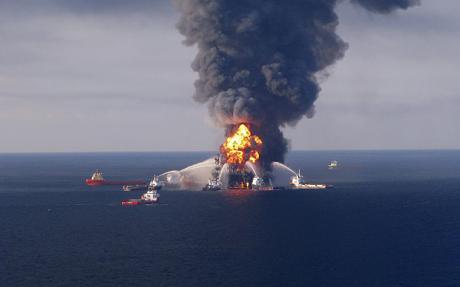
Photo via the Telegraph A federal judge in New Orleans blocked the Obama administration’s 6 month moratorium on deep water offshore drilling. According to the New York Times , the judge Martin L. C. Feldman wrote in a 22-page opinion that “The blanket moratorium … seems to assume that because one rig failed and although no one yet fully knows why, all companies and rigs drilling new wells over 500 feet also universally present an imminent danger.” He said the offshore ban would cause “punitive” economic harm and was unwarranted. The White House disagree… Read the full story on TreeHugger

Read more from the original source:
Judge Strikes Down Obama’s Offshore Drilling Ban

Obama’s Leadership Deficit

Editor’s Note : The following originally appeared at Andrew Breitbart’s Big Hollywood . Appearing on CNN with Anderson Cooper, film director Spike Lee implored President Obama to infuse his handling of the Gulf oil spill with more emotion. Demonstrating the astute analysis we have come to expect from the director, Lee implored Obama to “one time, go off.” Perhaps he is of the same mind as Bill Maher, that the authentic black man is one who is always armed and resorts to violence and loud-talking when things do not go his way. (Note to self: On the way home from the liquor store, I must pick up my Glock from the gun shop.) Both Lee and Maher seem to share the opinion of a great many progressives that emotion is the same as leadership and that problems are most easily solved by decree. It is no mistake that following criticism by Lee and others, White House press secretary Robert Gibbs was declaring to the media that he had “seen rage from him [President Obama].” Apparently, when Obama gets angry, he clinches his jaw. Soon after the Gibbs press conference, the President showed up in Louisiana, walked the beach in shirt sleeves and then, with clenched jaw, he spoke of growing up in a culture where the water was sacred. The administration meant this to be a demonstration of leadership. However, in some quarters, this is also known as street theatre. Still seeking to enhance his “street cred,” the president then appeared on morning television, lowered his pants down below his buttocks, flashed his gold teeth, and announced that he was looking for some tail to kick. In the meantime, the oil continues to gush from the well and the resulting slick is now the size of a small state. As it turns out, sending the attorney general to Louisiana and ordering BP to “plug the damn hole” and then “going off” on national television didn’t solve the problem. If the poll numbers are to be believed, it would also appear that Americans are not impressed with how much booty a president can kick, especially if it is not accompanied by decisive action, which actually addresses the problem. Over the course of the last two months, the president has had several opportunities to take bold and determined action–to be a leader. He has dithered instead. A few of the missed opportunities: Fire-booms that were supposed to be a part of any oil-spill response were missing in action. When they were finally located there were too few to do much good. In the event of a major spill, federal responders had pre-approval to begin burning oil. They waited more than a week before doing a test-burn and then stopped. Experts have suggested that had the burning begun right away, 90% of the oil could have been burned away before it spread. Thirteen countries have offered the United States the advantage of their technical skills. To date, the Obama administration has declined to take advantage of all of this experience and expertise. The U.S. Army Corps of Engineers delayed the building of protective sand-berms until they could study the issue. The administration finally approved six berms, but only agreed to pay for one of them. Government officials say they want to first see if they work. Of course, by that time building more berms won’t do any good. Two months into the crisis, Admiral Thad Allen, the U.S. official in charge of the Gulf of Mexico crisis, (or is he?), is still talking about asking Congress for a waiver of the Jones Act, which would allow foreign vessels involved in the crisis to operate in American waters. However, that may not do much good. Louisiana boat owners who have volunteered to aid in clean-up efforts are complaining that bureaucratic red-tape is keeping them out of the water. On a positive note, the president did create another government commission. Leadership of the statesman variety–as opposed to the shirtsleeves and furrowed-brow-look-of-concern variety–would have the president with a large pair of scissors cutting through the red tape. A leader scours the private sector for the most knowledgeable folks he can find and asks for their help. He gets on the phone with our allies and says, “Yes! Please send me your experts!” He says to the governors of the Gulf States, “Tell me what you need.” Leadership is putting aside political agendas and mobilizing the power of the executive office in order to solve an immediate crisis. Leadership doesn’t always need big speeches or street corner bravado. Leadership can be quiet; it can be cool and determined. But if it isn’t focused and it isn’t active, it ain’t worth the price of admission to a “Spike Lee Joint.”

Link:
Obama’s Leadership Deficit

Is Illegal Immigration Raising Arizona’s Crime Rate? NY Times Says No; Relevant Figures Say Yes

On Sunday, New York Times reporter Randal Archibold offered up more of his slanted reporting on Arizona’s pending new immigration enforcement law, suggesting that supporters of tough immigration enforcement are fostering fear by exaggerating the problem of violent crime on the border with Mexico: ” On Border Violence, Truth Pales Compared to Ideas .” But does his evidence stand up? Two conservative writers say no, pointing to FBI statistics that show crime in towns outside major metropolitan areas and rural counties crime has increased substantially. When Representative Gabrielle Giffords, Democrat of Arizona, announced that the Obama administration would send as many as 1,200 additional National Guard troops to bolster security at the Mexican border, she held up a photograph of Robert Krentz, a mild-mannered rancher who was shot to death this year on his vast property. The authorities suspected that the culprit was linked to smuggling. “Robert Krentz really is the face behind the violence at the U.S.-Mexico border,” Ms. Giffords said. It is a connection that those who support stronger enforcement of immigration laws and tighter borders often make: rising crime at the border necessitates tougher enforcement. But the rate of violent crime at the border, and indeed across Arizona, has been declining, according to the Federal Bureau of Investigation, as has illegal immigration, according to the Border Patrol . While thousands have been killed in Mexico’s drug wars, raising anxiety that the violence will spread to the United States, F.B.I. statistics show that Arizona is relatively safe. That Mr. Krentz’s death nevertheless churned the emotionally charged immigration debate points to a fundamental truth: perception often trumps reality, sometimes affecting laws and society in the process . Archibold again pompously implied fear-mongering on the part of supporters of immigration enforcement: Moreover, crime statistics, however rosy, are abstract. It takes only one well-publicized crime, like Mr. Krentz’s shooting, to drive up fear. …. Crime figures, in fact, present a more mixed picture, with the likes of Russell Pearce, the Republican state senator behind the immigration enforcement law, playing up the darkest side while immigrant advocacy groups like Coalición de Derechos Humanos (Human Rights Coalition), based in Tucson, circulate news reports and studies showing that crime is not as bad as it may seem. For instance, statistics show that even as Arizona’s population swelled, buoyed in part by illegal immigrants funneling across the border, violent crime rates declined, to 447 incidents per 100,000 residents in 2008, the most recent year for which comprehensive data is available from the F.B.I. In 2000, the rate was 532 incidents per 100,000. Nationally, the crime rate declined to 455 incidents per 100,000 people, from 507 in 2000. Reporter Jennifer Steinhauer seconded Archibold’s assertion about crime dropping on the Arizona border in her Tuesday front-page profile of Sen. John McCain on the campaign trail in Arizona: While border crime has decreased in this state in recent years , the killing of a prominent rancher in the south by what the police suspect was an illegal immigrant set off rage across the state, and helped fuel a tough new state law directed at immigrants. But Tom Maguire researched the actual FBI statistics and came away with the opposite result, though his results are not definitive: …the stats reprinted below tell a different story — measured by violent crimes per 100,000, the non-MSA portion of Arizona has seen a dramatic increase in crime….these numbers do not support the case that the rural and border areas of Arizona are getting safer. Quite the contrary, actually. Maybe the Times can turn a reporter loose on that. Taking off from Maguire’s spadework, Mark Hemingway at the Washington Examiner explained: …essentially, the FBI crime stats are broken down by region and while crime has fallen 20 percent in cities from 2000 to 2008, in towns outside major metropolitan areas and rural counties crime is up 39 and 45 percent, respectively. In other words, it sure looks like crime is way up in the border regions of Arizona.

View original post here:
Is Illegal Immigration Raising Arizona’s Crime Rate? NY Times Says No; Relevant Figures Say Yes

Fibershed Project: The 150 Mile Wardrobe

Photo: Fibershed Three years ago we covered The Hundred Mile Suit , where 92% of a man’s outfit was created from materials and production sourced from a radius of 100 miles. The project’s designer, Kelly Cobb, said at the time: “If we worked on it for a year and a half, I think we could have eliminated that 8 percent.” Now, the Fibershed Project is experimenting with the concept once more, and they seem to taken on board Kelly’s hint, for they’ve widen their scope to fibres sourced from within 150 miles, and given the project a one year time-frame. But w… Read the full story on TreeHugger

See original here:
Fibershed Project: The 150 Mile Wardrobe

What’s the Best Way to Price Carbon Emissions: Cap and Trade, Cap and Dividend, or Carbon Tax?

photo: Jeffery DelViscio via flickr With all the talk about getting the United States off of oil, energy independence, creating a low-carbon future, et cetera, one of the key parts of that is reducing carbon emissions, whether they are from electricity, transportation or wherever they occur. Central to that is setting a price on carbon emissions. What options are there to do this? Cap and trade may be the main option being considered, but both a cap and dividend approach, as well as a carbon tax have their vocal proponents. Let’s take a look at e… Read the full story on TreeHugger

See the original post:
What’s the Best Way to Price Carbon Emissions: Cap and Trade, Cap and Dividend, or Carbon Tax?

GOP Walks Tightrope of Contradictions Over BP Gulf Spill (Video)

Photo via TBO The biggest splash in politics last week, at least ’round the blogoshpere and cable news circuit, was undoubtedly Representative Joe Barton’s (R-Texas) surprise apology to BP . While many conservatives supported his sentiment, many others immediately recognized the political damage it could cause, and rushed to distance themselves from the apology. The whole debacle underscores the contradiction-laden tightrope that GOP leaders must walk: The party must … Read the full story on TreeHugger

The rest is here:
GOP Walks Tightrope of Contradictions Over BP Gulf Spill (Video)

General Stanley McChrystal apologizes for comments in Rolling Stone magazine

Washington Post coverage at the link, and here is Defense Secretary Gates official statement on McChrystal the profile: “I read with concern the profile piece on Gen. Stanley McChrystal in the upcoming edition of 'Rolling Stone' magazine. I believe that Gen. McChrystal made a significant mistake and exercised poor judgment in this case. We are fighting a war against al Qaeda and its extremist allies, who directly threaten the United States, Afghanistan, and our friends and allies around the world. Going forward, we must pursue this mission with a unity of purpose. Our troops and coalition partners are making extraordinary sacrifices on behalf of our security, and our singular focus must be on supporting them and succeeding in Afghanistan without such distractions. Gen. McChrystal has apologized to me and is similarly reaching out to others named in this article to apologize to them as well. I have recalled Gen. McChrystal to Washington to discuss this in person.” http://www.washingtonpost.com/wp-dyn/content/discussion/2010/06/22/DI20100622017… added by: Incredulous

Chris Matthews Suggested Tea Parties Are Unlike Reagan — Who Moved to the Center?

It’s one thing for media liberals to suggest the Tea Party is on the fringe of the right, but when it’s another when they starting putting Ronald Reagan in the center by comparison (even as Governor of California). On The Rachel Maddow Show on Tuesday, Matthews suggested that somehow America is reliably centrist, so even Reagan moved to moderation (and there’s no mention of Obama’s left-wing surge): But the American people have sort of a gyroscope, something that always brings them back to center, where it very much — and nobody wants to hear this on the right, but we’re very much like France in that way. We`re not an ideologically proletarian country or right-wing militarist country. Generally, we listen to those voices and we never go further right than Reagan, and the minute he got into office, he moved very much to the center. As governor of California, for example, on issues like abortion rights. He moved to the center. I don’t think we are an extremist country, but these voices are frightening. And at a time of economic desperation, if you will, they’re being listened to. But the one ironic — I don’t want to call it silver lining – the one whisper of possible good coming out of this horror in the Gulf of Mexico, what is really hurting North America, the love we have for this part of the world, our own part of the world, is that maybe it convinces people that government is important. Matthews smeared the Tea Party together with every fringy right-wing cause in American history: MATTHEWS: You hear it from the tea party people. You see them with the Gadsden flag, “Don`t tread on me.” You hear it from the militia, from the birthers, from the patriot groups, the oath takers — the oath keepers. They all have one resonant statement. `The United States has been taken over by a foreign power. There’s a tyranny in Washington. It`s illegitimate. It’s led by a person who`s not an American. He may be a Muslim. He may be a Nazi.’ whatever. It’s not America. Anything goes. And by the way, when you resort to the Second Amendment to take out your government officials, can you go any further than that? I wonder. MADDOW: You know, seeing the way that you juxtaposed that historical clip that we just played with, for example, the birthers, and when you draw those connections with them all thinking there`s some foreign and illegitimate power that needs to be – that`s usurping legitimate American authority, it just reminds me that there’s a lot to the ‘Communists in the State Department’ stuff that sounds like the Kenyan in the White House stuff. Isn`t it sort of, can it be the same hot buttons for Americans, can they work? MATTHEWS: No, of course, it’s there. It’s the paranoid history of America. I always like to tell this to people who care about America, like your audience. There`s two armies that march almost side by side through American history. There’s the progressive army that led for abolition, that fought the Civil War, the good guys of the Civil War. And of course, those who really pushed for reconstruction afterwards like Thaddeus Stevens and the good guys, the radical Republicans of that day. And alongside is this other army, the know-nothings and then the Klansmen who came along later. And then, you`ve got in the 20th century – it’s the same pattern – it’s the progressives moving a step or two ahead of this reactionary army that rides right along them, sort of camp followers playing off the dispossessed, those who resent change. It’s same with sexual orientation today. There`s always going to be another group growing along saying this threatens traditional marriage. This threatens something here. Matthews talk of the centrist “gyroscope” came right after more of his optimistic preaching about how Democrats will pull out some of these congressional races: I think Charlie Crist, having been pushed out of the Republican Party in Florida basically for hugging Barack Obama – let’s face it – might well win down there. I think he will. I think Marco Rubio is going to fade as a candidate. I think Sharron Angle, with the statements coming out now about using the Second Amendment right, which is a right in the Constitution. It`s written there, as a way of taking on your government and bringing it down. I think that`s going to scare you. Nevada is not a right wing state. Nevada is kind of a purple state. I think Harry Reid is now back in the saddle. So I think Joe Sestak is going to win. I don’t think Pat Toomey is consistent with Pennsylvania sort of center right and center left history. So we`ll see. …I think Rand Paul could lose. But we’ll have to see. I don’t know. I think this is a bad year for progressives. It`s a tough economy, and you’re always blamed if you’re in power.

See the original post here:
Chris Matthews Suggested Tea Parties Are Unlike Reagan — Who Moved to the Center?

World Cup 2010: Slovenia v USA – live!

Hammer F5, click refresh or use our auto-refresher for the latest updates and send your comments to paul.doyle@guardian.co.uk 7 min: No quality on display from either side so far. “If every game in a group ended, let’s say, 1-1, leaving the entire group tied on points and GD, then by what method would Fifa decide who went through to the knockout stages?” asks Will Hayward. “Most reducers?” Lots would be drawn. 5 min: Bold burst by Bradley through the middle. He then slips the ball wide to Findley, who wins a corner taht Donovan wastes. “As a jealous Croatian neighbor I am praying for the Slovenians to lose in order to avoid eruptions of exuberance such as these ,” gnashes Zlatko Ceraj-Ceric. “Come to think of it, this may be a conversation stopper, just the opposite of what was called for.” 3 min: No sooner does play resume after that little ruckus than Ljubjankic concedes a freekick for a careless tackle in the American half. It’s a tetchy opening and no mistake. 1 min: It’s kicked off in more ways than one! After 15 seconds Ljubjankic goes down after copping an elbow from Dempsey. The outraged Slovenians converge on the ref, who, it seems, is not going to punish the American who, if I recall correctly, left John Terry with a broken cheekbone following a similar sort of clash a couple of season ago. Debate: “Now that Germany and Spain have a very good chance of finishing their groups in second place, what do the other teams do?” wonders Gadi Abraham. “Do Brazil and England try to lose points in the last game? Do the Netherlands? How can they go about doing it without the whole world going up in arms?” National anthems: Why do they stick a microphone in front of the players during this formality? It’s really not fair. Both sets of players are appalling singers and there’s no reason why they shouldn’t be. Do we ask Beyonce or Ingelbert Humperdink to do keepie-uppies before a concert, do we? 2:54pm: “Watch for Jose Torres in this match,” tips Matt Lucas. “His game is very similar to Xavi Hernandez and he really should have started against England.” I find that hard to believe but am open to being converrted. Bring it on, Jose. Preamble: For reasons that you wil not care about but may well be very grateful for, there is no time for a lengthy intro today. So let me just give you my prediction – USA 1-0 Slovenia – and a plea for one or more of you to suggest a motion for us to debate alongside the match commentary. Thanks. Teams: Slovenia: Samir Handanovic; Miso Brecko, Marko Suler, Bostjan Cesar, Bojan Jokic, Valter Birsa, Robert Koren, Aleksandar Radosavljevic, Andraz Kirm, Zlatan Ljubijankic, Milivoje Novakovic United States: Tim Howard; Steve Cherundolo, Jay DeMerit, Oguchi Onyewu, Carlos Bocanegra; Landon Donovan, Michael Bradley, Jose Torres, Clint Dempsey; Jozy Altidore, Robbie Findley. Referee: Koman Coulibaly (Mali) Stats that may or may not be relevant: • This will be the first ever meeting between Slovenia and USA • USA have kept only one clean sheet in 20 World Cup matches • Slovenia have won seven of their last eight matches • Eight of USA’s 10 goals in the last three World Cups have come in the first half • Landon Donovan was involved in six of USA’s 12 shots against England World Cup 2010 Group C World Cup 2010 Slovenia USA Paul Doyle guardian.co.uk

See the rest here:
World Cup 2010: Slovenia v USA – live!

BP CEO’s Infuriating Congressional Testimony in 4 Minutes (Video)

Photo via the NY Daily News Yesterday, BP CEO Tony Hayward headed to Congress to answer questions about BP’s role in the Gulf oil spill . At least, that was ostensibly the reason he appeare… Read the full story on TreeHugger

See the original post:
BP CEO’s Infuriating Congressional Testimony in 4 Minutes (Video)