Tag Archives: university

‘Hotbeds of Sex’: Texas on Top, Maine at Bottom

Men's Health Magazine Survey Rates Austin, Texas, Sexiest City, But Portland, Maine, Comes Last American sex. Desire rises in the Lone Star State but goes limp in the cold surf of Maine, at least according to a survey of 100 U.S. cities in the October issue of Men's Health magazine. Austin, Texas, was ranked number 1 in a Men's Health magazine survey this week. Portland, Maine, came in last. (Courtesy Travis Measley) More Photos Austin came in at No. 1, and Dallas at No. 2, but five other Texas cities — Arlington, Houston, Lubbock, Fort Worth and San Antonio — made the top 15. El Paso was No. 27. “Wow. I mean, 'Wow,' said 23-year-old Tessa Thibodeau, an at the University of Texas in Austin, amazed. “Maybe [Texans] aren't in the Bible Belt after all.” The survey determined the bedroom barometers by using census birth rates, sales of sex toys and condoms, and rates of sexually transmitted diseases. Other sexy cities that made the top 10 were Columbus, Ohio; Durham, N.C.; Denver; Indianapolis; Oklahoma City and Bakersfield, Calif. Portland, Me., and Burlington, Vt., on the other hand, came in last, at Nos. 100 and 99, respectively. Other unsexy cities were Manchester, N.H. (96); Charleston, W.Va. (97); Yonkers, N.Y. (98); Manchester, N.H. (97); and St. Petersburg, Fla. (95). But in Texas, where the summer heat tops 100 degrees, the bedroom exudes its fair share of sweat. When Men's Health announced the survey results this week, the Austin American-Statesmen called its hometown the “Capital of Copulation.” “As Texans know, size does matter,” the newspaper bragged. “We do note that a lot of the cities on the list are college towns. Maybe there's a correlation? Go figure. Either way, the heat is on in Texas, but you already knew that.” Austin, which takes top honors, or dishonors, depending on how you look at it, is the Live Music Capital and houses the University of Texas, one of the largest universities in the country. “If you have a college this size, you're bound to get a bunch of hot girls,” said Kyle Goldstein, a 23-year-old film major. “I mean, it's Texas. You're bound to have all those cute little Southern blond girls running around.” The ranking “could mean we are just the sleaziest city in the country,” said Mark Teschauer, a first-year graduate student. “But it could also be a reflection on the city's progressive culture. People are more open-minded here.” Each year, hundreds of thousands of scantily clad men and women flock to Barton Springs to lie on the banks and soak in the cool waters, and the night life on Austin's popular Sixth Street may be the reason the city gets dubbed the “King of Promiscuity.” Being the “king of sex” means high condom sales, but also high rates of STDs. “Sure, it's a positive to see that we are being smart about sex,” said Andrew Schnitker, a senior broadcast major. “But nobody wants to be the city with the most STDs. That's not exactly something to be proud of. It probably shouldn't go in our tourism brochures.” =========Read the entire story where does your town rate ?=================== In Austin the median age is 30 -34 years of age. Go figure, we have more SEX ! And Yes Ladies everything is bigger in Texas! http://abcnews.go.com/Health/MindMoodNews/americas-hotbeds-sex-survey-rates-aust… added by: Sparky2U
Arctic sea ice shrinks to third lowest area on record

Arctic sea ice melted over the summer to cover the third smallest area on record, US researchers said Wednesday, warning global warming could leave the region ice free in the month of September 2030. Last week, at the end of the spring and summer “melt season” in the Arctic, sea ice covered 4.76 million square kilometers (1.84 million square miles), the University of Colorado's National Snow and Ice Data Center said in an annual report. “This is only the third time in the satellite record that ice extent has fallen below five million square kilometers (1.93 million square miles), and all those occurrences have been within the past four years,” the report said. A separate report by the National Oceanic and Atmospheric Administration (NOAA) found that in August, too, Arctic sea ice coverage was down sharply, covering an average of six million square kilometers (2.3 million square miles), or 22 percent below the average extent from 1979 to 2000. The August coverage was the second lowest for Arctic sea ice since records began in 1979. Only 2007 saw a smaller area of the northern sea covered in ice in August, NOAA said. The record low for Arctic sea ice cover at the end of the spring and summer “melt season” in September, was also in 2007, when ice covered just 4.13 million square kilometers (1.595 million square miles). Mark Serreze, director of the NSIDC, said climate-change skeptics might seize the fact that Arctic sea ice did not hit a record-low extent this year, but said they would be barking up the wrong tree if they claimed the shrinkage had been stopped. “Only the third lowest? It didn't set a new record? Well, right. It didn't set a new record but we're still headed down. We're not looking at any kind of recovery here,” he told AFP. In fact, Serreze said, Arctic sea ice cover is shrinking year-round, with more ice melting in the spring and summer months and less ice forming in the fall and winter. “The Arctic, like the globe as a whole, is warming up and warming up quickly, and we're starting to see the sea ice respond to that. Really, in all months, the sea ice cover is shrinking — there's an overall downward trend,” Serreze told AFP. “The extent of Arctic ice is dropping at something like 11 percent per decade — very quickly, in other words. “Our thinking is that by 2030 or so, if you went out to the Arctic on the first of September, you probably won't see any ice at all. It will look like a blue ocean, we're losing it that quickly,” he said. Losing sea ice cover in the Arctic would affect everything from the obvious, such as people who live in the far north and polar bears, to global weather patterns, said Serreze. “The Arctic acts as a sort of refrigerator of the northern hemisphere. As we lose the ice cover, we start to change the nature of that refrigerator, and what happens up there affects what happens down here in the middle latitudes,” he said. “We might have less cold outbreaks, which you might say is a good thing, but it's not such a good thing in regions that depend on snowfall for their water supply.” NOAA noted in its report that the first eight months of 2010 were in equal first place with the same period in 1998 for the warmest combined land and ocean surface temperatures on record worldwide, and the summer months were the second warmest on record globally, after 1998. added by: JanforGore

AUSTRALIA: Exposure to chemical TBT causes female snails to grow penises on heads

FEMALE marine snails living off the Perth coast are growing male sex organs on their heads after exposure to the chemical TBT, according to local researchers. Curtin University researchers have revealed the snails are suffering from imposex, a condition that involves the development of a second sex organ after being exposed to the chemical. Unlike garden snails, which are hermaphrodites, this species of marine snail has distinct sexes. Curtin's Department of Environment and Agriculture Associate Professor Monique Gagnon said studies on the marine snail Thais orbita over the past 10 years showed that although TBT contamination had declined at sites visited by recreational boats, a 100 per cent rate of imposex still existed at sites where commercial vessels were present. “These high levels are believed to be related to the continuous input of TBT into the area over a period of years, resulting in the presence of significant quantities in the sediment on the sea floor,” she said. Associate Professor Gagnon said Fremantle port and the Garden Island naval facility were the main sites where TBT contamination was present in the Perth region. She said studies had shown that imposex could stop the females from procreating, potentially reducing the number of snails in the shoreline environment. The samples of Thais orbita were collected along the Perth coast between March and June 2009. added by: eden49

Scientists Find Thick Layer Of Oil On Seafloor

Scientists on a research vessel in the Gulf of Mexico are finding a substantial layer of oily sediment stretching for dozens of miles in all directions. Their discovery suggests that a lot of oil from the Deepwater Horizon didn't simply evaporate or dissipate into the water — it has settled to the seafloor. The Research Vessel Oceanus sailed on Aug. 21 on a mission to figure out what happened to the more than 4 million barrels of oil that gushed into the water. Onboard, Samantha Joye, a professor in the Department of Marine Sciences at the University of Georgia, says she suddenly has a pretty good idea about where a lot of it ended up. It's showing up in samples of the seafloor, between the well site and the coast. “I've collected literally hundreds of sediment cores from the Gulf of Mexico, including around this area. And I've never seen anything like this,” she said in an interview via satellite phone from the boat. Joye describes seeing layers of oily material — in some places more than 2 inches thick — covering the bottom of the seafloor. “It's very fluffy and porous. And there are little tar balls in there you can see that look like microscopic cauliflower heads,” she says. It's very clearly a fresh layer. Right below it she finds much more typical seafloor mud. And in that layer, she finds recently dead shrimp, worms and other invertebrates. 'A Slime Highway' … story continued at link. added by: Jessica_Bryant

The Brain Speaks: Scientists Decode Words from Brain Signals

Sept. 7, 2010 — In an early step toward letting severely paralyzed people speak with their thoughts, University of Utah researchers translated brain signals into words using two grids of 16 microelectrodes implanted beneath the skull but atop the brain. “We have been able to decode spoken words using only signals from the brain with a device that has promise for long-term use in paralyzed patients who cannot now speak,” says Bradley Greger, an assistant professor of bioengineering. Because the method needs much more improvement and involves placing electrodes on the brain, he expects it will be a few years before clinical trials on paralyzed people who cannot speak due to so-called “locked-in syndrome.” The Journal of Neural Engineering's September issue is publishing Greger's study showing the feasibility of translating brain signals into computer-spoken words. The University of Utah research team placed grids of tiny microelectrodes over speech centers in the brain of a volunteer with severe epileptic seizures. The man already had a craniotomy – temporary partial skull removal – so doctors could place larger, conventional electrodes to locate the source of his seizures and surgically stop them. Using the experimental microelectrodes, the scientists recorded brain signals as the patient repeatedly read each of 10 words that might be useful to a paralyzed person: yes, no, hot, cold, hungry, thirsty, hello, goodbye, more and less. Later, they tried figuring out which brain signals represented each of the 10 words. When they compared any two brain signals – such as those generated when the man said the words “yes” and “no” – they were able to distinguish brain signals for each word 76 percent to 90 percent of the time. When they examined all 10 brain signal patterns at once, they were able to pick out the correct word any one signal represented only 28 percent to 48 percent of the time – better than chance (which would have been 10 percent) but not good enough for a device to translate a paralyzed person's thoughts into words spoken by a computer. “This is proof of concept,” Greger says, “We've proven these signals can tell you what the person is saying well above chance. But we need to be able to do more words with more accuracy before it is something a patient really might find useful.” People who eventually could benefit from a wireless device that converts thoughts into computer-spoken spoken words include those paralyzed by stroke, Lou Gehrig's disease and trauma, Greger says. People who are now “locked in” often communicate with any movement they can make – blinking an eye or moving a hand slightly – to arduously pick letters or words from a list. University of Utah colleagues who conducted the study with Greger included electrical engineers Spencer Kellis, a doctoral student, and Richard Brown, dean of the College of Engineering; and Paul House, an assistant professor of neurosurgery. Another coauthor was Kai Miller, a neuroscientist at the University of Washington in Seattle. The research was funded by the National Institutes of Health, the Defense Advanced Research Projects Agency, the University of Utah Research Foundation and the National Science Foundation. Nonpenetrating Microelectrodes Read Brain's Speech Signals The study used a new kind of nonpenetrating microelectrode that sits on the brain without poking into it. These electrodes are known as microECoGs because they are a small version of the much larger electrodes used for electrocorticography, or ECoG, developed a half century ago. For patients with severe epileptic seizures uncontrolled by medication, surgeons remove part of the skull and place a silicone mat containing ECoG electrodes over the brain for days to weeks while the cranium is held in place but not reattached. The button-sized ECoG electrodes don't penetrate the brain but detect abnormal electrical activity and allow surgeons to locate and remove a small portion of the brain causing the seizures. Last year, Greger and colleagues published a study showing the much smaller microECoG electrodes could “read” brain signals controlling arm movements. One of the epileptic patients involved in that study also volunteered for the new study. Because the microelectrodes do not penetrate brain matter, they are considered safe to place on speech areas of the brain – something that cannot be done with penetrating electrodes that have been used in experimental devices to help paralyzed people control a computer cursor or an artificial arm. EEG electrodes used on the skull to record brain waves are too big and record too many brain signals to be used easily for decoding speech signals from paralyzed people. Translating Nerve Signals into Words In the new study, the microelectrodes were used to detect weak electrical signals from the brain generated by a few thousand neurons or nerve cells. Each of two grids with 16 microECoGs spaced 1 millimeter (about one-25th of an inch) apart, was placed over one of two speech areas of the brain: First, the facial motor cortex, which controls movements of the mouth, lips, tongue and face – basically the muscles involved in speaking. Second, Wernicke's area, a little understood part of the human brain tied to language comprehension and understanding. The study was conducted during one-hour sessions on four consecutive days. Researchers told the epilepsy patient to repeat one of the 10 words each time they pointed at the patient. Brain signals were recorded via the two grids of microelectrodes. Each of the 10 words was repeated from 31 to 96 times, depending on how tired the patient was. Then the researchers “looked for patterns in the brain signals that correspond to the different words” by analyzing changes in strength of different frequencies within each nerve signal, says Greger. The researchers found that each spoken word produced varying brain signals, and thus the pattern of electrodes that most accurately identified each word varied from word to word. They say that supports the theory that closely spaced microelectrodes can capture signals from single, column-shaped processing units of neurons in the brain. One unexpected finding: When the patient repeated words, the facial motor cortex was most active and Wernicke's area was less active. Yet Wernicke's area “lit up” when the patient was thanked by researchers after repeating words. It shows Wernicke's area is more involved in high-level understanding of language, while the facial motor cortex controls facial muscles that help produce sounds, Greger says. More at link… added by: Almibry

Even Bugs Have Personality

Individual insects and bugs may all look alike to human eyes, but each and every one is unique and possesses its own personality, suggests new research that also helps to explain how personality arises in virtually all organisms. Some individual bugs, like humans, turn out to be shy, while others are very forceful, determined the study, published in the latest Proceedings of the Royal Society B. “Boldness, explorativeness, activity and aggressiveness are the main personality traits usually measured because these connect to each other and appear together,” lead author Eniko Gyuris told Discovery News. What makes a bug bold or shy? Gyuris explains the traits manifest themselves a bit differently in insects. “Boldness — whether they are shier or braver — could be defined, for example, as to how quickly they start after an alarm, or how soon they come out of their refuge,” added Gyuris, a member of the Behavioral Ecology Research Group at the University of Debrecen. “Explorativeness could be measured in another context, namely in which they have the opportunity to discover a new environment with novel objects.” Gyuris and his team conducted personality tests on short-winged and long-winged firebugs, a common insect that's known for its striking red and black coloration. The researchers collected these bugs from wild populations in Debrecen, Hungary, and put them through a barrage of different situations. In one experiment, an individual firebug was placed in a covered vial that was moved to a small, lit circular arena. Four colored plugs made of gum were arranged on the arena's floor to serve as objects for each bug to explore. The scientists then tapped the vial and removed the cover, noting how long it took for the insect to leave its protective container and explore its new surroundings. The researchers also shook the bugs out of their vials and into the arena. The scientists recorded how many objects each firebug explored, how fast the bug moved, how long it took to reach the wall of the arena, and more. All experiments were repeated four times per bug. Each individual firebug behaved in a unique manner that was consistent across all of the experiments. If a particular bug was classified as bold and brave, it acted that way under a variety of circumstances. The same held true for more tentative, less aggressive firebugs. Females tended to show more extreme reactions, with long-winged firebugs acting bolder than short-winged ones. The scientists believe their findings carry over to other bugs and animals, with genes, gender, life experiences, environmental conditions and other factors shaping personality. “I think nearly every individual — insects and other organisms alike — has his or her own personality, with the possible exception of the ones living in very specific and stable habitats for a long time, like a cave, for example, as they may not need to behave in different ways among conspecifics,” Gyuris explained. Raine Kortet, a University of Helsinki researcher, and colleague Ann Hedrick discovered that personalities are all over the chart for field crickets, particularly among males. Some are veritable daredevils, while others are passive and guarded. Kortet and Hedrick concluded that “more aggressive males are also more active in general, and possibly less cautious towards predation risk.” Prior research by Kortet also found that dominant male crickets are more attractive to females, with dominance possibly tied to better immune defense and certain beneficial genes. But boldness isn't always better. “Some traits can be beneficial in one context” but not in another, Gyuris indicated. A brazen male bug that may be hearty and popular with females due to boldness, for example, could display aggressive behavior around an annoyed human and get squished in the process. added by: Almibry

Small Networks of Marine Reserves Better Than Single Large Reserves for Preserving Fish & Coral

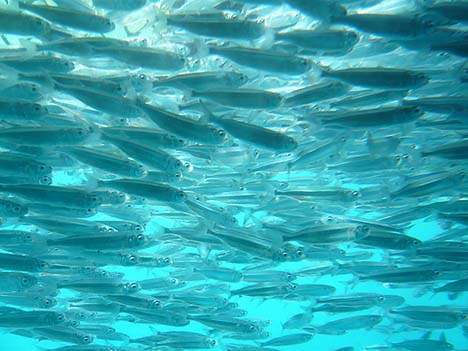
photo: Johnny Bahru via flickr. Large marine reserves aren’t working to protect fish or coral–and therefore fishermen’s livelihoods in the long term–and we should collectively shift towards more small reserves with fishing allowed in between. That’s the word from the UN University Institute for Water, Environment and Health ‘s Peter Sale. … Read the full story on TreeHugger

View original post here:
Small Networks of Marine Reserves Better Than Single Large Reserves for Preserving Fish & Coral

TMZ’s Prego Picture Contest — WINNER!

The tribe has spoken — and the Beach Ball Belly bounced the competition in our Labor Day ” Prego Picture ” Contest — scoring the $250 prize and some great gifts from TMZ! Now, it’s time to grab your pom-poms and bust out your megaphones — ’cause this… Read more

Continue reading here:
TMZ’s Prego Picture Contest — WINNER!

After Nearly Five Months, BP Scheduled to Release Findings of Inquiry Into Its Oil Rig Disaster

BP to release results of investigation into oil spill disaster By the CNN Wire Staff September 8, 2010 2:49 a.m. EDT The BP oil spill in the Gulf of Mexico released an estimated 205 million gallons of oil during an 87-day period. STORY HIGHLIGHTS * BP report comes nearly five months after oil rig explosion in the Gulf * Deep-water oxygen levels are down but not deadly, a federal report concludes * The federal study tracked dissolved oxygen levels from May to August (CNN) — BP on Wednesday is expected to release findings of an internal investigation into the Gulf oil disaster, the oil giant said. The report comes nearly five months after an April 20 explosion aboard an oil rig left 11 men dead and spewed millions of barrels of oil into the Gulf of Mexico over an 87-day period. A federal task report on Tuesday said scientists have found a decline in oxygen levels in the Gulf following the BP spill, but no “dead zones.” Levels of dissolved oxygen in deep water have dropped about 20 percent below their long-term average, according to data collected from up to 60 miles from the well at the center of the worst oil spill in U.S. history. But much of that dip appears to be the result of microbes using oxygen to dissolve oil underwater, and the decline is not enough to be fatal to marine life, said Steve Murawski of the National Oceanic and Atmospheric Administration and the head of the Joint Analysis Group studying the spill's impact. “Even the lowest observations in all of these was substantially above the threshold,” Murawski said. The samples were collected from 419 points at varying distances from the ruptured well at the heart of the disaster and at depths as far down as 4,800 feet, the group reported. The task force is made up of NOAA, the Environmental Protection Agency and the White House Office of Science and Technology Policy. The undersea gusher erupted in April, releasing an estimated 4.9 million barrels (205 million gallons) of crude before being temporarily capped in July. The volume of oil — and the amount of chemical dispersants used to break it up — have created concerns about the long-term health of the Gulf. The spill also delivered an economic blow to the region, where fisheries and beach resorts are major employers. Early findings from a mid-August survey led by the University of South Florida indicated oil had settled to the bottom of the Gulf farther east than previously suspected and at levels toxic to marine life. At about the same time, a team from Georgia Sea Grant and the University of Georgia released a report that estimates that 70 to 79 percent of the oil that leaked from the well “has not been recovered and remains a threat to the ecosystem.” The latest study “does not discuss the broad ecosystem consequences of hydrocarbons released into the environment,” NOAA said. But it concludes that the oil is continuing to break up and disperse underneath the surface, making the emergency of a major oxygen-poor dead zone unlikely. In early August, the federal government estimated that three-quarters of the oil spilled had either evaporated or been dispersed, or had been skimmed or burned off the surface. The well has been temporarily capped and operations are under way to permanently seal it. BP, rig owner Transocean and well cement contractor Halliburton have blamed one another for the disaster. http://www.cnn.com/2010/US/09/08/us.gulf.oil.disaster/index.html?hpt=T1 added by: EthicalVegan

Human Activity May Have Boosted Palau Shellfish Size

photo: Wikimedia Commons A new study in the Journal of Archaeological Science shows there are exceptions to the conventional eco-wisdom that increased human activity always spells harm for animals: Researchers from North Carolina State University have discovered that the size of one mollusk, that’s been a food source for Pacific Islanders for thousands of years, has increased in size in conjunction with human population growth. … Read the full story on TreeHugger

Read more here:
Human Activity May Have Boosted Palau Shellfish Size