Tag Archives: video-game

Not Yet Snake! It’s Not Over Yet! Four Reasons To Be Hopeful About The Metal Gear Solid Movie

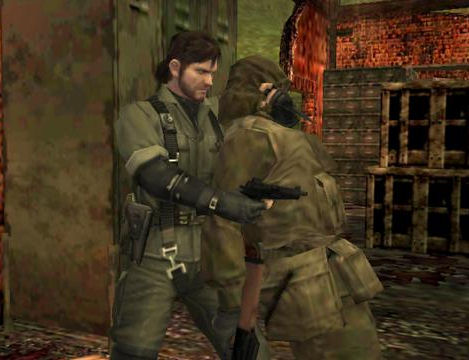
Video game fans are naturally suspicious of movie conversions because they’ve been burned more often than charcoal briquettes. Which is weird, because pattern recognition is meant to be a gaming skill.  Columbia Pictures’ announcement that it’s taking on the Metal Gear Solid license with Iron Man and The Amazing Spider-Man franchise producer Avi Arad has many gamers wary. The last attempt crashed and burned only two years ago, with Michael De Luca , producer of Oscar winner  The Social Network , c iting vague but fatal incompatibilities between video game companies and the big screen. But as the game’s signature character Solid Snake once said: “Don’t regret your past! Learn from it!”  With that in mind, here are four reasons the film adaptation might actually work this time.   1. Licenses Are Big Money Now:   For a long time, the wide-scale sucking of video game movies wasn’t a tragedy, it was a kind of karmic blowback. Movies licensed for games were stamped into soulless, cookie-cutter platformers with less character than a game of Hangman.  Similarly little care was put into the games’ development. In return, movie companies would buy a video game license, shred it, then spit a few random catch phrases from the game into a standard action movie script. In both cases it was because the adaptation meant a few extra dollars for whoever could be bothered to grab them. g Solid Snake: good at grabbing. But big money changes everything. The Resident Evil movies are making exponential profits, while comic-book heroes are now grabbing more cash than every one of their bank-robbing villains put together.  (Just ask Arad. ) Studios are scrambling to get onto bandwagon, because it’s really a bank truck with the back doors open. An epic storyline and a quarter-century of rabid fandom means Metal Gear Solid  is perfect for conversion. 2. It’s Already A Movie Pilot:  Metal Gear isn’t a Street Fighter , where scriptwriters had to pad the game’s haiku-simple idea of two outlandishly dressed characters “punching each other in the head for 90 minutes,” and then did such a bad job you’d swear they wrote the padding after receiving the punching.  The franchise is an established full-bore action story armed with politics, double-crosses, environmental messages and more character motivation than War and Peace. In essence, an elite agent comes out of retirement to infiltrate a terrorist facility. That’s a viable, if not entirely original, action-movie plot, and Metal Gear makes it smarter, more, um, solid.  A direct translation of the plot would actually work. Of course that won’t happen, but that isn’t a problem because…. 3. Movie-fication will Help:  Video games aren’t converted into movies, they’re flattened. An entire dimension of viewer participation is removed. Metal Gear ’s most iconic moments affect the viewer in ways movies can only dream of &mdash like Psycho Mantis breaking the fourth wall with music and controller-vibration, or the Sorrow’s attempt to end the game by convincing the player that it’s already over. This involvement will no doubt be lost in the game’s translation to the cinema screen. That said, the language of action movies is about streamlining: ideally, everything should fit into a neat 90-minute package, unless you’re Christopher Nolan. And that process inevitably requires the sanding down of a lot of important detail, Metal Gear maestro Hideo Kojima needs more streamlining than a supersonic jet. Still, he’s the unquestioned master of the series — to the point where the game franchise owner Konami seems unwilling to let him escape, constantly forcing him into sequels no matter how many times he publicly says “this is the last one.” (I genuinely think they’re using a real world Foxdie virus on him, set to trigger if he leaves. The next game’s going to include include Codec messages reading “Help me. They have my family!”) Kojima crafts masterpieces of stealth action. He also crafts epics of monologue to rival the Iliad and puts them on the same disc. This gave Metal Gear Solid a depth unseen in any “man-with-a-gun” game before or since. By the fourth installment, it was day long movie with some set pieces you were allowed to stunt direct. Tightening the script could sharpen the story and share it with a whole new audience. 4. The Special Effects Will Be Worth the Price of Admission: Perhaps it’s apostasy to write this, but the special effects in a Metal Gear movie are bound to kick ass. They must. The Metal Gear itself is the most perfect villain in any series: a giant walking tank which can also nuke anything on the planet. Action stars spend entire careers searching for an enemy that perfect. One of the most stunning moments in Metal Gear Solid was when this office-block sized monstrosity rose out of the ground in a cut-scene and you, with your mouth hanging open in the real world, stood still while it shot at you until you realized that the cut scene had ended and this techno-leviathan was about to smoke your tiny ass. IMAX-ing the movie alone will justify ticket sales. Sure, that’s no guarantee that the boys in Hollywood won’t screw it up, but let’s hope Columbia, Konami and Arad heed the wisdom of Solid Snake:  “This isn’t a training exercise. Our lives are riding on this. There are no heroes or heroines. If you lose, you’re worm food.” Luke McKinney loves the real world, but only because it has movies and video games in it. He responds to every tweet. Follow Luke McKinney on Twitter. Follow Movieline on Twitter. 
See the article here:
Not Yet Snake! It’s Not Over Yet! Four Reasons To Be Hopeful About The Metal Gear Solid Movie

REVIEW: Video-Game Sensibility Of Resident Evil: Retribution Makes For Unsettling But Unsatisfying Experience

It’s a big week for the filmmaking Paul Andersons. Paul Thomas Anderson’s    The Master  opened in a handful of cinemas in New York and Los Angeles, and Paul W.S. Anderson’s  Resident Evil: Retribution  in theaters everywhere (in 3D and otherwise). While  The Master  offers up a immersive, abstract look at an unstable man being courted by the head of a cult-like movement,  Resident Evil: Retribution  in its own way also departs from the usual narrative confines of moviemaking. It’s the closest thing you’ll find yet to a recreation of a video game sensibility on the big screen — which is in line with the franchise’s source material — and makes for a memorably unsettling if not particularly satisfying viewing experience. Resident Evil: Retribution finds action star (and Anderson spouse)  Milla Jovovich  returning to play Alice, a former employee turned sworn enemy of the evil Umbrella Corporation. Considering how crazily far and, frankly, nonsensical the story has gotten from its start as the story of a weaponized virus infecting a secret genetic research facility, the film pays surprising attention to the basic premise before skimming over the developments of the more recent installments in an intro sequence. The series’ ability to shuck off its own history is put on display in the initial action scene, which picks up where the last film left off: a slow-motion sequence of explosions and gunfire that runs backwards before lurching forward at full speed to neatly do away with the Arcadia and any other surviving characters on board. Then again, who cares about those guys? The  Resident Evil  films have clearly become a continuing discombobulated nightmare belonging to Alice and Alice alone. Again and again, she seems to find safety, only to wake up in some new, terrible scenario in which she has to fight for her life.  Resident Evil: Retribution takes this idea to its end point by being set in an underwater Umbrella-run base in which different test stages have been built for the company to demonstrate its bioweapons. All-white hallways string together life-size recreations of Times Square, downtown Tokyo, central Moscow and a suburban street. Each houses a scenario in which, at the bidding of the central A.I., swarms of infected humans, ax-wielding mutants or zombie soldiers will be released to attack. Resident Evil: Retribution , in other words, has taken great pains to find a way to have real-life game stages. This sensibility extends to the way the film explains its mission — rendezvous with a rescue team and find a way out — and the way it provides weapons for its characters: armories rise out of the ground, or, in a sequence that demonstrates definite game logic, Alice looks in an abandoned cop car, heads to a nearby bike to take its chain, smashes in the window and adds both her new tool and a gun from the vehicle to her inventory. This is even the case in the way actors from earlier installments in the franchise — Michelle Rodriguez and Oded Fehr — are folded into the film, thanks to Umbrella’s fondness for cloning. A glimpse of multiple versions of Alice in storage also reinforces the idea that if she were to die, she could just respawn and start over. Video games and movies have an uneasy partnership. The first  Resident Evil is one of the best of a shaky history of adaptations from console to big screen, but the franchise has skewed toward the sensibility of the former medium rather than the latter in a way that’s unique but tiresome. At its best,  Resident Evil: Retribution feels like a series of elaborate cut scenes strung together, but much of the time it’s a reminder of how incredibly unfun it can be to sit around watching someone else play without getting a chance yourself. The film’s extravagant action scenes have not a whiff of consequence to them, and other than Alice, the foremost quality of all of the characters is their disposability. A sequence like the one in which clones of familiar characters are put through an impossible test scenario is genuinely disconcerting in how it shakes up our perceptions of the reality of what’s on screen. But even that becomes a reminder that bringing one of the traditional qualities of a video game protagonist — his or her qualified immortality — to a movie further strips any sense of human investment in the character. Any consistency on screen is entirely stylistic: there are no rules in this universe other than that Alice will battle on, defying gravity and physics and looking fabulous despite the world eternally ending all around her. Follow Alison Willmore on Twitter. Follow Movieline on Twitter.

View original post here:
REVIEW: Video-Game Sensibility Of Resident Evil: Retribution Makes For Unsettling But Unsatisfying Experience

WATCH: The New Wreck-It Ralph Trailer Is The Best Thing Ever

Children of the Nintendo generation, take heed: Disney’s Wreck-It Ralph was made just for you. In addition to setting up a rather compelling hero’s journey for video game character Wreck-It Ralph (voiced by John C. Reilly) — an arcade villain who goes “game-hopping” to reinvent himself as the good guy — the animated adventure stuffs in more Gen X/Y video game references than you can count. Who will weep for Bowser as he gives his testimony at AA for baddies!? I say Nintendo generation (and by that, I mean NES) because we bridged the gap between the 8-bit/Atari era and the slicker Xbox crowd that followed years later. We who popped quarters into stand-ups and owned Sega Dreamcasts know the sorrow of saying goodbye. Wreck-It Ralph features the voices of Sarah Silverman as Vanellope von Schweetz, Ralph’s 9-year-old new BFF from the Candyland-like game Sugar Rush, Jane Lynch as Sergeant Calhoun from the first-person shooter Hero’s Duty, and Jack McBrayer as Fix-It Felix, the handyman hero of Ralph’s world. Also onboard bringing Wreck-It Ralph to life: Dennis Haysbert, Mindy Kaling, Alan Tudyk, Rachael Harris, Ed O’Neill, Adam Carolla, Horatio Sanz, and Edie McClurg. Credit for the film’s fresh, zingy spirit goes to director Rich Moore, veteran of The Simpsons and Futurama , and a script credited to Phil Johnston ( Cedar Rapids ) and first-timer Jennifer Lee. Wreck-It Ralph hits theaters November 2. Verdict: Jokes! Drama! Q*bert! Maybe I’m still high off the nostalgia factor but I declare this a must-see. [Via Yahoo ]

The rest is here:
WATCH: The New Wreck-It Ralph Trailer Is The Best Thing Ever

REVIEW: Pattinson Is Quietly Marvelous In Cronenberg’s Admirable, Feverish Cosmopolis

Easier to admire than to love, David Cronenberg’s  Cosmopolis is an amplified, feverish vision of the one percent as scarcely human — not because of any innate maliciousness, but because they’re so removed from the lives of the masses. They’re like children who’ve already won a video game and now play carelessly, without any need to observe the rules. The lead role of 28-year-old billionaire Eric Packer is played by Robert Pattinson, although the star of the film is just as much Packer Capital’s high-tech stretch limousine, which serves as his mobile office as he inches across Manhattan in search of a haircut and, perhaps, his own destruction. That limo, equipped with glowing console panels, a slide-out urinal and what’s essentially a throne in the back, is the primary setting of  Cosmopolis.   It’s a hermetically sealed bubble in which Eric can glide through the roiling urban landscape, jumping off or taking on passengers at whim. He is in the city, but not a part of it. The vehicle is armored and, he explains to his aloof wife Elise (Sarah Gadon), “Prousted” — lined with cork soundproofing — though the latter gesture is, he admits, largely symbolic, as the New York noise manages to bleed through. Despite this, the barrier between him and the world is considerable, bolstered by watchful presence of his security chief Torval (Kevin Durand), who informs him tersely of any credible threats to his life. Cosmopolis  is based on the 2003 novel of the same name by Don DeLillo, but Cronenberg adapted the tale to the screen and it feels very much like a Cronenberg work. It’s the chilly sibling to  eXistenZ , without the comfort of slipping realities. If the universe of  Cosmopolis were to come loose, it would only reveal a void underneath. Pattinson does a quietly marvelous thing in finding vulnerability in Eric without making it seem like softness. The film depicts Eric’s financial kingdom (and with it his sense of self) crumbling over a day, but his breakdown is a gradual one. His panic rises in barely perceptible increments. Despite Torval’s warnings, Eric has set out to get a haircut, though he doesn’t seem to need one. (Pattinson begins the film looking like a character from The Matrix , pale and immaculate in his dark suit and sunglasses.) The city is in a state of intense gridlock thanks to a presidential visit, the funeral procession of a famous Sufi rapper and by anti-corporate protests that strikingly recall Occupy Wall Street, though instead of a tent the crowd’s chosen symbol is a giant rat. As the limo crawls along, Eric takes meetings with coworkers and employees who appear in his car as if beamed in: his partner Shiner (Jay Baruchel), his art consultant and lover Didi (Juliette Binoche), his finance chief Jane (Emily Hampshire) and his adviser Vija (Samantha Morton), with whom he sips vodka while calmly discussing the rioters outside rocking his limo and spray-painting anarchist symbols on it. “This is a protest against the future,” she says. Packer Capital is attempting to short the yuan, a gambit that is not going well and bleeding the company of vast amounts of money as the hours roll by. Eric is a big fat symbol — the film treats this fact with a wink — never more so than in scenes with his wife Elise (Sarah Gadon), who’s as much an enigma to him as he initially is to us. A poet from a massive wealthy family, she’s indifferent to the wealth he’s built and the position he’s achieved. She’s also apathetic to his more animal needs: Elise solemnly refuses to have sex with Eric because, she tells him, she needs to conserve her energy for work. Their connection is so tenuous and they know so little about each other that their marriage might as well be an arranged one between two royals. Cosmopolis is a film about the demeaning and dehumanizing effects of money, and Eric’s wealth has left him untethered. He can buy things or simply have them at will — security, sex, an appropriate spouse, maybe even the Rothko Chapel, which he wants to keep whole in his apartment — but few of these acquisitions seem to resonate with him. As a portrait of the far end of wealth,  Cosmopolis is hauntingly hollow, its world deliberately crammed with things but empty of meaning. It’s possible that Eric courts death — by intentionally putting himself in the way of a “credible threat” — because he’s losing his fortune, or maybe he set out to lose that fortune first as part of plan for complete self-destruction. Either way,  Cosmopolis presents a world of vivid and sometimes nightmarish imagery outside those tinted windows, and finds something elegiac and terrible in the detached way its characters process what they see. As Morton’s character says as she gazes at a protester who’s set himself on fire outside the limo: “It’s not original — it’s an appropriation.” Follow Alison Willmore on Twitter.   Follow Movieline on Twitter.

See the article here:
REVIEW: Pattinson Is Quietly Marvelous In Cronenberg’s Admirable, Feverish Cosmopolis

REVIEW: Pattinson Is Quietly Marvelous In Cronenberg’s Admirable, Feverish Cosmopolis

Easier to admire than to love, David Cronenberg’s  Cosmopolis is an amplified, feverish vision of the one percent as scarcely human — not because of any innate maliciousness, but because they’re so removed from the lives of the masses. They’re like children who’ve already won a video game and now play carelessly, without any need to observe the rules. The lead role of 28-year-old billionaire Eric Packer is played by Robert Pattinson, although the star of the film is just as much Packer Capital’s high-tech stretch limousine, which serves as his mobile office as he inches across Manhattan in search of a haircut and, perhaps, his own destruction. That limo, equipped with glowing console panels, a slide-out urinal and what’s essentially a throne in the back, is the primary setting of  Cosmopolis.   It’s a hermetically sealed bubble in which Eric can glide through the roiling urban landscape, jumping off or taking on passengers at whim. He is in the city, but not a part of it. The vehicle is armored and, he explains to his aloof wife Elise (Sarah Gadon), “Prousted” — lined with cork soundproofing — though the latter gesture is, he admits, largely symbolic, as the New York noise manages to bleed through. Despite this, the barrier between him and the world is considerable, bolstered by watchful presence of his security chief Torval (Kevin Durand), who informs him tersely of any credible threats to his life. Cosmopolis  is based on the 2003 novel of the same name by Don DeLillo, but Cronenberg adapted the tale to the screen and it feels very much like a Cronenberg work. It’s the chilly sibling to  eXistenZ , without the comfort of slipping realities. If the universe of  Cosmopolis were to come loose, it would only reveal a void underneath. Pattinson does a quietly marvelous thing in finding vulnerability in Eric without making it seem like softness. The film depicts Eric’s financial kingdom (and with it his sense of self) crumbling over a day, but his breakdown is a gradual one. His panic rises in barely perceptible increments. Despite Torval’s warnings, Eric has set out to get a haircut, though he doesn’t seem to need one. (Pattinson begins the film looking like a character from The Matrix , pale and immaculate in his dark suit and sunglasses.) The city is in a state of intense gridlock thanks to a presidential visit, the funeral procession of a famous Sufi rapper and by anti-corporate protests that strikingly recall Occupy Wall Street, though instead of a tent the crowd’s chosen symbol is a giant rat. As the limo crawls along, Eric takes meetings with coworkers and employees who appear in his car as if beamed in: his partner Shiner (Jay Baruchel), his art consultant and lover Didi (Juliette Binoche), his finance chief Jane (Emily Hampshire) and his adviser Vija (Samantha Morton), with whom he sips vodka while calmly discussing the rioters outside rocking his limo and spray-painting anarchist symbols on it. “This is a protest against the future,” she says. Packer Capital is attempting to short the yuan, a gambit that is not going well and bleeding the company of vast amounts of money as the hours roll by. Eric is a big fat symbol — the film treats this fact with a wink — never more so than in scenes with his wife Elise (Sarah Gadon), who’s as much an enigma to him as he initially is to us. A poet from a massive wealthy family, she’s indifferent to the wealth he’s built and the position he’s achieved. She’s also apathetic to his more animal needs: Elise solemnly refuses to have sex with Eric because, she tells him, she needs to conserve her energy for work. Their connection is so tenuous and they know so little about each other that their marriage might as well be an arranged one between two royals. Cosmopolis is a film about the demeaning and dehumanizing effects of money, and Eric’s wealth has left him untethered. He can buy things or simply have them at will — security, sex, an appropriate spouse, maybe even the Rothko Chapel, which he wants to keep whole in his apartment — but few of these acquisitions seem to resonate with him. As a portrait of the far end of wealth,  Cosmopolis is hauntingly hollow, its world deliberately crammed with things but empty of meaning. It’s possible that Eric courts death — by intentionally putting himself in the way of a “credible threat” — because he’s losing his fortune, or maybe he set out to lose that fortune first as part of plan for complete self-destruction. Either way,  Cosmopolis presents a world of vivid and sometimes nightmarish imagery outside those tinted windows, and finds something elegiac and terrible in the detached way its characters process what they see. As Morton’s character says as she gazes at a protester who’s set himself on fire outside the limo: “It’s not original — it’s an appropriation.” Follow Alison Willmore on Twitter.   Follow Movieline on Twitter.

See the article here:
REVIEW: Pattinson Is Quietly Marvelous In Cronenberg’s Admirable, Feverish Cosmopolis

Kush Chronicles: 8,000 Pounds Of That Mary Jane Worth $3.6M Found Floating Off The Coast Of Orange County, Cali [Video]

SMH: Harbor Patrol officers found nearly 8,000 pounds worth of marijuana floating off the coast of Orange County, Calif., on Sunday, according to reports. The marijuana found south of Los Angeles was packed in around 160 bales and had an estimated street value of $3.6 million, border patrol agents told CBS Los Angeles. “Shortly before noon on Sunday, May 20, maritime law enforcement authorities received a tip about suspicious bales floating in the water off the coast of Orange County, near Dana Point,” border patrol agent supervisor Michael Jimenez said in a statement. The haul reportedly totaled 7,263 pounds. Coast guard petty officer Seth Johnson told the Orange County Register that the bales were first reported by a boater who saw them floating around 15 miles offshore. Three Harbor Patrol ships and a Coast Guard cutter were sent to recover the marijuana from the water. The incident was out of the ordinary, Jimenez told the Register. “At other events, they’ve dumped the bales to get rid of weight if they’re being chased,” he said. “Generally in these cases we’re aware they’re being dumped. What’s more unusual is that the bales were floating with no boat in sight.” No suspects or vessel have been identified in connection to an ongoing investigation, the Register reported. Source

Read this article:
Kush Chronicles: 8,000 Pounds Of That Mary Jane Worth $3.6M Found Floating Off The Coast Of Orange County, Cali [Video]

Goin’ Digital: Tim Tebow’s Trademark “Tebowing” Will Be Included As A Touchdown Celebration In Madden 13

That isht cray! Tebowing To Be Included In New Madden 13 Video Game “Tebowing” has made its way to “Madden NFL 13,” according to the game’s creative director Mike Young. Young made the announcement on his Twitter account, but it was not clear when or how the popular kneeling pose — inspired by Jets quarterback and devout Christian Tim Tebow, who is known for dropping to one knee in prayer — will be used in the EA Sports game. Tebowing, which also requires placing a fist on your forehead, has been mimicked across the world and spawned a website where people can submit pictures of themselves striking the pose. The game is set to be released on Aug. 28, with Detroit Lions receiver Calvin Johnson on the cover. No one can agree if Tim Tebow is a good quarterback or not, but he’s provocative, he gets the people GOING!!! #BallSoHard Images AP Images/EA Sports Source

Here is the original post:
Goin’ Digital: Tim Tebow’s Trademark “Tebowing” Will Be Included As A Touchdown Celebration In Madden 13

Wreck-It Ralph Teaser Poster: 8-Bit Baddie Goes Good

Video games have inspired many a movie in the post-Atari age, but Disney’s CG-animated November adventure Wreck-It Ralph puts a spin on things: It follows an 8-bit villain named Wreck-It Ralph (voiced by John C. Reilly) who escapes the confines of his video game and journeys through the arcade to prove he’s got what it takes to be a hero. As such, the early art work has been retro-tastic, and this week’s new teaser poster is no different. Take a gander and get ready to explain to the iPhone-toting, Tweet-happy kiddies what “8-bit” means. The synopsis: Walt Disney Animation Studios and Emmy®-winning director Rich Moore (TV’s “The Simpsons,” “Futurama”) take moviegoers on a hilarious, arcade-game-hopping journey in “Wreck-It Ralph.” Ralph (voice of John C. Reilly, “Talladega Nights: The Ballad of Ricky Bobby,” “Step Brothers”) is tired of being overshadowed by Fix-It Felix (voice of Jack McBrayer, “30 Rock”), the “good guy” star of their game who always gets to save the day. But after decades doing the same thing andseeing all the glory go to Felix, Ralph decides he’s tired of playing the role of a bad guy. He takes matters into his own massive hands and sets off on a game-hopping journey across the arcade through every generation of video games to prove he’s got what it takes to be a hero. On his quest, he meets the tough-as-nails Sergeant Calhoun (voice of Jane Lynch, TV’s “Glee”) from the first-person action game Hero’s Duty. But it’s the feisty misfit Vanellope von Schweetz (voice of Sarah Silverman, “The Sarah Silverman Program”) from the candy-coated cart racing game, Sugar Rush, whose world is threatened when Ralph accidentally unleashes a deadly enemy that threatens the entire arcade. Will Ralph realize his dream and save the day before it’s too late? Wreck-It Ralph hits theaters on November 2. Follow Jen Yamato on Twitter . Follow Movieline on Twitter .

Read the original post:
Wreck-It Ralph Teaser Poster: 8-Bit Baddie Goes Good

‘Mad Men’ Takes A Turn For The Geeky

AMC series nerds out with ‘Lost’ references and Ken Cosgrove’s sci-fi novel about a robot and a bridge. By Josh Wigler Embeth Davidtz and Lane Jared Harris in “Mad Men” Photo: AMC All right, AMC, if we didn’t get it before, we certainly do now: You dudes are a bunch of nerds. No one is going to argue that point what with your record-smashing “Walking Dead,” or the developing series based on “Dead” creator Robert Kirkman’s “Thief of Thieves” comic book . But all those many, many geek references on this week’s “Mad Men”? Consider the message received, loud and clear. What, you missed the ’60s-set drama’s absurd amount of nerd-out moments last night (April 15)? For good measure, then, we’ll walk you through them all. “Mad Men” season five draws major attention for “fattening up” Betty Draper actress January Jones. First and foremost, the episode, titled “Signal 30” and directed by series star (and “Iron Man 2” actor) John Slattery, heralded the arrival of science fiction and fantasy novelist Ben Hargrove, the pen name for ad man Kenny Cosgrove (played by actor Aaron Stanton, already a fixture in geek culture for providing his voice and likeness to the lead role in video game “L.A. Noir” ). Previously operating in secret, Ken’s private passion was outted by Cynthia, Ken’s all-too-forgettable wife who is suddenly a whole lot more memorable when you realize that she’s played by Larisa Oleynik, formerly the titular shape-shifter on ’90s Nickelodeon series “The Secret World of Alex Mack.” Cynthia (or is it Cheryl? Like Don’s new wife Megan, we can’t really recall) spilled the beans on “The Punishment of X4,” an old story of Ken’s, during a dinner party held at Pete and Trudy Campbell’s home. Her description of the plot: “There’s this bridge between these two planets and thousands of humans travel on it every day, and there’s this robot who does maintenance on the bridge. One day he removes a bolt, the bridge collapses, and everyone dies.” “There’s more to it than that,” a nervous Cosgrove tells the hushed room. Don pushes for further details: Why does the robot destroy the bridge? “Because he’s a robot,” Ken answers, clearly encouraged by Don’s interest. “Those people tell him what to do and he doesn’t have the power to make any decisions, except he can decide whether that bolt’s on or off.” “Or he just hates commuters,” Pete quips in response. Ken’s fledgling career as a sci-fi novelist wasn’t the only nerdy reference at the Campbell family’s eventful dinner: Texas college sniper Charles Whitman was briefly misidentified as Charles Widmore, a clear Easter egg for “Lost” fans. Indeed, “Lost” co-creator Damon Lindelof (who already enjoyed a shoutout to his six-season sci-fi series earlier in the evening on “The Simpsons” ) took it upon himself to further flesh out Cosgrove’s “X4” through a series of fan-fiction tweets . Well worth a read from the man behind the DHARMA Initiative. “The solution seemed obvious… create a commuter colony that would work on Nephytus, but live on Aton.” — Damon Lindelof (@DamonLindelof) April 16, 2012 Later, at the same dinner, the faucet at Chez Campbell burst for the second time in the same episode, prompting Don to remove his dress shirt and get to work on fixing the sink. The heroic action drew immediate Superman comparisons from the onlooking housewives, which is far from the first time that Jon Hamm has been connected to the Man of Steel . Superman is a “young man’s game,” according to “Mad Men” superstar Jon Hamm Meanwhile, on a subtler note, Pete Campbell took a turn for the super-villainous this week. Aside from being completely shown up by Don’s ability to fix a sink in seconds, Pete spent the episode flirting with and fantasizing about a high school senior in his driver’s education class, and later having sex with a prostitute, but only after she switched into king-worshipping role-playing mode. He even got into an intense fist fight with fellow Sterling Cooper Draper Pryce partner Lane Pryce; usually the consummate British gentlemen on the AMC series, don’t forget that Lane is played by Jared Harris, who also appears as science terrorist David Robert Jones on Fox’s cult sci-fi series “Fringe” and recently enjoyed a celebrated turn as legendary villain Professor Moriarty in “Sherlock Holmes: A Game of Shadows.” Pete clearly hasn’t seen the aforementioned show and film, but he nevertheless learned the hard way (and by hard way I mean via serious ass-kicking) that you never, ever get into a knockout brawl with Dumbledore’s son . All of this served as a reminder to me that Pete, whose views on Don oscillated between hero worship and pure spite throughout the episode, has known about Draper’s secret identity for several seasons now. With his latest turn toward the dark side, can it really be much longer before he uses that bit of proverbial kryptonite against the artist formerly known as Dick Whitman? Only Matt Weiner knows for sure. Finally, we return to Ken’s side-career as a writer, news of which spread throughout SCDP like wildfire. After a scolding from silver fox playboy Roger Sterling (played by the aforementioned Slattery, whose own Roger got his groove back a bit in this week’s episode, albeit to mixed results for his company), Cosgrove was persuaded to let his alter-ego Ben Hargrove go, but not before Peggy Olsen was able to read one of Ken’s short sci-fi stories, “the one in Galaxy about the girl who laid eggs.” ( Lindelof has titled the story “Ova,” though whether or not he tweets excerpts from the yarn remains to be seen.) But where Ben Hargrove dies, Ken is reborn anew as Dave Algonquin, writer of “The Man with the Miniature Orchestra.” The episode closes with a reading from Cosgrove’s latest effort: “There were phrases of Beethoven’s Ninth Symphony that still made Coe cry. He always thought it had to do with the circumstances of the composition itself. He imagined Beethoven deaf and soul-sick, his heart broken, scribbling furiously while Death stood in the doorway, clipping his nails. Still, Coe thought, it might have been living in the country that was making him cry. It was killing him with its silence and loneliness, making everything ordinary too beautiful to bear.” Ken’s latest written effort isn’t exactly nerd-worthy, no, but it’s the perfect example of why it’s so fantastic to have “Mad Men” back after a year and a half, geek call-outs be damned. Tell us what you thought of the latest “Mad Men” episode in the comments section or hit me up on Twitter @roundhoward !

Read the rest here:
‘Mad Men’ Takes A Turn For The Geeky

Mad Men Video Game is Free, Lets You Smoke and Shoot People [Video]

http://www.youtube.com/v/nW5mZey1iXw

Read the original post:

If you’re like me, you watched Mad Men and lamented the fact that the hit AMC Show takes place before the dawn of home video game consoles. Can you imagine too-cool ad execs Don Draper and Roger Sterling in a pitch meeting for the Atari 2600? “So, all it does is move that thing on my TV? How’re we gonna sell that?” Alas, such a plotline probably won’t come to pass but an interactive YouTube video… Broadcasting platform : YouTube Source : Kotaku Discovery Date : 21/03/2012 15:29 Number of articles : 2

Mad Men Video Game is Free, Lets You Smoke and Shoot People [Video]