In a new Public Service Announcement, celebrities from the world of television, music, movies and more gather with one basic urging of the American people: Demand a plan to end gun violence. Just hours after an NRA press conference espoused the addition of patrol officers and guns to every school in the country, stars from Beyonce to Jon Hamm to Aziz Ansari are seemingly sending another message. Watch them do so now and vote in our poll… Celebrities Demand a Plan: End Gun Violence Should we enact major gun control legislation? YES. Fewer guns, fewer tragedies! NO. It’s unconstitutional and won’t stop anything! View Poll »
Quentin Tarantino says slavery continues in the United States. The outspoken filmmaker — whose spaghetti southern Django Unchained unflinchingly depicts the brutality of slavery — stoked the debate on race Tuesday night when he appeared on the Canadian television talk show George Stroumboulopoulos Tonight to suggest that the United States’ “war on drugs” and its “mass incarcerations” of black men is “just slavery through and through.” Tarantino didn’t cite these figures, but he could have: According to the New York Times, half of the 2.3 million Americans in prison or jail are black, an astonishing figure when compared to 2011 U.S. Census information that indicates blacks comprise only 13.1 percent of the country’s population. In other words, he’s got a point, and this is a conversation our country should stop avoiding. Tarantino was promoting Django Unchained , which opens Christmas Day, on Stroumboulopoulos’ CBC show when he made the controversial comments, and it will be interesting to see whether they get any traction in the U.S.— especially since the national debate is now focused on gun control in the wake of the Newtown, Conn. shootings. A spokesman for George Stroumboulopoulos Tonight provided Movieline with a video clip of Tarantino’s segment and a transcript of his comments. Check them out below and let me know whether you agree with Tarantino’s remarks in the comments section. George Stroumboulopoulos: So you know this film is gonna deal with the conversation about race in America today, people will talk about it. What do you feel about where it’s at? Quentin Tarantino: Uh… It’s… You know, there is… On a day-to-day, day-in, day-out basis for most people in America, it’s okay. Things have gotten a lot better. People are a little too sensitive to talk about stuff, and that’s a drag, but you know that’s, that’s how it is. But on a bigger level, it’s very depressing. This whole thing of the, this “war on drugs,” and the mass incarcerations that have happened pretty much for the last 40 years has just decimated the black male population. It’s slavery, it is just, it’s just slavery through and through, and it’s just the same fear of the black male that existed back in the 1800s. And uh, you know there’s a reason – I mean, especially having even directed a movie about slavery, and you know the scenes that we have in the slave town, the slave auction town, where they’re moving back and forth. Well that looks like standing in the top tier of a prison system and watching the things go down. And between the private prisons and the public prisons, the way prisoners are traded back and forth. And literally all the reasons that they have for keeping this going are all the same reasons they had for keeping slavery going after the whole world had pretty much decided that it was immoral. GS: Right. Business first. QT: Because it’s like, because it’s an industry. And one, what are we gonna do with all these people that are let loose, you know, these black people let loose, and two, what are we gonna do about all of the people that make money off of this industry? READ MORE on Django Unchained: Quentin Tarantino Defends Violence in ‘Django Unchained’ Samuel L. Jackson Says He Burned Off Jamie Foxx’s Nipples In Cut ‘Django Unchained’ Scene [ George Stroumboulopoulos Tonight , New York Times , U.S. Census Bureau ] Follow Frank DiGiacomo on Twitter. Follow Movieline on Twitter.
Filmmaker Quentin Tarantino defended the heavy dosage of violence in Django Unchained , his latest film starring Jamie Foxx , Christoph Waltz , Leonardo DiCaprio , Kerry Washington and Samuel L. Jackson . As with many of his past offerings, Tarantino’s Oscar hopeful includes a graphic depictions of blood and gunshot victims. Tarantino was asked about the violence over the weekend in New York in the wake of the tragedy in a Connecticut elementary school that left 26 dead, most of them children. At a Saturday press event, Tarantino said that real-life violence is the fault of perpetrators and didn’t appear to accept a correlation between incidents like the weekend’s massacre in Newtown, CT and violence on the big screen. “I think you know there’s violence in the world, tragedies happen, blame the playmakers,” he said according to BBC, adding, “It’s a Western. Give me a break.” Django Unchained received five Golden Globe nominations last week and is a strong contender for Oscar nominations next month. Still, Django star Jamie Foxx did say he believes the big screen can influence people’s actions. “We cannot turn our back and say that violence in films or anything that we do doesn’t have a sort of influence. It does,” he said. In the spaghetti-western style feature, Foxx pays a freed slave who sets out to rescue his wife from a ruthless plantation owner, played by Leonardo DiCaprio. Representing more divide among the Django crew that is perhaps a microcosm of society generally, Christoph Waltz said he didn’t believe films provoke violence, adding that the film contained violence because it was in fact part of American history. “The media’s responsibility is greater than the story teller is because… Django is violent, but it’s not inspiring violence,” said Waltz. Kerry Washington offered up that violence in film can serve as an important learning vehicle, educating audiences about historical atrocities such as slavery. “I do think that it’s important when we have the opportunity to talk about violence and not just kind of have it as entertainment, but connect it to the wrongs, the injustices, the social ills,” said Washington. Meanwhile, Paramount decided to move premiere events in Los Angeles and Pittsburgh for Tom Cruise’s new action pic Jack Reacher “out of honor and respect for the families of the victims whose lives were senselessly taken.” The feature opens with sniper shooting several people. And Sunday night, new episodes of Family Guy and American Dad were dropped, with Fox network opting for repeats of the shows in order to avoid showing any potentially sensitive content. A scheduled repeat of The Cleveland Show was also swapped out. Twenty six children and six adults died at Sandy Hook school in Newton, CT. The gunman is identified as Adam Lanza, 20. He killed his mother before heading to the school Friday. [ Source: BBC ]
This isht was just cold-blooded murder !!! According to The New York Post , this happened in broad fawking daylight too!!! A man was fatally shot in the head…on West 58th Street and Broadway this afternoon in a shocking act of violence, authorities said. The incident occurred about a block from Carnegie Hall, in front of the St. Thomas Choir School located at 202 W. 58th St. around 1:50 p.m., the FDNY said. The victim, Brandon Lincoln Woodard, 31, of Los Angeles, was approached from behind by his killer and shot once in the back of the head, according to NYPD spokesman Paul Browne. He was pronounced dead at St. Luke’s Hospital. “The victim was walking westbound on West 58th street in front of St. Thomas Choir School when a male black, unknown age, in a dark coat, dark hood and khaki pants began walking westbound behind the victim,” said Browne. “The shooter came up at close range and shot the victim one time in the back of the head.” The street was crowded with passers-by at the time of the shooting. After the shooting, stunned witnesses ran over to a nearby fire house and said Woodard had been shot in the face, sources said. The firefighters then rushed over to Woodard and tried to aid him, sources said. The suspect, described as a black male wearing a dark coat, dark hood and khaki pants, hopped into the passenger side of a light-colored Lincoln MKZ sedan, Browne said. “The shooter got into the passenger front seat of that awaiting vehicle, which had the driver in it and they drove out of the parking space and proceeded eastbound toward Seventh Avenue on West 58th street,” Browne said. “The gun was a silver semiautomatic pistol and a shell casing was recovered at scene,” Browne added. “We’re canvassing for videos and witnesses.” The shooter appeared calm and determined to carry out the execution-style shooting, according to cops. “There was no rush,” Browne said. “He just walked up, shot him and walked away.” The NYPD has obtained video of the shooting. The getaway car was parked right there too?? SMH…this story has us asking a lot of dayum questions. Stop the violence folks! Images via shutterstock
“Why do we fall, Bruce? So we can learn to pick ourselves up.” Was The Dark Knight Rises the finale that Batman deserved and needed? On the new TDKR DVD/Blu-ray release (on shelves today), Christopher Nolan and his collaborators wax poetic about their Batman saga and shed light on what made Bruce Wayne’s rise, fall, and redemption such compelling material. “Every film has to be driven by a story,” says Nolan in the bonus feature “The Journey of Bruce Wayne” in which he offers up his personal take on the Batman mythos along with brother/screenwriter Jonathan Nolan, David S. Goyer, Christian Bale, and Hans Zimmer. “And story is driven by people, by characters, by the human face. What we recognize in it, what we’re attracted to, what we hope for, for that character — that relatability — is what drew me to Bruce Wayne’s story.” Nolan and his co-writers speak of Batman/Bruce Wayne in clinical terms: He’s depressed, addicted, and traumatized as the events of Batman Begins and moreso The Dark Knight give way to the confrontations of The Dark Knight Rises . “We tried to treat Batman – the Batman costume, the Batman personality — as if it were an addiction,” said Goyer. “He’s addicted to it; he’s addicted to the anger, that he’s addicted to the violence, that he’s addicted to the suit. It’s all he really lives for, how he was able to channel his anger and his energy is by being Batman and as long as there was something to push against he had a reason for existing, and now that the streets are relatively crime free he doesn’t have anything to push against, so he doesn’t have a purpose.” Bale puts it another way: “He’s not the most healthy of individuals.” The imperative for Nolan & Co.’s game-changing approach to superhero stories was, according to Jonathan Nolan, “being conscious of never straying too far from these being films about a man. There’s a city, there’s a rogue’s gallery, there are some amazing, compelling characters — but it’s really the story of a guy who decided to do something very unconventional, illegal, dangerous, out of a somewhat broken sense of righteousness and justice.” Behind-the-scenes looks abound on Warner Bros.’ comprehensive home video release, from a franchise-spanning Batmobile featurette to the plethora of making-of pieces that peel back the layers on the technical orchestration that went into TDKR ‘s explosive, epic production. But if you want to get to the heart of Nolan’s Batman — and the series that, starting with Batman Begins , ushered in a new era for the Caped Crusader and comic book movies for cinephiles and fanboys alike – this is the must-watch of the batch. As much as the bombast and drama of TDKR makes for a standalone watch, it was intended to fulfill a specific purpose: To question all that came before, and round out the complete three-film journey of its hero. “For the ending of The Dark Knight to have the validity of gravity it should have,” says Nolan, “it is important to have The Dark Knight Rises .” Read more on The Dark Knight Rises , on DVD/Blu-ray today. Follow Jen Yamato on Twitter . Follow Movieline on Twitter .
“Why do we fall, Bruce? So we can learn to pick ourselves up.” Was The Dark Knight Rises the finale that Batman deserved and needed? On the new TDKR DVD/Blu-ray release (on shelves today), Christopher Nolan and his collaborators wax poetic about their Batman saga and shed light on what made Bruce Wayne’s rise, fall, and redemption such compelling material. “Every film has to be driven by a story,” says Nolan in the bonus feature “The Journey of Bruce Wayne” in which he offers up his personal take on the Batman mythos along with brother/screenwriter Jonathan Nolan, David S. Goyer, Christian Bale, and Hans Zimmer. “And story is driven by people, by characters, by the human face. What we recognize in it, what we’re attracted to, what we hope for, for that character — that relatability — is what drew me to Bruce Wayne’s story.” Nolan and his co-writers speak of Batman/Bruce Wayne in clinical terms: He’s depressed, addicted, and traumatized as the events of Batman Begins and moreso The Dark Knight give way to the confrontations of The Dark Knight Rises . “We tried to treat Batman – the Batman costume, the Batman personality — as if it were an addiction,” said Goyer. “He’s addicted to it; he’s addicted to the anger, that he’s addicted to the violence, that he’s addicted to the suit. It’s all he really lives for, how he was able to channel his anger and his energy is by being Batman and as long as there was something to push against he had a reason for existing, and now that the streets are relatively crime free he doesn’t have anything to push against, so he doesn’t have a purpose.” Bale puts it another way: “He’s not the most healthy of individuals.” The imperative for Nolan & Co.’s game-changing approach to superhero stories was, according to Jonathan Nolan, “being conscious of never straying too far from these being films about a man. There’s a city, there’s a rogue’s gallery, there are some amazing, compelling characters — but it’s really the story of a guy who decided to do something very unconventional, illegal, dangerous, out of a somewhat broken sense of righteousness and justice.” Behind-the-scenes looks abound on Warner Bros.’ comprehensive home video release, from a franchise-spanning Batmobile featurette to the plethora of making-of pieces that peel back the layers on the technical orchestration that went into TDKR ‘s explosive, epic production. But if you want to get to the heart of Nolan’s Batman — and the series that, starting with Batman Begins , ushered in a new era for the Caped Crusader and comic book movies for cinephiles and fanboys alike – this is the must-watch of the batch. As much as the bombast and drama of TDKR makes for a standalone watch, it was intended to fulfill a specific purpose: To question all that came before, and round out the complete three-film journey of its hero. “For the ending of The Dark Knight to have the validity of gravity it should have,” says Nolan, “it is important to have The Dark Knight Rises .” Read more on The Dark Knight Rises , on DVD/Blu-ray today. Follow Jen Yamato on Twitter . Follow Movieline on Twitter .
The Sundance Film Festival completed its 2013 roster with 65 short films announced Tuesday. Veteran filmmakers Albert Maysles and Morgan Spurlock are among the filmmakers that will screen their latest in shorts programs or before features at the celebrated event. The list includes titles that will screen in the U.S. and International Narrative, Documentary, Animated and New Frontier short films. [ Related: Sundance’s U.S. and World Competition Films & NEXT Lineup ] Sundance received 8,104 shorts submissions, 427 more than 2012 vs 4,044 feature-length submissions. “The Short Film section of our 2013 Festival is comprised of bold works by adventurous filmmakers who have mastered creative ways to embody their unique perspectives in the short form onscreen,” said Sundance Director of Programming Trevor Groth in a statement. “The selections represent the immensely varied and dynamic approaches to storytelling that will inspire audiences with their huge accomplishments within a limited timeframe.” [ Related: Sundance’s 2013 Premieres and Documentary Premieres lineup ] Sundance Film Festival Shorts lineup follows with information provided by the event: U.S. NARRATIVE SHORT FILMS The Apocalypse / U.S.A. (Director and screenwriter: Andrew Zuchero) — Four uninspired friends try to come up with a terrific idea for how to spend their Saturday afternoon. Black Metal / U.S.A. (Director and screenwriter: Kat Candler) — After a career spent mining his music from the shadows, one fan creates a chain reaction for the lead singer of a black metal band. Boneshaker / U.S.A. (Director and screenwriter: Frances Bodomo) — An African family lost in America travels to a Louisiana church to find a cure for its problem child. Broken Night / U.S.A. (Director and screenwriter: Guillermo Arriaga) — A young woman and her four-year-old daughter drive across desolated hills. Everything looks fine and they seem to enjoy the ride, until an accident sends them into the nightmare of darkness. The Captain / Australia, U.S.A. (Directors: Nash Edgerton, Spencer Susser, Screenwriters: Nash Edgerton, Spencer Susser, Taika Waititi) — A man wakes up with a hangover, only to discover the consequences of his actions. The Cub / U.S.A. (Director and screenwriter: Riley Stearns) — Wolves make the best parents. GUN / U.S.A. (Director and screenwriter: Spencer Gillis) — Roy purchases a handgun to protect his wife and newborn baby after a terrifying home invasion. The newfound sense of power Roy feels carrying the weapon becomes an obsession, leading him down a reckless path that may have tragic consequences. Karaoke! / U.S.A. (Director and screenwriter: Andrew F. Renzi) — On a night out in New York City, a young man tries to avoid his problems. K.I.T. / U.S.A. (Director and screenwriter: Michelle Morgan) — A guilt-ridden, but well-intentioned, yuppie goes to great lengths to prove she is a decent person. Movies Made From Home # 6 / U.S.A. (Director: Robert Machoian) — Debbie is good at playing hide and seek – so good she is often hard to find. Movies Made From Home # 15 / U.S.A. (Director: Robert Machoian) — Robert attempts to keep himself healthy and fit so he can live as long as possible, unaware of what that really means. Palimpsest / U.S.A. (Director: Michael Tyburski, Screenwriters: Michael Tyburski, Ben Nabors) — A successful house tuner provides clients with a unique form of therapy that examines subtle details in their living spaces. #PostModem / U.S.A. (Directors and screenwriters: Jillian Mayer, Lucas Leyva) — A comedic, satirical, sci-fi pop musical based on the theories of Ray Kurzweil and other futurists, #PostModem is the story of two Miami girls and how they deal with technological singularity, as told through a series of cinematic tweets. Record/Play / U.S.A. (Director: Jesse Atlas, Screenwriters: Aaron Wolfe, Jesse Atlas) — War, fate, and a broken Walkman transcend time and space in this sci-fi love story. Skin / U.S.A. (Director: Jordana Spiro, Screenwriters: Jordana Spiro, David Pablos) — A young taxidermist and small town loner is entranced by a girl who finds his work beautiful. Just as their relationship begins to progress, he does something that drastically changes everything. Social Butterfly / France, U.S.A. (Director and screenwriter: Lauren Wolkstein) — When a 30-year-old American woman attends a teenage party in the south of France, guests wonder who she is and what she is doing there. What Do We Have in Our Pockets? / Israel, U.S.A. (Director and screenwriter: Goran Dukic) — A most unusual love story unravels when the objects in a young man’s pockets come to life. Based on a short story by Etgar Keret. Whiplash / U.S.A. (Director and screenwriter: Damien Chazelle) — An aspiring drummer enters an elite conservatory’s top jazz orchestra. [ Related: Sundance 2013’s Spotlight, Park City at Midnight and New Frontiers lineups ] INTERNATIONAL NARRATIVE SHORT FILMS The Companion / Peru (Director and screenwriter: Alvaro Delgado-Aparicio) — On the outskirts of Lima, a young prostitute tends to his father, a fallen-from-grace artisan. However, the young man feels that his efforts are never enough. He tries to break free, but his father’s dependence is stronger than his son’s will. The Curse / United Kingdom (Director and screenwriter: Fyzal Boulifa) — Fatine has ventured far from the village to meet her older lover. When a small boy catches her, all she wants to do is go home. The Date / Finland (Director and screenwriter: Jenni Toivoniemi) — Tino’s manhood is put to the test in front of two women when he has to host a date for Diablo, the family’s stud cat. Le Futur Proche / Canada (Director: Sophie Goyette, Screenwriters: Sophie Goyette, Madeleine David) — A French immigrant pilot receives an unexpected phone call that changes his life forever. He must deal with the emotional consequences of the call while still completing his work duties in this impressionistic depiction of an all-but-ordinary day. Jonah / Tanzania, United Kingdom (Director: Kibwe Tavares, Screenwriter: Jack Thorne) — When two young men photograph a gigantic fish leaping from the sea, their small town becomes a tourist attraction in this story about the old and the new. Magnesium / Netherlands (Director: Sam de Jong, Screenwriter: Shady El-Hamus) — A talented gymnast makes a life-changing discovery as she prepares for an important tournament, which is her last chance to reach the top. Night Shift / New Zealand (Director and screenwriter: Zia Mandviwalla) — Salote, an airport cleaner, starts another long night shift. She keeps her head down, does her job, and gleans the means for her survival from what others leave behind. On Suffocation / Sweden (Director and screenwriter: Jenifer Malmqvist) — This dialogue-free film about an execution describes what happens when the system becomes more important than human life. Scrubber / United Kingdom (Director and screenwriter: Romola Garai) — A mysterious and disturbing suburban narrative about a listless young mother who is torn between family duty and self-serving fantasies. The Song of the Mechanical Fish / Russian Federation (Director and screenwriter: Philipp Yuryev) — A fisherman who lives in a deserted village in the far north receives an invitation to the wedding of a son he has never seen and decides to make a redemptive journey. Summer Vacation / Israel (Directors: Sharon Maymon, Tal Granit, Screenwriters: Tal Granit, Sharon Maymon) — The family summer vacation: sea, sun and sand, and all Yuval wants is to get the heck out of there. Today and Tomorrow / Netherlands (Director: Aaron Douglas Johnston, Screenwriter: Jesse van’t Hull) — Iranian and Afghani political refugees make a life for themselves in Holland as they anxiously await word if they will be granted political asylum or sent back to their native countries. Volume / United Kingdom (Director: Mahalia Belo, Screenwriter: Ingeborg Topsøe) — Sam’s perfectly polished world is upended when Georgina goes missing. As everyone acts like nothing has happened, Sam drifts back into his memories of Georgina and realizes he may know more than he wants to remember. You Are More Than Beautiful / China, Hong Kong (Director: Tae-yong Kim) — A man arrives in beautiful Jeju Island and pays a woman to act as his partner while he visits his ill father in this tale of beauty among base human acts. [Related Interview: Sundance Director John Cooper Says ‘Fearlessness’ Distinguishes The Festival’s 2013 Slate ] DOCUMENTARY SHORT FILMS 30% (Women and Politics in Sierra Leone) / United Kingdom, Sierra Leone (Director: Anna Cady) — Oil-painted animation brings to life the stories of three powerful women in postconflict Sierra Leone, revealing the violence and corruption women face as they fight for fairer representation in the governance of their country. The Battle of amfAR / U.S.A. (Directors: Rob Epstein, Jeffrey Friedman, Screenwriter: Sharon Wood) — When AIDS strikes, two very different women – Hollywood icon Elizabeth Taylor and research scientist Dr. Mathilde Krim – join forces to create America’s first AIDS research foundation. The fight against HIV/AIDS has never been the same. Catnip: Egress to Oblivion? / U.S.A.(Director: Jason Willis) — Catnip is all the rage with today’s modern feline, but do we really understand it? This film frankly discusses the facts about this controversial substance. Endless Day / Germany (Director: Anna Frances Ewert) — For most people, sleep comes naturally, but for others, the night turns into an ongoing struggle to drift off into oblivion. This film explores what it’s like to be awake involuntarily and the feelings that accompany the passing of sleepless time. Fall to Grace / U.S.A. (Director: Alexandra Pelosi) — Former New Jersey governor Jim McGreevey famously resigned from office after declaring himself “a gay American.” Since then, he has continued to use his connections to help rehabilitate women and to make peace with his journey from married governor to gay suburban priest. Irish Folk Furniture / Ireland (Director: Tony Donoghue) — In Ireland, old hand-painted furniture is often associated with hard times, with poverty, and with a time many would rather forget. In this animated documentary, 16 pieces of traditional folk furniture are repaired and returned home. Outlawed in Pakistan / Pakistan, U.S.A. (Directors: Habiba Nosheen, Hilke Schellmann) — Kainat Soomro, a Pakistani teenager, accuses four men from her village of gang-raping her. She takes her case to the Pakistani courts and faces a deeply flawed criminal-justice system. Paraíso / U.S.A. (Director: Nadav Kurtz) — Three immigrant window cleaners risk their lives every day rappelling down some of Chicago’s tallest skyscrapers. Paraíso reveals the danger of their job and what they see on the way down. The Roper / U.S.A. (Director: Ewan McNicol) — A black man with hip-hop and zydeco roots hard grafts through the local, all-white rodeo circuits in the Deep South, as he dreams of competing in the National Finals Rodeo in Las Vegas. The Secret of Trees / U.S.A. (Director: Albert Maysles) — What do trees know that we don’t? Thirteen-year-old inventor Aidan has discovered that trees use a mathematical formula to gather sunlight in crowded forests. Now he wonders why we don’t collect solar energy in the same way. Skinningrove / U.S.A. (Director: Michael Almereyda) — Photographer Chris Killip shares unpublished images chronicling time spent among the fiercely independent residents of a remote English fishing village. A Story for the Modlins / Spain (Director: Sergio Oksman, Screenwriter: Sergio Oksman) —The tale of Elmer Modlin, who, after appearing in Rosemary’s Baby, fled with his family to a far-off country and shut himself away in a dark apartment for 30 years. When the Zombies Come / U.S.A. (Director: Jon Hurst) — At a remote hardware store, fans of the walking dead have turned their love of zombies into an obsession, warping the way they see the store and its customers. The Whistle / Poland (Director: Grzegorz Zariczny) — Marcin, a lowest-leagues football referee who lives in a small town near Krakow, dreams of better times. At his mother’s urging, he decides to change his life and find himself a girlfriend and a better job. You Don’t Know Jack / U.S.A. (Director: Morgan Spurlock) — Jack Andraka, a high school sophomore, has developed a revolutionary new test for pancreatic cancer, proving the future of science is in the hands of our youth. ANIMATED SHORT FILMS Benjamin’s Flowers / Sweden (Director and screenwriter: Malin Erixon) — Lovelorn and lonely Benjamin lives on the blurry borderline between fantasy and reality. Bite of the Tail / South Korea, U.S.A. (Director and screenwriter: Song E Kim) — Life is a constant struggle for a husband and wife. She is suffering from stomach pain, and the doctor has no clue about a cure. Meanwhile, her husband is on his own journey of hunting a snake. The Event / U.S.A., United Kingdom (Director: Julia Pott, Screenwriter: Tom Chivers) — Love and a severed foot at the end of the world. Feral / U.S.A. (Director and screenwriter: Daniel Sousa) — A solitary hunter finds a wild boy in the woods and brings him back to civilization. Alienated by his strange new environment, the boy tries to adapt by using the same strategies that kept him safe in the forest. In Hanford / U.S.A. (Director and screenwriter: Chris Mars) — This heartbreaking true story of a town poisoned by Cold War–era nuclear-arms manufacture is told through firsthand accounts and fantasy scenes, which empathize with the victim’s plight. Marcel, King of Tervuren / U.S.A. (Director: Tom Schroeder, Screenwriter: Ann Berckmoes) — In this Greek tragedy – as acted out by Belgian roosters – Marcel survives the bird flu, alcohol, sleeping pills and his son, Max. Oh Willy… / Belgium, France, Netherlands (Directors and screenwriters: Marc James Roels, Emma De Swaef) — Willy returns to his naturalist roots as he bungles his way into noble savagery. Seraph / U.S.A. (Director: Dash Shaw, Screenwriters: John Cameron Mitchell, Dash Shaw) — A boy’s childhood scars his life. Thank You / U.S.A. (Directors: Pendleton Ward, Tom Herpich, Screenwriters: Pendleton Ward, Tom Herpich) — A pack of fire wolves attack a snow golem in the forest and accidentally leave a cub behind after their retreat. The golem’s life is thrown into chaos as he attempts to reunite the cub with its family. Tram / France, Czech Republic (Director and screenwriter: Michaela Pavlátová) — The humdrum daily routine of a tram conductress is jolted when the vibrations and rhythm of the road turn her on and take her on an erotic and surrealistic fantasy journey. NEW FRONTIER SHORT FILMS An electrifying celebration of innovation in filmmaking, these New Frontier shorts energize the mind through bold aesthetics and thought-provoking content. The Capsule / Greece (Director: Athina Rachel Tsangari, Screenwriters: Athina Rachel Tsangari, Aleksandra Waliszewska) — Seven young women. A mansion perched on a Cycladic rock. A series of lessons on discipline, desire, discovery, and disappearance. A melancholy, inescapable cycle on the brink of womanhood – infinitely. Century / U.S.A. (Director: Kevin Jerome Everson) — Filmed in Charlottesville, Virginia, and starring a General Motors automobile – the titular brown Buick Century – meeting its fate. Datamosh / U.S.A. (Director: Yung Jake) — A contemporary rap video that explores the glitchy video art trend “datamoshing”. All geeked up, Yung Jake glitches out your computer and celebrates nerdiness and getting money. Iyeza / South Africa (Director and screenwriter: Kudzanai Chiurai) — An allegory of the Last Supper depicting the establishment of a new nation-state, Kudzanai Chiurai’s Iyeza explores the African condition by juxtaposing the past and the present of a continent in the grip of violent civil wars. Primate Cinema: Apes As Family / Scotland, U.S.A. (Director and screenwriter: Rachel Mayeri) — Chimpanzees, our closest relatives, like to watch television. What would a film made expressly for chimps look like? Created with a primatologist and actors in chimp suits, a primate drama is presented to chimpanzees at the Edinburgh Zoo. Reindeer / United Kingdom (Director: Eva Weber) — A lyrical and haunting portrait of reindeer herding in the twilight expanses of the Lapland wilderness. Sirocco / U.S.A. (Director and screenwriter: Hisham Bizri) — A detective is sent to the desert to investigate a murder only to find out he’s been investigating his own death. Until the Quiet Comes / U.S.A. (Director and screenwriter: Kahlil Joseph) — Shot in the Nickerson Gardens housing projects in Watts, Los Angeles, this film deals with themes of violence, camaraderie and spirituality through the lens of magical realism.
For many in the DMV, this is definitely something to celebrate! From crack in the 80′s to being dubbed “the Murder Capital of the U.S.” in the 90′s, Washington, DC has gone from roughly 500 homicides annually to less than 100 this year. That’s something that hasn’t been done since 1963!! According to ABC News , the decline in numbers has been lowering each year: The crack epidemic that began in the 1980s ushered in a wave of bloodletting in the nation’s capital and a death toll that ticked upward daily. Dead bodies, sometimes several a night, had homicide detectives hustling between crime scenes and earned Washington unwelcome monikers such as the nation’s “murder capital.” At the time, some feared the murder rate might ascend to more frightening heights. But after approaching nearly 500 slayings a year in the early 1990s, the annual rate has gradually declined to the point that the city is now on the verge of a once-unthinkable milestone. The number of 2012 killings in the District of Columbia stands at 78 and is on pace to finish lower than 100 for the first time since 1963, police records show. “It strikes me probably daily as I ride around the city, or sometimes when I’m sitting at home at night, and it’s 10 o’clock and my phone’s not ringing. Or I get up in the morning, and I go, ‘Oh my gosh, I’ve slept five hours,” said Police Chief Cathy Lanier, who joined the department amid violent 1991 street riots. “It strikes me quite often how different things are now.” The drop reflects a downward trend in violent crime nationwide and is in line with declining homicides in other big cities. Though killings have risen in Chicago, New York City officials say homicides dropped to 515 last year from more than 2,200 in 1990. Houston reported 198 homicides last year, down from 457 in 1985, while Los Angeles police reported fewer than 300 last year after ending 1992 with about 1,100. Across the country, violent crime reported by police to the FBI fell by 3.8 percent last year from 2010. Though D.C. is hardly crime-free today, and crime in some categories is even up, the homicide decline is especially notable in a place where grisly acts of violence — sometimes not far from the U.S. Capitol — embodied the worst of the crack scourge. The number of homicides in this city of about 600,000 residents averaged about 457 between 1989 and 1993, a staggering rate that attracted unwanted attention. “A war zone? No, Washington, D.C.,” was the sub-headline of a 1992 People magazine story that described Washington as a “city under siege.” The Economist in 1995 called it “the violence capital of America.” Tony Patterson, a longtime homicide detective, recalled one eight-hour shift when every detective on his squad landed a homicide investigation. Drive-by shootings with multiple victims were common, as were witnesses who’d see something — but say nothing. Officials say renovations, the Nationals MLB stadium, and of course…gentrification, have all contributed to the low numbers. Images via tumblr
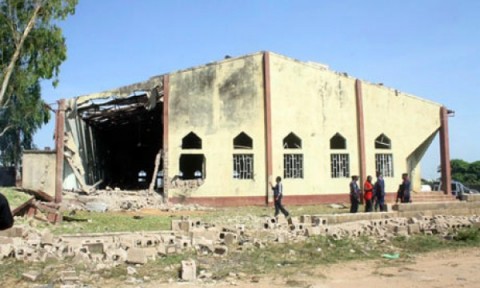
Elsewhere in the world …. According to NBC News: A suicide bomber drove a vehicle packed with explosives into a Catholic church in northern Nigeria on Sunday, killing at least five people, wounding nearly 100 and triggering reprisal attacks that killed at least two more, officials said. The bomber drove a jeep right inside the packed St Rita’s church, in the Malali area of Kaduna, a volatile ethnically and religiously mixed city, in the morning. “I cannot tell you how many casualties, but there were many. The heavy explosion also damaged so many buildings around the area,” said survivor Linus Lighthouse, saying he thought there had been two explosions in different parts of the church. Other witnesses and the police said there had just been one bomber however. A spokesman for the National Emergency Management Agency (NEMA) in Kaduna said that five people had been confirmed killed, while 98 people were receiving treatment for wounds at two local hospitals. There was no immediate claim of responsibility but Islamist sect Boko Haram has claimed similar attacks in the past and has attacked several churches with bombs and guns since it intensified its campaign against Christians in the past year. One wall of the church was blasted open and scorched black, with debris lying around. Police later moved in and cordoned the area off. Shortly after the blast, angry Christian youths took to the streets armed with sticks and knives. A Reuters reporter saw two bodies on the roadside lying in pools of blood. “We killed them and we’ll do more,” shouted a youth, with blood on his shirt, before police chased him and his cohorts away. Police set up roadblocks and patrols across town in an effort to prevent the violence spreading. Another witness, Daniel Kazah, a member of the Catholic cadets in the church, said he had seen three bodies on the bloodied church floor after the bomb. “But still others were taken to the mortuary,” he said. An emergency worker on the scene, who had helped move casualties but was not authorized to give his name, estimated the total number of dead and wounded at around 30.
If he keeps on fueling the violence in our neighborhoods instead of trying to mend old wounds or right his wrongs… then lock him back up: “With the 17-year-old rapper listening, Cook County prosecutors outlined why they think the Interscope Records artist should be returned to juvenile detention. The rapper, whose real name is Keith Cozart, is serving 18 months of probation for pointing a gun at a Chicago cop. He was also found delinquent on two other felonies. Prosecutors argued he violated the probation by having a gun in a video posted online. They pointed to a recorded media interview the rapper did in June at a gun range in New York, where he can be seen with a gun. That’s a probation violation, prosecutors argued, because his probation bans him from having any guns or illegal drugs or associating with gang members.” F*ck A Thug… Suntimes youtube