Tag Archives: Water

Cleaner Water Helps Corals Combat Climate Change (Duh.)

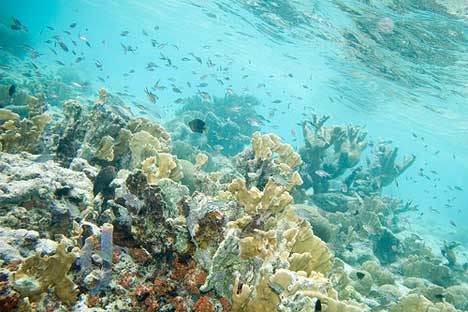
Photo via Paul and Jill Intuitively, everyone already knows this, but a new study has confirmed that seawater free from pollution helps corals survive the impacts of climate change. Coral reef ecologist Robert van Woesik from the Florida Institute of Technology and his team demonstrated that as the waters around the Florida Keys warmed, the corals living in cleaner water continued to thrive while those in more polluted water suffered. Their findings provide evidence that policies around wastewater discharge and water pollution can help corals surviv… Read the full story on TreeHugger

Original post:
Cleaner Water Helps Corals Combat Climate Change (Duh.)

Senator Burr Pulled Out of Gulf Covered in Oil

Republican Sen. Richard Burr is the target of a new TV ad campaign that ties him to the oil industry and the Gulf of Mexico spill. A coalition of four environmental, labor and veterans groups began airing an ad today showing an oil-covered man – identified as Burr – being pulled out of the ocean like a sea bird. The man in the suit is shown being cleaned in a rescue operation, reports Rob Christensen. “We pulled one out of the water this morning completely covered in oil,” says a man. “The name is Senator Richard Burr.” added by: punman

Gulf oil spill threatens world’s largest fish

Whale sharks, the biggest fish in the sea, may be the latest victims of the massive Gulf of Mexico oil spill. Officials at the National Oceanic and Atmospheric Administration reported this week that four of the polka-dotted creatures, stretching about 40 feet long, had been spotted swimming alongside oil in search of food. Since whale sharks are filter feeders — scooping up plankton and small fish with their gaping mouths as they swim just beneath the surface — scientists are concerned they will swallow large amounts of toxic oil and die. “The problem is that these are surface feeding animals and if they digest the oil they will sink and we will not know how many are dying,” said Dr. Eric Hoffmayer, who has studied whales in the northern Gulf for the University of Southern Mississippi. “I don't think there is any question we're going to lose whale sharks to this oil spill. That's why we need to tag these sharks so that we can determine how they are impacted by the oil,” Hoffmayer told Reuters. Hoffmayer spent three days on the Gulf where he and other researchers discovered an extraordinary gathering of more than 100 feeding whale sharks about 90 miles south of Grand Isle, La. The site where they were feeding was about 60 miles west of BP Plc's blown-out Macondo well off the Louisiana coast and the gathering of whale sharks was among the largest seen in the northern Gulf of Mexico, Hoffmayer said. In addition to the danger inherent in swallowing oil, it could cause untold harm to the giant but vulnerable fish when they force the water they feed on, after it is sucked into their mouths, to filter out through their gills. Hoffmayer and a team of marine scientists came up with a plan Thursday to tag the sharks so they can track their movements and hopefully find out if oil is being digested. One of the big problems, he said, is that there is no known way of steering the whale sharks away from oil contaminated areas of the Gulf. Marine scientists in Mississippi are hoping to save other species from the oil, which breached Mississippi's mainland this week for the first time. http://www.canada.com/technology/environment/Gulf spill threatens world largest fish/3236621/story.html http://www.canada.com/technology/environment/3236622.bin?size=620×400 added by: julesrs007

Danger of Tsunamis From Trapped Gigantic Methane Bubble In The Gulf Of Mexico.

A new and less well known asymmetric threat has surfaced in the Gulf of Mexico oil gusher. Methane or CH4 gas is being released in vast quantities in the Gulf waters. Seismic data shows huge pools of methane gas at the location immediately below and around the damaged “Macondo” oil well. Methane is a colorless, odorless and highly flammable substance which forms a major component in natural gas. This is the same gas that blew the top off Deep water Horizon and killed 11 people. The “flow team” of the US Geological Survey estimates that 2,900 cubic feet of natural gas, which primarily contains methane, is being released into the Gulf waters with every barrel of oil. The constant flow of over 50,000 barrels of crude oil places the total daily amount of natural gas at over 145 million cubic feet. So far, over 8 billion cubic feet may have been released, making it one of the most vigorous methane eruptions in modern human history. If the estimates of 100,000 barrels a day — that have emerged from a BP internal document — are true, then the estimates for methane gas release might have to be doubled. Methane and Poison Gas Bubble The US Environmental Protection Agency (EPA) has found high concentrations of gases in the Gulf of Mexico area. The escape of other poisonous gases associated with an underground methane bubble — such as hydrogen sulfide, benzene and methylene chloride — have also been found. Recently, the EPA measured hydrogen sulfide at more than 1,000 parts per billion (ppb) — well above the normal 5 to 10 ppb. Some benzene levels were measured near the Gulf of Mexico in the range of 3,000 to 4,000 ppb — up from the normal 0 to 4 ppb. Benzene gas is water soluble and is a carcinogen at levels of 1,000 ppb according to the EPA. Upon using a GPS and depth finder system, experts have discovered a large gas bubble, 15 to 20 miles wide and tens of feet high, under the ocean floor. These bubbles are common. Some even believe that the rapid release of similar bubbles may have caused the sinking of ships and planes in the Bermuda Triangle. 50,000 to 100,000 PSI The intractable problem is that this methane, located deep in the bowels of the earth, is under tremendous pressure. Experts agree that the pressure that blows the oil into the Gulf waters is estimated to be between 30,000 and 70,000 pounds per square inch (psi). Some speculate that the pressure of the methane at the base of the well head, deep under the ocean floor, may be as high as 100,000 psi — far too much for current technology to contain. The shutoff valves and safety measures were only built for thousands of psi at best. There is no known device to cap a well with such an ultra high pressure. Oxygen Depletion The crude oil from the “Macondo” well, which is damaging the Gulf of Mexico, contains around 40 percent methane, compared with about 5 percent found in typical oil deposits. Scientists warn that gases such as methane, hydrogen sulfide and benzene, along with oil, are now depleting the oxygen in the water and are beginning to suffocate marine life creating vast “dead zones”. As small microbes living in the sea feed on oil and natural gas, they consume large amounts of oxygen which they require in order to digest food, ie, convert it into energy. There is an environmental ripple effect: when oxygen levels decrease, the breakdown of oil can't advance any further. Fissures or Cracks According to geologists, the first signs that the methane may burst its way through the bottom of the ocean would be manifest via fissures or cracks appearing on the ocean floor near the path of least resistance, ie, the damaged well head. Evidence of fissures opening up on the seabed have been captured by the robotic midget submarines working to repair and contain the ruptured well. Smaller, independent plumes have also appeared outside the nearby radius of the bore hole. When reviewing video tapes of the live BP feeds, one can see in the tapes of mid-June that there is oil spewing up from visible fissions. Geologists are pointing to new fissures and cracks that are appearing on the ocean floor. Fault Areas The stretching and compression of the earth's crust causes minor cracking, called faults, and the bottom of the Gulf of Mexico has many such fault areas. Fault areas run along the Gulf of Mexico and well inland in Mexico, South and East Texas, Louisiana, Mississippi, Alabama and the extreme western Florida Panhandle. The close coupling of new fissures and cracks with natural fault areas could prove to be lethal. Bubble Eruption A methane bubble this large — if able to escape from under the ocean floor through fissures, cracks and fault areas — is likely to cause a gas explosion. With the emerging evidence of fissures, the tacit fear now is this: the methane bubble may rupture the seabed and may then erupt with an explosion within the Gulf of Mexico waters. The bubble is likely to explode upwards propelled by more than 50,000 psi of pressure, bursting through the cracks and fissures of the sea floor, fracturing and rupturing miles of ocean bottom with a single extreme explosion. Cascading Catastrophe Scenarios 1. Loss of Buoyancy Huge methane gas bubbles under a ship can cause a sudden buoyancy loss. This causes a ship to tilt adversely or worse. Every ship, drilling rig and structure within a ten mile radius of the escaping methane bubble would have to deal with a rapid change in buoyancy, causing many oil structures in its vicinity to become unstable and ships to sink. The lives of all the workers, engineers, coast guard personnel and marine biologists — measuring and mitigating the oil plumes' advance and assisting with the clean up — could be in some danger. Therefore, advanced safety measures should be put in place. 2. First Tsunami with Toxic Cloud If the toxic gas bubble explodes, it might simultaneously set off a tsunami traveling at a high speed of hundreds of miles per hour. Florida might be most exposed to the fury of a tsunami wave. The entire Gulf coastline would be vulnerable, if the tsunami is manifest. Texas, Louisiana, Mississippi, Alabama and southern region of Georgia might experience the effects of the tsunami according to some sources. 3. Second Tsunami via Vaporization After several billion barrels of oil and billions of cubic feet of gas have been released, the massive cavity beneath the ocean floor will begin to normalize, allowing freezing water to be forced naturally into the huge cavity where the oil and gas once were. The temperature in that cavity can be extremely hot at around 150 degrees Celsius or more. The incoming water will be vaporized and turned into steam, creating an enormous force, which could actually lift the Gulf floor. According to computer models, a second massive tsunami wave might occur. added by: keithponder

Tibetan Environmentalist Jailed for Five Years

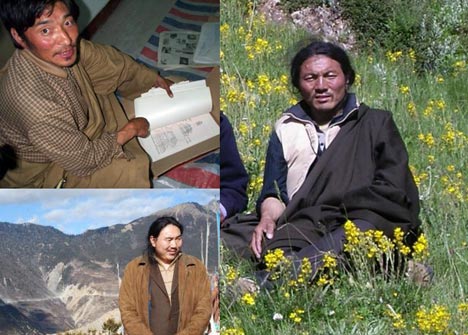
Brothers Rinchen Samdrup, Jigme Namgyal, and Karma Samdrup (clockwise from top left) are now all in jail. Photos via the International Campaign for Tibet Picking up trash and planting trees sounds about as uncontroversial as activism can get, but an internationally recognized Tibetan environmentalist who had been organizing local villagers to do just tha… Read the full story on TreeHugger

Continue reading here:
Tibetan Environmentalist Jailed for Five Years

WOW Gets Real – 3D Role Playing Game Models Water Crisis (Video)

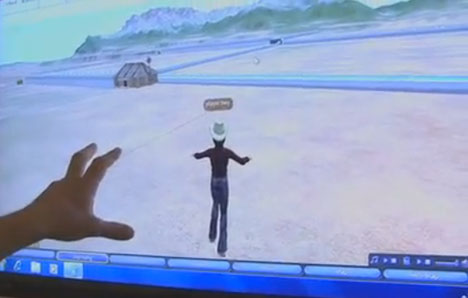
Image via Intel Video Water Wars uses a gaming platform to conduct a study on how people respond to water shortages. Intel Labs developers have ventured into combining 3D gaming with scientific research. In Water Wars, they’ve modeled an area of the Rio Grande in New Mexico and have created a role playing game that allows residents of that area to participate in different water scenarios. As the game creates new situations and water problems, the residents respond. Those responses tell us a little bit about what we can expect to see socially as the water crisis in the US and worldwide grows. … Read the full story on TreeHugger

Read more:
WOW Gets Real – 3D Role Playing Game Models Water Crisis (Video)

‘The Last Airbender’: An Inside Look At Five Cool Powers And Weapons

Visual-effects supervisor and set decorator lead MTV News through the film’s biggest spectacles. By Eric Ditzian Shaun Toub in “The Last Airbender” Photo: Paramount Pictures Last summer, MTV News took a trip inside M. Night Shyamalan’s mad-scientist brain when we visited the Philadelphia set of “The Last Airbender.” The hyperkinetic director was in the midst of bringing “Airbender” out from the animated small screen and into real life, and the results were big, big, big — sets twice the size of football fields, massive green screens, hundreds of extras in elaborate costumes and a production budget two and a half times the size of any of his other movies. “I’m scared to death,” he admitted back then. Yet, at the same time, Shyamalan knew exactly what he was doing. Now the results of that focused anxiety have arrived in theaters. Set in an imaginary world in which various tribes can control the elements of the planet, the film follows the century-long war that the Fire nation has been waging against other nations until a young boy named Aang (Noah Ringer) discovers he is the only person capable of controlling all four elements and bringing about peace. As the tribes go at one another, the audience gets to sit back and take in all manner of badass weaponry and cool, CGI-assisted powers. Visual-effects supervisor Pablo Helman (“War of the Worlds”) and set decorator Larry Dias (“Transformers”) walked MTV News through the creation of these various features to give us the inside scoop about five cool weapons and powers. Manipulating Fire The Fire nation is one committed to ceaseless warfare. Their weapon of choice, obviously, is all manner of wicked flames — flung in various ways at the enemy to cause maximum damage. It’s fantastical stuff, no doubt, but Shyamalan wanted that computer-generated power to be grounded in reality. Helman’s source of inspiration? The annual Burning Man festival in Nevada. “Night wanted something that no one had seen before,” Helman said. “And he wanted the fire to look different every time it was used. At Burning Man, they’ve got a bonfire there, and they put a bunch of fans around it so the fire looks like a tornado fire. That was the main inspiration. We showed it to Night and said it’s a cool look, and he loved it.” Manipulating Water The Water nation, meanwhile, is a more peaceful tribe — until they’re challenged by the Fire folks and have to fight back. Their ability is controlling water and using it every conceivable way to eliminate the aggressor. Helman looked to the U.S. space agency to come up with something that would work for computer animation. “We looked at NASA footage. They did some experiments with liquid water in zero gravity,” Helman said. “If you look at the water in zero gravity, it behaves in a specific way. It stays together, it forms balls, and there’s all this interesting stuff that happens inside the balls of water. That’s what we showed Night, and he loved it. So we had to come up with a piece of software that allowed us to manipulate water in the same way.” Fire Balls The Fire nation doesn’t just hurl fire. They also build huge, spiky metal spheres that they launch from their warships. Think of them like the scariest, flame-assisted catapults you’ve ever seen. “The Fire nation is the only one of the nations that has industrialized, and we needed to create something that would work for them,” Dias explained. “So for the military ships, we manufactured these giant orbs — basically a metal framework that would have fire put in digitally. They have huge spikes, they’re flaming, they’re intense. They inflict a lot of damage.” Zuko’s Double Swords “Airbender” features a slew of weapons, from Aang’s powerful staff to the various swords of the warring tribes. But ask star Dev Patel what his favorite weapon in the movie is, and of course he’s going to choose one that his character — the Fire nation’s Prince Zuko — gets to wield in a seriously badass fashion. Too bad Patel himself didn’t actually get to swing those double swords. “I actually didn’t use the two broad swords,” Patel told MTV News. “Most of the other action I did. With two big, sharp swords in my hand, they had an amazing stunt guy called Stephen Oyoung, and he is brilliant with these two swords. He deserves lots of credit.” Fire Braziers Here’s the thing about the Fire nation: While they maintain a mighty army capable of manipulating fire, they can’t create enough fire themselves to rein terror on their enemies. Instead, they have to cart around huge fire carriers that give them the raw material. “We built these big fire baskets called braziers that are really ornate,” Dias said. “We built them in different sizes. They have these poles that are decorated with spearheads, and four soldiers carry them. The Fire nation can’t go to war without them.” Check out everything we’ve got on “The Last Airbender.” For breaking news and previews of the latest comic book movies — updated around the clock — visit SplashPage.MTV.com . Related Videos MTV Rough Cut: ‘The Last Airbender’ ‘The Last Airbender’ Clips Related Photos The Powers & Creatures Of ‘The Last Airbender’ ‘The Last Airbender’

Read this article:
‘The Last Airbender’: An Inside Look At Five Cool Powers And Weapons

Report: Forests Key to the Future of Clean Water

Photo via Chi King A new report by the US Forest Service shows that forests play a vital role in protecting watersheds from the impacts of climate change. After two years of research, Water, Climate Change, and Forests: Watershed Stewardship for a Changing Climate shows that ecosystems that have healthy watersheds can sustain changes and keep ecosystems functioning, especially if they’re from forested areas. So, protecting forests means protecting future water supplies…. Read the full story on TreeHugger

See the rest here:
Report: Forests Key to the Future of Clean Water

Interactive Map Shows Worldwide Water and Energy Tug-o-War

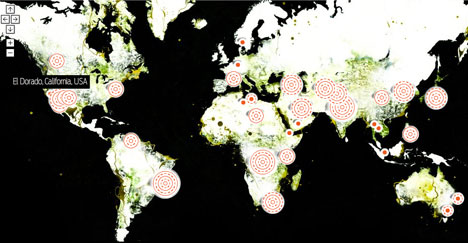
Image via IEEE The water crisis and energy crisis are not necessarily exclusive issues around the globe. The generation of electricity is hugely dependent upon water, which is a quickly disappearing resource. Power plants heavily rely on water to create the power we consume, and the power we also use to create more clean drinking water. So, often the crunch for water and energy come into conflict. With a new interactive map, IEEE has highlighted areas across the globe where water and energy are posing problems, and high… Read the full story on TreeHugger

See the article here:
Interactive Map Shows Worldwide Water and Energy Tug-o-War

What questions would you like to see Supreme Court nominee Elena Kagan answer?

Today is the second day of Senate confirmation hearings for Obama's second Supreme Court nominee, Elena Kagan. With the 2010 elections approaching, plenty of Senators are expected to use this as an opportunity to do a little campaigning before a national audience. But outside of partisan positioning – what questions would you like to see her answer? What are the biggest questions facing out Supreme Court these days? http://www.nytimes.com/2010/06/30/us/30kagan.html added by: afitzgerald