I am totally uninterested in Kate Upton…she’s got fat tits..but she’s also got a fat chick body…that’s just not fat yet…and I like to avoid issues before they happen…like quitting smoking before my lungs get cancerous…and quitting drinking before my liver falls out…even though I never actually do quit anything, I am a weak man with no self control, and hating on her for being over hyped…doesn’t mean I wouldn’t eat her shit if she asked me to, and not to see how much cake she ate the night before but cuz I like her so much… What we can learn from this interview with cosmo is that she has a weird relationship with food and mentions it at least once as fat girls in training often do…. She doesn’t like pick up lines…but I bet that’s just bullshit and if you went up to her and say “Hey Girl, you like fried food, cuz I got a sausage in my pants that’s ready to be slid into a bun”…she’d jump on the opportunity and rush you to the nearest store o pick up some bread products in order to carb load… That she is a hooker who only leaves the house with her cell phone and 20 dollars cuz she expects the dude to pay for her…but I just say that’s convienent when kidnapping her…. Either way, she does have big tits…
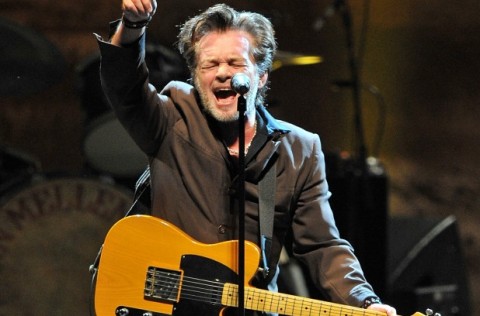
This is a little ditty about John Mellencamp’s vaguely annoyed reaction to Bradley Rust Gray’s Jack & Diane. If you were born after the 1980s, you might not know that Gray’s “werewolf-lesbian-psycho-drama,” as it has been described, takes its title from Mellencamp’s giganto-1982 number-one hit and little else. (The National Endowment for the Arts chose the tune as one of the “Songs of the Century,” as in 20th, in 2001.) Mellencamp’s song is about a teenaged boy and girl living the so-slow-it-hurts Midwestern life of sucking down chili dogs outside the Tastee Freeze. Gray’s movie is about, well, two lesbians, one of whom happens to be a werewolf. With the movie now on VOD, Mellencamp, whose nickname is “Little Bastard,” apparently has been fielding a lot of questions about how his song ended up as the title of a movie — both use an ampersand — that has nothing to do with said tune, and on Monday afternoon issued an irritated sounding statement via his spokesman Bob Merlis. “You don’t hear my song in the film, and I played no part in suggesting or offering this title. It’s most apparent that the lead characters were named with the hope that the familiar title might resonate in some people’s minds,” Mellencamp said in the statement. “I guess that’s OK to do, strictly from a legal perspective, but riding on someone else’s coattails and having a moral compass is left up to each individual.” Merlis explained that Mellencamp “is not making a value judgment on the film. I don’t believe he’s even seen it,” he said. “He’s just wondering why this particular combination of names was chosen, with an ampersand joining them, for the title. It does hearken back to his song. Follow Frank DiGiacomo on Twitter. Follow Movieline on Twitter.
It’s been a frustrating four years for Joe Dante , whose latest feature, the kid horror flick The Hole , has endured a rough road to release since filming in 2008. The effective and spooky chiller, about two brothers (Chris Massoglia, Nathan Gamble) fighting the stuff of nightmares with their neighbor (Haley Bennett) after opening a mysterious void in their basement, was one of the first recent films to film in 3-D — but, as Dante recalled to Movieline, being at the forefront of filmed 3-D was ironically also what hurt The Hole ‘s distribution hopes. The Hole , an independent feature filmed in 3-D, found itself fighting for specialized screens with big studio fare and, as Dante tells it, “just got crowded out” of the marketplace. It opened domestically Friday in Los Angeles and Atlanta ahead of an October 2 DVD/Blu-ray/VOD/iTunes release , though the lack of a 3-D Blu-ray offering means most audiences won’t see it in its intended format. (A Region 2 3-D Blu-ray was released last year.) That’s a shame given that the critically-acclaimed PG-13 adventure marks a return to the milieu of youth horror for the iconic director of such classics as Gremlins , Explorers , The Twilight Zone , Innerspace , The ‘Burbs , and Matinee . Dante , who runs the fantastic Trailers from Hell and still, wonderfully, calls movies “pictures,” rang Movieline to discuss The Hole ‘s long road to release, his penchant for kid horror, the Glee actor he had no idea he’d cast four years ago in the film, and where Eerie, Indiana / Matinee teen actor Omri Katz — one of many promising young talents given an early start by Dante — went off to when he retired from acting. How does it feel to have The Hole finally come out, years after filming it and after all you’ve been through getting it seen? I feel kind of like the people who made Cabin in the Woods — it’s great relief. You don’t paint a picture to put it up in the attic and have nobody see it. You certainly don’t make movies for that reason. You usually assume that somehow it’s going to escape. And this was very frustrating because of the fact that I talked them into shooting it in 3-D was ultimately its Achilles heel, because by the time we were ready to release it all the theaters we were planning to play in were filled with big box office pictures that had been converted from 2-D into 3-D and didn’t take the time and trouble to shoot it in 3-D like we did. They were all high profile stuff and we had this little horror film with no stars, and we just got crowded out — and we continued to get crowded out, and then we had trouble getting a distributor. It was very frustrating. And we’re talking The Hole being pushed out of 3-D screens by movies like Clash of the Titans , one of the all-time worst examples of 3-D filmmaking. Particularly then the converted 3-D stuff when they were just starting out was terrible. It was too dark, and it’s badly done — it’s not intended to be shown that way. When you make a 3-D movie you actually have to plan the way the visuals look because there’s a parallax issue and there’s an issue of editing, you can’t edit very quickly in 3-D because the eye won’t adjust fast enough for it. There are a whole lot of rules that you have to go by if you want to make a good 3-D movie and most of these movies were just made like normal movies. It just doesn’t work that way. Tell me about your 3-D approach. How did you conceive of using the format? The idea was that because it’s a movie about people’s fears, I wanted them to identify strongly with the characters, and because it’s a very small film with six or seven characters and five locations, one of which is a basement. I thought that it would be much better to do a 3-D thing that drags you into the movie and puts you into the hole so that you feel like these people’s fears are your fears. Even watching it in 2-D I was taken by a number of very interesting camera moves and compositions — you play a lot with depth within the span of single shots. I remember watching movies on TV that had been shot in 3-D and thinking, this is much more imaginative than normal movies. Add to that your sound design, which had me nervously looking around the shadows as I watched the film, and the essence of the film itself — there’s something quite elemental about darkness and one’s own childhood fears that had me spooked. It’s rare that films made these days for younger audiences are actually, viscerally scary. Look at how Walt Disney chose to make his animated cartoon stuff. All the moments in Bambi and Snow White and Pinocchio that are really memorable are the scary ones. It’s primal. It’s a primal thing. It comes from sitting around the fire in caveman days and hearing stories. In The Hole these fears are primal but also very contemporary, in that you don’t often see stories about children dealing with issues like abuse. Well, that was a little tricky but that was one of the things that appealed to me about the script. It didn’t go where the standard horror movies went. It was a little deeper and a little more personal. The tightrope we had to walk was to try to find a way to suggest things that might have happened without having to freak out little kids who might be seeing it. There’s a wonderful secondary world you create within the film with fantastic sets that really convey a child’s perspective — the fog of memory where rooms feel huge, you feel tiny, and adults seem to be seven feet tall… Have you ever gone back to a school that you used to attend as a kid, and everything seems like it’s gotten smaller? The desks don’t fit as well anymore! And the halls are not as wide. The ceiling is lower. It’s really weird! This project came to you with a script already written. Had you been actively looking for films to direct? I’m always looking for films, but the horror scripts that I get tend to be very repetitive and often not that interesting. This one just stuck out because I liked the characters and I liked the setup, even though it was kind of familiar because I’d seen it in other movies, but it didn’t go where I thought it was going to go. That’s what piqued my interest. You have a great history of creating vivid film worlds for children, populated by children. Why do you think that is? I think it’s probably because I’m just a big kid myself. I don’t have any of my own, and I like actors in general but I find kid actors particularly fun to work with because they come with no preset conditions. They don’t give you acting tips. They just “be.” How did you find your cast? Haley Bennett in particular is tremendous here. She’s wonderful. That’s another reason I’m so sorry that this picture didn’t come out, because the kids didn’t get the benefit of the work they did. She’s great, she’s got a big future. Chris Massoglia had been in a picture called The Vampire’s Assistant , which I never saw because I was trying to get the producers to let me look at it before I hired him and they were so protective of their movie they never let me see anything. So I hired him because I thought he was the best kid for the part. And as far as Nathan [Gamble], he had been in the Batman movie and he was in The Mist , but it was really his own personality and presence that struck me. When I started to work with him, he really was the best child actor I’d worked with since Ethan Hawke. He’s got an innate ability to be natural and respond realistically to anything that you’d throw at him. He’s a 40-year-old in a 12-year-old body! Speaking of the great child actors you’ve worked with, Explorers was a fantastic showcase for its cast but you also worked a few times with a kid named Omri Katz. When I was growing up, I – Had a crush on him? Maybe. Maybe I had a crush on him. Well let me tell you something: Omri got out of the business and he came to visit me a couple years ago, and he is now the most striking-looking and handsome guy. I think he became a ski instructor. I said, “You should be acting!” But I haven’t heard from him since. So I can’t set you up on any dates, sorry! Let’s see if we can work something out, Joe. And by the way, it looks like in The Hole you cast Chord Overstreet from Glee before he became Glee -famous. What? Oh my god, yes, I remember him. I didn’t realize that! They blond guy who gets thrown in the pool? Well see, you told me something about my movie that I didn’t know. It’s a testament to your knack for discovering new talent. I’m still finding them! Follow Jen Yamato on Twitter . Follow Movieline on Twitter .
No more excuses for being chubby lumpkins! EBT is gonna help y’all get bangin’ bawwwwdies courtesy of Jeanette Jenkins , Queen Latifah’s former boo! According to AllHipHop reports : Hollywood’s most sought after celebrity trainer, Jeanette Jenkins, has secured her very own show on BET. The nationally syndicated show is currently in pre-production, and will feature Jenkins whipping everyday people into shape and giving them a complete makeover from top to bottom. “You’re going to see the whole transformation in one show,” Jeanette Jenkins said during her visit to the AllHipHop offices. “Ordinary people out there are going to have an opportunity to train with the Hollywood trainer and will get the opportunity to get treated like stars.” Known as the “Hollywood Trainer” because of her work with numerous A-list celebrities, including Alicia Keys and Swizz Beatz, Kimora Lee Simmons, Serena Williams, Queen Latifah, Kelly Rowland, Paula Patton, Robin Thicke, Terrence J, and many others, Jenkins plans to incorporate her celebrity clients into her new show. “I’m going to have a few celebrity drop-ins every once in a while, but this show is really about the people. Showing them how they can change their lives with just what they have in their own homes and in their own environment,” said Jenkins. Jenkins has teamed up with Akil productions, the same team that is responsible for creating popular shows, “The Game” and “Girlfriends”. Several contestants for the show will be chosen via Jenkins’ Twitter page (@jeanettejenkins).* The untitled show is currently in pre-production and will be coming to BET soon. Sounds like a good look for both Jeanette and Mara and Salim Akil! Congratulations guys. Will you be watching? Even more importantly, do you think Jeanette’s show can inspire y’all to get off the couch and avoid obesity, heart disease and diabetes? Check out some of her pics with famous friends below: Twitter
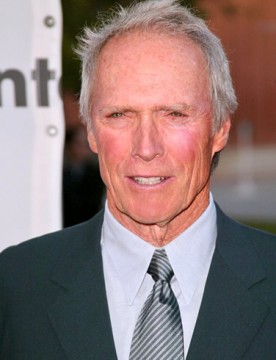
Also in Friday morning’s round-up of news briefs, Jesse Eisenberg has tapped Vanessa Redgrave for an Off-Broadway play. A judge has ruled on a request to close Innocence of Muslims video. And a look at the Specialty offerings coming out this weekend. Clint Eastwood Owns The Chair Thing at Premiere The 82 year-old Oscar winner has taken some heat for his empty chair speech at the Republican National Convention, but at his premier for Trouble With the Curve he chatted with a press contingent that – somehow – noticed there were 16 empty chairs nearby – “Oh my god yes,” he said with a laugh. He added that he worked with people on the film that fall across the political spectrum, but his latest is not a political film. And he will continue to stomp for Romney, A.P. reports . John Travolta Eyes Vince Lombardi Biopic At the Zurich Film Festival, Travolta said he’s considering a remake of the John Woo film, The Killer as well as starring in a biopic of legendary football star Vince Lombardi. The Killer remake will shoot in 3-D, Screen Daily reports . Jesse Eisenberg, Vanessa Redgrave Set for Off-Broadway in The Revisionist Redgrave will star along with Eisenberg in The Social Network ‘s Off-Broadway play that will be directed by Kip Fagan. The plot centers around Eisenberg’s character is a blocked sci-fi writer attempting to escape his problems in Poland. “A 75-year-old cousin played by Redgrave latches onto him as a means of connecting with her distant American family, gradually revealing details of their complex post-war past.” THR reports . Riots Continue as Judge Denies Actress’ Move to Shut Down Innocence of Muslims Western embassies closed in anticipation of Friday prayers as protesters fought police in Pakistan. The government there ran ads on television showing U.S. President Obama and Secretary of State Hillary Rodham Clinton condemning the video made by a U.S. resident that prompted the furor. A judge in California did not agree with an Innocence of Muslims actress that the film should be taken down, Deadline reports . Wallflower , Diana Vreeland , Head Games , How To Survive a Plague A run down of this weekend’s specialty openers, with a spotlight on some documentaries about a fashionista extraordinaire, sports risks and pioneers who faced down AIDS. Also check out a coming-of-age feature that has been all the rage on MTV (and it’s even good). Deadline reports .
Clint Eastwood is not the type of movie star to disappear into a role, especially not at this point in his career. He’s more icon than actor, and a grumpy, bristly icon at that. Tonewise, there’s not actually that much separating the improvised shtick Eastwood offered to the Republican National Convention in August and the scripted routine (by writer Randy Brown) he goes through at the start of Trouble With The Curve . On the small screen he addressed an empty chair. On the big one he talks to his penis, which is not cooperating with him in his morning micturition. In both cases, he’s gruffly displeased. Eastwood’s screen persona may have calcified over the years, but it’s still enjoyably familiar to take in, and Trouble With The Curve , the directorial debut of Eastwood’s go-to producer Robert Lorenz, is constructed around his immovable, surly-with-a-soft-center performance like a house built around a tree that’s been growing in the same spot for years. Trouble With The Curve is an ode to the old ways of doing things, both in terms of acting and baseball. Clint Eastwood plays Gus, a scout for the Braves and one of the last holdouts against the stats-based system represented by his obnoxious, ambitious coworker Phillip (Matthew Lillard). In terms of perspective, Trouble With The Curve is exactly the opposite of Moneyball. It lauds the types of things that Bennett Miller’s film dismissed as out-of-date sentimentality: scrutinizing a player’s hands when he swings, listening to the crack of his bat, and looking into his face to know if he’s got heart. Where Moneyball ‘s hero was the bright kid with the computer, Trouble With The Curve ‘s is the old man with the ingrained instincts; the family with baseball in its blood. The film basks in the analog side of putting together a team, in traveling on the road to high school games and listening to a hit. Gus is getting on in years and is in denial about the fact that his eyesight is going, but by the film’s judgement he’s still the best there is — even if he has to depend on his ears. Here, character is destiny, and so we know that Bo Gentry (Joe Massingill), the North Carolina up-and-comer Gus and the other scouts are all eager to evaluate as a potential first draft pick, is lacking before we ever see him play, because he’s an arrogant ass. Trouble With The Curve ‘s old-fashioned qualities and romanticism veer into hokiness, but , but the film gets a major charge from Amy Adams, who plays Gus’ daughter Mickey. In a spirited, nuanced performance, Adams subtly undermines the film’s tacit approval of its protagonist’s ways. A dedicated lawyer on track for partnership at her Atlanta firm, Mickey’s learned to hide in her work and to keep people at an emotional distance from her dad, who shipped her away to live with family when she was six and her mother passed away. Adams doesn’t play Mickey as brittle or snippy, which has become lazy actor shorthand for the workaholic females in movies. She’s guarded but warm, and keeps reaching out to her father via calls and dinners, despite his apparent indifference and unintentionally harsh words. We know that Gus loves his daughter, he just has trouble expressing it. When Mickey isn’t around, he has no trouble praising her in the presence of others. But over the course of the film, Mickey’s refusal to give up on her relationship with her father, despite being repeatedly rebuffed by him, starts looking more like strength than her remaining parent’s growling dedication to doing things the right way. The same qualities show up in Mickey’s tentative romance with new scout Johnny (Justin Timberlake, always welcome), a former pitcher scouted by Gus years ago who blew out his arm and now aims for an announcer job. He charms his way past her defenses, and she in turn acknowledges her tendency to keep people at a distance. Mickey demonstrates that being able to bend, to acknowledge your faults and work on them requires more courage than always standing your ground. Adams quietly steals the movie out from under her co-star, and she does it while steering clear of the stereotypical ruts that could have mired her performance in mediocrity. Adams and her unexpected approach to her scenes with Eastwood bring Trouble With The Curve to life and give it more animation than its formula would suggest. Despite this, the film loses a lot of that energy in a final act that makes Lillard’s character needlessly and foolishly villainous, and then wraps every element up in an overly neat happy ending. Even baseball is entitled to a few fairytale moments, but it’s a wrap-up than oversimplifies the more complex portrait of a father and daughter and their lifelong struggle to connect. Follow Alison Willmore on Twitter. Follow Movieline on Twitter.
It says something about how the LAPD tends to get portrayed in the movies that when Officers Brian Taylor (Jake Gyllenhaal) and Mike Zavala (Michael Peña) are introduced on screen at the beginning of the surprising cop drama End of Watch , it feels like it’s only a matter of time before they plant evidence on someone, steal drugs or money, beat or kill someone without warrant or let loose with something terribly racist. The film is, after, the latest from David Ayer, who wrote and directed Street Kings and scripted Training Day , two features that portrayed Los Angeles law enforcement as morally compromised at best and violently corrupt at worst. That sense of apprehension carries through an opening scene in which Taylor and Zavala shoot two suspects down in what appears to be legitimate self-defense. (They’re cleared of any wrongdoing and roll back onto the street on patrol.) The two cops are cocky and funny and young, and it still takes a good half hour to accept that they may be as forthright and dedicated to their jobs as they appear to be. End of Watch is a Millennial police drama. It’s a generation or two removed from Rodney King and the Rampart scandal, and Ayer manages to give a startling sense of a changing of the LAPD guard as well as the forces they’re up against. Its main characters are tough but not yet jaded cops who bicker with affectionate familiarity about race and make obligatory gay jokes that lack the sting of homophobia. The longstanding L.A. battle against gang violence is ongoing, but lurking behind it is a new and more frightening enemy: the Sinaloa Cartel, onto whose ominous dealings Taylor and Zavala stumble more times than is good for their health. The film’s found footage aesthetic also speaks to its refreshing next-gen spirit. Taylor and Zavala blithely record themselves on the job — even though fellow officer Orozco (America Ferrera) warns them their footage can be subpoenaed and used against them should something go wrong — for the night school film class that Taylor’s taking for a pre-law program arts requirement. Both he and his partner pin cameras to their uniforms and mount the camcorder on the front of their black and white (and we witness some stomach-churning car chases from that perspective). It’s a pretty standard police drama technique, but like Chronicle earlier this year, the conceit that most of what we’re seeing was filmed by the characters on screen is only a loose one, allowed to drop away when it might interfere. Mostly, the self-documentation is a way of letting us get to know the central pair, who sometimes offer asides or explanations to the camera and who don’t feel they have anything to hide. End of Watch is fond of Taylor and Zavala almost to a fault — a scene early on in which the latter puts his weapons aside to fistfight a belligerent gang member, earning his respect in the process, feels ridiculous even as it establishes the partners’ frat-boy delight in their work. Fortunately, the two characters are easily likable — Gyllenhaal looks more comfortable on screen than he has in years — whether they’re busting each other’s balls or discoursing on marriage. Zavala is married to his high-school sweetheart Gabby (Natalie Martinez) while Taylor is getting serious about Janet (Anna Kendrick). The film is shaped around the two cops rather than around much of a plot and offers a heightened slice of the contemporary lives of law-enforcement officers assigned to a rough area of the city. It’s a depiction that includes some stirringly tense encounters with a cracked-out mother unable to find her children, and an ex-con whose encounter with fellow cop Van Hauser (David Harbour) and his rookie partner goes gruesomely wrong. Taylor and Zavala aren’t the only ones with access to recording equipment. One of the film’s most interesting aspects is that it also includes the self-documentation of the Curbside Gang, who are run by Big Evil (Maurice Compte) and kept in line by the swaggering female thug La La (Yahira Garcia). Everyone’s the star of their own movie, particularly when they’re holding the cameras, and End of Watch depicts a gang-on-gang drive-by from both sides: While the primarily black Bloods barbecue and commiserate about getting driven out of their neighborhood by the growing Mexican community, the Latino Curbsiders roll up and open fire on them. It’s only the cartel point of view that goes unrepresented, and its appearances provide End of Watch with its most memorably haunting yet bothersome scenes: stacked body parts in a darkened house, jewel-encrusted handguns, people locked away behind chicken wire like animals. When we see the cartel handiwork through Taylor and Zavala’s eyes, it looks demonic, apocalyptic and incomprehensible compared to the street skirmishes that they’re used to tamping down. And though the real-life cartels have shown themselves to be capable of all this and worse, the near-supernatural way in which they’re depicted in End of Watch doesn’t mesh with the film’s otherwise matter-of-fact sensibility and its warts-and-all adoration of the cops it portrays. Unlike the gang members, addicts and vicious ex-cons, who are all shown to be vividly human, the cartels are left to be symbolic — a metaphor for dread of terrible things coming that even the most devoted enforces of order won’t be able to handle. Follow Alison Willmore on Twitter Follow Movieline on Twitter.
The Jake Gyllenhaal and Michael Peña starrer End Of Watch appears to have hooked audiences at the Toronto International Film Festival , where the police drama premiered. The fast-paced story of two LAPD officers who form a powerful bond as they patrol the mean streets of South Central Los Angeles required both actors to go through months of training and “ride-alongs” with L.A. and Inglewood police officers; the movie itself unfolds a liberal dose of gun fire, fights and some gruesome scenes. But on one patrol in the lead-up to the shoot, Jake Gyllenhaal experienced a true-life horror — a murder. “On my first ride-along, someone was murdered in front of me,” said Gyllenhaal in Toronto. “There was another officer initially on the scene. It was a drug [shoot-out] between gang members. I was probably the safest you can be. And yet I was at the forefront of the danger. There were moments on these ride-alongs when I was afraid. I was amazed with how LAPD took care of us. When there are two actors in the back of the car, you’re an added responsibility and Michael [Peña] and I were very aware of it.” Gyllenhaal plays Officer Brian Taylor, who patrols the gang-infested streets with Officer Mike Zavala (Peña) in the Open Road film, which bows in theaters nationwide September 21st. Directed by David Ayer ( Harsh Times , Street Kings ), who grew up in L.A.’s long troubled South Central neighborhood, the action unfolds on screen through footage of handheld cameras shot from the P.O.V. of hand-held cameras by police officers, gang members, surveillance cameras, dish cams and citizen-caught images in the line of fire. While there are moments peppered throughout the feature showing moments of levity between the two officers that prompted outbursts of laughter in the Toronto audience, the scenes quickly turn to present a mosaic of dark violent streets, human trafficking, gang confrontation and a barrage of shoot-outs. “For me, this movie was a journey,” said Gyllenhaal who also has an executive producer credit on the film. ” I spent five months preparing for this part. I went on ride-alongs with LAPD two or three times a week and was doing tactical training two times per week, and live ammunition training, as well as fight training, every morning. Everything was an internal journey for me. I don’t pay much attention to the external world… It was about that internal ride for me. I have consequently made some of the closest relationships I’ve had in my life so far. It’s safe to say they’re some of my closest friends at the moment.” The building chemistry between Gyllenhaal and Peña’s characters is central to the film. There were quiet whispers among some in Toronto who said that the two had difficulty in their relationship during the long process building up to the film, but Gyllenhaal said that their bond was something he made an effort to build and is happy that their chemistry is visible on screen. “I’m most proud of the relationship between me and Michael. That took the most time to build,” said Gyllenhaal. “Right now in my life, my focus is my work. It’s what matters to me more than anything. The results of that are what the results are. This movie was a different approach to making a movie than I’ve ever experienced.” Along with the ride-alongs with police officers, the two trained together in fighting and with live ammunition. Gyllenhaal admitted that went it came to fights, Peña had the leg up. “Every morning Michael and I would go to this dojo in [L.A. neighborhood] Echo Park and fight these kids. They were between 14 and 20 and they’d beat the crap out of me. Michael is a much better fighter than I am,” he admitted. Stay tuned for more on End of Watch and read all of Movieline’s coverage of the Toronto Film Festival . Follow Brian Brooks on Twitter . Follow Movieline on Twitter .