Category Archives: Sports

Time for African Glory

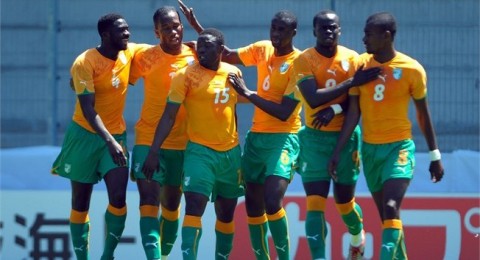
With Pele’s prediction that an African team would win the FIFA World Cup™ by the end of the last century having proved wide off the mark, Africans are desperate for the continent’ first finals to witness a meaningful achievement. Many see a semi-final place for one of the African contenders at South Africa 2010 as an absolute must, especially with the backing of a football-mad people that are sure to support their home side first and any other African nation second. Considering that Cameroon at Italy 1990 and Senegal at Korea/Japan 2002 are the only African sides to reach the quarter-finals of the world’s showpiece football event and that no FIFA World Cup has ever had more than one African side in the knockout rounds, it seems a tall order. And while there is no doubt that the continent has continued to produce some of the world’s best players, the inconsistency of its national teams has left many scratching their heads. However, typical of Africa, optimism somehow triumphs in the face of any odds, and many legendary figures, past and present, have gone on the record predicting success. For current players, the idea of lifting the spirits of the continent’s people to the level of ecstasy is the ultimate. “My team-mates and I want to make history and want to change the way the world sees African football. I hope that we’ll be the team that is going to go to the Final and win the competition,” said injury-worry Didier Drogba, who may miss the tournament with a broken arm, but who captains what many consider to be the most talent-laden side on the continent. Ghana legend Abedi Pele has also been in bullish form, hinting that there is a good chance for ultimate glory in the Final on 11 July. He is, however, also careful to insist that, at such a difficult event, in which the draw was not particularly kind to the African hopefuls, performance may matter more ultimately than advancement. “It’s going to be a very tough tournament for the African teams,” Pele, who has two sons – Andre and Rahim Ayew – on the current Ghana team, admitted to FIFA.com. “They have tough groups and it’s not going to be easy for them to get out. There is a theory that says this is the best time for an African team to win the tournament – maybe that is true. We will have to wait and see, but whatever happens, I think our teams will do us proud.” Pele no doubt has in his mind the success of his home country at the end of last year in the FIFA U-20 World Cup, when they broke through to become the first African winner of the competition. Many of those impressive youngsters have worked their way into the Black Stars side and shown at the CAF Africa Cup of Nations earlier this year in Angola. Another team on the up are South Africa, who have not lost in 12 matches, and are hitting peak form at just the right time under veteran boss Carlos Alberto Parreira. And the hosts of the FIFA World Cup typically get a huge boost from their home crowd, which will surely be the case for Bafana Bafana. South African great Lucas Radebe sees potential for the hosts to reach the semi-finals, but he also stressed that how far the African teams advance is not the ultimate measure of success. “This World Cup is not only about football, it’s about Africa reinventing itself,” said the former Leeds defender. “Of course we want success on the field, but at the same time, we would like to see this event a success off the field. We want the world to trust Africa, we want everyone to know that we are capable of organising these events. After July 12, everyone should be proud of being an African.” For the first time, Africa has six teams at the finals, and two of the continent’s sleeping giants will be there desperate to make an impact. This will be Cameroon’s sixth FIFA World Cup, but the Samuel Eto’o-led side have failed to make a significant impact since 1990. Nigeria are playing in their fourth finals, but they have also disappointed since reaching the second round at both USA 1994 and France 1998. However, some shaky friendly results and an injury to central midfield lynchpin John Obi Mikel has hurt the Super Eagles, while the Lions of Cameroon have also been inconsistent in their warm-up matches. Algeria are considered the biggest outsiders of the bunch, but the Desert Foxes proved themselves wily and cool customers in qualifying and at the last CAF Africa Cup of Nations, where they finished fourth. For all of the African teams, the difficulty of the groups are such that none can be considered favourites to advance, but the potential would seem to be there for almost all of them to find form and embark on a creditable run. “We are in a different and better position than previous tournaments, and I think we are better prepared,” Kalusha Bwalya said recently. “We have the confidence and experience, and I believe our teams now believe they can achieve success at this level.” #
More:
Time for African Glory
World Cup Murals

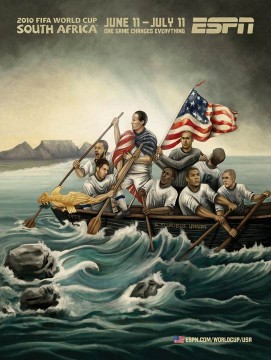
ESPN’s advertising campaign for the 2010 FIFA World Cup is a celebration of the World Cup and the host country, South Africa. These promotional efforts include 33 original pieces of artwork — one for each participating country and one general World Cup piece. The look of each work was inspired by hand-painted African signage and movie posters. This hand-painted style can be found in the streets and townships across South Africa and the entire African continent. The paintings, created at AM I Collective Studios in Cape Town, South Africa, tell the story of each team’s plight or essence as it enters the country for the World Cup. Click here to view the entire gallery of 33 murals.

See the rest here:
World Cup Murals

Nelson Mandela will attend FIFA World Cup opening ceremonies in South Africa

As was announced today by his family, South Africa’s Former President Nelson Mandela is scheduled to attend the opening ceremonies of the World Cup this week. This means the world event has now become an even bigger one with the promise of an appearance of this great man who worked long and hard for his country’s unification, winning the Nobel Peace Prize for his efforts. The World Cup symbolizes that courage, and so to have this global leader show up to start the event will mean, well, the world to the millions who admire Mandela. Although the Nelson Mandela Foundation said the great man will be appeared, this has been confirmed by Nkosi Zwelivelile Mandela today who told the press: “He will come and greet the fans… before he retires to his home. We’re trying to see how long he will stay at the stadium. At least 10 to 15 minutes.’ Since this South African icon is now 91, and since his appearances are not very frequent, all fans of football (both soccer and American) and all fans of civil rights should be sure to put their focus on Nelson Mandela as he greets the world at the opening ceremonies of this world-class event. Hopefully, the whole experience will mean a big boost to South African tourism as we start to watch the FIFA World Cup beginning Friday in Soccer City.

Continue reading here:
Nelson Mandela will attend FIFA World Cup opening ceremonies in South Africa

Vuvuzela: SA football’s beautiful noise

What’s plastic, a metre long, brightly coloured and sounds like an elephant? It’s the vuvuzela, the noise-making trumpet of South African football fans, and it’s come to symbolise the sport in the country. It’s an instrument, but not always a musical one. Describing the atmosphere in a stadium packed with thousands of fans blowing their vuvuzelas is difficult. Up close it’s an elephant, sure, but en masse the sound is more like a massive swarm of very angry bees. And when there’s action near the goal mouth, those bees go really crazy. To get that sound out requires lip flexibility and lung strength – in short, a fair amount of technique. So be sure to get in some practice before attending a South African football match, or you the sound you produce may cause some amusement in the seats around you! Vuvuzela supplier Boogieblast offers this advice: “Put your lips inside the mouthpiece and almost make a ‘farting’ sound. Relax your cheeks and let your lips vibrate inside the mouthpiece. As soon as you get that trumpeting sound, blow harder until you reach a ridiculously loud ‘boogying blast’. Read here

View post:
Vuvuzela: SA football’s beautiful noise

Soccer fever grips Parliament

Football fever seized MPs on Thursday at a joint sitting of Parliament’s two houses to debate the 2010 Soccer World Cup . “Honourable members, please, there should be no vuvuzelas in the House!” Speaker Max Sisulu admonished members in the National Assembly, after his call for them to come to order was greeted with a horn blast. This provoked much laughter among MPs, all of whom were in a festive mood, wearing Bafana shirts under their jackets. Many had donned football hats and scarves, while one NCOP member sported an Afro-style brightly-coloured wig. DA parliamentary leader Athol Trollip had mounted a small Zakumi mascot doll on his bench alongside a miniature soccer ball. Across the floor, Deputy President Kgalema Motlanthe sat with a scarf in the colours of the South African flag around his neck. Opening the debate, ANC MP and chairperson of the sports portfolio committee, Butana Komphela, said the event was “a dream of the nation come true”. The country’s stadiums, airports, roads and accommodation facilities were all ready, he told MPs. “It is so wonderful today to be an African…,” he said. He paid tribute to several opposition party members, whom, he said, had put aside political differences and united around the drive to prepare for the cup. Ten minutes into the debate, the Zakumi mascot made an appearance in the public gallery, and was recognised by Sisulu. “A warm welcome to you,” he told Zakumi, who waved from high up in the back of the House as MPs applauded and cheered. Earlier, some MPs practised diski dance moves in front of the National Assembly building, and signed a giant Bafana football jersey.

Visit link:
Soccer fever grips Parliament

Soccernomics

Call it Money ball for soccer: journalist Kuper (Soccer against the Enemy, 2006) and economist Szymanski (Fans of the World, Unite! 2008) apply cold, hard facts to our commonly held beliefs about the beautiful game and tell us that everything we think we know is wrong. England’s national team doesn’t underachieve (if anything, given its size, location, and talent pool, it overachieves); paying big money for hot players isn’t a good idea (usually, the players’ exertions mean they’ll underperform next year); and soccer clubs make terrible (though remarkably durable) businesses. Unlike Kuper’s more sober Soccer against the Enemy, there’s a teasing playfulness, almost braggadocio, here, as the authors burst bubble after bubble using the words, “We have the data to answer this question.” As they acknowledge, some fans will resist subjecting long-held emotional attachments to the cold light of statistical analysis. And some may argue their findings: just as Billy Beane’s Oakland A’s are coming off their third losing season, author-praised AC Milan is off to a terrible start. But whether analyzing the relationship of spending to winning or applying game theory to the penalty kick, the authors’ delight in discovery proves both persuasive and contagious. It’s a fascinating book with the potential to effect genuine change in the sport. — Keir Graff Related: Economic Impact of World Cup

Link:
Soccernomics

FIFA World Cup South Africa – 2010

The stage is set for football lovers for the biggest event in history of the sports where teams from 32 countries are going to battle hard to prove their worth. FIFA World Cup 2010 is being played in South Africa, from June 11 to July 11, 2010 and football fans have already gathered there to watch the thrilling game and the rest are glued to different media channels to find what is happening. The passion for Football is certainly sweeping every one in Pakistan this time, particularly the sportsmen and the youth. In addition to conventional media, Pakistani football fans are going online to find all sorts of information about the championship, including multimedia content such as brief video clips of stars and highlights from games from earlier championships. Many Internet sites have sprung up which are reporting each and every thing about the World Cup. “The hype this time is of an entirely different order,” says Zahir Khan, footballer and a student in Business and Information Technology. Earlier football fan frenzy started when the 18 carat gold FIFA World Cup

World Cup Hype

See the rest here:
World Cup Hype

Pakistan Out of 2010 FIFA Football World Cup

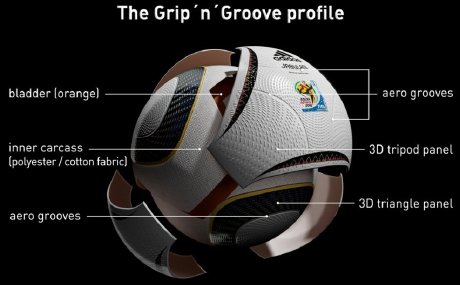
Adil Najam Unlike the 2006 FIFA World Cup, when Pakistan was represented in each and every game of the world’s premier sporting tournament – in the shape of Pakistani manufactured footballs – Pakistan will be missing in action at the 2010 FIFA Football World Cup that starts in South Africa later this week. This year’s official match football for the World Cup – Jabulani or Jo’bulani (manufactured by Adidas and meaning ‘to celebrate’ in Zulu – will come from China, not Pakistan. Pakistani footballs, of course, have a long history of being kicked around in Football World Cup tournaments. From the iconic Telstar (which was the first designated official game ball, at the 1970 Mexico World Cup and then at the 1974 World Cup in Germany) to the even more iconic Tango (the official ball of the 1978 and 1982 World Cups in Argentina and Spain), and even at the last World Cup in 2006 in Germany, hand-stitched, high-performance from Pakistan – really from Sialkot – have been the preferred choice for Adidas, the official providers of match balls to the FIFA World Cups. No longer so, it seems. Indeed, from once commanding as much as 85% of the world’s market in footballs, Pakistani manufacturers now believe that they will supply no more than 30-40 percent of the footballs sold around this mega-event. Pakistan, of course, is not a football power at all – ranked 165th out of 202 countries in the world. But like everywhere else, football fever can get high in Pakistan too ( here and here). This year, however, we would no longer be kicked around on the FIFA World Cup soccer fields. This should be read not just as a matter of national pride, but as yet another sign of the changing global economic landscape, Pakistan’s sliding economic fortunes, and a need to focus more deeply on Pakistan’s enterprise-level economic structures than we often do. The most commonly cited reason for Pakistan’s dwindling football fortunes is the use of child labor in the football industry. Even though the practice is now far less than it used to be, there are still instances of it and the stigma has lingered. In this particular case, technology may also have a lot to do with it. The new ball is being described in technological rather than craft terms: “The newly developed ‘Grip’n’Groove’ profile provides the best players in the world with a ball allowing an exceptionally stable flight and perfect grip under all conditions. Comprising only eight, completely new, thermally bonded 3-D panels, which for the first time are spherically molded, the ball is perfectly round and even more accurate than ever before.” And, of course, Pakistan’s security situation also must have had some impact in perceptions. An good overview report of the football manufacturing industry in Pakistan was recently published in The Express Tribune: Soccer or football is the most popular sport in the world. And for many, this means great economic opportunity. At one time, Pakistan’s export city of Sialkot was catering to 85 per cent of the total world demand for high-quality hand-stitched inflatable balls. A workforce of 85,000 was employed to produce 60 million balls per year worth $210 million. In Fifa World Cup years the demand for stitched balls rises by 70 per cent. Consecutive governments however, ignored this industry and failed to plan ahead to tackle the growing competition from China, India and Japan. For a long time this vital industry also faced criticism from European countries and especially from United States with allegations of using child labour. The Sialkot Chamber of Commerce and Industry took prompt measures to curb child labour from the soccer ball industry in accordance with the Atlanta Agreement signed with the International Labour Organisation (ILO) and Unicef in February 1997. It is estimated that some 93 per cent of child labour was progressively eradicated from this vital industry and necessary steps were taken to provide social protection to children and their families. The children who were associated with this industry were provided with good schooling. The vital steps taken by the soccer manufacturers and exporter were highly praised by the then United States President Bill Clinton in the address at the ILO convention at Geneva in June 1999. The Sialkot football industry has been contributing millions of export dollars to the national kitty but in the year 2006 the industry’s share in the international market took a significant hit with the entry of new players in the market, notably China and India. Manufacturers from these countries were able to supply balls at a much cheaper rate. According to industry sources, local soccer ball manufacturers have been able to grab around 30 to 40 per cent of the total orders floated globally for the upcoming Fifa World Cup. This is a sharp decline from the 70-80 per cent bagged during the 1998 and 2002 World tournaments. The local football industry earned $164 million in export earnings in the financial year 09, as against an average of $221 million per annum earned during financial years 2005-08. Power and gas shortage are not making it any easier for the industry, and sources say that a number of business have failed to meet deadlines which has dented their reputation. Technology was also a major factor in tilting the balance against the local industry. The penetration of machine-made balls hit the Sialkot hand made stitched soccer industry. And in the present scenario of fast growing globalisation hand-stitched balls will not be able to compete with machine-made footballs. It is important that the local industry moves forward and embraces new technology to meet the needs of the international market. Industry sources also say that China has received large export orders of footballs from a number of countries ahead of the June 2010 Football World Cup. Pakistan Sports Goods Manufacturers and Exporters Association is rightly concerned over this state of affairs. According to Arif Mehmood Sheikh, a former chairman (PSGMEA) the shift of a large number of orders to China should serve as an ‘eye opener’ for every one. He said that the factors behind the diversion of export orders to China was a combination of rising cost of production and inability to meet deadlines, which in turn were caused by rising POL prices and unreliable power supply. This has made it difficult for Sialkot exporters to compete with manufacturers in China, India, Nepal and Thailand. With the government looking for new avenues to bridge the fiscal deficit and the trade deficit, it is very important that measures be taken to build upon the advantages that Pakistan holds in the global market, and not allow others to encroach upon them. The Sialkot exporters have urged the government to come up with some sort of trade related package to stop the diversion of football export orders through the Trade Development Authority, likewise enforcing suitable measures to encourage the export of hand stitched fooballs. Outdated manufacturing techniques still in use by the local industry is a major hurdle in enhancing exports. This industry for its survival is in dire need of advanced technology and early provisioning of skilled labour. The Sialkot manufacturers and exporters have realised that in the event of a change in the global trend from hand stitched balls to mechanically stitched balls they will also need to make the shift. In order to cope with the menace of machine made balls, the Small and Medium Enterprise Development Authority has at put in place the final steps for the establishing of the Sports Industries Development Centre. It is expected that this project worth Rs435 million will enable the Sialkot sports manufacturing industry to adopt modern technology, without which there is no going forward. Sad as this situation is, I intend to follow the World Cup in South Africa, as will so many other Pakistanis. Probably no where more so than in Lyari – a community whose passion for soccer is boundless.

Read the rest here:
Pakistan Out of 2010 FIFA Football World Cup

Waka Waka

Shakira will be in 3D this weekend when the FIFA World Cup Official 2010 video is released . This will be the first time ever that millions of people will see a 3D performance video at the same time around the world. Shakira sings Waka Waka (This Time for Africa) as the Official 2010 FIFA World Cup Song. Yesterday, the official release of the 2010 FIFA World Cup video was released complimenting this song and giving viewers around the world a chance to catch the FIFA World Cup fever. The song, focusing on the host country of the region, gives the chance to see more of the country and bring together the world under one sport. The vivid colors of the area are seen in the clothes as well as video for the sport. The world is bracing for an exciting time of World Cup fever. Teams have been arriving in South America over the week with hundreds of fans already present. Bracing for one of the largest events means having the world come together and scream every time a goal is scored.

Go here to read the rest:
Waka Waka