Also in Monday afternoon’s round-up of news briefs is more Elijah Wood news. He is teaming up for a production company focusing on genre product. Matt Reeves is picked to direct a major Fox project and more casting news in today’s edition. Elijah Wood Joins The Late Bloomer Wood will play the lead in the new comedy. Directed by Randall Einhorn, the film is based on the 2001 book Man Made: A Memoir of My Body by Ken Baker. The film will be based on the true story about a 30 year-old man who hadn’t totally undergone puberty, but then went through it in several short overwhelming weeks after the medical condition was removed. AJ Bowen & Barbara Crampton Join Grow Up, Tony Phillips The pair join previously attached cast members Tony Vespe, Devin Bonnée (both of My Sucky Teen Romance ), and Jamie Landau (son of Jon Landau, in his feature film acting debut) in the independently-produced comedy about a Halloween-loving teenager who doesn’t think childhood passions should have an expiration date. Grow Up, Tony Phillips is the fourth feature film from young director Emily Hagins, who drew an international spotlight when she set out to make her first feature, the zombie film Pathogen, at only 11 years old. Around the ‘net… Elijah Wood Sets Up Indie Company with Genre Focus Elijah Wood is partnering with Daniel Noah and Josh C. Waller for The Woodshed, an indie company that will create mostly genre pics. “I’ve been a fan of horror and genre cinema in general since I was a child and have become increasingly passionate about the idea of there being a space in which horror films that take their subject matter and characters seriously could be produced,” said Wood. Deadline reports . Matt Reeves To Direct Dawn of the Planet of the Apes The Cloverfield director will direct the 20th Century Fox sequel to Rise of the Planet of the Apes . He had been atop a list of directors to replace Rupert Wyatt who departed the project, Deadline reports . Beasts of the Southern Wild Actors are Ineligible for SAG Awards The actors in the Fox Searchlight Sundance Film Festival award-winner has been ruled ineligible for the Screen Actors Guild Awards because it was not made under the terms of SAG Low Budget Feature Agreement, which mandates that professional actors be employed. The move is considered a hurdle to its Oscar chances because SAG Awards often mirror the Academy’s selections, THR reports .
Also in Monday morning’s round-up of news briefs, The Other Dream Team tops a mostly lackluster specialty box office, while The Perks of Being a Wallflower held strong in expansion. Looper tops the foreign box office. And, a French film wins in San Sebastian. Gothams to Honor Matt Damon, David O. Russell and Participant’s Jeff Skoll The three will be honored with career tributes at the 22nd Gotham Independent Film Awards November 26th at Cipriani Wall Street. Damon stars in Gus Van Sant’s Promised Land , which was produced by Skoll’s Participant Media. Russell directed Silver Linings Playbook , Deadline reports . Leonardo DiCaprio and Tobey Maguire Urge Voter Expression DiCaprio and Maguire lead a cast of stars in a new public service announcement urging young voters to use social media to talk about which issues they think matter most in the upcoming election. Zac Efron, Selena Gomez, Ellen DeGeneres, Jonah Hill and Joseph Gordon Levitt also appear in the Vote 4 Stuff video unveiled Monday, A.P. reports . Specialty Box Office: The Other Dream Team Scores on Slow Weekend; Perks of Being a Wallflower Strong in Expansion There were a few weeks there when the specialties shined compared to their studio brethren — overall box office slumped, but newcomers like The Master and Arbitrage impressed. Well, the final weekend of September saw limited-release titles lack the star-power of those earlier releases, and this frame as a result can best be described as ho-hum for the indies. The documentary The Other Dream Team scored the best overall numbers with a solid $11K-plus screen average,” Deadline reports . Foreign Box Office: Looper Opens No. 1 Overseas with $36 Million The sci-fi pic opened strong in only a handful of markets, opening number one in China with an estimated $24 million, several million more than its U.S. start at $21.2 million. It opened in Russia with $4.5 million and $3.6 million in the U.K., THR reports . French Filmmaker Francois Ozon Wins San Sebastian’s Golden Shell French film In The House (Dans La Maison) won the Golden Shell at the San Sebastian Film Festival, while Blancanieves won a Special Jury Prize and The Attack received a special mention, Screen reports .
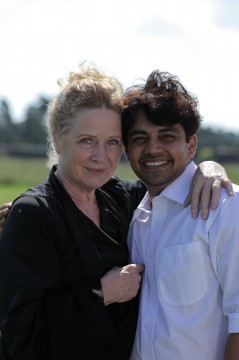
It’s too bad they don’t give Oscars out for individual performances in documentaries because Liv Ullmann’s work in Dheeraj Akolkar’s Liv & Ingmar would be worthy of consideration. The Norwegian actress and filmmaker discusses her 42-year relationship with the late Swedish filmmaking legend Ingmar Bergman with such emotional candor and poetic economy that the movie becomes something much more than just a re-telling of one of the most famous work-love relationships in cinema. Although Ullmann and Bergman — who was 22 years her senior when they fell for each other on the set of Persona in 1965 — lived together for only five tempestuous years, the friendship that they built in the aftermath is very much a love story. And Ullmann’s remembrances of their time together and apart until Bergman’s death in 2007, combined with Akolkar’s sumptuous and artful telling of the story, make Liv & Ingmar a story that can be enjoyed without an immersion course in their work together. Liv & Ingmar is at its essence a story of two people who love each other but cannot live with each other. (Think of it as a real-life Celeste & Jesse Forever .) Ullmann, 73 will attend the U.S. premiere of the film at the New York Film Festival on Monday night, and the Oscar-nominated actress spoke to Movieline about her initial reluctance to participate in Akolkar’s film, her happiness with the result, her rollercoaster relationship with Bergman, and Johnny Carson’s flirting during a Tonight show appearance. Note: The door to which she refers in the interview is located at the house on the Swedish island of Fårö where she and Bergman lived together. On the door’s surface, the couple kept a kind of hand-doodled calendar of their good — and bad days together, and Akolkar repeatedly depicts the drawings as a document of their union. Liv Ullmann and Dheeraj Akolkar Movieline: Liv & Ingmar was clearly an emotional experience for you. Your decision to talk so candidly about your relationship with Ingmar seems pretty brave to me. Was it a difficult one to make? Liv Ullman: Well, I did say no at first, but then I met with the director and the producer here in Norway. They really convinced me I would like to be part of this, but only on a very limited basis: two days to be interviewed and to produce my readings from my book. That was it. I did not have anything to do with how the movie was made. It wasn’t a brave decision because I’ve done so many interviews in my life about Ingmar or Ingmar and me. It was only when I saw the finished movie and saw what it was about that I thought, Oh, if I had know this before, I would maybe would have been more scared because it is so much deeper than I thought based on the interviews I did. The director is a tremendously creative person, and I believe that if Ingmar were alive, he would have liked this version. It’s not how I would have described this relationship, or how he would. But nonetheless, it’s terrifically true. You’re saying that if you had directed this movie, your interpretation of your relationship with Ingmar would have been different? Mine would be different, yes, but I’m not saying that mine would be truer or closer to the truth. It would be my kind of truth. I would have talked more about the memories and the longing, but this is true in a way that I never thought about our relationship. To me, this film is interesting because the person telling the story never met us before. [Dheeraj] only knew me through reading my book Changing and through our brief work together. He never met Ingmar. And yet, Liv & Ingmar may be closer to the truth in some ways because he’s looking in at us and he sees us in a different way than somebody who was completely involved with the experience. That’s interesting. The film left me with the impression that you had worked very closely with Akolkar. No! This movie is his creative work. Except for the interviews I gave, I had absolutely nothing to do with it. We had no discussions beforehand about it. We did not talk while he was editing it or finishing it. We did not talk about music. It was his film. How did Akolkar contact you? He wrote me [to ask if I would participate], and I said, “No.” And I was so glad that the Norwegian people who have money in the film called me and convinced me to meet with him. Sometimes you need to see a person and listen to a person to make your decision. When we met, I saw this young man who was very different from me — a different country and a different religion as far as I know. But I could tell that he was hearing me. We met for one hour, and that’s it. And then we shot two days in Fårö. That’s how much we knew each other. And then when I saw the movie, I just knew this man knows me in so many ways. One of aspects of the movie that I found fascinating was that when your on-camera comments are interspersed with scenes with the Bergman movies you did, the films seem remarkably autobiographical. Was that apparent to you when you were making them? No, I’ve never known this. But that is Ingmar’s genius. The movies may be autobiographical for a lot of people. It’s easy to say, “Oh God, this movie is about us..” But maybe some other woman can say, “Oh, it’s about me, too.” I know a lot of people who’ve said they recognize themselves in these movies. That’s another thing that I really liked about this film: You don’t need to have seen your work with Bergman to feel the emotional impact of this film. It’s a story about a very intense love affair that works on a universal level. Other people have said that to me — that you don’t have to know Ingmar, or me, or our movies to enjoy this movie. That surprises me because the first time I watched it, I thought, maybe this will only appeal to people who have seen the Bergman movies. Liv & Ingmar leaves the distinct impression that you couldn’t live with each other but you also couldn’t live without each other. Exactly. But one thing is true: if we had continued to live with each other, we probably could never have been together as friends afterwards. For some strange reason, it happened at the right time for us. It was so painful — so painful. I hope I’ll never have that pain again. But it led to a deep friendship and often those friendships don’t happen either. When you’re on camera, you really communicate the emotional complexity of your relationship with Ingmar. The scene where you learn that he kept one of your notes tucked away in a favorite teddy bear is pretty devastating. I’m so happy you’re saying that, but the credit goes to the director. The moment with the teddy bear that you talk about – no one knew about it until the housekeeper in Ingmar’s house [in Fårö] said, “Do you know what’s in that teddy bear?” It was kind of a friendship letter that I wrote Ingmar around the time that I did Faithless [in 2000.] And he took the letter and put it in his teddy bear that was always at the house. When I learned about the letter, it was like Ingmar saying again: “I love you –but, of course, not like when you were in Persona . I love you in a different way, and your throwaway letter is so important to me that I’m putting it in my teddy bear.” If I hadn’t done this movie, I would never have learned that. The housekeeper would never have told anyone. The same goes for the door at the house with our drawings. Since I left Fårö, I was so scared that Ingmar would take away the door, or his wife would take away the door. And when Ingmar died, I was sure I’d lose the door. But if you see the film, you see that every year, he did things to keep the sun from bleaching our drawings. Now that there’s no one there anymore to do that, in a couple of years you won’t be able to see what we did very clearly, but now I’ll never lose the door. It’s in the film. That door symbolizes so much. There’s a hand-drawn image of two side-by-side hearts with faces, but they’re both wearing frowns. Was that the essence of your relationship –that you had this great love and yet struggled to make each other happy? You always hope that the other one will make you happy before you think of all the ways that you can make the other one happy. It’s so strange—those doors came just before it was all over [between Ingmar and me]. Why we made the hearts, I don’t know. The other thing I noticed when we made the film is that Ingmar put airmail stamps over some of the dates. I don’t know what’s under them. It’s probably sad. But again, it’s another sign of him saying he cared. Do you still feel his presence? Yes, I do. In this movie, people might say, ‘Ah, he’s not here. He probably would not have made this movie. That happens not to be true. I am so sure that Ingmar would smile and care about this film. I even made a contract with the producer: if I don’t like the movie, I’m going to badmouth it and just say that I spent two days on it and what a shame. I made a contract: no payment but I am free. So, why do you think I’m talking about it? I think this is a great movie about a relationship. It’s a great movie about love. In the movie, you talk about struggling with living in Bergman’s shadow. Do you feel free of that now? I’m will always be proud of having worked with Ingmar. But at the same time, I’m directing Uncle Vanya in Oslo now and an English film version of Strindberg’s Miss Juliet . I will also probably direct Ibsen’s A Doll’s House on Broadway. So, I feel my life has always been apart from Ingmar’s but always connected to him. If I didn’t have him, I wouldn’t have the deep satisfaction of having worked so often with one of the great people of cinema. He has given me so much knowledge and trust and I use so much of what he taught me. When I was in Hollywood and maybe doing things that weren’t the best of the best, I could smile because my luggage were some of Ingmar’s great movies. So nobody could say, ‘Ah, she shouldn’t be filming.” What are your favorite performances in non-Bergman movies? My favorite films are Jan Troell’s The Emigrants (1971) and The New Land , (1972) about Swedish immigrants to the United States. I was nominated for an Oscar for the first one. I just love those two movies. It’s been 40 years since they were made, but they still reflect the attitudes and the realness of why the Swedish came to the United States. I think they would be very important to show now that you are having a new election. I have to ask: I loved the clip in the movie of you being interviewed by Johnny Carson on the Tonight show. He seems genuinely smitten with you. Did he continue to flirt with you when you were off-camera? My husband thought the same thing. He watched it. No, [Carson] didn’t flirt with me after the show didn’t, but he did have me on his program a number of times. And the strange thing is that he didn’t want me at first. He said, “Oh God no, she’s serious. I don’t want someone like that.” He was talked into having me on because I was so open. And then I was there a lot. And no, he did not start, though I wouldn’t have even minded. My husband was very jealous. Follow Frank DiGiacomo on Twitter. Follow Movieline on Twitter.
In the cinematic world of Rian Johnson , where friends are collaborators and cast and crew a part of a close-knit filmmaking “family,” actor Noah Segan is a constant. But after appearing in Johnson’s debut film Brick and his follow-up, The Brothers Bloom , Segan received what he calls a “gift” from Johnson — one of the smartest rising writer-directors of his generation — in the form of what’s sure to be his breakout role: The finely-tuned, gun-obsessed futuristic cowboy Kid Blue in Looper , a “gat man” eagerly hunting down rival Joe ( Joseph Gordon-Levitt ) who’s so fraught with seriocomic human frailty he only grows more sympathetic as he becomes increasingly unhinged. To Segan’s credit, he shines in the role Johnson tailored for him, inspired by Segan’s own offscreen cinephilia and the actor’s favorite movie — the obscure Dennis Hopper-Warren Oates Western Kid Blue , his signature on Twitter , Tumblr and the film community for years. As Gordon-Levitt’s steely Joe attempts to change his fate by confronting his future self (Bruce Willis), Segan’s eager-to-please Kid Blue illustrates a pained parallel course of desperate self-determination gone wrong. For the actor, who considers Brick the start of his bona fide career and also appeared in Deadgirl , What We Do Is Secret , and Cabin Fever 2 , Looper could and should be the catalyst for Hollywood to take note. As he and the Looper crew took Fantastic Fest by storm, Segan spoke with Movieline about his uniquely personal relationship with Looper and director Johnson, the compelling complexities of Kid Blue, that one time he was on Dawson’s Creek , and why no industry honor could match the feeling of being welcomed as family at the best movie theater in Los Angeles. You and Rian Johnson go back all the way to the Brick days. How did he first describe Looper to you? I had read his short story called Looper before we made Brick , and it was two pages long and it was really the hook — like getting the chorus to a song in your head if you were writing a tune. It was the chase between the older version and the younger version of the same guy. He tucked it away into the archives and went about his business, made Brick , and [ Brothers ] Bloom , and then he mentioned he was revisiting it a few years ago. Sent me a draft about three years ago, and that was that. And he wrote Kid Blue specifically with you in mind? He did. Kid Blue is my nickname; it’s been my nickname for about ten years, since I was a teenager. It’s a reference to a pretty obscure 1970s comedic Western starring Dennis Hopper and Warren Oates, and a buddy of mine who’s a screenwriter back in New York turned me onto some great movies, the movies that I now love, counterculture ‘60s, ‘70s American New Wave — the Dennis Hoppers and the Sam Peckinpahs and the Monte Hellmans, the guys who now I consider my favorite filmmakers. One day he said, “There’s this movie, and you’re gonna dig it — it’s going to be your story. It’s called Kid Blue , and good luck trying to find it.” I go down to this place we had in the Village called Kim’s, which is this famous archive of cinema, bootlegs, and at the time, VHS tapes, of stuff you could never find anywhere else, and you didn’t know how it got there, and maybe it’s not supposed to be there, but if it existed it might as well be at Kim’s. I found Kid Blue there, a pan-and-scan VHS of a dub of a dub from Spanish television with subtitles, and I watched it — it’s the story of a Kid, like Billy the Kid, played by Dennis Hopper, trying to go straight. He realizes he’s getting a little long in the tooth for his lifestyle so he tries to go straight in this town at the beginning of the Industrial Revolution; hilarity ensues. There was something about it that just clicked with me so I stuck with it, and it became my nickname. It’s a pretty good nickname, I must say — long before I had even heard about Looper it was your Twitter handle, so I knew there must have been a history there. It surprised me as much as anybody, because, listen — you happen to be lucky enough to be friends with one of your favorite filmmakers, that’s kind of enough. You don’t expect anybody to write you a part. And then he writes me a part, and he writes me my part. He wrote a part that I think, not dissimilarly from Brick , has a lot of the sort of vulnerability and pathos and yet diligence that I guess Rian sees in me. It’s a great honor to be saddled with these big emotions and still be able to have fun with it. That must be an interesting experience in itself, to have a friend write a character for you knowing what you’re capable of and shades of what he sees in you — and it turn out to be a character like this. Kid Blue is not the hero but he and Joe come from very similar backgrounds. It’s very Oliver Twist. Yes! Joe is Oliver and I’m the Artful Dodger and Abe [Jeff Daniels] is Fagin, you know? The three of us, Joe [Gordon-Levitt], Rian, and I, are very good friends — we spend a lot of time together along with the other members of the family, whether it’s Ram [Bergman] his producer, Steve [Yedlin] his cameraman, or Nathan [Johnson] his composer. We all live in the same neighborhood, pretty much, and have keys to each others’ houses and BBQ all the time. I think first impressions make a big impact whether we’re aware of them or not, and the first impression of our relationship was obviously Brick . Dode in that movie is a foil for Brendan, for Joe’s character, and I think a lot of the dynamic that the three of us have is that we are foils for one another. So I imagine, whether consciously or not, Rian read into that. He read into the dynamic between me and Joe probably by watching us, just like I watch him and Joe. There are a lot of parallels between the Kid and Dode from Brick as well — the idea that here’s a guy who will stop at nothing to do what he thinks is the right thing, even if it’s absolutely not the right thing. You’ve floated the idea that Kid Blue could be Dode’s grandson if the Brick and Looper universes overlapped… I’m rolling with that so hard! I kind of rolled that one out and now I’m going to kick it into gear. What I would love is somebody to do some fanfic that’s like Dode had an illegitimate son and that’s his great-grandson. I think they start early in that family. [Laughs] They’re very similar guys, guys who have a duty and a purpose. I think that’s where the vulnerability and the pathos comes from — someone trying to do a dignified act in a very undignified way. Therein you get sympathy too, right, because we’ve all tried to do the right thing and realized we have absolutely no idea how to do the right thing. The great thing about Kid Blue is that we can still understand where he’s coming from, even as he’s not the best equipped to handle the situation, and perhaps isn’t completely all there. You still feel for him. I hope so. I think everyone’s in the gray here. No one in this movie is absolutely doing the right thing. So you cut the Kid more slack. It also helps that he’s goofy, he’s funny, and in a movie that doesn’t have a lot of comic relief a little bit goes a long way. Kid Blue is the most colorful character in a movie that’s populated with very straightfaced people. Yes, and I think that’s something that Rian gave to me — this Western character, this cowboy, in this post-manufacturing era dystopian society, here’s a cowboy who’s earned his stripes to be as silly as he wants to be. He is the character who brings that Western element to the film, in many ways — he’s basically a gunslinger, he has his signature gat, and he even rides the futuristic equivalent of a horse in the form of the slat bike. I get to ride that, I get to spin my gun, I get to talk with a drawl… I got to really play the points of a Western, which again is a great gift from Rian because he knows how much I love that stuff. The guns in Looper provide a lot of interesting analytical dissection, but from your perspective how much is Kid Blue’s obsession with his gat perhaps a phallic psychological extension? [Laughs] Not mine, right? The Kid’s… that’s a bigger conversation to have, no pun intended. I do not have the biggest gun in the movie, as you know — I think Emily [Blunt] actually has the biggest gun in the movie, and she’s also kind of the most bad ass, so maybe that explains the answer to your question right there. I hadn’t thought about that but it’s such an obvious question: What do these guns represent? Rian explains it in the movie as the idea behind the gat is it’s this precision instrument, a perfect device that has withstood the test of time. It’s a side-loading revolver, a single action gun — the same thing that cowboys used to use, so it’s proven itself as a worthy tool. The blunderbuss, the thing that the loopers use and that Joe uses, is this modern distillation of a shotgun, this new school version of a very brutal weapon that just needs to be vaguely pointed in a direction and it’ll get rid of everything in front of it. I think that explains where the characters are coming from; the Kid really wants to be viewed as skilled, as worthy, and I think Joe doesn’t care — Joe’s just thinking, “How am I going to get out of here?” Has The Kid watched a few too many Westerns himself? Absolutely. There’s a line that Abe says where he says, “You’re just emulating these movies.” These movie-movies. I almost see that as a response as much to the Kid as it is to Joe, in that poor Abe is saddled with this guy who, unlike Joe who he also raised and reared, the Kid is a company man. He’s hanging around and he’s pretty good at his job even though he’s kind of a goofball and a screw-up, they keep him around. He’s diligent and a good kid, but poor Abe’s thinking, he’s got the skills so I’ll let him wear his blue jeans and his cowboy boots and let him use his special Western revolver, but how annoying is it that he can’t be contemporary here in the future? You mentioned the filmmaking “family” built around Rian’s films, but what was it like to have folks like Jeff Daniels and Bruce Willis come into that from the outside? We thought about that a lot, specifically with Bruce. What was it going to be like, every step of the way, to have this guy who represents the modern movie star hanging around with us? Everyone was really excited when he became part of the family, but you’re in awe of this guy who is an icon coming in saying, “Let me join in on the fun.” My guess is he vibed that, that this was an opportunity to join the family, and as a great actor and collaborator who has done so much I imagine his reaction was the same as ours, which was that this was fantastic, this was a beautiful thing. With Jeff, the best analogy I could use was it was like having a family reunion and meeting an uncle you never knew you had. They were onboard the minute they saw what we were up to. You and Jeff Daniels share some heavy moments; The Kid aims to please Abe, but he never quite seems to get it right. What were your impressions from working together? Jeff’s a very stoic guy and about as pro as you’ll ever find; he runs a theater company and he comes correct. He’d sit back with his guitar between takes and do his regal thing, but when we got into our really emotional stuff and he saw that I was not really holding back, because I had prepared for so long to do it and didn’t know any other way, and frankly I’m not trained like he and a lot of people are — I just figured, be ready to just wallow for a while and have a tough day then have dinner with your friends and take a deep breath. He was very kind to me and saw that on that day and said, “When the camera’s on me you don’t have to go whole hog, you don’t have to drive yourself nuts.” And I said, “I’m ready for this and I’m doing it, and there’s only one way I know how to do it.” We did the scene and stayed with it and that night he was leaving the set with his fedora and scarf on, looking extremely gentlemanly, and he turned back and saw me smoking a cigarette outside my trailer trying to shake off the day, and he said, “You did a good job, Kid — we’re in a good one.” He knows how to deliver that line on set and off, you know what I mean? And it wasn’t dissimilar from Bloom — I had a tiny part in Bloom and flew out to Serbia to visit my buddies making this movie and do one scene of schtick and it was the same thing. There were these great actors, Mark Ruffalo and Adrien Brody, and it was like my dad had a secret family and they were the half-brothers I never knew about. It’s just something that Rian and his crew really engender, an inexplicable comfort. Looking at your career to date — I have a career? I sort of feel like my career’s about to start, I hope. You’ve been a working actor for so long, and have done a number of indie films but you seem to have done things you really were passionate about. What has your approach been in terms of balancing indie and mainstream and where you’d like to go? My experience working in the movie business — I was a camera assistant before I was an actor — began when I was a little kid, acting in New York. It was something that I did because I was not into doing team sports. I was a little kid who could read and look in the same place for more than two seconds at a time, so I think my folks figured, “He might as well do something with his time, why not have him do commercials?” It was the exact opposite of what you hear when you hear of stage parents, I either did it or I didn’t depending on if I wanted to, and it was an after school hobby sort of thing. But I think it was the seed of loving movies and loving sets. As I came of age I thought I wanted to be a cameraman, a cinematographer — that was sort of the family business, my grandfather was a photographer and my mother is a photographer, among other things, and I have a very close family friend who was a cameraman so I started working for him. I did that for a couple of years very seriously and thought I was going to do that until I met an actor who said, “You should think about acting.” It being show business, you introduce somebody and introduce somebody and introduce somebody and the fifth guy you’re introduced to sends you out on an audition and it’s for Brick . So my first experience working in a movie was working with the people who are now my best friends in the world, who I love dearly, and I think for better or for worse that’s what I want every time now. I got spoiled really, really early. That’s sort of what I’m looking for, people who have that kind of mentality and that collaborative vibe, with an evangelical, pure vision of a script — which is usually people who’ve written their own scripts, so I tend to like to work on stuff that’s being directed by the guy or girl who wrote it. I’ve always thought that it’s such a weird thing to not have to shovel shit in order to pay my rent, which is really the only thing that I’m qualified to do — I have a 9th grade education. I am not capable. I have no skills! What happened in high school? It wasn’t for me. I wasn’t a school guy. I had a big chip on my shoulder, listened to a lot of punk rock music and watched a lot of grownup movies. I remember being in school, right before I left, and they had us read Catcher in the Rye which is basically a guide on how to drop out of school. You’re supposed to read this in high school or junior high and appreciate it as a great work of American 21st century fiction but in reality it’s that, and it’s telling you, fuck ‘em . It’s sort of like, this guy did it — I guess I will too. There are so many would be teenage Holden Caulfields who would love to follow suit, to grasp that sort of freedom for themselves. I grasped it! Much to the chagrin of my folks and all the other adults around me, but at the end of the day I’m now sort of stuck acting in movies as my job. Well, that did lead you to one of your greatest early acting credits, by which I mean that one very special episode of Dawson’s Creek where Joey and Pacey get locked in a store overnight. I was! I think that was the second thing I did after Brick . Why was it very special? Because I’m Team Pacey, of course. [Laughs] I remember I had gotten that job and there was some talk that it would be a recurring character. I actually don’t know much about the show so you can tell me if I’m wrong, but it was late in the show and there was some talk of finding someone to spice it up, like Cousin Oliver on The Brady Bunch . I showed up and I only knew this one weird way to do my job and I had created this really weird guy who has like five lines, but is super weird and stoned, and I think it really went against what they envisioned for their show. I just re-watched it and I think you were quite striking. Besides, you’re now part of television history. I am? Well, those two were always meant to end up together. I’m glad it worked out for them. Joey is Katie Holmes, right? And Pacey is the tall guy? Are you telling me you’re not up on your Dawson’s Creek lore? That’s fine. So — indie movies, mainstream movies — how do you view the two worlds and your place in them? I’m really excited about potentially working on more mainstream movies. I look at a lot of the movies and big filmmakers we now take for granted; if you went back in time and went to Sundance and saw sex, lies, and videotape and then said, “That guy’s going to make three of the most charming, entertaining popcorn movies with the biggest movie stars in the world in it and they’re going to be good and everyone’s going to see and enjoy them,” nobody would believe you. If you went back in time and went to a four-walled midnight screening of Evil Dead and said, “That guy’s going to make Spider-Man movies and they’re really going to get people interested and excited,” nobody would believe you. Did anybody watch Memento and think, that guy’s going to make Batman movies? That’s a really cool thing to me, the potential to up the game. For me it’s even more luxurious because I can be a good actor in any movie; that’s my challenge. I’d better be whatever I need to be – sad, or funny, or believable, or not believable. I can do that in any kind of movie. I can do that for $5 on an iPhone or for $5 million on a big movie, or $500 million on the biggest movie. So it’s not really an argument for me. The argument is really for the filmmaker, and the producers. It’s nice, I’m a worker bee. I get to follow direction, literally. You seem to just really love being a part of it all. I’m really happy to be a part of something. That’s the thing, you have all these people, all these iconoclast and idiosyncratic people, and when it works all of a sudden these disparate things come together into a team sport. Everyone’s fighting to get on the team and to sort of get called off the bench a little bit here is really nice. I just want to do a good job. Speaking of being a part of something, you refer to the New Beverly Cinema in Los Angeles, my favorite theater, as “church.” When I first came to Los Angeles and wanted to do something in the movie business I started going to the New Beverly, because that’s where you go. Sherman Torgan, who originally ran it before he passed away, and his son Michael who took it over, have always been very kind to me, and within a couple years of being in L.A. I decided that I’m not really interested in how I’m going to feel if I make a bunch of money or win an award — that’s really fun stuff, that’s awesome, but I’m not really looking forward to that stuff as being watershed events. But if they ever know my name at the New Beverly, if they ever open the door and usher me in and say, “Noah, enjoy the show,” I’ll know that I’ve achieved some success. A couple of years ago Michael and Julia [Marchese] started doing that, and now I feel like a successful person. Now I feel like I belong. Looper is in theaters this weekend. What are you waiting for, go see it! While you’re at it, follow Noah Segan on Twitter and Tumblr . Follow Jen Yamato on Twitter . Follow Movieline on Twitter .
Friday night saw the opening gala for the fantasy adaptation Life of Pi at the 50th Annual New York Film Festival, and oh boy the times they are a’changing! Who’d have ever guessed that a 3-D flick would open a prestigious film festival? Well, apparently if it’s from Ang Lee all bets are off. The director got major kudos from his peers for embracing 3D, with Fox head honcho Tom Rothman saying Lee has even topped Scorsese’s use of the medium in Hugo ! Check out my video interview below not just to hear Lee defend 3-D, but for an awesome Movieline shout out from Frank Oz himself. Plus: Tom Rothman has a warning for all other films on behalf of his upcoming Steven Spielberg sci-fi actioner, Robopocalypse , which I’m pretty sure will be in 3-D… Follow Movieline on Twitter . Follow Grace on Twitter .
It’s good to see Genndy Tartakovsky on the big screen. Even when he was working at Cartoon Network beginning in the 1990s, where he produced such contemporary animated classics as Dexter’s Laboratory , Powerpuff Girls and the visually stunning Samurai Jack , Tartakovsky and his team produced remarkably three-dimensional worlds — populated with fully developed characters, ageless physical humor and memorable sight gags — rendered in 2D animation. It was only a matter of time before he graduated to feature films, and on Friday, his engaging and funny directorial debut Hotel Transylvania opened in theaters in 3D. Movieline talked to Tartakovsky about the challenges of making the transition from animated TV series to feature films and his push during production to achieve a hyper-exaggerated, Mad Magazine-meet- Looney Tunes style of animation that, he says, is largely taboo among the gatekeepers of the genre. The Moscow-born Tartakovsky, whose family moved to the United States when he was 7, also talked about working with Adam Sandler, who as the voice of Dracula, gives one of his best performances in a long time, and another genius of a certain type of animation, Saturday TV Funhouse creator Robert Smigel. Finally, he talks about his influences, which aren’t limited to cartoons. Indeed, there’s more than a little The Good, The Bad And The Ugly i in Samurai Jack , which, happily, Tartakovsky says he wants to revisit via a film or miniseries. Movieline: This is your first theatrical feature. Tartakovsky : Yeah, I’ve done long-form movies for DVD, but this is my first theatrical feature. What are the challenges of making that transition from TV to feature films? One of them is the simple idea that in television, you have episode after episode, so if you mess up one, the audience usually forgives you. In features nowadays, you work all this time and put out all this effort for one weekend. If you don’t open, you’re dead. And so it’s a totally different type of pressure where you’re working so hard to tell a good story and create good characters. Usually in TV, it takes six to eight, sometimes 10 episodes, to really get going and know what the show is. There’s always that moment in TV where a show clicks. Seinfeld had it. A lot of shows go through it. But in features, you don’t have that choice. You’ve got to figure everything out. You’ve got to know what your movie is. And you’ve got to know what story you’re telling. And all of this pressure and build-up was very different for me because I was like, this is it. This is the one shot that I get at this. When it came to the monsters in Hotel Transylvania , I thought I saw and heard a lot of references to pop culture: the Universal monsters, of course, but also Count Floyd from SCTV and Young Frankenstein. Tartakovsky: Well, the main monsters are all inspired by the iconic things that we know them by. but we actually tried not to put in too many references. So, for Dracula, we tried to make him his own design, even though he probably has classic flavors of Count Chocula and other things. [Laughs] But that definitely wasn’t on purpose. If anything, we were trying to do almost a Mad Magazine type of vibe. We tried not to take ourselves too seriously. So any of the references you may have thought you saw, definitely weren’t on purpose. I first became of fan of your work watching Dexter’s Laboratory , The Powerpuff Girls and Samurai Jack on Cartoon Network. I’m also a fan of screenwriter Robert Smigel’s Saturday TV Funhouse for SNL. How did you get involved with Sandler and Smigel and that crew? When I came on, Adam was already signed on to do the voice of Dracula. I worked on the script to take the tone and other aspects in the direction I wanted them to go, and then I gave it to Adam. He really liked what I did. No matter what movie he does, Adam brings in his own guys to help write whatever character he’s portraying, and one of the guys he works with is Robert Smigel. He asked me if I wanted to work with Smigel, and I said, ‘Oh yeah, definitely. I love the stuff he’s done.” And that’s how he got involved. So this project didn’t originate with you? I came on board after it had been going through the grinder for few years. Judging from some of the bios I read about you, you grew up a pretty alienated kid. Did monsters help you deal with those feelings? The actuality is that I was really scared of scary movies. I think kids either get off on it or they don’t. I was one of those that didn’t. I like knowing things. I didn’t like that feeling of, what’s around the corner? I never went to haunted houses or anything like that. But at the same time, I liked the idea of Dracula and Frankenstein – definitely the older movies weren’t as scary as today’s are. So, I definitely watched those. But, for me, where I really liked the monsters were in comedy, like Abbott and Costello Meet Frankenstein , or, of course, Young Frankenstein is one of my favorite movies. That was my introduction to the monsters, until I read some of the books and thought more in terms of the truer sense of them. Weirdly, I saw Hotel Transylvania knowing that you were involved but unaware that Sandler was the voice of Dracula. And I have to say, I his usual trademark vocal tics weren’t obvious. That’s hilarious. I am a real Adam Sandler fan, but, at the same time, when a celebrity voice overtakes the character, it can throw you out of the film. You know, you realize who’s doing the voice and you’re just, ‘Oh, it’s that actor playing that character.’ And so, I was really worried about it. That’s why I tried really hard to push Dracula’s expressions and his posing and to push for Adam not to do his voice. At first, I think he was really hesitant—you know comedians are really hard on each other and they’re hard on themselves. They want to make sure they don’t sound hacky, or whatever. And doing something [as iconic] as Dracula, you’re opening yourself up. But I loved the voice Adam did. We started looking at it, and for me, I wanted this to be a broad comedy. So I kept pressuring him to do it as cartoony as he could get and still be comfortable. So whenever he yelled and did those big ranges and different rhythms, the happier I was because then we could make some really fun, old-school animation like the old school — like Mel Blanc when he would do Bugs Bunny or Daffy. For the emotional stuff, he definitely came down and we have that kind of contrast. I loved the scene where Dracula is chasing the airplane that’s carrying his daughter’s boyfriend, Jonathan (Andy Samberg) and sees him watching some sort of Twilight -like movie with bare-chested pretty boys. And even though the sunlight is burning him up, Dracula has to make some sort of smart-ass comment about the state of vampire movies today. Was that your idea? That was an Adam and Smigel idea, I think. I thought you were successful getting most of the actors not to sound too much like themselves. How did you manage that? It all depended on the character. With Fran Drescher, for the Bride of Frankenstein, we really wanted it to be her voice, which is super cartoony to begin with. With Kevin we decided to do Frankenstein as really conversational, so he could be more of his voice. If we were successful, I think it had a lot to do with the visuals. They way we executed performances and stuff, you weren’t paying too much attention to the voices because they just kind of all fit. Tell me about what you were striving for in terms of the animation. We really tried to push the animation to be better than other movies, to have it’s own point of view. And, again, to support the broad comedy of it, we wanted to do a Tex Avery-, Warner Brothers-influenced type of animation. When I first started doing it, everybody was so hesitant because that’s the big taboo in feature animation.: you can’t have things too over-exaggerated. I always thought that was ridiculous because for me the best scene in animation is in Disney’s Snow White and the Seven Dwarfs, where you’ve got these crazy looking dwarves and Snow White’s dead and they’re super sad. They’re as unrealistic as you get. They’re ridiculous. And then they shed a tear and the audience is rapt. They’re so involved in these characters. To me, it was always ridiculous that you can’t emote if you’re doing something cartoony and exaggerated. I always argued the opposite. The more cartoony and exaggerated you are, the more range of expression you have and it will be more believable. And so, that was the whole point. Push the expressions. Push the animation. Push the posing to a much more exaggerated level. When did that silly rule get made? Look at the movies. It’s really be around since Disney. Disney started really cartoony, and then it switched. It started going more and more realistic, and eventually that look kind of stuck. And that became the law. When you have a movie like Beauty And The Beast that’s very realistic making so much money, that starts the argument that you can only do it that way. It’s just a trend that never went away. Maybe you’re about to reverse that. I’m hoping. [Laughs] The animation is all CGI? Technically, it’s the same as any Pixar, Dreamworks or big CG feature. The only thing that’s really different is that we really pushed the drawing aspect of it. We tried to get funny expressions, funny poses and that’s what really stands out. We really broke the puppet. With CGI, you have this model of a puppet in the computer, and it can only do a limited number of things. But if you push it and stretch it and pull it and break it, it can do so much more. And that’s where the Mad Magazine theory came into play. If you pause on a frame of Dracula, you get a funny expression. And that’s a really hand-drawn 2-D animated theory, where you have a funny drawing and you laugh at it. And that’s what I wanted to get more of — that the movie is drawn, not so much just posed.
Bond villainy is demanding work. Evil genius and a lust for world domination are crucial, but future Blofelds of the world take note, a way with words — steeped in wit and curare, or whatever neurotoxin the cool kids are using these days — is essential. Given that inevitable defeat and death are occupational hazards of obsessively pursuing the world’s greatest spy, one of the few ways a Bond villain to distinguish himself from the other loser Bond villains is by delivering some of the most memorable lines of the movie. Sometimes it’s the little victories that count. Without further unnecessary exposition, the 10 best lines delivered by Bond villains in ascending order. 10. “I like a girl in a bikini: no concealed weapons.” — Francisco Scaramanga, The Man With the Golden Gun The supernumerary-nippled Scaramanga, played by the great Christopher Lee, may not be one for sensible artillery purchases, but The Man with the Golden Gun certainly knows how to dress a woman for optimal security — and cleavage. 9. “I am invincible!” — Boris Grishenko, Goldeneye As Bond films go, Goldeneye is relatively straightforward, but it does contain a few nods to the campier 007 flicks of yesteryear. One of them comes courtesy of Grishenko (Alan Cumming), the Russian hacker who ends every successful evasion of authority with a heavily accented proclamation of hubris that foreshadows his inevitable downfall. If only James Cameron had taken note before his controversial “I’m king of the world!” Oscar acceptance speech for Titanic. 8. “The distance between insanity and genius is measured only by success.” — Elliot Carver, Tomorrow Never Dies Carver (Jonathan Pryce) is a compelling villain in a not-so compelling Bond film about a William Randolph Hearst-like media mogul who uses his control over said media to kickstart global warfare. The above quote demonstrates the fine line between being unhinged and just plain evil. Fox News could not be reached for comment regarding his passing resemblance to Rupert Murdoch. 7. ““Such nice cheeks too. If only they were brains.” — Ernst Stavro Blofeld, Diamonds are Forever It’s no coincidence that Bond’s most long-lived adversary was also quite the wordsmith. With this little verbal bon bon, he nicely captures the mixture of arrogance and casual misogyny that makes Blofeld (in this instance, played by Charles Gray) one of the franchise’s best villains. 6. “Of course Vargas does not drink…does not smoke…does not make love. What do you do, Vargas?” — Emilio Largo, Thunderball In the hedonistic world of James Bond, it’s almost unthinkable that any character would abstain from the above-mentioned vices, let alone all three. No wonder Vargas chose assassin as a career. 5. “The first one won’t kill you. Not the second. Not even the third. Not until you crawl over here and kiss my foot!” — Red Grant, From Russia with Love Sean Connery’s Bond was a cold and ruthless secret agent, and as such, his adversaries were the stuff of legend, often digging into deeper and darker places than the more fleshed-out characters of the later films. Robert Shaw’s magnificent turn as the psychopathic Red Grant is one for the ages. 4. “This time, Mr. Bond, the pleasure will be all mine!” — Xenia Onatopp, Goldeneye This line from the 1995 Goldeneye may be in keeping with the double entendres that distinguished so many of the earlier Bond films, but it’s delivered by the most confident, badass female villain (played by Famke Janssen) that Bond has ever faced. The scene marks the moment when (most of) the vicious sexism of the 007 franchise was left behind. 3. “East, West, just points of the compass, each as stupid as the other.” — Dr. No, Dr. No Joseph Wiseman laid the framework for the Bond baddies, and consequently, for the spy villain archetype itself. He’s clinically insane, emotionally detached and obsessed with world domination, as demonstrated by the above sentiment. 2. “Kill Bond! Now!” — Ernst Stavro Blofeld, You Only Live Twice That really says it all in a neat but expressive package, doesn’t it? Normally a man of refined taste and precise language, even Blofeld has his breaking point. 1. No Mr. Bond, I expect you to die.” — Auric Goldfinger, Goldfinger Goldfinger’s icily matter-of-fact response to the about-to-be-lasered Bond’s sneering inquiry, “I suppose you expect me to talk?”, is villainy at its streamlined best: no bad puns or goofball cackles, just pure malevolence. Nobody chilled the blood like Gert Frobe. Nobody! John Jarzemsky is a contributor at LitReactor , Twitch , and can be read semi-regularly at his personal blog, the ineptly named Super Roller Disco Monkey Hullabaloo! or on twitter @jtjarzemsky. He is big in Japan.
Years in the making, director Ang Lee was apparently still tweaking his ravishing Life of Pi up until the Friday morning pre-gala screening of his latest for press and industry Friday morning. The epic 3-D adaptation of the book by Yann Martel delivered a rare cinematic experience about a young Indian boy who endures a seemingly endless time at sea. Fox released visuals from the film during summer, but suppositions about what the film is about may be dashed — at least for those who have not read the book. One thing is predictable, however: Oscar night will certainly reserve some — and likely many — spots for Life of Pi , Lee will certainly be up for another Best Director nomination, and the feature will undoubtedly be up for Best Picture. The Film Society of Lincoln Center scored a coup debuting this spectacle on its opening night of the 50th New York Film Festival . Also certainly in the running for accolades this awards season is the film’s young star, Suraj Sharma, who Lee found for the title role of Pi after months of searching. He gives a stunning performance as a highly spiritual and introspective young boy who finds himself the only human survivor after his ship sinks during a violent storm. Along with him are a gaggle of animals, including an adult tiger. Previous teasers about Life of Pie suggested the young boy befriends the Bengal tiger, almost as if the audience is being set up for a human-wild beast version of Blue Lagoon . In truth, their relationship is much more complex and those looking for a fantasy story with animals and humans living together harmoniously in paradise may be disappointed — this is not a South Seas 3-D version of Chronicles of Narnia . Still, a bond is established and they do happen on a sort of paradise island, but even that takes an unusual twist. Much of the film, however, is set aboard a life raft and Sharma assumes the duty of carrying the movie emotionally and physically as he finesses his relationship with the tiger, named Richard Parker. To get Sharma ready to portray a man fighting to survive at sea, Lee had him meet American author and sailor Steven Callahan, who actually survived weeks in open water and lived to tell about it. He wrote Adrift: 76 Days Lost At Sea (1986), which was itself a New York Times best-seller “I met him on a ship and it was raining with big waves,” said Sharma at the Walter Reade Theater Friday afternoon. “I met Steve and didn’t know who he was at that point. I found out he had survived 76 days at sea. He said you don’t feel anything, most of the time you feel completely blank. So when you do feel emotions, they are very strong, very powerful moments. So I tried to [employ] that in my acting.” Initially, it was Sharma’s brother who went after the part of Pi, but he was encouraged to audition as well. The process went on for six months and he received many call backs, but then he was asked to go to what he called Bombay (Mumbai) and his emotions turned. “I I was really excited when I went there and gave a final audition,” he said. “The first time I didn’t think I did very well, and then Ang talked to me and made me breathe in particular ways that brought out emotion inside of me. And by the end of it I didn’t even feel like I was acting anymore. I was just kind of an instrument of sorts.” After reading the novel Life of Pi , Lee said he found the book “fascinating” and “mind-boggling” but didn’t think anyone in their “right mind would put up money for this,” as he recalled today. Even author Yann Martel said that while writing the story he imagined it as “very cinematic in my mind” but he didn’t think the complications the story posed would make it possible to make it into a movie. “The literature is philosophy, regardless of how cinematic it is. And it would be very, very expensive and nearly impossible to do, and how do you sell this thing? I thought the economic side and the artistic side may not ever meet,” said Lee. Fox, however, did approach Lee several years ago and turning Pi into a feature became a possibility. “Elizabeth Gabler approached me and said it had always been their dream to work with me,” said Lee. “Little by little, it started to become my destiny and my faith, so to speak.” “We knew we could never make this film without a superior ‘guiding light’ in our leader and the filmmaker that was actually going to bring it to life,” recalled Fox 2000 head Elizabeth Gabler. “When we heard that Ang was possibly interested, I went to see him. And he said,’ Why is it that a studio would make this? It’s going to be a big, huge movie…I told him that audiences are always craving something original and new and we felt that under his directorship we would have something that could be extraordinary and new to the world in so many different ways.” While Gabler kept the budget under wraps, anyone who watches the film can easily see it must have gobbled up a hefty amount of money. Without providing a lot of detail, Lee said he spent a year animating a version of the story in order to communicate to his crew what he wanted, though once production began, circumstance ruled the day and Lee had to adapt to unforeseen challenges. “Planning and improvisation took place. For a movie like this, nothing works the way you plan it, so you just have to go along. One time it took one week to get something done in my shot list. Often it took one or two days to get something done on my shot list. I have a dramatic background, so I don’t usually use storyboards. The shots were so expensive for this, so I spent a whole year before making this movie to animate it so I could talk to the team about what it should be like. So, I wouldn’t call it so much improvising as surviving.” Follow Brian Brooks on Twitter . Follow Movieline on Twitter .
Thor actress Jaimie Alexander was sidelined after something on set of the Marvel sequel went wrong, Thor: The Dark World . “Today I sustained a pretty horrible injury,” Tweeted the erstwhile superhuman warrioress Lady Sif on Monday. “I’m lucky I’m not paralyzed. Thank you (with all of my heart) to those who’ve looked after me.” Alexander kept her Twitter following updated as she underwent treatment for the as-yet undisclosed injury. Already in recovery mode and my spirits are high. I'll be back kicking ass as Lady Sif in no time! It can only get better from here on out!— Jaimie Alexander (@JaimieAlexander) September 24, 2012 Feeling better today! Speedy recovery taking place! Off to see another specialist. A smile on my face 🙂 Thank you for all the love! XO— Jaimie Alexander (@JaimieAlexander) September 25, 2012 Received great news today! Meds are kicking in. Awesome funny nurses here at the hospital. Physio tomorrow. All good. #HappySif #Thankful — Jaimie Alexander (@JaimieAlexander) September 25, 2012 The athletic Alexander reprises her role as Thor’s fellow Asgardian Sif in the November 13 pic. She Tweeted today that she was scheduled to be discharged from the hospital. Speedy recovery! [ @JaimeAlexander via Next Movie ]
No matter how hard they try, it’s highly unlikely any actress/singer/starlet will ever come close to portraying famed Depression-era outlaw Bonnie Parker like Faye Dunaway did in Arthur Penn’s game-changing Bonnie and Clyde . But no matter! That won’t stop Miley Cyrus from being the latest to give the fantastically stylish bank robber a try , as she’s slated to do in the four-hour History Channel/Lifetime miniseries Bonnie & Clyde . Parker and her paramour Clyde Barrow have been depicted about a dozen times in TV and film dating back to 1958’s The Bonnie Parker Story , starring WB player Dorothy Provine. ( Her story, see what I did there?) Once Penn’s classic burst onto the cinescape and tommy gunned its way into film history — helped along in no small part by Dunaway, who was Oscar-nominated for her turn as Parker — no film or television property has successfully made a mark retelling the Parker-Barrow lore. But the reckless romanticism of their tale is too rich to ignore; hence, the many musical iterations of the Bonnie & Clyde mythos. Serge Gainsbourg and Brigitte Bardot channeled the duo for their 1968 collaboration album Bonnie and Clyde , headlined by the titular track featuring Bardot’s sensual cooing; in Parker’s signature beret, Bardot is the vision of Bonnie Parker’s sensual French reincarnate. Many others have paid homage to this homage in turn, including actress Scarlett Johansson, who whisper-crooned her way through a 2011 cover with Gainsbourg’s son Lulu. My favorite post-Gainsbourg musical riff on the duo? Jay-Z and Beyonce’s “’03 Bonnie and Clyde,” which itself uses a sample of Tupac’s 1996 track “Me and My Girlfriend,” a song inspired by Penn’s Bonnie and Clyde film. More recently, former tween idol Hilary Duff was set to play Parker until she was dropped due to pregnancy (infamously collecting $100,000 in her pay or play deal for doing next to nothing). I think we can all agree we dodged a bullet there, although the project was recast with True Blood ‘s Lindsay Pulsipher and apparently is still happening. So now comes Miley Cyrus to breathe good girl-gone-bad life into four hours of Bonnie and Clyde . I’m sure she, like all who’ve come before, feels a deep and soulful connection to the spirit of Bonnie Parker. The question is, how much peroxide and cigars will it take for her to be able to disappear into the role? (And is a Cyrus cover of that Gainsbourg classic inevitable/unavoidable?) [via Deadline ] Follow Jen Yamato on Twitter . Follow Movieline on Twitter .