Sloane ain’t bout that life… Sloane Stephens Apologizes To Serena Williams For Comments Serena Williams didn’t take too kindly to being beaten by tennis’ newest star Sloan Stephens at the Australian Open last January. Serena even broke her tennis racket in a huge rage after the soul crushing defeat. S loane recently talked about how Serena acted like a sore loser after the loss and even unfollowed her on Twitter . GASP! Serena Williams took the high road when she got wind of Stephens’ interview and told reporters when asked what she thought about Sloane’s comments… Via SI reports: “I don’t really know. I don’t have many thoughts. I’m a big Sloane Stephens fan and always have been. I’ve always said that I think she can be the best in the world. I’ll always continue to think that and always be rooting for her. So I really just always wish her — and anyone, really, especially from America — the best. We don’t have that many American players, so it’s always exciting to see so many young players doing so well.” Sloane later took to her Twitter account to clear up the beef: Good to see two black girls balling in peace!
Sloane ain’t bout that life… Sloane Stephens Apologizes To Serena Williams For Comments Serena Williams didn’t take too kindly to being beaten by tennis’ newest star Sloan Stephens at the Australian Open last January. Serena even broke her tennis racket in a huge rage after the soul crushing defeat. S loane recently talked about how Serena acted like a sore loser after the loss and even unfollowed her on Twitter . GASP! Serena Williams took the high road when she got wind of Stephens’ interview and told reporters when asked what she thought about Sloane’s comments… Via SI reports: “I don’t really know. I don’t have many thoughts. I’m a big Sloane Stephens fan and always have been. I’ve always said that I think she can be the best in the world. I’ll always continue to think that and always be rooting for her. So I really just always wish her — and anyone, really, especially from America — the best. We don’t have that many American players, so it’s always exciting to see so many young players doing so well.” Sloane later took to her Twitter account to clear up the beef: Good to see two black girls balling in peace!
Quit hatin’ and let our main man C-Rams cook! Angel Cordero Says He Helped 3 Kidnapped Cleveland Girls First Not Charles Ramsey Via NYDailyNews A second neighbor of the West Cleveland home where three captive women were freed Monday says he, not Charles Ramsey, was the one who helped the trio break out of the ramshackle house of horrors. “I helped her and I was first,” neighbor Angel Cordero told local NewsChannel5, referring to Amanda Berry, the 27-year-old hostage who signaled for help. “Ramsey arrived after she was outside with the girl,” Cordero told the reporter in Spanish. “But the truth who arrived there, who crossed the street, who came and broke the door, it was me.” Cordero said he and other neighbors helped Ramsey break down the door of the Seymore Avenue home. Another neighbor, Wintel Tejeda, said Berry made her now-infamous 911 call from his home. Ramsey became America’s newest and unlikeliest hero after he gave several colorful interviews recounting how he busted down the door to free Berry and the others. The plucky dishwasher gave a face-to-face interview with CNN’s Anderson Cooper on Tuesday night and even received a shout-out from McDonald’s on Twitter. Ramsey said he was in his house chowing on a Big Mac when he first heard Berry’s screaming as if “a car had hit a kid,” he said. Cordero and Tejeda said they aren’t jealous of the attention Ramsey has received. “I did what had to be done. I helped her,” Cordero told NewsChannel5. “They have their daughter, daughters are safe over there.” If you’re not jealous of the attention then why even mention that you were “first”??? SMH…GTFOHWTBS! Image via WEWS Continue reading →
SMH! This is why the Republican party is struggling now, because of nuts like this. Republican Says President Obama Encourages Criminal Activity According to Raw Story Republican strategist Brad Blakeman on Friday said that President Barack Obama was complicit in encouraging criminal activity because he supported contraception for young women. Last month, a federal judge ordered the Obama administration to make emergency contraception available to girls as young as 15 without a prescription. The Justice Department vowed to appeal the ruling, but the president on Thursday told reporters in Mexico that he was “comfortable” with giving girls access to the morning-after pill. “This makes no sense at all,” Blakeman opined to Fox News host Martha MacCallum on Friday. “You have to be 18 years old to buy a pack of cigarettes. And the president is also encouraging criminal behavior because in most jurisdictions in America, engaging in sexual intercourse at 14, 15 years old is statutory rape. So the president is somehow saying, ‘If you engage in that activity — criminal behavior — that’s okay because the government is going to provide you the out for your bad decision making.’” Left-leaning Fox News contributor Julie Rodinsky, however, was more realistic, pointing out that “15 year olds and people who are older do have sex, and if they do have sex, isn’t the whole point here to prevent them from getting pregnant? And this is the best way to prevent conception. This is not an abortion pill.” MacCallum argued that “some people would quibble with that definition.” “This strips away the moral fabric of our country,” Blakeman agreed. “It’s the government basically being complicit in a criminal act, and also complicit in coming into the houses of America and telling the parents, ‘We’re going to bring up your children, we’re going to be able to provide better for your children than the decisions you may make at home.’” “What’s the message, you know, when your 14, 15 years old, you say, ‘Well, the president says I should be able to have this’?” MacCallum pressed Rodinsky. “You’re living in a world that just doesn’t exist,” Rodinsky shot back. “The bottom line is just because you don’t want kids who are 15, 16 years old not to have sex, you’re going to punish them by not proving them with the means to not get pregnant.” “So should we decriminalize statutory rape?” Blakeman interrupted. “And say that if you’re 15, go out and have sex as a matter of law?” “Statutory rape is if a 15 year old sleeps with a 25 year old,” Rodinsky replied. “I’m sorry to tell you, but it’s going on out there. You can bury your head in the sand, but people are having sex at the age of 15. You might not like it… Government is not condoning it, but if you don’t give them the tools to prevent abortion and pregnancy, they’ll have abortion and pregnancy.” “It’s a big issue, whether or not this condones it, whether it encourages it,” MacCallum concluded. “And I think a lot of people feel that it does.” While no state has an age of consent younger than 16, minors in many states can legally engage in sexual activity with other minors, according to the Department of Health and Human Services. In New Jersey for example, a 13 year old may legally engage in sexual activity with a partner who is less than four years older. Allowing younger women to buy birth control will decrease the teen mom rate, abortions and prevent teens who do not want their babies from throwing them in the garbage. Do you think he has a point or is he just another right wing weirdo? Fox News
Motor city is now murder city! Detroit Most Dangerous City In The U.S. According to CBS Detroit It’s a clean sweep for Detroit, but nothing to be proud of, as the city takes the top three spots on a list of the most dangerous neighborhoods in America. The study by NeighborhoodScout.com analyzed FBI statistics from 17,000 local law enforcement agencies to pinpoint neighborhoods across the country with the highest predicted rates of violent crimes per 1,000 residents. Researchers drilled down deep into cities and towns to find specific census tract areas that had the highest rates of homicide, forcible rape, armed robbery and aggravated assault. According to the study, the area east of the Barton-McFarland community in zip code 48204 is the most dangerous neighborhood in America. The study said the chances of becoming a victim of violent crime in this west side community over the course of a year are one in seven. According to NeighborhoodScout, one of the more devastating events in this neighborhood over the past year was the closure of the public library — where children took remedial reading and math classes and adults used public computers to apply for jobs. Sharing similar statistics is the Islandview community in the 48207 zip code on the city’s east side, which ranks as the second most dangerous neighborhood on the list. It’s in this neighborhood where, according to the study, housing costs have gone down so dramatically that a 3,300 square-foot property sold for just $800 — down from $70,000 in 2002. The study said the chances of becoming a victim of violent crime in this community over the course of a year are one in seven. Coming in as the third most dangerous neighborhood in the country is the area between Ravendale and LaSalle College Park in zip codes 48213 and 48205. The study said the chances of becoming a victim of violent crime in this east side neighborhood are one in eight. About 40 percent of the households here have four or more cars — more cars per household than in 96 percent of the country, according to NeighborhoodScout. The vacancy rate in this neighborhood is also about 30 percent. Detroit is to America what crack was for the black community! Shutterstock Continue reading →
She captured America’s heart. He broke hers. So it begins again. Desiree Hartsock , who came close to winning Sean Lowe’s final rose on The Bachelor , will be the one doling them out this summer. ABC has released its first promos for The Bachelorette , premiering Monday, May 27. You won’t believe this, but the brunette beauty is living a fairy tale: The Bachelorette Promo: Desiree’s Turn! In the much-anticipated premiere, Desiree Hartsock is introduced to some good-looking, confident fellas, including one dressed up as a knight in shining armor. Good one. She’s also asked if she will accept … THESE ABS!?! Check out another promo for the new season after the jump: The Bachelorette Promo: Will You Accept These Abs? Desiree Hartsock: Good choice for The Bachelorette? Yes! She’s like perfect for the show! No, I prefer Lindsay/AshLee! No, someone new entirely! View Poll »
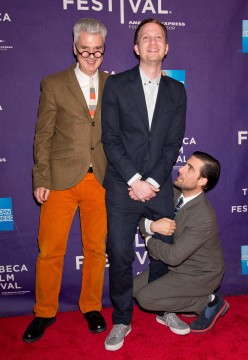
Teenage is as rebellious a film as the territory it covers. Based on punk author Jon Savage ‘s 2007 book Teenage: The Creation of Youth Culture 1875-1945 , Matt Wolf’s documentary eschews the talking heads and Chyroned dates that dominate the genre to immerse the moviegoer in a visually and aurally sumptuous history lesson. Wolf uses rare archival footage, period-piece recreations and a score by Deerhunter’s Bradford Cox to depict the evolution of teen culture via a number of influential and unconventional subcultures — swing kids, Boy Scouts, flappers, the German Wandervogel and even Nazi Youth — that coalesced from the late 19th century through the end of World War II. Understand them and today’s teens don’t seem so mystifying. I sat down with Wolf (he’s in the center of photo at left), Savage (he’s the one wearing orange pants) and the movie’s executive producer, actor Jason Schwartzman ( Moonrise Kingdom ) at the Tribeca Film Festival. Below is an edited version of our discussion: Movieline: Jason, how did you get to be the executive producer of Teenage ? Jason Schwartzman: When Matt’s movie about Arthur Russell came out, Wild Combination , I saw it multiple times in the course of a couple days, told everybody that I could possibly tell about it and showed it to one of my best friends Humberto Leon , who owns the fashion company Opening Ceremony . And when he saw that it was directed by Matt Wolf, he said, “Oh, Matt’s a really good friend of mine.” One thing led to another and Humberto connected Matt and I to make a short film for his store opening in Japan. We spent a lovely beautiful afternoon together in Toronto. It was just a beautiful day, and I felt instantly connected to Matt. I hope it’s okay that I say that. Matt Wolf: Please. Schwartzman: Does that make you feel uncomfortable? Wolf: No, I’m okay. Schwartzman: Too much pressure? After that, we started talking about books and music, and Matt said he was trying to make a documentary based on Jon Savage’s book Teenage . Being a fan of music and culture, I knew and loved Jon and was excited about this idea. And then a couple years later? Wolf: A year or two, I don’t know. Schwartzman: I reached out to Matt and said, “What’s going on with the movie? Is there anything I can try to do?” That began a process of getting the word out there and finding a way to finish the movie and make it happen. Movieline: You’ve taken a very unorthodox approach to making a non-fiction film. You call it “living collage.” Can you explain what you mean by that? Matt Wolf: When I read Jon’s book Teenage I didn’t just see it as source material. It helped me imagine a philosophy for the filmmaking. John is well known for his book on punk, England’s Dreaming , and in Teenage, he treated history in a punk way. Early on in our collaboration, he told me about something he observed in the 1970s: He saw these teenage punks wearing thrift clothes from the ‘30s, ‘40s and ‘50s and they would cut them up and reassemble them with safety pins into something new. He called that “living collage.” It really struck a chord with me and made me think, “Well what about living collage as a kind of filmmaking style, where we pick and choose these kind of documents and fragments from previous youth cultures and reassemble them into something that feels fresh and new.” And so living collage plays out visually in the way the film looks. In terms of the storytelling, the reason it probably feels unconventional is that, rather than telling the story with experts and historians, the film is told from the point of view of youth. And in John’s book, a huge basis of it is actual quotes from teenagers that are sourced from diaries and journalistic sources and books. And we kind of did a living collage of these quotes as well. You go so far as to not always identify who is talking. The moviegoer is essentially left to absorb what’s coming at him. Jon Savage: In an earlier edit we had lots of dates and times and Matt decided, and I thought it was a great idea, to actually take them out. Although it was good to have them, they were like the foundation. In any production, you have to start with a foundation and when the product is actually made, you don’t need [that foundation] any more. It’s not as if you need to explain Hitler Youth to a lot of people. It’s interesting that you say that because I thought the movie flowed like a piece of music — a punk symphony, you could say. Wolf: Yeah, that analogy makes sense to me, too. Music exists almost wall-to-wall through the film, and I perceive the voiceovers as being like lyrics. Very little of the archival footage we source has sound on it. . The voiceover is meant to provide a narrative foundation and to deepen the emotional impact of the film. It’s also meant to provide context in a personal way where it’s helpful. So kind of like lyrics in a song, you can just listen and hear it and have an emotional response to what you hear. Or that experience can be deepened by listening to the ideas in the lyrics. One of the first things I did when I started making this movie was to match archival footage to contemporary music that felt really transformational. It felt like a departure from how we normally see archival footage being used. How did you come to use Deer Hunter’s Bradford Cox to score the movie? Wolf: Bradford is my favorite contemporary musician, and we had actually corresponded as teenagers on an early blog that he ran. We reconnected over a music-themed film I made called Wild Combination years ago, and I approached him very early on in the process of Teenage to ask him if he’d like to score it. He wrote back saying, “Yes,” right away. But, like I said, the film is wall-to-wall music, and I’ve also included some pre-existing songs in the film as well. Savage: I gave Matt a hard drive. Wolf: Yeah, Jon gave me a lot of ideas for that music, too. I think our shared taste in music also was a helpful starting point. Jon, should someone who plans to see Teenage read your book before or after watching the movie? Savage: Whichever way, but, actually, I think the movie stands on its own. War plays an important role in this movie: On one hand, it’s responsible for the cross-pollination of teen cultures from around the world. On the other, it turns teens into adults very quickly. Wolf: It destroys them. At the beginning of this story, young people are perceived as a social problem. They need to be controlled. They’re sent to war and what happens to them in World War I is a kind of foundational trauma that creates teenage rebellion as we know it. It creates generational tension, and it drives the whole story. Then you have World War II, where young people are essentially sacrificed as cannon fodder by adults. But, at the same time, war stimulates the economy and enables teens to earn money and have a certain level of freedom. It’s as consumers that teenagers become the ultimate stakeholders in societies. War can lead to the destruction of their innocence, but it can also empower them with a certain level of freedom in terms of time and space and economics. War is the rear prism through which youth found their place in society. Savage: In our different ways, when I was doing the book and you were doing the film, we both fund the wartime stuff very hard. Wolf: Totally. I think the Hitler stuff is really intense. It’s at once totally intoxicating and absorbing. The reason Hitler and the Nazi experience for youth is a big part of the film is that Hitler both empowered and destroyed youth like no one else in history. In youth, he saw the potential to reimagine the world, but to very destructive and evil ends. It seems like every generation of adults laments how adventurous or promiscuous teens have become. But after watching this film, I wonder if that’s a myth. For instance, the German Wandervogel you depict from the late 19th and early 20th Centuries were quite free-spirited and daring. Savage: The cycle is the same, but the circumstances are different. Each generation has similar characteristics because it’s a physical and developmental stage of life that happens to everyone but within different societies and different context. I think there’s always a proportion of teens that are going to be rebels. There’s always a proportion that are going to be extremists and they’re always going to be the much larger proportion against whom the rebels and the extremists act: kids who just want to carry on and live life just like their parents did. Wolf: The focus of our film is these exceptional teenagers who are inventing new styles of communication, who are reimagining the future and the Wandervogel — this youth-led movement that’s incredibly liberated — is an example of that. Savage: Matt found extraordinary footage that hasn’t been seen. Schwartzman: I don’t believe that Wandervogel footage has ever been seen in a documentary. It comes from a museum for youth movements in Germany who do not typically license out their footage. When I look at pop stars like Justin Timberlake and Justin Bieber, I feel like we’ve entered a period of extended adolescence. Wolf: The starting point for me has always been, why is the culture obsessed with youth and where does this obsession come from? I do think that obsession has only intensified over time, but it’s hard to speculate about why that is. You mentioned the archetype of Justin Timberlake . In Teenage , we’re really finding the root and source of that, beginning with Rudolph Valentino, and with kids who fashioned their hair to look like him and who rioted at his funeral, and then progressing to Frank Sinatra , the first giant teen commercial pop star. Savage: Matt’s totally right. It has intensified because it’s become a huge industry. I’m much older than [Matt and Jason] and when I was a teenager it wasn’t this thing it is now. Since I was a young man, the whole area of pop culture and media has expanded exponentially. Wolf: Films that are about youth culture are usually focused on the now, and I thought it was a provocative strategy to make a film about youth that is based completely in the past — not even the recent past, the distant past. So it’s not working against the obsession with youth but it’s trying to attack the ideas and issue of youth culture in a totally different way. Instead of making a film about punks and hippies and skaters and Justin Bieber , it’s about flappers and jitterbugs. Schwartzman: He is making a movie about the punks and the skaters and Bieber. It’s called Teenage 2. That was going to be my next question. Would you consider making a Part 2? Wolf: Part of the reason Jon wrote the book in the style that he did is that, after the war, youth culture becomes this global phenomenon. The American model of the teen years spreads everywhere. It proliferates at such a rapid pace and is so gigantic that it’s probably not possible to explore the subject in a comprehensive way. Looking at this pre-history that led up to the creation of the teenager felt like the perfect way to explore the themes and ideas of youth culture in a deeper sense. So, to me, this film completes the idea. Schwartzman: He had planned to go to the ’60s but he ran out of computer space. Savage: If I was able to do a follow-up to the book — and I think it would actually make a good film — I would go from ’45 to say ’54. Elvis. But then it just gets insane. The level of data increases exponentially. Wolf: And then it becomes like a TV special or a textbook that doesn’t really go deep into much at all. After the war, it’s really difficult to not be just a greatest hits compilation. Watching Teenage left me with the distinct impression that if you had to choose the one medium that has had the most influence over youth culture, it would be music. Savage: Music is very, very important. Again, from a European prospective, America’s great gift to the world is black American music. I’m still in awe of it after listening to it for 50 years, and to me one of the high spots of the film is the section about Swing. My single favorite piece of footage is the Chicago Swing Jamboree with 200,000 kids going crazy in 1938. There’s an integrated audience, everybody is going nuts you see this black American guy with a bowler hat — and he’s pogoing. That said it all to me. Wolf: When I started making the film I thought it would be a deeper investigation of pop culture, but it ended up becoming much more political than I ever expected. I feel like the story of the German Swing Kids is the perfect synthesis of all the themes and the tension between politics and pop culture in the film. Here you have these kids who are like proto-punks: They have wild fashion, they dress very flamboyantly, they’re smuggling in music from America, and they’re doing it as a form of rebellion against the Nazi regime. They don’t perceive themselves as activists, but they’re doing it with great courage. It shows the political power of popular culture in a certain context. The film is also about the spread of American culture throughout the world and music facilitated that like nothing else. In the 1920’s, the British narrator says, “I got my hands on all the jazz records. My mum asked me why it was good and I said, ‘Because it comes from America.'” Savage: Swing looks to me like the proper birth of youth culture, certainly in a mass form, even more so than jazz in the ’20s. Wolf: The Chicago Swing Jamboree is so meaningful because you see these teenagers pioneering this new style of expression and dance. It has its own slang, its own music vocabulary. Savage: It’s own lifestyle. Wolf: And it spreads to become a mainstream phenomenon. What’s next for each of you guys? Wolf: I’m in the early stages of developing a bunch of projects. Jon and I are hoping to collaborate on a new film based on an unprecedented archive of gay life that this collector has. It’s a personal photography collection of early gay life. I’m also working on a documentary portrait of Hilary Knight , the illustrator of Eloise . Savage: I’m writing a new book about the year 1966 in pop culture and youth culture. Schwartzman: I just finished a film about the making of Mary Poppins . Sounds so dumb compared to what you guys just said. Follow Frank DiGiacomo on Twitter. Follow Movieline on Twitter.
Teenage is as rebellious a film as the territory it covers. Based on punk author Jon Savage ‘s 2007 book Teenage: The Creation of Youth Culture 1875-1945 , Matt Wolf’s documentary eschews the talking heads and Chyroned dates that dominate the genre to immerse the moviegoer in a visually and aurally sumptuous history lesson. Wolf uses rare archival footage, period-piece recreations and a score by Deerhunter’s Bradford Cox to depict the evolution of teen culture via a number of influential and unconventional subcultures — swing kids, Boy Scouts, flappers, the German Wandervogel and even Nazi Youth — that coalesced from the late 19th century through the end of World War II. Understand them and today’s teens don’t seem so mystifying. I sat down with Wolf (he’s in the center of photo at left), Savage (he’s the one wearing orange pants) and the movie’s executive producer, actor Jason Schwartzman ( Moonrise Kingdom ) at the Tribeca Film Festival. Below is an edited version of our discussion: Movieline: Jason, how did you get to be the executive producer of Teenage ? Jason Schwartzman: When Matt’s movie about Arthur Russell came out, Wild Combination , I saw it multiple times in the course of a couple days, told everybody that I could possibly tell about it and showed it to one of my best friends Humberto Leon , who owns the fashion company Opening Ceremony . And when he saw that it was directed by Matt Wolf, he said, “Oh, Matt’s a really good friend of mine.” One thing led to another and Humberto connected Matt and I to make a short film for his store opening in Japan. We spent a lovely beautiful afternoon together in Toronto. It was just a beautiful day, and I felt instantly connected to Matt. I hope it’s okay that I say that. Matt Wolf: Please. Schwartzman: Does that make you feel uncomfortable? Wolf: No, I’m okay. Schwartzman: Too much pressure? After that, we started talking about books and music, and Matt said he was trying to make a documentary based on Jon Savage’s book Teenage . Being a fan of music and culture, I knew and loved Jon and was excited about this idea. And then a couple years later? Wolf: A year or two, I don’t know. Schwartzman: I reached out to Matt and said, “What’s going on with the movie? Is there anything I can try to do?” That began a process of getting the word out there and finding a way to finish the movie and make it happen. Movieline: You’ve taken a very unorthodox approach to making a non-fiction film. You call it “living collage.” Can you explain what you mean by that? Matt Wolf: When I read Jon’s book Teenage I didn’t just see it as source material. It helped me imagine a philosophy for the filmmaking. John is well known for his book on punk, England’s Dreaming , and in Teenage, he treated history in a punk way. Early on in our collaboration, he told me about something he observed in the 1970s: He saw these teenage punks wearing thrift clothes from the ‘30s, ‘40s and ‘50s and they would cut them up and reassemble them with safety pins into something new. He called that “living collage.” It really struck a chord with me and made me think, “Well what about living collage as a kind of filmmaking style, where we pick and choose these kind of documents and fragments from previous youth cultures and reassemble them into something that feels fresh and new.” And so living collage plays out visually in the way the film looks. In terms of the storytelling, the reason it probably feels unconventional is that, rather than telling the story with experts and historians, the film is told from the point of view of youth. And in John’s book, a huge basis of it is actual quotes from teenagers that are sourced from diaries and journalistic sources and books. And we kind of did a living collage of these quotes as well. You go so far as to not always identify who is talking. The moviegoer is essentially left to absorb what’s coming at him. Jon Savage: In an earlier edit we had lots of dates and times and Matt decided, and I thought it was a great idea, to actually take them out. Although it was good to have them, they were like the foundation. In any production, you have to start with a foundation and when the product is actually made, you don’t need [that foundation] any more. It’s not as if you need to explain Hitler Youth to a lot of people. It’s interesting that you say that because I thought the movie flowed like a piece of music — a punk symphony, you could say. Wolf: Yeah, that analogy makes sense to me, too. Music exists almost wall-to-wall through the film, and I perceive the voiceovers as being like lyrics. Very little of the archival footage we source has sound on it. . The voiceover is meant to provide a narrative foundation and to deepen the emotional impact of the film. It’s also meant to provide context in a personal way where it’s helpful. So kind of like lyrics in a song, you can just listen and hear it and have an emotional response to what you hear. Or that experience can be deepened by listening to the ideas in the lyrics. One of the first things I did when I started making this movie was to match archival footage to contemporary music that felt really transformational. It felt like a departure from how we normally see archival footage being used. How did you come to use Deer Hunter’s Bradford Cox to score the movie? Wolf: Bradford is my favorite contemporary musician, and we had actually corresponded as teenagers on an early blog that he ran. We reconnected over a music-themed film I made called Wild Combination years ago, and I approached him very early on in the process of Teenage to ask him if he’d like to score it. He wrote back saying, “Yes,” right away. But, like I said, the film is wall-to-wall music, and I’ve also included some pre-existing songs in the film as well. Savage: I gave Matt a hard drive. Wolf: Yeah, Jon gave me a lot of ideas for that music, too. I think our shared taste in music also was a helpful starting point. Jon, should someone who plans to see Teenage read your book before or after watching the movie? Savage: Whichever way, but, actually, I think the movie stands on its own. War plays an important role in this movie: On one hand, it’s responsible for the cross-pollination of teen cultures from around the world. On the other, it turns teens into adults very quickly. Wolf: It destroys them. At the beginning of this story, young people are perceived as a social problem. They need to be controlled. They’re sent to war and what happens to them in World War I is a kind of foundational trauma that creates teenage rebellion as we know it. It creates generational tension, and it drives the whole story. Then you have World War II, where young people are essentially sacrificed as cannon fodder by adults. But, at the same time, war stimulates the economy and enables teens to earn money and have a certain level of freedom. It’s as consumers that teenagers become the ultimate stakeholders in societies. War can lead to the destruction of their innocence, but it can also empower them with a certain level of freedom in terms of time and space and economics. War is the rear prism through which youth found their place in society. Savage: In our different ways, when I was doing the book and you were doing the film, we both fund the wartime stuff very hard. Wolf: Totally. I think the Hitler stuff is really intense. It’s at once totally intoxicating and absorbing. The reason Hitler and the Nazi experience for youth is a big part of the film is that Hitler both empowered and destroyed youth like no one else in history. In youth, he saw the potential to reimagine the world, but to very destructive and evil ends. It seems like every generation of adults laments how adventurous or promiscuous teens have become. But after watching this film, I wonder if that’s a myth. For instance, the German Wandervogel you depict from the late 19th and early 20th Centuries were quite free-spirited and daring. Savage: The cycle is the same, but the circumstances are different. Each generation has similar characteristics because it’s a physical and developmental stage of life that happens to everyone but within different societies and different context. I think there’s always a proportion of teens that are going to be rebels. There’s always a proportion that are going to be extremists and they’re always going to be the much larger proportion against whom the rebels and the extremists act: kids who just want to carry on and live life just like their parents did. Wolf: The focus of our film is these exceptional teenagers who are inventing new styles of communication, who are reimagining the future and the Wandervogel — this youth-led movement that’s incredibly liberated — is an example of that. Savage: Matt found extraordinary footage that hasn’t been seen. Schwartzman: I don’t believe that Wandervogel footage has ever been seen in a documentary. It comes from a museum for youth movements in Germany who do not typically license out their footage. When I look at pop stars like Justin Timberlake and Justin Bieber, I feel like we’ve entered a period of extended adolescence. Wolf: The starting point for me has always been, why is the culture obsessed with youth and where does this obsession come from? I do think that obsession has only intensified over time, but it’s hard to speculate about why that is. You mentioned the archetype of Justin Timberlake . In Teenage , we’re really finding the root and source of that, beginning with Rudolph Valentino, and with kids who fashioned their hair to look like him and who rioted at his funeral, and then progressing to Frank Sinatra , the first giant teen commercial pop star. Savage: Matt’s totally right. It has intensified because it’s become a huge industry. I’m much older than [Matt and Jason] and when I was a teenager it wasn’t this thing it is now. Since I was a young man, the whole area of pop culture and media has expanded exponentially. Wolf: Films that are about youth culture are usually focused on the now, and I thought it was a provocative strategy to make a film about youth that is based completely in the past — not even the recent past, the distant past. So it’s not working against the obsession with youth but it’s trying to attack the ideas and issue of youth culture in a totally different way. Instead of making a film about punks and hippies and skaters and Justin Bieber , it’s about flappers and jitterbugs. Schwartzman: He is making a movie about the punks and the skaters and Bieber. It’s called Teenage 2. That was going to be my next question. Would you consider making a Part 2? Wolf: Part of the reason Jon wrote the book in the style that he did is that, after the war, youth culture becomes this global phenomenon. The American model of the teen years spreads everywhere. It proliferates at such a rapid pace and is so gigantic that it’s probably not possible to explore the subject in a comprehensive way. Looking at this pre-history that led up to the creation of the teenager felt like the perfect way to explore the themes and ideas of youth culture in a deeper sense. So, to me, this film completes the idea. Schwartzman: He had planned to go to the ’60s but he ran out of computer space. Savage: If I was able to do a follow-up to the book — and I think it would actually make a good film — I would go from ’45 to say ’54. Elvis. But then it just gets insane. The level of data increases exponentially. Wolf: And then it becomes like a TV special or a textbook that doesn’t really go deep into much at all. After the war, it’s really difficult to not be just a greatest hits compilation. Watching Teenage left me with the distinct impression that if you had to choose the one medium that has had the most influence over youth culture, it would be music. Savage: Music is very, very important. Again, from a European prospective, America’s great gift to the world is black American music. I’m still in awe of it after listening to it for 50 years, and to me one of the high spots of the film is the section about Swing. My single favorite piece of footage is the Chicago Swing Jamboree with 200,000 kids going crazy in 1938. There’s an integrated audience, everybody is going nuts you see this black American guy with a bowler hat — and he’s pogoing. That said it all to me. Wolf: When I started making the film I thought it would be a deeper investigation of pop culture, but it ended up becoming much more political than I ever expected. I feel like the story of the German Swing Kids is the perfect synthesis of all the themes and the tension between politics and pop culture in the film. Here you have these kids who are like proto-punks: They have wild fashion, they dress very flamboyantly, they’re smuggling in music from America, and they’re doing it as a form of rebellion against the Nazi regime. They don’t perceive themselves as activists, but they’re doing it with great courage. It shows the political power of popular culture in a certain context. The film is also about the spread of American culture throughout the world and music facilitated that like nothing else. In the 1920’s, the British narrator says, “I got my hands on all the jazz records. My mum asked me why it was good and I said, ‘Because it comes from America.'” Savage: Swing looks to me like the proper birth of youth culture, certainly in a mass form, even more so than jazz in the ’20s. Wolf: The Chicago Swing Jamboree is so meaningful because you see these teenagers pioneering this new style of expression and dance. It has its own slang, its own music vocabulary. Savage: It’s own lifestyle. Wolf: And it spreads to become a mainstream phenomenon. What’s next for each of you guys? Wolf: I’m in the early stages of developing a bunch of projects. Jon and I are hoping to collaborate on a new film based on an unprecedented archive of gay life that this collector has. It’s a personal photography collection of early gay life. I’m also working on a documentary portrait of Hilary Knight , the illustrator of Eloise . Savage: I’m writing a new book about the year 1966 in pop culture and youth culture. Schwartzman: I just finished a film about the making of Mary Poppins . Sounds so dumb compared to what you guys just said. Follow Frank DiGiacomo on Twitter. Follow Movieline on Twitter.
Here’s Made in Chelsea star Kimberley Garner showing off her sexy legs while attending some launch for something I really don’t care about (unless that company wants to pay me money). However, I do care about Kimberley and think we should discuss her career in America over a naked leg wrestling match. Don’t worry Kim, I’ll let you win. Anyway, I decided to follow Kim on Twitter, so hopefully her following me back is a sign that she wants to take me up on that offer. Kim, it’s your move.