Tag Archives: america

NYT’s Friedman Defends CNN’s Nasr and Hezbollah Founder Fadlallah, the Alan Alda of the Middle East

Tom Friedman stepped into a journalistic controversy in his Sunday New York Times column, ” Can We Talk? ” protesting CNN’s firing of senior editor of Middle East affairs Octavia Nasr for posting this message on Twitter upon the death of Hezbollah founder Mohammed Hussein Fadlallah: Sad to hear of the passing of Sayyed Mohammed Hussein Fadlallah… One of Hezbollah’s giants I respect a lot. According to Western intelligence, Fadlallah blessed the drivers of the vehicles behind the 1983 attacks on Marine barracks in Beirut which killed 241 Marines. President Clinton froze his assets in 1995 because of his suspected involvement with terrorists. Yet Friedman was dismayed by Nasr’s dismissal by CNN: I find Nasr’s firing troubling. Yes, she made a mistake. Reporters covering a beat should not be issuing condolences for any of the actors they cover. It undermines their credibility. But we also gain a great deal by having an Arabic-speaking, Lebanese-Christian female journalist covering the Middle East for CNN, and if her only sin in 20 years is a 140-character message about a complex figure like Fadlallah , she deserved some slack. She should have been suspended for a month, but not fired. It’s wrong on several counts. Friedman’s omission of the killing of the Marines is especially odd considering he used the massacre to insult Ronald Reagan in an exchange with then-GOP presidential candidate Lamar Alexander in a March 5, 1995 appearance on CBS’s Face the Nation. Friedman downplayed Fadlallah’s hatred of Israel, never mentioning the phrase “suicide bombers” and saying only that he “had some dark side.” I’ve never met Octavia Nasr or Fadlallah. Fadlallah clearly hated Israel, supported attacks on Israelis and opposed the U.S. troops in Lebanon and Iraq. But he also opposed Hezbollah’s choking dogmatism and obedience to Iran; he wanted Lebanon’s Shiites to be independent and modern, and he built a regional following through his social commentaries. …. Of course, Fadlallah was not just a social worker. He had some dark side. People at CNN tell me Nasr knew both. But here’s what I know: The Middle East has to change in order to thrive, and that change has to come from within, from change agents who are seen as legitimate and rooted in their own cultures. They may not be America’s cup of tea. But we need to know about them, and understand where our interests converge — not just demonize them all. Dan Abrams, founder of Mediaite, responded at length to Friedman in the comments section of a related Mediaite article. ….when a journalist who covers the middle east expresses admiration for the leader of a group that is at least partially a terror organization, its not just a small matter. He may have done other amazing things including being more progressive than others of his ilk, but can you imagine what would happen to an American journalist expressing admiration for an Al Quaeda leader who had other, better, attributes? When you work at a media entity like CNN (or the New York Times) and you don’t get that words matter — all of them — then that in and of itself, should be a fireable offense. One would think, from the wailing of Friedman and Nasr’s other apologists, that Fadlallah was defined by his support of women’s rights. But the Times’s July 5 obituary for Fadlallah , which appeared before the Nasr controversy broke, devoted a single paragraph to his “comparatively progressive positions on women’s rights and family law,” while emphasizing his justification for suicide bombings and hatred for Israel. “Comparatively” is the operative word, as the opinions of this Alan Alda of the Middle East aren’t exactly bold by civilized standards: “…he argued that women had the right to defend themselves from domestic violence.” Friedman’s interest in Fadlallah’s feminism is pretty new. His only previous mention of Fadlallah, according to a Nexis search, was a single citation in the last paragraph of a 1984 news story, back when Friedman was a New York Times reporter.

More:
NYT’s Friedman Defends CNN’s Nasr and Hezbollah Founder Fadlallah, the Alan Alda of the Middle East

Disgraced USDA Official Blames Fox News and Tea Party For Her Dismissal

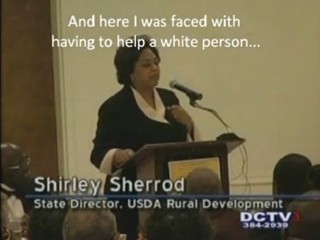
The USDA employee that was forced to resign Monday as a result of racist comments she made at an NAACP gathering in March has blamed Fox News and the Tea Party for her inability to convince her employers of her innocence. As NewsBusters reported Tuesday, Shirley Sherrod, the USDA’s Rural Development director for the state of Georgia, delivered a racism-laden address at the NAACP’s 20th Annual Freedom Fund Banquet back on March 27. On CNN’s “American Morning” Tuesday, after Sherrod said that the video published by Big Government didn’t accurately depict what really happened, host John Roberts asked, “When the U.S. Department of Agriculture came to you and said you have to step down, why didn’t you just say, wait a minute, you don’t know the full story?” Sherrod amazingly answered, “I did say that, but they, for some reason, the stuff that Fox and the Tea Party does is scaring the administration” (video follows with transcript and commentary): JOHN ROBERTS: Just a little while ago, we’re telling you the story of Shirley Sherrod, the U.S. Department of Agriculture official from Georgia who resigned after charges that she made racist comments before the NAACP because she said she wouldn’t help a farmer because he was white. That was one side of the story. We got the other side of the story from Shirley Sherrod coming up right after the break. She says it’s nothing of what people are saying it was. So, let’s hear from her coming right up. Fifty minutes after the hour. (COMMERCIAL BREAK) ROBERTS: The U.S. Department of Agriculture accepts the resignation of an employee after a video surfaced showing her telling an audience that she withheld assistance to a white farmer because of his race. Let’s listen to what she told the NAACP. (BEGIN VIDEOTAPE) SHIRLEY SHERROD, FMR. USDA WORKER: I was struggling with the fact that so many black people had lost their farm land. And here I was faced with having to help a white person save their land. So, I didn’t give him the full force of what I could do. I did enough. (END VIDEO CLIP) KIRAN CHETRY: Does that video tell the whole story? Joining us now on the phone from Albany, Georgia is Shirley Sherrod, herself. Thanks for being with us this morning, Shirley. SHERROD: Thank you. CHETRY: You say that this was part of the story and that it was part that was spliced enough to show you in a bad light, that this isn’t the whole story. Will you finish for us how this ended? SHERROD: OK. I was speaking to that group like I’ve done many groups, and I tell them about a time when I thought the issue was race and race only. And I tell them the story of how I’ve worked with a white farmer back in 1986. I was not working for the Department of Agriculture. I was working with a non-profit organization assisting farmers throughout South Georgia and the Southeast. And this farmer came to me for help. I was telling the story about how working with him helped me to see that the issue is not about race, it’s about those who have versus those who do not have. And I tell how I took him to a lawyer who I thought would help him. In the end, that lawyer didn’t. In the end, I had to frantically look for a lawyer because when USDA lifted — I’m sorry. When the court lifted the injunction against USDA in May of 1987, this white farmer was one of 13 that was foreclosed on by the state of Georgia. I had to frantically find a lawyer who would file a chapter 11 to stop the foreclosure. He couldn’t — at that time, we had up to 12. CHETRY: Yes. But let me just get back really quickly, you said you didn’t give them the full force of what you could do. You said you did enough, and then you referred to the race (ph) of the lawyer as well saying that perhaps because the lawyer was white, that he would help him. So, what did you mean by that? SHERROD: What I meant was, I didn’t know anyone else, but it thought taking — I didn’t know another lawyer at that time who was local, who knew something about chapter 12. But I thought if I took him to a white lawyer, he would definitely do all that he could to help save his farm. ROBERTS: Miss Sherrod, let’s make it clear though, that this happened 24 years ago. You eventually worked with this white farmer. You eventually became friends, you say, with the farmer and his wife. SHERROD: Yes. ROBERTS: So, the question I have is, when the U.S. Department of Agriculture came to you and said you have to step down, why didn’t you just say, wait a minute, you don’t know the full story. Here’s the full story, why should I step down? SHERROD: I did say that, but they, for some reason, the stuff that Fox and the Tea Party does is scaring the administration. I told them get the whole tape and look at the whole tape and look at how I tell people we have to get beyond race and start working together. ROBERTS: Many people at home might be thinking if you’re recounting an old story, why did you succumb to pressure to step down, why didn’t you fight this? SHERROD: If I tried to fight it and didn’t have any support from the U.S. Department of Agriculture, what would I do? CHETRY: Let me ask you this. Did you talk to the NAACP about it because I just want to read from our audience what Ben Jealous, the president said. He said referring to you and this surfacing of the tape, “her actions were shameful. While she went on to explain in the story, she ultimately realized her mistake as well as the common predicament of working people of all races. She gave no indication she’d attempted to right the wrong she had done to this man. And the reaction from many in the audience is disturbing.” This is from Ben Jealous. Did you try to clarify with the NAACP your story? SHERROD: No, I haven’t had had a chance to talk to anyone. All of this was happening so fast. And it’s unfortunate that the NAACP would make a statement without even checking to see what happened. This was 24 years ago, and I’m telling a story to try to unite people with that now. ROBERTS: Certainly, you’re coming out and telling your story now takes it to a different level, and obviously, we’re going to keep following this. It’s good to get your side of it. Sherri Sherrod, former Agriculture Department official. Thanks for joining us this morning. And perhaps, we can get you back on again, get your face on TV as well and talk to you more about this as the story continues to develop. SHERROD: I don’t mind. ROBERTS: All right. Thanks so much. CHETRY: Thanks a lot. So let’s get this straight: her employers at the USDA don’t believe her story and NEITHER does the NAACP. But didn’t you get the sense Chetry and Roberts did and were quite sympathetic?  For the record, here’s Monday’s press release from the NAACP: (BALTIMORE, MD) NAACP President and CEO Benjamin Todd Jealous issued the following statement today after learning of the resignation of Shirley Sherrod of the United States Department of Agriculture: “Since our founding in 1909, the NAACP has been a multi-racial, multi-faith organization that– while generally rooted in African American communities– fights to end racial discrimination against all Americans. We concur with US Agriculture Secretary Vilsack in accepting the resignation of Shirley Sherrod for her remarks at a local NAACP Freedom Fund banquet. Racism is about the abuse of power. Sherrod had it in her position at USDA. According to her remarks, she mistreated a white farmer in need of assistance because of his race. We are appalled by her actions, just as we are with abuses of power against farmers of color and female farmers. Her actions were shameful. While she went on to explain in the story that she ultimately realized her mistake, as well as the common predicament of working people of all races, she gave no indication she had attempted to right the wrong she had done to this man. The reaction from many in the audience is disturbing. We will be looking into the behavior of NAACP representatives at this local event and take any appropriate action. We thank those who brought this to our national office’s attention, as there are hundreds of local fundraising dinners each year. Sherrod’s behavior is even more intolerable in light of the US Department of Agriculture’s well documented history of denying opportunities to African American, Latino, Asian American, and Native American farmers, as well as female farmers of all races. Currently, justice for many of these farmers is being held up by Congress. We would hope all who share our outrage at Sherrod’s statements would join us in pushing for these cases to be remedied. The NAACP will continue to advance the ideals of America and fight for freedom, justice and fairness for all Americans.” Regardless of the conclusions made by the USDA and the NAACP, is the media template going to be that Sherrod’s actions took place 24 years ago, and she was wrongfully forced to resign as a result of pressure from Fox News and the Tea Party? Will Sherrod be made out as the victim by a sympathetic press? Stay tuned. 
Go here to see the original:
Disgraced USDA Official Blames Fox News and Tea Party For Her Dismissal

Media Liberals on ‘JournoList’ Plotted to Bury the Jeremiah Wright Story in 2008

The Daily Caller has another scoop on the leftist JournoList e-mails today, recalling when they all wanted the Jeremiah Wright story to be dead and buried in the spring of 2008. Jonathan Strong explained “Employees of news organizations including Time, Politico, the Huffington Post, the Baltimore Sun, the Guardian, Salon and the New Republic participated in outpourings of anger over how Obama had been treated in the media, and in some cases plotted to fix the damage.” Stephanopoulos asked, “Do you think Reverend Wright loves America as much as you do?”…The tough questioning from ABC left many of them outraged. “George [Stephanopoulos],” fumed Richard Kim of the Nation, is “being a disgusting little rat snake.” In one instance, Spencer Ackerman of the Washington Independent urged his colleagues to deflect attention from Obama’s relationship with Wright by changing the subject. Pick one of Obama’s conservative critics, Ackerman wrote, “Fred Barnes, Karl Rove, who cares — and call them racists.” Michael Tomasky, a writer for the Guardian, also tried to rally his fellow members of Journolist: “Listen folks–in my opinion, we all have to do what we can to kill ABC and this idiocy in whatever venues we have. This isn’t about defending Obama. This is about how the [mainstream media] kills any chance of discourse that actually serves the people .” “Richard Kim got this right above: ‘a horrible glimpse of general election press strategy.’ He’s dead on,” Tomasky continued. “We need to throw chairs now, try as hard as we can to get the call next time. Otherwise the questions in October will be exactly like this. This is just a disease.” The most eye-opening quote may come from Chris Hayes, a regular guest and occasional guest host on The Rachel Maddow Show on MSNBC, writing about how America is a murderous, torturing giant, and that’s much more outrageous than Wright. In fact, Hayes echoed Wright’s sermons: Chris Hayes of the Nation posted on April 29, 2008, urging his colleagues to ignore Wright. Hayes directed his message to “particularly those in the ostensible mainstream media” who were members of the list. The Wright controversy, Hayes argued, was not about Wright at all. Instead, “It has everything to do with the attempts of the right to maintain control of the country.” Hayes castigated his fellow liberals for criticizing Wright. “All this hand wringing about just how awful and odious Rev. Wright remarks are just keeps the hustle going.” “Our country disappears people. It tortures people. It has the blood of as many as one million Iraqi civilians — men, women, children, the infirmed — on its hands. You’ll forgive me if I just can’t quite dredge up the requisite amount of outrage over Barack Obama’s pastor,” Hayes wrote. For followers of the Clinton scandals, it gets incredibly rich when Katha Pollitt confesses: Katha Pollitt – Hayes’s colleague at the Nation – didn’t disagree on principle, though she did sound weary of the propaganda. “I hear you. but I am really tired of defending the indefensible. The people who attacked Clinton on Monica were prissy and ridiculous, but let me tell you it was no fun, as a feminist and a woman, waving aside as politically irrelevant and part of the vast rightwing conspiracy Paula, Monica, Kathleen, Juanita,” Pollitt said. “Part of me doesn’t like this s–t either,” agreed Spencer Ackerman, then of the Washington Independent. “But what I like less is being governed by racists and warmongers and criminals.” Ackerman went on: I do not endorse a Popular Front, nor do I think you need to. It’s not necessary to jump to Wright-qua-Wright’s defense. What is necessary is to raise the cost on the right of going after the left. In other words, find a rightwinger’s [sic] and smash it through a plate-glass window. Take a snapshot of the bleeding mess and send it out in a Christmas card to let the right know that it needs to live in a state of constant fear . Obviously I mean this rhetorically.

ABC’s George Stephanopoulos Spins for Obama: ‘Set Aside’ Last Two Terror Attacks

Good Morning America’s George Stephanopoulos on Monday lobbied that if one were to “set aside” the Fort Hood terror attack and the botched Christmas bombing, there haven’t been successful attacks on America in the last few years. Stephanopoulos was talking to William Arkin, the co-author of a new Washington Post  investigation into the top secret agencies created in the wake of 9/11. The GMA host began by asserting, “I spoke with an administration official early this morning.” Putting a positive spin on Obama’s first 18 months, he trumpeted, ” And that if you set aside the Fort Hood bombing in Texas and the failed Christmas bomber, there has not been a major attack that’s been anything close to successful on American soil. ” Arkin dryly responded that it’s “always good to set aside the things that are most significant” in order to focus on good news. After the Washington Post journalist mentioned the problems that led up to the Fort Hood slaughter, Stephanopoulos again defended Obama: “That’s been conceded by the administration. But, the President came out, ordered a review and they’ve now have addressed those problems, haven’t they?” The ABC anchor did challenge Arkin on whether or not it’s right for the Post to reveal such secret information. However, Stephanopoulos seemed more interested in defending the Obama administration’s handling of terrorist incidents. As for the reference to his “administration official,” NewsBusters readers will remember the 2009 revelation that the journalist has daily chats with White House Chief of Staff Rahm Emanuel. A transcript of the July 19 segment, which aired at 7:12am EDT, follows: GEORGE STEPHANOPOULOS: We’re going to turn now to a revealing new national security investigation into the government’s efforts to prevent another major terror attack o American soil. The Washington Post begins a three-part investigation today into the national security system set up in response to the 9/11 attacks. And what they discovered it startling. The series is called Top Secret America and its co-author William Arkin joins us now. And, Bill, thanks for joining us this morning. What I was most struck by in reading your piece in the Washington Post is how vast this apparatus has become, more than 850,000 people working across 1200 government agencies. 1,900 private companies in 10,000 locations. You know, that’s a lot for people at home to absorb. So, for everyone trying to get a handling on this, what the single most important thing they need to know about this top secret America? WILLIAM ARKIN (Washington Post): Well, George, thank you for having me on. I think that the reality for Americans is we’ve done exactly what America does best. But, now, ten years after 9/11, we ask to ask ourselves whether or not this gigantic system that we’ve created for counter-terrorism provides us both value in terms of money and also makes us safer. And one of the things we’ve learned in the two-year investigation is that the evidence shows that no one is really in a position of confidence to say that we are safer today than we were ten years ago. STEPHANOPOULOS: Well, you say that. Yet, I spoke with an administration official early this morning who pointed out that, number one, at least half of al Qaeda’s top 20 have been taken out since 9/11. And that if you set aside the Fort Hood bombing in Texas and the failed Christmas bomber there has not been a major attack that’s been anything close to successful on American soil. ARKIN: Well, I think it’s always good to set aside the things that are most significant in terms of countering what is that the government would like to put out as the good news. The evidence shows that, in fact, in the case of Major Hasan in Fort Hood last year, that the vast apparatus of counterintelligence and force protection on the part of the military completely and you utterly failed to detect someone who was right inside the ranks of the U.S. Army. And I think that’s a massive failure. So I’m not comforted at all by that. STEPHANOPOULOS: That’s been conceded by the administration. But, the President came out, ordered a review and they’ve now have addressed those problems, haven’t they? ARKIN: Well, I’m not sure I could say they’ve addressed those problems. One of the things that we’ve learned in this investigation, George, in getting on the record interviews with Secretary Gates, the Secretary of Defense, with Panetta, the head of the CIA, with the top two intelligence officials of the U.S. government. On the record they’ve all basically conceded this is a system which has grown so fast that no one really has a full handle on it, no one really is fully charge of it. And they basically agreed with our conclusions that they themselves, even within their agencies are not able to determine all of the redundant work that’s being done and whether or not it can be done in better ways. STEPHANOPOULOS: Although Dennis Blair, who’s head of intelligence, was head of intelligence, said that this is not redundancy, it’s actually tailored intelligence. But, I want to get to a separate point. You also reveal the existence of several secret sites in places like shopping malls. And one other problem the administration has with your report is that they say the very existence of this database that you’ve created is troubling, that it’s a road map, could be a road map, to our adversaries that could be very easily altered as well. ARKIN: Well, George, we’ve been working on this project for two years. We’ve been through months now of negotiations with the government. I don’t think that there’s anything in here that would do harm to U.S. national security. And, frankly, I’m an American as well. And I don’t want to do any harm to American national security. The reality is, that for people to really have an understanding of the system that’s been created since 9/11, they need to have the facts. And one of the things that we were able to do in this investigation is both write stories that explain to people this incredibly complex system. But, also, at the same time, show them so they can somehow be vested in the decision about either going to war or continuing the war or what their government is doing.

Read the rest here:
ABC’s George Stephanopoulos Spins for Obama: ‘Set Aside’ Last Two Terror Attacks

BP says it finally stops oil spewing from Gulf gusher

The oil has stopped. For now. After 85 days and up to 184 million gallons, BP finally gained control over one of America's biggest environmental catastrophes Thursday by placing a carefully fitted cap over a runaway geyser that has been gushing crude into the Gulf of Mexico since early spring. Though a temporary fix, the accomplishment was greeted with hope, high expectations — and, in many cases along the beleaguered coastline, disbelief. From one Gulf Coast resident came this: “Hallelujah.” And from another: “I got to see it to believe it.” If the cap holds, if the sea floor doesn't crack and if the relief wells being prepared are completed successfully, this could be the beginning of the end for the spill. But that's a lot of ifs, and no one was declaring any sort of victory beyond the moment. The oil stopped flowing at 3:25 p.m. EDT when the last of three valves in the 75-ton cap was slowly throttled shut. That set off a 48-hour watch period in which — much like the hours immediately after a surgery — the patient was in stable, guarded condition and being watched closely for complications. “It's a great sight,” said BP Chief Operating Officer Doug Suttles, who immediately urged caution. The flow, he said, could resume. “It's far from the finish line. … It's not the time to celebrate.” Nevertheless, one comforting fact stood out: For the first time since an explosion on the BP-leased Deepwater Horizon oil rig killed 11 workers April 20 and unleashed the spill 5,000 feet beneath the water's surface, no oil was flowing into the Gulf. President Barack Obama, who has encouraged, cajoled and outright ordered BP to stop the leak, called Thursday's development “a positive sign.” But Obama, whose political standing has taken a hit because of the spill and accusations of government inaction, cautioned that “we're still in the testing phase.” The worst-case scenario would be if the oil forced down into the bedrock ruptured the seafloor irreparably. Leaks deep in the well bore might also be found, which would mean that oil would continue to flow into the Gulf. And there's always the possiblity of another explosion, either from too much pressure or from a previously unknown unstable piece of piping. The drama that unfolded quietly in the darkness of deep water Thursday was a combination of trial, error, technology and luck. It came after weeks of repeated attempts to stop the oil — everything from robotics to different capping techniques to stuffing the hole with mud and golf balls. The week leading up to the moment where the oil stopped was a series of fitful starts and setbacks. Robotic submarines working deep in the ocean removed a busted piece of pipe last weekend, at which point oil flowed unimpeded into the water. That was followed by installation of a connector that sits atop the spewing well bore — and by Monday the 75-ton metal cap, a stack of lines and valves latched onto the busted well. After that, engineers spent hours creating a map of the rock under the sea floor to spot potential dangers, like gas pockets. They also shut down two ships collecting oil above the sea to get an accurate reading on the pressure in the cap. As the oil flowed up to the cap, increasing the pressure, two valves were shut off like light switches, and the third dialed down on a dimmer switch until it too was choked off. And just like that, the oil stopped. It's not clear yet whether the oil will remain bottled in the cap, or whether BP will choose to use the new device to funnel the crude into four ships on the surface. For nearly two months, the world's window into the disaster has been through a battery of BP cameras, known as the “spillcam.” The constant stream of spewing oil became a fixture on cable TV news and web feeds. That made it all the more dramatic on Thursday when, suddenly, it was no more. On the video feed, the violently churning cloud of oil and gas coming out of a narrow tube thinned, and tapered off. Suddenly, there were a few puffs of oil, surrounded by cloudy dispersant that BP was pumping on top. Then there was nothing. “Finally!” said Renee Brown, a school guidance counselor visiting Pensacola Beach, Fla., from London, Ky. “Honestly, I'm surprised that they haven't been able to do something sooner, though.” Alabama Gov. Bob Riley's face lit up when he heard the news. “I think a lot of prayers were answered today,” he said. The next 48 hours are critical. Engineers and scientists will be monitoring the cap around the clock, looking for pressure changes. High pressure is good, because it shows there's only a single leak. Low pressure, below 6,000 pounds per square inch or so, could mean more leaks farther down in the well. Thad Allen, the retired Coast Guard admiral overseeing the spill for the government, said they are deciding as they go along whether to release oil into the water again. At the end of the 48-hour test it's possible oil will start to flow again — but, theoretically, in a controlled manner. When the test is complete, more seafloor mapping will be done to detect any damage or deep-water leaks. added by: JanforGore

My Open Letter To President Obama.

Dear Mr. President. I love you Dude, but I have to tuff love you here. Sorry! I know you have accomplishes a lot, but the average American does not know that, see that or think that. They wanted to see change that would rock the earth back in 2008. You have to start rocking the earth NOW. USE THE RAGE AND ANGER THAT IS OUT THERE TO YOUR ADVANTAGE!!! Republicans do. Attack the Republicans; right now you look like an appeasing vacillator. NO MORE LINCOLN AND MORE TEDDY ROSEVELT thank you!!! If you do not rock the earth NOW, we will lose Congress and you will certainly lose the White House in 2012 as a lame duck. PLEASE MR. PRESIDENT, please do not leave us again at the mercies of the Conservatives. We will be so poor, and we will literally die with our children starving and freezing in the streets. America will lose its last bit of democracy as well, as we fall into complete corporate dictatorship. Get Joe Biden to lower the filibuster break to 51 votes and then ram forward Change We Can Believe IN, fast and furious before November. Let the Republicans walk out! Then call the Republicans what they are un-American, traders for BP, Big Oil and anyone that will fill their pockets with money, who want unemployed desperate workers who will work for pennies, who want to see American jobs go overseas, and want to fill the pockets of the wealthy from the pockets of the middle class and poor. They loved George Bush and they want Jeb next, so American can be poorer. SAY IT! SAY IT SIMPLE, so the average dullard will understand, BUT SAY IT WITH AL THE VOLCANIC ANGER THAT IS IN THE AMERICAN HEART RIGHT NOW. USE THAT ANGER, PLEASE!!! And while the pigs are away, pass everything we need. Then take the credit when it gets better!!! The south is not going to secede, why should they, they think they can beat you in November. Mr. President, millions of lives are in YOUR hands. The fate of the planet is in YOUR hands. This is your defining moment for your soul. Do not hear me, and it will be the end of all of us in America and the world. This is the leading pivotal moment in history, you decide if we survive as a species or not. added by: ezrierin

‘The Hills’ Finale ‘Acknowledged’ It’s Hollywood Setting, Creator Says

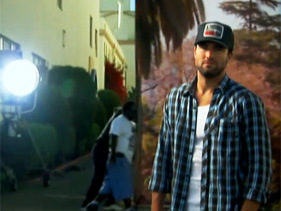
‘It’s a nod to how much work goes into making it feel like a scripted show,’ Adam DiVello explains to MTV News. By Jocelyn Vena Brody Jenner in the finale of “The Hills” Photo: MTV After six seasons, marked by streams of mascara-stained tears and countless barbecues, “The Hills” finally bowed for good on Tuesday. But instead of playing it straight, the last few moments of the series cleverly addressed years of rumors about the reality show’s, well, realness, by panning out to reveal that Kristin’s goodbye with Brody had been filmed on a Hollywood backlot. And although some “Hills” fans have taken issue with the surreal ending, creator Adam DiVello said he was just going for a “wink.” “We had joked early on about different ways to do kind of a wink to whether it was real or not,” DiVello admitted to MTV News. “There were a lot of ideas thrown around, from even Lauren waking up and this whole thing was a dream, which would have been a little ‘Newhart,’ ” he revealed. “We had come up with a bunch of ideas, and then I had this idea to focus it on the Hollywood sign and really just kind of incorporate Hollywood into the ending of it. Our show’s one that’s based in Hollywood, and these kids live, work and play here and never, never really kind of acknowledged in the series that Hollywood is where shows are made.” Of course, that final shot had some fans wondering if it was confirmation from the show itself that what they’d been watching all these years was fiction. But DiVello argued that it confirms the opposite. “It’s a nod to how much work goes into making it feel like a scripted show,” he said. “When we set out to make the show, it was a reality show without the conventions of a reality show. When we showed up to Paramount that day we kind of walked Brody through it, and he was shocked,” DiVello recalled of shooting the finale. “I believe Kristin kind of started to cry a little bit. I think she was surprised when she showed up as well. We had a great time. [Viewers wondered,] ‘Were these things shot on soundstages or were they shot in their apartments?’ But I think everyone knows it was a reality show, obviously. So would he change anything about that ending? “I think it was great. I think we did tie up some stories with the cast and I think, ultimately, not only myself, but the people that work on my team and I think the network and I think America wants to see the kids happy,” he said. “And I think it showed that. You always want to leave the audience wondering what happens next. At the end of the day we were telling stories. I hope people leave it [as] a fun, six-season trip to California,” he said of the “Hills” legacy. “I hope they leave with fond memories of it. We make this show for the fans.” Do you feel any differently about “The Hills” finale having heard the show creator’s assessment. Share your thoughts in the comments. Related Videos On The Red Carpet At ‘The Hills’ Finale The Hills Live: A Hollywood Ending The Hills (Season 6) | Ep. 12 | ‘All Good Things…’ Related Photos The Hills Finale: Behind The Scenes At The Roosevelt The Boys Of ‘The Hills’

See the article here:
‘The Hills’ Finale ‘Acknowledged’ It’s Hollywood Setting, Creator Says

Debi Nova Explains ‘Coming To America’ Moment On ‘When I Was 17’

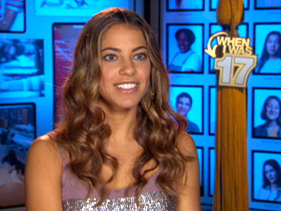
Costa Rica native was overwhelmed by the sheer number of toilet-paper varieties. By MTV News staff Debi Nova Photo: MTV News Since “When I Was 17” premiered in May, we’ve heard celebrity stories of teenage heartbreak and hilarity, triumph and defeat, and OK, a whole lot of foolishness. Drake shared memories of his days rocking what he called a “terrible afro,” Queen Latifah recalled the day she landed her first record deal, and Bret Michaels shared intimate details about the night he lost his virginity. This Saturday’s episode brings us a tale of hope for the future — and a bit of terror at the present. When “Drummer Boy” singer Debi Nova was 17, she emigrated from Costa Rica to Los Angeles. What she found in La La Land was enormously enticing and more than a little overwhelming. “There was a very specific story that marked my coming-to-America moment,” she explains. The event took place almost as soon as her plane had touched down in California and she set out to get some household supplies. “Very first week I get here, I go into the supermarket because I need some toilet paper,” she said. “I go in the toilet-paper aisle and I’m like, ‘OK, unscented, aloe vera, recycled, non-recycled, double-ply, triple-ply, four rolls, eight rolls, 12 rolls, 32 rolls. What do you want?’ ” Tune into Saturday’s show to hear more about Nova’s first year in America, including the embarrassing time she failed her driver’s license test. New York Yankees ace CC Sabathia , who already stood 6-foot-6 before he’d even hit his 18th birthday, and Ciara, who found out what it was like to be cheated on at the tender age of 17, are also featured in the new episode. “When I Was 17” — this week featuring Debi Nova, CC Sabathia and Ciara — airs Saturday at 11 a.m. on MTV. Related Videos ‘When I Was 17’ Sneak Peek Ep. 11 Related Photos When I Was 17 | Ep. 11 | Celebrity Photo Flashback

Go here to read the rest:
Debi Nova Explains ‘Coming To America’ Moment On ‘When I Was 17’

Confused Matthews: How Can South Carolina GOPers Vote for a Indian-American But Not Support a Black President?

Chris Matthews, on Wednesday’s Hardball, invited on recently defeated Republican Representative Bob Inglis to slam Matthews’ favorite targets, namely the Tea Party, Rush Limbaugh and Sarah Palin and after he got the requisite criticisms out of the South Carolina congressman of those entities asked him if he could explain how primary voters from his own party could nominate an Indian-American like Nikki Haley, even though they’ve “got a problem with a black president?” Matthews, clearly not grasping the concept that perhaps voters in South Carolina could cast their ballot based out of purely ideological and not racial motives, asked Inglis the following question: How do you figure your state out? It’s pretty conservative obviously. It’s Strom Thurmond country in many ways and, and it has people like DeMint pretty far over and then people like Lindsey Graham who are sort of regular conservatives. But then you nominated, your party has nominated an Indian-American woman, Nikki Haley. Obviously an attractive candidate, she knows how to present herself obviously, but what’s that about? Is that just an interesting little aspect? It’s okay to be Indian-American but we’ve got a problem with this black president? What’s that about? Before Matthews ended his show on that stumper of a question, he egged on the soon to be former Representative Inglis to attack the Tea Party, Limbaugh and Palin, as seen in the following exchanges that were aired on the July 14 Hardball: CHRIS MATTHEWS: Well, the Tea Party has racked up big wins already in 2010. They scared Senator Arlen Specter out of the Republican primary and watched him lose as a Democrat. Former Alabama Democratic Congressman Parker Griffith did the exact opposite. He jumped into the Republican primary and lost down there. Tea Partiers ousted Senator Bob Bennett at the Republican state convention out in Utah. They ran Governor Charlie Crist right out of the Republican Senate primary in Florida. And the latest victim of the Tea Party is South Carolina congressman Bob Inglis who lost a Republican runoff just last month after getting hammered in town halls for voting for TARP and knocking down false rumors about death panels. He joins us right now. Congressman Inglis, I want to make sure everybody knows you’re not a RINO. You’ve got an 85 percent conservative record, you’ve got a five percent liberal record. You’re a conservative, right? REP. BOB INGLIS: Right, I think it’s actually 93 percent ACU rating. Yeah, yeah. MATTHEWS: Well I looked, I looked at it a couple years ago. So you’re up to date at ninety, ninety-what? INGLIS: Ninety-three percent. MATTHEWS: So you’re not conservative enough for South Carolina. INGLIS: I needed that extra seven. MATTHEWS: Oh my God! Well you told the Associated Press, quote, “I think we have a lot of leaders that are following those television and talk radio personalities and not leading us.” We’ve had a little contest here, as you know, waiting for somebody. Well, you’re a lame duck now but maybe you count. But we’ve been waiting for somebody to say “I’m not really a ditto head. I don’t really follow Rush Limbaugh’s thinking. He’s not my leader.” Are you ready to be the first? INGLIS: Well I’ll tell ya- MATTHEWS: Or are you still gonna hold back? INGLIS: I don’t, I don’t follow Rush Limbaugh’s lead. You know, when, when I found out I didn’t? I was in six years and I was out of Congress for six years and I was listening to him one day and he’s making fun of people in cars who get high fuel efficiency and I thought, you know, Rush, that’s it. I turned the radio off. MATTHEWS: Yeah. INGLIS: Because it didn’t fit with my dad who’s 87 years old. He’s my idea of conservative. He used to tell us, “Now, we gonna let off the gas at the Tarvers’ and you coast to our driveway,” because he’s a conservative. MATTHEWS: Well what happened to Teddy Roosevelt? Wasn’t he a great conservative in the Republican Party? INGLIS: Yeah, absolutely. MATTHEWS: A conservationist. INGLIS: Yeah and so my, yeah and so my thought was, you know, listen, conservatism is saving resources, and, and what Rush was further making fun of is people driving electric cars with regenerative braking. I’m thinking, if I make the investment to get up the hill with my gas, why wouldn’t I want to generate electricity coming down the hill? I’m a conservative. MATTHEWS: Rush, by the way, says a lot of things. He makes fun of anybody who tries to deal with conservation issues, which are traditionally conservative issues. He makes fun of all kinds of things. … MATTHEWS: You, you sir, strike me, as I hate to use the word, as someone who’s well-educated. I know you went to UVA Law School. Is that hurting you? Is – no I’m dead serious about this. Do you get hurt in the Republican Party now for having had a fine education? Do people think, look askance at you and say, “Oh he’s an egghead, he’s got a good degree from UVA” Is that a problem now, it’s better to be a yahoo? Well I mean to be really uneducated like Palin, to really be proud of the fact you don’t know anything? INGLIS: There, there is a sense out there that ignorance is strength. But you know ignorance really is not strength. MATTHEWS: Where did that come from? Where did that come from? INGLIS: And here’s my view. I’m ignorant of a lot of things. There are a lot of things I need to know but if I choose to remain ignorant of those things, that’s when, that’s quite a different matter. So I have a sense of how much I don’t know and I need to find out a lot of information. I think that’s what education gives you is a sense of how much you don’t know and let’s go find it out. MATTHEWS: Well, what do you make of Palin’s – without getting — she seems like, I guess a nice person as a human being but the question is, is she selling herself as someone – she calls it common sense. But I think what she’s really selling is “I don’t read books. I don’t read newspapers, Katie Couric. I don’t read magazines. I don’t need information. I have common conservative sense.” What does that mean? To say you know things without having read it or learned anything? What do people know naturally? … MATTHEWS: Well, that fear that led people like Rick Perry of Texas to talk about secession, those old scare terms about race. I mean race is always an issue in America but to go back and rip that scab off? What’s that about? Why are people doing that? Is it their fear, fear of change or is it just anger or what? INGLIS: Yeah well, I think that we, what we’re finding out here that in 2010 we have not fought the final fight against the scent of racism and won. We’re still in it. We’re still dealing with that problem. We always will be, but we need to extend grace to one another and have some honesty about it, understand that we are different, but let’s find a way to extend grace and get through it, and that’s – rather than womp up those fears and drive with misinformation reactions against people because of their party or their ethnicity. That’s a real problem and it- MATTHEWS: How do you figure your state out? It’s pretty conservative obviously. It’s Strom Thurmond country in many ways and, and it has people like DeMint pretty far over and then people like Lindsey Graham who are sort of regular conservatives. But then you nominated, your party has nominated an Indian-American woman, Nikki Haley. Obviously an attractive candidate, she knows how to present herself obviously, but what’s that about? Is that just an interesting little aspect? It’s okay to be Indian-American but we’ve got a problem with this black president? What’s that about?

Read the original here:
Confused Matthews: How Can South Carolina GOPers Vote for a Indian-American But Not Support a Black President?

VIDEO Chevron Tries to Restrict 1st Amendment Rights of "Crude" Documentary Filmmaker

The ongoing saga of the class action lawsuit, Aguinda v. Chevron, originally filed in 1993 by the people of Ecuador whose rainforest land had been contaminated by oil production practices, and documented on film by Joe Berlinger in “Crude,” has taken a new turn. Chevron's latest diversionary and delaying tactic is to engage in a widespread and unprecedented legal assault on the First Amendment in their attempt to force Berlinger, the celebrated independent documentarian, to turn over more than 600 hours of private film outtakes from “Crude.” Chevron's legal tactic has attracted widespread criticism from prominent individuals across the media community, including actor and filmmaker Robert Redford, journalist Bill Moyers, bestselling author John Perkins, documentarians Michael Moore and Ric Burns, the Director's Guild of America, the Writer's Guild of America, and others. Virtually every major U.S. media outlet, including the NY Times, LA Times, CBS, NBC, ABC, Associated Press, Dow Jones, HBO, and others have opposed Chevron's action in court. This latest action by Chevron is part of a worldwide, desperate litigation campaign by the oil giant to escape liability for what is thought to be the world's worst oil-related environmental catastrophe. The extent of the contamination is almost unfathomable – by Chevron's own admission they dumped at least 15.8 billion gallons of toxic 'produced water' in the region, and their own audits indicate that the number may actually be much higher – more than 18.5 billion gallons. Of the 18.5 billion gallons of toxins, at least 345 million gallons of it was pure crude oil. To put this in perspective, as of June 15, 2010, U.S. government estimates have indicated that the BP spill in the Gulf has spilled somewhere between 73 and 126 million gallons of oil. At least the BP spill was not intentional. By contrast, Chevron's dumping was, by the company's own admission, a deliberate production decision to maximize profits. According to experts, a saving of approximately $1-3 per barrel of oil was achieved by dumping the toxins rather than disposing of them properly. The end result of this has been incredible devastation of a formerly pristine section of Ecuador's Amazon rainforest. Though Chevron no longer operates in the area (having ceased Ecuadorian drilling operations in 1990), the pollution still remains. The people living in that region do not have widespread running water or plumbing, and have had no access to water that has not been polluted by the oil operations for nearly four decades. I have seen firsthand the reality of the aftermath of Chevron's actions in Ecuador. I have seen some of the unlined, unfenced waste pits that Chevron left behind. I have met many people there who have lost their parents, their children, and who are losing heir own lives. The area is besieged with oil-related illnesses; families are plagued with extremely elevated levels of childhood leukemia, spontaneous abortions, birth defects, and other serious oil-related health impacts. Experts have estimated that at least 1,400 people have died needlessly from oil-related sicknesses due to the illegal dumping. In 1993, the people in the region brought a lawsuit against the oil giant to force the company to clean-up the damage it caused on their land. An independent court-expert has estimated that the damage caused in the region could cost as much as $27.3 billion to clean up. However, even that amount will be insufficient to return the people to the lifestyles they knew before the Chevron showed up. Small wonder Chevron are running scared. Without taking sides in the lawsuit itself, the enormous legal liability tied to all of these harms provides the context for why Chevron is so aggressively attacking its critics across the world. Chevron has one animating principle in their attacks on Joe Berlinger, the Ecuadorean people, and anyone attempting to hold the company responsible for the pollution it left behind in Ecuador: to find some way of eliminating the legal liability to protect the company's bottom line. But the time has come for Chevron to stop its attacks, and to stop trying to evade its responsibilities. The company should cease its futile attempts to force documentarians and journalists to open up their files to the company's lawyers, and instead focus on the essential issue: how they will remediate the damage it caused in Ecuador to the 30,000 affected people and their land. http://www.crudethemovie.com/ added by: captainplanet71