Tag Archives: animals

Helicopters vs. Mustangs: A Roundup Racket? | Animal Rights Advocates Say the Methods Are Cruel

Helicopters vs. mustangs: A roundup 'racket'? Animal rights advocates say the methods are cruel, expensive and unnecessary Helicopters vs. Mustangs: Cruel, expensive and unnecessary, animal activists say More than 1,200 wild horses have been captured in the current roundup Jim Wilson/The New York Times The aim of roundups is to reduce the horse population to more sustainable levels. OUTSIDE RAVENDALE, Calif. — It is horse versus helicopter here in the high desert. On one side are nearly 40,000 horses spread over 10 states, whose presence on the range is a last vestige of the Old West. On the other is a group of crusty cowboys whose chosen method of roundup involves rotors more than wrangling, using high-tech helicopters to drive galloping mustangs into low-tech traps. “When they get in here, they know something’s going on,” said Dave Cattoor, 68, a straight-talking roundup expert who has been herding horses since he was 12. “The chips are down.” Over the last month, Mr. Cattoor and his feral quarry have been doing battle under the dry, horizon-to-horizon skies of northeastern California and a neighboring Nevada county, with humans the inevitable victor. More than 1,200 horses have been captured during the current roundup, much to the chagrin of people like Simone Netherlands, an animal rights advocate who says that the roundups — part of a nationwide push to take some 12,000 horses off public lands — are cruel, expensive and unnecessary. “They’re running at full speed for miles and miles for hours, with babies, little babies, and they don’t let up on them,” Ms. Netherlands said. “They’re stressing them out to the max.” The Bureau of Land Management, which is overseeing the roundup, disputes that, saying that the roundups are humane and that it must reduce the wild horse population to more sustainable levels, both for their health and for that of the other animals that live in this harsh terrain. “Some advocate groups would like us to leave the horses out there and let nature take its course,” said Bob Abbey, director of the bureau. “We don’t believe that’s a sound option.” Dollars and dead horses The debate over roundups dates back decades, to the passage of the 1971 Wild Free-Roaming Horse and Burro Act, a federal law that protected what was then a faltering wild horse population and made it illegal for cowboys like Mr. Cattoor to round up horses on their own for sport or profit. “A cowboy really wasn’t a cowboy if you didn’t rope a wild horse,” Mr. Cattoor said. “But they stopped that. They stopped the maintenance, which costs nothing, and turned it into a multimillion-dollar deal. It’s crazy.” Questions about the roundups have intensified in recent years as costs have mounted, both in dollars and in dead horses. Seven horses have died in the current operation, and last winter, a roundup in Nevada resulted in over 100 horse deaths, prompting more than 50 members of Congress to ask Interior Secretary Ken Salazar to look for independent analysis of the bureau’s Wild Horse and Burro Program. Late last month, the bureau did just that, asking the National Academy of Sciences to conduct a technical review of the program. Horses that are captured are offered for adoption, but with demand for horses low and the cost of feed high, the government often ends up quartering them on large private ranches, primarily in Kansas and Oklahoma. In 2009, about 70 percent of the entire program’s $40.6 million budget was spent holding 34,500 horses and burros, a system that the Government Accountability Office has concluded will “overwhelm the program” if not controlled. “They are a symbol of the American West,” said Nathaniel Messer, a professor of veterinary medicine at the University of Missouri and a former member of the federal Wild Horse and Burro Advisory Committee. “But do we need 35,000 symbols of the American West?” 'What you call a racket' For critics like Deniz Bolbol, the pattern of roundup, removal and stockpiling is an example of the bureau’s catering to private interests on public lands, namely by favoring livestock ranchers — who pay the government for the right to graze and who can sell their animals — over wild horses, which cannot be sold for slaughter. “We remove wild horses from the public lands so private livestock can graze, and then we ship the wild horses to private ranchers in the Midwest where we stockpile them and pay private ranchers,” said Ms. Bolbol, a spokeswoman for the group In Defense of Animals, which has sued to stop the roundups. “This is what you call a racket.” And while Mr. Cattoor calls Ms. Bolbol and other protesters “fanatics,” he does not think the government’s reliance on big, periodic roundups makes much sense either, saying the bureau needs more steady maintenance of the wild herds, which can double in size every four years. Perhaps the only other thing the two sides can agree on is that the horses — whose estimated populations range from about 120 in New Mexico to more than 17,000 in Nevada — are magnificent. Art DiGrazia, the operations chief for one of the bureau’s wild horse and burro offices in California, said that some of the mustangs on the range were descended from Army cavalry horses, which were bred for size, speed and strength and left here or given to ranchers. “They have the intelligence and endurance to work out in this country,” said Mr. DiGrazia, a bearded New Jersey native who speaks in a hoarse whisper. “They’ll know before you know that there’s something out there going on.” Judas horse The method of capture is simple: horses are located from helicopters, which have been used in roundups since the mid-1970s, and pushed toward the trap site, essentially a funnel shaped by two netted walls that lead into a temporary corral. Once the herd runs into the funnel, Mr. Cattoor lets loose a so-called Judas horse, which is trained to lead the rest into the trap, where — uncombed, unshod and often stomping and biting — they slowly settle into their new lives as kept animals. All of which is more humane than the old days, said Mr. Cattoor, who recalls cowboys using rope and brawn to bring in a herd, often injuring horses and horsemen alike. “You have to really put the pound on them,” he said. “You’d have to get them sore footed and tired, and there’s a lot of problems with getting them really tired. Today, at this point, this is the best we can do.” One recent morning, Mr. Cattoor and his team conducted several successful runs — 10 horses in one, a handful in another — before a small herd of four horses, their black manes and wild tails flying, came running full-tilt across the desert. The helicopter was close on their heels, whipping up curlicues of dust in the horses’ wake. They were headed straight for the trap, when suddenly the herd broke, with three horses escaping across a field, while a single stallion — the leader — galloped in another direction. The pilot, perhaps 50 feet up, chose to follow the larger group, but horse sense had its way; the three headed into a patch of trees, where helicopters cannot pursue. The stallion, meanwhile, disappeared up a ridge and back into the wild. Mr. Cattoor watched it all, standing near his Judas horse with a resigned smile, as roundup opponents watched happily from a public viewing station several hundred feet away. “These wild horse advocates love it when the horse beats the helicopter,” Mr. Cattoor said. “And they do sometimes win.” This story, headlined ” Horse Advocates Pull for Underdog in Roundups,” first appeared in The New York Times. http://www.msnbc.msn.com/id/39023276/ns/us_news-the_new_york_times/ http://msnbcmedia1.msn.com/j/MSNBC/Components/Photo/100906_NYThorseschopper.grid… added by: EthicalVegan

First-Ever Baby Seahorse Spotted in British Waters

A tiny baby seahorse was measured off the coast of Dorset, England. Image via the Seahorse Trust . It must have been like finding a needle in a haystack, but somehow, in murky water conditions, diver Neil Garrick-Maidment, the executive director of the Seahorse Trust , spotted a single 1.5-inch-long female baby seahorse “clinging onto a piece of seagrass” off the coast of Studland, Dorset — a finding so rare he said it was “akin to seeing a

Read the original here:
First-Ever Baby Seahorse Spotted in British Waters

Elephants: India’s New "National Heritage Animal" To Receive Same Protection As Tigers

Photo: Elephant being bathed in a temple in Thrissur (K.C. Sowmish via The Hindu ) As long-standing icons of its unique cultural psyche, India’s threatened elephants are finally getting the protection — and well-deserved recognition — they need. In a bid for better conservation, earlier this week the Indian government formally declared the elephant its “national heritage animal”, elevating the legendary pachyderm alongside the likes of the majestic tiger, in the hopes of averting a future con… Read the full story on TreeHugger

Originally posted here:
Elephants: India’s New "National Heritage Animal" To Receive Same Protection As Tigers

Chimps Found Deactivating Snares Set By Human Bushmeat Hunters

photo: Graham Racher via flickr Go chimps, go! An interesting new paper in the journal Primates documents how a group of chimpanzees in Bossou, Guinea have been successfully deactivating snares set by human bushmeat hunters. Though not always successful, the scienti… Read the full story on TreeHugger

See the original post:
Chimps Found Deactivating Snares Set By Human Bushmeat Hunters

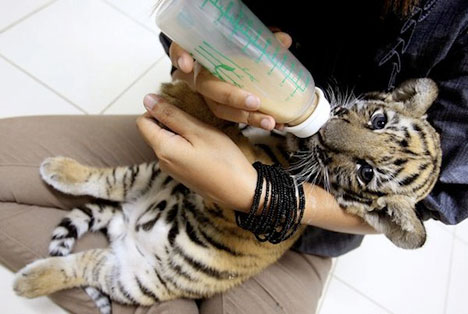
The Week in Animal Photos: Tiger Cubs in Luggage and More (Slideshow)

Photo via National Geographic We’ve got a new regular slideshow here on TreeHugger: The Week in Animal Photos. Catch a glimpse of what the animal kingdom has been up to this week, from a tiger cub disguised as a stuffed tiger rescued from an international smuggling deal to a newly discovered pea-sized frog perched on a pencil tip.

See the article here:
The Week in Animal Photos: Tiger Cubs in Luggage and More (Slideshow)

Earth’s Animals Face GRIM Future | Major Extinction Event Is Taking Place

Earth's animals face grim future Major extinction event taking place, with many wondering what animals will disappear from the planet forever Getty Images: Two of the most important and plentiful groups of marine animals 250 million years ago were corals and brachiopods, also called lamp shells. After the Great Dying, corals were almost wiped out By Jennifer Viegas updated 9/2/2010 2:34:41 PM ET Corals, big mammals and many tropical species could all go extinct in the not too distant future, predict scientists who are attempting to forecast the fate of today's animals by studying what happened to those in the distant past. A complication is that no prior mass extinction event on the planet was driven by a single species. In a period of more than a half-billion years, only three such extinction events appear to have been as devastating as the present one, which is being caused by humans. “We're 100 percent responsible for it,” John Alroy, a researcher in the Department of Biological Sciences at Macquarie University, told Discovery News. “There is no precedent at all for what we're doing,” he added. “All well-understood extinctions in the deep fossil record are tied to environmental changes that were not triggered by the behavior of individual species, such as the asteroid impact 65 million years ago that wiped out the terrestrial (non-avian) dinosaurs.” Alroy used the Paleobiology Database, which compiles data from nearly 100,000 fossil collections worldwide, to track the fate of major groups of animals during Earth's most massive extinction event 250 million years ago: the Permian-Triassic Extinction Event, also known as the “Great Dying.” Alroy, whose findings are published in the latest issue of the journal Science, focused on marine animals, since the fossil record includes many such species. He determined that two of the most important and plentiful groups of marine animals 250 million years ago were corals and brachiopods, also called lamp shells. After the Great Dying, corals were almost wiped out. “There are almost no early Triassic coral fossils in the world,” explained Alroy, who added that corals “eventually recovered all of their lost diversity.” The lamp shells, on the other hand, never recovered. While they're still in existence, they exhibit little diversity and not many of them are around compared to other animal populations. He said these are just a few examples from the past that demonstrate how a species-rich animal group may not necessarily fare well after a major extinction event. The rules governing their, and other animals', diversity change over time, and really go off the chart during and after mass extinction events. Species-rich animal groups “could happen to be very vulnerable to the particular mechanism that creates a particular mass extinction,” he said. They could also lose all of their subspecies, or “during the scramble to fill empty niches after a mass extinction, rival groups may get there first, making it difficult for a group to get back where it was.” Alroy is particularly worried about today's corals. “They don't seem to do well when there's a big environmental change,” he explained. “It's possible that future reef builders won't be corals at all. At different times in the past, reefs have been built by such organisms as sponges and clams.” Mammals with big body sizes, highly endemic tropical species, and certain plants may also die out before this latest extinction event concludes, Charles Marshall told Discovery News. Marshall is a professor in the Department of Integrative Biology at the University of California at Berkeley, where he also directs the university's Museum of Paleontology. He wrote an accompanying “Perspectives” article in the latest Science. Marshall agrees with Alroy that studying past extinctions and diversity patterns can help us to learn what makes different groups of animals more or less prone to dying out. In terms of humanity's impact on the planet, Marshall also agrees that “we have no evidence of a single species causing such havoc.” “However,” he added, “if you are willing to broaden the taxonomic scope a little, when cyanobacteria started producing oxygen in abundance, they basically poisoned the world, converting it from one that was primarily anoxic (without oxygen) to one that was oxic.” added by: EthicalVegan

Taiji Opens Season on Dolphins Today

Photo via Animal Planet Each year in early September, Japan opens season on dolphins, and today marks the start of the season in Taiji, a now notorious place for slaughtering cetaceans thanks to the Oscar-winning documentary The Cove . And of course, activist Ric O’Barry is on the move. He delivered a petition to the US Embassy in Tokyo signed by 1.7 million people from 155 countries demanding an end to … Read the full story on TreeHugger

Original post:
Taiji Opens Season on Dolphins Today

As Long as There are "Veal Calves," There Is No Such Thing as "Humane Treatment"

Costco Responds to Animal Cruelty Charge The mega-popular chain store pledges humane treatment of veal calves Updated 8:30 PM PDT, Wed, Sep 1, 2010 Following the release of video purportedly showing animal cruelty at a supplier's farm, Costco Wholesale vowed Wednesday to make sure the calves that produce the veal on its shelves are treated humanely. “We're very disappointed not only in our vendor but ourselves,'' Jeff Lyons, Costco's senior vice president of fresh foods, said. “We didn't know this was taking place.'' The video taken by the animal rights group, Mercy For Animals, at Ohio-based Buckeye Veal farm in April showed rows of narrow wooden stalls, each of which housed a calf chained by its neck to a low bar. The calves were unable to turn around or even lie down comfortably. Some could be seen trying to pull free. Several were covered in feces. Mercy for Animals' Nathan Runkle said today, “Costco has, literally, taken a step forward on this important issue.'' “However, consumers should know that crate-free doesn't mean cruelty-free,'' he added. “Ditching veal is the most compassionate choice shoppers can make to prevent animal abuse.'' Lyons said Costco has ordered its supplier — Atlantic Veal and Lamb Inc. — to trace all the veal that became part of Costco's inventory. “(Atlantic Veal is) right now on notice to provide the lot identification so that we can identify the farms that have the proper handling procedures,'' Lyons said. “We will then audit those farms and make sure that is a true statement, and once that's done, we will continue to do business with them. But if they cannot provide that information, then we will delete the program. “We're going by the obligations that we've made, the commitments we've made to that vendor, and we're doing our research.'' Gaylord Barkman of Buckeye Veal, said on Tuesday that the company has been in the process of switching from individual stalls to group housing, where the calves can roam and interact with other calves. Buckeye Veal has 480 calves in individual shelves, 850 in group housing and 150 that will be moved to group housing in four weeks. When asked whether Costco would accept calves from Buckeye Veal's group housing facility, Lyons said, “If that manufacturer is doing something that we don't agree with but is acceptable by the Veal Association and the American Veterinary Association, that's not our business — that's their business. “If they were doing something illegal, that'd be different. But if everything is approved by other entities, then they can do whatever they like. We're not going to participate in that.'' First Published: Sep 1, 2010 8:21 PM PDT added by: EthicalVegan

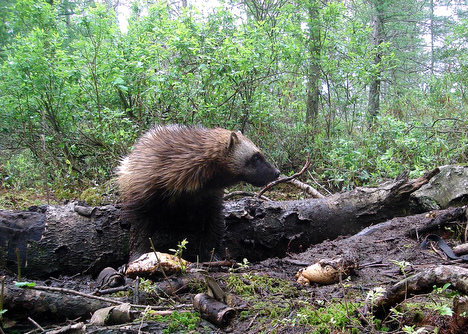
Michigan’s Last Wild Wolverine a Victim of Budget Cuts?

Taken June 2009. Courtesy Jeff Ford . Michigan lost its last wild wolverine in March. State wildlife officials later said the animal, a female about nine years old, would be mounted and put on display at a state park. But that was months ago. What happened to plans for the display? It turns out the animal may never be seen again, because there’s not enough money in the state budget to pay for it. … Read the full story on TreeHugger

Read this article:
Michigan’s Last Wild Wolverine a Victim of Budget Cuts?

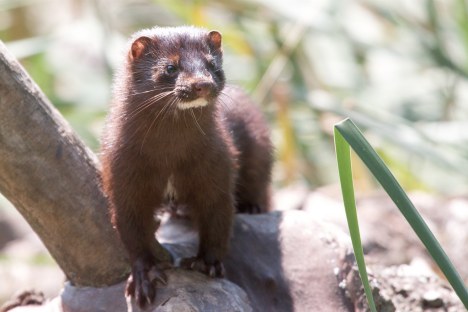
50,000 Minks Loose In Greece After Fur Farm Raid

Photo via qmnonic Nothing like a flood of minks loose in a country’s already fragile ecosystem to put environmentalists in a tough spot. Two fur farms in northern Greece were raided, the results of which saw 50,000 minks running for the hills. Fortunately for everyone (except the minks) the problem could solve itself in a short time. … Read the full story on TreeHugger

Original post:
50,000 Minks Loose In Greece After Fur Farm Raid