Tag Archives: Associated Press

AP White House Reporter Loven Jumps to Liberal Democratic Political PR/Lobbying Shop

Jennifer Loven, an 18-year AP veteran and the wire service’s chief White House correspondent, has decided to put her communications talents to work for The Glover Park Group , a “strategic communications firm” founded in 2001 by a bunch of Clinton and Gore staffers, most prominently Joe Lockhart, who found themselves unemployed after the 2000 election. She’ll be “Managing Director in its Public Affairs practice,” a Thursday press release from the Glover Park Group, plugged by Politico’s Mike Allen , announced. She’s the second President in a row of the White House Correspondents’ Association to leave journalism for a left-wing, or at least left-leaning, lobbying outfit. In June, Bloomberg’s White House reporter, Ed Chen, formerly of the Los Angeles Times, jumped to the Natural Resources Defense Council as Federal Communications Director. (My complete Obama-journalism revolving door list .) Loven held the WHCA position for 2008-2009 and was succeeded by Chen. Amongst the clients touted on the Glover Park Group’s Web site: American Civil Liberties Union, Alliance for Climate Protection, Campaign for Women’s Lives, Better World Campaign and the Center for Interfaith Action on Global Poverty. They also list some corporate clients, but no conservative activist groups. The firm’s leaders include a who’s who of ex-Clinton and Gore operatives, such as “Founding Partner and Managing Director” Joe Lockhart , “the former chief spokesman and senior adviser to President Bill Clinton from 1998-2000” who “served as Senior Advisor to Sen. John Kerry’s 2004 presidential bid.” Earlier, he toiled as “Deputy Press Secretary for the 1988 Dukakis-Bentsen campaign, and Assistant Press Secretary for the 1984 Mondale-Ferraro campaign.” In between all that, he put in stints as “Assignment Editor at ABC News and Deputy Assignment Manager for CNN in Washington.” Another “Founding Partner and Managing Director,” Carter Eskew , “was Chief Strategist for the Gore 2000 presidential campaign, leading the message and creative team that helped Vice President Gore win every primary and caucus, secure the nomination, then make up a 20 point deficit in the polls to a victory in the popular vote.” Susan Brophy , “Managing Director,” from 1993-1998 was “Deputy Assistant to the President and Deputy Director of Legislative Affairs, where she developed, implemented and directed legislative strategy with the White House, administration and Congress in support of President Clinton’s policy priorities.” Loven’s husband, by the way, is a liberal environmental activist. A 2009 National Review “Media Blog” post provided an excerpt from this bio for him: Roger Ballentine is the President of Green Strategies Inc., where he advises and represents businesses, associations, government agencies and non-profit entities on domestic and international public policy issues and business strategies, focusing on energy, conservation and environmental matters. Roger is also a Senior Fellow at the Progressive Policy Institute in Washington D.C. where he works to develop cutting edge, third way approaches to public policy challenges in the areas of energy and the environment. He also served as Senior Advisor to the Kerry-Edwards Campaign on energy and environmental matters. Roger previously was a senior member of the White House staff, serving President Bill Clinton as Chairman of the White House Climate Change Task Force and Deputy Assistant to the President for Environmental Initiatives. Prior to being named Deputy Assistant to the President, Mr. Ballentine was Special Assistant to the President for Legislative Affairs, where he focused on energy and environment issues. … He and his wife, journalist Jennifer Loven, reside in Chevy Chase, Maryland.

Excerpt from:
AP White House Reporter Loven Jumps to Liberal Democratic Political PR/Lobbying Shop

Wire Watch: Rostenkowski Name That Party Round-up

Wednesday evening, Brent Baker at NewsBusters noted that two of the Big Three television networks failed to tag Dan Rostenkowsi, the former long-time congressman from Chicago who was ousted from his seat in 1994 over corruption charges and ended doing prison time, as a Democrat. Rostenkowski (RIP), who was 82, died yesterday. At the five major wire services whose reports I reviewed — The Associated Press, Reuters, UPI, AFP, and the business-oriented Bloomberg News — Rosty’s Democratic affiliation made at least one appearance. But the prominence and directness of those appearances varied widely. Not surprisingly, the Associated Press and writer Don Babwin did the worst job of identifying Rosty’s party, waiting until the eleventh paragraph to directly tag him (the eighth paragraph contains a generic reference to the “Chicago Democratic machine”), and poured it on the thickest when referring to the supposedly beloved bygone days of bipartisanship: Rostenkowski became symbol of power and excesses With his rumpled suits and gruff, growling voice, former Rep. Dan Rostenkowski was far more comfortable behind closed doors than in front of the camera or behind a podium. Rostenkowski left speeches to others, but he quietly wielded enormous power on Capitol Hill for more than 30 years, becoming one of the most powerful lawmakers of his time – and a potent symbol of Washington’s excesses after he pleaded guilty to corruption charges. When Rostenkowski died Wednesday of lung cancer at age 82, those who knew him recalled a meat-and potatoes politician from an era that doesn’t exist anymore, where leaders crossed party lines to cut deals and seek consensus, and where a young man from Chicago’s Northwest Side could grow up to shape the national agenda as head of a congressional committee. Today most of that power rests with the House speaker. … Back home, where he emerged from the Chicago Democratic Machine, Rostenkowski brought in millions of federal dollars for public works projects, including improvements to the Kennedy Expressway, the transformation of Navy Pier on Chicago’s downtown lakefront into a recreational area, and the construction of a train line to the city’s biggest airport. … Rostenkowski was at once a tough politician who called Chicago politics a “blood sport,” and a master at the disappearing art of political compromise. So even as he fought battles on behalf of Chicago mayors back home, the staunch Democrat worked closely with President Ronald Reagan and President George H.W. Bush in Washington. “We were going to work together,” he once said. “We were going to get something done. We were Democrats and Republicans, but we were also legislators.” Sensible, Constitution-based conservatives more accurately recall the years fondly described by Babwin as the period when Congressional Republicans could usually be counted to eventually cave in to the government-expanding ideas of Democrats and then figure out a way to pay for them by becoming what Newt Gingrich, who become the first to seriously change that dynamic in 1994 (unfortunately not consistently), used to call “tax collectors for the welfare state.” At Reuters , Nick Carey got the D-word into the third paragraph, while remarkably (and correctly) connecting Rostenkowski to a current congressman in serious trouble: Former Representative Dan Rostenkowski dies at 82 Dan Rostenkowski, who as Congress’ chief tax-writer was one of most powerful U.S. politicians in the 1980s and early 1990s until brought down by a corruption conviction and a 17-month prison sentence, has died at age 82. The office of an alderman in Rostenkowski’s old congressional district in Chicago on Wednesday confirmed his death. As chairman of the House of Representatives Ways and Means Committee for 13 years starting in 1981, the Illinois Democrat had a hand in some of the most important legislation of that period. But a federal grand jury indicted him on felony corruption charges in 1994, and he eventually pleaded guilty to mail fraud. Just last March, another Democrat who led the Ways and Means Committee, Charles Rangel, was forced to step down as chairman in the face of ethics charges. UPI’s unbyllined coverage was hard on Rosty but overly light on the D-word, putting in the worst performance of all five wire services in that regard. The coverage never directly referred to him as a Democrat, only noting that his father was a party member: Former U.S. Rep. Dan Rostenkowski dead Former U.S. Rep Dan Rostenkowski, who rose to be chairman of the House Ways and Means Committee and went to prison in disgrace, died Wednesday. He was 82. Rostenkowski died at his summer home in Powers Lake, Wis., after a long battle with cancer, the Chicago Tribune reported. A onetime Washington political insider and power broker, Rostenkowski represented his Chicago 5th Congressional District in Congress for 36 years, rising to head the powerful tax-writing Ways and Means Committee that rewrote the 1986 U.S. tax code. The son of 32nd Ward Democratic Alderman Joseph Rostenkowski, Daniel was first elected to the House of Representatives in 1958 and served until scandal brought him down in 1994. He was indicted on 17 counts ranging from mail and wire fraud to obstruction of justice, including hiring ghost payrollers and maintaining political slush funds. Over at AFP , the unbylined story’s headline weirdly didn’t name Rosty, but got the D-word into the third paragraph, while doing a pretty good job of succinctly describing his political life: Powerful 18-term former US congressman dies CHICAGO — Dan Rostenkowski, a powerful legislator during the Ronald Reagan era who was elected to 18 terms in Congress before being arrested on corruption charges, died Wednesday at the age of 82. An old-style Chicago ward boss and protege of the windy city’s legendary mayor Richard J. Daley, Rostenkowski served in the House of Representatives from 1959 to 1995. As chairman of the powerful Ways and Means Committee from 1981 until 1994, the Illinois Democrat helped broker a key deal to keep the Social Security system solvent and played a major role in reforming taxes, welfare and foreign trade. He was unseated by an upstart Republican in the 1994 election after being indicted in a wide-ranging corruption case where he was accused of everything from maintaining slush funds to accepting bribes. Despite pleading guilty to two counts of mail fraud for misusing taxpayer money in 1996 and serving 15 months in jail, Rostenkowski maintained his innocence for the rest of his life. He was pardoned by outgoing President Bill Clinton just before Christmas 2000. Business-oriented Bloomberg News was the only outlet to put Rostenkowski’s party affiliation into its headline, and otherwise pulled no punches on using the D-word. As would be expected, Laurence Arnold’s story concentrated on Rosty’s involvement with tax legislation: Dan Rostenkowski, Democrat Who Steered Tax Policy, Dies at 82 Dan Rostenkowski, a product of Chicago’s fabled political machine who engineered U.S. tax policy, indulged in the perks of his job during 36 years in Congress and wound up in prison for misusing funds, has died, according to a Democratic official. He was 82. He died today at his home in Wisconsin, the official said. As chairman of the House Ways and Means Committee from 1981 to 1994, Rostenkowski was a Democratic rampart that three presidents had to navigate if they hoped to change U.S. tax laws as well as health and Social Security policies. The grandson of Polish immigrants and protégé of legendary Chicago Mayor Richard J. Daley, Rostenkowski was “big, brash and bellowing — a door slammer and, at times, a bully,” Jeffrey Birnbaum and Alan Murray wrote in “Showdown at Gucci Gulch: Lawmakers, Lobbyists and the Unlikely Triumph of Tax Reform,” an account of the Tax Reform Act of 1986. That law was Rostenkowski’s best-known achievement. He worked with Republican President Ronald Reagan and other lawmakers to lower tax rates while ending enough deductions and shelters to avoid increasing the federal budget deficit. He became something of a national celebrity for urging viewers, in a televised address, to send letters supporting tax reform to “Rosty, Washington, D.C.” Tens of thousands of letters came in that way, and for a time “Write Rosty” buttons were the rage on Capitol Hill. His long career ended in an indictment, lost reelection, conviction and prison sentence. Since Bloomberg mentioned health policy, it’s worth recalling that one of Rosty’s worst political moments related to how he wanted to “reform” Medicare. As would be expected from a Democrat, it involved taxes and higher premiums. Eventually it was kicked to the curb. That’s because as a YouTube courtesy of CBSNewsOnline shows, opposition was fierce. The video’s last few moments capture an exchange that could have come straight out the Democratic Party’s 2010 playbook: Rostenkowski (to a reporter walking alongside him as he was attempting to “escape,” i.e., avoid talking to, an angry crowd of seniors): I don’t think they understand what the government’s trying to do for them. That’s always been a problem. Reporter: Do you sympathize with their anger on this? Rostenkowski: No, I don’t think they understand what’s going on. With all due respect to the late congressman, the upset seniors knew exactly what was going on then; many more of us understand it even better now. Cross-posted at BizzyBlog.com .

See the original post:
Wire Watch: Rostenkowski Name That Party Round-up

As Freddie Begs for More Cash, AP’s Zibel Perpetuates Fannie Mae/Freddie Mac Myths

There are quite a few shaky assertions in Alan Zibel’s Associated Press report yesterday about Freddie Mac’s latest quarterly loss ($6 billion), its latest bailout installment request to the U.S. Treasury ($1.8 billion), and the cumulative taxpayer bailout amounts that have been paid out to Freddie Mac and big sister Fannie Mae thus far ($148.2 billion) — too many to cover in a blog post. So I’ll concentrate on the howlers present in just a single paragraph near the end, wherein the AP reporter attempts to explain why the two formerly government-sponsored mortgage giants that are now government-bailout enterprises ran into the ditch. The verbiage pretty much states the meme that the establishment press seems to want the public to swallow about what went down, and who’s to blame: During the housing boom, Fannie and Freddie faced political pressure to expand homeownership and competitive pressure from Wall Street to back ever-riskier loans. When the market went bust, defaults and foreclosures piled up, and the government had to take them over. Zibel treats the two giants as if they were innocent bystanders in a boom that “just so happened” to coincide with the political pressures it faced. Nonsense. It’s more accurate to say that Fan and Fred fed the boom to the point of being its major cause . Many already know that in 1999, Fannie Mae announced looser lending standards (Fred soon followed; go here to see what this specifically meant). Even the New York Times was a bit concerned at the time: In moving, even tentatively, into this new area of lending, Fannie Mae is taking on significantly more risk, which may not pose any difficulties during flush economic times. But the government-subsidized corporation may run into trouble in an economic downturn, prompting a government rescue similar to that of the savings and loan industry in the 1980’s. ”From the perspective of many people, including me, this is another thrift industry growing up around us,” said Peter Wallison a resident fellow at the American Enterprise Institute. ”If they fail, the government will have to step up and bail them out the way it stepped up and bailed out the thrift industry.” Probably much more important is something that is about the best-kept secret outside of the Wall Street Journal in the establishment press. In a December 29, 2009 article, the aforementioned Wallison conveyed an assertion by Edward Pinto, who is certainly in a position to know, that, as far back as 1993, Fan and Fred “routinely misrepresented the mortgages they were acquiring, reporting them as prime when they had characteristics that made them clearly subprime or Alt-A.” In other words, they deceived the financial markets and the ratings agencies on a massive scale about the underlying quality ofhundreds of billions if not trillions of dollars of securitized mortgages. If Zibel isn’t aware of this, he should be. If this has anything to do with “competitive pressure,” I’d like him to explain how that’s the case. It’s also not written in stone that “the government had to take them over.” Perhaps it felt obligated because of the implicit guarantees against default (they were not explicit, despite Zibel’s claim that they were), but the legal requirement for Uncle Sam to take over Fan and Fred in troubled circumstances was not there. Zibel wants readers to believe that Fan and Fred were really just victims of a “market (that) went bust” during the final year of the Bush administration. No sir, it has become painfully apparent that they sowed the seeds of that bust by committing fraud on what may be an unprecedented scale all the way back to the early Clinton years. Taxpayers are now reaping the whirlwind. Cross-posted at BizzyBlog.com .

Continued here:
As Freddie Begs for More Cash, AP’s Zibel Perpetuates Fannie Mae/Freddie Mac Myths

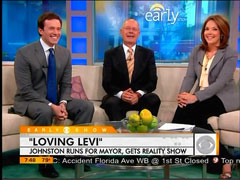
CBS ‘Early Show’ Promotes Levi Johnston Pitch for Reality Show

Teasing an upcoming story in the 7:30AM ET half hour on Tuesday’s CBS Early Show, co-host Harry Smith cheerfully promoted Levi Johnston’s pitch for a reality show in Alaska: “He’s going to star in a new reality show and it’s all about him running for mayor of Wasilla. That’s right, he’s gunning for his would-have-been mother-in-law’s old job.” Later, Smith further teased: “Johnston’s quest to follow in Sarah Palin’s foot steps and hold political office.” Introducing the report, fill-in co-host Erica Hill remarked how Johnston would “be chasing Sarah Palin’s legacy.” Correspondent Priya David-Clemens discussed the show as if it was about to go on the air: “He’s inked a reality show deal that will be all Levi and no Bristol. The new show, called ‘Loving Levi: The Road to the Mayor’s Office,’ will follow the young father as he campaigns for the top job in his hometown of Wasilla, Alaska.” In fact, as the New York Times reported , the show is simply an idea being pitched by Johnston and producers but has not been picked up any network yet. David-Clemens touted a description of the proposed show: “In a statement to ‘Us Weekly,’ the show’s executive producer said, quote, ‘he’ll give us a real inside look into who he is as a father, a skilled hunter, an avid dirt biker, and, of course, his journey down the road of small town politics, right after he gets his high school diploma.'” Following the story, Hill noted: “And he [Johnston] was asked at one point what his ideas for Wasilla are. The answer, ‘you’ll have to wait for the show.'” Smith remarked: “I wonder where his – where his politics are? Left, center, Right?” Hill responded: ” I am absolutely intrigued.” In contrast to the Early Show, ABC’s Good Morning America only offered a 15-second news brief to the topic in the 8:00AM ET hour, instead of a three-minute segment. GMA news reader JuJu Chang reported: “And finally, looking to extend his moment in the spotlight, Palin family nemesis Levi Johnston is jumping into politics. Johnston’s manager says he’s planning to run for city council or mayor in his hometown of Wasilla. All that for a new reality show.” NBC’s Today skipped the story. Here is a full transcript of the August 10 Early Show segment: 7:30AM TEASE HARRY SMITH: And on a much lighter note, Levi Johnston isn’t letting his second breakup with – in case anybody’s keeping score – with Bristol Palin slow him down. He’s going to star in a new reality show and it’s all about him running for mayor of Wasilla. That’s right, he’s gunning for his would-have-been mother-in-law’s old job. Did I get that right? ERICA HILL: Which came first, the show or the campaign? SMITH: Oh, I wonder? 7:41AM TEASE SMITH: Coming up next, Levi Johnston’s quest to follow in Sarah Palin’s foot steps and hold political office. 7:45AM SEGMENT ERICA HILL: Just one week after Bristol Palin dumped Levi Johnston because, as she said, he was obsessed with the limelight, it turns out, well, he’s got his own reality show. Only this one has a Wasilla twist. He’ll be chasing Sarah Palin’s legacy. Correspondent Priya David-Clemens has more. [ON-SCREEN HEADLINE: “Loving Levi;” Johnston Runs for Mayor, Gets Reality Show] PRIYA DAVID-CLEMENS: When Bristol Palin and Levi Johnston announced their engagement- BRISTOL PALIN: He got down on one knee and asked me to marry him. DAVID-CLEMENS: -rumors of a reality show quickly followed suit. BONNIE FULLER [EDITOR-IN-CHIEF, HOLLWOODLIFE.COM]: Bristol Palin and Levi Johnston are a perfect example of new reality stars. They already have a little fame as a result of being related to Sarah Palin. DAVID-CLEMENS: The two recently went their separate ways. Bristol says Levi’s hunger for the spotlight was partly to blame. Now he’s inked a reality show deal that will be all Levi and no Bristol. The new show, called ‘Loving Levi: The Road to the Mayor’s Office,’ will follow the young father as he campaigns for the top job in his hometown of Wasilla, Alaska. In a statement to ‘Us Weekly,’ the show’s executive producer said, quote, ‘he’ll give us a real inside look into who he is as a father, a skilled hunter, an avid dirt biker, and, of course, his journey down the road of small town politics, right after he gets his high school diploma.’ He’s part of the latest reality in reality TV. People trying to cash in and create industries based solely on their stints on these shows. The most successful example, Kim Kardashian. She’s built a brand that earns more than $5 million a year. UNIDENTIFIED WOMAN: Like what is the point of this? KIM KARDASHIAN: What do you mean what is the point of this? You want to know what your boyfriend’s up to. DAVID-CLEMENS: But if Levi hopes to replicate Kardashian, he’ll have to make small town politics into big time TV. FULLER: The new reality stars are like ‘come on in, come take my picture, come in my house. See what I look like without my clothes on.’ DAVID-CLEMENS: Given his track record of photo shoots, that’s something Levi may not have a problem with. Priya David-Clemens, CBS News, Los Angeles. HILL: There’s a lot going on in this story. Two of my favorite tidbits. HARRY SMITH: Yes? HILL: They approached him with the idea. So at first he said ‘I don’t really know about this’ and then he thought ‘maybe I’ve got something here.’ SMITH: Okay, right. HILL: And he was asked at one point what his ideas for Wasilla are. The answer, ‘you’ll have to wait for the show.’ SMITH: I wonder where his – where his politics are? HILL: I am absolutely intrigued. SMITH: Left, center, Right? HILL: Well, he calls himself half Hollywood, half redneck, so I don’t know what of marriage that gets you. SMITH: And avid dirt biking. HILL: Avid, not just a dirt biker. SMITH: That’s right, that was what jumped out at me. Because if you’re putting in a political resume, if it just said dirt biking, I mean, why would you vote for a guy like that? HILL: But if it’s avid- SMITH: I think that’s- JEFF GLOR: When you’re avid about it- HILL: I think there is more to Levi Johnston than meets the eye. We’ve seen just about all we can. [LAUGHTER] SMITH: No mas.

More here:
CBS ‘Early Show’ Promotes Levi Johnston Pitch for Reality Show

Copenhagen Dashed: AP Reports Lament That Bonn Talks ‘Slip Backward’ and ‘Stumble’

The past week has brought forth a couple of items from the Associated Press’s — and for the most part the establishment press’s — special corner of journalistic unreality. It is an area where human-caused global warming is still a given, and where that the nastiness known as ClimateGate that exposed the entire global warming enterprise as entirely unsupported by verifiable scientific data doesn’t exist. Maybe we should refer to that special corner as “The Climate Zone.” The reports each arrived via AP Writer Arthur Max. Mr. Max and conference attendees at climate negotiations in Bonn shouldn’t be mad about having the opportunity to spend in Germany’s capital city. After all, the temperatures there, based on the current report for Tuesday and plus the three forecasted days in the graphic at the top right (seen currently at Google ), are on track to be virtually identical to the city’s pleasant historical August average highs and lows of 73 and 54 degrees , respectively, for August. But despite the reasonably pleasant atmosphere (yeah, I know temps and climate aren’t the same, so back off already), Mr. Max’s August 6 and August 8 reports tell us that discussions between “rich” and “poor” countries have been quite frosty. Meanwhile, reactions from the the supporters of international statist expansion in the environmental movement who are on hand for the festivities have been quite heated. Overall, everyone, including the clumsy Mr. Max, is making mince meat of President Barack Obama’s claim, occasionally echoed in establishment press outlets at the time, to have accomplished anything meaningful at last December’s Copenhagen conference. First, here are the opening paragraphs from Max’s Friday missive : Climate talks appear to slip backward Global climate talks appeared to have slipped backward after five days of negotiations in Bonn, with rich and poor countries exchanging charges of reneging on agreements they made last year to contain greenhouse gases. Delegates complained that reversals in the talks put negotiations back by a year, even before minimal gains were scored at the Copenhagen summit last December. “It’s a little bit like a broken record,” said European Union negotiator Artur Runge-Metzger. “It’s like a flashback,” agreed Raman Mehta, of the Action Aid environment group. “The discourse is the same level” as before Copenhagen. The sharp divide between rich and poor nations over how best to fight climate change – a clash that crippled the Copenhagen summit – remains, and bodes ill for any deal at the next climate convention in Cancun, Mexico, which begins in November. “At this point, I am very concerned,” said chief U.S. delegate Jonathan Pershing. “Unfortunately, what we have seen over and over this week is that some countries are walking back from progress made in Copenhagen, and what was agreed there.” Fortunately or unfortunately (I’m going with the former), there really wasn’t much that “was agreed there,” despite Pershing’s posing, as Max revealed in his Sunday submission (bold is mine): Analysis: Climate talks stumble from Page 1 The new climate change treaty under negotiation for the past 2 1/2 years begins with a brief document called “A Shared Vision.” The problem is, there isn’t one. The latest round of talks that concluded Friday showed that the 194 negotiating countries have failed to even define a common target or method for curbing greenhouse gases – just one example of the ongoing divide among rich and poor nations. Talks began in 2007, with the aim of wrapping up a deal in Copenhagen last December. But that didn’t happen, despite the presence of 120 heads of state or government. It ended instead with a three-page statement of intentions brokered by President Barack Obama. Though less than expected, the Copenhagen Accord scored some breakthroughs. It boiled down the core elements of a deal to 12 carefully worded paragraphs, and it inscribed hard-fought compromises by the main protagonists, the U.S. and China. Details were to be filled in by the next major conference in Cancun, Mexico, starting in November. But the accord was never formally adopted. … The paper was merely “noted” by the conference, stripping it of any legal force. Now, much of the Copenhagen deal has been thrown open again. As readers can see, Mr. Max couldn’t stay consistent in his musings even in the space of five paragraphs. In the third paragraph above, he notes that a deal “didn’t happen.” But in the seventh, he says that “the Copenhagen deal has been thrown open again,” as if a deal really was done. What transpired in Copenhagen was not a “deal.” If “the paper” had no “legal force” and could only be “‘noted” by the conference,” it really didn’t rise even to the level of what most of us would consider a “memorandum of understanding.” In other words, there really never has been a “deal.” Then again, for journalists in “The Climate Zone” who have had years of practice presumptively insisting that human-caused global warming is settled science, when it’s not — not even the “warming” part, as one leading advocate admitted in one of the ClimateGate e-mails — making the leap from “no deal” to “deal” hardly causes them to break a sweat. Cross-posted at BizzyBlog.com .

Read the rest here:
Copenhagen Dashed: AP Reports Lament That Bonn Talks ‘Slip Backward’ and ‘Stumble’

AP’s Fall-out-of-Chair Headline: ‘Adult Stem Cell Research Far Ahead of Embryonic’

A week ago, AP Science Writer Malcolm Ritter committed a serious act of journalism by telling readers what is really going on in stem cell science. It ought to be required reading for the Obama administration, which seems to be making a crusade out of human embryonic stem cell research (hESCR) while acting to stifle what appears to be significant progress in adult stem cell research (ASCR). The amazing title of the AP reporter’s article is “Adult stem cell research far ahead of embryonic.” Given the establishment press’s years-long favoritism towards hESCR going back at least to George W. Bush’s 2001 announcement limiting federal government involvement in that area, it’s enough to make you wonder if Ritter knew that his editors were on vacation or away on other business on August 2. Here are just some of the exemplary paragraphs from Ritter’s long report : … For all the emotional debate that began about a decade ago on allowing the use of embryonic stem cells, it’s adult stem cells that are in human testing today. An extensive review of stem cell projects and interviews with two dozen experts reveal a wide range of potential treatments. … Adult stem cells are being studied in people who suffer from multiple sclerosis, heart attacks and diabetes. Some early results suggest stem cells can help some patients avoid leg amputation. Recently, researchers reported that they restored vision to patients whose eyes were damaged by chemicals. Apart from these efforts, transplants of adult stem cells have become a standard lifesaving therapy for perhaps hundreds of thousands of people with leukemia, lymphoma and other blood diseases. … Embryonic cells may indeed be used someday to grow replacement tissue or therapeutic material for diseases like Parkinson’s or diabetes. Just on Friday, a biotech company said it was going ahead with an initial safety study in spinal cord injury patients. Another is planning an initial study in eye disease patients later this year. But in the near term, embryonic stem cells are more likely to pay off as lab tools, for learning about the roots of disease and screening potential drugs. … Some of the new approaches, like the long-proven treatments, are based on the idea that stem cells can turn into other cells. Einhorn said the ankle-repair technique, for example, apparently works because of cells that turn into bone and blood vessels. But for other uses, scientists say they’re harnessing the apparent abilities of adult stem cells to stimulate tissue repair, or to suppress the immune system. “That gives adult stem cells really a very interesting and potent quality that embryonic stem cells don’t have,” says Rocky Tuan of the University of Pittsburgh. Though he alludes to the concept in the bolded sentence above, one word missing from Ritter’s report is “potency,” which in stem cell science refers to a cell’s ability to create unrelated types of cells. The Mayo Clinic describes the status of adult stem cells thusly: … it was thought that stem cells residing in the bone marrow could give rise only to blood cells. However, emerging evidence suggests that adult stem cells may be more versatile than previously thought and able to create unrelated types of cells after all. For instance, bone marrow stem cells may be able to create muscle cells. This research has led to early-stage clinical trials to test usefulness and safety in people. Mayo also notes that “Researchers have reported being able to transform regular adult cells into stem cells in laboratory studies. By altering the genes in the adult cells, researchers were able to reprogram the cells to act similarly to embryonic stem cells.” There was a time when “pluripotency,” the ability of a stem cell to give rise to any kind of human cell, was thought to be the sole province of hESCR. That may still conceivably be true, but if enough adult cells of different types can be coaxed into creating other types of cells, they may be able to cover the gamut of human tissue even if none are ever induced into true pluripotency. Besides, some scientists are saying that true pluripotency from adult stem cells is not that far away . So remind me, if hESCR has such limited use, why did President Obama make such a big deal of reversing President Bush’s Executive Order, thereby allowing federal funds to go into ESCR, while proclaiming that “ensuring that scientific data is never distorted or concealed to serve a political agenda, and that we make scientific decisions based on facts, not ideology”? Perhaps he can explain to Malcolm Ritter how he knows that adult stem cells are Republican, and embryonic ones are Democratic. Graphic found at the Stem Cell Blog . Cross-posted at BizyBlog.com .

See more here:
AP’s Fall-out-of-Chair Headline: ‘Adult Stem Cell Research Far Ahead of Embryonic’

Establishment Press Ignores Counterpunch Accusations That Sherrods Mistreated Workers at New Communities

What follows was eminently predictable, but noting it is nonetheless necessary. Shirley Sherrod, and to a lesser extent her husband Charles, were media celebrities for a while in late July. Readers might have noticed their near absence from establishment media news reports during the past seven days. It would be easy to think that this has occurred because the story played itself out, with nothing newsworthy to add. That stopped being true on Monday, August 2, when a column by Ron Wilkins (“The Other Side of Shirley Sherrod”) appeared in the leftist alternative publication Counterpunch . Wilkins is currently a professor in the Department of Africana Studies (not misspelled) at Cal State University. He claims in the final sentence of his column that he is knowledgeable concerning what he is writing because “I was one of those workers at NCI.” “NCI” is New Communities, Inc., described at a RuralDevelopment.org link as “the land trust that Shirley and Charles Sherrod established, with other black farm families in the 1960’s.” Here’s part of what Wilkins alleges (excerpted items are not in the same order as they originally appeared; out of order verbiage is identified): Imagine farm workers doing back breaking labor in the sweltering sun, sprayed with pesticides and paid less than minimum wage. Imagine the United Farm Workers called in to defend these laborers against such exploitation by management. Now imagine that the farm workers are black children and adults and that the managers are Shirley Sherrod, her husband Rev. Charles Sherrod, and a host of others. But it’s no illusion; this is fact. Shirley Sherrod was New Communities Inc. store manager during the 1970s. As such, Mrs. Sherrod was a key member of the NCI administrative team, which exploited and abused the workforce in the field. The 6,000 acre New Communities Inc. in Lee County promoted itself during the latter part of the 1960s and throughout the 70s as a land trust committed to improving the lives of the rural black poor. Underneath this facade, the young and old worked long hours with few breaks, the pay averaged sixty-seven cents an hour, fieldwork behind equipment spraying pesticides was commonplace and workers expressing dissatisfaction were fired without recourse. Worker protest at New Communities eventually garnered some assistance from the United Farm Workers Union in nearby Florida in the person of one of its most formidable organizers, black State Director, the late Mack Lyons. … Fearful of both UFW efforts to unionize NCI’s labor force and scrutiny by the Georgia State Wage and Hour Division, the Sherrods and NCI management hastily issued checks in varying amounts to strikers to makeup ostensibly for minimum wage differentials. It is bitter irony that the Sherrods have succeeded in being awarded $300,000 following a discrimination lawsuit, while … impoverished NCI black laborers whom NCI exploited were never adequately compensated for their “pain and suffering.” (the following sentences appeared earlier in the column) … Justice and integrity require at least as much accountability from Mrs. Sherrod to the poor black farm workers of NCI as to the white farmers she came to befriend. This lack of full disclosure of the whole truth is a “sin of omission” that trivializes the suffering of poor black farm workers and exacerbates the offenses of NCI. This is hardly a right-wing hit piece. Wilkins’s bio at the end of his column describes him as “a former organizer in the Student Nonviolent Coordinating Committee,” and further claims the following: In 1974, under an assumed name, he hired-on at New Communities Inc. The Emergency Land Fund, an Atlanta-based black land retention organization, which shared oversight responsibility for NCI’s progress, wanted to know the basis for NCI’s continued poor performance. … For his role in organizing NCI’s workers, management eventually fired him from his $40 per week position, evicted him from the rent-free shack on NCI property and orchestrated his arrest, on bogus charges, by FBI agents and Lee County, Georgia Sheriff’s deputies in the midst of an NCI labor protest. The charges were later dropped. In his column, Wilkins refers to a report in  El Macriado , which was then a monthly publication of the United Farm Workers. That report contains these two final paragraphs describing Charles Sherrod’s attitude toward labor-management relations: Though (the original reads “through” — Ed.) several of the cooperative’s funding organization’s are pressuring Charles Sherrod, the farm’s manager, to reach a settlement with the strikers, he remains unwilling to negotiate. With so few scabs left in New Community’s (sic) fields, the UFW first strike in the southeast area (outside of Florida) may bring the first of many UFW contracts to these fields that were once harvested by slave labor. You read that right: “Scabs.” Despite the contemporaneous evidence that his allegations of serious labor mistreatment are credible, Wilkins’s column has been ignored by the establishment press: On August 4, two days after the Counterpunch item appeared, the Associated Press published two pieces apparently intended to be the last word on the main players in the Sherrod controversy — one by Julie Pace (“AP Exclusive: USDA racial flap reconstructed”) containing what AP claims is the backstory of the lead-up to Sherrod’s firing, and another by Michael R. Blood (“Breitbart: Enemy of the left with a laptop”) which portrays Andrew Breitbart, whose posting of a brief speech excerpt at his BigGovernment.com web site first brought Shirley Sherrod to the nation’s attention (the USAcationnew.com web site actually posted the video first , as this July 15 tweet demonstrates). Neither AP article alludes to the Sherrods’ alleged troubled labor history. An advanced search on “Shirley Sherrod” (not in quotes) at the New York Times indicates that the latest related story was on August 1, the day before the Counterpunch item appeared. Searches at the Times’s Media Decoder , The Caucus , and The Lede blogs on the “Shirley Sherrod” tag also have nothing. A Washington Post search on “Shirley Sherrod” (in quotes) returns several items dated August 2 or later. But two of them are the AP items already noted, and the others don’t refer to the Sherrods’ alleged inhumane labor practices during the 1960s and early 1970s. An August 4 Tribune Media item originating from Albany, Georgia by Kathleen Hennessey (Hard feelings about handling of Shirley Sherrod have deep roots in Georgia) and carried at the Los Angeles Times contains several direct quotes from residents. Even though she was almost literally in the neighborhood, there is no evidence that Hennessey attempted to follow up on the allegations contained in the Counterpunch item that had been out for two days. It is not reasonable to believe that the establishment press is not aware of the story by this time. A Google Web search on [“Ron Wilkins” “Shirley Sherrod”] (typed as indicated between brackets) for the past seven days returns about 180 items (it says almost 600 , but it’s really “only” about 180 ). No cocoon of ignorance is that tight. It’s more reasonable to believe that the establishment press is not interested in letting Wilkins’s charges get out to the majority of the population that isn’t paying close attention, lest it damage the current “Shirley good, Breitbart bad” meme. Cross-posted at BizzyBlog.com .

Read the original here:
Establishment Press Ignores Counterpunch Accusations That Sherrods Mistreated Workers at New Communities

As GM Plans IPO, AP Finally Makes Prominent Reference to Drivers’ ‘Resentment’ of Bailout

In what I believe is the first direct acknowledgment by the wire service of what so many have known for so long, the Associated Press’s Tom Krisher wrote the following in an August 5 story about plans for an initial public offering by government-controlled General Motors (bolds are mine throughout this post): Ever since the Obama administration gave the automaker a $50 billion dollar survival loan last year, many drivers have scorned the company and bought cars from rivals. Even though GM has cut costs, changed leadership, and reported its first quarterly profit since 2007, the resentment will linger as long as taxpayers have a 61 percent stake in the company. Actually, the “resentment” goes back to December 2008, when the Bush administration bowed to pressure to use Troubled Asset Relief Program funds to “temporarily” loan a combined $13.4 billion to GM and Chrysler. Also, the total bailout dollars involved are at least $63 billion when GMAC is included, as it should be. If you have relied exclusively on AP reports and its news feeds to subscribing publications since then, Krisher’s assertion that “drivers have scorned the company” would more than likely be the first time you have seen an AP reporter record that observation. Any AP reporter covering the company almost any time in the intervening 20 months could have observed the existence of the scorn and resentment. But if this factor has ever been directly cited by an AP reporter covering the car industry until now, I haven’t seen it. In January 2009, the first month after those “loan” funds were disbursed, year-over-year sales at GM fell 49% . In previous months, the struggling automaker’s year-over-year declines had been in the 30% range. In just one month, the company’s sales decline in the recessionary economy went from roughly matching those seen at archrivals Ford and Toyota to about what cratering Chrysler was experiencing. GM’s sales plunge of 42% during last year’s first five months was far worse than Ford’s or Toyota’s, though not quite as bad as Chrysler’s. During 2009, I only recall two instances where AP got into the neighborhood of explaining what was really going on. The first was in  a May 1, 2009 story in the wake of April’s sales releases: Detroit’s Big Three is becoming Ford and the other two. While its rivals stay afloat with billions in government aid, Ford grabbed a bigger slice of the American car market in April with record sales of its fuel-efficient Fusion. … Most of those gains (at Ford) came at the expense of General Motors and Chrysler, which unlike Ford are dependent on federal help. Later in the report, the AP’s Kimberly S. Johnson and Dan Strumpf quoted an analyst who tied Ford’s success to Chrysler being in bankruptcy court and GM’s near-certain arrival there. Clearly those concerns were relevant, but the unmentioned scorn and resentment were already quite visible. An early June 2009 Rasmussen poll confirmed it : “The government bailout and takeover of General Motors remains very unpopular among the public. Just 26% of Americans believe the bailout was a good idea, and nearly as many support a boycott of GM products.” The other instance of near recognition came in the eighth paragraph of an early November 2009 report (covered at NewsBusters ; at Bizzyblog ) about October’s sales results. In that item, Krisher and Dee-Ann Durbin wrote: Ford Motor Co.’s sales rose 3 percent and it gained U.S. market share for the 12th time in 13 months as its critically acclaimed vehicles continue to grab buyers from rivals. Ford has benefited from consumer goodwill because it didn’t take government bailout money or go into bankruptcy protection, as General Motors and Chrysler did. That’s fine, but it’s one thing to note that customers like the company that wasn’t bailed out. It’s quite another to assert that many resentful customers and potential customers abandoned GM and Chrysler because they were bailed out. Also, Ford wasn’t necessarily the only beneficiary of anti-GM and anti-Chrysler sentiment. So why now? Why did the AP have to wait for GM Chairman Whitacre to say what he said before acknowledging what all of us already knew? Has the wire service seen protecting the company as part of its mission until now? If so, why? Finally, Krisher cannot prove his claim in the opening excerpt that “the resentment will linger as long as taxpayers have a 61 percent stake in the company.” It’s very likely — I would suggest virtually certain — that the resentment will linger until the government sells its entire stake in the company. It’s also not unreasonable to believe that for some, especially those who remember how the government and the company “ripped off” unsecured bondholders during bankruptcy proceedings, the resentment will last a long, long time even if the government fully divests. Cross-posted at BizzyBlog.com .

Continued here:
As GM Plans IPO, AP Finally Makes Prominent Reference to Drivers’ ‘Resentment’ of Bailout

AP Shills for NAACP Against Wishes of Black Citizens in North Carolina

The Associated Press on Monday published a news item that would more correctly be called a shameless press release on behalf of the NAACP. Writer Allen G. Breed followed the liberal group to Raleigh for a recent show of kabuki theatre. The cause? Getting the Wake County school system to continue the antiquated method of forcibly busing students to far-flung neighborhoods in pursuit of racial integration. Never mind that the minority-heavy county brought sweeping changes to the school board by giving Republicans control last year – on the very platform of ending integration. And never mind that the majority of African-Americans living there are either opposed or indifferent to school integration. The NAACP knows what is best for them. Breed predictably began with the headline ” Fear of ‘Resegregation’ Fuels Unrest in NC .” What followed was a history lesson obviously designed to drum up more fear: In the annals of desegregation, Raleigh is barely a footnote. Integration came relatively peacefully to the North Carolina capital. There was no “stand in the schoolhouse door,” no need of National Guard escorts or even a federal court order. Nearly 50 years passed – mostly uneventfully, at least until a new school board majority was elected last year on a platform supporting community schools. The result has been turmoil. When a mainstream media news item uses a delicate word like “turmoil,” you can usually take that as a sign of some unhinged liberal getting arrested. In this case, that’s exactly what happened : four activists, including the NAACP state leader, disrupted a school board meeting in front of media cameras, sat in the chairs belonging to the school officials, and waited to be pulled away by police. This apparently made them heroes in the eyes of Breed, who contacted at least one of them for a quote: “We’re not going to sit idly by while they turn the clock back on the blood, sweat and tears and wipe their feet on the sacrifices of so many that have enabled us to get to the place we are today,” says the Rev. William J. Barber II, head of the state NAACP chapter and one of the four protesters arrested for trespassing at the June 15 board meeting. If Barber is so worried about those trying to turn back the clock, his outrage is aimed in the wrong direction. The new school board was elected to do that very thing by voters in the county, many of them minorities, tired of the pointless practice of integration. Raleigh’s local News and Observer provides information from 2009 that got conveniently ignored by the AP: Winning candidates in Tuesday’s Wake County school board elections achieved their victories by tapping into widespread resentment about the schools and offering up the rallying cry “neighborhood schools.” So these proponents of localized education were swept into power by a population ready and willing to “turn back the clock” on school integration. But wait, it gets worse: Interviews with candidates and supporters showed that other factors in the near-sweep by opponents of current school board policies included:   Lackluster support for current board diversity policies by Democrats and even opposition by a significant percentage of African-Americans, as reflected in a private poll taken by a Democratic operative last month. A core of discontent not only with board policies on diversity but also with year-round schools and what opponents called an arrogant and distant board and administration. Indeed, that internal poll conducted by a Democrat campaign operative in September 2009 found that some 46 percent of black voters opposed forced busing, 14 percent had no opinion, and only 39 percent approved. In other words, the NAACP is staging protests and spouting about civil rights against the very wishes of nearly half the African-Americans in Wake County.  The AP did eventually get around to admitting that some folks wanted to repeal integration… only to reprimand them for being ignorant: With 140,000 students in 160 schools, Wake County was the largest of about 70 districts across the nation using socio-economic status to maintain diversity. The system was considered a model for those looking for a way around race-based assignment scheme rejected by the courts. “It (the Wake County system) really was a beacon, a flag around which more and more people were rallying as they saw the positive effects of this,” says sociologist Gerald Grant, a professor emeritus at Syracuse University and author of the book “Hope and Despair in the American City: Why There are No Bad Schools in Raleigh.” But some parents grew tired of sending their children off on long bus rides. Others said the policy may have brought whites and blacks together, but it wasn’t really helping blacks educationally. And there are those who say people forgot how bad the bad old days were. “For folks who were there and lived through it, there’s a real sense of a collective forgetting, a collective amnesia,” says James Leloudis, a history professor at the University of North Carolina at Chapel Hill who was in high school when the county system integrated. “There is a kind of tragic disremembering.” Part of the story is that Wake County is increasingly populated by people who did not grow up here and do not feel the tug or burden of that history. According to the U.S. Census Bureau, about half of Wake County’s residents were born outside North Carolina. So let’s break this down. First, courts kept striking down racially-driven school district schemes, but the geniuses in Wake County circumvented this by calling their scheme economically-driven, and this trick was heralded by liberal community organizers nationwide. Yet despite the apparent brilliance of this scheme, voters were unable to appreciate their good fortunes. Kids didn’t like being stuck on a bus for an hour, parents didn’t like PTA meetings on the other side of the city, and minority children were still not matching white peers on performance. The whole scheme was wasting money, time, fuel, and resources, all for very little gain. And then outsiders moved to Raleigh with their silly ideas of attending the school nearest home. Impressionable young black families, who don’t harbor resentment from the 1950s, are being convinced that forced busing is a stupid idea. Middle age NAACP activists are the true voice of the black community and know what is best for these naïve young blacks. This is what the Associated Press calls an informative news report about a complex issue. But it wasn’t done yet! No article on race would be complete without a random shot at tea parties: A columnist for The News & Observer in Raleigh recently called Margiotta and Tedesco “a couple of carpetbagging Northerners.” And Raleigh Mayor Charles Meeker referred to the board majority as “people who are not from the area, who don’t share our values,” and announced the formation of a group to ensure that any new student assignment plan doesn’t violate the state constitutional guarantee of a sound education. The NAACP’s Barber admits busing supporters were caught napping last fall. But with five seats – including Margiotta’s – up for grabs next year, they are determined to keep up the heat to counter what “the anti-diversity, right-wing, tea party-sympathizing, resegregationist caucus is doing in Wake County.” That’s right, folks. If you think it’s pointless to make a black student sit on a bus for an hour to attend a school miles away from friends and family, you’re a right-wing bigot. The AP did not quote one single black voter who disagreed with the NAACP. It didn’t cite any polling data on how local minorities felt, and it didn’t share any facts on how ineffective the scheme has been. How kind of the AP to care so much about the plight of poor minorities in North Carolina. Perhaps when the news wire gets done propping up liberal activist groups, it can return to reporting on actual news from that state – like say, perhaps, the ongoing investigation against former governor Mike Easley, which the AP has all but ignored in recent months. Since the local affairs of North Carolina are of so much interest to readers nationwide, it would only make sense to report on all of them. Or do nationwide readers only need to hear about the NAACP’s grasp at relevance?

See the rest here:
AP Shills for NAACP Against Wishes of Black Citizens in North Carolina

AP: How Dare Steinbrenner Die in 2010

How do you honor a man who built a $1.3 billion baseball dynasty and revived one of the most iconic American sports franchises? If you’re the Associated Press, you whine that he avoided the estate tax. In a July 14 article , the Associated Press bemoaned that Steinbrenner died in a year with a “quirky tax situation” due to the suspended estate tax. The AP complained that the estate tax suspension “deprives the government of billions of dollars in tax revenue” yet gives the deceased heirs “an unexpected bonanza for those who inherit wealth:” Attorney and estate planner Jack Nuckolls told the AP that, “If you’re super-wealth, it’s a good year to die. It really is.” The AP tactfully noted that if Steinbrenner had not so selfishly waited to pass away, and instead died in 2009, he would have paid half a billion dollars in taxes. “Forbes magazine has estimated Steinbrenner’s estate at $1.1 billion. The federal estate tax in 2009 was 45 percent, with the $3.5 million per-person exemption. If he had died last year, his estate could thus have faced federal taxes of almost $500 million, depending on how the estate was structured.” This is the second time this summer the media have been frustrated by a wealthy person “dying in a good year” and avoiding the estate tax. The media frequently advocate higher taxes on the wealthy but usually wait more than a day after they’ve died to publicly envy their success.

Read the original:
AP: How Dare Steinbrenner Die in 2010