Tag Archives: attention

The 20 Most Anticipated Moviegoing Dates of 2012

Who’s excited for 2012? I said, Who’s excited for 2012? Oh. Well, it’s coming whether you want it or not, and Mayan doomsday predictions and a U.S. presidential election aside, there is stuff to look forward to. Get your calendars ready and read on for 20 dates worth saving at the movies alone. Jan. 6 : The Devil Inside becomes the millionth exorcist movie to open in theaters, thus netting a $3 million cash prize and earning the producers and 20 of their closest friends a free party and Dave and Buster’s. Jan. 15 : In a craven, ruinous grab for ratings, the Hollywood Foreign Press Association invites a suicide bomber to host the Golden Globe Awards. Jan. 20 : Coriolanus makes its official post-Oscar-qualifying debut in theaters. Take Stephanie and Louis and my words for it: You really should see it. Feb. 10 : Watch a Michael Caine paycheck role come alive as you’ve never seen it before — in the eye-popping 3-D family adventure Journey 2: The Mysterious Island . Feb. 26 : “Ziss ees for you, Uggie”: Jean Dujardin dedicates his Best Actor prize at the 84th Academy Awards to his criminally underrecognized canine co-star . March 2 : Holy shit, they really made Hansel and Gretel: Witch Hunters ? With Jeremy Renner, Gemma Arterton and Famke Janssen? Wow. OK. Anyway, this opens today. March 9 : Disney commences counting how much money it lost on the ultra expensive, roundly buzzless John Carter . March 23 : Fangirl civil war erupts as The Hunger Games makes its first incursion against the creaky, sparkly Twilight empire. The rest of us, faced only with the sad counterprogramming spectacle of A Thousand Words , flee to art-house refugee camps nationwide. April 27 : The crackerjack comic duo of Jason Segel and Emily Blunt Alison Brie and Jacki Weaver co-star in The Five-Year Engagement June 22 — Abraham Lincoln: Vampire Hunter winds up a distressing month of predatorily-titled blockbusters including Snow White and the Huntsman , Jack the Giant Killer and Madagascar 3: Europe’s Most Wanted . Which is fine, because you’re going to be watching the awesome-looking , June 8-opening Prometheus for the fifth time this weekend, anyway. July 20 — The Dark Knight Rises opens! To quote Bane, the film’s excited villain: “ Fghrlkdjhafskdfbldkbsj .” July 27 : Tyler Perry’s The Marriage Counselor reaches theaters, finally exposing audiences everywhere to the subtle dramatic charms of Kim Kardashian. I smell a Verge ! Or maybe it’s just Valtrex. Aug. 17 : Boldly leaping to the front of the Oscar-season line, the Los Angeles Film Critics Association moves up its awards-voting date to Aug. 20 after seeing The Expendables 2 . Sept. 28 : The year of Taylor Kitsch — previously comprising John Carter and Battleship — concludes with the only one of his films any grown-ass adult wants to actually see: The Oliver Stone pot-cartel thriller Savages , co-starring Beinicio Del Toro, Salma Hayek, Uma Thurman, John Travolta, Blake Lively and Emile Hirsch. Oct. 12 : From Kevin James and his Zookeeper director Frank Coraci comes the teacher-turned-MMA moonlighter comedy Here Comes the Boom . I only bring it up because Jesus will weep so copiously that you might start filling and stacking sandbags now . Oct. 19 : Ryan Gosling. Emma Stone. Josh Brolin. Sean Penn. Gangster Squad . That is all. Nov. 16 : The Twilight Saga: Breaking Dawn – Part 2 concludes the billion-dollar franchise, instantly prompting millions of prodigious sobbing binges. But enough about Taylor Lautner’s management team. Nov. 21 : The visionary filmmaker Alfonso Cuaron returns with Gravity , which draws a robust opening-weekend crowd with its promise of showing Sandra Bullock shot into space. Dec. 19 : Kathryn Bigelow’s as-yet-unnamed Osama bin Laden movie — working title: Banned in Pakistan — reaches theaters. Dec. 25 : A very DiCaprio Christmas gets underway with Django Unchained and The Great Gatsby . Enjoy 2012, everyone! Follow S.T. VanAirsdale on Twitter . Follow Movieline on Twitter .

See original here:
The 20 Most Anticipated Moviegoing Dates of 2012

Margaret, Melancholia and More: Alison’s Top 10 Movies of 2011

I found 2011 to be a great, overstuffed year in film, though the sweeping trend of nostalgia that peaked during this awards season left me a little cold. Hugo , War Horse , The Artist , The Adventures of Tintin , The Help , even the self-aware looking back of Midnight in Paris — when it’s been such a turbulent 12 months beyond the movies, the comfort of evoking the past, especially the cinephilic past, is understandable, particularly with attendance down once again. But the features I really loved tended to be more prickly, vital affairs, about tragedy and life messily, stubbornly going on in its aftermath — ones that reminded us that film can not only be a great escape, but can also engage and reflect the outside world. 10. Shame Steve McQueen’s sophomore effort took flack from some who found it moralizing in its portrayal of sex addiction, but it’s not a film about a condition, it’s a film about damage. Michael Fassbender plays a man who’s left a traumatic childhood behind and has shored himself up in the city that never sleeps with an immaculate condo and a high-powered job that almost hide his underlying desperation and his inability to connect or open up to anyone on anything other than a physical level. It’s one of the loneliest portraits of urban living I’ve ever seen. 9. Warrior The neglected blockbuster of our Occupy Wall Street era, Warrior drapes Rocky trappings over characters and settings more immediate than you’d ever expect at a multiplex. Its two brothers, in what should have been star-making turns from Tom Hardy and Joel Edgerton, head to the cage after taking beatings elsewhere — one’s left the Marines on less than ideal terms after the death of colleague, the other’s upside down on his mortgage and unable to support his family on a teacher’s salary. Add to that the fact that the tournament in which they both compete was started by a former Wall Street type putting up the money to see “who the toughest man on the planet is,” and you have a rousing, violent fight film with a seriously bittersweet edge. 8. The Arbor Andrea Dunbar grew up in run-down Bradford council estates, drank heavily, had three kids by different fathers, wrote a trio of acclaimed plays about the life she knew and died at age 29. Clio Barnard’s documentary about the playwright brilliantly stages its interviews as their own performance, lip-synched by actors in the settings in which Dunbar and her children grew up and lived, and offering a piercing glimpse of how tragedy is taken up — her second work Rita, Sue and Bob Too was made into a film directed by Alan Clarke — and passed down, to her heroin-addicted eldest Lorraine. 7. Certified Copy It’s never clear which part of Juliette Binoche’s antiques dealer and William Shimell’s writer’s relationship is the pretense — are they strangers who play at being married, or a married couple playing at meeting as strangers? The thesis of Shimell’s book may or may not line up with that of Abbas Kiarostami’s film — the relationship between art and reproduction, original and copy — but the figuring out, and the slippery nature of the connection the pair on screen, is delicious. 6. The Tree of Life It’s a film about a family that stretches from the beginning of the universe to a possible vision of the afterlife — if it may not be wholly lovable, its ambition alone should earn respect. But it’s the evocative immersion on childhood that lingered with me after Terrence Malick’s more grandiose imagery had faded, the tactile sense of that Texas street, the house, the endless possibility, uncertainty and wonder of being young and new to the world, the flashes of memory — the offering of a drink to a prisoner, the caress of a baby’s foot, the goading of a younger sibling to touch a light socket — that break up the more iconic moments with startling specificity. 5. Margaret Messy, vivid and wonderful, Kenneth Lonergan’s difficult production has become a critics’ cause, in part because of how tough it’s been to actually see. It’s worth the trouble, and in some ways better because of the long wait in reaching the few theaters it did — it now looks less like a movie about post-9/11 New York and more one about the city in all of its anonymous, chaotic glory, about a teenage girl’s first horrific brush with mortality and about the strange places that life leads us. 4. Take Shelter Few films have attempted to capture our age of anxiety like Jeff Nichols’s drama, about catastrophic dreams that may be caused by mental illness, but seem just as much to spring from the sense of uncertainty with which we’ve all been infected. Anchored by a stunning performance from Michael Shannon, Take Shelter presents a look at quiet breakdown spurred on by a desire to protect one’s loved ones, and pairs it with frightening scenes of monstrous storms and shadowy attackers that rival any of this year’s horror movies. 3. Into the Abyss Trust Werner Herzog to find stories so strange and moving in a terrible small-town triple murder over an automobile. The Texas of this film is recognizable, but it’s also near-mythic — a place of universally broken families, sudden violence, prison reunions and hard-earned redemption. Taken alone, the interviews with Melyssa Burkett or Jared Tolbert would be enough to make the film. As part of a kaleidoscope of suffering and hope, they’re highlights in something dark, funny and expressly moving about the persistence of human nature in the face of loss. 2. A Separation A marriage falls apart over the decision of whether or not to leave Iran in Asghar Farhadi’s magnificent drama, and encompasses in its disintegration a snapshot of the fractured nation that’s so nuanced, empathetic and complex it quickens the heart. Certainly the smartest film of the year, both as a self-contained work and in the respect it offers the audience, A Separation is unadorned by a score or flashy camera tricks — it doesn’t need them. 1. Melancholia The opposite of love isn’t hate, it’s indifference, and in Lars von Trier’s film it’s the awesome force of Kirsten Dunst’s depression-fueled disinterest that exudes a gravitational drag on everyone around here even before the arrival of the destructive planet of the title. Before the breathtaking apocalyptic imagery appears — the object looming closer in the sky, the static sparking from fingertips — Melancholia is already a devastating look at an illness that leaves you unable to connect to what life has to offer, even on an extravagant wedding day that seems to compress half a lifetime into a night. But it’s that the film turns to offer a sympathetic eye to Charlotte Gainsbourg’s anxious sibling in the second half that makes it great, and that gives it a soul. As she struggles to hold everything together in the face of approaching disaster, even Dunst’s depressive is moved to offer her a conciliatory gesture as the world ends. Follow Alison Willmore on Twitter . Follow Movieline on Twitter .

Original post:
Margaret, Melancholia and More: Alison’s Top 10 Movies of 2011

The Ides of March, The Artist and Other Moviegoing Let-Downs of 2011

The key to a list of moviegoing disappointments is the element of expectation: I am prepared to say I watched more suicidally bad films in 2011 than in any other year in my life; to be merely disappointed suggests a certain relativity. For example, I found The Ides of March to be a tremendous let down, I think partly because my hopes were inflated. George Clooney’s high political tragedy is perfectly cast, and that early, loaded exchange of glances between rival campaign managers Phillip Seymour Hoffman and Paul Giamatti goes off like a starter pistol. But The Ides of March is like that — it keeps threatening to start something interesting, right up to the point that it just… ends. I had the same issue with Good Night and Good Luck , another major disappointment and another film that played as if it were perpetually about to begin . The pleasures of Ryan Gosling’s performance as the fledgling spinmeister feel stingy — why tell us that he’s known to rock the microphone when we paid for the show? And Clooney’s Teflon governor is an empty, well-cut overcoat — perhaps the most glaring evidence of both the character and the director’s failure is that his one big scene with his golden boy star is the least exciting one in the movie. Given the improbable, stadium-rolling wave of appreciation that greeted The Artist , I expected much more than the mannered silent that Michel Hazanavicius and co. delivered. A mediocre movie with a couple of bright moments, The Artist also had too little to say about its chosen themes. Given the challenge of holding our attention across a silent film landscape, the music felt either too sparse or too sentimentally obvious, and the droopy patches felt twice as long as they needed to. The story of a silent film star left behind by the transition to sound was unconvincing when it needed to be clear and dolorous when it might have been lyrical. Similarly cranky friends have fixated on the issue of George Valentin’s (Jean Dujardin) refusal to speak on film—was it the accent? A principled stance? The fact that they were at all unsure points out a massive gap in the center of The Artist , one its title sews up too neatly. Any close follower of Werner Herzog’s career should know better than to bring expectations brewed from his last film into the next. Along with an auteurist consistency of preoccupations, Herzog shares with Woody Allen a prodigious output of wildly variable quality. The titles of this year’s Herzogian harvest — the sublime Cave of Forgotten Dreams and the slapdash Into the Abyss — seem interchangeable, but the latter felt to me like Achilles Herzog, a hot check of a documentary passed off as the real thing. Researched and assembled under extreme time constraints, Into the Abyss is an inquiry into the death penalty that gets by on artful narrative juxtapositions and moments of profound, almost invasive intimacy with its interview subjects. The reach for effect often feels more craven than considered, and the crime at the heart of the film is eventually clouded over for convenience. When a topic and a director — and a title! — of this magnitude collide, the viewer wants the Earth to shimmy; instead we had to settle for the Richter equivalent of a quick freehand sketch. I’ve watched Tinker, Tailor, Soldier, Spy twice now and I still couldn’t give you a basic plot summary. Having felt like a failure after the first viewing, after the second I’m prepared to push the better part of the blame onto director Tomas Alfredson and his Let the Right One In editor Dino Jonsäter. It’s a film that seems designed for le Carré obsessives, which means the rest of us may have to sit through all 57 hours of the 1979 BBC production just to get the facts straight. It’s a shame, because the performances and the production design knocked me out, but of all the ways to sex up a retro-procedural, I’d put mincing it into incomprehensibility second to casting Young Jeezy as George Smiley. With The Iron Lady Meryl Streep re-stamps her all-access passport to human history, and proves once again that the only thing she can’t seem to defy are superlative clichés. There are no words left to describe the kind of work Streep does — even those who dismiss her as a mere impressionist have to admit that her Margaret Thatcher is uncanny in its near-total self-effacement. But the film built around that performance is in some sense designed to disappoint: The biopic is an inefficient delivery system for dramatic tension or even, paradoxically, the human arc of a lifetime. It’s the movie equivalent of a greatest hits package, and while I’m not crazy about the appropriation of the still-living Thatcher’s dementia as a dramatic device, for me the more broadly director Phyllida Lloyd played her hand — ruining every successful visual cue by repeating it three times, leaping from one familiar milestone to the next — the farther we move away from the potential of Streep’s performance and the uneven richness of Thatcher’s story, into the straight flush of political iconography. Follow Michelle Orange on Twitter . Follow Movieline on Twitter .

Visit link:
The Ides of March, The Artist and Other Moviegoing Let-Downs of 2011

The Ides of March, The Artist and Other Moviegoing Let-Downs of 2011

The key to a list of moviegoing disappointments is the element of expectation: I am prepared to say I watched more suicidally bad films in 2011 than in any other year in my life; to be merely disappointed suggests a certain relativity. For example, I found The Ides of March to be a tremendous let down, I think partly because my hopes were inflated. George Clooney’s high political tragedy is perfectly cast, and that early, loaded exchange of glances between rival campaign managers Phillip Seymour Hoffman and Paul Giamatti goes off like a starter pistol. But The Ides of March is like that — it keeps threatening to start something interesting, right up to the point that it just… ends. I had the same issue with Good Night and Good Luck , another major disappointment and another film that played as if it were perpetually about to begin . The pleasures of Ryan Gosling’s performance as the fledgling spinmeister feel stingy — why tell us that he’s known to rock the microphone when we paid for the show? And Clooney’s Teflon governor is an empty, well-cut overcoat — perhaps the most glaring evidence of both the character and the director’s failure is that his one big scene with his golden boy star is the least exciting one in the movie. Given the improbable, stadium-rolling wave of appreciation that greeted The Artist , I expected much more than the mannered silent that Michel Hazanavicius and co. delivered. A mediocre movie with a couple of bright moments, The Artist also had too little to say about its chosen themes. Given the challenge of holding our attention across a silent film landscape, the music felt either too sparse or too sentimentally obvious, and the droopy patches felt twice as long as they needed to. The story of a silent film star left behind by the transition to sound was unconvincing when it needed to be clear and dolorous when it might have been lyrical. Similarly cranky friends have fixated on the issue of George Valentin’s (Jean Dujardin) refusal to speak on film—was it the accent? A principled stance? The fact that they were at all unsure points out a massive gap in the center of The Artist , one its title sews up too neatly. Any close follower of Werner Herzog’s career should know better than to bring expectations brewed from his last film into the next. Along with an auteurist consistency of preoccupations, Herzog shares with Woody Allen a prodigious output of wildly variable quality. The titles of this year’s Herzogian harvest — the sublime Cave of Forgotten Dreams and the slapdash Into the Abyss — seem interchangeable, but the latter felt to me like Achilles Herzog, a hot check of a documentary passed off as the real thing. Researched and assembled under extreme time constraints, Into the Abyss is an inquiry into the death penalty that gets by on artful narrative juxtapositions and moments of profound, almost invasive intimacy with its interview subjects. The reach for effect often feels more craven than considered, and the crime at the heart of the film is eventually clouded over for convenience. When a topic and a director — and a title! — of this magnitude collide, the viewer wants the Earth to shimmy; instead we had to settle for the Richter equivalent of a quick freehand sketch. I’ve watched Tinker, Tailor, Soldier, Spy twice now and I still couldn’t give you a basic plot summary. Having felt like a failure after the first viewing, after the second I’m prepared to push the better part of the blame onto director Tomas Alfredson and his Let the Right One In editor Dino Jonsäter. It’s a film that seems designed for le Carré obsessives, which means the rest of us may have to sit through all 57 hours of the 1979 BBC production just to get the facts straight. It’s a shame, because the performances and the production design knocked me out, but of all the ways to sex up a retro-procedural, I’d put mincing it into incomprehensibility second to casting Young Jeezy as George Smiley. With The Iron Lady Meryl Streep re-stamps her all-access passport to human history, and proves once again that the only thing she can’t seem to defy are superlative clichés. There are no words left to describe the kind of work Streep does — even those who dismiss her as a mere impressionist have to admit that her Margaret Thatcher is uncanny in its near-total self-effacement. But the film built around that performance is in some sense designed to disappoint: The biopic is an inefficient delivery system for dramatic tension or even, paradoxically, the human arc of a lifetime. It’s the movie equivalent of a greatest hits package, and while I’m not crazy about the appropriation of the still-living Thatcher’s dementia as a dramatic device, for me the more broadly director Phyllida Lloyd played her hand — ruining every successful visual cue by repeating it three times, leaping from one familiar milestone to the next — the farther we move away from the potential of Streep’s performance and the uneven richness of Thatcher’s story, into the straight flush of political iconography. Follow Michelle Orange on Twitter . Follow Movieline on Twitter .

Continued here:
The Ides of March, The Artist and Other Moviegoing Let-Downs of 2011

Our Favorite Celebrity Couples Of 2011

From Britney and Jason to K-Stew and R-Pattz, we look back at the best high-profile pair-ups of the year. By Jocelyn Vena Jason Trawick and Britney Spears Photo: Denise Truscello/ WireImage From young love to established romantic empires, 2011 was all about PDA. Some of La La Land’s most A-list couples weren’t shy about flaunting the love they share. From musicians to actors to everyone in between, the last 12 months were all about sharing the love. As the year winds down, MTV News is reflecting on some of our favorite couples of the year. Britney Spears and Jason Trawick The couple walked red carpets, gave each other shout-outs at awards shows and even got naked together in Britney’s “Criminal” video , but it wasn’t until December that they decided to make it official. After two years of dating, Spears and Trawick took their relationship to the next level, with confirmation that Jason put a ring on it . The pair celebrated their love and their impending nuptials in Las Vegas. Their engagement sparked headlines and left Spears “glowing.” Who is your top couple of 2011? Vote in our Newsroom poll! Justin Bieber and Selena Gomez Summing up Justin Bieber and Selena Gomez ‘s year into a little blurb isn’t that easy. They went to events together, and Bieber lavishly rented the Staples Center just to watch “Titanic.” And when they weren’t chilling out, they were giving shine to each other’s hard work. Or bringing each other gifts. Remember when Bieber showed Selena his pet snake, Johnson , at the VMAs? Yes, we knew you wouldn’t forget. Kristin Stewart and Robert Pattinson The two “Twilight” stars seem poised to make our favorite couples lists for years to come. While in years past, they’ve remained under the radar, this year they came out of their shell and opened up about one another in interviews. Who could forget the time that K-Stew referred to her not-so-mysterious “English” boyfriend in an interview? We’re assuming not R-Pattz. Beyonc

Kendall Jenner Gets A Little Inapropriate

It would seem that we’ve got a new member of the Kardashian tribe trying to make her mark. Here’s sixteen year old Kendall Jenner practicing her stripper pole moves with some of her hussy friends. Classy. I guess when you’ve got roll models who got famous for sextapes and whoring themselves out for reality TV shows… This is what happens.

Ashley Tisdale Tweets Her Panties of the Day

I hate on Ashley Tisdale every fucking time I see her pictures because she’s ugly….or at least got an ugly face by Hollywood standards, and guess what….she’s in Hollywood…and instead of accepting it and walking around in a mask like me, she’s got this attitude that she’s all that…maybe it is cuz of her fame, her money, or all the attention and affirmations her team have put on her all these years, leading to confidence and delusions….which is enough reason to hate a bitch, no matter how hard she works out…..she’s just bullshit…..but then she goes ahead and posts her panties on twitter…and that’s a fucking win in my mind….finally.

Originally posted here:
Ashley Tisdale Tweets Her Panties of the Day

‘Dragon Tattoo’ Director David Fincher On What’s Next

Fincher, who says ‘I think there is a trilogy here,’ opens up to MTV News about ‘20,000 Leagues Under the Sea,’ ‘Cleopatra’ and ‘Goon.’ By Josh Horowitz Rooney Mara in “The Girl With The Dragon Tattoo” Photo: Columbia Pictures If you’ve somehow missed the cultural phenomenon that is Stieg Larsson’s massively successful Millenium trilogy, it might be time to give in and see what all the fuss is about. MTV has already named David Fincher’s “The Girl With the Dragon Tattoo” the best movie of 2011, so you can bet we had plenty to discuss when we sat down with revered director of “The Social Network,” “Fight Club” and “Seven” on the eve of his much-hyped film’s opening. In a wide-ranging discussion, Fincher candidly addressed the microscope his latest project has been under, plus his plans to work with Angelina Jolie, the summer tent-pole movie he’s actually excited to helm and who the famously intimidating director actually fears pissing off. MTV : Congratulations on the film. You may have heard that MTV named it the best film of the year. David Fincher : I heard that! MTV : After a long debate, we came to a consensus. Fincher : Really? What possible debate could there be? [ laughs ] MTV : You’ve obviously had plenty of opportunities to helm a franchise and this, despite not being a happy-meal-friendly one, still is one. Fincher : There are a lot of those [franchise] expectations. I think there is a trilogy here, [but] I was looking it as a one off. I see a beginning, middle and an end in this first story. I would like for people to enjoy it. I would like for people to tell their friends. And I think it tees up two fascinating characters who I have really come to care about. There’s no doubt [Stieg Larsson] wrote it to be a rip-roaring yarn, but I don’t think he could have possibly imagined what it has become. There was no doubt that when we went to Stockholm that there were people asking, “Is this just a Hollywood land grab? Is this a co-opting of our cultural phenomenon?” I saw it as a ripping yarn and a partnership that I’d never seen before, and I like the idea of these two people who should never meet, much less sleep together, much less partner up. I had never seen that before and thought that’s kind of interesting. It was very Swedish and kind of sexy but also kind of oddly moving. Having no experience with the — I’m not saying these books are “Twilight” — but that message-board freak-out phenomenon that goes with it, I was unprepared for it, possibly because I’m just too insulated from the real world and because I’m kind of immune to that kind of sh–. MTV : The casting story became … Fincher : The casting story was blown out of proportion by a lot of people. I wasn’t prepared for that. The only way to win is to win on merit, and it’s the only satisfying way to win, and hopefully, that’s what we’ve done. In the end, I still work 14 hours a day whether or not people are doubting me. I doubt myself more, in much smarter and salient ways than people surfing the web. MTV : Your ending differs from the book’s. Was that a difficult choice? Fincher : It was an easy choice to make. I thought it was sleeker. I like the idea of someone who has been subjected to this kind of trauma learning to hide in plain sight. It’s a different choice than the one the book makes. Lisbeth manages to occupy in the shadows and margins. This is another way of doing that. And they are parallel stories. It’s silly not to think of them as that. MTV : Do you have the same affection for the other two books? Are they as cinematically interesting to you? Fincher : I think the second book is very cinematic. It suffers a little bit from a lack of Salander. I think it also ends in an odd way. I love the notion of really talking about sex trafficking. MTV : Rooney [Mara] was telling us she already has some ideas for her look the next time around. Fincher : We did a lot of exploring [the look]. We looked into the stitched, Sally from “Nightmare Before Christmas.” We’ve played around a lot. There are some things that we’ve learned. MTV : You’re not going to ask her to get implants, are you? Fincher : It’s interesting because when you go through the checklist of what Larsson did with [Salander], there were a lot of things [that seemed] like quasi-stripper Kardashian land. To me, that’s not who Lisbeth is. The guy created it. He’s not here to defend himself. I hold him in the highest esteem, but I don’t always agree with his choices. MTV : If he were around, what would you ask him? Fincher : I don’t know. Look, the person I wanted to impress the most on “Seven” was [screenwriter] Andy Walker. The person I wanted to impress most on “Fight Club” was [author] Chuck Palahniuk. I think my responsibility is first and foremost to the creator. MTV : Will Jules Verne be happy with what you do with “20,000 Leagues Under the Sea”? Fincher : I think he would be. If we get to do what we’re planning on doing, it’s pretty interesting. MTV : Was that a book that was important to you as a young man? Fincher : No, not at all. I was alive when a man stepped on the moon. It was awe-inspiring, the notion of that much care that NASA took. I’m sure it was the same thing for the Manhattan Project. The idea of a post-Civil War version of science fiction and the notion of being able to breathe underwater was so radical in its thinking. That’s pretty cool. If you’re going to do big tent-pole teenage PG-13 summer movies, it’s kind of cool that it would be this. MTV : Is “Cleopatra” something you’re currently developing? Fincher : That’s something I would love to do with Angie [Jolie]. It’s something that was brought to me that you have to take seriously. [Producer] Scott [Rudin] has this wonderful book, and hopefully [screenwriter] Eric [Roth] can find a way in. I’m not interested in a giant sword-and-sandal epic. We’ve seen scope; everyone knows we can fake that. That stuff doesn’t impress in the way that it did even 10 years ago. We expect that from Starz [now]. So that’s not the reason to do that. What is it about this character that has purchased this place in our history and imagination that is relatable today? MTV : One film I’ve talked to you about in the past is “Rendezvous With Rama.” Should we keep talking about it, or should I drop it? Fincher : You should drop that. It’s great but it’s just a really expensive movie, and talk about the bones being picked by so many other stories … MTV : IMAX is something that filmmakers like Brad Bird and Christopher Nolan have lately been using. Does it interest you? Fincher : No. They’re going to have the digital equivalent of IMAX very shortly. I don’t like the idea of changing fidelity in the middle of a movie just to say, “Here comes some big sh–!” Whatever Brad Bird or Chris do is fine by me. I normally think in terms of homogenization. I want to be able to count on a kind of resolution and depth of field. I never saw “The Dark Knight” in IMAX. I could definitely see a difference in fidelity of the IMAX sequences. But to each his own. MTV : I saw you last at Comic-Con for “Goon.” How is that project looking? Fincher : We’re still trying. Eric [Powell] rewrote his script. He got away from the genesis story, and I feel like we need to go back to a little bit of what he had before. I don’t think you can tailor what Powell does to what Hollywood does. I think you have to allow for the disparity. I don’t think you can go into it saying, “We have to make it fit into this box.” Everything is a digression from what the main through line is. MTV : Is there anything else you’re looking to collaborate on with Trent Reznor? Fincher : We’ve talked about a lot of stuff. I would do anything for him. I feel so lucky to have had his attention for the year and a half that I’ve had it. I’m not going to push my luck. I’m walking on eggshells. I don’t want to piss that guy off. MTV : There’s always the “Fight Club” musical. Fincher : I keep trying! Check out everything we’ve got on “The Girl With the Dragon Tattoo.” For breaking news, celebrity columns, humor and more — updated around the clock — visit MTVMoviesBlog.com . Related Videos Best Movies Of 2011 Debate

Read the original here:
‘Dragon Tattoo’ Director David Fincher On What’s Next

‘Dragon Tattoo’ Director David Fincher On What’s Next

Fincher, who says ‘I think there is a trilogy here,’ opens up to MTV News about ‘20,000 Leagues Under the Sea,’ ‘Cleopatra’ and ‘Goon.’ By Josh Horowitz Rooney Mara in “The Girl With The Dragon Tattoo” Photo: Columbia Pictures If you’ve somehow missed the cultural phenomenon that is Stieg Larsson’s massively successful Millenium trilogy, it might be time to give in and see what all the fuss is about. MTV has already named David Fincher’s “The Girl With the Dragon Tattoo” the best movie of 2011, so you can bet we had plenty to discuss when we sat down with revered director of “The Social Network,” “Fight Club” and “Seven” on the eve of his much-hyped film’s opening. In a wide-ranging discussion, Fincher candidly addressed the microscope his latest project has been under, plus his plans to work with Angelina Jolie, the summer tent-pole movie he’s actually excited to helm and who the famously intimidating director actually fears pissing off. MTV : Congratulations on the film. You may have heard that MTV named it the best film of the year. David Fincher : I heard that! MTV : After a long debate, we came to a consensus. Fincher : Really? What possible debate could there be? [ laughs ] MTV : You’ve obviously had plenty of opportunities to helm a franchise and this, despite not being a happy-meal-friendly one, still is one. Fincher : There are a lot of those [franchise] expectations. I think there is a trilogy here, [but] I was looking it as a one off. I see a beginning, middle and an end in this first story. I would like for people to enjoy it. I would like for people to tell their friends. And I think it tees up two fascinating characters who I have really come to care about. There’s no doubt [Stieg Larsson] wrote it to be a rip-roaring yarn, but I don’t think he could have possibly imagined what it has become. There was no doubt that when we went to Stockholm that there were people asking, “Is this just a Hollywood land grab? Is this a co-opting of our cultural phenomenon?” I saw it as a ripping yarn and a partnership that I’d never seen before, and I like the idea of these two people who should never meet, much less sleep together, much less partner up. I had never seen that before and thought that’s kind of interesting. It was very Swedish and kind of sexy but also kind of oddly moving. Having no experience with the — I’m not saying these books are “Twilight” — but that message-board freak-out phenomenon that goes with it, I was unprepared for it, possibly because I’m just too insulated from the real world and because I’m kind of immune to that kind of sh–. MTV : The casting story became … Fincher : The casting story was blown out of proportion by a lot of people. I wasn’t prepared for that. The only way to win is to win on merit, and it’s the only satisfying way to win, and hopefully, that’s what we’ve done. In the end, I still work 14 hours a day whether or not people are doubting me. I doubt myself more, in much smarter and salient ways than people surfing the web. MTV : Your ending differs from the book’s. Was that a difficult choice? Fincher : It was an easy choice to make. I thought it was sleeker. I like the idea of someone who has been subjected to this kind of trauma learning to hide in plain sight. It’s a different choice than the one the book makes. Lisbeth manages to occupy in the shadows and margins. This is another way of doing that. And they are parallel stories. It’s silly not to think of them as that. MTV : Do you have the same affection for the other two books? Are they as cinematically interesting to you? Fincher : I think the second book is very cinematic. It suffers a little bit from a lack of Salander. I think it also ends in an odd way. I love the notion of really talking about sex trafficking. MTV : Rooney [Mara] was telling us she already has some ideas for her look the next time around. Fincher : We did a lot of exploring [the look]. We looked into the stitched, Sally from “Nightmare Before Christmas.” We’ve played around a lot. There are some things that we’ve learned. MTV : You’re not going to ask her to get implants, are you? Fincher : It’s interesting because when you go through the checklist of what Larsson did with [Salander], there were a lot of things [that seemed] like quasi-stripper Kardashian land. To me, that’s not who Lisbeth is. The guy created it. He’s not here to defend himself. I hold him in the highest esteem, but I don’t always agree with his choices. MTV : If he were around, what would you ask him? Fincher : I don’t know. Look, the person I wanted to impress the most on “Seven” was [screenwriter] Andy Walker. The person I wanted to impress most on “Fight Club” was [author] Chuck Palahniuk. I think my responsibility is first and foremost to the creator. MTV : Will Jules Verne be happy with what you do with “20,000 Leagues Under the Sea”? Fincher : I think he would be. If we get to do what we’re planning on doing, it’s pretty interesting. MTV : Was that a book that was important to you as a young man? Fincher : No, not at all. I was alive when a man stepped on the moon. It was awe-inspiring, the notion of that much care that NASA took. I’m sure it was the same thing for the Manhattan Project. The idea of a post-Civil War version of science fiction and the notion of being able to breathe underwater was so radical in its thinking. That’s pretty cool. If you’re going to do big tent-pole teenage PG-13 summer movies, it’s kind of cool that it would be this. MTV : Is “Cleopatra” something you’re currently developing? Fincher : That’s something I would love to do with Angie [Jolie]. It’s something that was brought to me that you have to take seriously. [Producer] Scott [Rudin] has this wonderful book, and hopefully [screenwriter] Eric [Roth] can find a way in. I’m not interested in a giant sword-and-sandal epic. We’ve seen scope; everyone knows we can fake that. That stuff doesn’t impress in the way that it did even 10 years ago. We expect that from Starz [now]. So that’s not the reason to do that. What is it about this character that has purchased this place in our history and imagination that is relatable today? MTV : One film I’ve talked to you about in the past is “Rendezvous With Rama.” Should we keep talking about it, or should I drop it? Fincher : You should drop that. It’s great but it’s just a really expensive movie, and talk about the bones being picked by so many other stories … MTV : IMAX is something that filmmakers like Brad Bird and Christopher Nolan have lately been using. Does it interest you? Fincher : No. They’re going to have the digital equivalent of IMAX very shortly. I don’t like the idea of changing fidelity in the middle of a movie just to say, “Here comes some big sh–!” Whatever Brad Bird or Chris do is fine by me. I normally think in terms of homogenization. I want to be able to count on a kind of resolution and depth of field. I never saw “The Dark Knight” in IMAX. I could definitely see a difference in fidelity of the IMAX sequences. But to each his own. MTV : I saw you last at Comic-Con for “Goon.” How is that project looking? Fincher : We’re still trying. Eric [Powell] rewrote his script. He got away from the genesis story, and I feel like we need to go back to a little bit of what he had before. I don’t think you can tailor what Powell does to what Hollywood does. I think you have to allow for the disparity. I don’t think you can go into it saying, “We have to make it fit into this box.” Everything is a digression from what the main through line is. MTV : Is there anything else you’re looking to collaborate on with Trent Reznor? Fincher : We’ve talked about a lot of stuff. I would do anything for him. I feel so lucky to have had his attention for the year and a half that I’ve had it. I’m not going to push my luck. I’m walking on eggshells. I don’t want to piss that guy off. MTV : There’s always the “Fight Club” musical. Fincher : I keep trying! Check out everything we’ve got on “The Girl With the Dragon Tattoo.” For breaking news, celebrity columns, humor and more — updated around the clock — visit MTVMoviesBlog.com . Related Videos Best Movies Of 2011 Debate

Read more:
‘Dragon Tattoo’ Director David Fincher On What’s Next

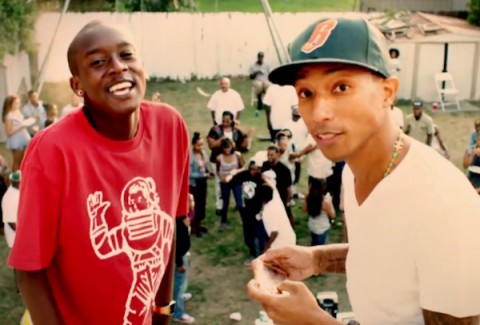
New Black Kid On The Block: Pharrell’s New Artist Buddy Wants To Change Hip-Hop

Buddy is an 18-year old spitfire from Compton ready to win over ears of a new generation of Hip-Hop enthusiasts. Rapping since he was eleven, Buddy has always put all his heart and effort into being the best emcee he could be. This eventually caught the attention of Pharrell, who mentored his growing skill and consequently produced his debut track “Awesome Awesome.” Currently featured on HBO’s “How To Make It In America 2” mixtape, the track is building momentum in both the Hip-Hop and mainstream world. HipHopWired.com recently caught up with Buddy to talk about the single, signing with Pharrell, and if he feels theirs more pressure on him than other MCs. Check out the full interview here .

Original post:
New Black Kid On The Block: Pharrell’s New Artist Buddy Wants To Change Hip-Hop