Tag Archives: awards

REVIEW: A Luminous Lead Performance and Sensitive Filmmaking Drive Pariah

On the bus home from a night out at a lesbian club, Fort Greene teenager Alike (Adepero Oduye) swaps her tomboyish outfit for earrings and a pink t-shirt, something clearly not of her own choosing, something selected to appease her mother. Alike is 17 and closeted, at least at home. Her mom Audrey (Kim Wayans) is uptight, religious and almost quivers with the effort of seeing her daughter as she wants her to be and not as she actually is. While Alike’s closer to her father Arthur (Charles Parnell), a cop, he’s chosen to step back from the tensions at home and in his marriage. Liking boys and makeup comes naturally to her younger sister Sharonda (Shamika Cotton) — our heroine is alone in her own personal form of camouflage, trying to blend into the background wherever she goes. What sets writer/director Dee Rees’s sensitive feature debut Pariah (expanded from her 2007 short of the same name) apart from the standard coming out story is that Alike is just as much an outsider at the club as at home, adrift and uncomfortable while her more outgoing best friend Laura (Pernell Walker) picks up girls on the dance floor. She hasn’t found the place in which she feels she can be herself. Alike knows that she’s gay, but her understanding and acceptance of that fact doesn’t mean she knows where she fits, in the scene or out of it — she doesn’t easily fall into the divisions of butch and femme, and she doesn’t seems to do any better at school, where she’s a good student in whose writing a teacher has taken a special interest, but other dangles outside the established social groups. Pariah is a coming of age story that’s uncommonly aware of just how heartbreakingly important the trappings of fashion, of music choices, of hobbies are when you’re young — they’re symbols of everything you think you are or aspire to be, even as they’re woefully inadequate shortcuts to establishing your identity. Alike’s journey take place in a larger landscape of shifting identities — just as the lesbian community isn’t a monolithic entity, neither is the black neighborhood in which the majority of the action is set. Her family has worked its way into the middle class, and Audrey’s consciousness of this achievement informs her stiffness around the coworkers she clearly feels she’s a cut above and her overall fussy propriety. It’s this sense of the type of people with whom her family belongs that leads her to insist Alike hang out with the daughter of an acquaintance from church, Bina (Aasha Davis), as if enough time in each other’s proximity would make a friendship inevitable. Alike begrudgingly walks to school with Bina and hangs out with her on the weekends, and finds a connection with the girl she never expected, one that blossoms into a possible romance when Bina gives our heroine her first kiss. Bina’s the opposite of Alike in many ways, bold where the latter is shy, but also uncertain where she’s fully decided, and the halting tenderness with which their relationship builds is tinged with the knowledge that Bina is probably going to break her heart. Pariah wouldn’t work without Oduye’s luminous performance, capturing the emotional nuances of a character not prone to letting her emotions show. She makes Alike’s vulnerabilities clear through her defenses — Alike’s convinced she has the world fooled, but isn’t anywhere near as in control as she’d like to believe. It’s a lovely, subtle portrayal that’s deservedly been getting a lot of attention for Oduye, who originated the role in Rees’s short and who may also be familiar as the grocery store clerk Louis C.K. awkwardly follows home to try to ask out in the first season of Louie . It’s a performance that good enough to smooth over the fact that the film’s gears grind as it arrives at an ending that feels neat, with Alike finally confronting her parents and encountering the results we’ve been primed to expect from the outset. Pariah is a small story of a painful, formative era in its protagonist’s life, and it sometimes feels roughly hewn to fit into an arc it doesn’t necessarily need. It’s the intimate, unforced details — an exchange between Arthur and his friends at a store, the way Laura chooses to shut Alike out after feeling betrayed by her new relationship — that speak volumes more than the film’s obvious butterfly metaphor, and that attest to a filmmaker and actress worth keeping an eye on. Follow Alison Willmore on Twitter . Follow Movieline on Twitter .

View post:
REVIEW: A Luminous Lead Performance and Sensitive Filmmaking Drive Pariah

Heavy D’s Cause Of Death Revealed

Here is the original post:

Heavy D died from a pulmonary embolism caused by deep leg vein thrombosis, according to the Los Angeles County Coroner’s Office. TMZ is reporting that a pulmonary embolism — which is a blockage of one or more arteries in the lungs, most often caused by blood clots which travel from other parts of the body — was formed in Heavy’s legs. Heavy D also suffered from heart disease, which could have been a contributing factor in his death. The Coroner’s Office has classified the death as “natural.” RELATED: Hip-Hop Royalty Honors Heavy D At Soul Train Music Awards [VIDEO] Heavy D Funeral: President Obama Sends Letter Of Condolence Jay-Z, Will Smith & More Attend Heavy D Funeral Service [PHOTOS] Rap Legend Heavy D Dead At 44

Heavy D’s Cause Of Death Revealed

Top 10 2012 Golden Globe Nominees Who Have Gone Nude

Golden Globes… and golden fleece! This year’s nominees for the Golden Globes were announced, and the nods include plenty of talent… and skin! Rooney Mara proves that flashing flesh will get you awards, while mainstays like Charlize Theron and Kate Winslet dominate. Check out our list of this year’s Globes nominees who have gotten naked. You’ll be polishing your own statuette.

Read this article:
Top 10 2012 Golden Globe Nominees Who Have Gone Nude

Check Out These Amazing Drawings of Alternate Lisbeth Salander Casting Options

Since we’ve all watched The Girl with the Dragon Tattoo like good little people-who-are-trying-to-figure-out-why-the-hell-it’s-is-such-a-phenomenon-because-even-my-parents-care-about-it-now, it’s the perfect time to reflect on what would’ve happened if David Fincher ditched Rooney Mara and opted for another ingenue to play Lisbeth Salander. Carey Mulligan? Ellen Page? Anne Hathaway? If I had the MS Paint prowess, I’d whip up renderings of Barbara Stanwyck, Faye Dunaway, and 94-year-old Joan Fontaine in the nose studs and combat boots, but I’ll leave that to your imagination. After the jump, check out a bunch of very accurate, wholly hypothetical Lisbeth portraits. I’m personally in love with the Ellen Page portrait. She’s so delighted to be a traumatized Nordic hacker! The Johansson work is devastating, and not just because of the iPhone-style nudity: As Fincher pointed out, she almost stole the part from Mara. Aww. And yet, I think this drawing is more than commensurate. Actresses as Lisbeth Salander [ But You’re Like Really Pretty via Huffpost]

See the original post:
Check Out These Amazing Drawings of Alternate Lisbeth Salander Casting Options

REVIEW: Gorgeous War Horse Hits Sweet Spot Between Cornball and Classic

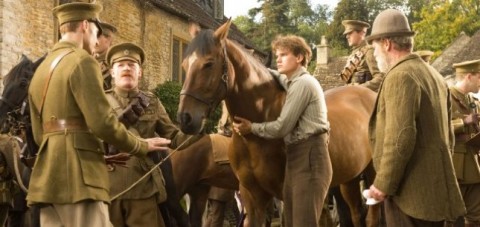
Steven Spielberg’s War Horse is masterly, accomplished, stirring, a real bang-up, show-off job — and watching it, I kept wishing it had been made by someone else, someone younger who hasn’t already proved dozens of times, beyond the point of redundancy, how much he cares about what he puts on the screen. Because Spielberg does care, and not just about the movies he makes himself. His forebears are with him every step of the way: With War Horse he tries on many masks, including those of David Lean, John Ford, Stanley Kubrick and David O. Selznick, just because he’s Steven Spielberg and he can. He wants to be everyone and everything at once: At times it’s way too much, but at others it’s a relief. In an Oscar-grabby end-of-year movie landscape littered with itsy-bitsy fuzzy-wuzzy literary adaptations and colorless apologias for lady monsters (I’m looking at you, Extremely Loud and Incredibly Close and Iron Lady ), why shouldn’t there be room for an old-school road-show picture with crazy-ass classical-filmmaking values? There’s something to be said for just sitting back and delivering yourself into the hands of a guy who creates a dissolve in which a piece of bumpy knitting transforms itself into a rock-strewn, hardscrabble landscape. Who else today would dare? Maybe it’s that unapologetic cornpone aesthetic, even more than all that virtuoso filmmaking, that makes War Horse so engaging. From the moment you see the foal Joey, having only recently squeezed forth from his mother’s womb, finding his matchstick legs on sturdy English soil, you’re either in the game or you’re not. Later, when Joey’s a bit older, he’s bought by an impoverished farmer, Ted Narracott (Peter Mullan), to spite his arrogant landlord (David Thewlis), who also had been eyeing the horse at auction. The purchase is immediately problematic: Joey isn’t a workhorse, which is what Ted and his family, including wife Rose (a half-winsome, half-grave Emily Watson) and teenage son Albert (Jeremy Irvine), need in order to save their failing farm. But Albert has already fallen in love with Joey, who was born and raised on a neighboring property — Albert had long been wooing the horse, discerning in him not just beauty but sterling character. Albert is right, of course: Joey not only helps save the farm, but when war — the Great one — breaks out, he’s sold out from under poor Albert and goes on to endure numerous hardships and touch the lives of everyone who’s lucky enough to stroke his noble, glossy, star-splashed head. Those include a noble but ill-fated English cavalry officer, Captain Nicholls (Tom Hiddleston), a French farmer and his fragile but feisty granddaughter (Niels Arestrup and Celine Buckens), and two nameless soldiers, one English and one German, who momentarily — I kid you not — forget their nation’s differences and reach across the bleak stretches of No Man’s Land to perform the ultimate act of kindness. Will Joey ever make it back to Albert, with whom he clearly longs to be? You can probably guess. But it’s important not to judge the bones of the story until you see what Spielberg does with it. (The script was adapted, by Lee Hall and Richard Curtis, from Michael Morpurgo’s slim, direct 1982 young adult novel. That material has also, of course, been turned into an acclaimed play, with puppets substituting for real horses; Spielberg was inspired to make the film after seeing the play.) This is the kind of excess you can get away with only when you’re Steven Spielberg, and maybe not even then. The filmmaker has surrounded himself with his usual posse, an all-star lineup of crackerjack craftspeople: Janusz Kaminski shoots the craggily gorgeous Devon countryside as if he were looking at it through God’s eyes. At one point he lights Joey in his stable — the character is played by 14 different horses — as if he were the Blessed Virgin on a holy card, a nimbus of gold emanating from his visage. John Williams, who has written some of the most superb scores in modern film but who, like every other superstar composer, is also sometimes guilty of phoning them in, is on top of his game here: The combat footage is heralded by lots of meaty brass and strings, but the most beautiful sections are the more pastoral ones, where the composer channels another Williams (or, rather a Vaughan Williams), Ralph: You can hear traces of the trilling sweetness and delicacy of “The Lark Ascending,” one of the most beautiful and most quintessentially English pieces of music ever composed. For the actors, War Horse is something of a round robin, the action passing from one character to another and only sometimes weaving back again. Spielberg is often too sentimental a director, and there are moments in War Horse that come close to being spongey-soft. But somehow the actors here save Spielberg from his worst impulses: Hiddleston plays that cavalry officer with the kind of slow-burning dignity that’s more archetypal than stereotypical; with his scrubbed-clean skin and carefully pomaded hair, he seems to know what England he’s fighting for, and he dresses the part until the end. Irvine, making his film debut, shows a suitable naïvete tempered by good instincts — he avoids mawkishness, perhaps only narrowly, but it’s a performance that always has mud on its shoes. And Arestrup packs a great deal of unfiltered feeling into the small role of the French grandfather. The bags beneath his eyes are packed with sorrow and happiness and everything in between. In War Horse Spielberg indulges his most melodramatic impulses, and sometimes they lead him astray: He’s a little cheap, for example, in the way he uses animal endangerment and suffering as a pulse point — a sequence in which the camera fixates on Joey’s stumbling leg as he painstakingly pulls an artillery cart that’s far too heavy for him is typical Spielbergian overkill. But melodrama isn’t a dirty word, and Lord knows there are few contemporary directors who know how to do it well, if at all. This movie is also, of course, an extended wartime metaphor, one that’s aware of the costs to both sides: Spielberg shows young, callow German and English soldiers alike, all unaware of what’s about to befall them. And when Spielberg goes big — as he does in the picture’s integral cavalry charge sequence — he does it right, capturing the essence of wartime chaos with clear images and clean cutting. (It’s almost as tense and meticulous a battle sequence as the one the young Branagh gave us in Henry V .) I saw War Horse at a critics’ screening and noted plenty of snickering around me, at the picture’s sometimes too-naked emotion, at its “Look at me, I’m Steven Spielberg!” panoramic landscapes, at the beatific lighting of the equine central character. The downer, of course, is that we already know Spielberg knows how to pull off all of these things well, perhaps better than anyone — now that Lean and Ford and everyone else is dead, it’s as if he feels he has no one to top but himself, and that’s a sad place for a filmmaker to be. But for all its borrowing from old Hollywood, I don’t think War Horse is particularly nostalgic. The word I’d use is wistful . It’s the largest, most lavish handful of wistfulness money can buy, and sometimes it’s too much. Yet it’s nice to know that even Steven Spielberg can still wish for something. Follow Stephanie Zacharek on Twitter . Follow Movieline on Twitter .

More here:
REVIEW: Gorgeous War Horse Hits Sweet Spot Between Cornball and Classic

Kristin Davis

Kristin Davis Hollywood Style Awards Liezbdzcl, Kristin Davis Hollywood Style Awards Ebprioapzl, Kristin Davis Hollywood Style Awards Qsyppqbpl, Kristin Davis Hollywood Style Awards Dqn, Kristin Davis Hollywood Style Awards Dypxf Diml, Kristin Davis Hollywood Style Awards Glbi Nal, Kristin Davis Hollywood Style Awards Jckykgrybl, Kristin Davis Hollywood Style Awards Ptjvgtadl, Kristin Davis Kristin Davis Pink City Luncheon Jxdyixsel, Kristin Davis Kristin Davis Pink City Luncheon Dkstllasfil, Kristin Davis Kristin Davis Pink City Luncheon Eborwutexl, Kristin Davis Kristin Davis Pink City Luncheon Hexzxbwjzl Continue reading

REVIEW: Wim Wenders’ 3-D Pina Makes Its Own Joyful Dance

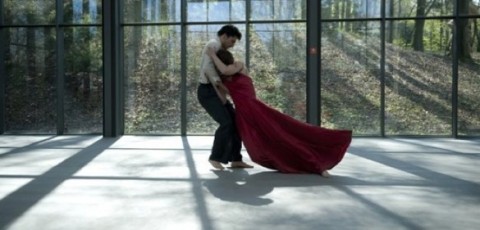
Now that everyone has grown tired of touting the allegedly thrilling promise of 3-D, we may have some chance of figuring out exactly what its future might be. While I still think 3-D is almost less than a gimmick, I’ve come to think that its real promise lies not in big-budget filmmaking along the lines of The Adventures of Tintin or even a picture as wonderful as Hugo , but in the hands of directors working on a more modest scale who simply have a good idea and a spark of enthusiasm for the medium. Wim Wenders has brought that spark to a rather unlikely subject, the late German modern-dance choreographer Pina Bausch. For years, Wenders and Bausch, longtime friends, had been working on a movie together. Bausch died suddenly in 2009, at age 68, and Pina is Wenders’ tribute to her, less a strict documentary than a heartfelt — and visually gorgeous — celebration of Bausch’s work and her mode of working.

See the article here:
REVIEW: Wim Wenders’ 3-D Pina Makes Its Own Joyful Dance

Christopher Plummer on Dragon Tattoo, Beginners Luck and Laughing Off Oscar

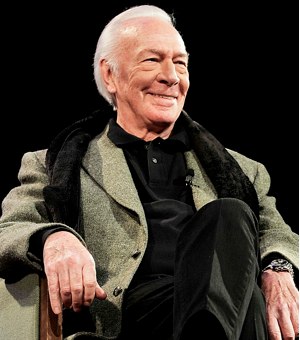
One week removed from his 82nd birthday, Christopher Plummer is winding up what one could arguably call a career year. And it’s been a long career — more than half a century’s worth of stage and screen roles comprising such milestones as The Sound of Music , The Man Who Would Be King , The Insider and The Last Station , the latter of which earned the Canadian legend his first-ever Academy Award nomination. But as the curtain closes on a memorable 2011 — most notably his acclaimed stage adaptation Barrymore , his awards-worthy performance in Beginners and this week’s blockbuster hopeful The Girl With the Dragon Tattoo — you’d be hard-pressed to find a time when Plummer wasn’t more beloved.

Read the original:
Christopher Plummer on Dragon Tattoo, Beginners Luck and Laughing Off Oscar

REVIEW: The Adventures of Tintin Putt-Putts Along with a Terrier in Tow

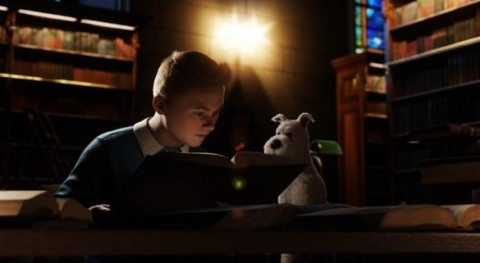
There are times when too much of a good thing and not enough meet halfway and settle into a comfortable middle ground. That’s the case with Steven Spielberg’s The Adventures of Tintin , which would be better if it had been made using more traditional animation techniques rather than that performance-capture nonsense and if 3-D weren’t one of its big selling points.

Continue reading here:
REVIEW: The Adventures of Tintin Putt-Putts Along with a Terrier in Tow

Here is an Awards Podcast Featuring a Certain Movieline Editor

The Hollywood Reporter ‘s resident awards guru and all-around nice guy Scott Feinberg invited me to join him on the latest installment of his “Feinberg and Friends” podcast, which is now live at THR . Therein we go deep — like, deep deep, or Ed-Harris-gagging-down-amniotic-fluid-at-the-bottom-of-the-ocean-in- The Abyss deep — on this year’s awards race, including but not limited to…

More here:
Here is an Awards Podcast Featuring a Certain Movieline Editor