
Tag Archives: awards

REVIEW: That’s My Boy Would Be Good Raunchy Fun, If Not for One Fatal Flaw

To say that  That’s My Boy  is a step up from the recent output of Adam Sandler and his company  Happy Madison Productions really is to suggest only that the film isn’t likely to be screened as some sort of new Guantanamo interrogation technique.  Jack and Jill , Zookeeper , Bucky Larson: Born to Be a Star  — these movies aren’t merely bad, they’re sandpaper-on-skin excruciating, unfunny to the point of inspiring hostility toward whoever’s chosen to make them. Sandler, once upon a time, was king of a winning kind of anarchic, gleeful stupidity —  Billy Madison  holds up so well (seriously, it does) because it feels like it’s just every idiotic gag that he and his buddies could come up with while crowded around a table littered with bongs and beer cans, crammed into an hour and a half. These late features have an undercurrent of misanthropy — their silliness isn’t inclusive, its confrontational and unpleasant, as if it was a chore to have to be bothered to actually make the movie in order to get everyone paid. That’s My Boy , which was directed by Sean Anders (of  Sex Drive ) from a script by  Happy Endings  creator David Caspe, isn’t nearly as problematically hateful (with the exception of the introduction, which I’ll get to later). It’s a celebration of vintage ’80s dirtbaggery, a beer-guzzling, bird-flipping rebuke to contemporary calorie-counting, omega male meekness that finds Sandler back in only somewhat worse-for-wear form as an agent of chaos. He plays Donny Berger, an aging Massachusetts party boy (the phrase “wicked” gets a workout) whose onetime fame/infamy has faded along with his income until he finds himself facing three years in jail for failing to pay his taxes unless he can come up with $43,000 by next week. Donny’s only got a few bucks to his name and no prospects to speak of except for his long estranged son, played by Andy Samberg — and while he’s reluctant (and skeptical) about going to the kid for money, he cuts a deal with trashy talk-show host Randall Morgan (Dan Patrick) to squeeze one last bit of cash out of his past celebrity by agreeing to stage a family reunion with the boy and his mom. Donny’s child has grown into a neurotic, successful hedge fund manager who now goes by Todd — he’s rejected the name (Han Solo) given to him by his young dad, as well as the man’s negligent parenting techniques and lifestyle. Todd is set to marry Jamie (Leighton Meester) out on Cape Cod, where they’re all staying in the luxurious summer home of Todd’s boss Steve (Tony Orlando). Thanks to a wedding announcement in the paper, Donny knows where to find them, and turns up with an overnight (garbage) bag, forcing Todd to hurriedly declare Donny his long-lost best friend, as he told everyone his parents both died in an explosion when he was young. Straight man isn’t a good use for Samberg’s comedic gifts — he seems too at ease with himself to play what’s essentially a role for Michael Cera (whom he does eerily channel in some of his early scenes). Todd is awkward and uptight — he carries an extra pair of underwear around with him as a kind of security blanket — and likes to show off his ability to multiply large numbers in his head (he always precedes his answers with a robot-style “bleep bleep bloop”), but Samberg still comes across as the guy most likely to have a joint to share at the back of a party rather than as a fawning nerd. That’s My Boy is Sandler’s show, anyway, and his Donny somehow charms everyone with his constant beer-drinking, dick jokes and insistence on bringing back the Budweiser commercial catchphrase “Whassup?” Donny loves strip clubs (his favorite also serves breakfast) and his old pal Vanilla Ice (who is to this movie what Al Pacino was to  Jack and Jill , albeit with less range). And he slowly worms his way back into his son’s heart and just a little bit into ours, culminating with a bachelor party montage that’s the film’s high point and its biggest celebration of trashed troublemaking. That’s My Boy is Sandler’s raunchiest movie — its approach to sex is enthusiastic and juvenile and the opposite of the squeamishness of  Bucky Larson . Three-ways are had with grandmothers, wedding dresses are defiled, sticky post-masturbatory tissues are flung everywhere and a late twist takes the film into what has to be new territory for a gross-out comedy. While maybe half of the jokes actually land, there’s a cheery expansiveness to these antics — everyone’s better when being a sloppy but genuine mess than when being a controlling phony. In other words, this is a film that finds poorly chosen, impulsive back tattoos endlessly hilarious. Which brings us back to the intro, and the reason Donny is famous for the first place — a sequence that may kill the movie for some before it even gets going.  That’s My Boy starts in 1984, when Donny’s a junior high student played by Justin Weaver who ends up getting seduced by his teacher Miss McGarricle (Eva Amurri Martino). She takes his virginity and carries on an affair with him until they’re discovered by the entire school at an assembly — at which point the kids and faculty members applaud young Donny for his prowess in “living the ultimate teenage boy’s fantasy.” It’s this Mary Kay Letourneau-style scandal that makes Donny into a celebrity and a hero for men everywhere because he managed not just to sleep with his teacher but to knock her up before she heads to jail. This isn’t a scenario completely resistent to comedy — 30 Rock  included a similar storyline (using the same famous actress the film does for its present-day version of the seductress — if you’re unfamiliar, the reveal’s worth leaving her name unmentioned), and it was funny and oddly sweet. But here, both the focus on the world’s celebration of this act of statutory rape and the actual portrayal of an adult woman coming on to a 12-year-old boy in the name of laughs is spectacularly uncomfortable and troubling. That’s My Boy insists that Donny was not a victim, that what happened was every boy’s dream, but the film makes the (unintended?) case that he was permanently warped by the incident, left stunted and half-formed. No matter how much good-hearted licentiousness follows in the rest of the movie, the opening sequence brings a unshakable sourness to the whole affair. Follow Alison Willmore on Twitter . Follow Movieline on Twitter .

Read the original post:
REVIEW: That’s My Boy Would Be Good Raunchy Fun, If Not for One Fatal Flaw

REVIEW: That’s My Boy Would Be Good Raunchy Fun, If Not for One Fatal Flaw

To say that  That’s My Boy  is a step up from the recent output of Adam Sandler and his company  Happy Madison Productions really is to suggest only that the film isn’t likely to be screened as some sort of new Guantanamo interrogation technique.  Jack and Jill , Zookeeper , Bucky Larson: Born to Be a Star  — these movies aren’t merely bad, they’re sandpaper-on-skin excruciating, unfunny to the point of inspiring hostility toward whoever’s chosen to make them. Sandler, once upon a time, was king of a winning kind of anarchic, gleeful stupidity —  Billy Madison  holds up so well (seriously, it does) because it feels like it’s just every idiotic gag that he and his buddies could come up with while crowded around a table littered with bongs and beer cans, crammed into an hour and a half. These late features have an undercurrent of misanthropy — their silliness isn’t inclusive, its confrontational and unpleasant, as if it was a chore to have to be bothered to actually make the movie in order to get everyone paid. That’s My Boy , which was directed by Sean Anders (of  Sex Drive ) from a script by  Happy Endings  creator David Caspe, isn’t nearly as problematically hateful (with the exception of the introduction, which I’ll get to later). It’s a celebration of vintage ’80s dirtbaggery, a beer-guzzling, bird-flipping rebuke to contemporary calorie-counting, omega male meekness that finds Sandler back in only somewhat worse-for-wear form as an agent of chaos. He plays Donny Berger, an aging Massachusetts party boy (the phrase “wicked” gets a workout) whose onetime fame/infamy has faded along with his income until he finds himself facing three years in jail for failing to pay his taxes unless he can come up with $43,000 by next week. Donny’s only got a few bucks to his name and no prospects to speak of except for his long estranged son, played by Andy Samberg — and while he’s reluctant (and skeptical) about going to the kid for money, he cuts a deal with trashy talk-show host Randall Morgan (Dan Patrick) to squeeze one last bit of cash out of his past celebrity by agreeing to stage a family reunion with the boy and his mom. Donny’s child has grown into a neurotic, successful hedge fund manager who now goes by Todd — he’s rejected the name (Han Solo) given to him by his young dad, as well as the man’s negligent parenting techniques and lifestyle. Todd is set to marry Jamie (Leighton Meester) out on Cape Cod, where they’re all staying in the luxurious summer home of Todd’s boss Steve (Tony Orlando). Thanks to a wedding announcement in the paper, Donny knows where to find them, and turns up with an overnight (garbage) bag, forcing Todd to hurriedly declare Donny his long-lost best friend, as he told everyone his parents both died in an explosion when he was young. Straight man isn’t a good use for Samberg’s comedic gifts — he seems too at ease with himself to play what’s essentially a role for Michael Cera (whom he does eerily channel in some of his early scenes). Todd is awkward and uptight — he carries an extra pair of underwear around with him as a kind of security blanket — and likes to show off his ability to multiply large numbers in his head (he always precedes his answers with a robot-style “bleep bleep bloop”), but Samberg still comes across as the guy most likely to have a joint to share at the back of a party rather than as a fawning nerd. That’s My Boy is Sandler’s show, anyway, and his Donny somehow charms everyone with his constant beer-drinking, dick jokes and insistence on bringing back the Budweiser commercial catchphrase “Whassup?” Donny loves strip clubs (his favorite also serves breakfast) and his old pal Vanilla Ice (who is to this movie what Al Pacino was to  Jack and Jill , albeit with less range). And he slowly worms his way back into his son’s heart and just a little bit into ours, culminating with a bachelor party montage that’s the film’s high point and its biggest celebration of trashed troublemaking. That’s My Boy is Sandler’s raunchiest movie — its approach to sex is enthusiastic and juvenile and the opposite of the squeamishness of  Bucky Larson . Three-ways are had with grandmothers, wedding dresses are defiled, sticky post-masturbatory tissues are flung everywhere and a late twist takes the film into what has to be new territory for a gross-out comedy. While maybe half of the jokes actually land, there’s a cheery expansiveness to these antics — everyone’s better when being a sloppy but genuine mess than when being a controlling phony. In other words, this is a film that finds poorly chosen, impulsive back tattoos endlessly hilarious. Which brings us back to the intro, and the reason Donny is famous for the first place — a sequence that may kill the movie for some before it even gets going.  That’s My Boy starts in 1984, when Donny’s a junior high student played by Justin Weaver who ends up getting seduced by his teacher Miss McGarricle (Eva Amurri Martino). She takes his virginity and carries on an affair with him until they’re discovered by the entire school at an assembly — at which point the kids and faculty members applaud young Donny for his prowess in “living the ultimate teenage boy’s fantasy.” It’s this Mary Kay Letourneau-style scandal that makes Donny into a celebrity and a hero for men everywhere because he managed not just to sleep with his teacher but to knock her up before she heads to jail. This isn’t a scenario completely resistent to comedy — 30 Rock  included a similar storyline (using the same famous actress the film does for its present-day version of the seductress — if you’re unfamiliar, the reveal’s worth leaving her name unmentioned), and it was funny and oddly sweet. But here, both the focus on the world’s celebration of this act of statutory rape and the actual portrayal of an adult woman coming on to a 12-year-old boy in the name of laughs is spectacularly uncomfortable and troubling. That’s My Boy insists that Donny was not a victim, that what happened was every boy’s dream, but the film makes the (unintended?) case that he was permanently warped by the incident, left stunted and half-formed. No matter how much good-hearted licentiousness follows in the rest of the movie, the opening sequence brings a unshakable sourness to the whole affair. Follow Alison Willmore on Twitter . Follow Movieline on Twitter .

Read the original post:
REVIEW: That’s My Boy Would Be Good Raunchy Fun, If Not for One Fatal Flaw

REVIEW: Marina Abramovic: The Artist Is Present Casts Light on the Shadowy Secrets of an Enigmatic Performer

“After the show I have to really put some more attention to sex in my life,” Marina Abramovic vows near the beginning of Marina Abramovic: The Artist Is Present , an elegantly observed, sleekly packaged look at an artist whose career-long balance of enigma and self-exposure culminated in a 2010 retrospective at New York City’s Museum of Modern Art. “Semi-intellectual artist at the top of her career,” goes Abramovic’s self-drafted personal ad, “looking for single male.” My head completed a few full rotations taking in what all’s going on in that sentence, but let’s begin with the part about being on top. That Abramovic seems to have willed her own peak into being — the German artist Frank Uwe Laysiepen (AKA “Ulay”) teases his former partner about whether she now prefers to be addressed as “the grandmother of performance art” or “the diva of performance art” — is deftly interlayered with director and cinematographer Matthew Akers’s presentation of a life and career united by the stubborn pursuit of meaning. The picture gives a sense of life’s fragments aligning, finally, to form a coherent story. What that story is depends on who’s doing the telling, of course. At the outset of her three-month MoMA performance — where the artist sat like a Buddha in a red (or blue, or white) dress, receiving an intrigued, then entranced, then near-hysterical public, one at a time, for a bout of eye contact across a wooden table — Abramovic outlines the three different versions of herself, her favorite being the pure, unshackled sensibility watching over the two other, more mortal selves. Hers is a very physical feat, as is made clear; there’s a bedpan built into her chair, and Ulay describes being wrecked by a similar performance during their partnership. As she did then, Marina carries on, outlasting her lover and smiting her doubters, a martyr to an indeterminate and therefore capacious cause — to “create a charismatic space” that will slow down time, return us to the present, absorb our ills, reflect us to ourselves, and/or furnish an insatiable attention-seeker with patiently queued reams of admirers. There is a careful reverence to these kinds of commissioned artist studies, and the earnest styling of the subject as a kind of time-bending sensei — a destination and a journey — might feel more poncy if it hadn’t played out pretty much exactly that way over three months in midtown Manhattan. Walking into the atrium the first day of the exhibition, Abramovic jokes about feeling like Marie Antoinette being led to her fate. But if the crossover success of “The Artist Is Present” came as a surprise, The Artist Is Present suggests a woman very consciously stepping forward to collect her due. “Excuse me,” Abramovic says in her smoky Balkan accent, “I’m 63 — I don’t want to be alternative anymore.” But the HBO treatment (it will air on that channel after a brief theatrical run) makes a strange and occasionally unsatisfying match for its subject. Entire corollary documentaries are glimpsed in a scene or a comment: Ambramovic’s ambition is alluded to in somewhat dark tones; the footage of striking and often disturbing previous performances barely outlines a complex and sometimes confounding sensibility; gallerist Sean Kelly speaks of his team’s invention of a market for her work, a model that has become a standard in the performance-art world; Ulay’s reappearance and the couple’s awkward, poignant reunion suggests untold romantic galaxies. And then there is curator Klaus Biesenbach, who in word and manner reveals a critical, under-investigated side of Abramovic. “Klaus, I love you,” Abramovic murmurs to him in the moments before her performance begins. “Is this okay?” Biesenbach acquires a curiously steely look when he describes the way “Marina seduces everyone she ever meets.” They are great friends now, he says, repeating it twice, “but we’re divorced .” Groupies and pranksters abound, as do would-be artists who see themselves as part of the show; all shenanigans are quickly shut down as Abramovic lowers her head like a mournful deity. In fact, Biesenbach says, the exhibition is ultimately a self-portrait, and just as he mistakenly believed Abramovic to be in love with him, so the same misunderstanding is repeated “with every single person in the atrium.” The better part of Abramovic’s personality slips out in asides and interactions, rather than in the rehearsed bits about her trinity of selves. Eerily untouched by age, her imposing physicality is softened by girlish accents. A shadow storyline trails Akers’s art show procedural, and it involves, of all plainly human things, Marina Abramovic getting laid. And yet the sideways frequency with which the issue comes up feels telling. As so often seems to be the case with successful women, for Abramovic being at the top of her career means forever looking past that next big project for her “other” life to begin, the one where she falls in love and has heaps of sex and looks up the hot Asian guy from day X and hour Y of her MoMA residency. At the outset Abramovic says she wanted to show the world, one time, the unglamorous underside of art’s creation; in fact the result has a slickness some might find disconcerting. Seeing her pinned down and packaged as an art star or even just a documentary “personality” might feel antithetical to a body of work committed to its own transience. And yet The Artist Is Present is ultimately an Abramovic production, whether the purists care to acknowledge her love of designer clothes and way with a one-liner or not. Why shouldn’t this be the woman who made an entire city confront the tyranny of time’s passage? Because I wasn’t seeking anything so grand from this clean-lined documentary, I came away moved most of all by the perseverance of an artist who, having put the time in, was rewarded with a moment that set a life lived largely through performance into meaningful relief. There’s also something to be said for having your ex come and pay homage to you, on your turf, at a MoMA restrospective of your career. As Ulay himself demurs: Only respect. Follow Michelle Orange on Twitter . Follow Movieline on Twitter .

Go here to read the rest:
REVIEW: Marina Abramovic: The Artist Is Present Casts Light on the Shadowy Secrets of an Enigmatic Performer

REVIEW: Marina Abramovic: The Artist Is Present Casts Light on the Shadowy Secrets of an Enigmatic Performer

“After the show I have to really put some more attention to sex in my life,” Marina Abramovic vows near the beginning of Marina Abramovic: The Artist Is Present , an elegantly observed, sleekly packaged look at an artist whose career-long balance of enigma and self-exposure culminated in a 2010 retrospective at New York City’s Museum of Modern Art. “Semi-intellectual artist at the top of her career,” goes Abramovic’s self-drafted personal ad, “looking for single male.” My head completed a few full rotations taking in what all’s going on in that sentence, but let’s begin with the part about being on top. That Abramovic seems to have willed her own peak into being — the German artist Frank Uwe Laysiepen (AKA “Ulay”) teases his former partner about whether she now prefers to be addressed as “the grandmother of performance art” or “the diva of performance art” — is deftly interlayered with director and cinematographer Matthew Akers’s presentation of a life and career united by the stubborn pursuit of meaning. The picture gives a sense of life’s fragments aligning, finally, to form a coherent story. What that story is depends on who’s doing the telling, of course. At the outset of her three-month MoMA performance — where the artist sat like a Buddha in a red (or blue, or white) dress, receiving an intrigued, then entranced, then near-hysterical public, one at a time, for a bout of eye contact across a wooden table — Abramovic outlines the three different versions of herself, her favorite being the pure, unshackled sensibility watching over the two other, more mortal selves. Hers is a very physical feat, as is made clear; there’s a bedpan built into her chair, and Ulay describes being wrecked by a similar performance during their partnership. As she did then, Marina carries on, outlasting her lover and smiting her doubters, a martyr to an indeterminate and therefore capacious cause — to “create a charismatic space” that will slow down time, return us to the present, absorb our ills, reflect us to ourselves, and/or furnish an insatiable attention-seeker with patiently queued reams of admirers. There is a careful reverence to these kinds of commissioned artist studies, and the earnest styling of the subject as a kind of time-bending sensei — a destination and a journey — might feel more poncy if it hadn’t played out pretty much exactly that way over three months in midtown Manhattan. Walking into the atrium the first day of the exhibition, Abramovic jokes about feeling like Marie Antoinette being led to her fate. But if the crossover success of “The Artist Is Present” came as a surprise, The Artist Is Present suggests a woman very consciously stepping forward to collect her due. “Excuse me,” Abramovic says in her smoky Balkan accent, “I’m 63 — I don’t want to be alternative anymore.” But the HBO treatment (it will air on that channel after a brief theatrical run) makes a strange and occasionally unsatisfying match for its subject. Entire corollary documentaries are glimpsed in a scene or a comment: Ambramovic’s ambition is alluded to in somewhat dark tones; the footage of striking and often disturbing previous performances barely outlines a complex and sometimes confounding sensibility; gallerist Sean Kelly speaks of his team’s invention of a market for her work, a model that has become a standard in the performance-art world; Ulay’s reappearance and the couple’s awkward, poignant reunion suggests untold romantic galaxies. And then there is curator Klaus Biesenbach, who in word and manner reveals a critical, under-investigated side of Abramovic. “Klaus, I love you,” Abramovic murmurs to him in the moments before her performance begins. “Is this okay?” Biesenbach acquires a curiously steely look when he describes the way “Marina seduces everyone she ever meets.” They are great friends now, he says, repeating it twice, “but we’re divorced .” Groupies and pranksters abound, as do would-be artists who see themselves as part of the show; all shenanigans are quickly shut down as Abramovic lowers her head like a mournful deity. In fact, Biesenbach says, the exhibition is ultimately a self-portrait, and just as he mistakenly believed Abramovic to be in love with him, so the same misunderstanding is repeated “with every single person in the atrium.” The better part of Abramovic’s personality slips out in asides and interactions, rather than in the rehearsed bits about her trinity of selves. Eerily untouched by age, her imposing physicality is softened by girlish accents. A shadow storyline trails Akers’s art show procedural, and it involves, of all plainly human things, Marina Abramovic getting laid. And yet the sideways frequency with which the issue comes up feels telling. As so often seems to be the case with successful women, for Abramovic being at the top of her career means forever looking past that next big project for her “other” life to begin, the one where she falls in love and has heaps of sex and looks up the hot Asian guy from day X and hour Y of her MoMA residency. At the outset Abramovic says she wanted to show the world, one time, the unglamorous underside of art’s creation; in fact the result has a slickness some might find disconcerting. Seeing her pinned down and packaged as an art star or even just a documentary “personality” might feel antithetical to a body of work committed to its own transience. And yet The Artist Is Present is ultimately an Abramovic production, whether the purists care to acknowledge her love of designer clothes and way with a one-liner or not. Why shouldn’t this be the woman who made an entire city confront the tyranny of time’s passage? Because I wasn’t seeking anything so grand from this clean-lined documentary, I came away moved most of all by the perseverance of an artist who, having put the time in, was rewarded with a moment that set a life lived largely through performance into meaningful relief. There’s also something to be said for having your ex come and pay homage to you, on your turf, at a MoMA restrospective of your career. As Ulay himself demurs: Only respect. Follow Michelle Orange on Twitter . Follow Movieline on Twitter .

Go here to read the rest:
REVIEW: Marina Abramovic: The Artist Is Present Casts Light on the Shadowy Secrets of an Enigmatic Performer

REVIEW: Tame Rock of Ages Gets a Slurpy Tongue Bath from Tom Cruise

Many of us who were alive in the 1980s claimed not to listen to heavy metal or its almost indistinguishable twin, hard rock. But we did listen, or at least we heard it — it was unavoidable, an omnipresent aural beast slithering out of car radios, grungy bars and retail-establishment stereo systems. Even if you were more attuned to punk or jazz or just about anything else, it was part of the background noise of your life whether you liked it or not. If nothing else, Rock of Ages — adapted from the Broadway show of the same name, in which ’80s metal hits from the likes of Def Leppard, Foreigner and Night Ranger were woven into a rudimentary boy-meets-girl love story — reminds us just how good many of those songs we were pretending not to listen to really were. The picture has a good-natured, if self-conscious, spring to its step, at least until you-know-who shows up in a bejeweled devil’s head codpiece. The movie almost doesn’t survive his slurpy tongue bath. Seeing Tom Cruise swathed in leather pants and fake tattoos, as Axl Rose-style metal god Stacee Jaxx , is supposedly Rock of Ages ’ big draw. But the movie is much more fun when he’s not around, partly because the story has been retooled from the stage show to give his character a dose of much-needed redemption. Why can’t he just be bad? The appeal of rock’n’roll is that it’s supposed to be disreputable. The rejiggered plot of Rock of Ages also involves a family-values crusader, played by Catherine Zeta-Jones, who vows to make the streets of Los Angeles “safe for teenagers” by killing the most popular rock club. That’s a tangled irony the writers of the exceedingly tame Rock of Ages — Justin Theroux, Chris D’Arienzo and Allan Loeb, riffing on the original book by D’Arienzo — can’t worm their way out of. But it’s probably futile to hold Rock of Ages up to such close scrutiny. The point, mainly, is to watch two young people, good-girl Oklahoma metalhead Sherrie Christian (Julianne Hough, of Dancing with the Stars ) and mild-mannered aspiring rock musician Drew Boley (Diego Boneta) meet, fall in love, break up over a misunderstanding, and then get together again. As the movie opens, Sherrie arrives in Los Angeles with a suitcase full of dreams (or record albums, which pretty much amount to the same thing) that’s promptly stolen. Drew, a barback at a rock’n’roll watering hole known as the Bourbon Room, tries to get it back for her but fails. Still, the sparks fly immediately, and Drew helps Sherrie get a job at his club, which is managed by an aged rocker whose leather vest barely reaches around his tubby belly. His name is Dennis Dupree, and he’s played with a great deal of shrewd glee by Alec Baldwin . Dennis runs the Bourbon Room at a deficit; his right-hand man is the scrawny, reasonably helpful Lonny (Russell Brand, who appears to be running out of tricks outside of just being Russell Brand-y). Dennis thinks he may be able to turn his club’s fortunes around by booking Stacee Jaxx, who got his start thanks to Dennis. Unfortunately, Jaxx’s manager — Paul Giamatti in a baldy-man ponytail and a succession of comically broad-shouldered suits and patterned sweaters — cheats Dennis out of any profit he might have made. Meanwhile, Patricia Whitmore (Zeta-Jones), the Tipper Gore-ish wife of the city’s mayor elect, tries to put Dennis out of business in other ways. Through it all, or through most of it, Drew and Sherrie make moo-moo eyes at one another and duet their way through the catalogs of Foreigner, Extreme and Warrant, dusting off songs like “More Than Words,” “Heaven Isn’t Too Far Away” and “I’ve Been Waiting for a Girl Like You.” Did I mention that Malin Akerman shows up as a poodle-haired, half-brainy half-horny Rolling Stone journalist? Actually, there’s a lot going on in Rock of Ages , probably too much. The simplicity of the stage show (which originated way off-off-Broadway, in a Hollywood club, in 2005) put the spotlight on the music, for better and sometimes for worse. The movie, made by longtime choreographer-turned-director Adam Shankman (also the man behind the 2007 Hairspray ) is often busier than it needs to be. All that extra business detracts from the modest appeal of the leads: Boneta has some of the scrappy charm of the very young Matt Dillon, and Hough is sunny in a wind-up doll sort of way. Unfortunately, their musical numbers are shot and cut in such a way that it’s hard to actually watch their bodies move — why cast a dancer like Hough if we don’t really get to see her move? Then there’s the Tom Cruise problem. He’s fun to watch in his first few scenes, hamming it up as a spoiled rock’n’roll satyr. But the role quickly becomes a retread of the one he played in Magnolia , only in a different costume. Cruise can’t hide his cockiness — it’s in his blood. But even when he tries to kick back and poke fun at himself, he takes the job so seriously that it becomes a sort of grind. There’s nothing sexy about him, unless you find studied posturing erotic. That said, he does strut quite ably through a version of “Pour Some Sugar on Me” — it’s his best moment, and one of the liveliest bits in the movie. Zeta-Jones might have been used to better effect, considering how dazzling she is in her one big number, a rendition of “Hit Me with Your Best Shot” which she performs in the unsexiest of costumes, a boxy pink suit. Zeta-Jones gets her revenge later, though, when she shows up in one of the sleekest, foxiest getups I’ve seen all year, at long last giving the movie some bite. You’ll get just a glimpse or two, so enjoy it while it lasts. The rest of Rock of Ages is a sprawl whose cheerfulness feels more than a bit calculated. It’s a fake tattoo with the volume turned way, way up. Follow Stephanie Zacharek on Twitter . Follow Movieline on Twitter .

See the article here:
REVIEW: Tame Rock of Ages Gets a Slurpy Tongue Bath from Tom Cruise

REVIEW: Tame Rock of Ages Gets a Slurpy Tongue Bath from Tom Cruise

Many of us who were alive in the 1980s claimed not to listen to heavy metal or its almost indistinguishable twin, hard rock. But we did listen, or at least we heard it — it was unavoidable, an omnipresent aural beast slithering out of car radios, grungy bars and retail-establishment stereo systems. Even if you were more attuned to punk or jazz or just about anything else, it was part of the background noise of your life whether you liked it or not. If nothing else, Rock of Ages — adapted from the Broadway show of the same name, in which ’80s metal hits from the likes of Def Leppard, Foreigner and Night Ranger were woven into a rudimentary boy-meets-girl love story — reminds us just how good many of those songs we were pretending not to listen to really were. The picture has a good-natured, if self-conscious, spring to its step, at least until you-know-who shows up in a bejeweled devil’s head codpiece. The movie almost doesn’t survive his slurpy tongue bath. Seeing Tom Cruise swathed in leather pants and fake tattoos, as Axl Rose-style metal god Stacee Jaxx , is supposedly Rock of Ages ’ big draw. But the movie is much more fun when he’s not around, partly because the story has been retooled from the stage show to give his character a dose of much-needed redemption. Why can’t he just be bad? The appeal of rock’n’roll is that it’s supposed to be disreputable. The rejiggered plot of Rock of Ages also involves a family-values crusader, played by Catherine Zeta-Jones, who vows to make the streets of Los Angeles “safe for teenagers” by killing the most popular rock club. That’s a tangled irony the writers of the exceedingly tame Rock of Ages — Justin Theroux, Chris D’Arienzo and Allan Loeb, riffing on the original book by D’Arienzo — can’t worm their way out of. But it’s probably futile to hold Rock of Ages up to such close scrutiny. The point, mainly, is to watch two young people, good-girl Oklahoma metalhead Sherrie Christian (Julianne Hough, of Dancing with the Stars ) and mild-mannered aspiring rock musician Drew Boley (Diego Boneta) meet, fall in love, break up over a misunderstanding, and then get together again. As the movie opens, Sherrie arrives in Los Angeles with a suitcase full of dreams (or record albums, which pretty much amount to the same thing) that’s promptly stolen. Drew, a barback at a rock’n’roll watering hole known as the Bourbon Room, tries to get it back for her but fails. Still, the sparks fly immediately, and Drew helps Sherrie get a job at his club, which is managed by an aged rocker whose leather vest barely reaches around his tubby belly. His name is Dennis Dupree, and he’s played with a great deal of shrewd glee by Alec Baldwin . Dennis runs the Bourbon Room at a deficit; his right-hand man is the scrawny, reasonably helpful Lonny (Russell Brand, who appears to be running out of tricks outside of just being Russell Brand-y). Dennis thinks he may be able to turn his club’s fortunes around by booking Stacee Jaxx, who got his start thanks to Dennis. Unfortunately, Jaxx’s manager — Paul Giamatti in a baldy-man ponytail and a succession of comically broad-shouldered suits and patterned sweaters — cheats Dennis out of any profit he might have made. Meanwhile, Patricia Whitmore (Zeta-Jones), the Tipper Gore-ish wife of the city’s mayor elect, tries to put Dennis out of business in other ways. Through it all, or through most of it, Drew and Sherrie make moo-moo eyes at one another and duet their way through the catalogs of Foreigner, Extreme and Warrant, dusting off songs like “More Than Words,” “Heaven Isn’t Too Far Away” and “I’ve Been Waiting for a Girl Like You.” Did I mention that Malin Akerman shows up as a poodle-haired, half-brainy half-horny Rolling Stone journalist? Actually, there’s a lot going on in Rock of Ages , probably too much. The simplicity of the stage show (which originated way off-off-Broadway, in a Hollywood club, in 2005) put the spotlight on the music, for better and sometimes for worse. The movie, made by longtime choreographer-turned-director Adam Shankman (also the man behind the 2007 Hairspray ) is often busier than it needs to be. All that extra business detracts from the modest appeal of the leads: Boneta has some of the scrappy charm of the very young Matt Dillon, and Hough is sunny in a wind-up doll sort of way. Unfortunately, their musical numbers are shot and cut in such a way that it’s hard to actually watch their bodies move — why cast a dancer like Hough if we don’t really get to see her move? Then there’s the Tom Cruise problem. He’s fun to watch in his first few scenes, hamming it up as a spoiled rock’n’roll satyr. But the role quickly becomes a retread of the one he played in Magnolia , only in a different costume. Cruise can’t hide his cockiness — it’s in his blood. But even when he tries to kick back and poke fun at himself, he takes the job so seriously that it becomes a sort of grind. There’s nothing sexy about him, unless you find studied posturing erotic. That said, he does strut quite ably through a version of “Pour Some Sugar on Me” — it’s his best moment, and one of the liveliest bits in the movie. Zeta-Jones might have been used to better effect, considering how dazzling she is in her one big number, a rendition of “Hit Me with Your Best Shot” which she performs in the unsexiest of costumes, a boxy pink suit. Zeta-Jones gets her revenge later, though, when she shows up in one of the sleekest, foxiest getups I’ve seen all year, at long last giving the movie some bite. You’ll get just a glimpse or two, so enjoy it while it lasts. The rest of Rock of Ages is a sprawl whose cheerfulness feels more than a bit calculated. It’s a fake tattoo with the volume turned way, way up. Follow Stephanie Zacharek on Twitter . Follow Movieline on Twitter .

See the article here:
REVIEW: Tame Rock of Ages Gets a Slurpy Tongue Bath from Tom Cruise

Pixar Storytelling 101: 22 Rules Hollywood Should Learn

Pixar Animation storyboard artist Emma Coats took to Twitter last month to share the storytelling tips she’s gleaned during her time at the Oscar-winning animation house, and taken together they comprise one of the most comprehensive, sensible, must-follow rules for writing you can find. ( Ridley Scott , Damon Lindelof , whoever’s working on the next Prometheus — are you listening?) Among Coats’ best tips, as collected by blog The Pixar Touch (via i09): “Coincidences to get characters into trouble are great; coincidences to get them out of it are cheating.” Amen to that. #1: You admire a character for trying more than for their successes. #2: You gotta keep in mind what’s interesting to you as an audience, not what’s fun to do as a writer. They can be v. different. #3: Trying for theme is important, but you won’t see what the story is actually about til you’re at the end of it. Now rewrite. #4: Once upon a time there was ___. Every day, ___. One day ___. Because of that, ___. Because of that, ___. Until finally ___. #5: Simplify. Focus. Combine characters. Hop over detours. You’ll feel like you’re losing valuable stuff but it sets you free. #6: What is your character good at, comfortable with? Throw the polar opposite at them. Challenge them. How do they deal? #7: Come up with your ending before you figure out your middle. Seriously. Endings are hard, get yours working up front. #8: Finish your story, let go even if it’s not perfect. In an ideal world you have both, but move on. Do better next time. #9: When you’re stuck, make a list of what WOULDN’T happen next. Lots of times the material to get you unstuck will show up. #10: Pull apart the stories you like. What you like in them is a part of you; you’ve got to recognize it before you can use it. #11: Putting it on paper lets you start fixing it. If it stays in your head, a perfect idea, you’ll never share it with anyone. #12: Discount the 1st thing that comes to mind. And the 2nd, 3rd, 4th, 5th – get the obvious out of the way. Surprise yourself. #13: Give your characters opinions. Passive/malleable might seem likable to you as you write, but it’s poison to the audience. #14: Why must you tell THIS story? What’s the belief burning within you that your story feeds off of? That’s the heart of it. #15: If you were your character, in this situation, how would you feel? Honesty lends credibility to unbelievable situations. #16: What are the stakes? Give us reason to root for the character. What happens if they don’t succeed? Stack the odds against. #17: No work is ever wasted. If it’s not working, let go and move on – it’ll come back around to be useful later. #18: You have to know yourself: the difference between doing your best & fussing. Story is testing, not refining. #19: Coincidences to get characters into trouble are great; coincidences to get them out of it are cheating. #20: Exercise: take the building blocks of a movie you dislike. How d’you rearrange them into what you DO like? #21: You gotta identify with your situation/characters, can’t just write ‘cool’. What would make YOU act that way? #22: What’s the essence of your story? Most economical telling of it? If you know that, you can build out from there. Coats, who has written and directed her own short, Horizon , and is a credited storyboard artist on Brave , is still engaging in storytelling talk over at Twitter and on Tumblr . [ The Pixar Touch via i09 ]

Link:
Pixar Storytelling 101: 22 Rules Hollywood Should Learn

Meryl Streep Lauds Viola Davis, Lone Ranger’s Manifest Budgetry: Biz Break

Rounding out Wednesday morning’s mostly film news briefs, Tribeca Film takes rights to one of its winners, Focus Forward heads to LA Film Festival with prizes ready to hand out, Amazon teams with MGM titles and CBGB movie picks up another actor to play a singer Tribeca Film Nabs War Witch U.S. rights to Kim Nguyen’s Berlin and Tribeca Film Festival prize-winner War Witch have been picked up by Tribeca Film, the distribution unit of Tribeca Enterprises. The film, which won the ‘Founders Award’ at the Tribeca Film Festival, centers on Komona who is swept up in an African war at an early age and has the uncanny ability to see gray ghosts that warn her of approaching enemies. Tribeca Film plans an early 2013 release. Focus Forward Heads to LA Film Festival with $200K Filmmaker Challenge The initiative announced during the Sundance Film Festival earlier this year is a series of 30 three-minute nonfiction films, inspired by a “vision of innovative people being the catalyst for world change.” Focus Forward will travel to LAFF to inspire filmmakers to submit their work and cash prizes will be given to the top five entries and $100K eventually going to the top prize winner. More information can be found here . Around the ‘net… Whoah! Johnny Depp’s Lone Ranger Lassoes $250M Budget Depp, director Gore Verbinski and producer Jerry Bruckheimer had cut out some action sequences to mosey costs down to a more manageable $215M, but the dollar figure is stampeding upward again, THR reports . Amazon to Stream MGM Movies and Series Amazon Prime customers will have access to MGM television and movie titles under a new licensing agreement. Late ’80s shows like thirtysomething and film titles such as Baby Boom (1987) are among those available under the new arrangement that will last for an undisclosed amount of time, Deadline reports . CBGB Pic Tags Justin Bartha The Hangover star will portray Dead Boys lead singer Stiv Bators. Randall Miller is directing the film about the now defunct club in Manhattan’s Bowery that is credited with spawning punk in the U.S. The film begins shooting next month in Savannah, GA., Deadline reports . Meryl Streep Fetes Viola Davis at Women in Film Event Streep took Best Actress for her portrayal of Margaret Thatcher over Davis in The Help , but Streep lavished praise on her colleague Tuesday at Women in Film’s annual Crystal + Lucy Awards, EW reports via AP.

Read this article:
Meryl Streep Lauds Viola Davis, Lone Ranger’s Manifest Budgetry: Biz Break

Sheryl Crow

Annual Tony Awards New York June Continue reading

Fifty Shades of Grey: Bret Easton Ellis Dream Casts Ryan Gosling, Lena Dunham

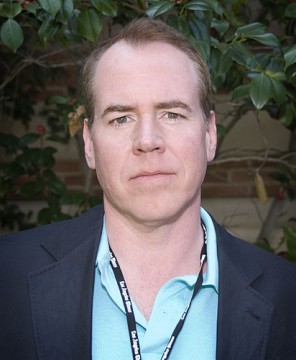
American Psycho writer Bret Easton Ellis made clear via Twitter who he’d pick as potential leads in Fifty Shades of Grey , the best-selling erotic drama by E. L. James that he claims he’s hoping to adapt for the big screen. If it ever comes to pass, Ryan Gosling and Girls creator/actress Lena Dunham are clear favorites — or so he insists. What would rumored potential director Angelina Jolie say? Reporting on Ellis’ Tweets — which should be taken with a sizable grain of salt, obviously — Orange UK noted that the Less Than Zero author speculated that Scarlett Johansson or Kristen Stewart would be the likely victors to play the novel’s Ana opposite a theoretical Gosling as Christian Grey. “I would love it if we lived in a world where [ Girls actress] Lena Dunham could be Ana in Fifty Shades of Grey but I don’t think we do,” Ellis wrote. “Hope E.L. James doesn’t think I’m being a prankster. I really want to adapt her novels for the screen. Christian Grey is a writer’s dream…” The novel’s Christian Grey is a wealthy man tormented by demons and a need for control who begins a BDSM affair with college grad, Ana. Ellis has additional thoughts on a director too, should the Jolie thing not work out — or is just an elaborate rumor — or both: “I think David Cronenberg is a great idea for directing Fifty Shades of Grey and we worked together on American Psycho in its initial phase.” He gave a shout out to his supporters and a nudge to the powers that, well.. “BEE”: “Thanks to everyone supporting BEE adapting Fifty Shades of Grey : the response has been huge and amazing. Hope E.L. James feels the same way.” [ @breteastonellis via Orange UK ]

More:
Fifty Shades of Grey: Bret Easton Ellis Dream Casts Ryan Gosling, Lena Dunham





