Tag Archives: awards

Inessential Essentials: Danny Boyle’s Shallow Grave Gets the Criterion Treatment

The film: Shallow Grave (1994) Why It’s an Inessential Essential: Today, Danny Boyle is commonly known as “the director of Slumdog Millionaire .” (Or: Olympian designer !) After that, he’s usually “the director of Trainspotting ,” or 127 Hours or even Millions . So it’s nice to see that the Criterion Collection’s first DVD/Blu-Ray release of a Boyle film is Shallow Grave , an early film by Boyle but an especially worthy one. Scripted by regular collaborator John Hodge ( Trainspotting , A Life Less Ordinary ), Shallow Grave is a nasty little neo-noir about three apathetic yuppies that cover up a crime involving a dead body and a bag full of cash. Juliet (Kerry Fox), Alex ( Ewan McGregor in his second film role), and David ( Doctor Who ‘s Christopher Eccleston) are a trio of casually petty young things that are equally bored, cruel and self-absorbed. They tentatively sublet the fourth bedroom in their Edinburgh flat to a stranger, who promptly dies and leaves a suitcase full of money beside his corpse. A decision is hastily made: they’ll keep the money and dispose of the body. The consequences of that decision naturally haunt and subsequently push the film’s group of sociopathic friends over the edge. How the DVD/Blu Ray Makes the Case for the Film: During his audio commentary soundtrack, Boyle behaves exactly how you’d think he would based on his films. He’s a reactive filmmaker, one that prioritizes sensationalism over moralism. That totally suits a film like Shallow Grave , a movie that Boyle, according to film critic Philip Kemp’s liner notes, originally conceived of as being similar to Blood Simple . During the director’s commentary (there’s also a separate commentary track that features Hodge in conversation with producer Andrew Macdonald), Boyle professes to have great reverence for British social realists like Ken Loach and Mike Leigh. But he also talks about how the film’s bright, lurid color palette, which he characterizes as “swathes of color,” were his way of getting away from “British realism,” which he said had “become very standard” at the time. Shallow Grave is about the perils of being young, British, materialistic and without a moral compass. But like Trainspotting , Boyle’s follow-up feature and breakthrough film, Shallow Grave , is a young filmmaker’s way of trying to, “just smash it up a bit, if we could.” Left to his own devices, Boyle tellingly only mentions the film’s political subtext infrequently and mostly in passing. He’s much more interested in talking about trick shots, effect-driven photography and the sense of visual “perspective” he achieved by making his antiheroes’ apartment, the film’s central location, built with an elevated foundation. Boyle did this for the same reason he had his cast lug around a crash test dummy when they simulated carrying a body down a flight of stairs. Boyle knew even then that to properly push buttons, he had to achieve a hyper-real effect. And he did: Boyle jokes that the dummy made his three lead actors mad at him, but that that an air of tension on-set is, “always a good thing.” Other trivia: Boyle is a great talker and goes on a number of funny tangents during his audio commentary, like when he warns anyone unfamiliar with The Wicker Man , which is playing in the background in one scene in Shallow Grave , not to watch the remake. His anecdote about gauging the success of Shallow Grave on the attendance of a single matinee screening in Hamilton, Scotland is especially funny. Boyle says that his contacts at Polygram Filmed Entertainment, the film’s distribution company, informed him that four people showed up to Hamilton’s first screening, but that that was a very good sign. “If there’s one person there,” Boyle recalled, “it’s going to be ok. If there’s nobody there, they don’t know. It’s bizarre, it’s all statistics, of course.” Previously: Inessential Essentials: Revisiting Joe Eszterhas’s Telling Lies in America Simon Abrams is a NY-based freelance film critic whose work has been featured in outlets like The Village Voice , Time Out New York , Vulture and Esquire . Additionally, some people like his writing, which he collects at Extended Cut .

Go here to see the original:
Inessential Essentials: Danny Boyle’s Shallow Grave Gets the Criterion Treatment
Damon Lindelof on Prometheus’s Ending and a Handy, Spoilery Alien Infographic

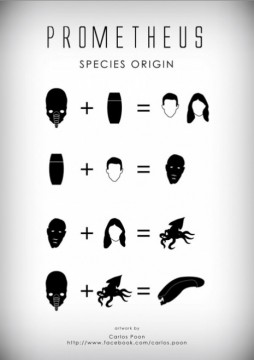
The Prometheus post-mortem continues (really, the fact that it’s still provoking discourse says something… right?) with screenwriter Damon Lindelof talking end-of-movie spoilers with TIME Magazine. Namely, what does it mean that you-know-who does you-know-what with the whatsit at the end? Kidding! Dive in to hear the LOST veteran address the certain future of our heroes, plus: An infographic that breaks down Prometheus ‘s DNA in one handy chart. Spoilers throughout! First up, TIME talks with Lindelof about the smoke monster. I mean the android, David (Michael Fassbender), who pulls some seriously heinous moves in Prometheus at the behest of one master, only to seemingly switch allegiances at the end. Can Shaw (Noomi Rapace) trust David’s head to direct her where she wants to go, i.e. the space beyond space, from whence the Engineers of doom hail? Lindelof says yes, because David has a robot crush on her . I think they’re going where she wants to go. His fundamental programming has been scrapped. Weyland [the man who built and programmed him] is dead and so now his programming is coming from God knows where. Is he being programmed by Elizabeth, or is it his own internal curiosity now that Weyland isn’t telling him what to do any more? He’s always been interested in Elizabeth, remember that: He’s watching her dreams when she’s sleeping in much the same way that he watches Lawrence of Arabia . He’s a strange robot that has a curious crush on a human being , and when Weyland is eliminated, I think he is genuinely interested in what she’s interested in. He reaches out partly for survival, but partly out of curiosity, and I think he’s sincere that he’ll take her wherever she wants to go. Right. Well, interspecies relations have taken stranger routes in the Alien universe. Speaking of which, artist Carlos Poon whipped up a handy infographic (via the folks at Dangerous Minds ) to help your brain keep track of the origins of species in Prometheus . Alright gang, mysteries solved! Right? RIIIIGHT?? [ TIME , Dangerous Minds ]

Link:
Damon Lindelof on Prometheus’s Ending and a Handy, Spoilery Alien Infographic

David Lynch’s Blue Velvet: Watch Nearly an Hour of Deleted Scenes

David Lynch ians, clear your schedule: You’ll want to spend the next hour or so indulging in these 50 minutes of deleted scenes unearthed from Lynch’s surreal 1986 noir Blue Velvet . Order a case of Pabst Blue Ribbon longnecks and raise a toast, as Jeffrey Beaumont might: “Here’s to an interesting experience!” Thanks to the folks at Dangerous Minds, the collection of deleted scenes from Blue Velvet ‘s Blu-ray release is viewable online and below. Enjoy, and hash it out: Would re-inserting these 50 minutes make for a better cut, or is Lynch’s theatrical version the better for leaving them on the cutting room floor? [ Dangerous Minds via Paste Magazine ]

Originally posted here:
David Lynch’s Blue Velvet: Watch Nearly an Hour of Deleted Scenes

Oliver Stone Lights Up for Some Good Ole High Times

HIGH Times has been a purveyor of – well – high times for years now and it’s high time, apparently, that one high-profile fan of the illegal-ish botanic blazon its cover with his famous image. Oliver Stone will grace the cover of the magazine in the August 2012 issue, just in time for the magazine’s new editor-in-chief to settle in at his new post – quite a coup! Always the classy guy, stone takes a toke dressed in his red carpet best tux and shares with HIGH Tmes about his new film Savages while also taking a dig at American foreign intervention and the ongoing global drug war. And the three-time Oscar winner is quite frank about his penchant for marijuana and tends to go for local product. “Certainly if you appreciate California weed, which I have for many years, you’ll realize that we’re somewhat close to the money when we say that, California has surpassed Thailand, Jamaica, South Sudan, and certainly Mexico as the king and queen of quality weed,” said Stone. He also joked – or maybe not? – that he might get into agriculture himself. ” I’m thinking myself of getting into the business, although I suspect there’d be a lot of stress with the Feds changing the rules all the time. Those bastards.” Savages was a chance for Stone to re-connect to his inner rebel, he told HIGH Times . Said the publication’s Chris Simunek: “We applaud Oliver Stone for showing the same sort of courage in his support for the marijuana cause that he’s shown with so many other issues, past and present. HIGH Times has always championed the rebel with a cause, and when people of Mr. Stone’s renown speak up — and smoke up — in the public sector, it exposes one more chink in the armor of idiocy that protects the status quo.” [Source: HIGH Times ] And what do you think of Stone’s HIGH Times cover shot?

The rest is here:
Oliver Stone Lights Up for Some Good Ole High Times

Paul Williams Still Alive: The Grammy and Oscar Winner Shares His Top 10 Movie Songs

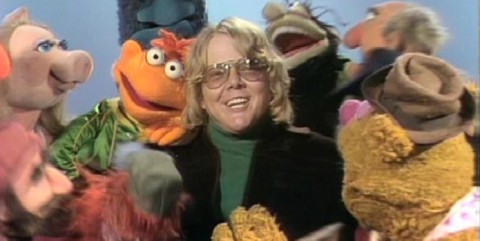
Throughout the ’70s and into the first part of the ’80s, it was hard to ignore singer/songwriter/actor/sometimes talk show host and best-friend of the Muppets Paul Williams. He won Grammys and even an Oscar for hits he wrote including “We’ve Only Just Begun,”, “Rainy Days on Mondays,” “Evergreen,” “Just an Old Fashioned Love Song” and “Rainbow Connection.” Barbra Streisand, The Carpenters and even Kermit the Frog are among the artists he wrote super-hits for. Below, Paul Williams gives us his top ten movie songs of all time and dishes insight on Stephen Kessler’s documentary about him, Paul Williams Still Alive , about his raging ascent and crashing fall and return to form… Johnny Carson first brought the artist onto the Tonight Show as the swinging ’70s were just beginning. He did television, movies, concerts. If there was a group of “It-guys” in that crazy decade, Williams would surely have been a part of that cadre of people at the center of all that spectacle. But as the ’80s wore on and into the ’90s Paul Williams all but disappeared from the center of it all. Drugs and booze did him in for a while, though he came roaring back though via a less flashy route. Enter fan and Oscar-nominated filmmaker Stephen Kessler. He had long been a fan of Williams as a teen growing up in Queens, NY and his songs which he described as about “depression, loneliness and alienation,” and set out to find Williams and make a documentary. Williams said ‘yes’ but he was hardly a willing participant, at least initially, as Williams told Movieline. “By the time I decided to go along, he had spent a lot of time and a lot of money. I didn’t want to flat out say no and didn’t know how to say no.” Williams added that he thought there was nothing worse than some older famous guy trying to reach for that last bit of notoriety. Kessler is very present in the film, which goes against most documentary standards unless you’re Michael Moore or Morgan Spurlock. With Williams reluctant initially to open up and only providing limited access, the story unfolds interweaving a treasure-trove of ’70s pop culture which Paul is at the center and Kessler’s desire to get at his core and open up. I’m an actor, I can ignore the camera if I want to. But it’s exhausting to try and pretend I don’t notice the camera,” said Williams. “I didn’t want to do that, it seemed ridiculous.” One thing cameras caught and the film surfaces, decades later, is footage of Williams, high, while doing late night talk shows. Now 22 years sober, it’s a painful reminder of his past life and he even said during the film that he didn’t want his daughter to see that. But he relents and said he hopes it will help others. “I became a shallow ride and my behavior was totally unacceptable. One of the best things I did was to say to keep that footage in the movie. I think by leaving in you get a sense of how bad it got,” he said. “[There is] a sense of real disappointment and leading edge of shame. In a certain context it’s hard to watch, but you get a sense that recovery works. You see the yin and yang of the whole deal and you see that now, my life is such a gift. I hope I can make a difference… I love my life. And I’m blown away by the reaction.” PAUL WILLIAM’s TOP 10 MOVIE SONGS: Rock Around the Clock by Bill Haley, Blackboard Jungle (1955) Main title theme by Elmer Bernstein, The Man with a Golden Arm (1955) Lose Yourself by Eminem/Bass/Resto, 8 Mile (2002) When You Wish Upon a Star by Harline/Washington Pinnochio (1940) The Man That Got Away by Arlen /Gershwin, A Star is Born (1954) With a Song in My Heart by Rodgers/Hart, With A Song in my Heart (1954) Somewhere by Bernstein/Sondheim, West Side Story Moon River by Mancini/Mercer, Breakfast at Tiffany’s (1961) Alfie by Bacharach/David, Alfie (2004) Streets of Philadelphia by Bruce Springsteen, Philadelphia (1993) Born To Be Wild by Dennis Edmonton AKA: Mars Bonfire, Easy Rider (1969) And what are your favorites? Paul Williams Still Alive opens in NYC today. Follow Brian Brooks on Twitter . Follow Movieline on Twitter .

Read more:
Paul Williams Still Alive: The Grammy and Oscar Winner Shares His Top 10 Movie Songs

What’s the Biggest Unanswered Question Raised By Ridley Scott’s Prometheus?

Ridley Scott’s Prometheus opens stateside today, which means no more tiptoeing around spoilers for those who’ve seen it. ( Obviously, spoilers will follow. You’ve been warned. ) The number one complaint among folks who have now seen the highly anticipated Alien kinda-prequel? So. Many. Unanswered. Questions. So let’s jump right into the spoiler goo and get to deciding (and, hopefully, answering) the biggest question prompted by Scott’s gorgeous, murky space opus that is left yet unanswered. I’ll start: WHY? Why does pretty much anyone in Prometheus make any of the decisions they make? Like… – Holloway (Logan Marshall-Green) with the helmet-taking off. Really, is sniffing (and contaminating) the alien world atmosphere on the planet you just landed on and know nothing about such a good idea? – Vickers (Charlize Theron), running in the one direction that will lead her to being squashed by a giant falling spaceship? – Millburn the dumb biologist (Rafe Spall), who just wants to reach out and make friends — even with the squishy alien penis-snakes? – Space crew guy, walking straight up to his recently deceased, re-animated fellow shipmate who has spider-crawled his way across a space desert to space-murder everyone? Most of these aren’t necessarily unanswered questions, just incredibly stupid decisions that inform and support the characters in facepalm-worthy strokes. Holloway is a risk-taker! Vickers is a sheltered, prideful ice queen with probably little field experience who would rather try to outrun death than roll, like her unassuming and practical brunette counterpart, out of its way! Crew guy is, well, a redshirt, for lack of a better term. Yes, yes. There are reasons to be found here, if not particularly great ones. The bigger questions have to do with two still-opaque entities: The Engineers and David, the increasingly creepy mayhem bot, Lawrence of Robotica. In the prologue we see one Engineer take a dose of black space goo and tumble, dead and transmorphing, into the water — thus presumably starting human life on Earth. So what is the goo? Prometheus builds a tech-driven world filled with great flying ships and alien holograms and C-section machines but is more concerned with ideas: Of creators and creation, of life and death cycling endlessly across the universe between humans and aliens, parents and offspring, scientists and their inventions. All children want to see their parents dead, according to David, who seems to be counting himself in that equation. What is the goo, then? Is it the proto-material of a xenomorph? How does it work, exactly? Why would anyone feed it to the cute Tom Hardy-looking guy? And who created the Engineers, anyway? Does it even matter when the real question is asking why we create, and in the process, destroy? The brilliance of Prometheus ‘s stubborn insistence on not feeding us the answers is that they’re not really important in the grand scheme of things, unless you require your movies to make sense. You know what else refuses to share vital information, instead choosing to provoke and see what happens? David. David, who has spent years in space flight amassing the breadth of human knowledge and yet cannot feel (or can he?), who has the answers — or, at least, the instructions the Engineers have written in their mystery language on the sides of their sweaty weapons of mass destruction like how-to manuals — and yet can’t understand why it is that Noomi Rapace’s Elizabeth Shaw MUST understand. David, played marvelously by Michael Fassbender, remains the biggest mystery . He’s tasked with one directive: Help Weyland find a way to live forever. You could build a strong case that everything David does is indeed in service of this goal. Weyland’s mistake is in trusting a machine that doesn’t think in human terms, but in practical ones; if there’s no alien magic out there to Benjamin Button old man Weyland back into handsome, young Guy Pearce, David finds another way to help his master live forever: Through his legacy, by altering the course of human history (gladly, it seems) via one or two devious deceptions. Consider the legacy of the man at the center of David’s favorite film, as seen in Prometheus ‘s sublime opening sequence. T.E. Lawrence was born in 1888, helped upset order in the Arab world in 1916, was immortalized on celluloid in 1962’s Lawrence of Arabia , and then, years later in the world of Prometheus , inspired an android to not only imitate his blond coif but instigate the beginnings of the Alien universe in 2093. Lawrence is really the key to understanding David; in helping Weyland achieve his immortality by way of launching the destruction of humanity, David is immortalizing himself, and a part of me thinks that a part of him yearns to express this measure of often foolhardy human emotion. Or maybe he’s just designed to be a close, but not close enough, imitation of the humans who built him? The more I think of David as a stand-in for Prometheus the movie at large, the less I care that Idris Elba figured out in five minutes what the Engineers were up to on this rinky dink planet, or that we’ll never know what David whispered to the last remaining Engineer, a la ScarJo and Bill Murray in Lost in Translation . Those quibbles seem minor given the vast provocations the film leaves behind. To an aggravatingly obvious extent, the gaping abyss of understanding that Prometheus leaves puts us, the viewer, in the position of Shaw — still searching, desperately, for answers, with only a soulless computer brain as her guide. We are Shaw, and maybe the internet is our David, offering knowledge and spoilers at our fingertips but, unless Ridley Scott and writers Jon Spaihts and Damon Lindelof hop on a Reddit AMA session, no ready answers and plenty to be wary of. Big things come in small packages, and that goes for space goo, blond robots, and universe-expanding ideas. So, all that said, what unsolved mysteries irked you the most in Prometheus ? Sound off in the spoiler-friendly comments below and let’s figure this sucker out. — Our colleagues at (PMC-owned) Beyond the Trailer pose a relevant question: “Is Prometheus an intellectual sci-fi thriller, or a pseudo-intellectual sci-fi thriller?” See what other real folks say in their impromptu exit poll. Follow Jen Yamato on Twitter . Follow Movieline on Twitter .

Continued here:
What’s the Biggest Unanswered Question Raised By Ridley Scott’s Prometheus?

REVIEW: Todd Solondz Spins a Tale of an Unlovable But Compelling Loser in Dark Horse

Dark Horse is a romance and a comedy in the way that  Titanic  is a movie about a boat trip. The latest film from Todd Solondz, that auteur of misery masquerading as humor,  Dark Horse is about a 35-year-old named Abe (Jordan Gelber, who’s halfway between Jeff Garlin and Vincent D’Onofrio) who still lives at home with his parents (Christopher Walken and Mia Farrow) and works at the real estate development office his dad owns. With his receding hairline and paunch, Abe is an undeniably aging guy existing in a limbo of arrested development — he’s a man-child, but in a creepily realized way, a corpulent adult acting like a teenager, looking painfully out of place in his T-shirts and childhood bedroom adorned with action figures. Solondz’s career has slowed since his ’90s hits, including  Welcome to the Dollhouse  and 2001’s  Storytelling. While skipping the more shocking turns of something like Happiness,   Dark Horse  does feel like a return to the fearless darkness of those earlier films, a tale of a loser who’s fully drawn but never allowed to be lovable. Abe didn’t leave home, and in the opening scene of the film, at a wedding, he meets what he hopes is his match in Miranda (Selma Blair, listed in the credits as “formerly ‘Vi’,” the character she played in  Storytelling ), who’s recently crawled home in defeat. Miranda doesn’t pretend to be in any way interested in him, but he’s persistent and she’s depressed and unable to resist, though she does forget their first date and is away at the grocery store when he comes to see her; she also spends a chunk of their second date lying facedown on her bed. Despite this show of indifference, he proposes to her, and she accepts, telling him that after a Skype chat with her ex, Mahmoud (Aasif Mandvi), she realized she should stop trying to slit her wrists, give up on her literary career, hope and ambition, and just get married and have children. When they kiss for the first time, Miranda says that it “could have been so much worse.” A grand romance, it is not. Abe is pathetic, but Dark Horse  doesn’t allow him to be pitiable. “I know that life has been unfair to you because it has given you every possible advantage,” points out a character in one of several dream sequences that suggests Abe has more self-awareness than he lets on, “so your feelings of inadequacy are endless and unrelenting.” There’s no particular reason that Abe has failed to leave the nest — he has been given all the same starting material as his younger brother, Richard (Justin Bartha), a successful doctor Abe naturally resents. Abe is lazy, self-conscious and defensive; he rationalizes away his situation as being the fault of an unjust world, of his father being an asshole and his mother loving his sibling more, things that we see aren’t true. Abe thinks of and describes himself as a “dark horse,” a term his dad applied to him growing up — the underdog, the unexpected candidate. But he isn’t in a Judd Apatow production, he’s in a Todd Solondz film, one that provides the same kind of bracing counterbalance to man-child genre tropes as  Welcome to the Dollhouse  did to teen comedies in which the outcast kid makes good. Abe doesn’t seem likely to pull himself out of the stagnation in which he’s wallowing, and he doesn’t really want to. The most resonant and most repugnant thing about the character is the way in which he feels he’s owed some kind of success without wanting to do the work — if it hasn’t arrived yet, that has to be because of the actions of others. “I know my problems better than anyone, and there’s no solution!” he barks at his concerned mother when she suggests he go back to therapy. Like other women in his life, she flutters over him in concern, undermining any firmness from his father so that they cancel each other out. Dark Horse  is set in a New Jersey that’s been made into a bland purgatory of suburban sprawl — one of the film’s several memorable slow pans across a room tracks from face to face of Abe and Miranda’s parents, meeting for the first time as soon-to-be in-laws, and discussing in idle detail whether taking I-95 or the Parkway would have been a better route to get where they already are. Abe drives a Hummer, compulsively drinks Diet Cokes and works to help his father manage strip malls, always late on getting spreadsheets together because he’s looking for Thundercat figurines on eBay. It’s a just-heightened world that becomes so stifling by the end that you want to run screaming out the door and not stop until you reach the state lines. Dark Horse ‘s most important scene takes place in an empty Toys “R” Us in which Abe tries repeatedly to return an item the store won’t accept. It’s a nightmarish but poetic moment in which the film’s themes come strikingly together — this is a man who’s crippled by the imperceptible things he thinks he’s been denied. Life, however, doesn’t come with a receipt.

See the original post:
REVIEW: Todd Solondz Spins a Tale of an Unlovable But Compelling Loser in Dark Horse

REVIEW: See Jane Fonda Cradling Some Very Nice-Looking Chickens in Peace, Love & Misunderstanding

Jane Fonda shows up so infrequently in movies these days that it doesn’t matter if they look potentially good or dismal: Even when the performances (not to mention the movies around them) don’t quite work, Fonda always gives you something to watch. That’s certainly true in Bruce Beresford’s Peace, Love & Misunderstanding , an aimless if good-natured picture that casts Fonda in the role of a Woodstock-dwelling, ugly-art-making hippie-dippie mom who welcomes her estranged and very uptight daughter – played by Catherine Keener – back into her mother-earth arms. Her goal: To get her offspring, and her offspring’s offspring, to loosen up and start getting it on. What’s that you’re saying? You really don’t want to see Jane Fonda in twirly Grateful Dead skirts and dreadful ethnic earrings, urging the younger folk to get in touch with their inner Alex Comfort? Neither did I. But the more I think about Peace, Love & Misunderstanding , the more I marvel that anyone would even cast Fonda, the most iron-willed of actresses, in this sort of role. None of it quite works, but it seems Beresford did his damnedest to try to pull it off. As the movie opens, the marriage between rich city people Diane (Keener) and Mark (Kyle MacLachlan) is clearly on the skids. Mark is the kind of guy who proclaims at a dinner party that all of Eugene O’Neill’s plays could easily be cut in half. How anyone could share a bed with this boob, let alone not murder him in his sleep, is beyond me, but Diane is crestfallen when Mark asks her for a divorce. She packs up the couple’s two teenage kids, awkward adolescent Jake (Nat Wolff) and luminous alien child Zoe (Elizabeth Olsen), and heads to her mother’s house upstate – even though, we soon learn, she can’t stand the woman who raised her, a free spirit named Grace (Fonda) who lives on a ramshackle but very expensive bit of hippie real estate adorned with hideous sculptures (which she makes herself, natch) and roaming chickens. Diane is a high-strung lawyer type who resents her mother for not having given her enough structure, guidance and security while growing up; Grace – who also, incidentally, sells pot on the side – just wants her daughter to chill out. She also doesn’t think it would be a bad idea if Diane got together with the local hottie, a woodworker – yes, ladies, a man who works with his hands! – played by Jeffrey Dean Morgan. But that’s not all: Grace also wants her grandchildren to enjoy the pleasure and freedom of human sexuality, and there are several mildly embarrassing scenes in which she counsels the young ’uns on how to get things cooking with their respective crushes (played by Marissa O’Donnell and the unnervingly good-looking Chace Crawford). If the van’s a rocking’, don’t come knockin’. Grace is the kind of woman who not only keeps chickens, but allows them to wander into the house. It must be said, though, that these are very clean, pretty chickens, and next to Fonda, they were my favorite part of Peace, Love & Misunderstanding . To watch Jane Fonda cradle a speckled puff of tawny feathers, all the while radiating a sort of businesslike affection – well, that’s something to see. But the rest of Peace, Love & Misunderstanding doesn’t go down so easy. The script, by Joseph Muszynski and Christina Mengert, wanders along very familiar trails, and even though Beresford tries to keep things clicking at a reasonable clip, the thing moves like a pair of too-long bell-bottoms dragging in the mud. Keener, an actress who’s usually great fun to watch, can’t seem to muster much enthusiasm for her extremely constrained character, and can you blame her? But again, at least there’s Fonda. Fonda’s last two movies, Garry Marshall’s 2007 Georgia Rule and Robert Luketic’s 2005 Monster-in-Law, were ridiculous little things, though there’s some faint hope looming ahead in the form of Aaron Sorkin’s upcoming show The Newsroom . Meanwhile, in Peace, Love & Misunderstanding , we need to reckon with the idea of Fonda as a woman who lets it all hang loose – which, as brilliant an actress as Fonda may be (and her radical politics aside), is a pretty big stretch. Still, this stroke of miscasting is fascinating to watch by itself. Fonda isn’t soft enough to play this kind of character, but she wraps herself around the task like an anaconda. When it comes to letting her freak flag fly, she’s damn serious.

See the original post here:
REVIEW: See Jane Fonda Cradling Some Very Nice-Looking Chickens in Peace, Love & Misunderstanding

REVIEW: Bloodless Bel Ami Wastes Robert Pattinson’s Perfectly Intriguing Face

Though he plays one of the great roués of literature – the social climbing, bloomer-dropping hero at the center of Guy de Maupassant’s 1895 novel – the focus on Robert Pattinson in Bel Ami is notably above the belt. This is certainly true in the literal sense, where first-time directing team Declan Donnellan and Nick Ormerod lavish attention on Pattinson’s extraordinary face, even get a little lost in it at times. But it also feels like the source of a larger lack – that of the libidinous physicality and charismatic breadth of a well-rounded scoundrel. Like Madonna’s recent W.E. , the look of Bel Ami is polished to a fine, if somewhat compensatory gloss. Even the prostitutes in the Parisian bar where Georges Duroy (Pattinson) washes up after his stint fighting on the Algerian front are styled like Moulin Rouge extras. A run-in with his former superior (and current newspaper man) Charles Forestier (Philip Glenister) at that bar yields the penniless Georges an invitation to a most fortuitous dinner. Donnellan and Ormerod, both veterans of the UK theater, give some cheek to the scene that follows, in which the beauteous Georges makes his social debut, and his future conquests are introduced only to align like a three-pineapple jackpot. George can’t believe his luck, and neither can we: Forestier’s formidable wife Madeleine is played by Uma Thurman; the wife of newspaper owner Rousset (Colm Meaney) is played by Kristin Scott Thomas; and the group’s pet, a lonely society wife named Clotilde, is played by Christina Ricci. Pattinson’s lips seem to visibly redden as the women take their bows, but the hope of watching him unleash a few eternities of Edwardian frustration in a highbrow bodice-ripper begins to dissipate as Georges proves to be more a man of reaction than action. When Madeleine proposes a newspaper column for Georges at dinner, he looks on with a smirk; when she writes the inaugural column for him during their first meeting à deux , informing him besides of her total disinterest in being his mistress, the camera lingers on a similar expression. Whatever feeling or calculation lies behind it is certainly well disguised, and the gap between Pattinson’s plentiful reaction shots and their meaning only widens as the film goes on. The women take to Georges immediately, though his knack appears to be less for insinuation than good timing. Clotilde is in the market for a lover, and lets a sumptuous apartment for their trysts. Meanwhile Georges’s ghostwritten column is a success, though the men see him as an empty waistcoat and Forestier in particular treats him with disgust. When his new position is jeopardized and Georges has to start scheming in earnest, his moves are sudden and poorly integrated. The hand-delivery of a basket of pears to Mme. Rousset seems to restore his job, and the idea that Georges is driven by a determination to abandon his peasant roots is most convincing when he spells it out for Clotilde. Characterization feels like an afterthought, and is only tended to when it becomes a necessity of the plot. And yet on the whole Bel Ami is highly watchable. As is often the case in costume pictures especially, the degree to which different characters are convincingly of the world of the film varies. Thomas, for instance, is at once tragically and comically lovely as the good, religious wife seduced out of her right mind. She can telegraph that world in a glance and a few words. Thurman has a tougher time with Madeleine; although she makes a shattering indictment of Georges near the end, her character in particular – the ambitious political player stymied by her sex – demonstrates an endemic problem with the script (by Rachel Bennette) and the direction: The best performances seem to inhabit a story that the filmmaking doesn’t bear out. Executive-produced by Simon Fuller (the American Idol creator is described in the press notes as being in the business of “world-class entertainment properties and icons”), at times Bel Ami feels like someone made an elaborate pretense of convincing both Pattinson and the audience that there’s more to the film than his pretty face. But what a face: Classically handsome one moment, darkly sensual the next, then almost grotesque in the wrong light, then back to boyish and unsullied. I haven’t seen David Cronenberg’s Cosmopolis yet, but if there is one director who might get a handle on that face and put its chameleon planes to proper use, it might be him. Although his face is his fortune in Bel Ami , Pattinson feels ill used, his raw talents still waiting for not just the right role but the right director. In that way, one of the most welcome of the film’s twists – watching a young man engage in the Victorian bloodsport of making a good marriage – has a separate resonance. Something tells me a more perfect concord awaits. Follow Michelle Orange on Twitter . Follow Movieline on Twitter .

Follow this link:
REVIEW: Bloodless Bel Ami Wastes Robert Pattinson’s Perfectly Intriguing Face

Robert Pattinson Starrer Cosmopolis to Open U.S. in August

Pattinson said in Cannes there wasn’t much in the way of rehearsal before he began shooting the David Cronenberg-directed film and that he “worried” in his hotel room before it all began. Distributor Entertainment One said it will hit U.S. theaters August 17th, well after its release north of the border. Cosmopolis opens this Friday in Canada and it will head a week later to the U.K. for a June 15th roll out. Pattinson noted about making the film recently , “I’m not very scared of it going away at all. If I could somehow maintain a career in which I keep making movies like Cosmopolis , than I think it would be amazing, because not very many of them are made.” Based on the novel by Don DeLillo, Cronenberg’s latest stars the Twilight heartthrob as a 28 year-old billionaire assets manager who begins a day-long journey in his very tricked out limo as it inches its way through Manhattan. Eric Packer’s (Pattinson) objective is simple enough — he wants to get a haircut. He has everything, so what else can fulfill him? Perched on his throne in the back of his stretch limo, Packer encounters individuals as his car meanders the packed New York City streets. Juliette Binoche, Paul Giamatti, Samantha Morton, Sarah Gadon and more represent his physical, material and intellectual desires as well as demise and some — but not all — joining him one-on-one in his inner sanctum.

Read more:
Robert Pattinson Starrer Cosmopolis to Open U.S. in August