Tag Archives: china

Hotter Than Warp Plasma: The Sexiest Women of Star Trek

For many of us, and there's no point in denying it, one of the highlights of Star Trek – all five series, eleven films, one cartoon and many bulging crates of comics and novels, is, as Spock shouted on the transporter deck in The Cage: The WOMEN!!! http://www.ugo.com/movies/hot-star-trek-women-tpol-mirror-universe added by: remanns

Obama Can Shut Down Internet For 4 Months Under New Emergency Powers

President Obama will be handed the power to shut down the Internet for at least four months without Congressional oversight if the Senate votes for the infamous Internet ‘kill switch’ bill, which was approved by a key Senate committee yesterday and now moves to the floor. The Protecting Cyberspace as a National Asset Act, which is being pushed hard by Senator Joe Lieberman, would hand absolute power to the federal government to close down networks, and block incoming Internet traffic from certain countries under a declared national emergency. Despite the Center for Democracy and Technology and 23 other privacy and technology organizations sending letters to Lieberman and other backers of the bill expressing concerns that the legislation could be used to stifle free speech, the Senate Homeland Security and Governmental Affairs Committee passed in the bill in advance of a vote on the Senate floor. In response to widespread criticism of the bill, language was added that would force the government to seek congressional approval to extend emergency measures beyond 120 days. Still, this would hand Obama the authority to shut down the Internet on a whim without Congressional oversight or approval for a period of no less than four months. The Senators pushing the bill rejected the claim that the bill was a ‘kill switch’ for the Internet, not by denying that Obama would be given the authority to shut down the Internet as part of this legislation, but by arguing that he already had the power to do so. They argued “That the President already had authority under the Communications Act to “cause the closing of any facility or station for wire communication” when there is a “state or threat of war”, reports the Sydney Morning Herald. ears that the legislation is aimed at bringing the Internet under the regulatory power of the U.S. government in an offensive against free speech were heightened further on Sunday, when Lieberman revealed that the plan was to mimic China’s policies of policing the web with censorship and coercion. “Right now China, the government, can disconnect parts of its Internet in case of war and we need to have that here too,” Lieberman told CNN’s Candy Crowley. While media and public attention is overwhelmingly focused on the BP oil spill, the establishment is quietly preparing the framework that will allow Obama, or indeed any President who follows him, to bring down a technological iron curtain that will give the government a foot in the door on seizing complete control over the Internet. As we have illustrated, fears surrounding cybersecurity have been hyped to mask the real agenda behind the bill, which is to strangle the runaway growth of alternative and independent media outlets which are exposing government atrocities, cover-ups and cronyism like never before. Indeed, China uses similar rhetoric about the need to maintain “security” and combating cyber warfare by regulating the web, when in reality their entire program is focused around silencing anyone who criticizes the state. The real agenda behind government control of the Internet has always been to strangle and suffocate independent media outlets who are now competing with and even displacing establishment press organs, with websites like the Drudge Report now attracting more traffic than many large newspapers combined. As part of this war against independent media, the FTC recently proposing a “Drudge Tax” that would force independent media organizations to pay fees that would be used to fund mainstream newspapers. added by: im1mjrpain

U.S. and Brazil Lead Google’s Top 10 Censorship List. It is news to me, what about you?

U.S. and Brazil lead Google’s Top 10 Censorship List. Yes, you read that right. Brazil and the U.S. are the respective #1 and #2 on Google’s Top 10 Censorship List. China is hardly the world’s only Internet censor. According to information released April 20, 2010 which excludes China and several other countries, Brazil and the US lead the world in the number of requests for user data and for the removal of content. Keep an Eye on Big Brother To find more information reports about government requests for information and content removal, you can contact government independent organizations such as Chilling Effects and the Open Net Initiative. http://idaconcpts.com/2010/04/22/u-s-and-brazil-lead-googles-top-10-censorship-l… =rss&utm_medium=rss&utm_campaign=u-s-and-brazil-lead-googles-top-10-censorship-list added by: MotherForTruth

Matthews: Canning Stan Helps Obama’s Oil Spill Image

Another leg tingle is on the way for MSNBC “Hardball” host Chris Matthews. Wednesday on “Andrea Mitchell Reports,” Chris Matthews asserted that the President’s image had been tainted because “BP has been the front institution, not the United States government, in this whole horror down in the gulf.” Yet, the White House no longer needs to worry, because to Matthews, the releasing of General McChrystal benefits the President’s image of handling the oil spill by creating a “chance for him and somewhat in a way or somewhat in a personnel manner to insist on his role as Commander in Chief.” Andrea Mitchell was relieved because according to a new poll, “only 50% think that the president is doing a good job in handling the oil spill.” Nevertheless, Matthews made sure to explain that although the President’s image may pay a price, it was us who,”created this problem through our capitalist system, free enterprise system and now we have to fix it.” Alas, the culprit is capitalism! Wait, even in China? [Proof available here ]

ABC Touts Entrepreneur Seeking Backing of Government ‘Lawyers and Lobbyists’

The day after President Obama’s oil spill speech — in which the President pivoted from the ongoing mess in the Gulf of Mexico to his call for ending our “addiction” to fossil fuels — ABC’s World News obliged the White House’s agenda with a profile of solar cell manufacturer Natcore , whose president, Chuck Provini, says he can cut the costs of solar cells (which are right now too expensive to be economically viable without government subsidies). But the problem, as ABC correspondent Dan Harris helped frame it, is that this entrepreneur was getting nothing but “blank stares” from the “congressional staffers, lawyers and lobbyists” he met with in Washington, D.C. — as if a venture capitalists and other private investors wouldn’t be tripping over themselves to get in on the ground floor of a process that could actually make solar power viable. And the hero of the story, as ABC told it, is China’s dictatorship, which has made a deal with the company and will now gain the “hundreds of jobs” that U.S. officials have supposedly squandered by not bankrolling Provini: DAN HARRIS: There was, however, one place offering help: China. The government flew him over there and made him a very generous offer. (to Provini) Would you say that the Chinese officials made your life easy in this process? CHUCK PROVINI, via Skype: It’s been a pleasure. They’ve been gracious. They’ve cut through red tape. HARRIS: He is about to cut a deal to open a factory that will create hundreds of jobs – jobs that could have been created here….Critics say the federal government needs a big, bold plan to dramatically ramp up our use of clean energy. Until then, they say, we’re going to see a lot more American companies like Natcore exporting their promising ideas to places like China. Does ABC really think that good business ideas require the support of lobbyists, lawyers and congressional staffers? That the free market cannot innovate and economize with at “big, bold” government “plan?” MRC’s Brad Wilmouth caught the story from the June 16 World News with Diane Sawyer: DIANE SAWYER: And, in his speech last night, President Obama used the moment to call for less dependence on foreign oil and fossil fuels and making sure that China doesn’t get all the new jobs in wind and solar power. But Dan Harris heard a story today of one company, one big idea, but in America, no one to say give it a try. DAN HARRIS: Natcore is a small company based in New Jersey that says it’s come up with an innovative new approach to make solar technology better and cheaper, one that its scientists are very excited about. The president of the company – this guy, Chuck Provini – says he was determined to set up shop here in America. CHUCK PROVINI, NATCORE SOLAR: I live here in New Jersey. I’m a former Marine. I consider myself a good American and a patriot. We wanted to do business in the States. HARRIS: He went to Washington, D.C., and met with congressional staffers, lawyers and lobbyists, but says he couldn’t get the help raising the money that he needed. [to Provini] Were you met with blank stares? PROVINI: They were very polite. We got polite letters, polite conversations, but it was obvious that there was a major disconnect. HARRIS: There was, however, one place offering help: China. The government flew him over there and made him a very generous offer. Would you say that the Chinese officials made your life easy in this process? PROVINI: It’s been a pleasure. They’ve been gracious. They’ve cut through red tape. HARRIS: He is about to cut a deal to open a factory that will create hundreds of jobs – jobs that could have been created here. (to Provini, via Skype) You’re now in China, as we speak, in the middle of the night, and you’re not far away from inking a final deal.                                  PROVINI: Well, I’m really curious as to how you found me at 2:00 in the morning in Jujo City. HARRIS: To be fair, it is hard for the U.S. to compete with China’s dictatorial government, which essentially runs the entire economy. But still, critics say the federal government needs a big, bold plan to dramatically ramp up our use of clean energy. Until then, they say, we’re going to see a lot more American companies like Natcore exporting their promising ideas to places like China. Diane? SAWYER: A real cautionary tale about the need for a fast track here in America. Dan Harris reporting.

Go here to see the original:
ABC Touts Entrepreneur Seeking Backing of Government ‘Lawyers and Lobbyists’

Royal Ascot: How to get thrown out of the Royal Enclosure

Could it be the cheese roll and lack of a hat that gives our intrepid journalist away among the posh people? When you imagine Ladies’ Day at Royal Ascot you may visualise a hat – the largest, most absurd hat you can imagine, a hat that looks like a suicide-bomber chicken after its glorious auto-martyrdom. And this is true. I am standing at the entrance to the Royal Enclosure, interviewing a woman with a Lego Palace of Westminster on her head. The photographers snap away, gasping, “Lego hat!” Her hat is indeed made of Lego and, to labour it, the Lego press office will later email me a document entitled Lego – Ascot hats. But Ascot is more than that. Ascot, as far as I can see with my middle-class eyes, is the British Class System in a grandstand. It is a world of barricades and badges and net veils and is thus the most terrifying place I have encountered since I last went to South Kensington by mistake. But that is for later. For now, the hats. Ah, hats! It is only when you watch British women dress up en masse that you realise we cannot dress at all; we dress like cats trying to learn algebra. I love us for this, because we look, to a woman, vulnerable and terrible. I have sunburn and a hole in my stocking. The woman beside me is wearing a 3ft-wide papier-mache teapot on her head and is already planning her Phantom of the Opera-themed hat for next year. But we are in denial; Jeff Banks is on the loudspeaker, praising the hats. “The hat,” he is saying, “is an exclamation mark.” In the tiers of things that matter at Ascot, after the hats come the enclosures or, as I prefer to call them, the pens. There is a strict apartheid system here. If you do not have a badge to a particular pen, you cannot go in and you probably cannot vote either. And, to enforce it, there is an army of Group 4 security guards, all in grey. And they keep us in our respective pens. On the far side is the Silver Ring. It is cheap and packed and it has women holding babies and eating sausage rolls. People have brought their own furniture and it is full of bins. The bins, it seems, are the focal point. Then, slightly nearer the action, is the main grandstand, which, from the inside, looks like Peter Jones. It has giant internal escalators and repulsive carpets. It houses the Middle Classes and Jeff Banks. Then, further over, and bang in front of the finishing line, is the Royal Enclosure, the pen of the toffs. I do not have a ticket but I walk in anyway. I am carrying a large cheese roll. This is my plan. If I do not succeed in getting in, it will be the fault of the cheese roll. The security guard waves me in – victory! I am now in the Royal Enclosure. But, because it is still early it is empty apart from a woman wearing a washing machine on her head. So, although I have arrived at the apex of British Society, everyone else has left. I now have an important contribution to make to Marxist theory. If you want to demolish the British aristocracy, admit me to its pen. I also have a cheese roll. The Royal Enclosure has benches instead of bins because everyone knows that posh people do not drop litter and, even when they do, it’s not litter, it’s the free market. “Do not bring a gazebo into the enclosure,” says a sign. (Nor hot tubs.) I sit and nibble my cheese roll, wondering whether to call g2. “I’m in the Royal Enclosure illegally,” I plan to say, “But everyone else has left. And, if I am caught, will you send a Social Democratic Swat Team?” But the cheese roll that screams “Outsider!” is, as I have always suspected, a time bomb. A man in a bowler pounces. “Madam,” he coughs discreetly, “DO YOU HAVE A BADGE?” I wave my press pass at him like a crucifix. “I am sorry, madam,” he replies, “but you will have to move.” But I am a friend of Ronnie Corbett, I say. He is on the front of the Official Royal Ascot Magazine and I am with him. He is in the toilet with Cilla Black. But they will be back soon and then – then – I can guarantee you will be on the eastern front by Christmas! The man gives a gently fluttering gesture away from the benches and towards the bins . I think briefly of the Exorcist and Max von Sydow roaring, “I CAST THEE OUT!” I am, in the end, glad I am thrown out, not because I am an egalitarian but because I get to see The Arrival of Joan Collins. The photographers, who have grown tired of photographing hats disguised as zebras, are restless. So, when Joan Collins appears dressed, as ever, as a transvestite outreach programme, they lunge like a confused centipede. Er, Joan, I say, hoping she will not remember all the times I have called her a transvestite outreach programme in print, what do you like about Ascot? “Not this,” she says, regarding me, as ever, as if I am a badly accessorised Matalan dress. Then comes Charlie Watts in a grey suit, thin and ghostlike. He tries to smile, fails and walks away. The photographers hurl themselves on Louise Redknapp and someone from Strictly Come Dancing instead. I leave. But the apartheid follows me. I approach one of the escalators. But a Group 4 employee plants herself in front of me. Think Rosa Klebb. “You cannot go down there because you are not wearing a hat,” she says. I long to say that this is the stupidest thing anyone has ever said to me. That I am wearing a microscopic nanorobotic hat designed and sponsored by the China Nanchang Aircraft Manufacturing Corporation and, just because she cannot see it, it does not mean it isn’t there. But of course I do not because I am British. I know my place. I long for Trotsky and walk away. Eventually, the Ascot PR rings to say I can sit in the Royal Enclosure grandstand to watch the racing. (I complained earlier that all I can see in the press room is the back of the Sun reporter’s neck.) So I slink back to the Royal Enclosure and sit down. I smile and murmur at the people around me but I am blanked with thin smiles. Reader, they know. They know about the cheese roll. Why am I not by the bins, where I belong? We applaud the Queen as she comes past in her carriage. (I do this unwillingly but I am outnumbered.) The Queen looks, as ever, like an angry sweet sitting on her rage. She waddles to her box to watch the show. There’s not much left to do but sit down, eat the cheese roll and wait for it all to die. Fashion Horse racing guardian.co.uk

Read more:
Royal Ascot: How to get thrown out of the Royal Enclosure

Boyle and Daldry, London’s Olympic double act

Filmmakers known for feelgood movies including Slumdog Millionaire and Billy Elliot put in charge of 2012 events Both are known for uplifting feelgood movies where the virtuous child gets what they deserve despite all the obstacles – whether it’s a chai wallah from the slums or a miner’s son who just wants to dance. So there was little surprise, but much cheer, when Danny Boyle and Stephen Daldry were today put in charge of London’s 2012 Olympic opening ceremony. Daldry, who directed Billy Elliot , will take overall creative charge of opening and closing ceremonies for both the Olympics and Paralympics while Boyle will be artistic director of the main Olympic opener. Boyle, an Oscar-winner for Slumdog Millionaire , called it “a fantastic responsibility.” He said: “When they offered me the job they said do you want to think about it overnight and I said ‘No, I want to do it and I’ll make tea if you want me to.’ “Just think about the games, where the four corners of the world come together and, yes, it’s very easy to be cynical about that, because there’s so much conflict in the world. But actually, it’s incredibly inspiring and you hope to capture some of that sense and also present a welcome, an open arms.” The budget for all four ceremonies is £40m, compared to the £70m China spent on its opening ceremony in 2008. “It’s a lot of money,” said Boyle. “It’s never enough money but it’s a lot of money and I hope we’ll spend it well.” Boyle said he would be thinking laterally. “We’ve got to acknowledge that it’s not going to be like Beijing where there was this overwhelming, intimidating scale. It will be more modest than that but our job is to make sure that, within our means, it is spectacular and that it delivers a thrilling welcome to the opening of the games.” Boyle was flanked by Daldry and Sebastian Coe, chairman of the London organising committee. All three insisted the economic climate would not affect the scale and ambition of the ceremony. “It is a welcome, a welcome to the athletes and a welcome to the world and the nature of that welcome needs to be as generous as we can be, both in spirit as well as cash,” said Daldry. Coe said the ceremonies budget had not been cut. “When we were bidding, we were bidding in probably the high water mark of the world economy but we were still doing so in a sustainable, responsible way. We haven’t suddenly reduced the scope of what we’re doing.” Boyle and Daldry will already have ideas, but they were revealing little yesterday. But Boyle – a local resident, having lived most of his adult life in Mile End – said possible themes were the joy of sport and pride in London. Also on his mind was that “in 2012 every single person in the stadium will probably have a camera phone, they’ll be filming their own versions of the ceremony”. Coe called the pair “the best of the best”, London mayor Boris Johnson hailed “a brilliant team” and Olympics secretary Jeremy Hunt predicted the events would “make Britain proud”. Others agreed. Paul Roseby, artistic director of the National Youth Theatre called them “an inspirational team”. He added: “It couldn’t be better. Let’s not forget it really is the greatest show on Earth and yes, comparisons will be made with China, but I think we have the opportunity now to surprise the world.” “Danny Boyle is a technician as well as an artist. Remember it’s a live ceremony but it’s also a film that will be seen on TV all over the world – it’s a big blockbuster movie, so you need someone like Danny.” Daldry said he had been looking back on previous Olympic ceremonies but would not reveal his favourites. It will be a surprise if pigeons are used, as they were in London’s last Olympic year – 1948. There have, though, been many memorable Olympic moments: the – at the time, astonishing – rocketman with jetpacks at Los Angeles in 1984 perhaps, or Kylie Minogue performing Dancing Queen at Sydney in 2000 . Best, perhaps, to not dwell too long on the 1936 opening ceremony in Berlin. The full creative team was unveiled at 3 Mills film studios, where 2012 production and rehearsals will take place. Daldry will be executive producer, creative, with three other executive producers. Mark Fisher, who has designed every Rolling Stones concert since 1989, will be in charge of design; Hamish Hamilton, an experienced director of live TV events, will be in charge of broadcast; and Catherine Ugwu, whose live events have included the Manchester commonwealth games closing ceremony and the Millennium Dome opening, will be executive producer, production. Before throwing himself full time into the Olympics, Boyle will finish editing his latest film, 127 Hours – which stars James Franco in the true story of mountaineer Aron Ralston who amputated his own arm when it became trapped under a boulder. This autumn, Boyle will make his debut at the National Theatre, directing a new version of Frankenstein. Until then he will work on the Olympics part-time. Olympic games 2012 Danny Boyle Stephen Daldry Sebastian Coe Olympics 2008 Mark Brown guardian.co.uk

See the original post here:
Boyle and Daldry, London’s Olympic double act

Behar Panel Sees ‘Bush-Like’ and ‘Corporatist’ Obama, Garofalo Slams ‘Anti-Intellectual’ Prayer

On Wednesday’s Joy Behar Show, HLN host Behar led a discussion of President Obama’s Address to the Nation with left-wing actress Janeane Garofalo and liberal commentator Ron Reagan, all of whom had some criticisms for President Obama regarding the BP oil spill and his speech on the subject. Garofalo started off complaining that “the prayer thing he did was pandering and anti-intellectual and just sort of a waste of time.” After Behar pointed out that Obama had blamed Mineral Management Service members who were still in place from the Bush administration, Garofalo did not give Obama a pass: “Right, so why did he not take care of that when he got into office?” Reagan complained that his speech was “too little too late,” and that “he`s a corporatist like all our other Presidents have been for a long, long time. That`s what`s being revealed here. Barack Obama is just as much a corporatist as George H.W. – or George W. Bush was.” While Behar was generally more inclined to defend Obama, at one point even she asserted that President Obama’s failure to meet with the head of BP was “so Bush, Bush-like. It`s shocking that he`s behaving this way,” prompting Garofalo to lament: “I don`t know who’s giving him the worst advice in the world. I don`t know, I don`t know why this presidency has been as disappointing as it has been. I really feel like he`s being advised terribly.” After Behar fretted that “some Sarah Palin clone” who would be “even worse” might replace Obama, Reagan pessimistically concluded that “you get somebody worse if it’s not Barack Obama”: BEHAR: And who`s going to take the place? Who are we going to get instead of him? Some Sarah Palin clone, or she herself? It`ll be even worse. REAGAN: That`s the dilemma. BEHAR: Isn`t that`s a scary thought? REAGAN: That`s the dilemma for liberals. That`s the dilemma for progressives and liberals is you get somebody worse if it’s not Barack Obama, even though Barack Obama isn’t doing what we want him to do. Below is a complete transcript of the segment from the Wednesday, June 16, Joy Behar Show on HLN: JOY BEHAR: President Obama appears to be doing everything he can to make sure Americans know that stopping the oil spill is his main priority. He met with BP executives today, and last night he delivered a speech on the disaster from the Oval Office. PRESIDENT BARACK OBAMA: But make no mistake. We will fight this spill with everything we`ve got for as long as it takes. We will make BP pay for the damage their company has caused, and we will do whatever is necessary to help the Gulf Coast and its people recover from this tragedy. BEHAR: Well, let`s just hope the next time Malia says, “Daddy, did you plug the hole?” she isn`t 47 years old. So was this speech enough to please his critics or did it just give them more material? Here with me to discuss this are Ron Reagan, liberal commentator, and actress and comedian Janeane Garofalo. … Janeane, start with you, did you like the speech? JANEANE GAROFALO: No, I didn`t feel that it was a strong speech, and I felt that the prayer thing he did was pandering and anti-intellectual and just sort of a waste of time. BEHAR: Anti-intellectual? He’s considered, like, overly intellectual? GAROFALO: He himself is. BEHAR: Yeah. GAROFALO: When politicians use that prayer stuff, it is anti-intellectual. It has nothing do with what has happened, it has nothing to do with any real way to solve a problem. You know, I felt this speech was not very effective. You know, fighting, fighting it with all that they`ve got, what would have been good is to undo the Bush policies that brought this. You know, Ken Salazar should not have been the Interior Secretary. That people from Mineral Management Services should not still have been able to work. BP has a terrible track record. It`s amazing that the Bush policies were allowed to still flourish, that the “drill, baby, drill” policy was still going. That any of these disasters could had been avoided because it wasn`t, it wasn`t unknown what could have gone wrong. BEHAR: Okay, well, he did blame a lot on the agency that was still in place. He did say that it was ineffective. GAROFALO: Right, so why did he not take care of that when he got into office? BEHAR: A good question. Ron, what do you think? RON REAGAN: Well, too little too late I agree with Janeane, he did bring up the Mineral Management Services, of course, and that really is the crux of this, to me. You know, BP was doing what BP could be expected to do – cut corners, act recklessly, all in the name of profits. But Mineral Management Service, which was supposed to be regulating them and overseeing this, had fallen asleep on the job. Actually, that`s not even the right way to put it. Fallen asleep on the job suggests they actually wanted to do the job somehow in the first place, but they didn`t, of course because they`re all former or, you know, prospective oil company employees there. That`s the criminality here, it`s not just BP, it`s the MMS. BEHAR: Do you think it would have been any different if a Republican was in office now? Be the same thing or worse? GAROFALO: Oh, no, the exact same because these are these type of conservative anti-regulation policies and also all this kind of oil culture of oil cronyism. I’m not going to say that Democrats don`t partake in that. Obviously they do. But it might be worse if Bush was in office in maybe more hiding scientific facts or maybe they would do that thing they always say about no fingerprinting, now`s not the time for the blame. Yeah, they always say that. BEHAR: Yeah, yeah, yeah. Whenever they’re to blame. GAROFALO: But the policies are still the same unfortunately. BEHAR: Yes. GAROFALO: The same Bush policies that we`ve been laboring under have been continued. There is no reason why MMS has been allowed to thrive the way they have. There`s no reason Ken Salazar should be at the Department of the Interior, and there`s no reason that BP should still be doing what they`re doing right now as we speak with other rigs. BEHAR: The left is very hard on him, though, I think. The left is going very hard. Part of the frustration, I think, with, on the left and the right, probably is that he can`t fix it. He can`t do it. People say he should do it. What do they want him do? GAROFALO: Well, there’s many, many things a President could and should do to make sure these types of things- BEHAR: Isn`t he doing some of it? GAROFALO: I would hope so, but there should had been regulation. You know, I mean, there should had been regulatory reform as he came into office. BEHAR: When he came into office. GAROFALO: Yes. BEHAR: Yeah. Why didn’t, Ron, why didn`t he do that? REAGAN: Well, because he`s a corporatist like all our other Presidents have been for a long, long time. That`s what`s being revealed here. Barack Obama is just as much a corporatist as George H.W. – or George W. Bush was. He`s a little less obvious about it. I think maybe his heart isn’t quite as in it. He`s not an actual oil man himself, but listen, he`s between a rock and a hard place here. He just proposed that we open up a lot of our coastline to deepwater drilling here, to offshore drilling. Completely ignoring the fact that any dependence on oil by America is dependence on foreign oil. That`s the thing that I think a lot of people don`t understand here. You can drill all- BEHAR: It`s kind of shocking in a way. It`s kind of shocking to me. REAGAN: Well, of course, but you can drill all that you want for oil on American territory, it goes into a global market. We`re going to sell it to China just as much as we`re going to sell it to, you know, American drivers here. There`s no such thing as American oil. It`s all fungible. It`s all global, so any dependence on oil is dependence on foreign oil. BEHAR: Well, he used the opportunity to bring up energy policy. Do you think that he was effective at all? Because I was a little disappointed in that. You know, we need alternative energy and there`s no question about it, and the American people are so lackadaisical about it that even now no one seems to see the urgency of the situation. GAROFALO: I think there’s many people who do see the urgency. They just aren’t given a forum to speak about it. There’s many people who are very concerned about this. There should have been clean energy reform made years and years ago. There`s many people who have tried to do this and because oil runs everything it keeps getting thwarted. There`s no reason why we shouldn`t have more clean energy and more reform in that area, too. It`s just, it`s one of those things it just keeps business as usual, it just keeps going and going and going. BEHAR: I know. Well, he met with BP men today. Ron, do you think that he kicked their butts today at all? REAGAN: No, I don`t think it`s about kicking their butts. No, of course not. It`s nice that there’s going to be a $20 billion fund to pay people off- BEHAR: Right. REAGAN: -but who says when the people actually get the money? There are people that are still waiting for a payoff from the Exxon Valdez, you know, I mean, you know, just because there`s money in a fund doesn`t mean it`s actually going to be going to people. I will imagine that BP will litigate every claim. BEHAR: He said, originally he didn`t want to meet with them because he didn`t want to hear their talking points. That is so Bush, Bush-like. It`s shocking that he`s behaving this way certainly.

MSNBC’s Mitchell Downplays Consequences of Cap-and-Trade

After wondering on Friday if President Obama should help push energy legislation through Congress, MSNBC anchor Andrea Mitchell continued her cheerleading for a new energy agenda on Monday. On her afternoon show “Andrea Mitchell Reports,” Mitchell downplayed the cost of last summer’s Cap and Trade bill, and opined that solar energy should be a part of the American energy future. “Ed Markey’s bill–the Markey-Waxman bill–was a year ago, but it is a Cap and Trade bill, as you were pointing out,” Mitchell said to guest Ron Brownstein of Atlantic Media. “It doesn’t really require us to eat our spinach,” she added. Mitchell introduced the segment by referencing the Oval Office address that President Obama will be delivering Tuesday. “How hard will [President Obama]  press BP, and just how far will he go in proposing new energy legislation?” Mitchell asked. After introducing Brownstein to the segment, Mitchell pitched the question she had asked of New York Magazine columnist John Heilemann on Friday: is now the time for sweeping energy legislation? “Strong energy–almost certainly the time to pitch it,” Brownstein answered. He added that it is not certain whether a climate dimension will be included in the bill. The two then discussed Brownstein’s recent trip to China and his insights on the country’s energy policy. “China is by leaps-and-bounds going to lap us on solar,” Mitchell asserted, and then added that it “should be an American initiative.” Brownstein was able to maintain that while China may be making advances in the alternative energy realm, the country is still heavily dependent on coal and thus continues to oppose international efforts to stop global warming. Mitchell chimed in once more on China’s alternative energy record, “It’s extraordinary, and we are falling way, way behind.” The transcript of the segment, which aired on June 14 at 1:16 p.m. EDT, is as follows: ANDREA MITCHELL: When President Obama addresses the nation tomorrow night, how hard will he press BP, and just how far will he go in proposing new energy legislation? Joining us is Ron Brownstein, political director for the Atlantic Media, and someone who has studied energy more intensively than most of our other colleagues, so we welcome you as an expert on that as well. Let’s talk about– is this the time to pitch strong energy legislation and what are the chances of getting anything passed this year? RON BROWNSTEIN, Political Director, Atlantic Media: You know, strong energy–almost certainly the time to pitch it. The hard part is going to be–as you were talking about with Congressman Markey, whether there is a climate dimension to that or not. I think from the beginning–right throughout his campaign, the Stimulus bill–the President has been a strong proponent of incentives to develop alternative energy, wind, solar, efficiency. They’ve always been somewhat ambivalent about whether it was politically realistic to couple that with a serious effort to control carbon emissions, which most advocates argue is the key to a long-term transition toward clean energy. But it imposes more immediate costs now than the carrots you can offer to develop things like solar. So I don’t know what we’ll see tomorrow. I assume that there will be something of a pitch there. But are they in the trenches, really telling Harry Reid, look, this has to be a comprehensive bill? It’s always been a little bit back-and-forth from the administration on that.   ANDREA MITCHELL: And in fact, Ed Markey’s bill–the Markey-Waxman bill, was a year ago, but it is a Cap-and-Trade bill, as you’re pointing out. It doesn’t really require us to eat our spinach , and– RON BROWNSTEIN: Well, it does have longer-term–I mean, the Waxman-Markey bill was a comprehensive bill that had a variety of incentives for alternatives, for efficiency, but also did have a Cap-and-Trade system which limited the emissions of Carbon Dioxide and the other gasses associated with Global Warming. That hits coal the hardest, harder than it does oil. It would have a big impact over time in moving the U.S. away from a reliance on coal to generate as much of its electricity. It’s impact on oil dependence might be smaller over time, but even that–because so many states rely so heavily on coal. It was always uncertain that you get the sixty votes in the Senate for that, and that’s been the delay. There’s been an entire year, as John Kerry and Lindsay Graham and Joe Lieberman and others have tried to find any formula that could get you to sixty votes in the Senate, while limiting carbon emissions. They’ve never found it, and now Harry Reid has to make this decision. Is this the moment to try to do it again, or do you do an energy-only bill, or maybe you can’t do anything. ANDREA MITCHELL: As he’s of course facing his own re-election fight. You just got back from looking at the energy situation in China, and as Bill Gates, Jeff Imhopt, last week– RON BROWNSTEIN: Put out the report– ANDREA MITCHELL: The CEO, of course, of our parent company GE put out their report on R & D, and Ed Markey has a lot of RND in this bill that’s been sitting there for a year. You were in the Gobi Desert, where China– RON BROWNSTEIN: Yes I was. You don’t get to say that everyday. ANDREA MITCHELL: You know, what a great date line– China is by leaps and bounds going to lap us on solar, which should be an American initiative. RON BROWNSTEIN: Right. China is a paradox. Because on one hand, they rely heavily on coal, and they’re a threat to any international effort to constrain Global Warming because of that. On the other hand, they have made enormous, specific goals in the area of alternative energy, solar, wind, high-speed rail, others–and they are becoming a serious competitor for those jobs that the President is counting on as a part of his long-term economic strategy. About half of the solar panels in the world are already built in China and Taiwan. ANDREA MITCHELL: It’s extraordinary, and we are falling way, way behind. Thank you, Ron Brownstein, we are going to stay on this.

Read more from the original source:
MSNBC’s Mitchell Downplays Consequences of Cap-and-Trade

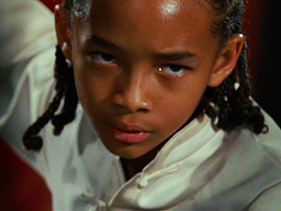
‘The Karate Kid’ Defeats ‘The A-Team’ At The Box Office

Jaden Smith and Jackie Chan’s kung fu flick gets the better of Bradley Cooper’s new action film. By Josh Wigler Jaden Smith in “Karate Kid” The Box-Office Top Five #1 “The Karate Kid” ($56 million) #2 “The A-Team” ($26 million) #3 “Shrek Forever After” ($15.8 million) #4 “Get Him to the Greek” ($10.1 million) #5 “Killers” ($8.2 million) After a few relatively quiet weekends at the box office, this past weekend made it quite clear that the summer movie season is officially in session with “The Karate Kid” debuting in first place over “The A-Team.” The “Karate Kid” reboot — which actually focuses on kung fu, despite the misleading title — stars Jaden Smith as an American youth who moves to China and comes under the tutelage of a martial arts expert played by Jackie Chan. The film exceeded expectations with an estimated $56 million opening weekend, a very impressive result given the movie’s $40 million production budget. It goes without saying that Sony Pictures will look to turn out several more sequels starring Smith and Chan. While the “Karate Kid” franchise enjoyed a successful new beginning, the same can’t be said for “The A-Team,” director Joe Carnahan’s updated take on the 1980s television series of the same name. Despite the star power of actors like Bradley Cooper and Jessica Biel and the promise of high-octane action sequences, the “A-Team” film adaptation only managed $26 million domestically and $15 million from foreign locations for a $41 million worldwide debut. It’s a poor performance considering the film’s reported $110 production budget, and it’s certainly a road bump in 20th Century Fox’s plan to turn “The A-Team” into a new tent-pole action franchise. The remainder of the box-office top five performed as expected, with “Shrek Forever After” continuing its impressive staying power with a $15.8 million third-place finish. Last weekend’s “Get Him to the Greek” and “Killers” landed in fourth and fifth place with $10.1 million and $8.2 million, respectively. Upcoming Releases The toys are back in town next weekend as “Toy Story 3” hits movie theaters nationwide alongside comic book adaptation “Jonah Hex.” Check out everything we’ve got on “The Karate Kid” and “The A-Team.” For breaking news, celebrity columns, humor and more — updated around the clock — visit MTVMoviesBlog.com . Related Videos MTV Rough Cut: ‘Get Him To The Greek’ MTV Rough Cut: ‘A-Team’ Related Photos ‘Karate Kid’ Premieres In Los Angeles ‘A-Team’ Brings Tanks, Helicopters To L.A. Premiere “The A-Team” Official Stills Russell Brand And Katy Perry At The ‘Get Him To The Greek’ L.A. Premiere ‘Get Him To The Greek’

Here is the original post:
‘The Karate Kid’ Defeats ‘The A-Team’ At The Box Office






