Tag Archives: Cnn

California Welfare Debit Cards Being Used At Casinos, Media Mostly Mum

The Los Angeles Times on Thursday published a blockbuster report concerning California welfare recipients using state-issued debit cards at casino ATMs to be able to instantly gamble with taxpayer dollars. “The cards, provided by the Department of Social Services to help recipients feed and clothe their families, work in automated teller machines at 32 of 58 tribal casinos and 47 of 90 state-licensed poker rooms, the review found.” Despite this shocking revelation, America’s media largely ignored the findings. But before we get there, KTLA-TV logged a fabulous report on this subject Thursday evening (video follows with more highlights from the Times piece and commentary): “In a time when we have a $19-billion deficit, and we’re taking a serious look at the future of many safety-net programs, it’s appalling to think that welfare beneficiaries can use their cards in a casino,” said Seth Unger, spokesman for the Assembly Republican Caucus. Democratic leaders, who have vowed to protect the state’s fraying social safety net, also began calling for reform Wednesday. “In these tough times, when so many children and vulnerable families depend on the safety net, we have to make sure food stamps and other services are being used the way the people of California intended them to be,” said Shannon Murphy, spokeswoman for Assembly Speaker John A. Pérez (D- Los Angeles). “Other states have closed this loophole, and the Assembly will work with the Schwarzenegger administration to make that happen.” The casinos are listed on a Department of Social Services website that allows welfare recipients to search for addresses of ATMs where they can withdraw cash provided under the Temporary Aid for Needy Families program. The monthly grant ranges up to $694; most of the ATMs impose a withdrawal limit of about $300 per day. To be sure, there IS a national interest here: The cash portion of California’s welfare benefits comes from the Temporary Assistance for Needy Families program. Each year, California gets $3.7 billion from the federal government for the program, while state and local governments kick in an additional $2.9 billion. Furthermore, as many states also issue these cards for their welfare recipients, who knows how many Americans are gambling with taxpayer dollars across the fruited plain? Yet outside of California, the media weren’t very interested in this story. According to LexisNexis, no newspapers outside of the Golden State reported the Times’ findings. Neither did ABC, CBS, CNN, MSNBC, or NBC. This boycott seems especially odd as the Associated Press and UPI covered this matter over their respective wires with the former logging reports on Thursday AND Friday. Also bucking the trend were Fox News’s Sean Hannity and Greta Van Susteren who both discussed this on Thursday as did NPR. The well-read Drudge Report featured this as a “developing” story at 6:47 PM Thursday.  With this in mind, why did the rest of our national media completely ignore it?  Those interested can read more about California’s Electronic Benefit Transfer program here . 

Follow this link:
California Welfare Debit Cards Being Used At Casinos, Media Mostly Mum

CNN’s Acosta and Costello Parrot Obama Talking Points on Offshore Drilling Moratorium

CNN’s Carol Costello and Jim Acosta revealed their disdain for a federal judge’s decision to overturn the Obama administration’s 6-month moratorium on offshore drilling when the expert they interviewed on the June 25 “American Morning” made a convincing case against the moratorium. Tom Bower, an author who has written extensively on the oil industry, tried to explain the devastating economic impact the moratorium would inflict on an already beleaguered industry, but Costello and Acosta were blinded by ideology: “But isn’t safety more important than money?” queried Costello. “Because, I mean, these oil companies make massive amounts of money each day.” Bower, author of “Oil, Money, Politics and Power in the 21st Century,” drew the ire of Costello and Acosta for calling the Gulf oil spill an “aberration” and noting the oil industry’s “phenomenal” overall safety record.      “But that’s what they say, it is just an aberration, but the BP disaster happened,” argued Costello. “Nobody thought that could happen either. So, it’s just not logical, is it, that argument?” “What do you mean they’re doing a very good job on the whole down there?” demanded Acosta. “I don’t know what that means. In what sense? You know, I mean, this entire body of water is at risk right now. It has been poisoned. And I’m just curious, what do you mean by doing a good job?” Taking aim at Republicans and moderate Democrats like Sen. Mary Landrieu (La.) who continue to support offshore drilling, Acosta asked Bower: “I’m just curious, you know, is there a little bit of a having your cake and eat it too, when it comes to some of these Gulf Coast politicians saying we want the jobs and the protection from any environmental impact at the same time?” Loaded questions designed to advance the White House’s narrative reflect Acosta’s underlying liberal tendencies. Costello also parroted the Obama administration’s narrative: Well, let’s talk about this moratorium because, and I’m just going to play devil’s advocate here. Let’s say — I mean, what’s wrong with these oil companies to stop drilling in the deepwater, these 33 wells, for four more months? Because that’s all we’re talking about when you take the moratorium in its entirety. What’s wrong with that? Bower’s response, unlike Costello’s sputtering rant, was succinct and nonpartisan: Well, the cost. We see each oil platform, each rig costs at least half a million dollars a day, and often more, and they just can’t afford that sort of equipment lying idle and the contractors will find other places around the world who want the rigs, and they’ll just take them there, so there’s just no choice. After dismissing the expert, Acosta, turning to Costello to offer his informed opinion, lamented that “it just doesn’t feel right, you know, to say that as a whole, the industry’s just doing a great job down there.” The transcript of the segment can be found below: CNN American Morning 6/25/10 6:41 a.m. CAROL COSTELLO, co-host: The Obama administration loses another effort to put a moratorium on drilling in the Gulf. But does lifting that ban serve our nation’s best interests? You know, Bonnie is talking about this storm coming in. JIM ACOSTA, co-host: Yeah.                      COSTELLO: Wouldn’t it be a good idea if they continue to stop drilling on those 33 rigs — you know that are affected by this? ACOSTA: It’s another potential complication for this whole thing. COSTELLO: Yes. We’re going to get really into that with author Tom Bower, who has written a lot on BP and the oil industry. It’s 41 minutes past the hour. ACOSTA: Welcome back to the “Most News in the Morning.” You know, a showdown looms this morning over offshore drilling. A federal judge denied the administration’s request to postpone an order that would end a six-month moratorium. COSTELLO: That means if anyone wants to start up the deep water drills, they certainly can, but the White House says it will introduce a new ban in a few days. We wanted to know what a moratorium really means for safety though. Is it really necessary? Joining us from London this morning: Tom Bower, who is the author of “Oil, Money, Politics and Power in the 21st Century.” Good morning, sir. TOM BOWER, author of “Oil, Money, Politics and Power in the 21st Century”: Good morning. COSTELLO: Well, let’s talk about this moratorium because, and I’m just going to play devil’s advocate here. Let’s say — I mean, what’s wrong with these oil companies to stop drilling in the deepwater, these 33 wells, for four more months? Because that’s all we’re talking about when you take the moratorium in its entirety. What’s wrong with that? BOWER: Well, the cost. We see each oil platform, each rig costs at least half a million dollars a day, and often more, and they just can’t afford that sort of equipment lying idle and the contractors will find other places around the world who want the rigs, and they’ll just take them there, so there’s just no choice. COSTELLO: But isn’t safety more important than money? Because, I mean, these oil companies make massive amounts of money each day. BOWER: Well of course, safety is critical. As we’ve now seen, the catastrophe follows if these are not safe. But on the whole, all the oil corporations are working safely. This is just an aberration. COSTELLO: But that’s what they say, it is just an aberration, but the BP disaster happened. Nobody thought that could happen either. So, it’s just not logical, is it, that argument? BOWER: We don’t stop driving on the road because of a car crash. People carry on driving and people walk up staircases and fall down them, but we still walk up stairs. So in the end — ACOSTA: Totally different when you’re talking about an entire body of water as important as the Gulf of Mexico. I mean, the question that I have is we’ve heard the governor of Louisiana, and I’m sure you watch him closely as well, Bobby Jindal, you know, talk about why this moratorium should be lifted for the sake of jobs and so forth. But at the same time, the governor is saying we need to built berms, we need to do all these other things to protect our coastline, and I’m just curious, you know, is there a little bit of a having your cake and eat it, too, when it comes to some of these Gulf Coast politicians saying we want the jobs and the protection from any environmental impact at the same time? BOWER: Look, I’m not an apologist for the oil industry, but I must tell you that on the whole, their record is very good. And America needs the oil, it needs the gas, and the product in the Gulf has been superb, and they’re doing very good job down there on the whole. So, you know, just like we don’t stop fly when a plane crashes, you just got to improve the regulation — ACOSTA: What do you mean they’re doing a very good job on the whole down there? I don’t know what that means. In what sense? You know, I mean, this entire body of water is at risk right now. It has been poisoned. And I’m just curious, what do you mean by doing a good job? Because the other day, there were CEOs from the entire oil industry testifying on Capitol Hill saying that if they were to also engage in deepwater oil drilling, they essentially have the same plan of action in place if there is a major catastrophe, which is, well, we just have to, you know, see if we can plug the hole. BOWER: Look, again, I can only say I’m not an apologist for the industry, but they are extracting amazing amounts of oil from the most difficult conditions. You got to ask why they’re in the Gulf and not getting it from Mexico, Venezuela or Russia. That’s one of the great issues. ACOSTA: Are you saying that we basically put ourselves in this position? I mean, is that your point? BOWER: I think the countries have gotten the oil to put America in that position. But on the whole, they have done a very good job in the Gulf and the executives who testified on the Hill like (INAUDIBLE) have not had these sort of catastrophes that BP is just having. So, I got to repeat on the whole, they’ve done an amazing job to find oil and gas there, and they are bringing it out safely. The point is that the administration discovered that the regulators, the MMS have done a very poor job so the government has got some of the blame here. They’ve let the oil corporations get away with murder for too long. They’ve now learned a lesson. They’ll clearly have much better regulations down in the Gulf and elsewhere as well, because, believe me, they’re going to have to start digging for oil and drilling for oil off other coastlines around the U.S. again in the near future because America needs the oil. COSTELLO: Funny you mentioned that because BP is doing that, you know, off the shores of Alaska and it’s doing this maneuver where they’re drilling it’s three miles offshore, they drilling down very deeply, and then they’re going to make a horizontal line, something that’s never been done before. So, BP, itself, is being allowed to go ahead with this process when we know that BP doesn’t have it together when it comes to extreme disasters and how to fix things. BOWER: You’re absolutely right. The horizontal drilling is really quite well established now. There’s nothing new on that. That is a very effective way of getting huge amounts of oil out which previously would have got lost. But I think BP has learned a lesson. I don’t think they’re going to make that sort of error again. They’re going to be more careful than ever. They can’t afford another catastrophe nor can any other oil corporation. I mean, you just got to set the seed that of course oil is a very risky business as I show in the book. What they’ve done down in the Gulf is quite phenomenal. This is a catastrophe which never should have happened. Everyone is learning lessons. They’re going to do their best to prevent it from happening again, but the government has got as much responsibility now as the oil corporations to make sure that the regulations are there and enforced. COSTELLO: Tom Bower, many thanks to you this morning. We appreciate it. BOWER: Pleasure. ACOSTA: I’m not sure I agree that they’re doing a bang-up job down there, but that’s just my take on it. COSTELLO: You mean BP or the oil industry as a whole? Because I think he was separating them out. ACOSTA: I think he was trying to separate it, but it just doesn’t feel right, you know, to say that as a whole, the industry’s just doing a great job down there. COSTELLO: It’s sort of like you have to trust them that catastrophes similar to what’s happening with BP doesn’t happen again. And the oil companies are saying, “well, we have a great safety record.” But BP said that, too. ACOSTA: Yes. We can’t go on like this. We’ll move on. –Alex Fitzsimmons is a News Analysis intern at the Media Research Center. Click here to follow you on Twitter.

Read more:
CNN’s Acosta and Costello Parrot Obama Talking Points on Offshore Drilling Moratorium

MRC’s Dan Gainor Responds to Gay Parenting TV on CNN

If you’ve noticed more gay characters with children on television and in movies, you’re not alone. CNN has noticed too, and they’re calling it “the new normal.” In a June 24 segment, Corinne Water reported that homosexuals “hope TV shows like ‘Modern Family,’ ‘Glee’ and the new film ‘The Kids are Alright’ represent a growing trend in Hollywood storylines: gay parents.” The segment featured one opponent to Hollywood ’s normalization of gay parenting: Media Research Center Vice President for Business & Culture Dan Gainor. “ Hollywood has done a great deal of work causing acceptance in American culture for homosexuality,” Gainor said. He added later, “Again, what they’re trying to do is normalize something that a lot of people, certainly in those states, don’t want to normalize.” But Winter’s segment presented Gainor’s view as the abnormal one (even showing his picture in black-and-white for an unexplained reason). Actress Julianne Moore, who stars in “The Kids are Alright,” argued that “the entertainment world reflects popular culture. I think that this was happening in the world. So what you’re seeing in television and in film is what’s going on in our society at large, which is a great thing.” Winter closed the segment by asking a gay couple if they thought they were normal. To absolutely no one’s surprise, they said they were normal parents, and Winter left it at that. However, Winter didn’t mention statistics that suggest Hollywood is not reflecting what’s going on in society, or that gay parenting is not normal. According to Colage , an “national movement of children, youth, and adults with one or more” gay parent, Census data found that that “more than 250,000 people under the age of 18 [were] living with unmarried same-sex couples” in 2000.   Colage argues the number of children with gay parents is higher, but acknowledges that other estimates are speculative. Assume for a moment that a full 250,000 children live with gay parents. They would represent 0.003 percent of the 72.4 million children counted in the 2000 Census. The number itself is extremely small, and it’s not even close to proportionate. Commonly cited estimates guess 10 percent of the population is homosexual. (The Centers for Disease Control found the number was closer to 4.1 percent for each gender in 2002.) CNN anchor Kyra Phillips used the segment to tease an upcoming special, “ Gary and Tony Have a Baby .” Soledad O’Brien’s one-hour special highlights what Phillips called the “struggle” of two gay man trying to have a biological child of their own.

Originally posted here:
MRC’s Dan Gainor Responds to Gay Parenting TV on CNN

The gay ‘Brady Bunch’ family

(CNN) — David Mayer and Keith Kennard's family is a modern-day Brady Bunch, with a twist. David, 43, has three sons and a daughter. His partner, Keith, 47, has three boys of his own. Together they are two gay men raising seven children. Their story reflects the changing face of the American family. The Williams Institute, an independent research group and UCLA think tank, estimates 20 percent (about 155,000) of same-sex couples in the U.S. are raising children younger than 18. “It's a chaotic day keeping up with kids and doctors appointments and just their daily lives,” says Keith, a nurse at an Atlanta hospital. “We don't get a lot of rest.” David, a manager for a security firm, and Keith say they've developed a regimented system for raising their children. Between getting everyone up and ready for school and shuffling around basketball practice and JROTC, their family's schedule is pretty full. By the end of the day, Keith says, “[We] get dinner on the table, homework checked and have them in bed by 10 o'clock, and the day starts all over again.” For this couple, the joys of family life outweigh the challenges. “We really couldn't ask for a better opportunity to really raise our kids together … you don't really hear that in our gay community, especially with black men.” In the U.S., one in six gay men has fathered or adopted a child, according to the Williams Institute. David and Keith each had children before their relationship. Three of their sons and their daughter are David's biological children from a heterosexual relationship. Their other sons are children Keith adopted when he was single. “I always knew that I wanted to be a dad ever since I was little,” Keith remembers. “I really was very much interested in adoption.” For gays and lesbians, adopting children can be tricky because adoption laws vary by state. Keith started the adoption process in Georgia and says he was upfront about his sexual orientation. “I brought it up because I wanted to make sure that there wasn't any problem,” he says. “I had heard about the laws they had in Florida against [homosexual] individuals adopting children … and I wasn't really sure what the laws were here in Georgia.” (click story link for rest of story) added by: TimALoftis

WaPo Paints the Spitzer-Parker Show as a ‘Democrat’ and a ‘Conservative’

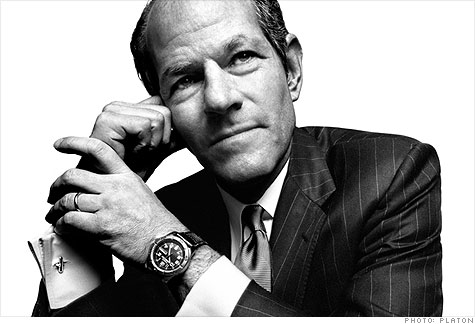
The Washington Post Style section promised an article on CNN’s new Eliot Spitzer-Kathleen Parker chat show with this front-page blurb: ” Odd couple on CNN: New show pairs a conservative with a Democrat.” Inside, in an article surprisingly shy on her typical snark, TV columnist Lisa de Moraes also described the pairing as the “disgraced/rehabbed former governor Eliot Spitzer, the New  York Democrat” vs. “Pulitzer-prize winning conservative columnist Kathleen Parker,” syndicated by the Washington Post Writers Group (this could explain the lack of snark against Parker, if not Spitzer.) The TV columnist made no attempt to assess whether conservatives felt she was one of them (they don’t). She did see this as a turnabout for “Crossfire”-canceling CNN president Jon Klein, but she reproduced his sales chat without much objection: In an interview with The TV Column, Klein said that Spitzer and Parker “can address an appetite that is not being satisfied now — the 99 percent of the country not watching” the other 8 o’clock cable news shows. “We’d like to begin the long, slow, steady process of reaching the underserved. . . . We think America’s ready for that. . . . I can’t think of two people better suited than these super-intelligent, ultra-opinionated but rational individuals .” Leave it to Klein to make a talk-show sound like a soup kitchen. The cable-news “underserved”? Then, he tops that by making them sound like a super-ultra comic-book pairing, a pundit Wonder Twins? In TV terms, they’re green-as-Shrek rookies, but Klein isn’t bothered:  Klein said he’s not worried that neither Spitzer nor Parker has extensive on-air hosting experience yet are joining forces for a new show in a punishing time slot. “We cast a very wide net, and after looking at scores of potential anchors, Kathleen and Eliot demonstrated they belong at the head of the pack,” he said. I’m sure you could find the same sales talk when CNN acquired Campbell Brown from NBC. That’s pretty empty blather — and at least Brown was a broadcaster, with no vice-squad “buzz.” Actually, Spitzer also had a Washington Post connection to tame the poison tip of the de Moraes pen: Recently, Spitzer has been doing the old phoenix-rising-from-ashes thing as a TV personality, as have so many fallen men before him. He got high marks when he subbed on MSNBC. (Spitzer is also a contributor to Slate.com, which is owned by The Washington Post Co.) Parker made the show sound like it would merge “Crossfire” with “Take 5,”  the hip-friends pundit show they tried with Jake Tapper in 2001. Parker told The TV Column the show’s goal is “to change people’s mind.” To that end, they are rounding up a stable of regular contributors for the show. “We’re looking for the smartest, coolest, hippest, funniest friends.” What she likes about the new show, she said, is that “we are from such different worlds in every way….And, I informed Eliot, there are lot more people like me than him.” This apparently means there are more opportunistic moderates (some who trash popular conservatives to get famous on TV and in the WashPost) than there are partisan liberals with a zipper problem. At least de Moraes rehashed Klein’s old trash talk when he killed “Crossfire” that “CNN is a different animal. We report the news. Fox talks about the news.” Klein told the Post writer “We think Eliot and Kathleen are a can’t-miss show. It’s like your favorite blog — you think, ‘I can’t really understand how to think about what’s going on today until I’ve checked out XYZ blogger.’ We think that’s how their show is going to feel.” Lisa went really, sadly soft here, or an editor slashed some copy: right next to Klein’s “different animal” boasting in the New York Observer in 2005  is his blogger-bashing: He dismissed bloggers as “guys in pajamas” (he coined the phrase while defending Mr. Rather on Fox News) and told NPR that pundit shows on cable news were “crack.” And: “There is always going to be an important role for the guys who grab the cameras and shoot the pictures of stuff that’s actually happening,” he said. “What happens after that in the great repurposing engine that is cable news and the blogosphere is out of our hands.” Already, Mr. Klein’s flip comments had hit the blogosphere. Mickey Kaus at Slate seemed all shook up that former Crossfire conservative Tucker Carlson had been unceremoniously released from service. “Boy, people at CNN do not like Jonathan Klein!” Mr. Kaus wrote. “Doesn’t he realize it’s hard to be a highly unpopular boss in the Web era, especially at a big media enterprise the press will pay inordinate attention to? Ask Howell Raines.” “It’s a little early for Mickey to be rooting for my downfall,” said Mr. Klein, who said he didn’t have time to read blogs. But earlier, Mr. Klein had been happy to compliment the blogs with an easy backhand: “I don’t think that blogging, which is, you know, glorified Web-site hosting — that’s what it is. I had a blog for a while, but I just didn’t have time,” he said. “I don’t think that blogs topple news organizations because of the difficulty of sifting through reliable information and mere opinion. But they certainly have arrived on the scene as a player.”

Read the rest here:
WaPo Paints the Spitzer-Parker Show as a ‘Democrat’ and a ‘Conservative’

CNN Fails to Label Liberal Group Poised to Sue McDonald’s Over ‘Happy Meal’ Toys

As NewsBusters sister company CNSNews.com reported , the Center for Science in the Public Interest (CSPI), a liberal consumer advocacy group, is threatening to sue the McDonald’s Corporation for “unfair and deceptive” marketing practices unless the fast food company stops giving away toys in its “Happy Meals.” CNN’s “American Morning” on June 23 covered the story half-jokingly, but failed to identify the liberal tilt of organization. Co-host Kiran Chetry reported: “The Center for Science in the Public Interest is delivering a warning to McDonald’s about toys being used to make “Happy Meals” more appetizing to kids. They say “Happy Meals” are unhealthy.” Making no effort to apply an appropriate label to the organization, co-host John Roberts continued: “The group accuses the fast food giant of ‘unfair and deceptive’ marketing practices toward children. McDonald’s, of course, as you could image, rejects the accusations.” On the surface, CNN crafted the impression that CSPI is a quirky but sincere consumer advocacy organization, but underlying the group’s innocuous veneer are liberal activists willing to inject partisan politics into consumer safety.                   Referring to the Bush administration, CSPI Litigation Director Stephen Gardner told CNSNews.com: “Marketers of all kinds in this country, one, were lulled into a sense of true security under the prior administration when the federal agencies did absolutely nothing to protect consumers.” At the end of the segment, both Chetry and Roberts seemed dismissive of the lawsuit, but neither anchor was willing to inform viewers of CSPI’s liberal leanings and history of pushing a public policy diet heavy in government regulation . A transcript of the segment can be found below: CNN American Morning 6/23/10 7:56 a.m. KIRAN CHETRY, co-host: Welcome back to the most news in the morning. The food police have a beef with McyDees. The Center for Science in the Public Interest is delivering a warning to McDonald’s about toys being used to make “Happy Meals” more appetizing to kids. They say “Happy Meals” are unhealthy. JOHN ROBERTS, co-host: Yeah, they’re putting McDonald’s on notice, saying “drop the toys, or we’ll sue you.” The group accuses the fast food giant of “unfair and deceptive” marketing practices toward children. McDonald’s, of course, as you could image, rejects the accusations. CHETRY: They can’t get a break. First they tried to give away the glasses but they had to recall them because of cadmium in the paint on the “Shrek” glasses. ROBERTS: Well that definitely is a bad thing, but the toy? Come on. –Alex Fitzsimmons is a News Analysis intern at the Media Research Center. Click here to follow him on Twitter.

Here is the original post:
CNN Fails to Label Liberal Group Poised to Sue McDonald’s Over ‘Happy Meal’ Toys

Ian Somerhalder on Gulf Oil Spill: It’s Time to Change

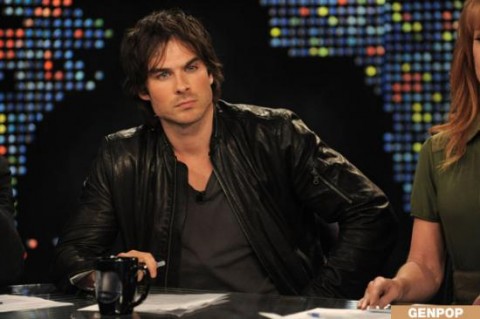
On The Vampire Diaries , Ian Somerhalder play Damon Salvatore, an often-scary blood sucker. But in real life, the actor isn’t frightened by garlic or stakes to the heart – he’s simply taken aback by the disastrous oil spill in the Gulf. A native of Louisiana, Somherlader was front and center at the CNN telethon that raised $1.8 million this week. He’s also devoted the last few weeks to doing all he can to call attention to this region and this catastrophe. “You know when something bad happens in your life, or something goes wrong – that weird kind of really uneasy feeling you have in the pit of your stomach? I’ve had that for two months,” he told Zap2It, adding: “Basically, the entire area is shut down. Everyone from the waitress who serves you breakfast to the guy who owns the charter boat to the shrimpers – they all literally rely on the ocean to keep their industry going… Think about how frightening it is when you suddenly, though no fault of your own, can’t feed your children or pay your mortgage.” Somerhalder is especially outraged over how and why this accident took place. “All of this happened due to human error – the error is cutting corners, saving money at the expense of safety measures, and a nonexistent regulatory commission,” he said. “The [U.S. Minerals Management Service] gets royalties from the oil industry. How is that any kind of regulatory body?” It’s a question the admistration most definitely has to answer, as many believe this is the prime to enact a serious climate change bill and convince America that government can – nay, must! – play an important role in the free market. Concluded Ian, who we greatly admire for putting himself out there in this manner: “It’s time to change, and I think this disaster is the game changer. It feels like this is one of those catastrophic events that truly changes the way that we think.”

See the rest here:
Ian Somerhalder on Gulf Oil Spill: It’s Time to Change

Crime Pays: CNN Hires Prostitute-Plying Ex-Gov. Eliot Spitzer to Star in Debate Show with Kathleen Parker

The rumors were true. CNN is without shame. They are hiring disgraced Democrat Gov. Eliot Spitzer, the hypocritical “Sheriff of Wall Street” who hired high-priced hookers, as a talk-show host. Spitzer’s co-host will be pseudo-conservative columnist Kathleen Parker, who won the Pulitzer Prize for being a conservative-basher . CNN’s press release said “she describes herself as a ‘rational’ conservative.” That’s a nice way to endear her to the “irrational” conservatives who might have considered watching this show. It’s set up to be Liberal Lion vs. ‘Rational’ Lamb. Jon Klein, president of CNN/U.S., the man who canceled the long-running left-right show “Crossfire” after Jon Stewart lamented they needed to “stop, stop, stop, stop, hurting America,” has reinvented the format as just the latest liberal-media attempt to rehabilitate Spitzer’s career. Klein said in a statement: “Eliot and Kathleen are beholden to no vested interest – in fact, quite the opposite: they are renowned for taking on the most powerful targets and most important causes.” They’re actually spinning this “unbeholden” Spitzer as a moralist and guardian of the public interest. CNN’s press release suggested that little prostitution thing is hardly a disqualification for such a “well-respected political mind.” They even re-used the ridiculous “Sheriff” moniker: Spitzer, a Democrat who resigned as governor in March 2008 after acknowledging visiting a prostitute, is a well respected political mind and a take-no-prisoners prosecutor who has been often referred to as the “Sheriff of Wall Street.” Parker was required by her new job to kiss Spitzer’s ring: “I’m thrilled by the opportunity to discuss the issues that matter to me — and that aren’t heard often enough on television — in a conversation with one of the nation’s most brilliant, fearless and original thinkers. With Eliot Spitzer as my co-host, Wall Street and Main Street will finally meet. It can’t possibly be boring.” Last year, Parker also felt pain for Spitzer in a column knocking David Letterman for his nasty Sarah Palin joke (ever the balancer): Everyone knows by now that Letterman made fun of the Palin family’s trip to New York last week. He quipped that Palin’s daughter got “knocked up” by Yankees third baseman Alex Rodriguez during the seventh inning. Unable to stop his slide into the gutter, he said the hardest part of the visit was keeping Eliot Spitzer away from her daughter. How will this show cover the next politican sex scandal? Or are they hoping CNN will be the “hot corner” on those stories now?  James Poniewozik at Time has the first boos from the media establishment:  The first is not that Spitzer has been chosen despite his sex scandal. It’s that he seemingly was chosen, at least in part, because of the scandal: that is, because of the short-term blast of notoriety and buzz that he will bring with him. Now, for all I know, CNN genuinely sees special and distinctive broadcasting talent in Spitzer, but if they do, it’s eluded me in his long recent history as commentator and guest-host on CNN and MSNBC, where—to my ears, anyway—he comes off grating and supercilious. If he didn’t come with the name and the headlines, I have a hard time believing he’d been chosen on the basis of ability alone. (As for Parker, I’m not familiar enough to say whether she’s a good choice or not, though her résumé is strong enough. But I do have to guess that—call me cynical—given Spitzer’s history it would have been hard for CNN to even consider pairing him with a man. Not that the underrepresentation of men in cable news is exactly a problem, but the idea that pairing Spitzer with a woman makes his choice any better is just icky.)

Excerpt from:
Crime Pays: CNN Hires Prostitute-Plying Ex-Gov. Eliot Spitzer to Star in Debate Show with Kathleen Parker

CNN Conducts Sympathetic Interview of Another Homosexual Teen Activist

On Tuesday’s Newsroom, CNN’s Brooke Baldwin brought on another teenaged homosexual activist for a sympathetic interview to help promote their upcoming one-sided documentary , “Gary and Tony Have a Baby.” Baldwin prompted Constance McMillen to give advice to ” other teens who are suffering in silence .” The anchor also didn’t press McMillen on how she might have inconvenienced her classmates. Baldwin, who was substituting for Kyra Phillips, brought on McMillen just after bottom of the 10 am Eastern hour. The CNN anchor trumpeted how the Mississippi teen was meeting with President Obama later in the day and how she was going to be grand martial for New York’s annual homosexual prade, and first asked, “Would you trade that all in if you could have gone to the regular prom with the rest of your classmates?” After McMillen gave her initial answer, Baldwin continued by mentioning how a U.S. District Court ruled that Constance McMillen’s high school violated her rights when they cancelled their prom, but omitted that it didn’t force the school to reinstate the dance : “Now, we know that the court eventually ruled – they said, absolutely, that the school violated your constitutional rights. And I want you to explain, though, what happened, because you transferred schools, right, late in your senior year? Why did do you that?” Later in the interview, the anchor sympathized with the homosexual teen: “So you transferred schools, and I can only imagine- it’s the end of your senior year, where you can’t walk with the rest of your classmates, right? Maybe you wouldn’t have wanted to. But I understand that at graduation day, normally a happy day for a lot of us- it was pretty tearful for you. Why was that? ” Baldwin didn’t once mention how the teen’s former high school classmates might have been affected by her actions. A slanted CNN.com article from earlier on Tuesday about how McMillen and fellow homosexual teen Ceara Sturgis (whom Soledad O’Brien sympathized with during a June 15 report ) have found “support in each other” hinted at the classmates sentiment: “McMillen says despite the difficult times, she wants to return to Itawamba and begin studies at the local junior college. She wants to be near her high school girlfriend. She says it won’t be easy. ‘ My best friend — we had been friends for like seven years — has not spoken with me since the day they canceled prom ,’ she says.” The anchor closed out the interview by asking McMillen to give advice to other homosexual high school students: “Before I let you go, for people who are watching and watched your story the past few months, what message- what have you taken away from this, and what message might you have for- maybe, some other teens who are suffering in silence? ” CNN has given a full-court press to their upcoming “Gary and Tony” documentary by airing several reports which helped further homosexual activists’ agenda. Besides O’Brien’s June 15 report, the network aired a gushing two-part report on the two “powerhouse” lawyers who are leading the effort against California’s Proposition 8, and conducted two softball interviews of the two subjects of O’Brien’s documentary on Sunday and Monday. The full transcript of Brooke Baldwin’s interview of Constance McMillen from Tuesday’s Newsroom: BALDWIN: Schoolwork, prom, graduation- you know, it’s the stuff most high school seniors think about, but 18-year-old Constance McMillan will be talking about it- oh, with- oh, the president of the United States. Why? Well, she sparked that national firestorm when she tried to take her girlfriend to prom, prompting her school to cancel the dance. She is joining us live this morning from Washington, and Constance, good morning to you. Listen, I appreciate you taking a little time and talking to me before your big night with the President. Good morning. CONSTANCE MCMILLEN: Good morning. BALDWIN: Let me first ask you, when you look at everything that’s happened since the story broke- it really broke- nationwide, you are meeting with the President. You’re going to be a grand marshal of the New York gay pride parade coming up. But would you trade that all in if you could have gone to the regular prom with the rest of your classmates? MCMILLEN: No, because if I had gone to the regular prom with the rest of my classmates, then I would not have been able to bring my girlfriend, and I wouldn’t have been able to be myself. So- and that was the whole point. Like, I wasn’t going to be able to go if I wasn’t going to be able to be myself. BALDWIN: Now, we know that the court eventually ruled – they said, absolutely, that the school violated your constitutional rights. And I want you to explain, though, what happened, because you transferred schools, right, late in your senior year? Why did do you that? MCMILLEN: Well, I started- like, doing my work from home because it was- like, it was really hard for me to go to that school because of how the people were treating me. It was just really hard for me to finish school there. So I- BALDWIN: What were they doing? What were they saying to you? MCMILLEN: I mean, it was- like, it was hostile all the time. There were rumors flying around about me. Every single day, I heard a new rumor and- like, it was just- it was really, really hard to concentrate in an environment where everybody ‘s like- being really mean. (laughs) So, I decided to do my work from home, but it got really hard because some of the work that I had to do, I couldn’t do if I wasn’t in the class. BALDWIN: Right. MCMILLEN: So that’s why I transferred schools. BALDWIN: So you transferred schools, and I can only imagine- it’s the end of your senior year, where you can’t walk with the rest of your classmates, right? Maybe you wouldn’t have wanted to. But I understand that at graduation day, normally a happy day for a lot of us- it was pretty tearful for you. Why was that? MCMILLEN: Well, it was like- I mean, I really didn’t- I didn’t want to walk, but I did for my parents. But it was really hard because- like, after everything I’ve been through- like, it was just reminding me, really, that a lot of the people that I used to have that were good friends- like, I don’t have those friends anymore and- I mean, I was- I didn’t know most- I mean, the classmates- the school was wonderful. But- like, I didn’t know a lot of the people there- BALDWIN: Right. MCMILLEN: And so, I was just kind of standing there. BALDWIN: Right. MCMILLEN: It was just- it was really hard because it wasn’t- BALDWIN: Constance- go ahead- finish your thought. MCMILLEN: It wasn’t how I pictured graduation, so it was just- like, a little hard. (laughs) BALDWIN: Well, I understand you’re going on to college. Before I let you go, for people who are watching and watched your story the past few months, what message- what have you taken away from this, and what message might you have for- maybe, some other teens who are suffering in silence? MCMILLEN: I’ve learned through all of this how important it is to be an activist and how important it is to- like, stand up for yourself, because that was never my intention to start with. But- like now that I’ve been around and met all these people, I’ve learned how important it is. I’ve heard so many horror stories- so many people that go through just terrible things just because they’re gay. And- you know, if you’re going through something like that, I think you should stand up for yourself because- like, it was hard for me. I’m not going to say it wasn’t hard because it was. But I went through it so that nobody else would have to go through it, and I think that if you can do something like that and change it for a lot of other people, even though it’s hard on you, I think you should do that. BALDWIN: Constance McMillen, thank you, ma’am, for sharing your story with us this morning. Hey, good luck with the President tonight. It’s a pretty nice house he’s got. MCMILLEN: Yeah. BALDWIN: And thanks for sharing your story. Good luck with college. MCMILLEN: All right.

See the rest here:
CNN Conducts Sympathetic Interview of Another Homosexual Teen Activist

Robert Redford Blames Cheney for America’s ‘Failed Energy Policy’

Actor Robert Redford lambasted America’s energy plan that he claimed led to the Gulf disaster, laying the responsibility at the feet of former Vice President Cheney. Appearing Monday night on “Anderson Cooper 360,” Redford blamed the Gulf oil spill not only on BP, but also because of the “failed” energy policy that led to this disaster. ‘There’s a lot being said about BP, and there’s a lot of truth that’s finally bubbling up to the surface,” Redford acknowledged. “But what I’m more interested in is – is looking at it from a historical point of view and trying to connect some dots about how we got here.” “Look, I think one of the reasons we’re in this problem is because we have not only a failed energy policy, but we have an energy policy – because of the way it was designed, and who it was designed by, Cheney – it’s sick and it’s dangerous.” Redford, who supports Obama’s drilling moratorium,  mandated that America must shed its current energy policy and adopt a new one. He rebuked the present policy as an unholy alliance of sorts between Congress, the government, and Big Oil. He gave the example of the US Minerals Management Service (MMS) as an example of a government agency that was asleep at the wheel in its oversight of oil companies. “Look, all that stuff has come out, and it’s painfully obvious what’s happened – the corruption that came with MMS as a result of Dick Cheney and how he engineered this whole thing,” he maintained. Redford’s solution? Get rid of former Vice President Dick Cheney – who’s been a private citizen for 17 months now – and his cronies. “You’ve got to get rid of Cheney and every – and all the horses he came in with. You’ve got to get rid of his energy policy. It’s bad for our health. It’s bad for our economy. It’s bad for our future.” A transcript of Anderson Cooper’s interview with Robert Redford, which aired on June 21, at 10:22 p.m. EDT, is as follows: ANDERSON COOPER, host: As you look at BP’s response to this spill, what stands out? I mean — I think, for a lot of people on the ground here, it’s the lack of transparency that we have seen. What surprises you about the way BP has handled this so far? ROBERT REDFORD: Nothing. What I’m kind of interested in here is, you know, there’s a lot being said about BP, and there’s a lot of truth that’s finally bubbling up to the surface. But what I’m more interested in is — is looking at it from a historical point of view and trying to connect some dots about how we got here. And, you know, when you stop and think about BP’s promises and the consequence of the collusion between government, Congress and big oil companies, what you get is what we’ve got: a failed energy policy — a terrible energy policy — that allowed this to happen. And so, I think, I’m interested in seeing if we can get to the public, connect the dots as to how we got here because we — there have been other disasters despite what they’re saying that have happened. COOPER: It’s interesting because — I mean, Senate Republicans told the President last week, look, focus on the oil spill right now, not on an energy bill. They say the President can’t afford any distractions until this is under control. You say the opposite. You say this is the time to focus on an energy bill. REDFORD: Look, I think one of the reasons we’re in this problem is because we have not only a failed energy policy, but we have an energy policy — because of the way it was designed by who it was designed by, Cheney — it’s sick and it’s dangerous. And any energy policy that’s designed behind closed doors with oil, gas and coal companies is bound to end up being a disaster of some sort. So, I think, we need a new energy policy. And I don’t think it’s next week, or next year or even — it’s now. If we miss this opportunity, we’re missing an incredible opportunity. And history will probably tell us that. So, get rid of this energy policy. It’s a disaster. COOPER: Do you think President Obama has shown leadership in that direction? I mean, he talked — he didn’t really give any details last week about what he wants to see in an energy bill. Were you satisfied with what you heard? Or were you looking for more specifics? REDFORD: No, I wasn’t satisfied with what I heard. I’m somewhat sympathetic to what the guy’s dealing with because he had all these other issues that were paramount when this thing came forward. And I don’t think he or the administration was quite prepared. Nor do I think BP was prepared. Nobody was prepared. I think he’s trying to do the best he can, but I think he’s got to do more. And I think if he thinks that he’s going to push something through with any kind of bipartisanship, I think it should be clear by now that there’s so many voices coming at him from the other side — the voices that, for me, is coming out of the Ice Age, you know, that he should forget about that. He better grab this moment. And I think the public is going to have to push him to push Congress. But he better push them. COOPER: Obviously, around here, the drilling moratorium, the deepwater drilling moratorium is hugely unpopular. There are a lot of jobs at stake here, there’s people suing in courts to try to get this thing overturned — although that seems unlikely to happen. We’ll have a ruling probably by tomorrow. You, obviously, I’m guessing, support the moratorium. Why? REDFORD: Well, I support the moratorium, because I think there’s so many disasters that have occurred in the past when we’ve been lied to about the fact that they would not happen. They have happened. Why have they happened? Because of the collusion between government, Congress and the big oil companies. So, I think — look, we’re not going to get rid of oil. I mean, we should accept that. I accept it. I worked in an oilfield as a kid. But I think what we’re asking for now is a new energy policy. And I think that — I’m totally sympathetic to the people in the Gulf who have lost their jobs, their way of life, environmental devastation and so forth. I understand the voices that want to not have a moratorium because they think it’s going to help jobs. But I think the first thing that should happen is that we have got to figure out — first of all, make sure BP pays every dime that’s owed to these people. My heart goes out to the people on the Gulf. And they need to be paid. And Obama has to push them to do it. Second, we’ve got to figure out how it happened. Why did this happen when we were told over and over again it wouldn’t happen? COOPER: And in terms of oversight by the government — I mean, clearly, the government, both under the Bush administration and even under the Obama administration, have not done as much in terms of reforming MMS. I mean, MMS, which has now been renamed today, has essentially, you know, been kind of a lap dog. REDFORD: It has. Look, all that stuff has come out, and it’s painfully obvious what’s happened — the corruption that came with MMS as a result of Dick Cheney and how he engineered this whole thing. You got to get rid of Cheney and every — and all the horses he came in with. You got to get rid of his energy policy. It’s bad for our health. It’s bad for our economy. It’s bad for our future. And I think the administration has to step up, get tough, get quick, and be very clear about what they’re prescribing. I think they have to be very clear about why there should be some moratorium, like should Shell be allowed to drill up in the Alaskan refuge? No, not yet. We got to get some facts in order first. COOPER: Robert Redford, I appreciate your time tonight. Thank you. REDFORD: You’re welcome.

Visit link:
Robert Redford Blames Cheney for America’s ‘Failed Energy Policy’