Ending nearly a year of speculation, the Film Society of Lincoln Center announced two replacements for long-serving Program Director Richard Peña, who is set to step down at the end of 2012 after serving 25 years in the post. Kent Jones will be the new Director of Programming for the annual New York Film Festival , while Robert Koehler will serve as Director of Programming, Year Round. The Film Society of Lincoln Center said that appointing two directors to the programming team will allow the organization, which not only produces the annual NYFF but a host of other programs throughout the year, to “better serve the needs of an organization that has recently expanded its operations with the opening of the Elinor Bunin Munroe Film.” Jones began in programming with Bruce Goldstein at Film Forum, and served as the American representative for the International Film Festival Rotterdam from 1996 to 1998. He was an assumed heir to Peña, serving as Associate Director of Programming at The Film Society of Lincoln Center, and from 2002 to 2009, including the New York Film Festival selection committee from 1998 to 2009 after departing under the organization’s previous Executive Director, Mara Manus. He has also served on juries at film festivals around the world, including Rotterdam, Buenos Aires, San Francisco, Venice and Cannes. In 2009, he was named Executive Director of The World Cinema Foundation. Koehler is a film critic and festival programmer and has served as an instructor and programmer for UCLA Extension’s Sneak Preview program from 2003 to 2007. In 2003, he developed the innovative film program, “The Films That Got Away,” an ongoing series presenting significant recent work that has previously not screened in Los Angeles. Institutions with which the series has collaborated include UCLA Film Archive, the American Cinematheque and the Los Angeles Film Festival. In 2009, he was appointed director of programming at AFI Fest Los Angeles, where he helped create a new and focused competition section titled “New Lights,” as part of AFI Fest’s programming concept as a festival-of-festivals. “Richard Peña has played a fundamental role in defining our organization and its commitment to discovering and supporting the best and most important cinema in the world,” FSLC Executive Director Rose Kuo said. “Kent Jones and Bob Koehler, whose thinking and writing about cinema I deeply respect, are the perfect team to build upon Richard’s vision and carry it forward.” “The New York Film Festival has always been a beacon to me – when I was young and pouring over the yearly schedule in the Sunday Times, when I moved to New York in my 20s and started to actually attend the festival, and later when I served on the selection committee” said Kent Jones in a statement. “It means a lot to me to be entrusted with its stewardship after Richard Peña, to whom I owe a lot – I’m far from alone on that count. I’m excited to be working with Rose Kuo, with Bob Koehler, with Scott Foundas, with Gavin Smith, with Marian Masone, and with the whole team at the Film Society, many of whom are old friends and work colleagues. We’ll be working together to keep our part of cinema culture alive and thriving.” Added Robert Koehler, “I’m delighted and honored to join the country’s finest cinema presentation organization. Especially at a time when it is embarking on a new, exciting and innovative chapter in its history.” Richard Peña will continue his involvement with the Film Society of Lincoln Center after departing his duties as Programming Director at the end of the year, helping to design and organize a new educational initiative. The 50th edition of the New York Film Festival will take place September 28 – October 14.
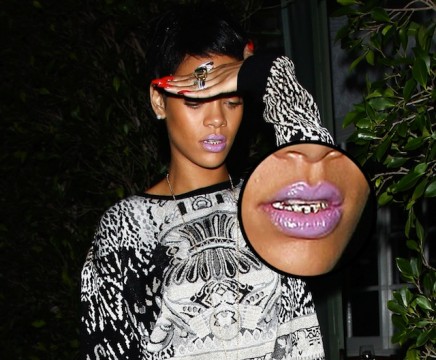
#ThugLife Rihanna Seen Wearing A Gold Grill Over Her Teeth It’s a shame Rihanna didn’t wear these to the VMAs, because A$AP Rocky would’ve definitely appreciated the gold grill look. The popstar hit her favorite restaurant in Santa Monica for dinner last night rocking a pair of gold grills with her new pixie cut. We’re not sure that dinner is the best time to wear grills, but Rih seemed to be really feeling them for the evening. She didn’t try to hide them either, wearing pastel pink lipstick to accentuate her gold mouthful. She’s such a “rebel”… Check out pics of Robyn’s leggy get-up below Images via SplashNews Source
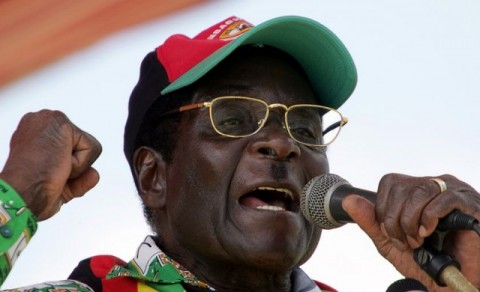
Jamaica Offended By Mugabe’s Remarks On People Being Drunk And Lazy Comments by an African leader portraying the men of Jamaica as chronic drunkards and unambitious pot smokers have become the talk of towns across this Caribbean island. People are debating the matter on street corners, in letters to the editor and on radio talk shows. In unscripted asides during a roughly three-hour speech last week at a research exposition, Zimbabwean President Robert Mugabe said Jamaican “men are always drunk,” have no interest in higher education, and people freely smoke chronic. “The men want to sing and do not go to colleges, some are dreadlocked. Let us not go there,” Mugabe told the crowd at the University of Zimbabwe in Harare. His comments in a mixture of both English and the Shona language were corroborated by The Associated Press after speaking to several reporters who attended the gathering. Over the years, Mugabe has repeatedly made disparaging remarks about dreadlocked Rastafarians, whom he once described as having “moths and mud” in their hair. Rastafarianism, best known for its ritual use of chronic and the dreadlock hair style worn by followers, emerged in Jamaica in the 1930s out of anger over the oppression of blacks. A small minority of Jamaicans are adherents. Glen Harris, a laborer and father of two children, said he felt irritated when he heard about the Zimbabwean president’s chiding remarks on a local radio program. Like the large majority of Jamaica’s population, Harris is black. “This is an African leader talking like this? Black man should stick up for each other. We’re all Africans,” he said on a Kingston street of low-slung concrete buildings and sheet metal fences. Although some foreigners have an image of Jamaica as a laid-back, sun-soaked slice of paradise where unhurried people smoke marijuana without a care, marijuana use is illegal and many islanders are socially conservative churchgoers who quietly endure stereotypes of their country. Still, a few Jamaicans aren’t aggrieved with Mugabe, who received a top government honor during a 1996 visit. They note that their island is the largest producer of marijuana in the Caribbean and that far more women graduate from university than men, and say Mugabe may have a point, even if he was being overly broad by disparaging Jamaican men. “Is President Robert Mugabe really on to something? Certainly, his observation that our ‘universities are full of women’ while our ‘men want to sing and do not go to colleges’ is a truism, which none can deny,” Northern Caribbean University administrator Vincent Peterkin wrote in a letter to the editor of The Jamaica Gleaner newspaper. Jamaican Information Minister Sandrea Falconer said Wednesday that the foreign affairs ministry, led by A.J. Nicholson, was still trying to confirm if Mugabe made the remarks. “I know his ministry is still trying to authenticate the source, and after we will respond,” Falconer said in a brief phone interview. In a written statement, Nicholson stressed that “Jamaican men and women from all walks of life have made valuable contributions to national development and have made their mark on the world stage.” Thoughts?? Source
The Voice returned for Season 3 last night, premiering in the fall for the first time (perhaps to stir up unfriendly competition and level The X Factor). For whatever reason, Blake Shelton’s folksy, borderline inappropriate wise cracks are back, along with Cee Lo Green’s eccentricities and cockatoos. Christina Aguilera’s booty is off the charts (in a good way), and Adam Levine continues to impress in his role as a judge, mentor and showman. Oh yeah, the blind auditions were pretty cool too. Team Christina Aguilera The format is the same: With their backs turned to a singing hopeful, the judges turn around if they like what they see … er, what they don’t see. If more than one turns around, then the candidate gets to choose his or her coach. Xtina got her first team member Monday night with De’Borah.
Kristen Stewart fans may have been disappointed that the Twilight superstar did not make an appearance at last week’s MTV Video Music Awards, but crowds here in Toronto had the chance to see the actress on the red carpet for the North American premiere of Walter Salles ‘ On The Road along with fellow cast members Garrett Hedlund , Kirsten Dunst , Amy Adams and Sam Riley . Stewart spoke with ML about the part she had actually landed before she filmed her first Twilight installment. Stewart shared her thoughts on the steamy relationship between her character Marylou and Hedlund’s Dean Moriarty — a life-long relationship that was rife with affairs, drugs and a wild ride on the road. [ PHOTOS: Kristen Stewart, Garrett Hedlund, and Kirsten Dunst at the Toronto premiere of On The Road ] “They really are ‘simpatico.’ It was a tumultuous relationship. And it’s hard to love like that, but they were so in love with each other and you don’t know this from reading the book, but they stayed lovers until the end of his life,” Stewart said during a conversation with ML at a Toronto hotel over the weekend. Stewart first read On The Road as a high school freshman. A short time afterward, she was approached by director Walter Salles who had been told to consider Stewart for the part of Marylou after fellow filmmakers saw her in Sean Penn’s Into The Wild and suggested that he consider the young actress. The project took a number of years before the actual shoot commenced and in the meantime, Stewart began doing the enormously popular Twilight series, propelling her fame into the stratosphere. “I got the [ On The Road ] job on the spot and I drove away vibrating,” Stewart said. In the film version of the book written by Jack Kerouac, Stewart plays the unconventional free-spirit Marylou, the former wife and still frequent lover of Dean Moriarty, a fast-talking charismatic with an insatiable libido. Dean and best friend Sal (Sam Riley), a young writer whose life is shaken after Dean’s arrival take to the road. Marylou frequently accompanies Sal and Dean’s travels across the country in adventures fueled by sex, drugs and the pursuit of the “It” – a quest for understanding and personal fulfillment. “He kind of raised her and she always had a place in his heart, even though there were a lot of spots in that heart, but she was definitely one in the center and the same goes the other way around,” Stewart said of Marylou and Dean, the On The Road names of the real-life individuals described by Kerouac. “They both helped each other grow up.” One of the seminal works of literature of post-war America, On The Road took decades to be made into a film, even after Francis Ford Coppola acquired the filmmaking rights to the story. Stewart said she believes that society may have not been ready to see On The Road in theaters in the immediate years after the book was published, acknowledging that the film, which has not yet been rated, is racy. “I think it’s a good time to see this story visually because we are not shocked by some of the things that we were so shocked by before and it would have veiled it,” said Stewart. “It would have been so shocking seeing people doing drugs and having sex that you wouldn’t have seen the spirit of [ On the Road ]. You wouldn’t have seen the message behind it. Maybe it would have been good because it would have forced people to look, but maybe they weren’t able to do it then.” She also expressed the need for young people to have dreams and a zest for life, similarly to the characters in the film, even if those dreams are not fully comprehended. “At that stage of your life there’s so much ahead of you, at least it feels that way. At that age you need to have a faith and feelings you can’t articulate yet because at some point you need to hold onto them and you’ll find the words to describe them.” [ Movieline will have more from our interviews with Kristen Stewart, Garrett Hedlund, and Walter Salles this week. ] Read more from the Toronto Film Festival. Follow Brian Brooks on Twitter . Follow Movieline on Twitter .
Keep The Lights On director Ira Sachs ( Forty Shades of Blue , Delta ) tapped into his own experience in a tumultuous relationship that would eventually morph into the film that screened to accolades at the Sundance and Berlin film festivals earlier this year, winning the New York-based filmmaker a Teddy Award at the Berlinale. Keep The Lights On morphed out of the disintegration of a relationship he had with a man that spanned a number of years in New York around the turn of the century. Career demands, extra-relationship temptations, addictions, obsessions and more play into the rocky road experienced by the young couple. Sachs took inspiration for Keep The Lights On from the likes of Lisa Cholodenko’s The Kids Are All Right , Bill Sherwood’s Parting Glances and Jacques Nolot’s confessional Before I Forget , constructing Keep The Lights On as a gay man in NYC while embracing at times details some may consider unflattering. Danish actor Thure Lindhardt plays documentary filmmaker Erik, while American Zachary Booth plays closeted lawyer Paul, a couple who embrace each other while passionately forming a dramatic relationship rife with sex, drugs, highs, lows and dysfunction. Ahead of Keep The Lights On ‘s theatrical release this weekend, Ira Sachs invited Movieline over to his NYC apartment, which, perhaps not so coincidentally served as a prime location for his film. He talks about embracing depictions of addiction and sexuality, the challenges of making indie film today, how making the film affected him personally and what his former partner, who helped inspire the project, thought of the film. When did you decide that you actually wanted to make this film? I saw a film called Before I Forget by Jacques Nolot at (New York’s) Cinema Village, which was programmed by Ed Arentz — who is now my distributor. And what I saw [was] a film that reflected sort of contemporary life — Parisian life — of a filmmaker who was gay, but also what his life in Paris is that looks like something specific. As a gay person how we live looks very specific today and different than it did 20 years ago. I felt like there was no film that looked like my life, and no film which really reflected the community that I live in which is very mixed. The boundaries between gay and straight, I think, for most of us in our everyday lives, though not in our psyche has dissipated. So I wanted to make a film about sort of what I had seen in the last many years here. But specifically I ended a relationship in 2008 and I had a sense that 10 years before that was an interesting story. I started writing and I put it away for a couple of years, and it was really Mauricio Zacharias, my co-writer who read that material and said, “Well clearly this is a story you have to tell.” And in a way because I was doing something so autobiographical, I think I needed someone else to give me the blessing that it would be relevant. So how much of it is similar and how much of it is a departure to your own life during a certain time period? We began with the journals, and diaries, so we began with the raw materials from my life, but then ultimately we were creating a screenplay, which is constructed around its own laws and orders. And in a way, all my films have begun with things that I feel like I know more than anyone else. They’ve begun in a very intimate place. So you’re creating it similarly to the approach you took in Forty Shades of Blue for instance? Forty Shades was kind of about my dad actually. I grew up in Memphis with this larger than life figure who always had these younger girlfriends. And my relationship to those girlfriends was my entry to the film, and that sort of thing. And then when you start making a movie [like Keep the Lights On ] and you’ve cast a Danish actor to play a character based on yourself, then you’re like off to the races because you’re making a film. So what made you decide to go that route with a Danish actor? Was it that the actor Thure Lindhardt personally that appealed to you? I sent the screenplay to an agent that I have worked with in Hollywood, and I got the response that no one in the agency would be available for this [project]. And I knew even before that I wanted to make this film different. I thought that this film needed to be a truly independent film, so it would be financed that way. It would be made that way. So I heard about Thure who I was told was the bravest actor In Denmark and one of the best, and I knew that he would be. I sent him the script and he was alone in a hotel room in Spain, and he ended up using up all the scenes one could shoot alone, which were a series of masturbation scenes. And I knew that he was both comfortable with the material, but also really amazingly interesting to watch. So I casted him. Is this a little reflection, perhaps, on American actors, that they’re less inclined to do this sort of thing? I have a Danish lead actor. I have a Greek cinematographer. I have a Brazilian co-writer. I have a Brazilian editor. I had a Romanian script supervisor. I surrounded myself with non-American sort of sensibilities. And I think that’s a big part of the film. It’s a film about New York, and it’s a very New York film, but I think it’s told in a way that’s not repressed, and it doesn’t look at sex as some foreign object that has to be viewed only in the dark. Do you agree that that’s sort of the American POV generally, that violence in movies is acceptable, but sex is taboo? I do, I do. I think when this film played in Berlin, it was the most ordinary movie you could see.It was extremely ordinary which is very different than how it played at Sundance. How did it play at Sundance then? The subject matter and the sexuality made people uncomfortable. I think there’s a fear of difference in American cinema. And I was thinking a lot about that when I made this film because there used to be an idea that independent cinema was independent cinema . And that production and the means of production were actually separate from commercial cinema. And that gave you certain rights and opportunities — and I had all those rights and opportunities. I am one of a number of filmmakers who started out making films about gay people who stopped. My whole generation, most of us stopped. We either couldn’t make films, or we had to make other kinds of films. And I think that that’s partially about the individual, but it’s mostly about the culture, and trying to figure out how to sustain a career. I think for me, ultimately, I feel now that in some ways my marginal voice is actually my most powerful. It’s also possibly economically my most fertile, because I’m the guy who can make these films. Is there still a pretty low glass ceiling for gay filmmakers generally in this country? It wasn’t any easier to make a film about a Russian woman living in Memphis ( Forty Shades of Blue ). When you’re trying to make non-broad character-driven stories, and I’m interested in documentary as forum, so I’m actually trying to get the details right, which makes it even more specific in a certain way. Going back to Keep the Lights On and Thure’s character Erik, I got the feeling he was a little bit a love junkie. Yeah, and I would agree. He was someone who didn’t feel complete without obsessing over something. I think, no one’s used that term, but I think it’s a good one. It’s better than a sex addict. I mean, I like love junkie… He is someone who just emotionally needs some attachment. I think that there’s a compulsive need to be connected to another person. And I think the film in a lot of ways is less about addiction and more about obsession. There was something, these two guys, both of them are obsessed with the idea of maintaining their life together. And I think with obsession, sometimes it seems like the most comfortable place to be, because it shuts out everything else because you think, “Well if I can control this situation, then I can control my life.” So was it emotional reliving this to a degree? It wasn’t. No? It wasn’t really. I mean, I think by the time that I made the film I really believe I’d done all the therapeutic work and transformation in a lot of ways. Occasionally it felt like déjà vu. It was like an odd sensation that occasionally I was creating fictional scenes that were replicating things that were close to my own life. But mostly I just really felt like my life was one of the drawers that we can open. And I was always very willing to share as much as I could with the actors. But I never felt like they needed to try to do anything other than what was natural to them as actors and as people living the story. I mean, a lot of what I think I do as a director is try to give everything over to the actor. So I disappear. I mean, but the helms are their helms. The spaces are their spaces. I don’t rehearse with my actors. Then what’s your methodology of instruction? I talk to them individually, but I never talk to them together. So really in a certain way it’s more difficult for the actor because there’s a lot of risk, but actually that risk I think is the element that you could actually name in the performance in this film, and in my films in general. I think there’s something risky about it all. This is the moment. So I think to trying to capture the moment means that you’re really valuing the present, which includes the past, but it is about the present which is about the actors, it’s about flirtation, it’s what happens between them. Did you ever consider not emphasizing the drug use? Maybe there would be some other more acceptable vice like — alcoholism? An everyday addiction… Yeah, an everyday addiction, a “legal” addiction, yeah. You know, I really wanted to be unashamed and unabashed about the truth of my relationship and my behavior, and to not shy away from the details, and to not judge the action. So pot-head, crack addict, different kinds of distractions, different kinds of consequences, but the root of addiction is usually similar in lots of ways. And I feel like the drug use that the film talks about is really prevalent in the gay community at least. It’s something I feel like goes unspoken. So has your former partner seen this film? Yeah, he has seen the film. I showed him the film before Sundance. And he’s been very supportive. I mean, I think it’s not him. It’s a story about our relationship as seen through my eyes. Next: The New York filmmaker gives his personal Top 9 NYC films
The 46th annual Country Music Association Awards will air live November 1 on ABC from Nashville’s Bridgestone Arena. The ceremony will be hosted by Carrie Underwood and Brad Paisley, but to whom will these heavyweights hand the hardware? Jason Aldean and Luke Bryan (pictured) announced the finalists for the five major categories on Good Morning America today. Did your favorite make the cut? Female Vocalist of the Year Kelly Clarkson Miranda Lambert Martina McBride Taylor Swift Carrie Underwood Male Vocalist of the Year Jason Aldean Luke Bryan Eric Church Blake Shelton Keith Urban Vocal Group of the Year Eli Young Band Lady Antebellum Little Big Town The Band Perry Zac Brown Band Entertainer of the Year Jason Aldean Kenny Chesney Brad Paisley Blake Shelton Taylor Swift Album of the Year Chief, Eric Church For the Record, Miranda Lambert Home, Dierks Bentley Own the Night, Lady Antebellum Tailgates and Tanlines, Luke Bryan
My name is Alejandra, I’m 17 years old and I’m from Honduras. I’ve been supporting Justin since 2009. Justin’s music has helped me a lot in these years and that’s why I always wanted to meet him. My family, friends, almost all never took me seriously as a Belieber for the country where I live. I was on vacation with my family in LA for a week but I didn’t meet Justin, so I told my dad to let me stay another week because I had a feeling I would meet Justin. Tuesday August 14, we arrived at the studio where Justin was rehearsing for the Believe Tour. I saw Kenny in his car and then saw that Moshe was in the van, they told us that Justin was going to take pictures after he was done with lunch. We waited 45 minutes and then the van was parked in the driveway and Moshe went and opened the door to say something to Justin. He closed it and a couple of seconds later, Justin came out and said, “What’s up guys?” I was thinking he looks like how he does in pictures, like an angel. He started taking pictures and some fans were pushing and Moshe then said, “One at a time.” After it was my turn and I said, “Can you sign my iPod?” and he said, “Yes pretty.” OMG I was so nervous and happy. Then we took the picture and asked him if I could get a hug and he said sure. Then he said, “A pleasure to meet you.” I was so happy, I cried so much because I achieved my goal even though people didn’t believe in me. Dreams do come true if you believe in them and it’s one thing I learned from Justin. I never gave up on meeting him and he is the sweetest boy ever. Thank you to my friends for always giving me hope and love. I’m happy and proud to say I met Justin Bieber. My idol, my inspiration. -@BieberWet Read more: My name is Alejandra, I’m 17 years old and I’m from…
Another twisted up lie about the President’s policies and opinions. Not only is this super PAC campaign ad bogus…it’s corny as isht! The socially conservative super PAC Campaign for American Values is running an ad campaign in the Charlotte media market this week accusing President Barack Obama of forcing gay marriage on the rest of the country. The organization, headed by Gary Bauer, has played this role before, most infamously in the lead up to the 2004 elections, when gay marriage ballot referendums helped drive up turnout for George W. Bush. And if there is a swing state in which this type of campaign could work, it would be North Carolina, where voters approved a ban on same-sex marriage this May. But perceptions on the issue have changed since then — owing to the President’s endorsement of marriage equality — with the black community in particular exhibiting more support. The ad is also factually wrong: Obama has endorsed same sex marriage personally, but has stressed repeatedly that religious institutions should retain the right to recognize marriage as they see fit. The Democratic Party platform says the same. This is set to air beginning next week in North Carolina. Hopefully that small minority of old, scared, white folks will be the only ones who fall for the hype! Source Images via Youtube/Facebook
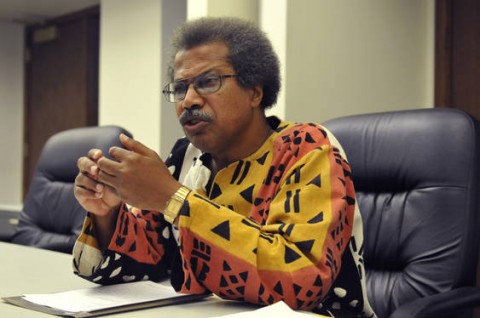
A 61 year-old Detroit immigrant has fought for over 30 years to be officially recognized as a black man . Mostafa Hefny has been trying to get his racial designation changed since he arrived in the United States from Egypt in 1978 and has even reached out to President Barack Obama for help: “As a black man and as an African, I am proud of this heritage,” Hefny told the Detroit News. “My classification as a white man takes away my black pride, my black heritage and my strong black identity.” Hefny was born in Egypt and immigrated to the U.S. in 1978. When he entered the country, he says that he was classified on government papers as a white person – “The government (interviewer) said, ‘You are now white,’” he said. Hefny told the News that he is a Nubian from the northern part of Sudan and the southern portion of Egypt. Nubians are ancient group of Egyptians considered to be more African than Arab. Hefny says that he has been persecuted and denied promotions because of his insistence that he is black. He claims that he lost out on a teaching position at Wayne State University in the early 1990s at because the position is designated for a minority. He says that he did not qualify because he is classified as white. “I have been awarded, inadvertently, the negative effects of being black such as racial profiling, stereotypes and disenfranchisement due to my Negroid features,” Hefny said. “However, the legal demand of my racial classification of ‘white’ prevents me from receiving benefits established for black people.” In all, Hefny, who is currently unemployed and gets help from his family, says that he’s lost five jobs because of his battle to be classified as a black man. He filed a lawsuit against the U.S. government in 1997 to be classified as a black man, but that case was dismissed. Hefny has reached out to the Justice Department and the United Nations to try to change his racial status. In June he wrote President Obama seeking help. “I need your help,” Hefny’s letter said. “As you can see in the enclosed photo, I am a black man. My complexion is darker than yours. I was born and raised in Africa and you were not, yet you are classified as Black and I am classified at White.” There is also an online petition trumpeting Hefny’s racial battle. The Association of Black Egyptian, Ethiopian, and Nubian Advocates – an organization that he co-founded – posted the petition and has collected 30 signatures as of Monday. Hefny claims he has missed job opportunities due to being classified as White. that has to be a first. Do you think the government should grant his request? Support Hefny’s peition HERE Source