Tag Archives: director

Oscars Acceptance Speeches: The Best And The Worst

MTV News looks back on the most moving speeches and those that left us cringing. By John Mitchell Jennifer Hudson at the 2007 Oscars Photo: Vince Bucci/Getty Images Delivering a good Oscar acceptance speech is not easy. If you over prepare, you seem arrogant, like you knew you were going to win all along, and if you aren’t ready for your name to be called, you’re almost certain to forget to thank your significant other or your film’s director. Some Oscar winners suffer from a serious case of the sniffles and leave audiences unsure what they even said, while others go off on tangents that have nothing to do with movies at all. In the end, though, it mostly just comes down to having that special something, that je ne sais quoi . And let’s face it, you’ve either got it or you don’t. Below are five stars we think nailed it when they were called onstage and five who, well, didn’t exactly charm viewers’ pants off on movies’ biggest night. Best Cuba Gooding Jr., Best Supporting Actor, “Jerry Maguire” (1998) Gooding’s acceptance speech is basically an exercise in pure joy. The actor leapt to the stage and earnestly thanked just about everyone he’s ever met, starting with his mother and God, and issued “I love you’s” to “Maguire” co-star Tom Cruise, director Cameron Crowe and pretty much everyone else who worked on the film. His genuine enthusiasm captured the crowd and earned him a standing ovation. Halle Berry, Best Actress, “Monsters Ball” (2002) History was made when Berry won the Best Actress statue — she was the first African American woman to claim the lead actress prize — and she honored the moment with an emotional speech that she dedicated to “every nameless, faceless woman of color who now has a chance after tonight because this door has been opened.” She thanked the actors and actresses of color who came before her and declared the moment “so much bigger” than herself. Her speech was an exercise in humility and surprise — two things most Oscar acceptance speeches could benefit from. Jennifer Hudson, Best Supporting Actress, “Dreamgirls” (2007) Hudson’s took home the Oscar for her very first film performance and delivered a simple acceptance speech that was probably most notable for how humble and truly surprised she seemed to hear her name called. Though she’d been a favorite throughout awards season that year, she seemed shocked when George Clooney announced that she’d won and stuttered and stumbled her way through her speech, but was sure to thank all those she needed to, from “Dreamgirls” director Bill Condon and her co-stars to her family, friends and Jennifer Holliday, who originated the role of Effie White on Broadway. Tom Hanks, Best Actor, “Philadelphia” (1994) Hank’s Oscar acceptance speech may well be the only one to have inspired a movie itself. His lengthy speech was marked by some traits we don’t always love — it certainly felt rehearsed — but the actor’s gratitude seemed genuine when he thanked his high school drama teacher, Rawley Farnsworth, as well as a former classmate, who he called “two of the finest gay Americans, two wonderful men.” There was only one problem: Farnsworth was still in the closet about his sexuality. The slip of the lip inspired the 1997 film “In & Out,” in which Kevin Kline plays a high school drama teacher outed when his former student (played by Matt Dillon) wins an Oscar. In a nice turn of events, the always lovely Joan Cusack earned an Oscar nomination herself playing Kline’s jilted fianc

Oscars 2012: Our Biggest Burning Questions

Only time will tell just how many statuettes will ‘The Artist’ take home and whether talking puppets will grace the Oscar stage. By Kevin P. Sullivan Jean Dujardin and B

Caesar Must Die Leads Berlinale Winners

Congrats to the Taviani Bros. ( who? ), the inveterate sibling filmmakers whose Shakespeare-in-prison semi-doc Caesar Must Die has claimed the top prize at this year’s Berlinale. Stephanie Zacharek has more about the Golden Bear winner in her review from Berlin — along with more about Barbara , whose own helmer, Christian Petzold, won the festival’s Best Director award. ( Tabu and Sister nabbed hardware as well.) As Stephanie predicted, Caesar Must Die secured U.S. distribution in this week in Berlin and will be Stateside later this year; stay tuned to Movieline for details about how and when you can see it, and read on for the complete list of winners. Congrats to all! GOLDEN BEAR FOR THE BEST FILM Cesare deve morire (Caesar Must Die) by Paolo & Vittorio Taviani JURY GRAND PRIX-SILVER BEAR Csak a szél (Just The Wind) by Bence Fliegauf SILVER BEAR FOR BEST DIRECTOR Christian Petzold for Barbara (Barbara) SILVER BEAR FOR BEST ACTRESS Rachel Mwanza in Rebelle (War Witch) by Kim Nguyen SILVER BEAR FOR BEST ACTOR Mikkel Boe Følsgaard in En Kongelig Affære (A Royal Affair) by Nikolaj Arcel SILVER BEAR FOR AN OUTSTANDING ARTISTIC CONTRIBUTION Lutz Reitemeier for the photography in Bai lu yuan (White Deer Plain) by Wang Quan’an SILVER BEAR FOR THE BEST SCRIPT Nikolaj Arcel, Rasmus Heisterberg for En Kongelig Affære (A Royal Affair) by Nikolaj Arcel ALFRED BAUER PRIZE, awarded in memory of the Festival founder, for a work of particular innovation: Tabu by Miguel Gomes SPECIAL PRIZE-SILVER BEAR L’enfant d’en haut (Sister) by Ursula Meier BEST FIRST FEATURE AWARD, endowed with 50,000 Euros, funded by GWFF Kauwboy Kauwboy by Boudewijn Koole (Generation Kplus) SPECIAL MENTION Tepenin Ardı Beyond the Hill by Emin Alper (Forum) PRIZES OF THE INTERNATIONAL SHORT FILM JURY GOLDEN BEAR Rafa by João Salaviza THE JURY PRIZE – SILVER BEAR Gurehto Rabitto The Great Rabbit by Atsushi Wada SPECIAL MENTION Licuri Surf Licuri Surf by Guile Martins EFA SHORT FILM NOMINEE BERLIN Vilaine Fille Mauvais Garçon Two Ships by Justine Triet DAAD SHORT FILM PRIZE: The Man that Got Away The Man that Got Away by Trevor Anderson PRIZES OF THE JURIES GENERATION Children’s Jury Generation Kplus CRYSTAL BEAR FOR THE BEST FILM: Arcadia by Olivia Silver SPECIAL MENTION: Just Pretended To Hear by Kaori Imaizumi CRYSTAL BEAR FOR THE BEST SHORT FILM: Julian by Matthew Moore SPECIAL MENTION: BINO by Billie Pleffer Youth Jury Generation 14 plus, CRYSTAL BEAR FOR THE BEST FILM: Night of Silence by Reis Çelik SPECIAL MENTION Kronjuvelerna The Crown Jewels by Ella Lemhagen CRYSTAL BEAR FOR THE BEST SHORT FILM: Meathead Meathead by Sam Holst SPECIAL MENTION 663114 by Isamu Hirabayashi International Jury Generation Kplus THE GRAND PRIX OF THE DEUTSCHES KINDERHILFSWERK FOR THE BEST FILM: Kauwboy Kauwboy by Boudewijn Koole SPECIAL MENTION: GATTU by Rajan Khosa THE SPECIAL PRIZE OF THE DEUTSCHES KINDERHILFSWERK FOR THE BEST SHORT FILM: BINO by Billie Pleffer SPECIAL MENTION: L by Thais Fujinaga Competition Panorama Forum Cesare deve morire (Caesar Must Die), by Paolo & Vittorio Taviani Rebelle (War Witch), by Kim Nguyen Die Wand (The Wall), by Julian Roman Pölsler Parada (The Parade), by Srdjan Dragojevic La demora (The Delay), by Rodrigo Plá Tabu (Tabu), by Miguel Gomes L’âge atomique (Atomic Age), by Héléna Klotz Hemel (Hemel), by Sacha Polak PRIZE OF THE GUILD OF GERMAN ART HOUSE CINEMAS: À moi seule (Coming Home), by Frédéric Videau C.I.C.A.E. PRIZE: Death For Sale (Death for Sale), by Faouzi Bensaïdi Forum Kazoku no kuni (Our Homeland), by Yang Yonghi LABEL EUROPA CINEMAS: My Brother The Devil (My Brother The Devil), by Sally El Hosaini Special Mention: Dollhouse (Dollhouse), by Kirsten Sheridan TEDDY AWARDS Keep The Lights On (Keep The Lights On), by Ira Sachs Call Me Kuchu (Call Me Kuchu), by Malika Zouhali-Worrall, Katherine Fairfax Wright Loxoro (Loxoro), by Claudia Llosa Jaurés (Jaurés), by Vincent Dieutre INDEPENDENT JURIES PRIZES OF THE ECUMENICAL JURY MADE IN GERMANY – PERSPEKTIVE FELLOWSHIP, endowed with 15,000 Euros, funded by Glashütte Original Annekatrin Hendel for Disko (Disco) DIALOGUE EN PERSPECTIVE, funded by the German-French Youth Office This Ain’t California (This Ain’t California), by Marten Persiel CALIGARI FILM PRIZE Tepenin Ardı (Beyond the Hill), by Emin Alper Special Mentions Bagrut Lochamim (Soldier / Citizen), by Silvina Landsmann Escuela normal (Normal School), by Celina Murga Jaurès (Jaurès), by Vincent Dieutre NETPAC PRIZE Paziraie Sadeh (Modest Reception), by Mani Haghighi PEACE FILM AWARD Csak a szél (Just The Wind), by Bence Fliegauf AMNESTY INTERNATIONAL FILM PRIZE Csak a szél (Just The Wind), by Bence Fliegauf CINEMA FAIRBINDET PRIZE Call Me Kuchu (Call Me Kuchu), by Malika Zouhali-Worrall, Katherine Fairfax Wright READERS’ JURIES AND AUDIENCE AWARDS Panorama Audience Award PPP – fiction film: Parada (The Parade), by Srdjan Dragojevic Panorama Audience Award PPP – documentary film: Marina Abramovic The Artist is Present (Marina Abramovic The Artist is Present), by Matthew Akers BERLINER MORGENPOST READERS’ PRIZE Barbara (Barbara), by Christian Petzold TAGESSPIEGEL READERS’ PRIZE La demora (The Delay), by Rodrigo Plá SIEGESSÄULE READERS’ AWARD Parada (The Parade), by Srdjan Dragojevic Special Mention Call Me Kuchu (Call Me Kuchu), by Malika Zouhali-Worrall, Katherine Fairfax Wright PRIZE OF THE BERLINALE TALENT CAMPUS SCORE COMPETITION Christoph Fleischmann (Germany) BERLIN TODAY AWARD Rafael Balulu (Israel) for Batman At The Checkpoint (Batman At The Checkpoint) Special Mention David Lalé (United Kingdom) for White Lobster (White Lobster) [via Deadline ]

See the rest here:
Caesar Must Die Leads Berlinale Winners

‘A Complete and Utter Lie’: The Fact, Fiction and Fury Behind John Carter’s Woes

A trade report last month suggested that Disney’s March sci-fi tent pole John Carter was in serious trouble owing to Pixar vet Andrew Stanton ’s relative inexperience directing live-action film, citing rumors that production reshoots and late-game rejiggering had bloated the budget from $200 million to as much as $300 million. Speaking with press Thursday, Stanton called the report “a complete and utter lie,” insisting that he stayed on time and on budget – but it’s easy to see how the Pixar way of moviemaking may have made for a bumpy transition for the filmmaker. John Carter , adapted from Edgar Rice Burroughs’s Barsoom sci-fi/fantasy series (created in 1912), introduces a hero and world that influenced many an iconic property that followed, from Star Wars to Avatar ; Stanton, a lifelong fan of the series, makes his live-action directing debut with the pic which combines live-action and CG to create an entirely new world on which its titular hero ( Taylor Kitsch ) finds himself a stranger in a strange land populated by eight-foot tall, four-armed aliens and fantastical creatures. The scope and detail of John Carter ’s alien world and its inhabitants is ambitious, which is both the draw and the risk. The Hollywood Reporter ’s Jan. 19 report cited insiders close to the production and talent in its assessment calling the costly Disney actioner out as being plagued with various problems stemming from Stanton’s inexperience with live-action filmmaking. “Industry sources with links to the project believe it might lead to a staggering write-down,” wrote Kim Masters, portending doom for the ambitious potential trilogy-starter. At the film’s press junket, Stanton and Co. were eager to refute the rumors. “I want to go completely on record that I literally was on budget and on time the entire shoot,” Stanton said. “Disney is so completely psyched that I stayed on budget and on time that they let me have a longer reshoot because I was such a good citizen, so I find it ironic that we’re getting accused of the opposite.” That said, Stanton and producer Lindsey Collins confirmed that the process of hammering out the John Carter story was a long and laborious one even after a first cut of the film was submitted. Collins, a Pixar producer who worked with Stanton on WALL-E , described it as a learning process for translating the Pixar way of doing things into huge-scale live-action filmmaking – first working out the basics, then moving around the pieces until a satisfying film falls into place. “It’s the way we’ve always worked and certainly at Pixar that’s how we work – we get it all up there and put it up and we watch it and go, ‘That’s not working, let’s move that over here,’” she said. “So it doesn’t surprise me at all that that’s how Andrew worked on this one.” That process has resulted in stellar storytelling at Pixar, where films are famously developed and worked over for years with seasoned teams of writers and animators before coming together. The problem comes when that way of working is applied to a project like John Carter , in which live-action footage must first be shot with actors against green screen, sent off to VFX houses to be merged with CG environments, creatures, and effects, and then returned in order to even begin the editing process. Because of his background, Stanton was involved in the animation process more than many directors might have been. The level of involvement was unusually demanding of visual effects vendors who were working on various moving parts with the director, according to Collins. “[Stanton] himself was drawing in all of these draw-overs,” she said, “because when you shoot that stuff 90% of it’s not there. He’s actually cut together these shots of Taylor, by himself, acting to nothing. Andrew was like, for us to be able to look at it narratively I have to be able to draw in these other characters that should be there. It was the only way that we could watch it as a narrative film and see what’s working and what’s not, ‘That’s dragging or that’s playing too fast’ or ‘I don’t understand what’s happening here.’” As reported by THR , even after putting together a first cut Stanton was rewriting major character arcs and story sequence. The lead female character of Martian princess Dejah Thoris, played by actress Lynn Collins, wasn’t quite as strong initially as she is in the final cut, according to producer Collins. Stanton then rearranged key character reveals and scenes — nothing new or shocking to any filmmaking process, live-action or otherwise, but a process that could become incredibly demanding of resources if story was still being hammered out after principal photography. Meanwhile, rumors of skyrocketing budgets aren’t the only issues facing John Carter , which opens March 9. Poor tracking numbers and audience confusion about the project are also concerns Disney is trying to address in the weeks leading up to release. The film’s title, for one, was changed from John Carter of Mars to John Carter to avoid too much of a science fiction/genre association to general audiences, but the truncated title now leaves those unfamiliar with the Burroughs book scratching their heads wondering what John Carter is about. Despite a great initial trailer , subsequent spots have lent too much of a Star Wars feel to the proceedings, and the studio is scrambling to convey that the John Carter of Mars tale isn’t derivative of many of the genre properties of the last few decades, but is in fact the series that spawned many of them. But while nobody’s talking yet in definitive terms about sequels, Stanton’s already prepared to continue; he’s already outlined a full trilogy, filtering the entire John Carter saga down from eleven books, and last week delivered a 25-page outline for the first sequel. Follow Jen Yamato on Twitter . Follow Movieline on Twitter .

Read the original:
‘A Complete and Utter Lie’: The Fact, Fiction and Fury Behind John Carter’s Woes

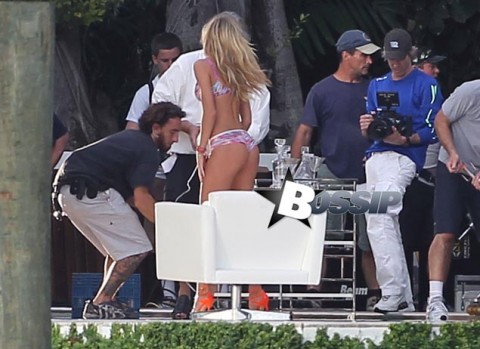
For The Fellas: Director Michael Bay Films A Caketastic Victoria’s Secret Angels Back It Up For Michael Bay On Commercial Shoot

Where is Chanel Iman ? Candice Swanepoel, Doutzen Kroes and Behati Prinsloo were spotted showcasing their itty bitty cakes on the set of a new Victoria’s Secret commercial being shot by Michael Bay at Alex Rodriguez’s Miami mansion and the nearby Golden Beach. We didn’t want to deprive you of your Friday cakes so we figured we’d show you some of the best shots to get your weekend started right. Hit the flip for your viewing pleasure to begin…

Originally posted here:
For The Fellas: Director Michael Bay Films A Caketastic Victoria’s Secret Angels Back It Up For Michael Bay On Commercial Shoot

‘Breaking Dawn’ Secrets Revealed: Kristen Stewart’s ‘Doll’ Double

“It was creepy … in a good way,” special effects supervisor tells MTV News of creating the Kristen Stewart look-alike. By Kara Warner Kristen Stewart in “Breaking Dawn – Part 1” Photo: Summit Entertainment For all the “Twilight” fans familiar with “Breaking Dawn,” via both Stephenie Meyer’s source material as well as the movie “The Twilight Saga: Breaking Dawn – Part 1,” you know that the much-discussed, heavily hyped birth scene is one of the more graphic and disturbing scenes in all of Meyer’s mostly PG-rated world. It’s safe to say that curiosity was fully piqued when it came to seeing how director Bill Condon decided to adapt it in the film. In a nutshell, the scene is pretty graphic and cringe-worthy. For those who have seen the “Making Of” documentary with the recently released DVD/Blu-Ray or happened to catch the sneak peek MTV News got ahead of time last week, you’ve been introduced to the Bella doll that the filmmaking team used in place of Kristen Stewart for a few scenes. This week’s Twilight Tuesday brings you a few fun details about the making of the doll, to which I affectionately refer as “Robot Bella” (even though it/she is clearly not a robot). According to John Rosengrant, the film’s animatronics and special makeup effects supervisor, the idea behind the creation of the Bella replica doll was to make the birthing/near-death scene appear as real as possible and to show Bella in her very emaciated form that Meyer describes in the book. “It’s very hybrid, the approach,” he told MTV News. “We tried to shape the whole Bella, what she looks like emaciated and all that, but it’s also digitally augmented, and that was from the get-go, this was going to be a hybrid-type effect.” If you look closely at the features of the doll, especially when Robert Pattinson is shown acting out that very emotional scene with it, there is a creepy element involved. “It was creepy when we created the look of her, in a good way,” Rosengrant said. “I was actually shocked that that was the edict and I think that is maybe [credit] to Bill Condon as the director, wanting to make something like that real because the previous movies didn’t strike me that they would embrace something like this.” What are you looking forward to most in “Breaking Dawn Part 2”? Leave your comment below! Check out everything we’ve got on “The Twilight Saga: Breaking Dawn, Part 1.” For breaking news, celebrity columns, humor and more — updated around the clock — visit MTVMoviesBlog.com . Related Videos Live From The ‘Twilight: Breaking Dawn – Part 1′ Red Carpet MTV News’ Comic-Con Takeover ‘Breaking Dawn’ Special

Read more:
‘Breaking Dawn’ Secrets Revealed: Kristen Stewart’s ‘Doll’ Double

Drake, Rihanna Get ‘Super Close’ In ‘Take Care’ Video

‘It’s not narrative at all, and it involves animals,’ director Yoann Lemoine tells MTV News of new clip. By Tomika L. Anderson Rihanna and Drake Photo: NBAE/Getty Images Capturing the chemistry between Drake and Rihanna on the set of their new video wasn’t very hard, the director of the clip, Yoann Lemoine, told MTV News. The video for “Take Care” was shot during the Super Bowl. “They seemed to be super close and that’s what I wanted for the video,” Lemoine, best known for directing Katy Perry’s “Teenage Dream,” Taylor Swift’s “Back to December” and Mystery Jet’s “Dreaming of Another World,” told us. “They fit together pretty well so it was just easy.” Lemoine said the three-day shoot — which took place in a studio as well as a park — had a “very minimal” and “mellow” vibe, even though the track itself is decidedly more upbeat. “Visually, it’s a very humble video … it’s not crazy,” the alternative indie musician who also goes by the stage name Woodkid said. “It’s actually the most indie video I’ve done my whole life. It’s probably the most famous artists, and they were so open to a project that was so minimal.” “There’s a lot of space in the video and I wanted the visuals to pay tribute to that,” he continued. “It pays tribute to nature. When I listened to the track, I was seeing a landscape … involving animals and massive landscapes. I won’t say too much, but it’s very surprising that there are very few elements in it. It’s very simple but there’s this big sense of emptiness in it. It’s not narrative at all, and it involves animals.” The French filmmaker does not know when the video will air, but he did say that the editing process is going in a “very good direction.” Lemoine — who tweeted a picture of himself with the rap-and-R&B duo last week — admitted that they all watched the Super Bowl on the set between takes, but that there weren’t very many other distractions. “There’s something very minimal and very delicate [about it] in a way,” he added. “And it was very symbolic too.” Related Artists Drake Rihanna

See the article here:
Drake, Rihanna Get ‘Super Close’ In ‘Take Care’ Video

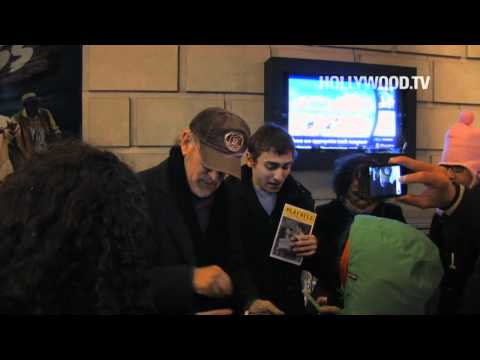
Steven Spielberg comments on Whitney Houston

http://www.youtube.com/v/T-XtBySCYAI?version=3&f=user_uploads&app=youtube_gdata

Steven Spielberg was signing autographs for fans in New York. We asked the director-extraordinaire for his thoughts on Whitney’s Death. We couldn’t agree more with what Steven had to say!

Read the original post:

Steven Spielberg comments on Whitney Houston

Berlinale Dispatch: The Taviani Brothers — Who? — Return with a Great Shakespeare-in-Prison Movie

There were many happy faces among critics on Saturday, the third day of the Berlinale. Because despite what I wrote yesterday about the criticism the festival has faced in recent years, particularly in terms of the films chosen for competition, nearly everyone I’ve spoken to thinks this year’s festival is off to a promising start. Of the six competition films that have been screened so far, not one has set any of my random sampling of critic friends howling with derision, or walking around wearing a perpetual scowly-frowny face. When the festival lineup was announced, friends who had to write pregame assessments had a hard time finding even one or two movies that, sight unseen, had the potential to stand out. But on the strength of what we’ve seen so far, it appears that the best of this festival, whatever that might be, will again come from left field, as it did last year with Asghar Farhadi’s A Separation . Not every edition of every festival starts out that way, with a sense of adventure and anticipation. Don’t quote me yet, but we may be onto something special here. We can attribute part of the buoyant mood to the reception of the screening of Paolo and Vittorio Taviani’s Caesar Must Die on Saturday morning. In the late 1970s and early 1980s the Taviani Brothers rode high, on an internationally cresting wave, with pictures like Padre Padrone and The Night of the Shooting Stars . But in recent years, mentioning their name would be likely to elicit a blank stare or a “Taviani Who?” Even though the brothers have been steadily making films in Italy since then, they’ve dropped off the map in the United States, and even at home their profile hasn’t exactly been blazing. But Caesar Must Die may reignite the fortunes of this octogenarian directing team. The picture is stark and alive in its simplicity; rendered mostly in black-and-white, it’s gorgeous to look at — you could practically use it as an illustrated textbook on framing and composition. Caesar Must Die is a sort-of documentary that tells the story of a group of prison inmates — incarcerated at Rome’s maximum security Rebibbia — who mount a production of Shakespeare’s Julius Caesar. Footage from the actual performance frames the picture: In the opening scene, we see a bunch of stubbly, rough-looking guys, wearing simple, stylized costumes that give the whole affair the aura of a children’s holiday pageant, doing some pretty interesting things with Shakespeare’s language. Not all of those things are, in the strict sense, good. But even the “bad” actors among this bunch — and remember, they’re not just nonprofessionals but convicted criminals, for Christ’s sake — contribute to the intense, quiet power of the final work. Most of Caesar Must Die is devoted to watching these men work their way through the material during rehearsal, learning its ins and outs, its dips and dives, and teasing out nuances and details that mean something to them. Sometimes the Tavianis draw the parallels between art and life a little too starkly. We don’t really need to hear the inmates reflecting on how Julius Caesar speaks to them when we can see how, in their proto-method-acting way, they bring every scrap of their experience to rehearsal: They touch each other warily but tenderly; when it’s time for a character to draw a knife, you can tell the actors respect it as both a weapon and a symbol, even though it’s presumably made out of plastic. You can bet these guys know a lot about duplicity and betrayal and power struggles, and they bring all of that to bear as they tangle with this challenging material, and with each other. The most wonderful sequence in this overall very fine picture may be the montage of the actors’ auditions, as they meet with the play’s director – a professional brought in from the outside – and try to impress him with their swagger and capacity for pathos. Many of them have both in spades. Some are awkwardly touching; others come off like they’ve spent too much time channeling Robert De Niro; and some are simply naturals, able to summon that deep-rooted whatever-it-is that makes magic happen in live performance. The picture also features a lovely, haunting Bernard Herrmann-inflected score — in places I could hear shadows of Taxi Driver . When Caesar Must Die eventually shows up in American theaters — and it will — it’s going to be easy as pie for marketing people to sell: An uplifting story about prison dudes finding meaning in art can pretty much sell itself. But even though that line essentially describes what happens in Caesar Must Die , it doesn’t come close to capturing the simultaneously joyous and mournful resonance of the picture. Caesar Must Die is really just about the way art lives on through people, sometimes in unlikely ways. There’s no way to keep it behind bars. Saturday’s press screening of Barbara, from German director Christian Petzold, didn’t draw the same kind of rapturous audience affection that Caesar Must Die did. But then, it’s a very different type of movie. In Barbara , a beautiful but rather blank-faced young doctor – played by the superb German actress Nina Hoss — arrives in a small East German town to take a new job at a tiny hospital. She doesn’t seem too happy to be there, though clearly the doc in charge – Ronald Zehrfeld, who somewhat resembles Brendan Fraser and is equally charming — takes an immediate shine to her. It’s 1980, as the movie’s press notes tell us, though if you go in cold, you probably won’t be able to immediately discern when and where the action is taking place. That’s probably intentional, and the approach works. This isn’t The Lives of Others, where the East-West divide is practically a major character; instead, it’s just a story about people living in constrained (and at times dangerous) circumstances and yearning for something more. Barbara is a drama and a romance, and it’s also laced with dry, delicate humor. There were times when the German members of the audience would laugh at a joke that I couldn’t quite get, and yet Petzold — the director behind the 2007 drama Yella, also featuring Hoss — is such a master of tone and mood that I could feel the vibrations of the movie’s subtle humor, even if I’d be hard-pressed to articulate it. Barbara starts out slow and then moves even slower — but by the end, somehow, it got me in its gentle clutches. Follow Stephanie Zacharek on Twitter . Follow Movieline on Twitter .

See the article here:
Berlinale Dispatch: The Taviani Brothers — Who? — Return with a Great Shakespeare-in-Prison Movie

Whitney Houston: A Film Fan’s Appreciation

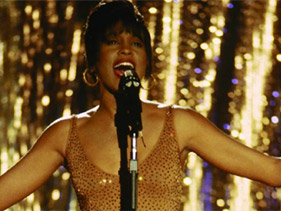
Late singer showed dignity and vulnerability in films like ‘The Bodyguard’ and ‘Waiting to Exhale.’ By Ryan J. Downey Whitney Houston in “Bodyguard” Photo: Warner Bros. Whitney Houston will be remembered for her voice, her hit songs, her charismatic presence. As someone who has spent my life sharing equal passion for music and movies, it’s particularly noteworthy to me that the biggest hit I associate Houston with is intrinsically tied to a film. Judging by the number of “Whitney, I will always love you” tweets from celebrities and fans on Saturday, I’d say I’m not alone in thinking of her big voice mostly in “I Will Always Love You,” which is inseparable from “The Bodyguard.” My late mother was a huge fan of Dolly Parton, who originally wrote and recorded the song that would become a huge hit for Houston on the soundtrack to “The Bodyguard,” in which she starred (years before people ran around saying “meta”!) as a pop singer. The stepmother who came into my life when I was a teenager passed away herself a couple of years ago. The first Christmas present I ever bought for her growing up was a copy of one of Whitney’s albums on cassette, so I experienced a variety of emotions and memories about important women in my life as my Twitter feed blew up with reports of the troubled star’s untimely passing. Nobody knew Houston could act (a bit part on an episode of the corny sitcom “Gimme a Break!” was certainly no barometer) when director Mick Jackson cast her to play Rachel Marron, a singer in need of protection from a stalker, in “The Bodyguard.” Big marquee name Kevin Costner played the title role of an ex-Secret Service agent turned private protector. The two characters, against the odds and against the rule, become more than co-workers as the story unfolds. The movie is cornball, sure, but Houston was quite fun. Lawrence Kasdan, who put his stamp all over my childhood as a writer on “The Empire Strikes Back,” “Raiders of the Lost Ark” and “Return of the Jedi,” reportedly conceived the script in the ’70s as a vehicle for the legendary Steve McQueen and Diana Ross. I was actually at the Grammy Special Merit Awards watching Ross accept a Lifetime Achievement Award when I saw the guy in front of me show his girlfriend a tweet about Whitney Houston’s death, which is how I first learned the news. Perhaps in some roundabout way you could call that my Six Degrees of Kevin Costner with this story. It’s not unusual to look for “signs” and coincidences when we try to process death around us, whether it’s a loved one, acquaintance or a public personality we never knew. “The Bodyguard” had action, romance and behind-the-scenes drama involving the entertainment industry, all of which are some touchtone topics that have followed me in life. I worked part-time in a record store when the movie came out and I vividly remember handling copies of the soundtrack on CD and cassette (remember those?) as patron after patron brought up a copy for me to ring up. The movie, the songs (“I Have Nothing” was no slouch!) and the CD were all intertwined, intermingled, wrapped up together to me. Houston’s performance displayed a certain tenderness combined with an elegant toughness that recalled screen sirens from mid-century. True, she was drawing from some life experience by playing someone so close to her comfort zone. But in 1995, she did it all over again in “Waiting to Exhale” and this time opposite acting heavyweight Angela Bassett (and directed by Forrest Whitaker!). “Exhale” shot straight to #1 at the box office, while Houston’s single from the movie did the same thing on Billboard. Last spring, Bassett did an interview in which she talked about a sequel reuniting the director and stars. Of course, that couldn’t happen now. Too many pop stars, rock idols and rappers trying their hand at acting have made the whole concept a joke to some people. And granted, not every musician who switches gears turns out to have chops (and vice versa in the actors-turned-musician department). But Penny Marshall certainly wouldn’t have put Houston next to Denzel Washington and Gregory Hines in “The Preacher’s Wife” if she’d watched “The Bodyguard” and “Waiting to Exhale” and thought the singer hadn’t pulled off the jobs. The remake of the 1947 film “The Bishop’s Wife” may have included some hokey fantasy elements, but it still became the best-reviewed movie Houston made. Sure, both “Bodyguard” and “Exhale” are “rotten” according to Rotten Tomatoes, which aggregates reviews from major film critics. I’m not going to try to pass either of them off as particularly great films. But “The Bodyguard,” my favorite of the two, is an inoffensive confection that rises above the phrase “guilty pleasure” ever so slightly even after repeated viewings and even after all of this time. There’s no denying Houston’s likability and watchability in all three of her major film roles. She was dignified, strong and yet vulnerable in the sort of way that made you want to sweep her up like Kevin Costner on the movie poster. Houston’s final film, “Sparkle,” is set to be released in August, and indeed, there is nothing the specter of addiction can do to erase her sparkle on the silver screen. We’ll miss you, Whitney. MTV News’ Sway and James Montgomery will be live from the Grammys red carpet this Sunday, February 12 starting at 5 p.m. ET to get reactions from music’s biggest stars on the death of Whitney Houston. Watch Reactions and Remembrances at MTV.com. Share your condolences with Whitney’s family and friends on our Facebook page. Related Videos Whitney Houston: Life And Music Of An Icon Related Photos Whitney Houston: A Life In Photos Related Artists Whitney Houston

Continued here:
Whitney Houston: A Film Fan’s Appreciation