Jill Connors may be Married to Medicine on Bravo. But she’s now Battling with the Law in real life. As confirmed by TMZ, the reality star and husband John Connors were at home on August 13 when the latter noticed some text messages from another man on his wife’s phone. John confronted Jill. He threatened to take away the kids if she were cheating. And that’s when she lost it. According to John, Jill hit him in the face with a spoon and then with her fists. She also tore off his shirt and scratched his chest. From there, John alleges that Jill actually cut HERSELF with a kitchen knife while screaming that John was the one doing it. John called 911 and Jill admitted to hitting her husband and starting their fight once the authorities arrived. But she stuck to the story that John was the one to cut her with the knife. The cops did not believe Jill, however, arresting her for domestic violence and also for cruelty to children because this outburst took place in front of her kids. Damn. Jill filed for divorce on August 19. View Slideshow: Celebrity Mug Shots: BOOK ‘EM!
Safe to say Kim Kardashian is done basking in her pregnancy glow and back to her (unfortunately) familiar pattern of having a rough go of it. The 34-year-old, who had a notoriously difficult pregnancy with North West, and then battled for so long to get pregnant again, is cracking. Kardashian broke down crying recently over her pregnant body, which is reportedly starting to bloat, and her drastically fluctuating weight. “Kim was desperate to do things right second time around,” says an insider. For the E! star, that meant going above and beyond “not put on too much weight like Jessica Simpson did with her second baby” (ouch). Of course, she’s eating for two, so that’s tough, and “she’s gone over her rigidly planned weight gain program … she’s furious at herself.” Come on Kim. You’re a super hot, famous mega-millionaire. We know pregnancy isbrutal physically, and that you’ve had some real health complications as well, but if this is just a vanity thing? The next few months will be over before she even knows it. “Her friends hate that she’s putting herself through this,” says the source, echoing that sentiment. “She’s setting herself up for a tough time.” “Kim hates her body with a passion,” continues the insider. “She is convinced she’s going to have an even worse time than with North.” In any case, regardless of whether Kanye West hates Kim’s pregnancy body or it’s all in her head, this time is it for Kim carrying kids: “She told Kanye if he wants any more it will be via surrogate … She’s vowed she’ll absolutely never go through all this again.” Soldier on, Kim. The occasional bad pic is worth it.
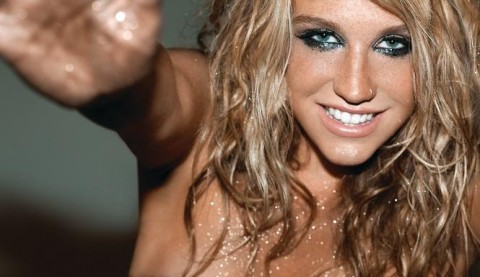
TMZ reports radio stations began pulling the song from playlists in order to avoid offending any listeners. Although Ke$sha may see the song as a celebration, most folks might be offended by the title alone. The website explained the last time a song dropped this drastically was when the Dixie Chicks were banned from country radio after coming out against President Bush. According to Entertainment Weekly, “Die Young” was topping the charts at number three when the Sandy Hook massacre occurred
You know this movie, and chances are that you loved this movie — except for that one role that almost ruined it all. Miscast Roles is where Movieline and its readers swap out those roles to make it right. One of last year’s surprise critical and commercial darlings, Rise of the Planet of the Apes , wowed audiences, stoked many an awards-season debate and revitalized an important science fiction franchise — all while still managing to appeal to moviegoers unfamiliar with the original 1968 film (or that film’s 1963 source novel). As chief chimp Caesar, Andy Serkis’s performative collaboration with the motion capture geniuses from WETA was a great spectacle, presenting viewers with a gorgeously rendered CGI-animated character. Yet one consistent flaw in Rise left me scratching my head: James Franco’s weirdly aloof performance as scientist Will Rodman. The film presents Rodman as an Alzheimer’s disease researcher who claims to have found a cure that necessitates extensive animal testing and, subsequently, brings about a race of intelligent, self-aware chimpanzees, as well as the titular “rise” of the primate-centered culture in which the rest of the series is based. Imagining Franco as a brilliant researcher even in the best of performances would be, let’s face it, a bit of stretch. But add the fact that this character is motivated by a desire to cure his own father of the debilitating effects of the disease in question — not to mention Rodman’s somewhat unhealthy attachment to the first subject of his animal tests — and you’ve got a complex emotional palette that seemed to flat-out confuse Franco. A much better choice for this role would have been the expressive Mark Ruffalo, an actor capable of communicating exactly what was needed of the Rodman character in this story. This is not to say that Franco is a bad actor, far from it. His talents are just misplaced here: Franco is best at lengthening the emotional distance between character and audience, arresting viewers’ attention through enigma and idiosyncrasy, rather than connecting through direct emotional appeal. He rarely lets the viewer into his head space, and this role really needed someone with whom the audience could immediately connect. Ruffalo, meanwhile, has acted powerfully in two films in particular — You Can Count on Me and Shutter Island — that required exactly the two traits most vital to the Rodman character: a palpable sense of sympathy and an ability to play a straight-man to a more eye-catching lead. Rodman’s psychology, hovering between helplessness and an ambitious determination to set things right, was meant to parallel the emotional instability of his primate pal Caesar, as the latter scales from animal behavior up the rungs of human cognitive development. Franco consistently hit the wrong notes in his interaction with Serkis’s Caesar, and often left John Lithgow, who played the dementia-stricken father, adrift in scenery chewing overtures. The scenes between father and son didn’t work like they could’ve, and the potential to cast the conflicting motivations vying for Rodman’s attention in terms of Caesar’s own dual nature went unrealized. In Ruffalo’s breakthrough role in You Can Count On Me , he showed huge emotional range as the wayward brother to Laura Linney’s maternally protective big sister character. You Can Count On Me highlights a young man’s floundering crisis of identity, as played out within a family drama. [Clip NSFW] The film is one long assurance by Ruffalo’s character that, wherever he might wander in the greater world, the bonds of family holding him and his sister together still remain. Sound familiar? Rise of the Planet of the Apes features a strikingly similar theme, though its identity crisis and negotiation of familial loyalty covers an inter-species bond. In You Can Count On Me , Ruffalo plays the “Caesar role” to Linney’s big sister; he is the one breaking out into new territory of self-determination, while it’s Linney who plays the concerned, yet ultimately quiescent guardian. But Ruffalo reverses that relationship in his mentorship of Linney’s young son, played by Kieran Culkin, and there he shows some very strong Rodman-type characteristics. Meanwhile, Ruffalo’s pensive second fiddle to Leonardo DiCaprio’s go-for-broke investigator in Shutter Island also fulfills the required qualifications for stepping into the Rodman part. Ruffalo stays in the background of the drama for most of Shutter Island , allowing DiCaprio to serve as a fixed center to the film’s horrifically shifting sense of reality. The fact that the audience isn’t supposed to be looking too closely at Ruffalo ends up being important, given plot developments. Yet when all is revealed, and Ruffalo is finally able to communicate what his watchful, subdued presence in the film actually entails, he shines. Watch Ruffalo’s eyes in the final scene of Shutter Island in the clip below, and imagine how applying that level of character layering to Will Rodman in Rise of the Planet of the Apes would have benefited the whole production. Nathan Pensky is an associate editor at PopMatters and a contributor at Forbes , among various other outlets. He can be found on Tumblr and Twitter as well.
The films almost couldn’t be more different: Hugo is an epic, 3-D family film that wraps us up in a warm glow, and The Girl With the Dragon Tattoo is a chilling murder mystery set in the stifling Nordic winter. Robert Richardson and Jeff Cronenweth — the cinematographers (pictured above R-L) tasked with making these respective worlds believable — will contend this weekend for an Oscar for Best Cinematography (along with The Artist ‘s Guillaume Schiffman, The Tree of Life ‘s Emmanuel Lubezki and War Horse ‘s Janusz Kaminski). Movieline spoke with Cronenweth and Richardson about their approach and style on their nominated films as well as their recognition from the Academy. What did the narrative of this film demand of you in terms of style? CRONENWETH: A murder mystery in and of itself has its own set of dramatic license and techniques to implore. But with Dragon Tattoo being the first book of the incredibly detailed Stieg Larsson trilogy and set in the Swedish countryside during a particularly harsh winter, we inherited certain esthetic obligations, the most obvious one being the cold and how it affects the lives of our characters. It was imperative that we afforded the audience to appreciate that visually through quality and color of light and through sound effects. RICHARDSON: The narrative of Hugo slipped from the seed of Brian Selznick’s illustrations — in that respect all departments enhanced the reality of the world that Hugo lived within — that became the foundation of our style. How much did you collaborate with your director on the message of each scene? CRONENWETH: Well, there is always a conversation about the impetus of each scene and the purpose of each shot within that scene. Then on the shoot day, when we actually rehearse with the cast and block the scene, we apply those discussions but stay open to discovery. RICHARDSON: Communication with Marty [Scorsese] is extremely specific — there is not a shot within his storyboards that does not have a purpose — in the same light his concept of what each scenes “message” might be is a reflection of this degree of precision — in respect to collaboration — generally it is less about collaboration of origin of concept and more about collaborating on manner and methods of achievement of his vision. This year, there’s a mix of digital and film among the nominees for Best Cinematography. How much does shooting on film vs. digital matter to you? CRONENWETH: I still like the notion that some formats support certain stories better than others, and I like the idea that we are afforded the luxury of different story telling tools. But having said that I feel the gap between the two has closed for all intents and purposes. RICHARDSON: Digital capture and film capture both have their advantages and disadvantages. I shot Hugo on digital with the Alexa and am now in the process of shooting Django Unchained on 35mm anamorphic. I feel comfortable with either digital or film — the director and the project should determine the course of choice. Does this digital-film diversity among cinematographers make it a more exciting race, and how so? CRONENWETH : I think the drastically different subject matter and story styles are a more interesting conversation than the digital vs. film. Black-and-white silent-period movie, a 3-D children’s fairy tale colorful and dramatic, WWII fantasy about a horse beautifully epic and classic, a story of life shot free-flowing with available light crosscut with nature’s marvels, and a murder mystery set in the Swedish country in the middle of winter. RICHARDSON: I am uncertain about this question. The product should speak for itself. I sense that perhaps you are making too much of too little. In the end (I believe) not one of the projects is not in some manner a digital collaboration — the digital intermediate currently is placed between capture and presentation — the number of screens with which to view a film capture and traditional chemical treatment is on a rapid decline — most presentations are now digital cinema and that percentage will rise exponentially — was The Artist shot on black and white? I am uncertain, but I would hazard the guess that it was shot on color film and then in post had the color removed, meaning regardless of capture most projects at some point become digitized. With that in mind I would ask if you might tell me where does digital and film begin and or end. Furthermore, what is the percentage of films that you have viewed this year that were captured on film, processed, printed for dailies and distributed on film to the cinema? Sadly, cinemas with film as the primary source are disappearing. We need to remain open to change. That does not require one to divorce the past but to respect and process both the present and the future. Are there any colleagues you would’ve liked to see nominated for best cinematography this year? CRONENWETH: Newton Thomas Sigel for Drive . RICHARDSON: Far too many to list. Who is accompanying you to the ceremony? CRONENWETH: My beautiful girlfriend Tyne Doyle. RICHARDSON: My wife, Stephanie Martin, will be accompanying me to the Oscars as she did to the BAFTAs. How are you following this film? What is your next project? CRONENWETH: Directing commercials at the moment and reading scripts. RICHARDSON: I followed Hugo with World War Z (Marc Forster), and I am currently filming Django Unchained (Quentin Tarantino). MORE 2012 OSCAR ROUNDTABLES & CHATS Best Costume Design Best Documentary Feature Best Foreign-Language Feature