Tag Archives: environmental

Thousands of People Along the Gulf Coast Suffer "BP Crud" | The Untold Story of Human Health Effects from BP’s Oil Disaster

Thousands of People Along the Gulf Coast Suffer ‘BP Crud’ September 7th, 2010 The Untold Story of Human Health Effects From BP’s Oil Disaster Editor’s Note: The Washington Post was given an opportunity for first, exclusive rights to publish this story today, but took a pass “because of the complicated nature of this story and our concerns that it’s too early to judge the real health effects.” Due to the time sensitive nature of this story, and because of tonight’s community health meeting in Orange Beach, we cannot hold it any longer for traditional news outlets. A special thanks to Spot.us for partial funding to cover travel expenses for reporting on this story. Robin_Young1b.jpg Glynn Wilson Robin Young of Orange Beach talks about the health problems she suffered from BP’s Gulf oil disaster (see video). by Glynn Wilson PART ONE… ORANGE BEACH, Ala. — Wherever disaster strikes, there’s always an associated crud. There was the Exxon Valdez Crud. The Nine Eleven Crud. The Katrina Cough, and then the TVA coal ash cough. Now, along the entire coast of the Gulf of Mexico, there is the BP Crud, afflicting workers and the general population from Louisiana to Florida. When the Deepwater Horizon oil rig blew up in the Gulf of Mexico on April 20, Robin Young, a 47-year-old director of guest services for a property management company in Orange Beach, Alabama, was gearing up for what promised to be the best tourist season on the coast in years. From the city of New Orleans to the Florida panhandle, communities were finally starting to feel like they were recovering from the devastation left in the wake of Hurricanes Katrina and Ivan. Since suffering a debilitating bout of what locals are calling the “BP Crud,” however, like thousands of other people along the coast due to their exposure to the oil and chemical dispersants, she is now part of a growing community of activists along the coast who are worried about their health. Just a few days after BP’s oil made landfall along the Alabama Gulf Coast in June, Ms. Young’s symptoms started with “a fiery, burning sore throat,” she said. Then came the horrible, constant cough, followed by an achy feeling much like a severe flu virus — and a lethargy that kept her in bed for two weeks solid. Her memory started playing tricks on her, and her motor skills and even hand-to-eye coordination went south. She started communicating with other sick folks over the Internet, and attending local meetings with corporate and government officials. At one meeting early on, she asked for a show of hands in a room of maybe 400 people to see how many had suffered symptoms similar to hers. “Half the people in the room raised their hands,” she said in an interview at her cottage right next to the Intercoastal Waterway, which was polluted with oil and chemicals at the height of the disaster. Clearly, this was not some isolated event unrelated to the oil rig blowout. Her new friends, who soon started a nonprofit group called Guardians of the Gulf, tried to find a local doctor to help them. After having no luck, they eventually found an out of state toxicologist and a doctor who knew enough about a new area of occupational and environmental health to order blood tests. They found Dr. Michael R. Harbut, a clinical professor of Internal Medicine and director of the Environmental Cancer Program at Wayne State University’s Karmanos Cancer Institute, board certified in Occupational and Environmental Medicine. And they found Metametrix, a lab to test their blood. What they found in the blood tests was a stew of toxic chemicals directly associated with oil and gas production and the chemical dispersant Corexit, including ethylbenzene, xylenehigh and high levels of hexane, a hydrocarbon chiefly obtained by the refining of crude oil. The long-term toxicity of hexane in humans is extensive peripheral nervous system failure. The initial symptoms are tingling and cramps in the arms and legs, followed by general muscular weakness. In severe cases, skeletal muscles atrophy and those exposed suffer a loss of coordination and vision problems, the very symptoms Ms. Young reported. Town officials and even local doctors have tried to silence her and others who raise the health issue, worried that if news got out, it could hurt the local economy even more. But a group of local pharmacists started keeping diaries of people coming in with similar symptoms. “There’s a core group of them that finally said, ‘Holy Cow,’ something’s going on,” she said. “They started listening to what we were saying. But we still couldn’t get a lot of help. We couldn’t get help from the local doctors because they didn’t know what to do.” Early on, Ms. Young invited a crew from Bio-Cascade, air-pollution specialists out of New Jersey and Boston, to come down and test the air. She put them up in a house right on the beach. On the third day John Vallier of Bio-Cascade woke up with a sore throat. He put the air monitoring machine on the deck and within 15 minutes it showed 110 parts per million of Volatile Organic Compounds in the air. The crew quickly packed and said they would help from outside the vicinity of the bad air coming off the Gulf. It was striking how scared they were and how fast they got out of town, Ms. Young said, while EPA was downplaying the threat coming from its own air monitoring stations. Another member of her group who suffered similar symptoms but does not want to be identified by name called the local schools and confirmed that there were an unusual number of children out sick with what was diagnosed as “strep throat” and a “stomach virus,” at the end of summer and long before flu season is supposed to start. Another woman, Robyn Hill of Foley, actually passed out while working for a BP contractor cleaning up the beach. When she was taken to the hospital by ambulance, the doctor tried to make her sign a form saying she suffered a heat stroke. She refused, and has now joined the cause to save the Gulf. “It really fired us up,” Ms Young said. CONTINUED… added by: EthicalVegan

Why China’s Environmental Laws Have Been Useless in Stopping Pollution

photo: Charlotte Marillet via flickr It’s no secret that China’s economic growth has contributed to massive environmental problems in the nation; it’s also fairly well known that China has actually enacted some pretty strict laws trying to stop that degradation, in fact some are stricter than in the United States. The effectiveness of those laws is, in the words of Peking University

More here:
Why China’s Environmental Laws Have Been Useless in Stopping Pollution

BBC Show Claims Home Working Produces More CO2 Than Going To Office

A home office setup in New York We just take it for granted at TreeHugger that working from home saves a huge amount of energy and is great for the environment. But Alex Johnson of Shedworking points us to Costing the Earth , a BBC radio show that claims otherwise, saying “a recent study by independent consultants WSP Environmental found that home workers typically produce almost a third more CO2 in a year than employees based in the office.” It is interesting listening, especially when Alex come… Read the full story on TreeHugger

Read more:
BBC Show Claims Home Working Produces More CO2 Than Going To Office

Twenty-three Governors Call For a Renewable Energy Standard

photo via flickr A bunch of treehugging greenies sounded off today about the Senate passing a Renewable Energy Standard, which would mandate that a percentage of energy from utilities come from renewable sources. Wait, upon closer inspection, they are actually responsible governors from both parties and a diverse collection states. I guess it’s not just environmentalists who know that it’s sound policy to shift away from dirty energy toward clean sources, now is it?… Read the full story on TreeHugger

The rest is here:
Twenty-three Governors Call For a Renewable Energy Standard

China to Have 200+ Million Cars by 2020!

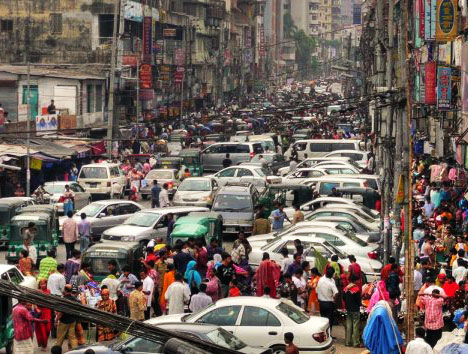
Photo: Flickr , CC Serious Environmental Issues Foreseen

View post:
China to Have 200+ Million Cars by 2020!

BP Helped Write CA’s Public School Environmental Curriculum

Image via Washington Times In the post- Deepwater Horizon explosion rush to expose every devious, idiotic, two-faced, greedy, and hypocritical move BP has every made, the media has brought us a veritable treasure trove of anecdotes and revelations: BP saved millions by cutting corners on the destroyed rig. BP had shady connections to the Lockerbie bomber. BP licensed

More:
BP Helped Write CA’s Public School Environmental Curriculum

School Named After Al Gore and Rachel ‘DDT’ Carson Built on Toxic Soil

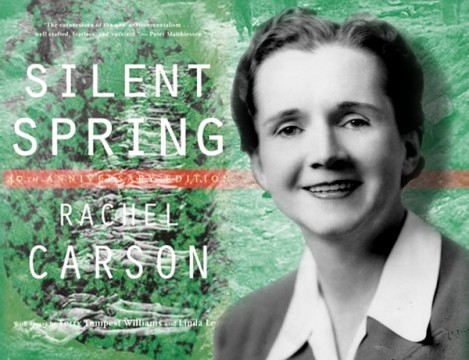
A new school will be opening in Los Angeles next Monday that is named after Nobel Laureate Al Gore and Rachel Carson, the woman almost single-handedly responsible for DDT being banned in the ’70s. Even more delicious than the names associated with the new $75.5-million Carson-Gore Academy of Environmental Sciences is that it was built on land thought to be highly-contaminated with various chemicals which could pose a threat to students. As the Los Angeles Times reported Sunday: Critics say the campus’ location poses a long-term health risk to students and staff. School district officials insist that the Arlington Heights property is clean and safe. And they’ve pledged to check vapor monitors and groundwater wells to make sure. “Renaming this terribly contaminated school after famous environmental advocates is an affront to the great work that these individuals have done to protect the public’s health from harm,” an environmental coalition wrote in a letter to the Los Angeles Unified School District. Making sure the school is safe “would be an even better way to honor their contribution to society.” Construction crews were working at the campus up to the Labor Day weekend, replacing toxic soil with clean fill. All told, workers removed dirt from two 3,800-square-foot plots to a depth of 45 feet, space enough to hold a four-story building. The soil had contained more than a dozen underground storage tanks serving light industrial businesses. Additional contamination may have come from the underground tanks of an adjacent gas station. A barrier will stretch 45 feet down from ground level to limit future possible fuel leakage. An oil well operates across the street, but officials said they’ve found no associated risks. Like many local campuses, this school also sits above an oil field, but no oil field-related methane has been detected. Groundwater about 45 feet below the surface remains contaminated but also poses no risk, officials said. You really can’t make this stuff up. Of course, readers shouldn’t miss the irony of Carson and Gore’s names being placed on a school that could end up being hazardous to the health of attendees. After all, Carson has the blood of millions nay billions of malaria deaths on her hands as a result of her paranoid book “Silent Spring” leading to the ban of DDT many years ago. As for Gore, if he ever gets his way, and nations around the world adopt cap-and-trade programs to limit carbon dioxide emissions, millions will likely die as a result of being kept from modern forms of energy creation. As such, it’s quite fitting a school be named after these two radical environmentalists that could end up harming the very students that attend it.  On the other hand, one could make the case that if the toxic fumes don’t hurt these poor, unsuspecting young souls, the environmental nonsense they’re being taught certainly will. It’s like rain on your wedding day.

More here:
School Named After Al Gore and Rachel ‘DDT’ Carson Built on Toxic Soil

Banksy Continues His Environmental Theme in Graffiti

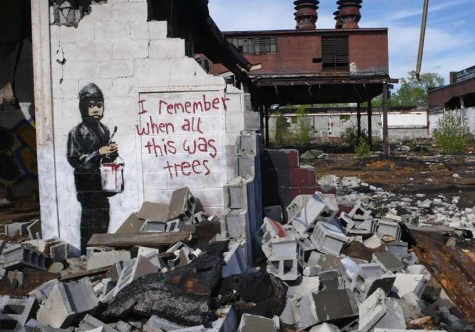
Images from artkrush Banksy, that super-productive and ubiquitous graffiti artist, is at it again. Last week his work was popping up as a children’s ride that was an anti-BP statement. He is back from his North American tour, where he visited Toronto , San Francisco, Chicago, Detroit, and Boston, promoting his film and creating havoc wher… Read the full story on TreeHugger

View post:
Banksy Continues His Environmental Theme in Graffiti

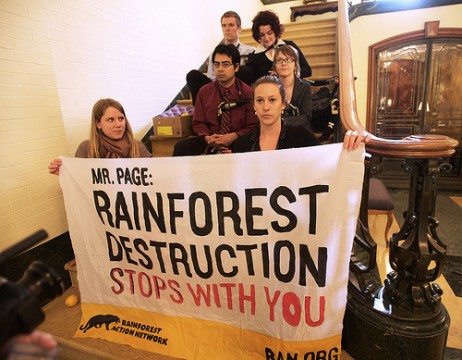
Interview: Rainforest Action Network Executive Director Rebecca Tarbotton

photo via RAN Rainforest Action Network’s new Executive Director, Rebecca Tarbotton, has big plans for the Bay Area-based advocacy group. RAN , which was founded in 1985, takes on big banks that are funding the coal industry, like JP Morgan and Chase, and it has worked to protect the world’s most threatened rainforests, like those in Indonesia that are home to endangered orangutans and tigers. Tarbotton has a lot to say about RAN’s future and where the environmental movement is going…. Read the full story on TreeHugger

Go here to read the rest:
Interview: Rainforest Action Network Executive Director Rebecca Tarbotton

Today on Planet 100: Golf Course is an Environmental Hole in One (Video)

See the article here:
Today on Planet 100: Golf Course is an Environmental Hole in One (Video)