Tag Archives: film

REVIEW: Pay No Attention To That Prequel Behind The Curtain! ‘Oz’ Is Neither Great Nor Powerful

Consciously evoking the structure and iconography of MGM’s classic The Wizard of Oz   without attempting to rival its impact, Disney’s Oz the Great and Powerful can be enjoyed, up to a point, on its own colorful, diverting but finally rather futile terms. Offering an eye-tickling but gaudily depersonalized Land of Oz populated by younger, sexier versions of well-known characters (most incongruously the Wicked Witch of the West), this elaborate exercise in visual Baum-bast nonetheless gets some mileage out of its game performances, luscious production design and the unfettered enthusiasm director Sam Raimi brings to a thin, simplistic origin story. The smash success of Wicked , the stage tuner adapted from Gregory Maguire’s much more intricate and morally complicated Oz  prequel, showed that L. Frank Baum’s richly imagined universe still holds significant interest for audiences worldwide. With its culturally resonant imagery, state-of-the-art technology and strong family appeal, Disney’s first excursion into this realm since Walter Murch’s Return to Oz  nearly 30 years ago should enjoy a hefty yellow-brick load in theatrical release that will only be amplified by 3D ticket premiums and bountiful ancillary opportunities. Abundant indicators of commercial success and faultless production values aside, there’s a persistent sense of artifice here, something admittedly not lost on a story that’s very much about the power of technology and the magic inherent in a skillfully executed illusion. Yet it still rings hollow in a way that prevents full surrender, leaving the viewer with an immediate desire to revisit the still-wondrous 1939 film and, to a lesser extent, the original Baum novels credited as the inspiration for Mitchell Kapner and David Lindsay-Abaire’s screenplay. (The filmmakers had to navigate a veritable poppy field of legal issues to steer clear of copyrighted and trademarked elements from the MGM film, now owned by Warner Bros.) Although Dorothy is nowhere in sight, attentive listeners will catch a fleeting reference to her origins in the film’s exquisite prologue, which, a la The Wizard of Oz , unfolds on a windy strip of Kansas prairie. Rendered in black-and-white and framed in Academy ratio, the sequence works as a luminous standalone tribute to the wonders of old-fashioned trickery and showmanship as practiced by traveling circus magician Oscar Diggs ( James Franco ), whose vaudeville-style act is a marvel of wires, trapdoors, faux hypnosis and do-it-yourself sound effects. Oscar is a handsome rogue, a sly con artist, and an expert levitator and seducer of women, qualities that will prove at once crucial and dangerous when a twister blows his hot-air balloon off course and deposits him in the vibrant-colored Land of Oz, where no fewer than three beautiful and powerful witches wind up vying for his attention. These include the naive, emotionally susceptible Theodora (Mila Kunis); her older, colder sister, Evanora (Rachel Weisz); and their sworn nemesis, Glinda (Michelle Williams), a beauteous blonde whose motives are initially shrouded in secrecy. Crucial to these women’s competing agendas is the question of whether Oscar is the all-powerful wizard who, as prophesied, will ascend to the throne of the Emerald City and deliver Oz from evil. Disney’s marketing campaign has worked to generate some suspense over the question of who will eventually become the Wicked Witch of the West, although even modestly Oz-savvy viewers will have no trouble guessing which witch is which before the truth is revealed halfway through. Suffice it to say that the transformation is poorly motivated at best, and the unlucky girl in question, sporting not only the requisite green skin but also an eyeful of cleavage, seems a better candidate for top honors at a West Hollywood Halloween bash than for the mantle of Margaret Hamilton. Such comparisons to The Wizard of Oz  are not only unavoidable but actively invited by Raimi’s film, which, within its legal restrictions, carefully mimics its 1939 forebear — from the early monochrome-to-color shift signaling that we’re not in Kansas anymore to the device of having key supporting characters pop up on both sides of the proverbial rainbow. To their credit, scribes Kapner and Lindsay-Abaire have taken pains to incorporate previously unfilmed elements from Baum’s original work. Pointedly in this version, Glinda hails from the South, not the North; the (racially diversified) Munchkins are joined by the similarly friendly but lesser-known Quadlings; and a key role is played by the fragile, all-porcelain China Girl (Joey King), who joins Oscar and his benign winged-monkey companion, Finley (voiced by Zach Braff), on their journey. Quite apart from the question of whether the picture lives up to its various inspirations, however, Oz the Great and Powerful  finally falls short by dint of a too-timid imagination. In straining for an all-ages simplicity, the script comes off as merely banal, full of flat, repetitive dialogue about who’s good, who’s wicked and, most incessantly, whether Oscar is a real wizard, an opportunistic scoundrel or perhaps both. Not until the third act does the film start to jell, with a couple of arresting setpieces that neatly demonstrate how pluck, resourcefulness and an endless supply of tricks can equal, and even overcome, real magic. Raimi’s genre credentials made him as ideal a match for this production as any, and he attacks the material with palpable vigor, countering the thinness of the story with visuals that can feel by turns excessive and transporting. Gary Jones and Michael Kutsche’s lovingly detailed costumes and Robert Stromberg’s multihued sets take on an almost radioactive glow in Peter Deming’s widescreen cinematography, and the use of tracking and crane shots is inspired, the camera pulling back on occasion to observe the action at a painterly remove. This marks the first time Raimi has worked with the stereoscopic format, and he’s applied it with abundant care and precision. Bob Murawski’s editing meshes seamlessly with the 3D-lensed imagery to produce a fluid, genuinely multidimensional experience whose eye-popping effects — a swirl of fog rolling out of the frame; blossoms that turn out to be butterflies — are executed with an enchanting dexterity and playfulness. In a real sense, Oz the Great and Powerful  has a certain kinship with George Lucas’ Star Wars  prequels, in the way it presents a beautiful but borderline-sterile digital update of a world that was richer, purer and a lot more fun in lower-tech form. Here, too, the actors often look artificially superimposed against their CG backdrops, though the intensity of the fakery generates its own visual fascination. The indie experiments with which Franco has been recently preoccupied lend an interesting subtext to his casting as a genial humbug, and the actor fills the Wizard’s shoes, vest and top hat with slippery, ingratiating charm. Among the three witches, Kunis’ Theodora is a bit lacking in dramatic stature; Weisz’s Evanora strikes the right notes of icy ambition; and Williams, who has rarely looked more radiant onscreen, is a bewitching presence indeed, making Glinda more than just another bubblehead.

Here is the original post:
REVIEW: Pay No Attention To That Prequel Behind The Curtain! ‘Oz’ Is Neither Great Nor Powerful

EXCLUSIVE: New Master Of Suspense Park Chan-Wook Talks ‘Stoker’ In Video And Q&A

Park Chan-wook’s  reverence for Alfred Hitchcock  and David Lynch  shines through in his English-language debut, Stoker . It’s a tightly wound thriller with psychosexual undertones and shocking — yet artful — violence in which, it seems, no detail is accidental and the details, both visual and auditory, add up to a lavish cinematic experience. Stoker  chronicles the macabre coming of age of 18-year-old India ( Mia Wasikowska ) when her father is killed on her 18th birthday and her handsome but creepy Uncle Charlie ( Matthew Goode )  comes to stay with her and her emotionally remote mother Evie ( Nicole Kidman ). On the eve of the film ‘ s March 1 U.S. opening, I spoke to Park about his vision for the film, the alterations he made to Wentworth Miller’s white-knuckle script and the film’s connection to his 2009 vampire movie Thirst,  even though, despite its title, Stoker has nothing to do with the undead or the supernatural. The soft-spoken filmmaker also told me why he doesn’t want to see Spike Lee’s take on Oldboy until it’s released weighed in on the movie violence debate that erupted in the wake of the Newtown shootings. But wait, that’s not all! Preceding the interview is an exclusive featurette, courtesy of Fox Searchlight, in which Park and his cast discuss the movie. Enjoy. Click here to view the embedded video. Movieline: This is your first English-language film, and it’s set in America. I’d love to know if you wanted make any kind of a statement about American culture in Stoker . Park: Although Wentworth was obviously influenced by Shadow of a Doubt , the first American film that Hitchcock made, it’s not a commentary on American society at all.  What attracted me to the script was that the story deals with the very universal idea of this family relationship. It doesn’t matter what country you’re from, you’ll be able to relate to and enjoy this film. You have said that Hitchcock — and David Lynch as well — influenced you, but the character of India’s mother, Evelyn, would be at home in a Tennessee Williams play. Was that intentional? Actually, the intention was to not evoke Tennessee Williams because the script ran the risk of being so under that influence. Of course, I am a fan of Tennessee Williams, but it’s not where I wanted to go, though I don’t want to blame Wentworth for everything.  [Smiles] Lady Vengeance and, to a degree, Sympathy for Mr. Vengeance had to do with family and revenge. I feel like these themes connect your earlier work to Stoker . Would you agree? It would depend on who’s doing the interpreting. Take the vengeance theme, for example. Some people might say that this film has nothing to do with the idea of vengeance. But if you want to interpret it as a story about vengeance, you can. It lends itself to that interpretation just as well as any other. Well, without spoiling the movie, there is at least one of act of vengeance committed — more, depending on your interpretation. It’s certainly not the only theme, but it’s definitely there. You’re absolutely right. It is an entirely possible interpretation.  And there you have the link to the Vengeance trilogy.  But I would say that Stoker lends itself just as well to vampiric aspects and is more closely linked to Thirst . But I also wanted to focus on the coming-of-age story of a young girl, and in that sense, it’s closer to I’m A Cyborg But That’s OK. Evie’s coldness and cruelty toward India is quite memorable. Is that straight from Miller’s script or did you expand upon that in the storytelling? I actually weakened it. Take the example of Evie’s big monologue.  She’s cursing her daughter — it’s a very, very cruel thing. But in the original script, the monologue ended with Evie telling India: “I can’t wait to see life tear you apart.”  I wanted to add a deeper layer to Evie’s character. I wanted her to be surprised at herself for having said such a cruel thing to her own daughter. So, I worked with Nicole to add more action and dialogue. The result is that after Evie realizes the harshness of what she has just said, she tells India: “Who are you? Aren’t you supposed to love me?”  And this is where we see that, underneath all of the vitriol, she’s a mother yearning for her own daughter to love her.  And in that we find a very relatable and ordinary maternal figure. Have you gotten a chance to see any of Spike Lee’s remake of Oldboy ? I haven’t. I don’t have any detailed information about it, and I don’t want to find out any more than I already know. When the film comes out, I want to be surprised and stunned by the great filmmaker that Spike Lee is. The violence in your film is shocking, but it’s also integral to the story. I’d love to know your opinion of the debate here over cinema violence and whether it influences actual violence.  I cannot believe that violence depicted onscreen actually causes people to act out violently. That’s oversimplifying the issue. If somebody commits a violent act after seeing violence in a movie, I think the question that needs to be asked is: would that person still have committed the act if he had not see a violent film? Follow Frank DiGiacomo on  Twitter . Follow Movieline on  Twitter .

Original post:
EXCLUSIVE: New Master Of Suspense Park Chan-Wook Talks ‘Stoker’ In Video And Q&A

EXCLUSIVE: ‘War Witch’ Star Rachel Mwanza Sees Dead People In This Harrowing Trailer

I was disappointed to learn that War Witch ‘s remarkable star, first-time actress  Rachel Mwanza didn’t get to meet her idol Beyoncé    when she traveled to Los Angeles to attend the Academy Awards on Sunday. I hope that the film’s producers and Sasha Fierce’s handlers figure out a way to make it happen.  Just think how good it would be for Beyoncé’s brand. One of those handlers should get the pop star and her husband Jay-Z to watch Kim Nguyen’s quietly powerful film about Africa’s orphan soldiers of war. It’s currently available via VOD and will open theatrically on Friday, March 1. Here’s a trailer to encourage the First Couple of Hip Hop.  In this scene, Mwanza’s character Komona earns her War Witch title after the rebel army that has just dragooned her into its ranks sends her onto the front lines to scout out the enemy’s position. There, she encounters the ghosts of her dead parents who alert her to the enemy’s presence. RELATED:  Beasts Of The African Wild: ‘War Witch’ Star Rachel Mwanza Should Be As Famous As Quvenzhané Wallis Follow Frank DiGiacomo on  Twitter . Follow Movieline on  Twitter .

Visit link:
EXCLUSIVE: ‘War Witch’ Star Rachel Mwanza Sees Dead People In This Harrowing Trailer

Light of Day: ‘The Canyons’ Could Save Lindsay Lohan’s Career

I come to praise Lindsay Lohan , not to bury her.  Yes, you read that right. Just a few months ago, I had declared the 26-year-old actress a lost cause who had swapped a promising career for a rap sheet. And then  Paul Schrader let me see The Canyons .  ‘The Canyons’: A Porn Star & A Miniscule Budget Before I focus on Lohan, let me say this about the film: Despite the drawbacks of working with a miniscule, crowd-sourced $250,000 budget, and a cast that included porn star,  James Deen , as its leading man, Schrader has made a taut, visually gripping movie that says some really smart things about the movie business and the Los Angelenos in their 20s who populate it today. It’s an unsentimental West-Coast Girls , done as tragedy instead of comedy. Lindsay Lohan In ‘The Canyons’: A Career-Saving Role? Anchoring the movie is a performance by Lohan that should mark the beginning of  the 26-year-old actress’s path to professional redemption. Lohan plays Tara, a former struggling model/actress who’s made a Faustian bargain for a more comfortable life, and under Schrader’s shrewd direction, she gives an acrid, wounded performance that is going to change the minds of quite a few people who have written her off. “A lot of people are going to be asking, ‘What happened to the girl from Parent Trap ‘?” Schrader told me. “It’s really tough with young performers. By the time they’re 16 or 17, they have been taught that they are perfect and that everything in the world belongs to them. And then about three years later, somebody comes to them and says, ‘Okay, you have to start over again. And nothing you earned before is going to help you.’” Lohan has endured a lot of misery — much of it self-inflicted — since the giddy heights of her  America’s Sweetheart days in Freaky Friday and Mean Girls,  and, like Tara, she’s made some regrettable compromises, too, but her performance in The Canyons shows that she is really good at using the drama from her life to inform the character she’s playing onscreen.  Her performance in The Canyons is more than a reminder that she’s got real talent: it’s an announcement that she’s ready to play complicated women instead of older ingénues. Paul Schrader Compares Lohan To Ann-Margret “This is her Ann-Margret Moment,” Schrader told me, referring to the 1960s bombshell who graduated from fizzy romantic comedies and musicals by portraying a woman in an abusive relationship in Carnal Knowledge  (and earned an Oscar nomination in the process.) “When we were working, I kept noticing that Lindz was this blowsy, tough girl who, at times looked like Gena Rowlands, who, at times, looked like Ann-Margret and at times looked like Angie Dickinson.” That’s quite a compliment from the writer of Taxi Driver , The Last Temptation of Christ  and the director of Auto Focus and Affliction (which he also adapted from Russell Banks’ novel) — especially since Schrader was reluctant to cast Lohan in the first place and then, as a lengthy piece in The New York Times Sunday Magazine r eported, the actress behaved like a diva on the set. But Schrader’s praise is leavened with some tough love: After noting that Lohan has got the the chops and a “mesmerizing” quality that can’t be taught in acting school, he adds: “Unfortunately, you also have to have self-discipline. And so, if she can organize her life better, I don’t see why she can’t have a career. A lot of people want to hire her. It’s just that she’s not helping them do that.” Is A Career Comeback Out Of The Question For Lindsay? In other words, it doesn’t matter who’s rooting for Lohan to make a comeback. It ain’t happening unless she gets her act together. And her track record is not exactly encouraging. As Schrader knows too well, there’s also a very loud and distracting contingent of blogosphere voices that envision only failure for Lohan. Their caustic response to Times story, which was snarkily titled Here Is What Happens When You Cast Lindsay Lohan In Your Movie ,  almost dashed his attempts to secure a distributor for the picture. Schrader says the cruelty of the comments leveled at Lohan and his movie surprised him.  “I think that largely because of the Internet, it is now possible to publicly say things that used to be said in bars and locker rooms. We’re seeing a manifestation of vindictiveness and a viciousnessa cruelty — that’s also become evident in our political rhetoric, by the way — that was not acceptable at an earlier time.” The filmmaker says he feels “vindicated and legal” now that IFC Films has acquired rights to the picture and will release it theatrically and via VOD in the summer. Lohan could end up feeling vindicated, too. Nothing speaks louder than asses in seats, and if The Canyons finds an audience — and Lohan’s new lawyer Mark Heller keeps Lohan from going back to jail — Schrader will have given the actress her last best hope of resuming an acting career worthy of her talents. The rest is up to Lohan. And I’d like to offer this quote from the America’s original Sweetheart, the late Mary Pickford, for inspiration:  “What we call failure is not the falling down but the staying down.” [ TMZ , The New York Times ] Follow Frank DiGiacomo on  Twitter . Follow Movieline on  Twitter . More On Lindsay Lohan & ‘The Canyons’: Lindsay Lohan In ‘The Canyons’ — The Preview Looks Pretty Terrible Lindsay Lohan: ‘The Canyons’ NY Times Piece On Making Of Paul Schrader’s Film Lindsay Lohan In ‘The Canyons’ Teaser Trailer — LiLo & James Dean Get Retro

Original post:
Light of Day: ‘The Canyons’ Could Save Lindsay Lohan’s Career

Oscar Index: Punditry Post-Mortem! Dancing With The Stars Of Academy Award Punditry

To quote Patton Oswalt from his great KFC Famous Bowls routine, “America has spoken,” and for Oscar pundits bemoaning Lincoln ’s loss to Argo , this Oscars truly was a “failure pile in a sadness bowl”: A reported 40.3 million people tuned in to the Oscars telecast, making it the most-watched entertainment show in three years, Entertainment Weekly reports. (Suck it, Golden Globes .) Host Seth McFarlane achieved what Anne Hathaway and James Franco could not: He helped put young adult asses in the seats. Ratings for the key 18-49 demographic were up a reported 11 percent. It does help that most of the movies nominated for Best Picture were those that the general public went to see, but McFarlane was undoubtedly a draw. So, kudos. But more tradition-bound Oscar aficionados may wonder if we perhaps lost something along the way: Bob Hope: “Welcome to the Oscars, or as we call it at my house, Passover” Johnny Carson: “I see a lot of new faces here, especially on the old faces.” Seth McFarlane: “We saw your boobs” (which, by the way, could be the new official theme song for the website, Mr. Skin). Monday morning quarterbacking the Oscar telecast is a tradition in itself. If the producers couldn’t wrangle all the men who would be Bond onstage, why not gather the Bond women? A 17-minute opening? That’s like 119 in TV minutes, especially when you’re making jokes about The Flying Nun . At the Oscars. But this is not about Seth McFarlane (try telling him that). This is about the Oscar pundits who have been on this long strange trip since the Telluride and Toronto Film Festivals. It has been their job to track the ebb and flow of the races (and ours to chart their ever-fluid forecasts). They’ve walked a fine line between journalistic objectivity to impassioned advocacy. We reached out to Entertainment Weekly ’s Anthony Breznican before the Oscar nominations were announced to ask about what he conceived to be the role of the Oscar pundit: “It would be arrogant to think that one reporter could dramatically change what the Academy thinks or to make a recommendation that everyone follows. I think the job really is in two parts: You have to reflect the mindset of the people who are casting the ballots because readers want to know what’s likely to get an Oscar nomination. You have to do your diligence and try to talk to as many voters as possible. How much of this is the job is the question. You can spend too much time in that echo chamber. There were a lot of worthy performances and so while you’re out there trying to reflect the feelings of the Hollywood voters, I think it’s important to occasionally [put out there], ‘Everyone’s talking about these films, but here’s one they’re not talking about that I feel is worthwhile.’ If all you do is reflect, you’re not really performing your duty, which is to highlight good work.” Oscar-race forecasting, impacted by forces objective (precursor awards) and subjective ( Emmanuelle Riva is 85 years-old!) can be a mercurial process, stymieing even Nate Silver , the graph-happy breakout prognosticator from the last presidential election, who got Best Director and Best Supporting Actor wrong (he went with Steven Spielberg and Tommy Lee Jones). The pundits’ respective acumens were put to the supreme test in a year.in which Academy members marked their ballots before the PGA, DGA and WGA nominations were announced. So how did they do? Slate.com has compiled an extensive (but not exhaustive)   “Oscar Predictions Dartboard” that ranks the pundits, according to the accuracy of their picks.  According to that site, the king of the prognosticators is Gold Derby’s Tom O’Neil with a 91 percent success rate. His pick of Wreck-It Ralph for Best Animated Feature was the only choice that tripped him up in the categories that were analyzed. On the other hand, he correctly called the evening’s biggest surprise, Christoph Waltz’s Best Supporting Actor win over Tommy Lee Jones and Robert De Niro . His fellow Derby pundit Paul Sheehan also picked Waltz, which helped him rack up an 82 percent success rate and finish second, in a seven-way tie with EW ‘s Breznican, Huffington Post’s Michael Hogan and Indiewire’s Anne Thompson, all of whom did not pick the Django Unchained star. The pundits at In Contention, Gurus o’ Gold and Gold Derby, near unanimously charted Lincoln’s , slow, inexorable fade from frontrunner to also-ran behind Argo . Some, most notably Awards Daily’s Sasha Stone, were not happy about that, but they duly noted the sea change. Some races were fait acompli . “Anne Hathaway: Start writing your acceptance speech,” Yahoo!’s Thelma Adams wrote in November following the film’s world premiere in November. Best Actress, Best Supporting Actor, and Best Director presented more of a challenge, as the pundits tried to make sense and sensibility of the zero-hour groundswells for Riva, De Niro and eventual Oscar-winner Ang Lee . And now, it’s over. Ten more months until next year’s Oscar race begins in earnest. December 20. Mark your calendars. That’s the release date for Anchorman 2 . [ Slate ] Follow Movieline on Twitter . 

Follow this link:
Oscar Index: Punditry Post-Mortem! Dancing With The Stars Of Academy Award Punditry

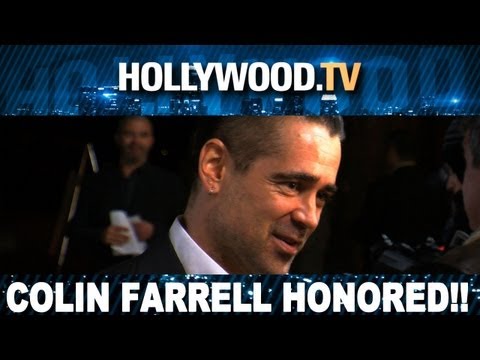
Colin Farrell honored for his contributions to the film industry – Hollywood.TV

http://www.youtube.com/v/qXPFHgwGO7U?version=3&f=user_uploads&app=youtube_gdata

Hollywood.TV is your source for all the latest celebrity news, gossip and videos of your favorite stars! bit.ly – Click to Subscribe! Facebook.com – Become a Fan! Twitter.com – Follow Us! Colin Farrell attended the Eighth Annual Irish-American Alliance “Oscar Wilde: Honouring the Irish in Film” party at JJ Abram’s Bad Robot Productions in Santa Monica last night. The Ireland native was honored for his contributions to the film industry and for helping to strengthen the Irish-American bond. On the green carpet, Colin talked about what receiving the honor meant to him, discussed who he wants to see win at Sunday’s Academy Awards and joked about plunging into New York’s icy-cold East River for a scene in his upcoming film “A Winter’s Tale.”

See the article here:

Colin Farrell honored for his contributions to the film industry – Hollywood.TV

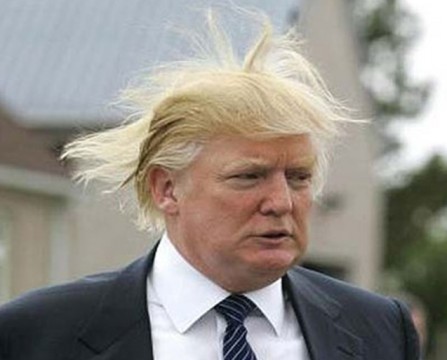
Ho Sit Down: Donald Trump Says Django Unchained Is The Most “Racist” Movie He’s Ever Seen – “It Sucked!”

Donald Trump Says Django Unchained Was A Racist Movie Motor-mouth meat head Donald Trump is back talking isht, but this time he surprised a few folks when he voiced his opinion on the controversial award-winning Tarantino film “Django Unchained.” via The Grio Believe it or not, director Spike Lee and conservative business mogul Donald Trump have something in common: They both hate Quentin Tarantino’s Django Unchained. During a series of tweets he unleashed during last night’s Academy Awards, the polarizing reality TV star saved some of his most vicious words for the hit slavery-themed Oscar winner. “Django Unchained is the most racist movie I have ever seen, it sucked!” he tweeted. Trump further explained his objections to the film during an appearance on Fox & Friends. “I thought it was terrible and a disgrace,” Trump said, adding that when people “talk about guns and gun control, that movie — people should watch that.” Sounds like the Donald is salty that Django Unchained racked up so many awards at the Oscars last night. Or he could just be mad that he took a picture with his hair looking like that. Who knows.

View post:
Ho Sit Down: Donald Trump Says Django Unchained Is The Most “Racist” Movie He’s Ever Seen – “It Sucked!”

Oscars On Ablixa: Five Observations About Last Night’s Excitement-Challenged Academy Awards Telecast

The early ratings for last night’s Oscars indicate that the telecast may have racked up its best numbers since 2007, according to Deadline . Which is good news for Seth MacFarlane , especially if you ignore that the biggest viewership increase came after The Walking Dead  ended on AMC and that six of the nine Best Picture nominees had done more than $100 million at the box office.  Otherwise, what do you really remember  for last night’s telecast besides Jennifer Lawrence’s face plant, the Jaws play-off theme (which was funny exactly once)  and the steamed look on Ben Affleck’s mug when he came out on stage after MacFarlane’s Gigli remark? And that brings me to my first Oscars recap observation: 1. Was everybody in the Dolby Theater on Ablixa?   Beginning with the show’s weirdly cold opening, the telecast was devoid of the emotional highs and lows, pomp and circumstance that the Oscars used to have and haven’t had for a few years. During the Movieline liveblog, I wondered if Harvey Weinstein had gotten Trazodone added to the Academy Awards gift bag, but I now think the Side Effects antidepressant reference is more appropriate, which is exactly what the Oscars telecast was: exceedingly appropriate. Even MacFarlane’s most out-there insults seemed even-keeled. New York Magazine slammed MacFarlane for being sexist, but I thought his bigger sins were being mediocre and cold. It’s as if the digital revolution didn’t just rewrite the way the film industry makes and releases movies, it reduced the way Hollywood generates excitement into a kind of binary code.  Everything’s either a 1 or a 0. That’s  what last night felt like, and the only time I felt some of that old-timey Oscar excitement was when Affleck gave his speed-speech. The privilege of being able to make movies is obviously still exciting to Affleck and he’s good at spreading that excitement. 2. The Oscars should not aspire to be the Tonys.   So, I understand why there was a preponderance of musical numbers last night: MacFarlane is a show-tunes freak, Les Miserables , Hugh Jackman and Anne Hathaway  were all nominated, and Barbra Streisand was on board to perform a tribute to the late Marvin Hamlisch. But that doesn’t mean they were a good thing.  The show was listless to begin with, and  all those musical performances didn’t help. Plus, the  Chicago (2002) and DreamGirls   (2006) tributes left me wondering if I’d slipped and fallen into the Hot Tub Time Machine. I half-expected to see Jackman join MacFarlane for some sort of tribute to  The Music Man , which Family Guy has parodied more than once.  I’m reluctant to say this is part of a trend, by the way, but have you noticed that the same thing has been happening, in a more contemporary manner, with Saturday Night Live ?   The practice of having musical guests hosting and performing — as Justin Bieber just did — is not helping the show’s comedy cred, and, for a number of seasons now,  an unusual number of skits seem to be built around musical performances. (On a related subject, as a big Lonely Island fan, I have to note that the “YOLO” clip with Adam Levine and Kendrick Lamar was lame.) 3. The only real surprise of the night was Christoph Waltz’s win:   Coming as it did near the beginning of the telecast, Waltz’s Best Supporting Actor Oscar — which had been predicted in some quarters but mostly as a longshot — left the impression that a night of surprises was ahead. And then everything unfolded as predicted. If you followed all of the pre-season Oscar punditry, I bet you were bored. 4. Was Ben Affleck’s comment about not holding grudges directed, in part, at Seth MacFarlane?   One of the more interesting observations Affleck made during his Best Picture acceptance speech was, “You can’t hold grudges. It’s hard. But you can’t hold grudges.”  The Argo director could have been referring to the Academy’s decision to snub him for a Best Director Oscar, but just as well could have been referring to MacFarlane’s remark that he’d gone from “starring in Gigli to becoming of the most respected filmmakers of this generation.”  The line didn’t seem so sharp to me.  Gigli is an awful movie. But Deadline reported that Affleck was pissed off by the remark, and the filmmaker did launch a half-hearted jab at MacFarlane when he came out on stage shortly after the Oscars host uttered the punchline. (Affleck said something about it still being possible for MacFarlane to “turn the show around,” but wouldn’t it have been cool if he just said, ‘Argo, fuck yourself”?)  The grudges remark, which Affleck delivered during his Best Picture acceptance speech, was a nice zen-like catch-all that demonstrated that Big Ben wasn’t just an Oscar winner, he was an enlightened Oscar winner. 5. You know that the media is burning out on Oscar coverage when… Reporters are asking Jennifer Lawrence if she tripped on purpose . I’m surprised no one asked if Jessica Chastain was the culprit. [ Deadline ] Follow Frank DiGiacomo on  Twitter . Follow Movieline on  Twitter .

Read more here:
Oscars On Ablixa: Five Observations About Last Night’s Excitement-Challenged Academy Awards Telecast

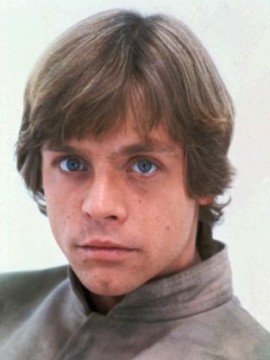
Mark Hamill: Returning For Star Wars: Episode VII?

For the latest movie news , turn to Mark Hamill himself apparently. The last Jedi standing recently opened up to ET about his possible return to Star Wars in Episode VII, and weighed in on many other topics regarding the film. Hamill says there aren’t any deals in place for himself, Carrie Fisher and Harrison Ford returning to Star Wars yet, but Lucasfilm is negotiating with them. “They’re talking to us,” Hamill said, and they have for some time. “George [Lucas] wanted to know whether we’d be interested. He did say that if we didn’t want to do it, they wouldn’t cast another actor in our parts.” “I can tell you right away that we haven’t signed any contracts. We’re in the stage where they want us to go in and meet with Michael Arndt, who is the writer.” “They want us to meet Kathleen Kennedy, who is going to run Lucasfilm. Both have had meetings that were postponed – on their end, not mine. They’re more busy than I am.” What does Hamill, now 61, think Star Wars: Episode VII holds for Luke Skywalker, the character he made iconic more than three decades ago? “I’m assuming, because I haven’t talked to the writers, that these movies would be about our offspring … like my character would be sort of in the Obi-Wan range.” “[Luke would be] an older, influential character.” “When I found out [while making the original trilogy] the ultimate good news/bad news joke – the good news is there’s a real attractive, hot girl in the universe. The bad news is she’s your sister – I thought, ‘Well, I’m going to wind up like Sir Alec [Guinness]. I’m going to be a lonely old hermit living out in some kind of desert igloo with a couple of robots.'” He also has some reservations about returning without his costars, and about the new trilogy and any Star Wars spinoffs being too reliant on CGI. “Another thing I’d want to make sure of is are we going to have the whole gang back? Is Carrie and Harrison and Billy Dee and Tony Daniels, everybody that’s around?” “I want to make sure everybody’s on board here, rather than just one.” “I also said to George that I wanted to go back to the way it was, in the sense that ours was much more carefree and lighthearted and humorous.” “In my opinion, anyway… I hope they find the right balance of CGI with practical effects. I love props, I love models, miniatures, matte paintings ̬ I’m sort of old school.” “I think if you go too far it winds up looking like just a giant a video game, and that’s unfortunate…. If they listen to me, I’d say, ‘Lighten up and go retro with the way it looks.'”

The rest is here:
Mark Hamill: Returning For Star Wars: Episode VII?

Beasts Of The African Wild: ‘War Witch’ Star Rachel Mwanza Should Be As Famous As Quvenzhané Wallis

War Witch   star  Rachel Mwanza  is headed to Hollywood, and she’s earned her close-up.  On Wednesday, Tribeca Film  announced that 16-year-old Mwanza has been granted a visa to travel to the United States to attend the Oscars and the Independent Spirit Awards  this weekend, where War Witch is nominated, respectively,  in the Best Foreign Language Film and Best International Film categories. And it’s time for the American media pays as much attention to her as it did to  Quvenzhané Wallis . If you didn’t hit the film-festival circuit last year, where War Witch  turned heads and won awards, then you might not be familiar with Canadian director Kim Nguyen’   powerful movie about Africa’s children of war.  But I hope that’s about to change now that Tribeca Film is about to make War Witch available to American audiences starting Feb. 26 on various VOD platforms and, theatrically, beginning March 1 in New York City. War Witch is the anti- Beasts of the Southern Wild , and I’m not knocking the Benh Zeitlin’s e xcellent film when I write that. Both movies show us dangerous, chaotic worlds from the perspective of a wise and courageous girl who is forced to grow up fast. Both films hinge on the mortality of parents and use mystical components to tell their stories,  and both films convey the message that hope and love can be found among the ruins. But  War Witch ultimately proves to be the more powerful film because it is reserved and unsentimental where Beasts of the Southern Wild is effusive and romantic. Mwanza, who had been abandoned by her family and was living on the streets of Kinshasha when Nguyen cast her,  plays Komona, the heroine of War Witch and the movie’s narrator. Within the first scenes of the movie, her parents are killed in horrifying fashion — suffice it to say she is present — when African rebels lay waste to Komona’s village and enslave her and the other child residents as soldiers to fight against government forces. “Respect your guns. They are your new mother and father,” the children are told as they embark on squalid lives of killing and dying. Komona is designated a “war witch” by the guerrilla leader after she is fed “magic milk,” a white tree sap with hallucinogenic properties that enables her to see the ghosts of the dead, including her parents, who warn her of impending attacks. Nguyen’s film is remarkably free of artifice and politics, and Mwanza’s stoic performance is its cornerstone.  And if I can be sentimental for a moment, her performance has changed her life.  The makers of War Witch have provided her with a caretaker and are now overseeing her education. For more on the movie, check out this extended featurette and here’s hoping some enterprising publicist engineers a photo op with both Wallis and Mwanza. Follow Frank DiGiacomo on Twitte r. Follow Movieline on Twitter . 

Read more from the original source:
Beasts Of The African Wild: ‘War Witch’ Star Rachel Mwanza Should Be As Famous As Quvenzhané Wallis