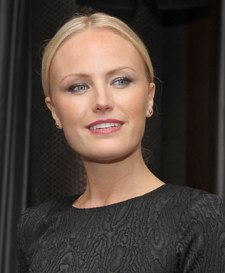
Casting news continues to trickle out for the film based on the wild life and times of CBGB, none of which is quite as eye-opening as word that the story of one of New York City’s most legendary, lamented live-music venues will be filmed largely in… Savannah, Georgia. So it goes! We get some stuntbozo driving a sportscar into a Sbarro for Jerry Bruckheimer, and Savannah gets Malin Åkerman as Debbie Harry , Rupert Grint as Cheetah Chrome, Joel David Moore as Joey Ramone, and Alan Rickman in the aforementioned role of club proprietor Hilly Kristal, all reviving the dawn of punk and new wave in the edgy metropolis where the Girl Scouts were founded Hollywood honchos go to self-immolate . Rock on, bitches : All of the movie’s interior shots will be done at Meddin Studios, which will be transformed to look like the iconic New York club, said director Randall Miller. “We’re going to build the interior of the club on the stages here,” Miller said. “Then the plan is we’ll do some shooting on the streets of downtown Savannah — and finally a few days in New York. “We’re using both Georgia and New York for New York,” he joked. “Savannah has a kind of downtown area that could really work for so many cities,” Miller said. “That translates pretty well in what we’re doing.” Fine, do what you’ve gotta do. By which I mean cast James Franco as Richard Hell already . [ The Strut , Savannah Morning News via EV Grieve ]
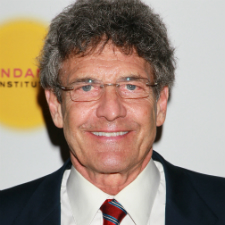
In the wake of Rich Ross’s departure from Disney , former Warner Bros. chairman Alan Horn has landed the job of replacing him — and turning the studio around from its John Carter epic fail. Horn, who guided WB to hit franchises like Harry Potter and The Dark Knight (and, fun fact, was also in the Air Force!), will now head all of Disney, Pixar, and Marvel Studios films, along with Touchstone-distributed DreamWorks titles. So, best of luck. No pressure or anything! Full press release: BURBANK, Calif. – May 31, 2012 – Bob Iger, Chairman and CEO of The Walt Disney Company, announced today that Alan Horn has been named Chairman of The Walt Disney Studios effective June 11. Horn will oversee worldwide operations for The Walt Disney Studios including production, distribution and marketing for live-action and animated films from Disney, Pixar and Marvel, as well as marketing and distribution for DreamWorks Studios films released under the Touchstone Pictures banner. Disney’s music and theatrical divisions will also report to Horn. Horn has been a prominent figure in the film and television industry overseeing creative executive teams responsible for some of the world’s most successful entertainment properties including the Harry Potter film franchise and the hit television series Seinfeld among others. “Alan not only has an incredible wealth of knowledge and experience in the business, he has a true appreciation of movie making as both an art and a business,” said Iger. “He’s earned the respect of the industry for driving tremendous, sustained creative and financial success, and is also known and admired for his impeccable taste and integrity. He brings all of this to his new role leading our studio group, and I truly look forward to working with him.” “I’m incredibly excited about joining The Walt Disney Company, one of the most iconic and beloved entertainment companies in the world,” said Horn. “I love the motion picture business and look forward to making a contribution as part of Bob Iger’s team working closely with the dedicated and talented group at the studio.” Horn was most recently President and COO of Warner Bros. Entertainment where he had oversight of the Studios’ theatrical and home entertainment operations, including the Warner Bros. Pictures Group, Warner Premiere (direct-to-platform production), Warner Bros. Theatrical Ventures (live stage) and Warner Home Video. During his 12 year tenure, Warner Bros. Studios was the global box office leader seven times. Among the numerous critically acclaimed films and box office hits released during his tenure are all eight films in the Harry Potter series, The Dark Knight, Charlie and the Chocolate Factory, Happy Feet, Sherlock Holmes, The Departed, Batman Begins, Million Dollar Baby, the second and third Matrix films and the Ocean’s Eleven trilogy. Horn is also an executive producer of The Hobbit: An Unexpected Journey. Before joining Warner Bros., Horn co-founded Castle Rock Entertainment where he served as Chairman and Chief Executive Officer. He oversaw the creation of many critically acclaimed and beloved films including Best Picture Oscar nominees A Few Good Men, The Shawshank Redemption and The Green Mile as well as When Harry Met Sally, City Slickers, In the Line of Fire and the most successful show in television history, Seinfeld. Horn has also served as President and Chief Operating Officer of Twentieth Century Fox Film Corporation and was Chairman and CEO of Embassy Communications. He is a member of the Academy of Motion Picture Arts and Sciences, the Academy of Television Arts and Sciences, the American Film Institute and the Museum of Broadcasting. He serves on the Board of Directors of the American Film Institute; as a Vice Chairman of the Natural Resources Defense Council (NRDC); is a co-founder of the Environmental Media Association (EMA); on the Board of Trustees for the Autry National Center in Los Angeles; and on the board of Harvard-Westlake School. Horn received his MBA from Harvard Business School and served as a captain in the U.S. Air Force. [ Deadline ]
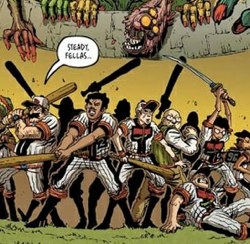
I mean, naturally : “Broken Road Production’s Todd Garner has teamed up with Adam Herz and Joshua Shader of Terra Firma Films to produce an adaptation of Sullivan’s Sluggers , a horror baseball graphic novel by Mark Andrew Smith and James Stokoe. Described by Smith as a ‘ Major League meets Zombieland and then some,’ Sluggers follows a has-been baseball manager Casey Sullivan and his dysfunctional minor league Sluggers who get an invitation to play a small venue game. Soon enough, they find themselves fighting for their lives against a town of shape-shifting monsters on a feeding frenzy and the has-beens and wannabes must use long-forgotten skills of teamwork to get out alive.” [ THR ]
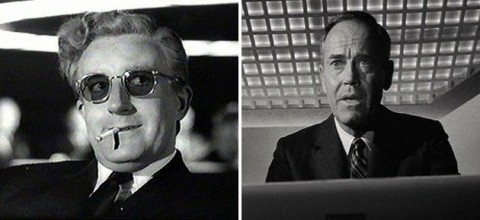
This weekend welcomes Snow White and the Huntsman to theaters, mere months after Relativity’s Mirror, Mirror preceded Universal’s Kristen Stewart film in the race to produce live-action versions of the fairy tale that Disney animators arguably perfected decades ago. And odd as it is to behold this practice of two serpents eating the other’s tail, stranger still is the thought of a studio executive ensconced in a corner office, slamming his fist down on the old-growth polished conference table, and bellowing to the suits, “Dammit! Where in the hell is OUR Snow White script!?!?!” Yet variations on this scenario are not so unique in Hollywood. Many of the actions surrounding these productions — wrestling over promotions, insistence of originality, chess games played with release dates — have played out for generations. Find below some of the more notable occasions when studio execs didn’t let redundancy stop them from flashing the green light: 1964 – The Cold Shoulder War: Dr. Strangelove (Jan.) / Fail-Safe (Sept.) With the Cold War at its peak, it came as little surprise that movies of the time might reflect the American public’s fear, dread and paranoia. But these competing efforts bore many similarities for such wide, ripe terrain: Each had a major young director at the helm, a cast choked with stars, and a storyline about a rogue mission that may spark a global conflict. Stanley Kubrick’s ambitious Strangelove , based on the book Red Alert , took shape as a satirical indictment of the geopolitical climate. Sidney Lumet’s Fail-Safe , meanwhile, sporting more of a spartan stage setting and relying on close-ups, hewed closer to the tense spirit of its own eponymous source novel. Many people found them more than similar — and for good reason. Result: While both are hailed as classics, Strangelove stole much of Fail-Safe ‘s thunder both culturally and financially — a predicament made all the more curious since Columbia released both films. (Kubrick reportedly lobbied the studio to release his movie first.) And despite Kubrick and co-writer Terry Southern’s comic vision of his novel, Red Alert author Peter George sued the studio over Fail-Safe , accusing it of plagiarism because of the similarities in the stories. 1989 – Paw Enforcement: K-9 (April) / Turner & Hooch (July) Studio experts must have test-marketed for — and found — results showing audiences salivating at the prospect of comedies with cops involuntarily partnered with a four-legged ride-along. How else to explain these mirrored attempts at mirth? The cops are given one-note characters (Jim Belushi is a loose-cannon loner, Tom Hanks a fastidious short-timer) simply to make the dog’s entrance more compelling; both films even have scenes of the hound destroying the interior of the beleaguered officer’s car. Result : Neither did blockbuster numbers, but considering the low-concept redundancy, returns of $43 million for K-9 and $71 million for Turner & Hooch are nothing to bark at. 1989 – Plunging Returns: Deepstar Six (Jan.) / Leviathan (Mar.) / The Abyss (Aug.) Was there something in the Hollywood water supply in 1989? Because executives sure had water on the brain that year, when audiences were actually given three identical deep-sea stories within an eight-month period. (To say nothing of straight-to-video efforts like The Rift and Endless Descent .) Incidentally, Deepstar was written by Lewis Abernathy, a pal of James Cameron’s who was later cast in Titanic as the wisecracking best friend of Bill Paxton’s character. In between their shared visions, MGM released its own deep-sea-alien hybrid film directed by George P. Cosmatos, ( Rambo, Cobra ), creating a viewing experience that almost produces the bends. Result : The Abyss earned a paltry (by Cameron standards, anyway) $54 million, but it holds up far better than its lower-budget counterparts ( Leviathan even dispensed with underwater photography; they shot in what is described as a “dry-wet” look), neither approached $10 million at the box office. Bonus points to Fox marketing for its poster touting The Abyss as “summer’s most original adventure.” 1992 – Non-Event on the Horizon: Christopher Columbus: The Discovery (Aug.) / 1492: Conquest of Paradise (Oct.) The 500th anniversary of Columbus finding America was deemed ripe for the plucking of historical events surrounding the explorer. Big names were used, sweeping epic visuals were displayed, and colons were inserted into the titles. Yet strangely, a subject that had long amounted to a cornerstone of many Americans’ primary education was passed over by audiences of all ages. Result : Both productions sported budgets well over $40 million both films drew the same paltry sum domestically, around $8 million. 1997 – Blowing Their Tops: Dante’s Peak (February) / Volcano (April) At one point in history, a tremor of excitement ran through Hollywood suggesting that volcanic eruptions would be next big thing. Universal gave us Dante’s Peak , a thriller with Pierce Brosnan and Linda Hamilton loosely based on the eruption of Mount St. Helens in 1980. Just a couple of months later came the 20th Century Fox version with Tommy Lee Jones and Anne Heche, a more traditional disaster film with large sets, a large cast and a large departure from reality as an eruption threatens Los Angeles. Given the lack of explosive imagery in Volcano audiences soon wondered why it had not been simply titled Lava instead. Result : Although, of the pair, only Volcano enjoyed a No. 1 opening at the domestic box office, Dante’s Peak far outgrossed the later effort with a global take of $178 million. 1998 – You Bet Your Asteroid: Deep Impact (May) / Armageddon (July) The prospect of our planet getting sucker-punched by a supernal rock form is the kind of disaster that carries the ultimate pathos: We are doomed, and there is nothing we can do about it. Unless you are Michael Bay, that is, because you’ll just send oil-rig roughnecks into space to blow up the flying rock. Or unless you’re Morgan Freeman, who, as the President in Deep Impact , collaborates with Russia to nuke the lethal comet. Crises averted? In one summer audiences were served up competing disaster films of similar size and scale, and who would have guessed there was an appetite for this sort of scientific chicanery? Result : Both movies were hits, combining for more than $900 million at the worldwide box office. 1998 – Colony Thinking: Antz (Oct.) / A Bug’s Life (Nov.) In the first real showdown between the established Pixar and the fledgling DreamWorks animation wing, ex-Disney boss Jeffrey Katzenberg claimed he was pitched the idea for Antz four years prior to his exit. Tension arrived when Pixar head John Lasseter said Katzenberg requested that Bug’s Life move its release date so as not to compete against DreamWorks’ animated title Prince of Egypt . When Lasseter declined, Antz had its release date changed from March ’99 to just over a month before Bug’s Life . Result : The bitterness did not hurt the box office: A Bug’s Life drew $363 million worldwide — more than twice Antz ‘s global take of $171 million, yet both still proving milestones for both studios the viability computer animation. 2000 – Fourth Rock from Profitability: Mission to Mars (Mar.) / Red Planet (Nov.) Talk about a studio not learning a lesson: While everyone is now familiar with the failure of John Carter , that release actually makes for the third time Disney has released a failed movie set on Mars – and all in the month of March (including Mars Needs Moms in March, 2011). Originally intended as a Gore Verbinski production, Mission to Mars wound up in the hands of Brian DePalma. Meanwhile, later in the year, Val Kilmer headed another mission to space — one said to be such a factual challenge to science that NASA backed away from assisting the production. Result : Both titles experienced critical and commercial difficulty, with Mission to Mars barely breaking even and Red Planet bombing spectacularly with a global total of just $33 million. 2006 – Sleight of Script: The Illusionist (Aug.) / The Prestige (Oct.) Odd to think that studios would gravitate towards similar stories centered upon turn of the century magicians. Odder still that both would be critically favored and find strong audience reception. Christopher Nolan and his brother Jonathan actually spent years adapting the screenplay of The Prestige from Christopher Priest’s novel of the same name, finally immersing himself in production for Warner Bros. following the success of his superhero reboot Batman Begins . Neil Burger’s The Illusionist , meanwhile, debuted at Sundance in 2006, trickling out ahead of The Prestige in limited release. Result : Both movies were warmly embraced critically and commercially and even nabbed nominations for their respective cinematographers Dick Pope and Wally Pfister. Neat trick, that. Brad Slager has written about movies and entertainment for Film Threat, Mediaite, and is a columnist at CHUD.com . His less insightful impressions on entertainment can be found on Twitter .
The premise of Chernobyl Diaries , in which a group of twentysomething tourists are menaced by malevolent beings while paying a visit to Pripyat, the abandoned Ukrainian town that used to house workers at the Chernobyl Nuclear Power Plant, has been described by some as uncomfortably exploitative of a real-life tragedy. But real-life tragedies bleed through into horror cinema all the time — the genre is frequently a reflection of subconscious dread and anxiety, from the nuclear detonation-born Godzilla menacing a Japan less than a decade after the bombings of Hiroshima and Nagasaki, to the monster that attacked New York in Cloverfield , 54 years later, in a wash of imagery reminiscent of 9/11. The problem with Chernobyl Diaries isn’t that it’s offensive, it’s that it’s dumb — a run-of-the-mill low-budget flick focused on killing off stupid, pretty young things slowly enough to fill out 90 minutes. Directed by Bradley Parker, who worked as a visual effects supervisor on Let Me In , Chernobyl Diaries is produced and based on a story by Oren Peli, the creator of the Paranormal Activity franchise and ABC series The River . With the exception of an intro and a clip found on a camera explaining what happened to two of the characters, it isn’t part of the found-footage subgenre Peli has made his own, though sometimes it could use the excuse — the film has loose, jerky camerawork that sometimes seems meant to evoke something shot by a panicky observer, though the effect is more likely a practical one meant to obscure the baddies from full view. The monsters are mutants twisted by radiation, as far as we’re told, and it’s for the better that we don’t ever get a good look at them. They lurk in the darkness, outlined in doorways and briefly illumined in flashlight beams, and they’re creepy enough to seem worthy of the film’s greatest effect, its setting. Composed of abandoned brutalist tower blocks and industrial areas, the film’s version of Pripyat (it wasn’t shot there, though you can indeed take a tour of the actual town these days) is ghostly, all remnants of abruptly abandoned lives and packs of wild dogs roaming the streets. “Nature has reclaimed its rightful home,” tour guide Uri (Dimitri Diatchenko) intones to his customers, but there’s no sense of renewal, only of a place burnt out and forever warped. Uri is the best of the batch of Pripyat wanderers, a solid former special forces soldier turned extreme-tourism business owner. Diatchenko conveys the reassuring professionalism needed to convince visitors of his trustworthiness while also making it clear that his gig is a little sketchy. But the tourists themselves are just awful mutant-fodder. There’s the primary four Americans, brothers Chris (Jesse McCartney) and Paul (Jonathan Sadowski) along with Natalie (Olivia Dudley) and Amanda (Devin Kelley), plus Australian backpacker Michael (Nathan Phillips) and his Scandinavian girlfriend Zoe (Ingrid Bolsø Berdal). They have their sibling and romantic tensions, which aren’t really worth describing — all you need to know is that these are the type of characters who always go into the darkest, scariest room because they need to see what’s there, who split up and who stop to bicker or indulge in a freak-out instead of running away as any sane person would. They are, in other words, the interchangeable, irrational characters who invariably populate horror movies, the kind so cleverly mocked in Cabin in the Woods , and despite the specificity of Chernobyl Diaries ‘ setting, it is really just another generic horror movie reliant on jump scares and ridiculous behavior to carry the action through to the end. The only noteworthy aspect of the film’s three travelers and one dedicated expat is that they aren’t especially ugly Americans. They’re entitled and rude at times, sure, but there’s not the sense of panicked paranoia that fed the likes of Hostel and Turistas , that feeling that everyone in the rest of the world secretly does want to kill us. In Chernobyl Diaries , the only sentiment that lingers is one of grinding practicality — that the film is set in Eastern Europe not because it has any larger point to make about the area or the tragedy it uses as a jumping-off point, but simply because it’s so affordable to shoot movies there. Follow Alison Willmore on Twitter . Follow Movieline on Twitter .
It would be very easy to show up here and report that Men in Black 3 has no reason to exist, that it’s just another threequel that didn’t have to be made. The truth is a little more complicated: Men in Black 3 — which was, like its two predecessors, directed by Barry Sonnenfeld — is neither as much fun as the first picture in the series nor as totally useless as the second. It has an actual story line, one that’s quite moving in places. And it features a bit of casting that’s pure genius. Men in Black 3 is almost good enough to make you care about its existence. And yet not quite. Will Smith and Tommy Lee Jones return as Agents J and K respectively, and their partnership is no more harmonious than it ever was: Agent J accuses K, quite justifiably, of barely being able to communicate on any human level. Agent K responds with yet more evasiveness: He’s a man of few words who appears to be carrying a great deal of baggage beneath his eyes alone. He has secrets, dammit, things that Agent J might be better off not knowing. Which makes Agent J that much more eager for some sort of connection with his partner-slash-father-figure. Meanwhile, Boris the Animal (Jemaine Clement, from Flight of the Conchords , doing his best Tim Curry imitation), a goggle-eyed alien villain whose dastardly plan was foiled years ago by Agent K — the episode also cost him an arm — escapes from prison with the goal of traveling back in time to kill Agent K before that arrest, and that arm-hacking, can happen. Simultaneously, Agent J wakes up in world where Agent K has been dead for years; he too travels back in time, to 1969, aiming to save the life of his taciturn hound dog of a partner, a guy who, as J aptly puts it, has “kind of a surly Elvis thing happening with him.” Outside of an early scene in which J and K show up at a Chinese restaurant to investigate a health-code violation that involves noodle dishes laced with alien eyeballs and such, Men in Black 3 is pretty low on the silly, clever creepie-crawlies that were the mainstay of the original. (The script is by Etan Cohen, based on the comic-book characters created by Lowell Cunningham.) And because this is a costly summer blockbuster, released in 3-D no less, its last third is cluttered with the usual manic action, which is undistinguished and unmemorable. But Men in Black 3 does have its charms, partly thanks to some first-rate second-banana players: The luminous Emma Thompson and the radiant Alice Eve play older and younger versions of the same character, and their presence helps tone down some of Will Smith’s unbearable “Love me!” rays. Jones is barely in the movie, but at least he makes an impact: It’s fascinating to look at his face, aging apace in the normal fashion — how has it gotten to the point that it’s such a wonderful thing to watch an actor grow into the face he was meant to have? But most wonderful of all is Josh Brolin as the young Agent K. It’s so easy to believe that Brolin could turn into Jones, given a couple of decades. Brolin mimics Jones’s phrasing perfectly, capturing the essence of his easy drawl, getting those Southern-fried pauses just right. His features even carry that half-worried, half-exasperated look that Jones’ Agent K has always worn so well. The plot of Men in Black 3, once you strip away the silly action and 3-D falderal, is relatively simple and straightforward, and even though, in essence, it’s not anything you haven’t seen before, it still manages to strike a semi-meaningful chord. Its effects, particularly a sequence that takes place near the very top of the Chrysler Building, atop one of those majestic art deco eagles, are reasonably impressive. But somehow, its actors end up mattering more. Is that a strength or a liability in a summer blockbuster? It ought to be the former, but these days, who can tell for sure? Follow Stephanie Zacharek on Twitter . Follow Movieline on Twitter .
Man, tip your cap to the marketing crew at 20th Century Fox, which redirected one of 2012’s most unfortunate current-events overlaps into a completely revised angle that it probably should have pursued in the first place. Behold: the new and improved teaser for The Watch , complete with introduction by star Vince Vaughn. The actor unveiled the package last night during a surprise drop-in on Conan , where the host’s mock protest against unannounced guest appearances gave way to exactly that — just the thing the retitled summer comedy (n
More than half a century has passed since Jack Kerouac’s On the Road was published and over 30 years since Francis Ford Coppola bought the rights to the book. Only today, in one of the Cannes Film Festival’s most anticipated events, has director Walter Salles’s adaptation finally screened for its first audience. Stars Kristen Stewart, Garrett Hedlund, Kirsten Dunst and Sam Riley (pictured above L-R) joined director Walter Salles and other On the Road principals to discuss the film at a press conference on Wednesday. Shot over 100,000 kilometers and with years of research heading into the project before shooting, the new film based on the Beat Generation bible finally made good on numerous failed adaptation attempts in the past. “My dad bought the rights in 1979 and aspired to make the movie with a handful of filmmakers through the years,” said Roman Coppola, a producer on the film, at the press conference. “Then Walter said he’d like to take it on, and he’s such a natural fit for this kind of material.” Salles has indeed put in his own time on the road — most notably in 2004 when he directed The Motorcycle Diaries , another overland film based on the famous travelogue by future Cuban revolutionary Ernesto “Che” Guevara. Salles spent five years retracing the route of On the Road before shooting. “What we’re portraying with this film has a correlation with The Motorcycle Diaries ,” Salles explained today. “It’s about the dawn of a new era and a journey from youth to the beginning of adulthood and [young people] trying to find the freedoms that were denied them. And by doing that, they also changed a culture in a country that was very, very conservative.” The film features Riley ( ControL ) as Sal, who falls under the spell of the intoxicatingly charming Dean Moriarty (Hedlund), who himself chases around America for freedom and an elusive “It.” Standing in as surrogates for Kerouac and Beat poet Neal Cassady, respectively, Sal and Dean travel around the country indulging in drink, drugs, sex, fast driving and the whims of youth hellbent on not conforming to post-WWII America. “I think this is a great time for this to come out now, because young people will discover this book and identify with it in a lot of ways,” said Viggo Mortensen, whose character Old Bull Lee was inspired by William S. Burroughs. Perhaps the darkest of the Beats, Lee tries to shed enlightenment on Sal and Dean as they pass through. Mortensen said he was drawn to Salles’s approach to the material, which has been viewed by some as difficult (at best) to adapt to the screen given its unconventional style. “You have to make these characters your own,” he said. “I asked, ‘How is this film going to be made?’ Is it just going to be a piece of Americana and in a box, or are we going to make these characters our own? Some could have made this beautifully photographed and that’s it. Or is it going to be beautifully photographed but also embrace the darker sides of the story. It is disturbing sometimes, this movie — drinking, drugs and the women who get left behind.” Among the women who get left behind we find Stewart, who co-stars as Dean’s ex-wife and longtime mistress (after their marriage) LuAnne. She travels with Dean and Sal through large swaths of America, sharing in their hedonism (and occasionally sharing them). Dunst, meanwhile, appears as the mother of Dean’s two children, whom he’d often leave behind as he traipsed across the country (and Mexico) with Sal, jumping into bed (or wherever) with one woman after the next. “I was 16 or 17 when I spoke to Walter for the first time [about this film],” Stewart told the press on Wednesday. “I was happy I could age a couple of years when I started this movie even though LuAnne was 16 when she started this journey but I was a younger 16,” said Stewart. When asked about the sex scenes and the nudity — and there is plenty of that across the board in On the Road — Stewart said she was ready to push the envelope after the more restrained sexuality of the Twilight series. “I like pushing and watching a genuine experience on screen,” she said. “The reason I wanted to do the job was to be provoked as much as possible and then to do it and take it further. We were just going forth, and as long as you’re being honest there’s nothing to be ashamed of.” “Those characters in the book had the courage to experience everything in the flesh,” said Salles, who added that he hopes the film will not only be a window into this particular group of people or a past generation, but also be a vehicle for young people now. “It may be very painful to see what happens to these men and women… [but] the most beautiful thing that could happen is that young viewers of this movie may read this book and have the same passion as we had when we were that age.” Read more of Movieline’s Cannes 2012 coverage here .
The Film : Putney Swope (1969), now available via The Criterion Collection’s Up All Night With Robert Downey Sr. box set Why It’s an Inessential Essential : Filmmaker Robert Downey Sr. is probably more famous for being the father of Iron Man ‘s megastar than he is for his scathing and surreal comedies. As part of the New York underground scene of avant garde filmmakers, Downey’s films, like the 1979 absurdist acid western Greaser’s Palace, are probably more linear and narrative-driven than most of his peers’ films. So it’s fitting that the stand-out title in the Criterion Collection’s new box set is both his most popular film and also his straight-est comedy. Putney Swope is a black comedy that suggests that power not only corrupts but that there’s also no real way to “keep it real.” The title character, played by Arnold Johnson, is democratically voted president of an ad agency which he proceeds to gut and then run into the ground according to his negotiable principles. Swope’s Black Panther-like comrades quickly replace a bunch of mealy-mouthed white guys, but everyone in the film has their own money-minded agendas to pursue. For starters, the old, white Madison Avenue ad executives — like the one who demands a raise, a private box at Shea Stadium and 22 weeks of vacation per year — want security and promotions. Next, Swope’s new sycophants — like the guy that suggests communicating via the drum — want money and status, too. And their clients are just as unscrupulous: As long as an ad campaign is successful, they don’t care how their product is sold, even if it means selling acne cream called Face Off with a facetiously sentimental jingle about “dry-hump[ing] behind the hot dog stand” and “beaver”-flashing. Worst of all, Swope is totally corrupt — both morally and creatively bankrupt. His idea of a good commercial for an airline involves naked women, a trampoline jump and a lottery ticket. And because nobody knows what they’re doing, Swope and his company, rechristened Truth and Soul Inc., makes a mint. With its neo-screwball dialogue and bizarre sight gags, Putney Swope is a demented good time. How the DVD Makes the Case for the Film : The box set featuring Putney Swope doesn’t doesn’t include any special features or interviews with Robert Downey Sr., but it does include four of his other films ( Babo 73, Chafed Elbows, No More Excuses, Two Tons of Turquoise to Taos Tonight ). Of these four, the one that’s closest in tone to Putney Swope is No More Excuses (1968), which pokes fun at the very idea of being “liberated” during the sexual revolution. However, film critic Michael Koresky does contribute an informative and well-written pair of essays on Downey’s films and the historical context within which they were made. For starters, Koresky points out that Downey drew on his own personal experiences as a disgruntled ad executive when making Putney Swope ; Downey made a Preparation H commercial where a Chinese woman says, “No matter what your ethnic affliction, use Preparation H and kiss your hemorrhoids goodbye!” As Koresky points out, that commercial was rejected in real life — but it is featured in No More Excuses . Other Interesting Trivia : One of the more interesting bits of trivia featured in Koresky’s essays is a tidbit about Putney’s voice: Downey Sr. dubbed over Johnson’s voice with his own. According to Koresky, Downey did this because Johnson couldn’t remember any of his lines. PREVIOUS INESSENTIAL ESSENTIALS The Last Temptation of Christ The Sitter Citizen Ruth The Broken Tower Dogville Night Call Nurses Strange Fruit: The Beatles’ Apple Records Jeremiah Johnson Being John Malkovich Simon Abrams is a NY-based freelance film critic whose work has been featured in outlets like The Village Voice, Time Out New York, Vulture and Esquire. Additionally, some people like his writing, which he collects at Extended Cut .
This week marks the big screen return of Will Smith — Hollywood’s most bankable star — after a four year absence from acting, during which time the erstwhile Fresh Prince refocused his personal pursuit of happiness: namely, producing the burgeoning entertainment careers of kids Jaden and Willow Smith, while fine-tuning his own career. So where do you go when you’re already on top — or were, a few films ago? Back to the blockbuster well, if you’re Smith, whose Men in Black 3 headlines the latest step in a lifetime career plan that, he describes, began when he was just a kid himself. “I like big movies,” admitted Smith to journalists at the Men in Black 3 press day in Los Angeles, “and the adjustment I’m making in my career right now is the clarity of what we’re saying with the movie. There has to be an idea, there has to be some message or some statement, for me.” Even, say, in a threequel about aliens wreaking havoc on earth? Despite widespread reports of the chaotic Men in Black 3 production — filming without a finished script, for starters — Smith insists these essential messages are there to be found as viewers watch his Agent J traipse back in time to the 1960s to save the younger version of his partner, Agent K (played by Josh Brolin , channeling Tommy Lee Jones with uncanny aplomb). “With Men in Black 3 we connected to the destructive nature of secrets,” he explained. “That idea whether you get that or not, when you look at it or think about it, that’s what we’re displaying, and how a relationship can get repaired and go to another level through the exposure of a secret.” At the age of 43, the Oscar- and Golden Globe-nominated Smith is almost twice as old as he was when he first rose to popularity on his TV show The Fresh Prince of Bel-Air . And though he’s still got those baby faced looks and an effervescent energy about him, he espouses the kind of philosophical musings of someone who’s managed to avoid the pitfalls of fame through sheer determination. “I control every interaction with every human being that I’m with,” he proclaimed. “That a person isn’t just an asshole, or a person isn’t crazy; if I’m aware, I can actually manage any situation with 98 percent of the people on Earth.” Of course, there’s the odd fan who’ll go in for one too many kisses on the red carpet — like the Ukrainian journalist at the center of last week’s widely reported Men in Black 3 premiere incident (which occurred after this interview). “There are some lunatics that you just can’t do nothing with them,” Smith said with a smile, “but for the most part you play a part in every aspect of your life going the way you want, or not going the way that you want.” That self-determining secret to success is something that Smith also says he and wife Jada Pinkett-Smith try to impart to their children, Willow and Jaden. “The idea of failure is a label,” said Smith. “It has no bearing on what actually happened. What actually happened can turn out to be the best thing that ever happened to you if you decide that it’s the best thing that ever happened to you. So for me, the big thing with my kids is you have to control how you label things, because they’re going to become what you say it is. It’s very important to me that they understand the power they have to create the lives that they want.” “Willow, for example — we were getting flack for letting Willow cut her hair,” he said. “If I teach her that I’m in charge of whether or not she can touch her hair, she’s going to replace me with some other man when she goes out in the world. Now, she can’t cut my hair! [Laughs] But that’s her hair. To me it’s more about lumping the responsibility on them for their lives, as much weight as they can hold without breaking… that’s what we try to give them until they can hold the full weight of their lives.” [To son Jaden, with whom Smith co-starred in The Pursuit of Happyness and appears in M. Night Shyamalan’s After Earth : “I tell him all the time, ‘Son, I’m going to teach you everything that I know — and if you work hard, you can be the second biggest movie star in the world.’”] This brings Smith full circle, in a way, with the roots of his own success, which he credits to soaking up the pop cultural trifecta of Star Wars , hip-hop, and TV’s Dallas as a child. “It just felt like somehow the limits got knocked off after I saw [ Star Wars ],” Smith recalled. He was 10 years-old when he first saw the sci-fi classic. “It coincided right with the time that ‘Rapper’s Delight’ came out, so it was the introduction to rap music and Star Wars in the same year. Rap music was something that only people in New York did, and it was separate and you couldn’t get it, but part of the experience of Star Wars made me think, ‘Oh, I can rap.’ My mind got expanded in a way that’s really hard to explain.” Add to that the sprawling estate that the Ewing family lived on in Dallas and Smith’s lifelong inspiration was set. “Grown people lived on the property and came to breakfast and everybody worked in the family business, and I was like, ‘I want that!’” he exclaimed. “So I’ve been like a mad scientist trying to build Dallas through Star Wars and rap music.” Men in Black 3 is in theaters Friday. Follow Jen Yamato on Twitter . Follow Movieline on Twitter .