This is real: Paramount is in talks with Magical Elves to direct their Katy Perry 3-D concert documentary — as in Magical Elves, the producing duo comprised of Dan Cutforth and Jane Lipsitz, who previously produced the Paramount smash Justin Bieber: Never Say Never in addition to creating reality TV “classics” like Project Runway and Top Chef . The film will follow the singer on and off-stage, with Footloose director Craig Brewer also onboard to executive produce. The question is, can Perry bring the star power and fan adulation that drove predecessors Never Say Never and Michael Jackson’s This Is It to huge box office returns — or will it take some fairy-esque magic to translate Perry’s candy-colored pop persona into movie gold? [ THR ]
Although it’s set in the present, the characters in Lasse Hallström’s Salmon Fishing in the Yemen seem to have been imported from a different time. The good ones behave in a courtly manner and speak in dignified tones and the rascals twinkle and flounce. Often the effect of Simon Beaufoy’s script (adapted from Paul Torday’s 2007 novel) is refreshing, due in no small part to the congenital irresistibility of the actors speaking his lines — Ewan McGregor, Emily Blunt and Kristin Scott Thomas. It’s when the adorably priggish Cary Grant type is accused of having Asperger’s by his plucky but labile future love interest and the benevolent Sheik bankrolling the duo’s wacky experiment is nearly assassinated by Yemeni jihadists that things get to feel a little pear-shaped. Things open on a sprightly note: Harriet (Blunt), the attaché to a wealthy Arab Sheik (Amr Waked), taps off an email to Dr. Alfred Jones (McGregor), a fisheries scientist with a government job, about the Sheik’s desire to fill the Yemen River with North Atlantic salmon. Whatever the Sheik wants the Sheik gets, although his reasons are never really clear — or convincing, anyway. Although all the salmon fishing any man could want is available at his English estate, we are supposed to believe the Sheik has a vision of bringing two worlds together. This is all British diplomatic relations guru Patricia Maxwell (Scott Thomas) needs to hear. After a decade of war in the Middle East, the Sheik’s plan looks like a human interest oasis in a PR desert. Fred’s not having it, of course. Fred’s not having much of anything, including his awful wife (Rachel Stirling). Although McGregor is novel as the endearing but highly repressed nerd, his scenes with Stirling — who treats Fred like a pet who has outlived his welcome — are the only ones in which he feels a little miscast. Middle aged and stagnant is not a look McGregor can pull off quite yet; even his most consternated furrow feels a beat away from that wolfy grin. He’s more natural with a fellow ingénue like Blunt, and their scenes together are charming enough to give the story and its sleepy, slightly TV movie-ish pacing that something extra. Fifty million pounds and a weekend seduction at his sprawling estate convince Fred to help the Sheik with his idea, and the rest of the film involves the trio working together to stock a desert river with salmon and see if they’ll swim upstream. Even if you don’t think this seems like a horrible idea in every possible way, it’s tough to get too excited: Hallström is like a human shock absorber, and that smoothness is reflected in every emotionally airbrushed moment, whether Blunt is mourning for her new boyfriend (Tom Mison) — who disappears mysteriously after being deployed to Afghanistan — or those angry terrorists who seem to have escaped from another movie are trying to pop off our handsome Magic Arab. When the recessive style works with the characters and the kooky international-incident story, Salmon Fishing in the Yemen has an absorbing, old-fashioned sweetness. The crackle of Scott Thomas’s performance — rarely has someone had more fun saying ahhhh- sss — cuts the breathless tension developing between Fred and Mary, and the exotic settings are just fabulous enough to sweep you away. But when the blend of classic and hyper-contemporary are not working together they are working against each other, making for some pretty jarring tonal lurches. We see Muslim men praying several times throughout the film, and when the script finally pauses to address it, the general wistful tone feels disingenuous: “I don’t know anyone who goes to church anymore,” Fred says in wonderment. “On Sundays we go to Target.” I imagine in the fullness of the novel a line like that has the resonance of context and perhaps even self-satire. In this often perilously simplistic film it just comes off as dopey. It’s too bad Blunt and McGregor have to compete with the flimsy conceit holding the story together. They make a lovely couple, even buried behind a heightened writerly style and the awkward persistence of those cliff-scrambling extremists. Surely there’s a sympathetic Sheik out there with fifty million to drop on a second go around? Follow Michelle Orange on Twitter . Follow Movieline on Twitter .
I have no idea how this concept eluded me for two years, but there it is: The 3rd annual 20/20 Awards were announced recently, honoring the best films of 1991 after two decades worth of distance and hindsight. Great idea — even though the event turned out just about as anticlimactically as this year’s real thing. That’s what happens when Oscar apparently gets it right. To wit, the Silence of the Lambs once again swept the major categories of Best Picture, Director, Actor, Actress and Screenplay (Adapted), claiming five “Felixes” on the night and leading the way among an unprecedented eight “Odd Couples” to win both Oscars and Felixes. (HA! Cute.) Alas, ’91 Supporting Actor Jack Palance and Supporting Actress Mercedes Ruehl were overthrown by John Goodman ( Barton Fink ) and Geena Davis ( Thelma & Louise ). Find the full list of winners below. Congrats to all! (* denotes an Oscar winner) BEST PICTURE THE SILENCE OF THE LAMBS* BEST DIRECTOR Jonathan Demme – THE SILENCE OF THE LAMBS* BEST ACTOR Anthony Hopkins – THE SILENCE OF THE LAMBS* BEST ACTRESS Jodie Foster – THE SILENCE OF THE LAMBS* BEST SUPPORTING ACTOR John Goodman – BARTON FINK BEST SUPPORTING ACTRESS Geena Davis – THELMA & LOUISE BEST ORIGINAL SCREENPLAY Callie Khouri – THELMA & LOUISE* BEST ADAPTED SCREENPLAY Ted Tally – THE SILENCE OF THE LAMBS* BEST FOREIGN FILM DELICATESSEN BEST DOCUMENTARY HEARTS OF DARKNESS: A FILMMAKER’S APOCALYPSE BEST SCORE Wilson Pickett – THE COMMITMENTS BEST SONG Until The End Of The World – UNTIL THE END OF THE WORLD BEST EDITING Conrad Buff, Mark Goldblatt, Richard A. Harris – TERMINATOR 2: JUDGEMENT DAY BEST CINEMATOGRAPHY Lun Yang – RAISE THE RED LANTERN BEST ART DIRECTION Dennis Gassner – BARTON FINK BEST COSTUME Valérj]ie Pozzo di Borgo – DELICATESSEN BEST MAKEUP THE ADDAMS FAMILY BEST VISUAL FX TERMINATOR 2: JUDGEMENT DAY* BEST SOUND DESIGN TERMINATOR 2: JUDGEMENT DAY*
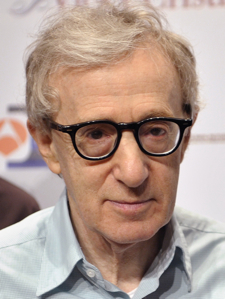
Because the only thing audiences want to see more than Woody Allen acting in someone else’s movie is Woody Allen whoring John Turturro out to rich women, we will soon have a film entitled Fading Gigolo (which still sounds better than Nero Fiddled ). Turturro will write and direct the buddy comedy, “which finds Turturro and Allen playing cash-strapped best friends who decide to go into the gigolo business together and subsequently attract the suspicion of the Hasidic Jewish community in which they live. Duo take on the pseudonyms Virgil and Bongo, with Allen pimping out Turturro’s character until he falls for a Jewish widow, who has not yet been cast.” [ Variety ]
This new Funny or Die bit featuring reigning Oscar king Jean Dujardin pushing a fictional brand of cigarettes in the suavest, most charming and youth-enticing way possible is pretty good (“And now in Cotton Candy and Snickers Bar!” I LOL’ed). Still, when it comes to animated/live-action smoke pushers, Dujardin and his partner in crime have pretty formidable competition in the infamous Happy Joe Lucky. Right down to the accordions! Who’s got the kid-pleasingest cigarettes around? Dujardin’s video calls for a rummage through the YouTube wilds, where we find the animated Lucky Strike mascot dueting with Your Hit Parade star Gisele MacKenzie. What an era! Smoke if you got ’em! BRB, etc. Jean Dujardin’s Cigarettes from Jean Dujardin Follow S.T. VanAirsdale on Twitter . Follow Movieline on Twitter .
Sometimes a movie demands attention more for its “How” than its “What,” and writer-director Joseph Cedar’s Footnote falls squarely in that category. A movie about feuding father-and-son Talmudic scholars isn’t a surefire way to pack ’em in at the box office. But Cedar approaches his subject with so much wit and verve that he almost – almost – makes you forget you’re watching a movie about a very small, cloistered subset of academic obsessives whose life’s work is about as visually undynamic as you can imagine. How do you get action and drama out of pages and pages filled with Hebrew lettering? Somehow Cedar – who was born in New York but who has lived in Jerusalem since the age of 5 – pulls it off. Footnote was the Israeli Academy Award nominee for 2011; it lost to Asghar Farhadi’s A Separation , which provided the bullying Iranian government with an unfortunate opportunity to declare artistic supremacy (in addition to every other kind) over Israel. But while Footnote is a very different movie – it doesn’t pack the emotional charge that A Separation does – its craftsmanship is exceptional. Cedar has made a picture about scholarly obsession that really moves, even when its characters – who spend a lot of time at their desks, surrounded by piles of papers and books adorned with wrinkled sticky-note flags – don’t. Eliezer Shkolnik (Shlomo Bar-Aba) has spent years, practically a lifetime, analyzing various versions of the Talmud, getting deep into minute differences in wording and phrasing. He makes a big research breakthrough, but just as he’s about to announce it, a rival professor (played by Micah Lewensohn) scoops him. Eliezer, an uncommunicative and taciturn sort, retreats deeper into his research, hoping that one day he’ll be appreciated and awarded the coveted Israel Prize. Meanwhile his son, Uriel (Lior Ashkenazi), also a Talmudic scholar, surpasses his father in both the respect and likability departments – he’s more of a born star, and he certainly likes the limelight. When it’s announced, finally, that Eliezer has been chosen for the Israel Prize, Uriel is relieved and happy for his father – until he learns exactly what Eliezer’s achievement will cost him, both professionally and personally. Between Uriel’s outright ambition and Eliezer’s naked need for recognition and respect, the relationship between father and son – which was never, it’s suggested, particularly warm to begin with – becomes increasingly tense. Cedar has cleverly organized his movie into chapter-like sections that somehow make analyzing reams of ancient text seem like an adventure, or at least something worth devoting your life to. He uses some lively effects, most of which are quite simple: He suggests the feverishness of scholarly devotion, for example, by showing sheafs of text whizzing across the frame, accompanied by the appropriate whooshing sound effects. The picture has a surprising agility, considering it really is about two guys with furrowed brows whose heads are generally buried in books. There is still the fact, though, that scholarship is just never going to be the jazziest subject on the planet, and even Cedar seems to know it. In places, Footnote strains to delineate the tension between father and son, re-embroidering their conflicts over and over again, long after we’ve gotten the point. Cedar – who previously made the 2007 Israeli war drama Beaufort – has taken great pains to add lots of emotional dappling and texture to this story, though in the end, what we take away from the relationship between these two characters is pretty simple: They’re victims of your garden variety criss-crossing jealousy and resentment. Still, the actors keep the drama believable and engaging: Bar-Aba, in particular, pulls off the tricky feat of making an impenetrable character sympathetic, albeit in a maddening, “Would it kill you to crack a smile?” way. And both Bar-Aba and Ashkenazi comfortably navigate the dry comic touches Cedar has added to the story: We don’t know whether to wince or laugh when, early in the film, Uriel publicly praises his father with a long-winded, backhanded story that essentially makes the guy sound like an uncommunicative jerk. Then again, that’s what he is. What Cedar captures here is the way a father and son can be bound so tightly they almost choke the air out of one another. You can’t exactly call it affection; it’s that far more complicated thing we call kinship. Follow Stephanie Zacharek on Twitter . Follow Movieline on Twitter .
Sometimes a movie demands attention more for its “How” than its “What,” and writer-director Joseph Cedar’s Footnote falls squarely in that category. A movie about feuding father-and-son Talmudic scholars isn’t a surefire way to pack ’em in at the box office. But Cedar approaches his subject with so much wit and verve that he almost – almost – makes you forget you’re watching a movie about a very small, cloistered subset of academic obsessives whose life’s work is about as visually undynamic as you can imagine. How do you get action and drama out of pages and pages filled with Hebrew lettering? Somehow Cedar – who was born in New York but who has lived in Jerusalem since the age of 5 – pulls it off. Footnote was the Israeli Academy Award nominee for 2011; it lost to Asghar Farhadi’s A Separation , which provided the bullying Iranian government with an unfortunate opportunity to declare artistic supremacy (in addition to every other kind) over Israel. But while Footnote is a very different movie – it doesn’t pack the emotional charge that A Separation does – its craftsmanship is exceptional. Cedar has made a picture about scholarly obsession that really moves, even when its characters – who spend a lot of time at their desks, surrounded by piles of papers and books adorned with wrinkled sticky-note flags – don’t. Eliezer Shkolnik (Shlomo Bar-Aba) has spent years, practically a lifetime, analyzing various versions of the Talmud, getting deep into minute differences in wording and phrasing. He makes a big research breakthrough, but just as he’s about to announce it, a rival professor (played by Micah Lewensohn) scoops him. Eliezer, an uncommunicative and taciturn sort, retreats deeper into his research, hoping that one day he’ll be appreciated and awarded the coveted Israel Prize. Meanwhile his son, Uriel (Lior Ashkenazi), also a Talmudic scholar, surpasses his father in both the respect and likability departments – he’s more of a born star, and he certainly likes the limelight. When it’s announced, finally, that Eliezer has been chosen for the Israel Prize, Uriel is relieved and happy for his father – until he learns exactly what Eliezer’s achievement will cost him, both professionally and personally. Between Uriel’s outright ambition and Eliezer’s naked need for recognition and respect, the relationship between father and son – which was never, it’s suggested, particularly warm to begin with – becomes increasingly tense. Cedar has cleverly organized his movie into chapter-like sections that somehow make analyzing reams of ancient text seem like an adventure, or at least something worth devoting your life to. He uses some lively effects, most of which are quite simple: He suggests the feverishness of scholarly devotion, for example, by showing sheafs of text whizzing across the frame, accompanied by the appropriate whooshing sound effects. The picture has a surprising agility, considering it really is about two guys with furrowed brows whose heads are generally buried in books. There is still the fact, though, that scholarship is just never going to be the jazziest subject on the planet, and even Cedar seems to know it. In places, Footnote strains to delineate the tension between father and son, re-embroidering their conflicts over and over again, long after we’ve gotten the point. Cedar – who previously made the 2007 Israeli war drama Beaufort – has taken great pains to add lots of emotional dappling and texture to this story, though in the end, what we take away from the relationship between these two characters is pretty simple: They’re victims of your garden variety criss-crossing jealousy and resentment. Still, the actors keep the drama believable and engaging: Bar-Aba, in particular, pulls off the tricky feat of making an impenetrable character sympathetic, albeit in a maddening, “Would it kill you to crack a smile?” way. And both Bar-Aba and Ashkenazi comfortably navigate the dry comic touches Cedar has added to the story: We don’t know whether to wince or laugh when, early in the film, Uriel publicly praises his father with a long-winded, backhanded story that essentially makes the guy sound like an uncommunicative jerk. Then again, that’s what he is. What Cedar captures here is the way a father and son can be bound so tightly they almost choke the air out of one another. You can’t exactly call it affection; it’s that far more complicated thing we call kinship. Follow Stephanie Zacharek on Twitter . Follow Movieline on Twitter .
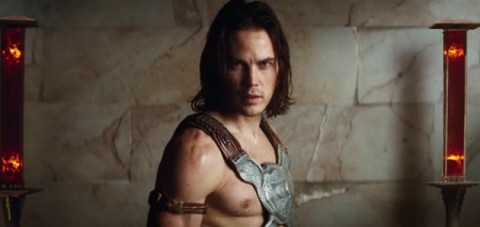
Taylor Kitsch is about to have a very big 2012. In addition to carrying Disney’s ambitious sci-fi adaptation John Carter as the titular Edgar Rice Burroughs hero, a Civil War veteran transported to Mars, he’s also fronting Peter Berg’s alien invasion actioner Battleship and starring in Oliver Stone ’s Savages later this year. But as Kitsch revealed to Movieline, the John Carter job wasn’t easy to get — and the toll it took on him during production was a challenge in itself. So who better to offer pro tips on nabbing the spotlight and handling the pressure of becoming an action hero than Kitsch, on the eve of a new chapter in his career? It should be noted that Kitsch is no stranger to action, having appeared in films like Snakes on a Plane , The Covenant , and X-Men Origins: Wolverine already in his six-year career, and no stranger to the spotlight thanks to his beloved turn as Tim Riggins on Friday Night Lights . But John Carter marks his first starring role and by far his biggest film to date, a sprawling epic set on a vast alien world envisioned in great detail by director Andrew Stanton ( Finding Nemo , WALL-E ). So how did Kitsch land the coveted role? What does his John Carter role share in common with his last one, as the late South African photojournalist Kevin Carter, in The Bang Bang Club ? All this and more as Taylor Kitsch shares his pro tips on landing (and keeping) that action hero gig. 1. Don’t think of yourself as an action star . “That’s you guys labeling me, so me saying yes to that – I can’t say yes to that because I refuse to put myself in that bubble. You saw Bang Bang Club , that’s no action movie. We hope to keep throwing you curveballs so you can’t put me in a spot like that.” 2. Ignore the hype and the naysayers – worry about putting pressure on yourself to do the work so you can sleep at night . “The pressure is what I put myself on in the sense of getting and doing the best I can, and having no regrets with what I put into it. That’s the pressure. The pressure now is that you can overthink everything, from how it’s going to do and how people are going to perceive it, you, this and that. If you want to drive yourself crazy over that you can, but I think that’s why you put so much into it. So you can lay down at night and be okay with what you did and be like, you know what? I still wouldn’t change it. If you say I’m fucking shit, I still wouldn’t change it.” 3. Be picky. Taking on a blockbuster gig is a huge commitment, so make sure you’re doing it for the right reasons. “Hopefully you feel that, you see it. You see the emotion and the energy that it takes to really do what it deserves, potentially. I think that’s what it’s about, and that’s why I’m so picky with the jobs. I’m all in. I’m never going to do a job for the sake of working. So we’re at a point now of looking at the next job, or whatever that is, and my people, my team, have been with me from Day One. If I don’t work for a year, I’m OK with it. We’re not going to do it unless we have to do it. “I was and still am okay with doing indies for the rest of my life. I don’t need to be in the spotlight; if anything, I’ll push it away even more. I live in Austin. I love the work. I love the storytelling, and that’s what the first meeting represented. I could play so many parts in this one character, from the Western, from the guy that doesn’t give a shit, to the guy who’s finally come full circle and become the leader that he’s pushed away for so long. I love that, and I love working with an Andrew Stanton, a Willem Dafoe, a Mark Strong, a Sam Morton, a Thomas Haden Church, a Lynn Collins.” 4. Make sure there is a “there” there. “Man, I will be shit if you give me nothing to play. Any actor will tell you, the more you can give me, the more depth I can escape into, the better it’s going to be on every level.” 5. Flawed characters are more interesting to play, and are worth diving into headfirst — even if it takes a lot out of you. “It’s not the war thing, but the more interesting guys I grew up watching — I like watching the more flawed guys than the perfect guys, and that’s more interesting for me to play. That’s more real to me. I love that and I love bringing people into a performance and it takes so fucking much out of you to do it honestly, but it’s worth it. Kev Carter – you won’t meet a guy more flawed. That crushed me.” 6. Remember to maintain balance with the emotional and physical demands of carrying a tentpole… especially when they require regular, long-term maintenance of action-hero muscles. “I was beyond exhausted in this film. Yeah, six day weeks is what killed me. I think I just pushed myself — I don’t regret it because you see it, but at times I could have had a better balance, maybe, just because waking up that early so often and the lack of sleep and pushing yourself that much, to have that much energy onscreen… for seven months, to be at that aesthetic! It’d be a lot easier if I had one shirtless scene and I could just get toned for that then be OK and balance it out, but it was 11 months that I was on that diet and training regimen. It’s very unreal to do that and to look that way, obviously, but it’s what I guess I demanded out of myself. This goes back to Kev [Carter, of the Bang Bang Club ], too. No one asked me to lose a pound, I wanted to. 7. That said, don’t worry too much about how you look, stud . “Fuck, man. You never want to be that conscious in a scene. That’d mean I’d be so totally out of John Carter mode, if I’m really that conscious of how I look and the lighting. That’s really bad. [But] you definitely have to do what you have to do to put yourself in the moment so it’s connecting to whatever it is. I think you’ve just got to get to a point where you’re okay with how you look and what you’re doing and you leave it and let it lay. Whatever it is, I look at that scene and it is what it is” 8. Go out for a role knowing it’s yours to lose. The audition process for John Carter was particularly grueling, with five actors and five actresses vying for the same roles over the course of two intense days. “Man, I was just so focused, I was so myopic with it. I prepped so much for that audition. I’ve always been an underdog and I came in on this gig that way, but it was like I felt it was mine to lose. I went in with that thinking really, if I can go in all out on this, I’m going to go in and kill it as much as I can. But it was a tough process, for sure. Two 14-hour days… and you’ve got to remember, what’s bizarre about getting roles and auditioning for the most part is you do your prep and everything for the most part after you get the role. It’s like OK, now I’ve got to sit down and really sketch this guy out. It’s a trip. “ 9. Whatever you do, do not go out partying the night before a big audition. “I won’t call the guy out, but I know and it gave me more oomph, put it that way, knowing that this one guy that was up for it was out partying quite hard the night before or two nights before. No matter what, I hear about that and I know I got ya, man. It’s like, good on ya for making it a little bit easier on me.” John Carter is in theaters this week. Read more on the film here . Follow Jen Yamato on Twitter . Follow Movieline on Twitter .
Official release plans haven’t been revealed for Paul Thomas Anderson’s mysterious untitled religious drama , known as The Master , which stars Philip Seymour Hoffman and Joaquin Phoenix and was reportedly filmed on 65mm. But while distributor The Weinstein Co. hasn’t let slip potential release dates yet, producer/financier Megan Ellison dropped a hint on Twitter about a possible fall opening. Responding to the PT Anderson fansite Cigarettes & Red Vines , Ellison (whose Annapurna Films financed the project) gave hope for a late 2012 debut. @ cigsandredvines I know you guys are waiting on a release date for ‘the Master’, and it’s still a bit early, but I’d keep my eyes on October — Megan Ellison (@meganeellison) March 6, 2012 If the October date lands it could potentially mean we’ll see The Master debut at Cannes in May, where Punch-Drunk Love premiered before opening in October of 2002, or play Telluride/Toronto/NYFF right before release at the start of awards season. While one Tweet (and Anderson’s film fest history) is awfully little to go on, it’d make sense if things shook out this way, but stay tuned for more as this phantom October date approaches. [ @meganeellison via Slashfilm ]
Jennifer Westfeldt’s sort-of romantic comedy Friends with Kids is on to something, even if in the end it suffers from a failure of nerve. This is actor and screenwriter Westfeldt’s directorial debut (she co-wrote and starred in the 2001 feature Kissing Jessica Stein ), and it’s polished to the point of shallow glossiness — it could benefit from being a little rougher, a little messier. But the picture at least attempts to wrestle with the notion that there’s no single right way to raise a family or navigate a partnership. And it acknowledges, if only fleetingly, the way very well-meaning people who are parents can often be incredibly smug toward those who aren’t, insinuating that their own lives are somehow more meaningful because they have kids who run them ragged. At one point Westfeldt and Adam Scott, who play best friends Julie and Jason, ponder how much their friends changed after they had kids. “I don’t know these people anymore,” Jason says, bewildered after he’s just attended a dinner party where frazzled, distracted parents did nothing but snap at one another and at their children, completely unable to enjoy themselves or one another. “These people are mean and angry.” The tide shifts when Jason and Julie decide to have a child together without becoming romantically involved. They’ve been close friends for years, and they live in the same apartment building — why not? The experiment goes surprisingly well, and the two end up with a pretty good kid who really does seem to be enriching their lives. In one of the movie’s most gratifying sequences, their traditionally coupled friends, played by a Bridesmaids reunion cast including Maya Rudolph, Chris O’Dowd, Kristen Wiig and Jon Hamm (Westfeldt’s partner in real life), speculate about how out-of-control the new parents’ lives must be, only to find that Jason and Julie’s unorthodox arrangement is extremely efficient and agreeable. But Friends with Kids winds up turning on itself, becoming a more conventional comedy than it sets out to be. In the end, Jason and Julie do fit themselves into a mold, although at least the transition doesn’t come easy. Westfeldt’s Julie is too adorable by half: She’s a cutie-pie neurotic, and the appeal wears thin quickly. (You can hardly blame Jason for falling, temporarily, for a shallow vixen played by Megan Fox.) But as writer and director, Westfeldt has at least done right by Adam Scott, a fine comic actor who, until now, has been relegated to second-banana roles. A highly unscientific poll conducted here and there among my women friends, straight and gay, has revealed that all women love Adam Scott. I have not been able to determine the source of his charm, but it appears that in addition to being good-looking (but not too good-looking), he tends to come off as the kind of guy who has flaws you could live with: He’s a little smart-alecky but also smart and funny; he might leave his underwear on the floor, but he remembers to hang up his towel; and so forth. As I said, it’s all unscientific. Friends with Kids proves that Scott can carry a movie: His comic timing is crisp and on-point, but he’s also capable of playing it straight when he needs to. He’s marvelous in one revelatory scene where he enumerates Julie’s best qualities, and as written, it’s the sort of dialogue that could head right into pukefest territory, fast. Scott gives Friends with Kids some necessary edge, and though the picture overall could still be much sharper, from scene to scene, he’s key to its integrity. No wonder his Jason is superdad material. [Editor’s note: This review appeared earlier, in a slightly different form, in Stephanie Zacharek’s Toronto Film Festival coverage. ] Follow Stephanie Zacharek on Twitter . Follow Movieline on Twitter .