Tag Archives: financial

Who Can Ignore and Downplay Democrat’s Racist Statement? The Establishment Media Can

To refresh, as posted at NewsBusters and Eyeblast.tv , Pennsylvania Congressman Paul Kanjorski said the following on Wednesday while he was defending what Investors Business Daily has called “Financial Deform” : We’re giving relief to people that I deal with in my office every day now unfortunately. But because of the longevity of this recession, these are people — and they’re not minorities and they’re not defective and they’re not all the things you’d like to insinuate that these programs are about — these are average, good American people. This isn’t too tough to decipher, no matter how many House Democrats try to give him defensive cover — If the people Kanjorski “deal(s) with in my office everyday” are “average, good American people” because “they’re not minorities and they’re not defective,” then those who are minorities and “defective” in some way are not “average, good American people.” Kanjorski uttered an objectively racist (embodying “the belief that race accounts for differences in human character or ability and that a particular race is superior to others”) statement. According to this report , Kanjorski is not apologizing. Therefore, one must conclude that the congressman is comfortable with his objectively racist statement. So how is the press handling this? The mostly Democrat-defending establishment press that generally sets the narrative for radio and TV news mostly understands the aforementioned elementary exercise in logic. This explains why Kanjorski’s statement, while occasionally being framed with the usual “Republicans attack poor misunderstood Democrat” approach, is mostly getting ignored. A search at the Associated Press’s main web site on the Congressman’s last name comes up with one seemingly relevant item , an article headlined “McMahon: Wrestling was soap opera.” Yeah, you read that right. But the article is really a collection of four short items and two “Quick Hits.” AP writer Philip Elliott (or perhaps his editors) thought that Connecticut U.S. Senate candidate Linda McMahon’s description of her Word Wrestling Entertainment enterprise was more important than Kanjorski’s racist remark, the coverage of which came second. Naturally, Elliott’s item used the “Republicans attack” technique: Republicans criticized Rep. Paul Kanjorski for what they said were remarks suggesting minorities are not “average, good American people.” The 13-term Pennsylvania Democrat vigorously denied the charge, saying Republicans were taking his words out of context to score political points. … A Kanjorski spokeswoman said the congressman was defending people who get government help from those who unfairly criticize them. Sure he was. But in the process, he uttered an objectively racist remark. Alleged “context” is irrelevant. Well, at least the AP has covered it in its own quirky way. The New York Times hasn’t . The Washington Post restricted coverage of Kanjorski’s statement to its “44” blog , and has apparently kept the matter out of its print edition. Matt DeLong’s post is funny, in a reality-denying, sickening sort of way (bolds are mine): A Democratic congressman has found himself the target of conservative criticism after an inartful description of who will be helped by the financial reform bill currently working its way through Congress. The conservative website Human Events reported that Rep. Paul Kanjorski’s (D-Pa.) appeared to say during Wednesday’s financial reform conference committee meeting that the financial overhaul will help “average, good American people” — but not minorities or “the defective.” It’s amazing how often the word “inartful” — which isn’t even a recognized word in the dictionary ( here or here ) — has appeared since candidate Barack Obama and others frequently employed it in 2008 to defend him and others after verbal gaffes and worse utterances. As to DeLong’s use of “appeared” — Matt, stop insulting our intelligence. Finally, it’s also quite predictable to see DeLong tag Human Events (accurately) as “conservative,” while, as Tim Graham at NewsBusters noted earlier this week , magazines like Rolling Stone almost never get the “liberal” or “radical left” tag from the establishment press. Cross-posted at BizzyBlog.com .

View original post here:
Who Can Ignore and Downplay Democrat’s Racist Statement? The Establishment Media Can

Jeremy London Insists Kidnapping Happened

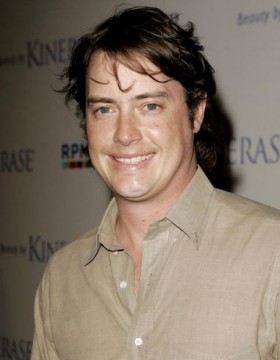
With speculation growing about his alleged abduction at gunpoint and forced drug use in Palm Springs, Calif., a week and a half ago, Jeremy London wants to set the record straight: It happened, and it was a complete and utter nightmare. In a statement to Radar Online , the Party of Five star recounts the night: “First of all, I want to say [the incident] actually happened. It was one of the worst days of my life.” “I thought I was going to die. Thank God I made it out alive.” The Jeremy London kidnapping account continues: “I had a gun put to my head. I had my family threatened. We’re currently working closely with the Palm Springs Police Department to get the rest of the guys. There’s one guy in custody.” “There’s two more out there.” Jeremy London says he’s lucky to be alive . A recovering drug addict, London had been embroiled in a custody battle with his ex-wife Melissa over their son Lyric, 3. But the spouses have apparently reconciled – Melissa was actually with Jeremy in the initial stages of the kidnapping. London says his mother, his brother Jason and his brother’s girlfriend are spreading “outrageous lies” about the incident and added that he has not spoken to them in months, and has sent legal threats to his family to stop talking to the press. Reached for comment Monday, Jason said , “I’m glad my brother’s okay, but I have serious questions about what transpired. His health is our #1 concern.” Asked if there was any reason to doubt London’s version of events, Palm Springs Police spokeswoman Melissa Desmarais said: “No, not at this point. Our investigators had enough information to arrest a suspect and the investigation is ongoing.” The suspect, Brandon Adams, has already been charged by officials with kidnapping, robbery, possession of stolen property, vehicle theft and carjacking. London, 37 opened up earlier this year about his struggle to stay sober and his financial troubles. We wish him the best getting through this ordeal now.

More here:
Jeremy London Insists Kidnapping Happened

NBC’s David Gregory: White House Rhetoric ‘Anti-Business,’ ‘Could Really Discourage Businesses’ in U.S.

Wow, just wow. Never would have seen this one coming, but is one of the standard-bearers of the media elite recognizing the Obama administration’s anti-business populist tone is inhibiting the U.S. economy? On the June 18 broadcast of CNBC’s “Squawk Box,” NBC “Meet the Press” moderator David Gregory was asked to respond to a June 18 New York Times article by David Sanger suggesting the Obama administration may be “overstepping” and discouraging business growth in the United States. Gregory told “Squawk Box” viewers that in his view they were and called it “a real problem.” “It is, certainly beyond Washington,” Gregory explained. “You all know it talking to business leaders every day and I do speak to business leaders quite often as well and I hear it time and time again that what you got at the administration are two problems. One, you’ve got nobody in the inner sanctum of the President’s advisers who has ever run a business – who have never run a business. And that’s a real problem. I think there’s a level of recognition about that being a problem in the West Wing as well. But the rhetoric and the policy substantively, a lot of people feel, is anti-business and getting to a point where it could really discourage businesses in the United States and certainly the multinationals working here as well. That’s a problem and I think that element of criticism from Joe Barton, while off the reservation substantively, got to that larger point, which is this populist string.” Gregory elaborated on the lack of business experience in the President’s inner circle and explained it has hurt the White House’s ability to get solid policy measures in place. “I think they would like to have more people advising the President who have that business acumen,” Gregory said. “But let’s call it what it is. They made a decision early on in this financial crisis they were going to demonize anybody from Wall Street. They wouldn’t take anybody who had the quote, unquote ‘taint of Wall Street’ and that’s a problem because you have the expertise that they could have leveraged, brought inside, to try to deal with financial regulation and all the rest. He’s going to get financial reforms. But nevertheless, they made the decision, going back to the AIG mess and the bonuses. And that has carried forward.” And Gregory said he thought the White House was second-guessing their decision to take this route. “I think there is [second-guessing] because I think they recognize that, look they’re at a point on stimulus alone, who’s going to create the jobs here? Forty-one thousand private sector jobs last month. The private sector has to start to feel like it’s got more confidence to lend more, to start more business investment, to stop hoarding cash. And a lot of that is going on – again, I realize you know this better than I do because of the question marks and- all of the uncertainty coming out of Washington and particularly this administration.”

Read the original here:
NBC’s David Gregory: White House Rhetoric ‘Anti-Business,’ ‘Could Really Discourage Businesses’ in U.S.

Sir Geoff Hurst | Small Talk

The 66 World Cup winner on Alf Ramsey’s tanning rules, playing first-class cricket and being tripped up by a strange presence Hello Geoff. Hello Small Talk. Let’s crack on shall we? Does winning the World Cup feel like yesterday or does it feel like 44 years ago? It’s both. Because of the nature of people reminding you about the day, not only every four years, but people still talk about it on a daily basis. It really brings it home how significant and important a national occasion it is and how the support of the country is behind that. The players will be aware that there’s public support, but they will never really be aware how much support and feeling there is in the country until they actually go and win it. Nobody can tell them apart from myself and twenty-one other guys who played. Indeed. An old opponent of yours, Franz Beckenbauer, has had a few things to say about England. Do you think he’s right or do you just think he’s starting the mind games? I never felt it appropriate for any level of football, where a manager is talking disparagingly about another team. If we get through and we play Germany that will be the most motivating speech they can give to the team. Small Talk spoke to George Cohen a while ago, he thought the Argentina team you played that tournament were the best team you faced throughout it … I wouldn’t necessarily say the best. They were the toughest. I think the three teams we played in the quarters, semi and final were terrific sides. I mean the Portugal side in the semi-final was fantastic and with Eusebio scoring eight or nine goals in the tournament arguably one of the best players that’s played up front in any year of football. And that German side was a terrific team, they were going on to win the European Championship in ’72 and the World Cup in ’74. I would put them very close together. Certainly in terms of the tough game, really tough physical game, Argentina sticks out way above the others. Are the rumours true about it all kicking off a bit in the tunnel afterwards? Yes that’s very true. It was kept quiet. It was obviously a very physical match on and off the field. Controversial incidents with the captain being sent off. As it was in those days, it was much easier to keep things quiet. It would be impossible to keep things quiet today because of the huge media coverage. You then played against one of the greatest teams of all time, that Brazil team in Mexico … Arguably the greatest Brazilian side that won a world cup. Quite. Can you remember that game well? I remember the game for a number of things. For one you’re playing against one of the greatest sides ever. We were as strong if not stronger at the time but we were that close with the result in the match playing in their backyard under their conditions, in their heat. If you analyse the game we were fantastic and should have at least drawn or possibly won. A couple of misses and also the performance of Bobby Moore who arguably was better in ’70 than he was in ’66 if that’s possible. Bearing in mind he’d been locked up under house arrest only three days before the tournament. There were a couple of misses. Everybody remembers Jeff Astle’s horrible miss towards the end. Were you on the pitch when that happened? I was and people relive that moment saying it was me who missed it but I do remember it. I love looking at that film today and realising what a good side we had, the bulk had been together since ’66, the backbone of the side was there. In ’68 we were close in the European Championships but ’70 we looked like we were going to go there and play in the final again. I read in Alf Ramsey’s biography recently that he had one of his coaches blowing his whistle every 10 minutes so you wouldn’t get too much sun when you were in Brazil? Yes that’s absolutely true. Five minutes on your front, five minutes on your back, five minutes in the pool. The discipline was very strict. On the floor we were on in the hotel, you’d have either Alf or Les Cocker sitting outside the door of the lift to check on people’s whereabouts. Sounds harsh. How late would you they be there till? Probably midnight. Very few people would be late. It’s how it should be. Now, just away from football you also played a single game of county cricket for Essex … That’s correct. In 1962. Essex v Lancashire in a district of Liverpool, which was interesting. West Ham went away on tour to Ghana that year but because I was split between the two sports at that stage I decided to stay behind and got an opportunity to play one first-class game. Did you have real hopes of making a go of the cricket? Well yes I did. The big downfall for me was trying to do two. Looking back, like in anything in life you have to focus on something 100%. I wasn’t. All my life I played cricket in the summer and football in the winter, it was how I was brought up. In many respects it was the end of an era for me. Prior to that you could probably do the two. When you hear now of Dennis Compton, William Watson and many other players who played cricket for England and football for England. You look at it today and think how did anybody play those sports? What was your strongest suit? I’ve read that you were a very good fielder. I was a good fielder because I had the hand-eye coordination. Primarily I was a batsman and we didn’t have a wicketkeeper in Essex’s second team so I kept wicket a fair bit. And then I had the opportunity when there were a couple of injuries to play in that game against Lancashire, which we won. Do you think England will ever win another World Cup or do they have they to change all the coaching and everything like Trevor Booking has suggested? Yes we can win the World Cup. But certainly there is a concern from Trevor quite rightly and the current situation clearly illustrates that with the strength of the squad. We’re not producing enough international players of the Wayne Rooneys and Steven Gerrards. It’s quite clear that the system we have isn’t working. The system we had in my day which was pretty simplistic. You kick the ball in the road, the streets, the playground till you were 15, you played for your schools a bit maybe for the county. The people in charge were not coaching – they were probably a PE teacher who’s second subject was art. And that system produced some of the greatest players at that time and any other time. When we do get a good player like Joe Cole they get wasted because we don’t trust the more skilful player. Do you think that’s a problem with English football? Glenn Hoddle is an outstanding example of that in the game Had he been in another country he would have got 150 caps. Whatever the coaching is, it can try and replicate what happened in our time to an extent. Let the guys play, let them enjoy, let them have some freedom. We should be producing more street players like Wayne Rooney shouldn’t we … You also get your players, currently Frank Lampard, who’s not quite as gifted but appears he has a fantastic attitude. Makes the most of what he’s got … ‘Makes the most of’ is probably unfair, he’s made himself into great player. Bobby Moore probably wasn’t as gifted as many people think when he joined the club but he made himself into one of the great players by the other attributes you need as a great player, your attitude, determination, learning, leadership. You mentioned Harry Redknapp before. You played with him at West Ham. Wasn’t he a speedy winger … I think that was about it. With very skinny legs … Yeah he was quite a lean individual. Very quick and very fit and could run all day. Unfortunately he had to pack-up from injury very quickly. Do you believe in God? That is quite a difficult question to answer. That’s a fairly serious question. I don’t think that’s a silly question. I need time to think about it, is my answer to that. What about extra-terrestrial life? No. You don’t think anything’s out there, the universe is empty? Eh? er, yes. What about ghosts then? Have you ever seen one? No. Have you ever felt or sensed a presence? Yes. Last Sunday. This is a serious answer. When I tripped over my suitcase and banged my head and had four stitches in it. I sensed that when I tripped over the suitcase something was holding my leg in the suitcase. And was it? Normally when you trip, you know, you recover and stumble over something like a suitcase. Really? This was in the hotel? In the hotel in South Africa. And that’s an honest, genuine answer. Small Talk likes honest, genuine answers. How was the South African healthcare? Fine, fine, very good. We were looked after. The security guys who look after a lot of people, one of the roles seemed to be that they ensured that if anything did happen to us, physically, not by a terrorist, but a simple little trip, they were there to look after us. So they took me to a clinic, had a tetanus injection, antibiotics, painkillers and they got me a hat to wear. Have you still got a headache? No it was OK. I think it just caught the corner of the table. It was a big enough gash to have four stitches. My wife still doesn’t believe that I wasn’t drunk … She actually didn’t say that. And after I did it I couldn’t believe how stupid it was to do that and I was cursing like mad. What have you got in your pockets? A handkerchief. Always carry a handkerchief? Mostly. What was the favourite toy you played with as a child? A football. Always the football? Yeah. And if you could describe in one sentence what it was like in Essex in the 1950s … My first answer would be it’s impossible to answer. Eh? How is it different then? The most noticeable change is the amount of cars on the roads now. Now there’s a line of cars outside all the houses. I’m giving you a two pound coin in the petrol station and you can go in and buy any chocolate bar you want, what’s it going to be? Kit-Kat. The chunky or the four finger? Four finger. I can share that with my wife. Exactly. Does she get one finger or two? It’s two mostly, but occasionally she doesn’t fancy too much so she’ll have one and I’ll have the three. But I do like the chunky one as well. Who doesn’t? Thanks Geoff. Goodbye … Bye Small Talk. World Cup 2010 England Barney Ronay guardian.co.uk

Originally posted here:
Sir Geoff Hurst | Small Talk

World Cup 2010: Cape Town opens its arms to England supporters

South Africa’s love affair with the Premier League means Fabio Capello’s team are home fans’ second favourite Amid the high‑end jewellery stores, boutique hotels, rare steaks and fine reds of Cape Town’s upmarket Waterfront area, thousands of England fans were last night being welcomed with open arms by South Africans who have adopted Fabio Capello’s men as their second favourite team. In the dark days of the 1980s and 1990s, cities would prepare for the arrival of England fans by pulling down the shutters and closing their bars. But this most European of South African cities, long a favourite of those following the British Lions or the England cricket team, was preparing to enthusiastically welcome a huge influx in relaxed fashion. • Follow the Guardian’s World Cup team on Twitter • Sign up to play our great Fantasy Football game • Stats centre: Get the lowdown on every player • The latest team-by-team news, features and more “We can’t wait. Bring them on, they’re the best fans. We love them. They get the best vibe going, we can’t wait for them to start with their English chants,” said Barry Nieuwoudt, manager of the City Grill steakhouse, perhaps with an eye on his bottom line. “A lot of South Africans will be supporting England. There are so many Liverpool and Manchester United supporters around here.” Outside The Dubliner Irish bar – opposite an open-air big screen where England fans mingled in the winter sun with Algerians, Hondurans and Brazilians – a policeman was insisting on being taught the correct intonation with which to chant “In‑ger-land”. Nearby, other fans enjoyed seafood and steaks and quaffed fine wine in the restaurants that line the marina. Many have based themselves in Cape Town for the duration of their stay. Perhaps for not altogether unconnected reasons, Cape Town’s stunningly located Green Point stadium will also host the biggest contingent of VIPs yet gathered. Prince Harry, Prince William, London mayor Boris Johnson and the culture secretary, Jeremy Hunt – in town to variously promote England’s 2018 World Cup bid and learn lessons ahead of the 2012 Olympics – will all be in the stands tonight. Johnson yesterday visited a community football project partly run by the Metropolitan Police and with links to Charlton Athletic, and visited a nearby township. Alongside those who have followed England to every eastern European outpost on the qualifying trail are others who have chosen to combine a holiday with their first World Cup. “It’s like another world down here, it’s much more like a traditional England match venue in a European city. There’s the potential for people to gather, have a drink and then head off to the match in a way that Rustenburg didn’t allow,” said Kevin Miles, head of international relations at the Football Supporters’ Federation. “It’s a real mixture. There’s the hardcore who travelled to all the qualifiers and all the friendlies and as a consequence were always going to come to the World Cup finals. There are others who just couldn’t afford it because of the financial situation. But then you’ve got people who have got the money, tickets are easier to get and so you’ve got people who are following England for the first time.” The Football Association has sold 7,000 tickets for tonight’s match, there is expected be a similar number from Fifa’s public sale and then there will be thousands more who are ex-pats or locals supporting England in the 64,100 capacity stadium. More so than any tournament since Japan/South Korea, fans are experiencing it in myriad different ways. Spedding McMullen, 65, from Birmingham, had left his wife on holiday in Mauritius to fly down for the England game. “It was the only way I could persuade her to let me come,” he said. Alongside the committed England fans who are veterans of previous tournaments and have contributed to a rehabilitation of their image that saw them voted best fans at the last World Cup in Germany, there were many others attending their first tournament and combining it with a holiday. “We’re staying in a game reserve for a few days, then driving to Port Elizabeth. It’s been fantastic, the people are so welcoming,” said Jim Edgar, from Tunbridge Wells, who was travelling with his friend Graeme Major from Woking. “It’s fantastic to see all the different races together enjoying themselves. It’s a great atmosphere and after all the nonsense about security and everything, we’ve walked everywhere and it’s been perfect.” At the first game in Rustenburg, the crowd was dominated by England fans despite there only being perhaps 10,000 travelling supporters in the stadium. Thousands of South Africans, dressed in shiny new England shirts and tracksuits, chose to back England – some because they had family links and others because they obsessively followed the Premier League, which receives wall to wall coverage on TV. Police also threw a tight security cordon around Green Point stadium ahead of the arrival of their royal guests tomorrow. Last night they used rubber bullets to break up a demonstration of 200 stewards in a dispute linked to complaints about low pay. England World Cup 2010 Group C World Cup 2010 Owen Gibson guardian.co.uk

More here:
World Cup 2010: Cape Town opens its arms to England supporters

Poll: Americans Overwhelmingly Reject Government’s Plan to ‘Save Journalism’

An overwhelming majority of Americans prefer freedom of the press to outdated models of journalism, according to a new Rasmussen poll. The survey comes in the midst of discussions in the Federal Trade Commission and the Federal Communications Commission to intervene on behalf of Old Media. Eighty-five percent of respondents in the Rasmussen poll said they believe maintaining press freedom is more important than financially supporting the newspaper industry. Only six percent said the latter is more important. Just 14 percent said they would favor a bailout of the newspaper industry. Respondents worried that government involvement in the industry would compromise press neutrality. Indeed, this sentiment reflects the findings of a number of studies over the past few years. As with any bailout, a bailout of a newspaper would inevitably mean at least some say in that newspaper’s content. In the words of a report released last year by the Business and Media Institute: As soon as Obama bailed out Detroit, he forced out GM Chairman and CEO Rick Wagoner. The White House also gave majority ownership in Chrysler (55 percent) to the UAW. Wall Street bailouts resulted in overnight government regulation – even salary controls. Government intervention in media gives Obama the same opportunity to control the news. Seven major newspaper chains have gone into bankruptcy. If he uses the same strategies he used for Detroit, that would let Obama control major media outlets across the nation and he could dictate the news. A Harvard/Northwestern study observed just such trends in the newspaper industry of Argentina after that nation’s government instituted subsidies for its own failing newspapers. According to one blogger who reported on the study, Their analysis found a “huge correlation” between, in any given month, how much money went to a newspaper and how much corruption coverage appeared on its front page. For example, if the government ad revenue in a month increased by one standard deviation — around $70,000 U.S. — corruption coverage would decrease by roughly half of a front page. …in periods where newspapers were getting more money from the government, they produced fewer corruption scoops of their own and covered fewer of the scoops produced by other newspapers. (It should be noted here that the study only looked at the front pages of newspapers — so it’s possible rival papers were writing about the scandals uncovered by their peers. But if so, they were doing it on inside pages.) The Washington Examiner’s Mark Tapscott brilliantly captured the inevitability of a stilted journalism once public funding is introduced. He noted that the not-too-subtle goal of the campaign to “save journalism” is to transform the news industry from an information product collected by private individuals and entrepreneurs as a service to private buyers, to a government-regulated public utility providing a “public good,” as defined and regulated by government. The inevitable result of the campaign, Tapscott writes, is more government control over the news, since “government always expands its control over any activity it either funds or regulates.” The poll’s respondents presciently observed this attempt at a power grab–and resoundingly rejected it. According to Rasmussen, Sixty-nine percent (69%) think it at least somewhat likely that a newspaper that receives government funding to hire journalists will avoid criticizing government officials and policies, with 45% who say it is Very Likely. Twenty-three percent (23%) say it’s not very or not at all likely that newspapers will avoid such criticism if they get government funding. Seventy-one percent (71%) oppose a government bailout of the newspaper industry like the ones for the financial sector and the automobile industry, up from 65% in March of last year. Only 14% say a government bailout of the newspaper business is a good idea. Of course the federal government is considering a number of options beyond the gifting of taxpayer funds to ailing newspapers. Still many of its options could leave the door open to cronyism and compromising conflicts of interest between journalists and their federal benefactors. One such option is the creation of an “Americorps-type program that would hire and pay journalists to work for newspapers around the country,” in Rasmussen’s phrasing. First of all, as Reason’s Peter Suderman notes , the last thing American journalism needs is a crop of reporters on the public dole. But more to the point of this study, AmeriCorps itself has served as a prime example of cronyism in the distribution of public money. It is certainly not a model to be emulated. And besides, the combined price tag of these programs to save journalism could cost as much as $35 billion, according to Suderman. That’s almost 100 times the FCC’s annual budget. Any federal program doling out that kind of money will attract sycophantic would-be recipients, ready to do what it takes to get their hands on a slice of that pie. Americans, apparently, have a firm grasp of these facts. 

See the original post:
Poll: Americans Overwhelmingly Reject Government’s Plan to ‘Save Journalism’

Sociological Study Reveals High Financial Malfeasance Rates in Largest U.S. Corporations

WASHINGTON, DC, June 2, 2010 — The need to “fix” or restate financial statements is an admission by corporate management that these reports (prior to their being corrected) to the government and the investing public misrepresented the corporations' financial positions, Texas A&M University sociology professor Harland Prechel reports in a research paper published in the June 2010 issue of the American Sociological Review (ASR). Prechel and Theresa Morris of Trinity College in Hartford, Connecticut, examined the revised statements from hundreds of the largest U.S. companies between 1995 and 2004, then co-authored the paper, titled “The Effects of Organizational and Political Embeddedness on Financial Malfeasance in the Largest U.S. Corporations: Dependence, Incentives, and Opportunities.” The researchers' analysis examines restatements that occurred after Congress passed the 2001 Sarbanes-Oxley Act, which held chief financial officers (CFOs) and chief executive officers (CEOs) personally responsible for corporate violations of security and exchange laws. Soon after this legislation was passed, the number of financial restatements rapidly increased. After eliminating the legitimate reasons for financial restatements such as accounting rule changes, their analysis shows that over 21 percent of the corporations in their study group restated their finances at least once, and some as many as seven times, during the study period. more at the link http://www.asanet.org/press/financial_malfeasance.cfm added by: Incredulous

Suze Orman’s Birthday Gift to Herself: Emergency Surgery

Suze Orman’s one step to appendix freedom: cut that puppy out. That’s what the financial whiz did Saturday, when she underwent an emergency appendectomy at Northwestern Memorial …

Here is the original post:
Suze Orman’s Birthday Gift to Herself: Emergency Surgery

Do World Fairs Make Sense Any More?

According to Edwin Heathcote in the Financial Times , Chicago’s Columbian Exhibition of 1893 changed everything. “The first Ferris wheel loomed above the “White City” and carried 2,160 people simultaneously on a 20-minute ride for 50 cents, every ride accompanied by a band in one of the cars. Nikola Tesla illuminated the fair in the biggest electric light show the world had ever seen, and displayed the first phosphorescent and neon lights. Meanwhile Wrigley’s Juicy Fruit gum, Cracker Jacks, Quaker Oats and Shredded Wheat made their first appearances; Scott Joplin introduced the world to the sync… Read the full story on TreeHugger

Link:
Do World Fairs Make Sense Any More?

Teresa Giudice Files for Bankruptcy, Seeks "Fresh Start"

This is shocking. Who would have thought that a bunch of spoiled, self-centered women – only famous because Bravo has placed a TV camera in their faces – would have so many problems? There’s the Danielle Staub sex tape , of course (along with her past of drug use, arrests and rumored prostitution). And now there’s official word from Teresa Giudice that her and her husband have filed for bankruptcy. According to documents filed with the U.S. Bankruptcy Court in Newark, The Real Housewives of New Jersey star is over $8 million in debt. She and husband Joe owe more than $33,000 on credit cards, $85,000 for home repairs and $91,000 for materials used to construct their new home. Said Giudice to People : “While this is a personal matter, I realize that certain aspects of my private life will always be subject to scrutiny and distortion. What is true is that due to the economy, most of my husband’s real estate ventures failed despite his hard work and effort. As a result, we looked to the Bankruptcy Court for a fresh start.” Teresa claims she is learning from her financial mistakes, which recently included a lavish birthday party for their nine-year old daughter that would have made Donald Trump blush. Seriously, it’s hard for have any sympathy for these rich morons.

Read more here:
Teresa Giudice Files for Bankruptcy, Seeks "Fresh Start"