
Tag Archives: follow-michelle

REVIEW: Despite Hijinks and Dick Jokes, Slight ‘The Watch’ Fails To Make Lasting Impression

Walking out of The Watch , Saturday Night Live writer Akiva Schaffer’s garrulous but indistinctive directing debut, a young woman in front of me complained to her friend. “What do you even say about that?” he’d asked. “I have no idea,” she said. She only had to write up a list of the movie’s pros and cons, and even then she could think of but one item for the former column. It’s not that The Watch is terrible – it’s not not terrible, but there are sufficient diversions and more punitive ways to spend your evening – but that it’s one of those smoke bomb comedies that seems to disappear even while you’re watching, leaving no trace of itself behind. A studio gumbo of proven quantities – here’s Vince Vaughn doing his flirty, towel-snapping thing, Ben Stiller playing a tightly wound Citizen Costco, um, rabid aliens, beer- and pot-sealed enshrinement of male bonding – The Watch leaves very little to say because, despite the near-constant jabber, it says, and aspires to, so very little. There is a concept, of course, and it’s high enough to track with those non-native Apatowians (Seth Rogen co-wrote the script with Jared Stern and his longtime writing partner Evan Goldberg) sadly unable to keep up with the movie’s urban thesaurus worth of masturbation references. Home team-loving Evan (Stiller) is what Max Fischer might be like if he grew up to manage a Costco and moved to Middle America. Trying to prop up his flagging self-image with extra credit community work, Evan is also trying (and failing) to have a child with his adorable wife (Rosemarie DeWitt). When his overnight security guard is found in a pile of viscera and green goo, Evan responds the only way he knows how: By deputizing himself as the leader of yet another organization, a neighborhood watch. I saw the trailer for The Watch back when it was still called Neighborhood Watch , just as the February murder of Florida teenager Trayvon Martin by a patrolling neighborhood watch volunteer was coming to national attention. No doubt a couple of 20 th Century Fox executives had a couple of sleepless nights, wondering if their lewd little genre mash-up would be found guilty by association. They did what studios do in these dismally self-interested situations – a shell game currently being played by Warner Bros. with their Gangster Squad , whose release has been postponed until next year in the wake of the Aurora shootings: They changed the title. It’s all about optics and the bottom line, and between those two imperatives less and less to do with (moral and other kinds of) substance in storytelling and image making seems to survive. With the exception of the character of Franklin (Jonah Hill), one of Evan’s three compatriots (including Vaughn’s bored dad and Richard Ayoade as a deceptively well-bred Brit looking to blend in), and a funny scene in which Stiller and Vaughn vie to get the last bullet into an alien corpse, The Watch is too clearly about cartoon battles and puerile riffing to inspire queasiness. Police Academy reject Franklin is keen to whip some neighborhood ass; he slings a blade around, refers to their club as a “militia,” and has an arsenal of automatic weapons hidden under his childhood bed. He’s really a pussycat, of course, and when it falls on the quartet to save their town from alien invasion (Will Forte is brilliant as usual playing one of the town’s handful of ineffectual cops; a creepy Billy Crudup is also welcome in a small part) and a divide forms between the two alpha males, Stiller and Vaughn vie for his loyalty. The Watch received an R-rating, which mostly means that the usual complement of dick jokes have room to flower into a full-blown penile fixation – to grow taller, bloom fatter, scatter more potent seeds, etc, etc. Some of it’s funny; most of it’s a flat-out grind. (Least clever is the movie’s nod to its own preoccupation with everything phallic and fluid; like I tell my landlord, acknowledging the problem is not the same as fixing it.) Back in March, the Watch trailer preceded a showing of 21 Jump Street , a movie that should not have worked if ever a movie were doomed from the start (or by its title), and yet it restored my faith in the studio comedy; side by side the two movies are a study in the difference between inspired silliness and what is merely and persistently slight. The Watch is in wide release Friday. Follow Michelle Orange on Twitter . Follow Movieline on Twitter .

Read more here:
REVIEW: Despite Hijinks and Dick Jokes, Slight ‘The Watch’ Fails To Make Lasting Impression

Charlie Kaufman, Dan Harmon Need You to Fund Their New Collaboration

The ever-expanding Crowdsource Era has a new milestone: Charlie Kaufman needs $200,000 to help make a 40-minute stop-motion animated film called Anomalisa , and he’s inviting exiled Community creator Dan Harmon — and you — along to help. The project, which has already raised $80,000 on Kickstarter , brings Kaufman, Harmon, and the animators at Starburns Industries ( Moral Orel , the stop-motion Community Christmas episode) together to tell the story of a motivational speaker who is “crippled by the mundanity of life” until “suddenly one day, a girl’s voice pierces through the veil of nothingness. She fills him with such a rush of ‘aliveness,’ he’s willing to abandon everything and everyone, including his own family, and escape with her to a better life.” Duke Johnson will direct, and apparently you will pay for it — though you can’t really argue with the incentives: A 20-page screenplay about you, written by Dan Harmon? Hand-crafted puppets and/or sets? Executive producer credit? Skype chats with the filmmakers? Pretty amazing, and not cheap: The really good stuff will run you $1,000 and up, with some of the top prizes already spoken for. Maybe there is an aftermarket eBay kind of thing to auction off Kickstarter rewards? Someone should get on that. Anyway, good luck to all! [ Kickstarter via Gawker ]

Link:
Charlie Kaufman, Dan Harmon Need You to Fund Their New Collaboration

REVIEW: Mira Sorvino Shines as a Sparkling Hot Mess in Union Square

At first glance, Mira Sorvino’s character in Union Square , a claustrophobic but well-acted sibling chamber piece, bears a striking resemblance to Linda Ash, the tacky hooker with the heart of gold from Mighty Aphrodite . The latter role won Sorvino an Oscar in 1996, and though she has worked steadily since that time the actress has suffered from that vague but chronic condition of feeling under-seen. With its small cast and focus on performance, Union Square promises to be a welcome showcase for Sorvino, and the early rhymes with Miss Linda are intriguingly open-ended. Lucy (Sorvino) is a character, all right. After the opening 10 minutes, in which we watch the Bronx-dwelling, stack-heeled, short-skirted, generally disheveled blonde arrive in Union Square, fine-tune a text message, take a spin around Filene’s Basement, then have a colossal meltdown when the object of her visit – a shadowy lover – refuses to see her or take her next dozen calls, the idea of spending an entire movie with Lucy fills one with dread. If you saw her smeared face coming on the subway, you’d switch cars. Director Nancy Savoca (who co-wrote the script with Mary Tobler) leans heavily on Lucy’s repellent qualities right up front. She’s unstable, unseemly, un-self-aware, a guileless garbage-mouth; at the same time, she’s streetwise and an exposed nerve out in the world. As a fallback Lucy shows up at the door of an estranged friend who we soon learn is her sister. Jenny (Tammy Blanchard) is Lucy’s direct inverse: She runs a holistic product business with her fiancé Andy (Christopher Backus), and her sleek Manhattan apartment has pointed ground rules: No noise, no shoes, no dogs, and no smoking. No sooner is she introduced to share our Lucy-generated dismay than Jenny starts to seem like a piece of work herself. Savoca spends too much time inviting us to gawp at Lucy’s hot messiness, and the contrast between them is neat and condescending. Jenny and Andy (who looks, as Lucy observes, just like Superman) live meticulously, down to the ginseng and the running log, and Lucy’s arrival seems to paralyze her sister. They have passed three years without contact, and no trace of the Bronx can be detected in Jenny’s voice or bearing. This, it is later revealed, is quite deliberate. As far as the blithely incurious Andy is concerned, Jenny is a sweet girl from Maine with no family to speak of. Thus a dilemma is set up, and through its resolution we hope Lucy and Jenny will emerge as something more than counterpoint caricatures of hysteria and Stepford catatonia. Which is not to say the actresses aren’t involving: Sorvino in particular develops a depth and pathos to shore up her city-girl charisma. Lucy decides to protect her sister’s secret, for as long as it lasts, and keeps several of her own close at hand. One involves their wayward mother (played, in a brief vignette, by Patti Lupone), and once it is divulged Lucy and Jenny begin to emerge as human beings with a history. The script can’t bring their relationship into a more complex, convincing relief, but Union Square comes closer to that than you would first imagine. Its best moments find Sorvino and Blanchard out of the apartment, where the direction and the writing feel more stagebound. Wending through the Union Square market, losing each other in a light-pulsing nightclub, and falling apart at the pier, they feel most like what they are: Bewildered sisters living in two kinds of reaction to their roots. Follow Michelle Orange on Twitter . Follow Movieline on Twitter .

Go here to see the original:
REVIEW: Mira Sorvino Shines as a Sparkling Hot Mess in Union Square

REVIEW: Martin Donovan Reinvigorates Dramatic Clichés with Collaborator

We don’t see the writer in Robert Longfellow (Martin Donovan) for some significant time in Collaborator , Donovan’s pensive, carefully woven writing and directing debut. Robert is a stalled playwright, and when we meet him, he’s fleeing New York after poison-tipped reviews have slain his latest, long-awaited effort. Headed home to Los Angeles swaddled in self-pity, he must attend to his mother (Katherine Helmond), some Hollywood hack work, a simmering movie star (Olivia Williams) and a frustrated wife (former Hole bassist Melissa Auf der Maur) stashed in a frosty East Coast locale. But Robert looks mostly inward, giving everyone else the vague but warm-eyed attention Donovan has brought to his work as a Hal Hartley muse and in a host of supporting roles. He’s at his fuzziest with Gus (a hulking David Morse in a handlebar mustache), formerly the shady older kid from across the street, currently the ex-con still living with his mother opposite the Longfellow homestead. Gus has a habit of sneaking up on Robert while he’s home visiting his mom, and in his gracious, facetious way Robert agrees to have a beer with him before he leaves. Of much greater concern is a long-anticipated assignation with Williams (assured in a small, tricky role), whom Robert turns to for comfort, damn those clichéd torpedoes. A lot of Collaborator ’s moving parts shouldn’t work, from the celebrity there for the taking to the painful contrast of smug self-consciousness and barreling authenticity set up between Robert and Gus. But Donovan manages to find a convincing balance between broad strokes and a small canvas, so that when Gus turns a guilt-induced beer between the two men into forced captivity, rather than gory melodrama what takes shape is a character piece that makes a literary job of deconstructing the hostage thriller. Morse has a casual, unwieldy menace as the beer- and pill-addled Gus. A life in trouble with the law has made something of a bipolar ironist of him; he’s cheerfully pragmatic one minute, dark and doleful the next. When Robert realizes that being waylaid en route to Williams has turned into what the SWAT team gathering outside his door might call a situation , rather than triggering panic and fear, it instigates a slower, more considered transformation in his demeanor. The direction is as calm and deliberate as the captive is, and the tension that develops has a natural rhythm to it. Robert the writer has taken over, and we watch his experience of the ordeal slide from shock to a narrative remove. The writing is relaxed in the right places and heightened to a largely effective degree when it counts. Whether Gus’s lot in life is the result of a failure of imagination comes up for discussion, and Robert suggests a storytelling exercise to help explain his craft but also his approach to and place in the world. A left turn near the end re-draws their dynamic as that of opposing political ideologies, and there it is Morse’s brute sincerity that keeps the scenes from tipping into cant. By that point we can see Robert culling and appropriating in real time, a process that culminates with a window onto the storyteller’s succubus heart. And a worn dramatic arc is renewed with the spark of life. Follow Michelle Orange on Twitter . Follow Movieline on Twitter .

See the rest here:
REVIEW: Martin Donovan Reinvigorates Dramatic Clichés with Collaborator

REVIEW: Willem Dafoe Goes on the Prowl in Flawed The Hunter

Man vs. beast, man vs. man, man vs. corporation, man vs. himself — The Hunter takes all these pretty ladies out for a spin, but can’t seem to decide which one to bring home. The set-up is so swift it could easily pass you by: Martin (Willem Dafoe) is contracted by a shady outfit to bag a Tasmanian tiger, presumed extinct, in the Australian wilderness. Rumor has it there’s one left out there, and what better reason to fully extinguish a species than in the name of pharmaceutical patent? Martin appears to have no particular feeling about this assignment; as long as his toiletries are properly lined up and he’s left alone, he doesn’t appear to have a particular feeling about much of anything. Martin’s inscrutability is both a key element of all the above-listed plotlines and the reason no one of them is fully realized. Billeted in a remote Tasmanian home with two young children who have a missing father and a grieving mother (Frances O’Connor) who dopes herself through the days, Dafoe’s character is prepped for a transfusion of warmer, more human blood early on. Sass (Morgana Davies) is the big sister with the foul mouth and matter of fact attitude, Bike (Finn Woodlock) is the mystical mute little brother who draws pictures of Tasmanian tigers (a striking mix of jungle cat and mountain wolf) and seems to know more about his father’s whereabouts than he lets on. Both are utterly irresistible, and with their mother MIA they launch a full charm offensive, even jumping in the tub with Martin after he finally gets a broken generator — and some hot water — flowing again. Scene by scene The Hunter , adapted from a novel by Julia Leigh, holds your attention like a pair of big, inquisitive eyes, or perhaps the point-blank scope of an automatic rifle. Director Daniel Nettheim finds a smooth, confident rhythm that almost carries the underdeveloped story (by Alice Addison and Wain Fimeri) across the finish line. In his new home Martin is assimilated into the children’s sprawl whether he likes it or not, and eventually he is moved to help their mother get back on her feet. In town he is inducted into the local dispute between the loggers and the “greenies,” a group of activists attempting to stop the exploitation of the land. Sam Neill plays a fixer of sorts, one with eyes for O’Connor’s fragile widow and a dubious connection to the company desperate for the Tasmanian tiger’s trophy glands. Strange things happen during Martin’s first trips into the wild: a shot is fired, a camera is rigged to monitor one of his traps, and a laser sight hovers near his head. The hunter is being hunted, but by whom? Martin’s moral awakening would seem to be the center of the story — “man” being the only constant in all of the available themes — where human attachments interfere with the mercenary thrust of science, progress, or just mechanical job-completion. And to an extent it is: He develops a protective interest in his host family, even searching for signs of their missing father, with whom he has more in common than it first appeared. But the self-reflective side of that process — specifically the point of Martin’s mission and his feeling about it — only gets cloudier the closer he gets to his target. And it’s not the good kind of fog, which is on ample display in the mood-enhancing veils of mist captured by cinematographer Robert Humphreys, among countless other gorgeously textured shots of the teeming Tasmanian landscape. The paradox of Martin’s character feels accidental, or at least unresolved: The more we evidence we get of a beating heart on the homefront, the more mysterious that heart seems out in the wilderness. Because the film alternates between Martin’s expeditions and furloughs, the contrast becomes starker as the film goes on, and it’s hard not to lose interest in a hunt whose stakes seem unclear to the hunter. The conflict that develops around the terms of his assignment is less convincing than it could have been, making for a rushed and unsatisfying, pseudo-nihilist climax. Still, Dafoe and Woodlock in particular have a few moments that transcend the plot holes surrounding them; in a movie with this much going for it there’s no shame in letting them take direct aim at your heart. Follow Michelle Orange on Twitter . Follow Movieline on Twitter .

Here is the original post:
REVIEW: Willem Dafoe Goes on the Prowl in Flawed The Hunter

The Ides of March, The Artist and Other Moviegoing Let-Downs of 2011

The key to a list of moviegoing disappointments is the element of expectation: I am prepared to say I watched more suicidally bad films in 2011 than in any other year in my life; to be merely disappointed suggests a certain relativity. For example, I found The Ides of March to be a tremendous let down, I think partly because my hopes were inflated. George Clooney’s high political tragedy is perfectly cast, and that early, loaded exchange of glances between rival campaign managers Phillip Seymour Hoffman and Paul Giamatti goes off like a starter pistol. But The Ides of March is like that — it keeps threatening to start something interesting, right up to the point that it just… ends. I had the same issue with Good Night and Good Luck , another major disappointment and another film that played as if it were perpetually about to begin . The pleasures of Ryan Gosling’s performance as the fledgling spinmeister feel stingy — why tell us that he’s known to rock the microphone when we paid for the show? And Clooney’s Teflon governor is an empty, well-cut overcoat — perhaps the most glaring evidence of both the character and the director’s failure is that his one big scene with his golden boy star is the least exciting one in the movie. Given the improbable, stadium-rolling wave of appreciation that greeted The Artist , I expected much more than the mannered silent that Michel Hazanavicius and co. delivered. A mediocre movie with a couple of bright moments, The Artist also had too little to say about its chosen themes. Given the challenge of holding our attention across a silent film landscape, the music felt either too sparse or too sentimentally obvious, and the droopy patches felt twice as long as they needed to. The story of a silent film star left behind by the transition to sound was unconvincing when it needed to be clear and dolorous when it might have been lyrical. Similarly cranky friends have fixated on the issue of George Valentin’s (Jean Dujardin) refusal to speak on film—was it the accent? A principled stance? The fact that they were at all unsure points out a massive gap in the center of The Artist , one its title sews up too neatly. Any close follower of Werner Herzog’s career should know better than to bring expectations brewed from his last film into the next. Along with an auteurist consistency of preoccupations, Herzog shares with Woody Allen a prodigious output of wildly variable quality. The titles of this year’s Herzogian harvest — the sublime Cave of Forgotten Dreams and the slapdash Into the Abyss — seem interchangeable, but the latter felt to me like Achilles Herzog, a hot check of a documentary passed off as the real thing. Researched and assembled under extreme time constraints, Into the Abyss is an inquiry into the death penalty that gets by on artful narrative juxtapositions and moments of profound, almost invasive intimacy with its interview subjects. The reach for effect often feels more craven than considered, and the crime at the heart of the film is eventually clouded over for convenience. When a topic and a director — and a title! — of this magnitude collide, the viewer wants the Earth to shimmy; instead we had to settle for the Richter equivalent of a quick freehand sketch. I’ve watched Tinker, Tailor, Soldier, Spy twice now and I still couldn’t give you a basic plot summary. Having felt like a failure after the first viewing, after the second I’m prepared to push the better part of the blame onto director Tomas Alfredson and his Let the Right One In editor Dino Jonsäter. It’s a film that seems designed for le Carré obsessives, which means the rest of us may have to sit through all 57 hours of the 1979 BBC production just to get the facts straight. It’s a shame, because the performances and the production design knocked me out, but of all the ways to sex up a retro-procedural, I’d put mincing it into incomprehensibility second to casting Young Jeezy as George Smiley. With The Iron Lady Meryl Streep re-stamps her all-access passport to human history, and proves once again that the only thing she can’t seem to defy are superlative clichés. There are no words left to describe the kind of work Streep does — even those who dismiss her as a mere impressionist have to admit that her Margaret Thatcher is uncanny in its near-total self-effacement. But the film built around that performance is in some sense designed to disappoint: The biopic is an inefficient delivery system for dramatic tension or even, paradoxically, the human arc of a lifetime. It’s the movie equivalent of a greatest hits package, and while I’m not crazy about the appropriation of the still-living Thatcher’s dementia as a dramatic device, for me the more broadly director Phyllida Lloyd played her hand — ruining every successful visual cue by repeating it three times, leaping from one familiar milestone to the next — the farther we move away from the potential of Streep’s performance and the uneven richness of Thatcher’s story, into the straight flush of political iconography. Follow Michelle Orange on Twitter . Follow Movieline on Twitter .

More here:
The Ides of March, The Artist and Other Moviegoing Let-Downs of 2011

Elizabeth Olsen, Shailene Woodley, and Other 2011 Highlights From The Verge

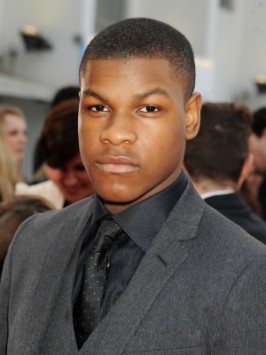
For nearly three years, Movieline’s Verge feature has introduced you to the likes of Jessica Chastain, Jennifer Lawrence, Armie Hammer, Emma Stone, Chris Hemsworth and dozens of other bright young screen talents on their ways to the big time. 2011 was no exception, so wind down the year with a look back at — and a word with — a few major new players you’ll be seeing plenty of in the future. John Boyega AGE: 19 THEN: Fought off alien invaders in South London in the cult favorite Attack the Block NOW: Leading the Spike Lee/Mike Tyson/John Ridley HBO series Da Brick ON COMING TO HOLLYWOOD “McDonald’s is a big highlight for me. [… Y]ou do things differently. Seriously. I mean, I asked for a burger and they give me a tank. It’s like, ‘Wow, you guys eat!’ I really respect that. We don’t have the little thing where you can refill your drinks. We don’t have that! So yeah, it’s been fun. Seeing the history, seeing the Hollywood sign. I’ve been on Sunset. I went to the Griddle Cafe. Oh, man. I had an Oreo pancake. It was heavenly. I don’t want to go back now, just because of that pancake.” Joel Courtney AGE: 15 THEN: Made film debut in J.J. Abrams’s Super 8 NOW: Will appear as the former Twain hero in upcoming Tom Sawyer & Huckleberry Finn ON THE SPIELBERG FACTOR : OK, I have to tell you. The first time Riley [Griffiths] and I were doing a scene, and [Steven Spielberg] came in, I didn’t know if Riley saw him, but I did. I was like, ‘Dude!” He was like, ‘Yeah, I see him!’ It was so funny because during this scene we were trying not to break character because he was there but we really wanted to talk to him and meet him. And it pushed us to do better in the scene, because he was there. That’s one of our better scenes together. It’s the one where we’re watching the TV, watching the newscast, and he was there during that scene. While we were at Bad Robot watching [the film] with J.J., I was like, “Riley, that’s the scene Steven was there for!” He was like, ‘I know, it’s awesome!’” Jeremy Irvine AGE: 21 THEN: Made big-screen debut as Albert Narracott in Steven Spielberg’s War Horse NOW: Will play younger version of Colin Firth’s character in The Railway Man , appear as Pip in Great Expectations , and co-star with Dakota Fanning in Now is Good WORDS OF ADVICE : “You’ve got to get away from the crowd. If you stay with everyone else, then you’re just going to be another one. But there’s no set way. At the end of the day, what it all comes down to is being in the right place at the right time.” Brit Marling AGE: 28 THEN: Co-wrote and starred in the Sundance darling Another Earth NOW: Appearing opposite Richard Gere and Susan Sarandon in Arbitrage and in the all-star Robert Redford-directed thriller The Company You Keep ON EXCEEDING EXPECTATIONS : “When we were making this movie, we were saying at the beginning, ‘Oh yeah, we’ll have a screening at our house. How many people can we fit into the living room? If we bring in chairs and we borrow this person’s couch, we can fit 20 people in here to watch the movie!’ That’s kind of how we went about making it; we just wanted to make something, you know? The desire to just make something is so strong, you’re not even thinking about how it could enter the world. Getting to go to Sundance, and [Fox] Searchlight taking the film into their hands — which are the most capable hands in independent filmmaking — they put so much thought and feeling behind bringing this work into the world that basically, it’s every day a state of shock and awe.” Elizabeth Meriwether AGE: 30 THEN: Wrote the screenplay for the Natalie Portman/Ashton Kutcher comedy No Strings Attached NOW: Created Fox’s hit New Girl , has projects in development with Fox, Paramount and Universal ON THE MASTERPLAN : “This has just been a kind of unbelievable process. I just want to keep writing characters who are interesting and complicated people and interesting roles for women, in TV or film or in theater. I think that’s like my Blues Brothers mission.” Elizabeth Olsen AGE: 22 THEN: Wowed Sundance and stirred awards talk with her breakout role in Martha Marcy May Marlene NOW: Will appear in Peace, Love and Misunderstanding (with Jane Fonda), Red Lights (with Robert De Niro and Sigourney Weaver) and Very Good Girls (with Dakota Fanning) ON THE ART OF READING SCRIPTS : “There’s something that was really interesting that happened as I was reading it that I actually hadn’t experienced with other scripts, because it was also within the first six months of reading scripts and auditioning. Like when you’re reading a book in your head, you create this imaginary character, naturally. And it was my first time reading a script imagining myself instead of another character. Now, every time I read a script I try and make that happen, because it helps a lot to figure out or tell yourself, ‘Oh, I can do this,’ and then you end up reading it in a way that you would do it.” Corey Stoll AGE: 35 THEN: Stole scene after scene as Ernest Hemingway in Woody Allen’s monster hit Midnight in Paris NOW: Will appear in The Bourne Legacy and the Samantha Morton-led ensemble film Decoding Annie Parker ON THE AUDITION OF A LIFETIME : “It was like a two-page sentence with no punctuation. It was a lot to prepare in five or 10 minutes. But then I came in and did it, and he seemed really happy. He gave me one little adjustment, and I did it again. And that was it. It was a great audition — the best audition of my life in terms of the sense of not having to feel like I was auditioning, even. It was just this sense of, ‘Here, just read this. What does this sound like? Is this going to work?’ I was shockingly un-nervous for what the stakes were, because you look at it and think, ‘Wow. There are so many actors who would kill for this role.’ And it’s so well-written, and it’s such a juicy character, and you know that Woody Allen is going to direct it perfectly. It was just up to me to not screw it up. [Laughs]” Juno Temple AGE: 22 THEN: Had first leading role in the ’80s-era dramedy Dirty Girl NOW: Has a half-dozen projects in line for 2012, including the The Dark Knight Rises , Lovelace and Jack and Diane ON HER INSPIRATION : “I was 4 years old. It was L.A. – my parents lived in L.A. – and I was sitting on the couch. They had this great striped couch in the living room. My dad had a laser-disc machine. I remember the dress I was wearing, too: This little short, bright blue corduroy dress with red trim, buttoned up the front. I was wearing that. And my dad put on La Belle et la Bete , by Jean Cocteau. And I legitimately had my mind blown. I was in love with the beast. I wanted to be Belle more than I know how to put into words — still to this day, and I’m 22. I wanted to do that — anything I could do to make that stuff happen. So I started doing plays. I was always in fancy dress. It just became something I was obsessed with. I’ve always had a crazy, vivid imagination.” Shailene Woodley AGE: 20 THEN: Appeared as George Clooney’s daughter in The Descendants NOW: Navigating awards season (likely all the way to Oscar night) and upcoming fourth season of her hit TV show The Secret Life of the American Teenager ON FAME, THE NECESSARY EVIL : “As a kid, I never wanted to be in magazines. I never wanted to be that stupid ‘F’ word, famous. I never wanted to be an ‘S’ word, star. For me it was all about the art of acting. I remember being an 8-year-old and saying, “I’m going to be a third-grade teacher and on the side, I’ll act.” [Laughs] I don’t want to be a third-grade teacher anymore, but I do want to always acting be my hobby and it be fun. The day it becomes tedious or the day it becomes something I feel I have to do for money, or because of the industry, or because of some silly image, is the day I quit. If it’s not fueling something, why would I do it?” Follow S.T. VanAirsdale on Twitter . Follow Movieline on Twitter .

Excerpt from:
Elizabeth Olsen, Shailene Woodley, and Other 2011 Highlights From The Verge

Country Strong, Final Destination and Other Noteworthy Surprises of 2011

Surprises too are often tied to expectation, or lack of it. The first film I saw in 2011 surprised me in part because it was the first film I saw in 2011 — that is, a film shunted onto the whistling heath of the January release schedule. It was Shana Feste’s Country Strong , and it got a raw deal. Casting Gwyneth Paltrow as a country superstar is either a brave decision or an incredibly timid one — regardless, Paltrow stepped into an outsized role and very nearly filled it out. The supporting cast of Leighton Meester, Tim McGraw, and especially Garrett Hedlund give the celebrity melodrama human ballast, and Feste manages to pace a pretty slick story with moments of believable intimacy and alienation. When it comes to horror films and especially on-screen gore (I suppose off-screen gore as well), I am — as Justin Timberlake’s character pronounced it in the reasonably surprising Friends With Benefits — a huge pu-ssay. Seeing Final Destination 5 next to my name on the assignment slate was a definite short straw situation, but I fancy myself a professional, and so cleared my schedule and my appetite and headed to midtown. I had never seen a Final Destination , which accounted for the formula’s novelty for me — the villain here is death itself, manifested in the trickle down economics of excruciating coincidence — but the film, shot in 3-D, is also brilliantly choreographed and possessed of the kind of tension — outrageous but not totally gratuitous — that directors rarely bother with anymore, when splatters and shakey cams do just as well. Not that there aren’t — heaven knows — plenty of guts a-squishin’ in Final Destination 5 . But it was worth a few pounds of flesh to be reminded how pleasurable it is to be both really and truly scared and perfectly safe in a crowded movie theater. So a quick check-in on the Friends alumni: Most promising cast member Jennifer Aniston seems resigned to debasing herself in Adam Sandler shitshows like Just Go With It ; Matthew Perry, always rebounding in my heart, is as ever poised for a comeback; Lisa Kudrow keeps launching hothouse comic series that feel too cringey to last; Courtney Cox has a network show and yet seems to spend her days fastened to a mirror; Matt LeBlanc came up with something interesting in the meta-TV cable series Episodes ; and David Schwimmer pretty much killed it directing his second feature film, the internet predator drama Trust . Clive Owen gives a powerful and difficult performance as a father reckoning with his daughter’s role in her own victimization and Liana Liberato makes a frankly astonishing debut as a young girl drawn into the emotional confusions of abuse. In deploying real emotional toughness against easy accusations of after-school special-dom, it is Schwimmer who emerges as the mature and still-promising talent. I was surprised, anyway. Though it’s not strictly movie-centric, I feel compelled to note one of the most pleasant surprises of my favorite new television series — the venue, after all, to which so many of our movie stars have migrated. Luke Wilson hit an inexplicable rough patch in the late aughts, his endearing, chronically bedazzled comic presence and magma-deep melancholy wasted on minnow-ish indies like Middle Men and I Melt With You director Mark Pellington’s Henry Poole Was Here . And then his disheartening appearance in the ads that cannot be named. But in playing the innocuous waster Levi Callow in Mike White’s HBO series Enlightened , Wilson seems to have not only returned to form but raised his game. White cast the role perfectly, and dispenses the character of Levi in precise and exact-right doses: Initially seen through the warped lens of Laura Dern’s Amy — a recent inductee into the narcissistic cult of well being — he emerges as more than a pathetic fallback and projection screen for his ex. In the exquisite Robin Wright episode, by making Levi’s exasperation his own White brings Amy’s desperation into clearer view. In a later confrontation with Amy’s mother (Diane Ladd) Levi is finally unleashed as a whole, seething person. Wilson makes what might be an ordinary role feel risky, and in his fringy yet essential presence sets up the question of whether Levi is a poignant satellite in Amy’s orbit or she is a moon to his Melancholia. I’m really happy to be watching Luke Wilson again, is mostly what I’m saying — on any screen. Happy and a little bit relieved. Follow Michelle Orange on Twitter . Follow Movieline on Twitter .

Original post:
Country Strong, Final Destination and Other Noteworthy Surprises of 2011





