Tag Archives: gulf

BP Crews Have Removed the Blowout Preventer on BP’s Ruptured Oil Well in the Gulf of Mexico

Crews have removed the blowout preventer on BP's ruptured well in the Gulf of Mexico, a company spokeswoman says. http://www.cnn.com/2010/US/09/02/gulf.oil.disaster/index.html?hpt=C1 Cap off BP's ruptured well By the CNN Wire Staff September 2, 2010 5:50 p.m. EDT Crews have begun removing the blowout preventer on BP's ruptured well in the Gulf. STORY HIGHLIGHTS * NEW: Cap removal is first step in removing, replacing blowout preventer * The well has been capped since July 15 * Installing a new blowout preventer is a crucial step toward killing the well LIVE: Click here for an underwater view of BP's work. New Orleans, Louisiana (CNN) — Crews removed the cap from BP's ruptured Gulf of Mexico oil well late Thursday afternoon, a company spokeswoman said. The operation was the first step in removing the blowout preventer — which failed spectacularly in April, triggering a deadly explosion and oil spill — said BP spokeswoman Jessie Baker. Officials plan to replace the blowout preventer with a new one, a major step toward a final fix. But the effort to permanently seal the ruptured oil well has stalled because of turbulent seas. “We've run into a weather window that's got us in a hold,” said retired Coast Guard Adm. Thad Allen, the government's point man on the oil disaster. “If we can get to the blowout preventer sooner rather than later, we will do that.” BP announced the postponement of the procedure on its Twitter page Monday. The operation was delayed last week as engineers tried to fish out pieces of drill pipe stuck inside the blowout preventer. Removal of the device needs to be done carefully, officials have said, because the blowout preventer may hold valuable forensic evidence as to why it failed April 20, triggering the explosion that killed 11 rig workers and caused the massive oil disaster. Allen said teams are working closely with joint investigation groups, engineers, scientists and the Department of Justice to ensure the machinery is handled correctly. The well has been capped since July 15, stopping the flow of oil. added by: EthicalVegan

iPhone Game Features Heroic Fish Dodging Gulf Oil Spill Damage

Image via Elephant Journal We’ve had an influx of iPhone apps based on the Gulf oil spill , and many of them also donate proceeds to helping clean-up efforts. So what makes Puff Puff: Gulf Spill any different? It’s still an app about the life post oil disaster and it donates 30% of net proceeds to ecosystem restoration in the Gulf of Mexico. But perhaps the importan… Read the full story on TreeHugger

Here is the original post:
iPhone Game Features Heroic Fish Dodging Gulf Oil Spill Damage

Lab Report Confirms Highly Toxic Levels of Corexit In Sickened Family’s Swimming Pool

*Exclusive* Credit: FloridaOilSpillLaw.com “Our heads are still swimming,” stated Barbara Schebler of Homosassa, Florida, who received word last Friday that test results on the water from her family’s swimming pool showed 50.3 ppm of 2-butoxyethanol, a marker for the dispersant Corexit 9527A used to break up and sink BP’s oil in the Gulf of Mexico. The problems began for the Scheblers a few weeks after the April 20 blow-out. “Our first clue were rashes we both got early in May. Both my husband and I couldn’t get rid of the rashes and had to get cream from our doctor,” Schebler noted, “I never had a rash in my life.” Then, on “July [23], my husband Warren mowed the lawn. It was hot so he got in the pool to cool off afterward. That afternoon he had severe diarrhea and very dark urine. This lasted about 2 days,” she revealed. Initially, they reasoned this was caused by the heat. The following week Mr. Schebler again mowed the lawn and went in the pool, and again he was sickened with the same severe symptoms. Suspicious that the pool may be a problem, the family set out to get the water tested. “We have a 15 year old and felt we owed it to him to live in a clean, healthy environment,” said Mrs. Schebler. The Scheblers found Robert Naman, a Mobile, Alabama chemist who’s performed multiple tests (1, 2, 3) for WKRG Channel 5, also out of Mobile. “Warren collected a water sample from the pool filter on August 17th… packed the sample according to Mr. Naman’s instructions, and overnighted it to his Mobile, Ala. lab that same day,” she noted. The results were delivered by Naman over the phone on August 27 at 11:00 a.m. EDT. A copy of the findings were then e-mailed to the Scheblers. To view the document, click here. “Naman [said] our pool water sample we sent him contained 50.3 ppm [parts per million] 2-butoxyethanol marker for Corexit,” according to Mrs. Schebler. Tests for arsenic came back at less than .02 ppm. A July letter from four top scientists noted, “Corexit 9527A contains 2-BTE (2-butoxyethanol), a toxic solvent that ruptures red blood cells, causing hemolysis (bleeding) and liver and kidney damage (Johanson and Bowman, 1991, Nalco, 2010).” The safety data sheet provided by Nalco, the manufacturer of Corexit 9527A, warns, “Harmful if absorbed through skin. May be harmful if swallowed. May cause liver and kidney effects and/or damage. There may be irritation to the gastro-intestinal tract.” Mr. Schebler’s “severe diarrhea and very dark urine” appear to indicate gastro-intestinal tract irritation. BP Press Officer Daren Beaudo released a statement on August 28 that reads, “Unified Command records indicate that the last date of use of the Corexit 9527 was May 22,” almost three months before the samples were taken from the pool. Yet, the Schebler’s report is the second time in the last 10 days that the 2-butoxyethanol marker for Corexit 9527A has been discovered near the Gulf. It has also been found near the Florida border in Cotton Bayou, AL, at about 1/4 the level as in Homosassa, FL. A WKRG segment from August 19 featured an inland water sample that tested for 13.3 ppm of the Corexit dispersant. The question remains, how did this chemical find its way into the Schebler’s pool in such a high concentration? “At night we would hear very low aircraft, including helicopters. We figured they were just heading to help out in the Gulf,” and Mrs. Schebler added that she was told, “The prevailing winds from the Gulf are easterly — and when they spray, it is airborne — and that we are right in the path of those winds.” It was also noted that, “We had alot of rain here before my husband got sick, and wondered what was going on… We had been having daily downpours in July.” There is no way to be sure at this point. Though she stated, “Friends a few miles away… are having [a] similar situation. They are now thinking of getting their water tested.” As for the family’s current physical well being, “We both still have rashes that will not go away if we stop the cream we were given by our doctor. Warren still gets diarrhea on and off – this never happened with this frequency before.” (a bit more at original article, and many links to sources) http://www.youtube.com/watch?v=1FxfYqnlQ50&feature=player_embedded added by: samantha420

Sophia Bush and Austin Nichols Go Green on "One Tree Hill," Ted Danson and Morgan Freeman Speak out for Oceana, and More

Photo via ivillage.com “One Tree Hill” stars Sophia Bush and Austin Nichols talked to Planet Green about their recent trip to the Gulf Coast, where they tried to help with clean-up efforts on the oil-soaked beaches, and about the ways they t… Read the full story on TreeHugger

See more here:
Sophia Bush and Austin Nichols Go Green on "One Tree Hill," Ted Danson and Morgan Freeman Speak out for Oceana, and More

Ed Burtynsky on the Gulf Oil Spill

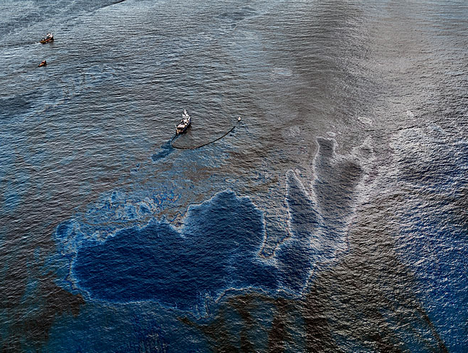
Images from metiviergallery : Oil Spill #4, Oil Skimming Boat near Ground Zero, May 12, 2010, chromogenic print The Canadian photographer, Ed Burtynsky, has been photographing the impact of industrialization on the environment for the last 30 years. His huge colour photographs depict the toll that environmental disasters are taking on human beings and the landscape. In May 2010 Burtynsky travelled to the Gulf of Mexico to photograph the oil spill. The series of 9 photos on display at a

More here:
Ed Burtynsky on the Gulf Oil Spill

Gulf Chemist: Mercenaries Hired By BP Are Now Applying Toxic Dispersant – at Night and In an Uncontrolled Manner – Which BP Says It No Longer Uses

Bob Naman is an analytical chemist with almost 30 years in the field, based in Mobile, Alambama. When WKRG News 5 gave Naman samples of water from the Gulf of Mexico, Naman found oil contamination, and one of his samples actually exploded during testing due – he believes – to the presence of methane gas or Corexit, the dispersant that BP has been using in the Gulf (see comments section for video). A few days ago, Naman was sent a sample of water from Cotton Bayou, Alabama. Naman found 13.3 parts per million of the dispersant Corexit in the sample: More imporantly, Naman told me that he found 2-butoxyethanol in the sample. BP and Nalco – the manufacturer of Corexit – have said that dispersant containing 2-butoxyethanol is no longer being sprayed in the Gulf. As the New York Times noted in June: Corexit 9527, used in lesser quantities during the earlier days of the spill response, is designated a chronic and acute health hazard by EPA. The 9527 formula contains 2-butoxyethanol, pinpointed as the cause of lingering health problems experienced by cleanup workers after the 1989 Exxon Valdez oil spill, and propylene glycol, a commonly used solvent. Corexit 9500, described by [Nalco's spokesman] as the “sole product” Nalco has manufactured for the Gulf since late April, contains propylene glycol and light petroleum distillates, a type of chemical refined from crude oil. Moreover, Naman said that he searched for the main ingredient in the less toxic 9500 version – propylene glycol – but there was none present. In other words, Naman found the most toxic ingredient in 9527 and did not find the chemical marker for 9500. Since BP and Nalco say that no dispersant containing 2-butoxyethanol has been sprayed in the Gulf for many months, that either means: (1) BP has been lying, and it is still using 2-butoxyethanol. In other words, BP is still Corexit 9527 in the Gulf or (2) The dispersant isn't breaking down nearly as quickly as hoped, and the more toxic form of Corexit used long ago is still present in the Gulf. Naman told me he used EPA-approved methods for testing the sample, but that a toxicologist working for BP is questioning everything he is doing, and trying to intimidate Naman by saying that he's been asked to look into who Naman is working with. I asked Naman if he could rule out the second possibility: that the 2-butoxyethanol he found was from a months-old applications of the more toxic version of Corexit. I assumed that he would say that, as a chemist, he could not rule out that possibility. However, Naman told me that he went to Dauphin Island, Alabama, last night. He said that he personally saw huge 250-500 gallon barrels all over the place with labels which said: Corexit 9527 Naman took pictures, and will send them to me later today (I'll post them as soon as I receive them). Naman further said he saw mercenaries dressed in all black fatigues, using gps coordinates, applying Corexit 9527 at Dauphin Island and at Bayou La Batre, Alabama. The mercenaries were “Blackwater”-type mercenaries, and Naman assumed they must have been hired either by BP or the government. Naman also confirmed – as previously reported – that the Corexit 9527 is being sprayed at night, and that it is being applied in such a haphazard manner that undiluted 9527 is running onto beach sand. added by: samantha420

It’s as if a nuclear apocalypse has gone off in the Gulf

There are a few new, developing BP-related stories that should greatly disturb any American who values openness and transparency in their democracy. First, a chemist named Bob Naman claims samples he received from Orange Beach Alabama waters tested positive for the dangerous neurotoxin pesticide 2-butoxyethanol, the main ingredient of Corexit 9527A. The government has been claiming they discontinued the use of that version of Corexit in the Gulf. Now, Naman says he’s worried because BP called him and “threatened him.” Next, Dr. Nyman of Louisiana State University, who began comparative tests early May to determine the impact of oil and the impact of Corexit laced oil on maritime life, says, while marine life may recover quickly from oil exposure, the same cannot be said about exposure to Corexit. Large mammals were the least affected by the presence of oil, while the small bottom creatures, worms that are the food source for bottom feeders, were affected the most. The conclusion was that an oil spill is disruptive to maritime life but does not negatively impact the seafood population on a permanent basis. The impact is temporary and can reverse and restore itself over a period of time. The same cannot be said when natural waters contain a Corexit-oil mixture. Dr. Nyman’s studies show that the recovery period is twice or three times as long when maritime life is exposed to the toxic mixture of Corexit and oil. While the large mammals ultimately recover, the smaller fish population is reduced dramatically by 25% or more, depending on the concentration. The bottom of the natural food chain however, does not recover and is killed in its entirety which affects all the bottom feeders in the Gulf of Mexico, including shrimp, crawfish, crabs and lobster. Over at Counterpunch, Anne McClintock has a very good summary of the three vanishing acts playing out in the Gulf: the “disappearing” of oil courtesy of Corexit, the disappearing story in the media, and the disappearing of private contractors who are making a pretty penny helping BP and the Coast Guard keep a lid on the cover-up. Previously, I have written about the absolutely absurd claim that the oil has magically disappeared thanks to the Corexit fairy. Corexit simply hid the problem by sinking the oil, and there is no good way to clean up oil that is sitting deep in the ocean. Marine scientists have reported finding enormous oil plumes that could still exist in the Gulf due to the cold temperatures of the water. I recommend reading McClintock’s article in full, but I wanted to highlight this interaction with her source, a veteran named Steve who was hired to help in the clean-up effort. “It’s as if a nuclear apocalypse has gone off in the Gulf,” he said. “The media is not telling the truth. No one is telling the truth. Let me tell you something. Yesterday on the beach where we work, my crew cleaned up seven hundred bags of oil. Today we went back and the beach was completely covered in oil, as if we had never been there. Today we carried away another seven hundred and fifty bags. Every day we clean up, then the tide brings it in again. The oil is everywhere, deep under the sand. Today I wanted to measure the oil, so I stuck my shovel into the sand and the oil was down there eight inches deep.” Steve leaned in close, “Do you want to know how long my contract is to work down here?” he asked. “Three years.” His jaw muscles tightened as if he wanted to suck his words back into his mouth, but could not. “They are telling everyone it is not so bad, but clean-up will take many years. I am going to be here a long time.” Steve wiped a hand heavily over his eyes as if they were burning. “Let me tell you something. Today we saw three sharks washed up dead on the beach. The insides of their noses were black with oil. The membranes of their mouths were black with oil. Their eyes were black with oil.” As I have repeatedly stressed, the full ramifications of this disaster won’t be understood for years. That’s why it’s so essential the media doesn’t buy the narrative that the crisis is over. Ever since they refused to allow workers to wear respirators during the clean-up, BP has been doing everything in its power to skirt liability for not only the oil volcano, but also the consequences of dumping two million gallons of experimental toxins into the ocean. They have bullied, intimidated, and used private contractors to suppress free and open media coverage of the unfolding events. BP is now desperately trying to get the victims of the Gulf disaster to quickly sign away their legal rights in order to secure swift payment as opposed to dragging things out in a lengthy, expensive court war like the one Exxon victims had to (and continue to) endure. All the right rich people want the Gulf squared in their rearview mirrors. The oil companies want to drill, and many politicians want the oil companies to stay happy so they can secure their donations come election time. The media is fatigued by the story, and eager to believe BP and state officials when they brushed off their hands and delivered the clarion call, “The End!” Focusing on the unknown consequences of Corexit is bad PR. It’s bad for deep-sea oil drilling. It’s bad for the politicians that need oil corporation donations. In all honesty, it’s bad for the local fishing industry, too. And I feel for those poor men and women, who will suffer years of financial devastation because of the irresponsible actions by BP (another reason not to let BP off the legal hook.) Of course, it’s also necessary to ask these questions. No one really understands the long-term consequences of Corexit. In fact, every day it becomes clearer and clearer that no one has any idea what this stuff is going to do to the food chain. ~ Visit the original article for embedded links ~ Related: The recent news that a new oil-eating microbe is eating BP's oil plumes comes from UC Berkeley, which received the largest BP grant ever ($500 million) http://www.youtube.com/watch?v=2hnA8IqTr8c&feature=player_embedded added by: samantha420

Feelgoodz Flip-Flops An Unwitting Casualty of Gulf Oil Spill

While not exactly on the same scale as fishing and tourism taking a huge hit from the Gulf oil spill, Change.org highlights an unwitting and unexpected casualty of it all: Feelgoodz flip-flops. The ethically-sourced, all natural rubber, footwear start-up is sitting on thousands of unsold shoes and may be unable to repay a $50,000 loan that got them started. … Read the full story on TreeHugger

Here is the original post:
Feelgoodz Flip-Flops An Unwitting Casualty of Gulf Oil Spill

BP Catastrophe: Scientists Have Confirmed That Toxic Organisms and Oil Have Been Found on the Gulf Floor | Video

Scientists: Toxic organisms, oil found on Gulf floor John Paul says, at first, he couldn't believe his own scientific data showing toxic microscopic marine organisms in the Gulf of Mexico. He repeated the field test. A colleague did his own test. All the results came back the same: toxic. It was the first time Paul and other University of South Florida scientists had made such a finding since they started investigating the environmental damage from the BP Deepwater Horizon oil spill. The preliminary results, the scientists believe, show that oil that has settled on the floor is contaminating small sea organisms. Paul is a marine microbiologist with the University of South Florida. He and 13 other researchers were in the middle of a 10-day research mission that began August 6 in the Gulf of Mexico when they made the toxic discovery. The researchers battled 12-foot waves and storms but returned to St. Petersburg, Florida Monday night. We were there as the team pulled its research materials into the lab and got the first report back of their initial findings. The researchers found micro-droplets of oil scattered across the ocean floor and they also found those droplets moving up through a part of the Gulf called the DeSoto Canyon, a channel which funnels water and nutrients into the popular commercial and recreational waters along the Florida Gulf Coast. The scientists say even though it's getting harder to see the oil the Gulf is still not safe. “This whole concept of submerged oil and the application of dispersants in the subsurface and what are the impacts that it could have, have changed the paradigm of what an oil spill is from a 2-dimensional surface disaster to a 3-dimensional catastrophe,” said David Hollander, a chemical oceanographer and one of the lead scientists on the recent USF mission. added by: EthicalVegan

BP Spill Oil Already Entering the Gulf Food Chain

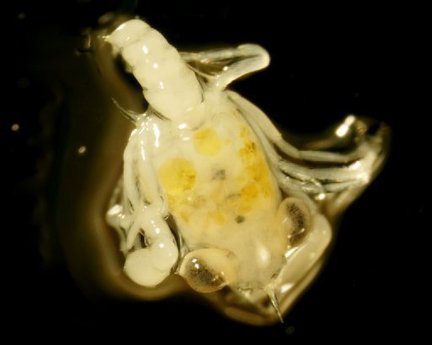
Photo via NOLA The recent discovery of trace amounts of oil in blue crab larvae has left experts forecasting dire news for the Gulf ecosystem. It’s evidence that the oil from the spill loosed from the Deepwater Horizon explosion has already begun working its way up the food chain — where it could be fatal to animals who ingest it. … Read the full story on TreeHugger

See the article here:
BP Spill Oil Already Entering the Gulf Food Chain