Halliburton employee warned BP that oil well plan was risky, he testifies at oil spill hearings Published: Tuesday, August 24, 2010, 4:19 PM Updated: Tuesday, August 24, 2010, 5:49 PM David Hammer, The Times-Picayune PART ONE… This is an update from the joint hearings by the Coast Guard and the Bureau of Ocean Energy Management, Regulation and Enforcement investigating the causes of the Deepwater Horizon oil rig explosion on April 20. A Halliburton employee who worked on cementing BP's wild Gulf oil well testified Tuesday that he verbally warned BP officials that their well plan increased the risk of gas leaks and questioned them about their plans by e-mail, but wasn't able to get them to change the process before the well kicked gas and started the largest oil spill in U.S. history. On April 15, five days before the explosions, Jesse Gagliano ran a computer model for BP's engineers, principally Brian Morel, that assumed BP would use 21 devices called centralizers to prevent the cement Halliburton was providing from channeling in the hole, thus weakening its effectiveness in sealing the well. Using modeling for 21 centralizers, Gagliano's report showed a low risk of gas flow. But that same day, Morel sent an e-mail message to Gagliano saying BP was going to use only six centralizers, adding that it was “too late” to send any more of the safety devices. Morel was scheduled to testify in Houston before Gagliano, but Morel's lawyer came instead and said Morel was pleading the Fifth. Three days after the e-mail exchange with Morel, or two days before the accident, Gagliano sent BP officials a new report that included modeling for seven centralizers, Gagliano testified. That report showed a severe risk of gas flowing in the well. Gagliano said he noted the risk on page 18 of the report. In addition, while working in the same office with the BP decision-makers, he said he personally addressed the issue with top BP engineers. “I notified BP of the potential issue we were facing,” Gagliano said before a federal investigative panel. “I printed it out and got up to go show them. I ran into (BP engineering team members) Brett Cocales and Mark Hafle and I said, 'Hey, I think we have a problem here.'” But when asked why he didn't exercise his power to stop the drilling project, which is supposedly given to everyone working on the job, Gagliano said he didn't because “channeling doesn't equal a blowout. It just means increased risk.” Channeling refers to when cement flows unevenly around metal tubes that line the well. When that happens, one side of the cylindrical liners is thicker than the other, leaving a weakness on the thinner side. Later, Gagliano said he sent an e-mail message asking Cocales, Hafle, Morel and another BP official, Greg Walz, if they were going to use the additional centralizers. Gagliano said he never got a response. The issue of centralizers is just one of several in which BP apparently chose less safe designs or processes in the final days before the blowout. The company also decided to use a single, long string of pipe to line the center of the hole, rather than a shorter final liner that could tie back to ones above it and place an additional barrier against gas flowing to the surface. There are BP e-mails in which company officials note that the long string would save time and money. BP also eschewed a cement bond log, a test known as the gold standard for measuring the integrity of a cement job. BP decided to send home a stand-by crew from oil-field services company Schlumberger without having them run the test, another decision that saved time and money. Gagliano testified that in his opinion, BP should have run the cement bond log, but he wasn't asked to weigh in on that. The cement bond log is the best test to detect channeling. If channeling is discovered, there are remedial cement jobs that can be done to sturdy the barriers against any oil or gas that's trying to enter the hole from the side or below. BP also went without a bottoms-up test, in which drilling fluid is circulated through the well to check if gas has entered at the bottom. Gagliano testified that it was Halliburton's best practice to perform a bottoms-up test on each well, but that the contractor played no role in BP's decision not to do it. Except he said Halliburton officially recommended using a bottoms-up test. BP lawyer Richard Godfrey cross-examined Gagliano, noting that Gagliano prepared a design report on April 18 that assumed the use of seven centralizers and that document never explicitly says BP shouldn't use the design. Gagliano responded that he clearly indicated a high risk of gas flow and channeling of the cement in that report. That same day, Gagliano signed a 12-page report that never mentioned the centralizers. In that document, called a job recommendation report, Gagliano asserted that the cementing plan was Halliburton's recommendation. He backpedaled from that under questioning, saying the statement he signed was automatically generated. Again, Godfrey sought to use the document to show that Gagliano and Halliburton weren't really that concerned with BP's well design and were just emphasizing a few pre-accident references after the fact. Godfrey noted that Halliburton markets its ability to control severe gas flow and channeling problems. He also pointed out that Halliburton had poured cement for 21 wells in the Gulf of Mexico that it scored as a severe risk for gas flow, and only two of those were for BP. Gagliano responded that a ratio used to score the risk more precisely was particularly high in this case. After all was said and done, though, Nathaniel Chaisson, a Halliburton engineer on the rig, sent an e-mail to Gagliano stating, “We have completed the job and it went well.” That was 17 hours before the rig blew. Three days later, Gagliano sent a post-job report that said the cement job was good and also never mentions having given any warnings about centralizers, cement channeling or any other deficiency. CONTINUED… added by: EthicalVegan
-

-

Raw Police Video
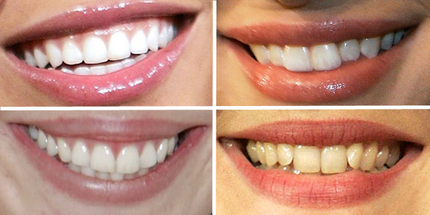
Name That Celebrity Smile!
 Breaking Sports Video
Hot Celebrities

Britney Spears
Kim Kardashian
Lauren Conrad
Heidi Montag
Zac Efron
Vanessa Hudgens
Miley Cyrus
Spencer Pratt
Robert Pattinson
Adam Lambert
Taylor Lautner
Taylor Swift
Roxy Olin
Khloe Kardashian
Brooke Hundley
Levi Johnston-