Tag Archives: history

REVIEW: Daniel Day-Lewis Brings Noble, Determined President To Life In Spielberg’s Timely ‘Lincoln’

The release of Lincoln , the new film from Steven Spielberg , is intended to coincide with the 150th anniversary of the days leading up to the Emancipation Proclamation and not the recent election; it doesn’t try to make a metaphor out of its portrayal of the 16th President or to force comparisons to our current commander-in-chief and the state of the country he’s overseeing, but it still couldn’t feel more timely. Written by Tony Kushner, the film covers the last four months in the life of Abraham Lincoln ( Daniel Day-Lewis ), as he battles to ratify the Thirteenth Amendment and bring an end to the Civil War, and up until an overly soft coda it is a magnificently warts-and-all portrait and appreciation of democracy at work in all its bickering, lively messiness. The difficulty of getting consensus on what’s clear now to be the righting of a massive ethical wrong allows for unlikely suspense and drama in what would be, had it existed back then, the domain of C-SPAN. The stakes are considerable, but Spielberg has no need to convince anyone of the awfulness of slavery. Instead, he makes a case for the democratic process, despite its flaws — as the best way for these decisions to be examined and hammered out, a place for moral purpose to meet practical concerns. A composition of browns and grays and dark rooms illuminated by dim period lighting,  Lincoln opens with two scenes that establish it has little desire to gaze at its subject or era with starry eyes. A glimpse of the war shows men floundering and dying in the mud, jabbing bayonets in each others’ guts. (Spielberg has no use, these days, in prettying up battle.) In the scene following, we watch soldiers greet Lincoln, all adoring, though not all content to simply praise: While two young white soldiers gawk over how tall he is, an African American one questions why there are still no commissioned officers of color as his friend tries to shush him. Lincoln receives and jokes with them all with characteristic unhurried equanimity, a quality that sees him through subsequent larger version of this interaction, in which even those who are firmly on his side have their own requests and additional needs to be pursued. With the help of a very good, fundamentally restrained performance from Day-Lewis,  Lincoln  offers up its protagonist as a flesh-and-blood being while allowing us to understand why his status in the country is already, as one of his officials puts it, “semi-divine.” Wielding a folksy charm and remaining even-keeled in the most tense of situations — his Secretary of War Edwin Stanton (Bruce McGill) storms off in frustration at one point when he realizes the President is about to launch into another anecdote — Lincoln’s nobility shines through in his unswerving conviction for what is right and his unfussiness about how to achieve it. Certain that the amendment must go through before the war ends, or risk not getting passed at all, Lincoln has Secretary of State William Seward (David Strathairn) hire a slightly disreputable trio (James Spader, John Hawkes and Tim Blake Nelson) to offer up patronage jobs to the outgoing Democrats in the House of Representatives in exchange for their votes. In his own Republican party, he tries to placate the conservatives, led by Preston Blair (Hal Holbrook), who are afraid of chasing away support with “extreme” views on things like freed slaves getting the vote, while winning over the radicals, led by the prickly Thaddeus Stevens ( Tommy Lee Jones at his most wonderfully irascible ), who consider compromise to be a betrayal of their beliefs about equality. Half the working character actors in Hollywood don wretched period facial hair and show up in small but memorable roles in  Lincoln — Jackie Earle Haley, Jared Harris, Michael Stuhlbarg, and Walton Goggins are just a few, while more famous faces like  Joseph Gordon-Levitt and  Sally Field show up as son Robert and wife Mary Todd Lincoln, who push and pull their patriarch over Robert’s desire to enlist. But this is Day-Lewis’ movie, and he does with the meditative inner stillness of his character a wonderful thing — he finds a type of heroism that runs counter to all of the usual showy movie signifiers of such a quality. The climactic vote in Lincoln , a rousing scene in which each congressman calls out his vote to the roar of his colleagues and the observers, takes place with the title character playing quietly with his young son in the White House, having done all he can. After months of a presidential campaign that illustrated the United States as a nation in which communication between parties and points of view has largely ceased,  Lincoln feels like a work of legitimate importance, and not only because it shows that people did just as much snarky, politicized yelling back in 1865. Spielberg has made a film that shows the legislative process as work but also as an ongoing conversation, one in which individual contact and shifts in perception can add up to gradual change, that argues multiple differing points of view needn’t leave the country immobile. Democracy is such that there will always be those who are displeased with the way votes went, but this was the moment in our history in which we declared that it didn’t mean they were allowed to secede and start their own country — that we were going to be in this together, one quarreling, diverse whole united in this national identity. As divided as the present can feel, there’s something unaffectedly patriotic about this sentiment, one that lightens this very fine film from within. Read more on Steven Spielberg’s Lincoln . Follow Alison Willmore on Twitter . Follow Movieline on Twitter .

Original post:
REVIEW: Daniel Day-Lewis Brings Noble, Determined President To Life In Spielberg’s Timely ‘Lincoln’

Harrison Ford Might Return As Han Solo − And Die Happy

Yes, Mara Jade, it’s possible for Harrison Ford to be “open to the idea” of reprising his role as Han Solo in Disney’s  Star Wars Episode VII  and still hate the character, as Movieline noted back in 2010 . The key here is that the actor may finally get the opportunity to kill off the character that has bedeviled him throughout his auspicious career, which is something he wanted back in Star Wars Episode VI: Return of the Jedi.   A “highly placed source” told EW.com  that  “Harrison is open to the idea of doing the movie and he’s upbeat about it,” but the story also notes, “don’t be surprised if his contract includes a mandatory death scene for the sly old space smuggler.” Now, there’s a reason to be upbeat!  Ford gets to chew some scenery in a death scene and   cut his ties — symbolically, psychically, joyously — to the role he can’t seem to shake, or love. Even though, two of the video clips seemed to have suddenly been pulled from Movieline’s 2010 post,  Ford’s not-so-fond feelings for the space cowboy character that made him a box-office boss have  been pretty apparent over the years. As EW also reported, Ford said in a 2010 ABC interview that Han Solo “was not so interesting to me” and that  “I thought he should have died in [Episode VI] to give it some bottom.” I also would have much preferred a Solo death scene instead of watching Ewoks dance. So, I hope Ford gets his wish. Then, the next time a talk-show host asks him about his iconic role, he can finally say:  “Han Solo — he’s dead.” Related Stories: Harrison Ford’s Long History of Hating Star Wars Luke Skywalker & Princess Leia Knew Of More Star Wars Stories; Surprised By LucasFilm Sale Disney Buying LucasFilm For $4.05 Billion, Promises New Star Wars in 2015 (UPDATED) Follow Frank DiGiacomo on Twitter. Follow Movieline on Twitter. 

The rest is here:
Harrison Ford Might Return As Han Solo − And Die Happy

No Doubt Removes Music Video, Apologizes for Offensive Content

No Doubt has left no doubt: it is very sorry if anyone was offended by its music video for “Looking Hot.” The video has come under fire because it features Gwen Stefani in Native American attire, tied up, handcuffed, dancing around teepees, and fighting cowboys. No Doubt – “Looking Hot” (Live Performance) In response to the controversy, the group has pulled the video from YouTube and issued the following apology: As a multi-racial band our foundation is built upon both diversity and consideration for other cultures. Our intention with our new video was never to offend, hurt or trivialize Native American people, their culture or their history. Although we consulted with Native American friends and Native American studies experts at the University of California, we realize now that we have offended people. This is of great concern to us and we are removing the video immediately. The music that inspired us when we started the band, and the community of friends, family, and fans that surrounds us was built upon respect, unity and inclusiveness. We sincerely apologize to the Native American community and anyone else offended by this video. Being hurtful to anyone is simply not who we are. Think this was the proper move?

Link:
No Doubt Removes Music Video, Apologizes for Offensive Content

Robert Zemeckis Says Bomb Mars Needs Moms Is ‘The Best 3-D Movie Since Avatar’

Disney’s 2011 family adventure Mars Needs Moms wasn’t just a box office disappointment; it was a box office disaster , one of the worst in movie history . Mars producer Robert Zemeckis , appearing at the Philadelphia Film Fest with his latest Oscar-hopeful, Flight , prefers to remember Mars Needs Moms another way: “It’s the best 3-D movie since Avatar .” Zemeckis’s bold answer matched the bold question that prompted his trip down memory lane during Flight ‘s post-screening Q&A session on Saturday night. Following a string of massive career hits ranging from the Back to the Future franchise to Oscar juggernaut Forrest Gump , the Zemeckis-produced Mars Needs Moms opened last year as the filmmaker’s most high profile critical and commercial failure. ImageMovers Digital, the Zemeckis-founded CG house that produced Mars as well as his own films The Polar Express , Beowulf , and A Christmas Carol , was shut down after completing Mars , while plans to embark on a Yellow Submarine pic with Disney were also scrapped; needless to say, it’s probably not Zemeckis’s favorite topic of conversation. (For what it’s worth, Flight , Zemeckis’s Denzel Washington -starring return to live-action film, played well with the Philly crowd.) But one Philadelphia Film Fest attendee was eager for answers. Film critic Martin Schneider penned a reasonably questioning if snarky review of Mars Needs Moms at the time of release, criticizing the film for a slew of offenses ranging from its animation to character development, with particular scrutiny of the film’s “anti-gay,” anti-progressive gender messaging. He seized the opportunity during the Philadelphia Film Fest closing night film event to share how offended he was by the film, asking Zemeckis to explain: What happened ? For his part, Zemeckis didn’t flinch. Prior to the film’s screening, Philadelphia Film Society Executive Director J. Andrew Greenblatt told the audience that the director would be taking questions, and that they could “ask him anything.” It’s tough to say whether or not Zemeckis expected the subject of his history-making bomb to pop up, but when faced by his accuser he kept his cool under pressure, like Denzel’s alcoholic hero Whip Whitaker. And then Zemeckis flew the airplane upside down, so to speak. “It was not marketed properly,” he said of the 3-D CG sci-fi flop, which cost a reported $150 million to make and made back just $38.9 million upon release, becoming the worst Disney performer of all time and one of the most miserable wide release 3-D openings in history. Zemeckis said Mars Needs Moms had been lost in the studio shuffle. He called it “breathtaking.” “It’s the best 3-D movie since Avatar ,” he continued. “It’s the way 3-D should be presented.” Meanwhile, in a career built on crowd-pleasers and after a decade spent attempting to bridge the uncanny valley with CG children’s films, Flight marks only the second film Zemeckis has directed to earn an R-rating. (His first? 1980s’s Used Cars .) Rated R “for drug and alcohol abuse, language, sexuality/nudity, and an intense action sequence,” Flight wasn’t gunning for anything less, given its full-tilt dive into the depths of addiction. “There was no way an adult drama was ever going to be anything other than R-rated,” said Zemeckis. Still, he earned applause with a parting shot at the MPAA: “I hate the ratings system. I think it’s horrible and despicable, and we should get rid of it.” Flight opens nationwide November 2. For more info on the Philadelphia Film Fest, head here . Follow Jen Yamato on Twitter . Follow Movieline on Twitter .

See the rest here:
Robert Zemeckis Says Bomb Mars Needs Moms Is ‘The Best 3-D Movie Since Avatar’

Marvel’s ‘Ant-Man’ Gets A 2015 Release Date

Marvel hero Hank Pym AKA Ant-Man will get his shot at the big screen in 2015, Disney announced today as they updated their slate of upcoming films. Also revealed: You’ll be able to see Iron Man 3 and Thor 2 in 3-D. Yawn . Let’s hear more about Ant-Man ! I’ll be honest: Even after Disney/Marvel unveiled the Ant-Man logo card at Comic-Con alongside the likes of Iron Man 3 , Thor: The Dark World , and Guardians of the Galaxy I had my doubts that Edgar Wright’s long-gestating superhero pic would make it to the screen in my lifetime. Now that it’s got a release date — albeit one in 2015, which is only three years away but feels like the distant future (seriously, how are we almost to the year 2015?!) — it finally feels like Ant-Man is happening. Also announced in Disney’s press release were dates for the Phineas and Ferb movie (moved up from 2014 to July 28, 2013), Saving Mr. Banks (December 20, 2013), DisneyNature’s Bears (April 18, 2014), “Disney Animation Untitled” (November 7, 2014) and “Pixar Animation Untitled” (November 25, 2015). Ant-Man , meanwhile, is slated to hit theaters on November 6, 2015. And while it’s unlikely since it came from an entirely different character who inherited the Ant-Man legacy (I know, I know), I’m holding out hope for a few scenes like this, because LOL.

Read the original:
Marvel’s ‘Ant-Man’ Gets A 2015 Release Date

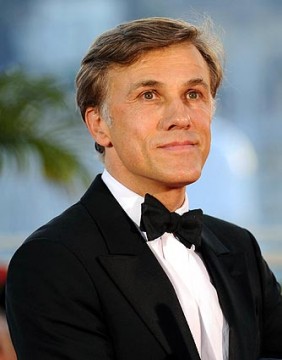
Christoph Waltz To Play Gorbachev In Reykjavik

The world sat on stitches as the Cold War raged. Ronald Reagan and Mikhail Gorbachev met in Iceland as the world glared. Would the world order of two superpowers on the brink end after decades of a nuclear arms race come to a close? Would a Communist and a Republican actually come to an understanding? Could Mikhail and Ronnie get along? If Nancy and Raisa were any indication, that would be a – no! The meeting that might have ended the U.S.-Soviet standoff is of course heading to the big screen and Oscar-winner Christoph Waltz will portray Gorbachev in Reykjavik . Production will begin in March on the meeting that riveted the world in the Icelandic capital. The high stakes meeting pitted two men who had control of enough nuclear bombs to destroy the world many times over. Waltz will star opposite Michael Douglas who will play the U.S. President in the film spearheaded by Mike Newell, according to BBC and THR . “I feel very fortunate to have two such masters to portray the men who brought about the end of the third great war of the 20 Century. Reagan and Gorbachev were two of the most significant politicians and individuals of their times,” said Newell. “I’m very excited to see how each of these great actors gets to grips with their role as the history-changing giants we remember them to have been.” Written by Kevin Hood ( Becoming Jane ) the story recounts the summit which was viewed as a last chance to avoid a nuclear Armageddon. “This is a moment in history where two world leaders with fundamentally opposing beliefs held the future of the world in their hands”, said Headline Pictures president Stewart Mackinnon, a project producer. “They controlled nuclear arsenals which had the capability to destroy the world many times over but despite this, put the needs of humanity before their ideology and agreed to end the nuclear arms race. Informed by deeply-held private beliefs Reagan and Gorbachev reached an understanding that we can still draw lessons from today.” “The film will offer the viewer a unique look into two larger than life figures – Reagan and Gorbachev – who served as the catalysts for one of the most defining moments in our history, the end of the cold war,” said Ridley Scott whose Scott Free Productions will also produce. Waltz will next be seen in Quentin Tarantino’s Django Unchained , while Douglas most recently portrayed flamboyant pianist Liberace in Behind the Candelabra with Matt Damon. [ Sources: BBC and THR ]

See the article here:
Christoph Waltz To Play Gorbachev In Reykjavik

Charlie Brown, Snoopy & Gang Head To Big Screen For 65th Anniversary

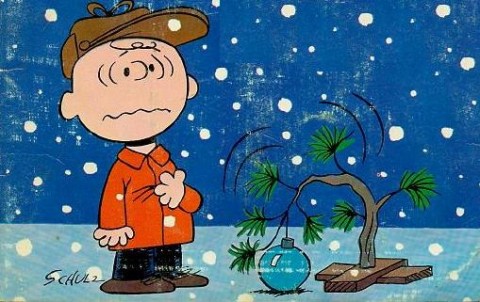
Those eternal kids from the Peanuts gang will get another turn at the big screen in a project spearheaded by Twentieth Century Fox Animation’s Blue Sky Studios. If all goes according to plan, Charlie Brown, Linus, Snoopy and the posse will hit theaters in 2015 with support from the family of Peanuts’ late creator Charles Schulz. The new film’s release will coincide with the 50th anniversary of the 1965 television special A Charlie Brown Christmas . The November 25, 2015 target is also in line with the 65th anniversary of Peanuts’ debut — talk about eternal youth! Charles Shulz’s son Craig and grandson Bryan will write the screenplay alongside Cornelius Uliano, while Ice Age 4: Continental Drift filmmaker Steve Martino is set to direct, according to The Guardian. Details about plot were not disclosed, though a holiday tie-in would not be a surprise. “We are thrilled to partner with the Schulz family and Iconix and honoured to bring the Peanuts characters to the big screen,” Fox Animation’s Vanessa Morrison said via a statement. “This all started with our love and respect for the work of Charles Schulz. We thank the Schulz family and Iconix for letting Fox and Blue Sky bring his vision to new generations of filmgoers.” Charles Monroe Schulz’s Peanuts comic strip was one of the most popular in the history of the medium, making its first appearance on October 2, 1950. Schulz died in February of 2000 and had said he wished for the strip to end after his death. United Features, which has ownership of the strip has honored that wish, but syndicates re-runs to newspapers. New television specials have since been produced, but they have been based on previous strips. Schulz had also said that he views Peanuts TV shows as entirely separate from the strip. [Image: Charles M Schulz/AP] [ Sources: The Guardian , Wikipedia ]

More:
Charlie Brown, Snoopy & Gang Head To Big Screen For 65th Anniversary

INTERVIEW: 007 Scion And Skyfall Producer Barbara Broccoli On Growing Up Bond

Barbara Broccoli was born into the world of James Bond ; along with co-producer Harry Saltzman, her father, Cubby Broccoli, brought 007 to the big screen with Dr. No when Barbara was only two years old. It would be inaccurate to say Broccoli inherited the Bond legacy — she’s made it her own, serving as producer from Goldeneye onwards, and in many ways, ushering cinema’s favorite secret agent into the modern era. The Skyfall producer rang Movieline to talk about the early days, Bond’s role in the cultural conversation over the years, and what the future holds for the character who, fifty years later, is still synonymous with effortless cool. Tell us a little about the beginning of the Bond film franchise. How did your father, Cubby Broccoli, along with Harry Saltzman, make the decision to adapt Ian Fleming’s spy novels? My father had wanted the rights to the films early on, but they eluded him. Harry Saltzman had an option, and my father heard this, called him up, and they joined forces just as the clock was ticking down, as the option was about to expire. Fortunately, they went to Arthur Kremp, who my father had a relationship with, and asked him if he would finance the film ( Dr. No ). David Picker, who was the young executive in the room, loved the Bond books, and he persuaded United Artists to take a shot and make the film, which was a huge commitment then. A million dollars for a budget, at that time, was significant. They were a force to be reckoned with. Cubby and Harry were both very passionate, determined men. They were driven. They wanted to see this series of books made into a film, and they were very passionate about their choice of Sean Connery, who was an unknown. They fought for him, and there was a lot of resistance because he wasn’t well known at all. The studio wanted a star, they wanted an American and all these various things, but [Broccoli and Saltzman] stuck to their guns, and the rest as they say, is history. Bond is turning 50 this year. In 2012, he’s still going strong. Why has the franchise endured? It basically comes down to Ian Fleming. I think he wrote a very complex character that has been able to evolve through the decades, with the assistance of the extraordinary men who have played the role, starting with Sean Connery who established the role to great effect in Dr. No , and all the subsequent actors have taken it and made it their own and made it of their time. I think Bond the character is distinct: He’s British, he has a certain code that he lives by, he’s incorruptible… he’s a classical hero, but he’s also fallible. He has inner demons, inner conflicts, and he’s a romantic. He gets himself caught up in all kinds of situations because of his heart, which gets broken in Casino Royale . He knows at the end of that first story that in order to do the job he does he has to make a lot of personal sacrifices, and one of them is that he cannot really have a proper relationship or a family, and that is a burden to him. By that same token, how do you think the character of Bond has evolved over the years, beginning with Sean Connery and running up to today with Daniel Craig ’s portrayal? With Daniel, the first film he did was Casino Royale , which was the first book, so that’s very much about how Bond became the Bond that we all know and love. It explains a lot about his history and why he got to be the way he is, particularly in his relationships with women, as I described. He knows he’s unable to really form a proper commitment with a woman because he may be captured, tortured, as he is in Casino Royale … he can put himself in that situation but he couldn’t put anyone else he loved, like a wife or a child, in that kind of jeopardy. So, I think with Daniel, it’s sort of come full-circle. We started with Fleming and fifty years later, we’re back to Fleming again: He’s very much central to the making of these films. The spirit of Ian Fleming is always with us and we particularly honor and celebrate him now, fifty years later, during this anniversary. Can you talk a little about your own relationship with 007 from a personal standpoint and how it’s changed from your childhood to the present? I was born in 1960, my father did the deal in ’61, and the first film was made in that year and released in ’62, so my life is synonymous with Bond. Growing up he was a huge figure in our lives, so much so that I thought he was a real person [laughs]. But it soon dawned on me that he was a fictional character. I spent a lot of time on the sets growing up. We would go on vacation from school, go on location, where the films were being filmed. Wonderful places: Exotic locales like Japan and the Bahamas, and the people making the films were part of our extended family. My father would be with them all day long and they would all come home for dinner. We were always together. It was a very large, happy family. Do you think Bond’s place in the pop culture spotlight has been constant, or has it fluctuated over the years? What kinds of challenges arise in making this franchise relevant to audiences today? There have always been challenges. I remember when we were doing Goldeneye and people were saying “The Cold War’s over, the wall’s down — does the world need James Bond anymore?” Of course, the answer was a resounding “Yes!” Just because the wall came down didn’t mean the world was at peace. In fact, good and evil were slightly blurred, and we didn’t know who the enemy was. I think we’re always trying to come up with intriguing storylines and villains for Bond to go up against, and when you look at Skyfall , and you look at Javier Bardem you’ll find… [laughter] he’s sort of the ultimate Bond villain. He’s provided a very exciting counterpoint to Daniel. How did Sam Mendes get involved with Skyfall ? Well, Sam and Daniel had worked together on Road to Perdition , and they’d had a great collaboration. When we were looking for a director, Daniel called us up and said “Oh, I was just at a party last night with Sam and I asked him if he wanted to do a Bond film — it turns out he’s a huge fan. What do you think?” And we said, “Oh my goodness, do you think we could actually get Sam Mendes? He’s a consummate film director, Oscar-award winner. Do you really think he’d be interested?” So we met with him, and it turns out — who would have known it – he’s a big Bond fan. So we snapped him up. He’s made an unbelievably terrific film, so we’re delighted. Has it been a little different working with a director like Sam, who is such a force of nature, on a franchise project like Bond that in the past has largely been producer-driven? I guess our attitude towards Sam was “We have a set of parameters as far as what we feel a Bond film is, but within those parameters…” There’s no point in hiring someone like Sam Mendes and then tying their hands. We wanted him because of his talent and his vision, and we worked together very closely on the script, and set the parameters together. He wanted to make a great Bond film, so it all turned out extremely well. As it turns out he was just like a kid in a candy store [laughs]. He loved the challenge, he lived up to it, and he exceeded all expectations. So I think the film has got all the wonderful, dramatic intriguing storylines and characters — we have a wonderful cast, many of whom were attracted to this because of Sam — and he’s also delivered tremendous action and excitement. He’s ticked all the boxes as far as I’m concerned. Learn more about Barbara Broccoli and the Bond legacy in the EPIX documentary Everything or Nothing: The Untold Story of 007 . Read more in Movieline’s ongoing Bond at 50 series leading up to the November 9 release of Skyfall . John Jarzemsky is a contributor at LitReactor, Twitch, and can be read semi-regularly at his personal blog, the ineptly named Super Roller Disco Monkey Hullabaloo! or on twitter @jtjarzemsky . He is big in Japan. Follow Movieline on Twitter .

See original here:
INTERVIEW: 007 Scion And Skyfall Producer Barbara Broccoli On Growing Up Bond

Oogieloves Writer Defends Film From ‘Oogie-Haters’

Screenwriter Scott Stabile has read the pans and box office bomb reports and anti- Oogieloves screeds, and yet ! He’s got nothing but (Oogie)love for even his harshest critics: “As all of us adults know, we live in a tense and troubled world. Young kids will be exposed to plenty of real-life scares and violence on TV, in video games, on the computer and in daily life. Why do we have to expose preschoolers to anything but innocence and love in a 90-minute movie? Why isn’t it enough to show a gentle world where people are kind and help one another, in hopes that young kids mimic those sentiments over fighting and jealousy and revenge?” [Scott Stabile via Oogieloves on Facebook ]

See the article here:
Oogieloves Writer Defends Film From ‘Oogie-Haters’

REVIEW: Phoenix, Hoffman Achieve Greatness While Doing Spiritual Battle In Marvelous The Master

The Master , the new film from  Paul Thomas Anderson , is the story of a spiritual duel — the battle for a soul — though only one of the participants perceives it as such. Lancaster Dodd ( Philip Seymour Hoffman ), the mystic of the title, is the leader of a young movement not unlike what evolved into a certain real life one well entrenched in the entertainment industry. It’s 1950, and he finds a stowaway on his ship, a drunk vagabond who claims to be an able-bodied seaman and who asks for work. The man’s name is Freddie Quell ( Joaquin Phoenix ), he fought in the war, and he’s not mentally stable, either because of his experiences in battle or because stability was just never meant for him. Lancaster, who is almost never referred to by his name but instead is called, simply, “master,” is intrigued by Freddie, likes him (to the bewilderment of others in his camp) and desires to work with him — wants to shape him using the force of will and ability to find the vulnerability in people that he’s slowly honing as his cause grows. Freddie is both terribly vulnerable and the ultimate challenge, because he’s a man with no ability to conform at will, one for whom all emotion and impulses run hot and right at the surface. If Freddie could be won over, changed and molded into someone new by Lancaster’s lectures and lessons, his “processing,” then the cause could be something real, and not just new age blatherings about past lives to wealthy socialites. What makes  The Master such a singular experience, as dense as a mille-feuille, is that it is not Lancaster’s story but Freddie’s, and told as such, in layers that are sensorially rich but that do not always lead easily from one to another. Freddie exists in the moment, ruled by his temper, his libido, or urges he would be unable to pin down or articulate.  At one point he wanders away for reasons unclear — restlessness, maybe — and years slip by without his seeming to register them. He loves but has left behind a girl, Doris (Madisen Beaty), though he doesn’t know why, longs to be with her and understands that he’s hurt her but doesn’t return. He has a good job in a department store until with no provocation one day he picks a fight with a client. He is a force of chaos, though it’s not malevolent. We see things as Freddie does, which is often the way a child does: Not fully understood, attention wandering after a while. We have more understanding than him, but it is almost exclusively through his eyes that we perceive the world, and we’re left to assemble the pieces we’re given into a whole that will never be fully coherent. There are only two scenes, by my count, in which Freddie is not present. Both show the ways in which other people, including Lancaster’s steely wife Peggy ( Amy Adams ), attempt to manipulate Lancaster the way he manages others, with rewards and slippery words. Lancaster is a man who is all performance, even, one would guess, when alone, while Freddie can only be himself. The Master  is built around two towering, career-high feats of acting. As Lancaster, Philip Seymour Hoffman is both authoritative and ridiculous, a series of shells with nothing inside. He’s not yet perfected the religion he’s building, and is still in the process of convincing himself of his sway over others, marveling in the way that he can tell people things and they will, frequently, be believed. We see the power in him when he processes Freddie in an early scene, demanding from the younger man that he not blink as he offers up answers about his past and himself, pulling from him capitulation even as Freddie is hopelessly moved by the intensity of his attention. Few things, we understand from what we’ve seen already, before Lancaster ever arrived on the scene, leave a mark on Freddie, but this moment does. This moment, he’ll remember. As Freddie, Joaquin Phoenix is entirely transformed — it’s a magnificent performance of remarkable physicality. “Naughty boy,” Lancaster calls him, reprovingly. “Silly animal.” Freddie is both of these things, a primitive, tending to swing his loose arms like an ape, his shoulders slumped, muttering out of one side of his mouth like he was crumpled into a ball once and never fully straightened out. He’s half-feral in a way that can be frightening, especially in a scene in which he loses control in a prison cell, raging, destroying everything within reach and hurting himself while Lancaster poses, still, in the cell next to him. But that coiled energy, that unrestrained carnality, is also appealing, and women are drawn to him (though they may not stay that way) — lucky for him, because baldly propositioning them is his main approach. With very fine cinematography by Mihai Malaimare Jr. and a textured, spiky score by Jonny Greenwood that chases the film along as much as the dialogue,  The Master is a more opaque sibling to  There Will Be Blood , a story that, like that earlier one, feels like an abstract American creation myth, a celluloid koan to be turned over in the mind. A final encounter between Lancaster and Freddie is sparked by a dream that signals that the former does have a hook in our strange protagonist, if not the ownership he desires, and that sends Freddie over the churning blue seas, images of which punctuate the film, to find his teacher. Lancaster, grown in power and yet more hollow than ever, offers up what may be the key to the film to his wayward ward: “If you figure out a way to live without a master, any master, be sure to let the rest of us know, for you would be the first in the history of the world.” In Freddie, terrible and free, is an image of a life unbounded by rules and unmarked by submission to any structure, whether it be an abstract figure or the one ensconced in his self-created institute, promising a cure for what ails you. Read more on The Master . Follow Alison Willmore on Twitter . Follow Movieline on Twitter .

View post:
REVIEW: Phoenix, Hoffman Achieve Greatness While Doing Spiritual Battle In Marvelous The Master