Tag Archives: housing

How To Choose The Best Daycare For Your Child

More here:

Great childcare  during your work day gives you a sense of peace during the day. Finding the right day care center, consider your child’s safety, how much you can afford to pay and your daily routine. Look for the following: Safety : check if the child care is licensed with your state and country.  Find out if it is well equipped to handle emergencies and if the staff is trained in first aid.  If required, get feedbacks from parents of other children attending the child care. Staff: the members of the staff are responsible for the care and learning of your child when you are away.  Make sure your child is in good hands through the day.  Watch how the staff works with the children and check if they are kind and caring.  Make sure there are enough staff members to give personalized attention to the kids. Learning programs: Find what kind of learning programs and activities the center is offering.  Check if they are on lines of your child’s interests and are apt for your child’s age.  You should also consider whether the programs fit with your family values and inculcate the right spirit in your child. Affordable: Check your finances to see whether it fits the fee charged by the child care.  Determine whether the services at the child care is worthy of the fees that you pay. Convenient :  Think about the location of the care center, if it is convenient for you to drop and pick up the child everyday and if you can reach the place easily in case of emergency. Peer:  the age of children at the child care center is a crucial aspect that most parents tend to ignore.  Make sure your child gels well with other children at the center and are happy at the end of the day. Bottom line, the child day care center should be a pleasant and enriching experience for your child.  It should be a place where your child can learn, play and be well taken care of. Make sure to read:  When To Choose Senior Housing For Elderly Parents and How To Get Your Child To Do Chores

How To Choose The Best Daycare For Your Child

Birdman Delivers Thanksgiving Joy To New Orleans

Cash Money CEO brings turkeys to his hometown neighborhood. By Steven Roberts, with reporting by Travis Laurendine Birdman Photo: Ray Tamarra/ Getty Images We rarely see the soft side of Cash Money CEO Birdman, but MTV News caught up with the 5-Star General in his hometown of New Orleans on Tuesday afternoon for his 15th annual turkey giveaway. The event was in Shakespeare Park, across the street from the housing projects Birdman, born Bryan Williams, grew up in. He said he was very happy to be home. “It feels good to see people that you grew up with, that you’ve been knowing your whole life and your family,” Birdman said. “[They] know more about you than you know about yourself.” He said the drive means a lot to those in the community, not just because of the giveaway, but also because the town is thrilled just to see Birdman and the rest of the Cash Money family. “They see us on TV so much, but never get to see us [in person]. But for them to see us, shake our hands, tell us they know our momma, they know our daddy, so many that watched me as a kid that tried to keep my head straight when I was younger — it feels great, not just good.” Birdman said Cash Money have been giving away turkeys for 15 years, but every year, it gets more exciting. He said that when they started, it was just to help out those that didn’t have anything for Thanksgiving. “We caught ourselves trying to help the neighborhood, the older folks who didn’t have anything,” he recalled. “Now it’s a different trade for me to come home and get [a reception] like this. It still means the world to me.” What are your Thanksgiving plans? Let us know in the comments! Related Artists Birdman

Originally posted here:
Birdman Delivers Thanksgiving Joy To New Orleans

Psst! Housing Market News Was Really Bad Wednesday; To AP, That Means It Was Really Good

Gosh, what's a bigger story — that to the extent it was ever happening at all the housing recovery “seems to have been aborted,” or that according to the government there was very little inflation in October? read more

More:
Psst! Housing Market News Was Really Bad Wednesday; To AP, That Means It Was Really Good

ABC’s Diane Sawyer Promotes ‘Change Agent’ Arianna Huffington and Her ‘Innovative Solutions’

ABC’s Diane Sawyer gave Arianna Huffington a rare gift on Tuesday night: An entire World News segment devoted to promoting the left-winger’s new book, Third World America: How Our Politicians Are Abandoning the Middle Class and Betraying the American Dream , and her Huffington Post site. Though a matching ABCNews.com posting described Huffington as a “liberal commentator,” no iteration of liberal passed Sawyer’s lips. As if Huffington’s book does any such thing, Sawyer wondered: “What if we pulled together in one place all the innovative ideas for creating jobs?” The generous on-screen heading beneath Huffington’s picture: “Change Agent.” After highlighting Huffington’s wish to absolve troubled mortgage-holders of much of their responsibility, Sawyer trumpeted: Arianna Huffington’s new book is called Third World America, and on her Web site, she’s been gathering innovative solutions to keep that Third World from happening. The articles posted on the Huffington Post page with “innovative solutions ,” a page the ABC segment displayed, sound more like the usual liberal carping: “Work Until You’re Dead? That May Be the Only Option for Many Americans,” “Thousands Crowd Atlanta Area Housing Authority for Section 8 WAITING LIST, Fights Break Out,” “The 10 Highest-Paid CEOs Who Laid Off the Most Workers: Institute for Policy Studies” and “Income Inequality: ‘The Most Profound Change In American Society In Your Lifetime.’” Huffington hailed: “It’s one person’s idea, like, that’s what I love. It’s like, somebody imagined that, and is making it happen.” Sawyer then showcased an idea that’s failed: “One solution we heard about, Gene Epstein, a self-made millionaire who’s going door to door in Philadelphia, asking every small business to hire one more employee, just for six months. He says if ten percent of businesses do that, one half million people will be employed.” She had to acknowledge, however, he’s “got only one signature.” Not raised by Sawyer in her friendly session with Huffington – the title’s racial overtones. Imagine if a conservative had written a book warning President Obaam’s policies could turn the U.S. into a “Third World” nation? From the Tuesday, September 7 ABC World News: DIANE SAWYER: And finally tonight, what if we pulled together in one place all the innovative ideas for creating jobs? Arianna Huffington has just written a book which begins with some tough statistics about Americans faltering in this economy. SAWYER TO HUFFINGTON, IN MOCK DISBELIEF: Every 30 seconds, someone goes bankrupt in America. Every 30 seconds? ARIANNA HUFFINGTON: Every 30 seconds. And almost three million homes were lost in the last year and about three million or more are expected to be foreclosed in 2010. SAWYER: Foreclosures on mortgages. You think it should be required that every one be negotiated? HUFFINGTON: We need to help people in the middle class who are losing their homes. SAWYER: You don’t think there will be a wave of people shouting, “it’s just not fair, I scraped and saved to make my mortgage payment”? HUFFINGTON: There’s an awful lot that’s happening that’s not fair. But I feel that’s something that, in the end, is going to have a positive impact on every community in the whole country. SAWYER: Arianna Huffington’s new book is called Third World America, and on her Web site, she’s been gathering innovative solutions to keep that Third World from happening. HUFFINGTON: It’s one person’s idea, like, that’s what I love. It’s like, somebody imagined that, and is making it happen. SAWYER: One solution we heard about, Gene Epstein, a self-made millionaire who’s going door to door in Philadelphia, asking every small business to hire one more employee, just for six months. He says if ten percent of businesses do that, one half million people will be employed. GENE EPSTEIN, BUSINESSMAN: People will be buying, stocks will be moving, people will start spending the cash that they’ve had in hand, waiting to spend. SAWYER: So far, he’s undaunted, though he’s got only one signature, a carpet company. EPSTEIN: Businesses have created what we are in the United States. Why can’t they be the salvation for what we are in the United States? SAWYER: Just one person, six months. You think you can pay it forward that way? HUFFINGTON: Yes, I totally believe you can pay it forward. Truth is that democracy’s not a spectator sport. When people take action, it’s the greatest antidote to despair. SAWYER: The rest of the interview’s on ABCNews.com, and give us your innovative ideas.

Go here to see the original:
ABC’s Diane Sawyer Promotes ‘Change Agent’ Arianna Huffington and Her ‘Innovative Solutions’

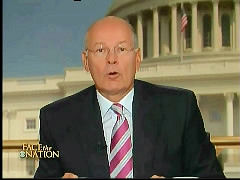
CBS’s Harry Smith on Face the Nation: No Time to ‘Continue Cutting Taxes,’ So ‘What About, Say, Something Like a New WPA?’

Filling in for Bob Schieffer as host of Face the Nation , Early Show co-host Harry Smith brought his liberal sensibilities to the Sunday show, pressing his economic panel to agree the Bush tax cuts should not be extended, the stimulus was too small and so another would be wise – even suggesting a return to an FDR-era government make-work jobs program: “What about, say, something like a new WPA?”   Presuming the pre-2003 levels are the real rates, Smith questioned Gretchen Morganson of the New York Times: “Is now the time to continue cutting taxes if there is this overwhelming deficit out there?” He soon cued up White House economic adviser Laura Tyson to agree with his premise: “Should the Bush tax cuts stay in place for the middle class but be rescinded for the top wage earners?” Turning back to Morganson, Smith showed exasperation with public opposition to government spending programs as he wondered if the stimulus wasn’t big enough: I want to go back to the stimulus because as so many of these Congress folks are going back out of their districts and people complain about the size of government, they’re complaining about the deficit, they’re complaining about TARP and who knows what all else. As we’re standing here looking at it right now, just if you can step away, was the stimulus big enough? Morganson afirmed “the stimulus was not big enough” and Smith next pushed Mark Zandi, of Moody’s Analytics: “There are plenty of economists out there, Mark Zandi, who say what’s needed is is a second stimulus. Could those words cross your lips?” After Zandi’s reply, Smith arrived at his Works Progress Administration idea: All right. Laura Tyson, what about a more significant stimulus, beyond the things, these, you know, a block here, a block here, a block here, but another say couple hundred billion dollars, what about say something like a new WPA? Tyson used that as a cue to advocate more “infrastructure” spending. The CBSNews.com posting summarizing the program reflected Smith’s agenda, “ Economists: Second Economic Stimulus Needed .” From the Sunday, September 5 Face the Nation on CBS, picking up a few minutes into the segment: HARRY SMITH: Gretchen, let me ask you this. This whole idea of the President talking about moving in the right direction, wanting to pick up the pace. Is there a pre-dominant idea of what it is that is hindering the economy from catching fire? GRETCHEN MORGANSON, NEW YORK TIMES: Definitely. It is debt. We had a debt binge the likes that we have hardly ever seen before. Frankly, Harry, it just takes a long, long time to get that out of the system. We’re still really working down the debt that homeowners took on. And it’s a difficult and really excruciating process. You can’t do it overnight. SMITH: Which brings up the whole idea, Gretchen, of this debate: Is now the time to continue cutting taxes if there is this overwhelming deficit out there? MORGANSON: Well, I think what you have to worry about immediately is job creation and let’s just forget about the deficit for the moment because when you have the unemployment rate where it is now and you have incomes really being stretched, I think that that is the key to any kind of activity and economic activity by consumers is an enormous part of our economy. That is really why we are in such dire straits. SMITH: Which is maybe one of the ideas that has to be in play is do we have the wrong model to begin with? I want to get back to that in a second. First, though, I want to talk about the Bush tax cuts which are due to expire in January. Laura Tyson, should the Bush tax cuts stay in place for the middle class but be rescinded for the top wage earners? LAURA TYSON: I think that is the right thing to do… …. SMITH, TO MARK ZANDI: Because you hear small business owners say if those tax cuts come back, I’m not going to hire a single person. I mean, that’s anecdotal, but is that really the predominant feeling among small businessmen? …. SMITH: Gretchen Morganson, I want to go back to the stimulus because as so many of these Congress folks are going back out of their districts and people complain about the size of government, they’re complaining about the deficit, they’re complaining about TARP and who knows what all else. As we’re standing here looking at it right now, just if you can step away, was the stimulus big enough? MORGANSON: The stimulus was not big enough… SMITH: One of the things you write so much about for the Times is the housing market. One of the other ideas that’s out this this week is this notion of giving people whose homes are underwater, mortgage holders whose homes are underwater, the opportunity to get out. People who are paying their mortgages, but to get out from underwater and basically handing the federal government the bill. In the short term, or even in the long term, Gretchen, does that seem like a viable option? And oh, by the way, we should say the government’s efforts on some of these levels have not been particularly good in the last two years. MORGANSON: That’s right. I mean, I think that the devil is in the details. The HAMP program has been a big disappointment. That was the helping homeowners, the initial program that treasury put out there. It’s been very disappointing. I think these matters are so complicated with so many different people and debt, second loans, first loans, it’s really very complex. And I just don’t see how it’s going to provide immediate help, the kind that we really need. SMITH: So is it time — it’s crazy to even talk about — but there are plenty of economists out there, Mark Zandi, who say what’s needed is is a second stimulus. Could those words cross your lips? MARK ZANDI: Well, we are talking about other stimulus, right? I mean, An r&d tax credit, payroll tax holiday. Job tax credit. All these things are different forms of stimulus. In fact, the federal government has provided a couple hundred billions dollars in additional stimulus beyond the recovery act stimulus that we put in place a year-and-a-half ago. We are doing that. In my view the recovery needs more help. It would be prudent, I think, to provide some additional help through some of the things that we’re talking about. SMITH: All right. Laura Tyson, what about a more significant stimulus, beyond the things,  these, you know, a block here, a block here, a block here, but another say couple hundred billion dollars, what about, say, something like a new WPA? LAURA TYSON: Well I believe that we should look at infrastructure because we know before the recession, before the great recession, we know that we were vastly underspending on the nation’s infrastructure. You can sort of, therefore, start with the notion that infrastructure spending is terrific in two ways. It creates demand right away when you go out and get the project start and get the worker started. It also creates the ability to grow and be productive in the future. SMITH: Although Japan tried that and they don’t have a lot to show for it.
See the original post here:
CBS’s Harry Smith on Face the Nation: No Time to ‘Continue Cutting Taxes,’ So ‘What About, Say, Something Like a New WPA?’


NYT Article Admits DDT Ban as a Cause of Bedbug Outbreak

Sleep tight. Don’t let the bedbugs bite. Unfortunately for residents of many urban areas such as New York and Philadelphia, the bedbugs are not only biting but spreading at an alarming rate. Despite this outbreak, the mainstream media has until recently kept insisting that bedbugs developed a resistance to DDT so any emergency lifting of the EPA ban on that pesticide is unnecessary. However, your humble correspondent has speculated that the MSM would eventually have to change its position on the DDT ban due to the fact that so many of its members are being assaulted by bedbug attacks which keep increasing despite the use of other pesticides. Well, it now appears that New York Times writer, Emily B. Hager, has had a revelation about DDT. While its not an outright call for a lifting of the DDT, consider it an important pit stop on the way to demanding the ban be lifted: … Bedbugs, once nearly eradicated, have spread across New York City, in part because of the decline in the use of DDT. According to the city’s Department of Housing and Preservation, the number of bedbug violations has gone up 67 percent in the last two years. In the most recent fiscal year, which ended on June 30, the city’s 311 help line recorded 12,768 bedbug complaints, 16 percent more than the previous year and 39 percent above the year before. A New York City community health survey showed that in 2009, 1 in 15 New Yorkers had bedbugs in their homes, a number that is probably higher now.  Yes, the MSM meme seems to have shifted from the claim that DDT would be ineffective against bedbugs to the admission that the current outbreak is due to a decline in its use. And the New York Times is not alone in admitting that the lack of DDT is a cause for the bedbug outbreak. Business Week is now also admitting that the ban on DDT as a cause for the bedbug outbreak: Experts are baffled by the resurgence of the tiny reddish-brown insects that feed off human and animal blood, their bites often leaving red welts. Entomologists say the pests are appearing on a scale not seen since before World War II and cite increases in global travel and the elimination of certain chemicals, like DDT, that were once used to treat bedbugs, as possible factors contributing to the upsurge. And now that media outlets are willing to admit that the ban on DDT helped caused this bedbug outbreak, a demand for the EPA to at least temporarily lift its ban can’t be far behind. Annoyance over lack of sleep due to biting bedbugs should trump tree-hugging political correctness over continuing the DDT ban.

Read more:
NYT Article Admits DDT Ban as a Cause of Bedbug Outbreak

Really Raw Data: July 2010 Is Worst July on Record for Housing Starts, Permits

Here’s how the Associated Press’s Martin Crutsinger and Daniel Wagner reported the housing portion of their Tuesday report on the day’s economic news (“Factories aid bumpy recovery, housing still weak”): Single-family home construction, which represented nearly 80 percent of the market, fell 4.2 percent. And requests for building permits, considered a good sign of future activity, slid 3.1 percent. … The July increase in housing construction pushed total activity to a seasonally adjusted annual rate of 546,000 units. Building activity in June was weaker than first reported. It fell 8.7 percent to an annual rate of 537,000 units, the slowest pace since October of last year. “The bad news is that activity is likely to remain depressed for several years,” said Paul Ashworth, senior U.S. economist at Capital Economics. “The good news, however, is that housing is so depressed it is hard to see activity falling much further from such a severely depressed level.” Well, okay, but the situation is already closer to a zero-out than it is to the levels were were seeing just a few years ago–or any time in the 50-plus years such records have been kept. Looking at the raw data on a historical basis, one finds that July 2010 was the worst July on record for the both stats the AP pair cited: This is on top of the worst June ever last month for housing starts and new home sales (noted on July 27 at  NewsBusters ; at  BizzyBlog ; new home sales haven’t been released yet). And note that June 2010 was revised down even further with the release of the July data. It doesn’t matter how much you season (i.e., seasonally adjust) the raw data before presenting it to the public; the raw data still stinks like it never has before. Both stats, which happen be identically awful, are even worse than July of last year, when the economy (but apparently not the housing market) bottomed out. There aren’t a lot of compelling reasons to believe that the housing situation is going to get much better any time soon — at least as long as “An explicit federal guarantee of a large portion of the mortgage-backed securities created to finance American’s home mortgages” is considered a key linchpin of housing policy. The “implicit” guarantees of the debt government-sponsored enterprises Fannie Mae and Freddie Mac became explicit as soon as they imploded in September 2008. From all appearances, they’re ready to do what caused that to happen all over again. You don’t get the impression that things are as bad as they really are from the AP pair’s reports. That doesn’t change the fact that things really are that bad, and unprecedentedly so. Cross-posted at BizzyBlog.com .

See the article here:
Really Raw Data: July 2010 Is Worst July on Record for Housing Starts, Permits

Friggebod Fun: MiniHouse From Add-A-Room

Image via Onen So much of what we build is a response to regulation; from garden sheds to modular homes, it is the rules that define the forms. Swedish Housing Minister, Birgit Friggebo exempted buildings under 150 square feet from the building codes; Her name will live forever in the explosion of lovely little cabins that bear the name Friggebod. The latest we have seen is the Minihouse 1 from Add-a-Room , designed by Lars Frank Neilsen of OneN. … Read the full story on TreeHugger

Link:
Friggebod Fun: MiniHouse From Add-A-Room

A Frisking ‘Frenzy’ in NYC, But Only New York Times Reporters Seem to Care

Reporters Ray Rivera, Al Baker, and Janet Roberts combined on a front-page Monday New York Times story questioning the frequency of “stop-and-frisk” policing by the NYPD in high-crime sections of the Brownsville neighborhood in Brooklyn: ” A Few Blocks, 4 Years, 52,000 Police Stops .” The text box: “Frisk Tactic Draws Questions Where It Is Used Most.” It’s a quasi-followup to an overheated May 13 front-page Times story which focused more on the racial aspect of frisking: ” City Minorities More Likely To Be Frisked — Increase in Police Stops Fuels Intense Debate .” The shoe leather analysis of that story was performed by the hard-left Center for Constitutional Rights, which the Times identified only as “a nonprofit civil and human rights organization.” Monday’s story also relied on research from the unlabeled leftists of CCR. Yet the paper’s reporters seem more worried about the frisking “frenzy” than do the residents of the crime-ridden neighborhoods that were the alleged victims of excessive stops and searches. When night falls, police officers blanket some eight odd blocks of Brownsville, Brooklyn…The officers stop people they think might be carrying guns; they stop and question people who merely enter the public housing project buildings without a key; they ask for identification from, and run warrant checks on, young people halted for riding bicycles on the sidewalk. One night, 20 officers surrounded a man outside the Brownsville Houses after he would not let an officer smell the contents of his orange juice container. Between January 2006 and March 2010, the police made nearly 52,000 stops on these blocks and in these buildings, according to a New York Times analysis of data provided by the Police Department and two organizations, the Center for Constitutional Rights and the New York Civil Liberties Union. In each of those encounters, officers logged the names of those stopped — whether they were arrested or not — into a police database that the police say is valuable in helping solve future crimes. These encounters amounted to nearly one stop a year for every one of the 14,000 residents of these blocks. In some instances, people were stopped because the police said they fit the description of a suspect. But the data show that fewer than 9 percent of stops were made based on “fit description.” Far more — nearly 26,000 times — the police listed either “furtive movement,” a catch-all category that critics say can mean anything, or “other” as the only reason for the stop. Many of the stops, the data show, were driven by the police’s ability to enforce seemingly minor violations of rules governing who can come and go in the city’s public housing. …. There are, to be sure, plenty of reasons for the police to be out in force in this section of Brooklyn, and plenty of reasons for residents to want them there. Murders, shootings and drug dealing have historically made this one of the worst crime corridors in the city. The Times issues one sentence perilously similar to its infamously naive headline from 1997, which saw a paradox where there was none: ” Crime Keeps on Falling, But Prisons Keep on Filling .” As if the two trends are unrelated. But now, in an era of lower crime rates, both in this part of Brooklyn and across the city, questions are swirling over what is emerging as a central tool in the crime fight, one intended to give officers the power to engage anyone they reasonably suspect has committed a crime or is about to. Couldn’t one explanation for the “era of lower crime rates” be more assertive police work like stop-and-frisk? Certainly, some say that the New York Police Department has so far failed to convincingly link the explosion in the numbers of stops with crime suppression. And some, from academics to the residents of these streets in Brooklyn, believe the stops could have a corrosive effect, alienating young and old alike in a community that has long had a tenuous relationship with the police. …. To many residents here, care is exactly what is not being used. To them, the flood of young officers who roam the community each day are not equipped to make the subtle judgments required to tell one young man in low-hanging jeans concealing a weapon from another young man wearing similar clothes on his way to school. …. The data show the initiative is conducted aggressively, sometimes in what can seem like a frenzy. During one month — January 2007 — the police executed an average of 61 stops a day. The high number of stops in this part of Brooklyn can be explained in part by the fact that police can use violations of city Housing Authority rules to justify stops. For instance, the Housing Authority, which oversees public housing developments, forbids people from being in their buildings unless they live there or are visiting someone. …. Many residents say they philosophically embrace the police presence. They say they know too well how the violence around them — the drugs and gangs — can swallow up young people. Yet the day-to-day interactions with officers can seem so arbitrary that many residents say they often come away from encounters with officers feeling violated, degraded and resentful. Near the very end the Times allowed this detail, which put an additional damper on the significance of its prominent front-page journalism: The Times, for this article, interviewed 12 current or former officers who had worked in this part of Brooklyn in the last five years, and all defended the necessity of the stop-and-frisks.

Read more here:
A Frisking ‘Frenzy’ in NYC, But Only New York Times Reporters Seem to Care

ABCNews.com Credits Fannie Mae, Freddie Mac for ‘Propping Up’ Housing Market

Apparently, Fannie and Freddie are the new Batman and Robin. At least they seemed more like heroes than villains in a July 6 ABC News story about the troubled housing market. Reporter Rich Blake gave the government sponsored enterprises (GSEs) Fannie Mae and Freddie Mac credit for “propping up” the flailing housing sector: “As perplexing and disturbing as this economic brainteaser may seem, the housing sector would be in even worse shape if not for those twin government sponsored enterprises, Fannie Mae and Freddie Mac, both in government conservatorship and bleeding assets,” Blake wrote. Blake was downbeat about the situation saying, “Such a scenario, a housing market propped up by Fannie and Freddie, several economic experts admit glumly, is akin to running a power plant on an auxiliary generator that is jumper-cabled to a car running on fumes.” He even noted that Fannie and Freddie are 79.9 percent owned by the federal government and 20.1 percent owned by the public, but he didn’t mention how much the two GSEs could cost taxpayers. So far, the pair have cost roughly $160 billion, but according to Bloomberg could run up to nearly $1 trillion . Furthermore, Blake wrote how Republican critics “immediately blasted” the Dodd-Frank financial reform bill for not addressing any of the GSEs problems but conceded that “no one on either side of the aisle has much to offer by way of solution:” “Too big to fail, and too broke to fix,” he concluded. Blake, like others in the media, didn’t bring up Sen. Richard Shelby’s (R-Ala.) closing statement on financial reform in May when Shelby addressed Republican efforts to cap and reform Fannie and Freddie. He buried proposals for a private sector solution until the fourteenth paragraph and waited until the eighteenth paragraph to quote Gilbert Leistner of the Chicago Board of Trade who proposed “euthanizing them.” The news media have recently ignored the cost of Fannie Mae and Freddie Mac’s bailout, after years of ignoring the scandals and other problems at the two GSEs . Like this article?   Sign up   for “The Balance Sheet,” BMI’s weekly e-mail newsletter.

Read the original here:
ABCNews.com Credits Fannie Mae, Freddie Mac for ‘Propping Up’ Housing Market