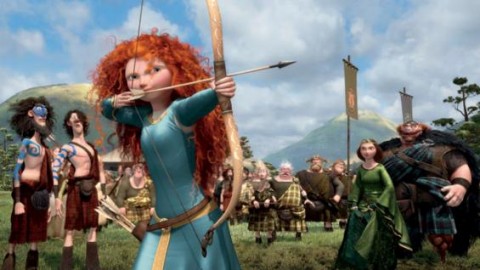
The year of the female protagonist continued at the box office this weekend, with Brave becoming the third film led by such a hero ( The Hunger Games , Snow White and the Huntsman ) to claim the top spot. This animated adventure earned $66.7 million, which marked the fifth-highest debut ever of a Pixar movie. Amidst poor reviews, meanwhile, Abraham Lincoln: Vampire Hunter only garnered a $16.5 million opening, with fans giving it a collective C+ according to CineScore. Here is a look at the top five and remember to visit our friends at Movie Fanatic for the latest movie news and more on a daily basis: Brave : $66.7 million Madagascar 3: Europe’s Most Wanted : $20.2 million Abraham Lincoln: Vampire Hunter : $16.5 million Prometheus : $10.0 million Snow White and the Huntsman : $8.0 million
Hollywood.TV is your source for celebrity gossip, news, and videos of your favorite stars! bit.ly – Click to Subscribe! Facebook.com – Become a Fan! Twitter.com – Follow Us! Mila Kunis gets down and dirty in Ted, cleaning up human sh*t up off the floor, which she performs dutifully with a “Yes, sir!” to director Seth McFarlane. She talks about playing a female character that is neither butchy or ultra-feminine, but more balanced, and gets into the details about having a “talking teddy bear” as a best friend in the movie. Hollywood.TV is the global leader in capturing celebrity breaking news as it happens. Launched in 2008, we capture all the latest news, exclusive celebrity interviews, star videos and hot celebrity gossip from around the world every minute of everyday. HTV is on the streets 24/7, at all the industry events and invited by the stars to cover their every move in Hollywood, New York and Miami. Hollywood.TV is currently the third most viewed reporter channel on www.youtube.com YouTube with almost 400 million views, and our footage is seen worldwide! Tune in daily for all the latest Hollywood news on www.hollywood.tv and http like us on Facebook!
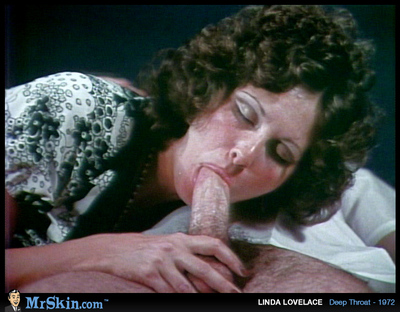
It’s been 40 years since Linda Lovelace unhinged her jaw and starred in Deep Throat (1972), the movie that started the “porno chic” revolution. And now, ten years after her untimely death in 2002, Linda is experiencing something of a renaissance as Amanda Seyfried stars as the embattled XXX queen in Lovelace and a parade of porn stars line up to pay lip service. The Daily Beast asked some of the biggest names in the biz, including Joanna Angel , Stormy Daniels , Alexis Texas and Jessica Drake , for their thoughts on Linda’s legacy, and you can read their comments after the jump!
It’s been 40 years since Linda Lovelace unhinged her jaw and starred in Deep Throat (1972), the movie that started the “porno chic” revolution. And now, ten years after her untimely death in 2002, Linda is experiencing something of a renaissance as Amanda Seyfried stars as the embattled XXX queen in Lovelace and a parade of porn stars line up to pay lip service. The Daily Beast asked some of the biggest names in the biz, including Joanna Angel , Stormy Daniels , Alexis Texas and Jessica Drake , for their thoughts on Linda’s legacy, and you can read their comments after the jump!
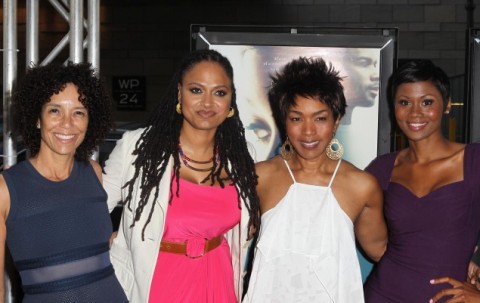
Celebrities At The “Middle Of Nowhere” Movie Premiere Some familiar faces that we haven’t seen in a while hit up Hollyweird for the “Middle of Nowhere” movie premiere last night in L.A. Check the gallery to below to see event host Anglea Basset and a long list of other celebs work the red carpet in support of the release. Images via Wenn
‘I feel like every artist is inherently granted one shot to sing about having a good time,’ Adam Young tells MTV News of ‘Good Time.’ By Jocelyn Vena Owl City Photo: When MTV News caught up with Owl City himself, Adam Young, on Thursday (June 21), he called “Good Time,” his just-released duet with Carly Rae Jepsen , a “happy accident.” Happy is definitely the right word to describe the feel-good summer track, on which Owl City and Carly Rae sing about listening to Prince and partying until twilight (the time of day, not the movie). “I feel like every artist is inherently granted one shot to sing about having a good time in his or her life, and six months ago, I realized I hadn’t cashed in my chips yet,” Young told MTV News. “So I thought, ‘I’m gonna sit down and I’m gonna give this a shot … and get my friend Carly to sing on it.’ … The final product rarely exceeds your expectations, and this thing just kind of happened.” Young’s people called Jepsen’s people, and from there, “Good Time” became a shimmering duet between the “Fireflies” singer and the “Call Me Maybe” songstress, combining their earworm powers for the ultimate summer sing-along jam. “It was this whole worlds-collide thing, and it was this kind of dream come true. I can’t believe it happened,” he said. “[It was] so kind to lend her talent to this song, so yeah, it worked out. … I feel like it’s one of those songs, it kind of always needed to be a duet. That was the initial idea from step one.” Young wrote the track back in the dead of winter, saying he wanted to craft a tune that “anybody from any walk of life can sing.” He certainly accomplished that mission, with the song’s easy-to-remember chorus (“We don’t even have to try/ It’s always a good time”) and a little bit of a “Whoa-oh-oh-oh-oh” anthem to keep you singing and dancing to. With the song out in the world, up next, Young and Jepsen are slated to shoot a video in New York City, but Owl City actually has a more ideal spot. “It would have to take place in Hawaii, ’cause it’s such a summer song,” he said. “So there’s probably $1 million in flights right there. But probably somewhere very dreamy and summery and somewhere you can feel like you can take a look around you, and you’re already having a good time.” “Good Time” is the lead single from Owl City’s next album, The Midsummer Station, due in August. Related Artists Owl City Carly Rae Jepsen Adam Young
Yesterday marked the official beginning of summer, but we’re already looking forward to fall here at Skin Central. Why? Because as big fans of horror flicks (and all the naked scream queens that come with them), fall is our favorite movie-going season of the year. And this October, V/H/S (2012) joins the proud pantheon of Halloween horror flicks with an anthology that celebrates the King of All Formats, the Video Home System. Our Skin Skout saw a preview at Sundance and says that while some segments are better than others, the audience went nuts for Adam Wingard ( A Horrible Way to Die ), Joe Swanberg ( Nights and Weekends ), Ti West ( The Innkeepers ), Radio Silence , Glenn McQuaid ( I Sell the Dead ), and David Bruckner ( The Signal )’s takes on the “found footage” (think Paranormal Activity ) genre. The red-band trailer for V/H/S hit the ‘net this week, giving us our first glimpse of Hannah Fierman , who goes full frontal as a monstrous seductress, and Helen Rogers , who bares boobs via Skype, in action. 00:35 for the very brief, but amply endowed, good part. V/H/S hits VOD on August 31 and theaters on October 5 , but you can see scream queens galore in Mr. Skin’s Favorite Horror Movie Nudes playlist right here at MrSkin.com
The Invisible War by director Kirby Dick and producer Amy Ziering is simply shocking. In this doc, which won the Audience Award at the Sundance Film Festival in January and screened at the recent Provincetown International Film Festival (where it also picked up an audience prize) the filmmaking duo expose a long-brewing scandal in the U.S. military. Sexual assault against both women and men has run rampant throughout the various branches of the military and even up the chain of command. It is, in fact, the chain of command that has, in part, allowed rape and other sexual assault to remain virtually hidden despite its ubiquity. The Invisible War blows the cover off this decades-old (or older) crisis with an emotional and devastating look at the victims of sexual assault and how it can be fixed. Though the film will be released theatrically this weekend, it has already had a major impact. Defense Secretary Leon Panetta screened the film and soon afterward announced some reforms. Though, as Kirby Dick warns in his interview with ML from the recent Provincetown festival, the moves are not enough and the U.S. military still needs to take some cues from its allies in alleviating this scourge. It may be tough to watch, but the film is riveting and the stories of individuals he and Zeiring interview are phenomenal. Dick has screened the film for various groups since Sundance and its subsequent East Coast premiere at Provincetown and, as he explains in his conversation with ML below, audiences have been riveted by what has been uncovered. What led you and your producer Amy Ziering to this topic and ultimately doing a film? Amy and I read an article in by Helen Benedict in Salon and we were astounded by the numbers of people sexually assaulted, and we were equally astounded that nobody had made a feature documentary on this. From a filmmaker point-of-view, that is sort of lucky when that happens. We pretty much decided right then and there that we’d make this film. I remember hearing about the Tailhook scandal in the ’90s when a number of women were assaulted at a U.S. Navy/Marines event in Las Vegas. And despite that, I still thought this was a horrifying yet isolated outrageous incident. I didn’t think it was so pervasive… Yeah, I remember following that situation and the Air Force Academy [situation] and I wondered when I was making this film why I hadn’t done this 15 years ago. It seems so isolated, but then it’s over – but no, it’s systemic. And the military has been very good at conveying that these are isolated. They’ll deny it or then blame the victim or they’ll say it’s been dealt with and it’s in the past. This has been covered up for generations. I would imagine, and I don’t have statistical evidence in this, but I would bet it’s a part of militaries forever and a problem in foreign militaries that have women or even ones that only have men. And that’s one thing we hope that this film will do as it plays around the world, which is to raise the same discussion in those countries as well. Are these people not able to call the police as civilians do or hopefully do? If they’re in the military it’s almost always referred to military authorities. If it happens on base then it automatically is referred to military authorities and if it happens off-base, then yes it is possible to call civilian authorities, but they very often will refer it back to the military. This must’ve been a heart-wrenching experience for both of you filming this doc. My mouth was dropping hearing these stories and I couldn’t help but talk back to the screen. Yeah, it was. Each one of these interviews were equally stunning. Amy did each interview and she did a phenomenal job and she’d be emotionally drained and devastated and be incredibly angry afterward. It was a good combination [for the creation of the film] and I knew we’d get it. The assaults of course were horrifying in and of themselves, but then to see how the institution reacts to these assaults is absolutely incredible. That’s one of the things we hope this film will inspire. Not only the outrage but this sense of responsibility which you’re alluding to that we all have in this country. There’s a sense that there are military families and non-military families and sometimes people without family members in the military think that they’ll simply take care of themselves. We all have responsibility for people in the military. We’re all a part of one society whether we agree with what the military is doing or not. And I’ve seen this happening. One of the things I foresaw was bring together veterans groups and women’s groups. In fact, we’ve set up a coalition to extend the impact of the film together with civil rights groups and sexual assault groups. And what we want to see happen is a push for reform after the film has gone. Did you reach out to any of the people who were accused? We decided not to do that. But what we did try to do is reach out to someone who was convicted. We tried to do that through many defense attorneys. We were interested in getting his perspective. It would be a courageous act for someone to come forward and talk about this, but ultimately we weren’t able to get anyone. Traditionalists may hold all of this up as evidence that women shouldn’t serve in the military or that they shouldn’t serve alongside men in the military and I was curious what your response is to that? Well I think first of all, that’s holding the men in our military with great disrespect. I believe the men in the military are more than capable of taking care of and not assaulting the people who they serve with side by side. And in the second place, these women make amazing soldiers. The women in our film are the people you would want in the military. They are so good at what they do and so idealistic. They’re model soldiers and that’s one of the tragedies. There was this problem with these gay translators being dismissed from the military and that was also a significant loss to the military. How did you get Leon Panetta to see this? Well, it was part of a long campaign immediately after Sundance. This movie was made to change policy. We got this into the hands of high ranking retired officers. We had dozens of screenings for officers’ wives, non profits, other military organizations and corporate leaders to get the discussion going and not only get the military aware of it, but also to get them to react to it. Eventually, it got to the Defense Secretary who saw the film and two days later held a press conference to announce significant policy changes. We later learned from our executive producer Jennifer Siebel Newsom, the wife of California Lieutenant Governor Gavin Newsom – and all three know each other – that Jennifer saw Leon Panetta at the White House Correspondence dinner and Panetta told her he was really moved by the film and decided to hold the press conference in part because of the film. So the campaign was successful to that degree. But there’s a lot more to do. The changes he announced do not fully take investigation outside the chain of command. It still remains within the chain of command and until that happens, there’s still opportunity for great miscarriages of justice. It should be taken out and there should be no opportunity for a conflict of interest. Take it out like it’s done in every other justice system. There are running sexual themes in many of your films including Twist of Faith and Outrage . Is it fair to say you’re drawn to topics related to sexual taboo – or maybe not “taboo” exactly but you get what I’m saying… Maybe not so much taboo, but yes I think there is. On the one hand sexuality is made for the cinema – any sexuality. But I’m also interested in almost all my films about sexuality and its relationship to trauma. Some more than others, but in some ways trauma is playing some sort of role to sexuality. Certainly as a documentary filmmaker I approach this topic similar to a novelist. The sexuality and the traumatic history of a subject makes for great material to work with. I think it’s something I work with – not always – but do work with [consistently].” Has the audience reaction here in Provincetown and at Sundance been what you have expected? Oh yeah, even more so. I also do these small screenings in various places [between the festivals] and people just wouldn’t get up afterward and I’ve never had that. I saw that they were really affected by this. It’s the experience we had when we were doing these interviews. You’re like, ‘this can’t be true.’ But at the same time you just want to reach out to them. Follow Brian Brooks on Twitter . Follow Movieline on Twitter .
Pixar is at its best when it’s making movies about rats working in restaurants and families of superheroes with not-so-super powers; not so much when it’s spinning cautionary environmental tales with robots-in-love subplots and sentimental weepers about grumpy codgers “learning to love again.” Somewhere at the more golden end of that yardstick is Brave , in which a peppery redheaded Scottish princess from days of yore named Merida – her voice is provided by the wonderful Glasgow-born actress Kelly Macdonald – decides she doesn’t want to marry from the selection of gents her parents have chosen for her and would much prefer traipsing through the forest with her trusty bow-and-arrow. Note: This review includes spoilers. Except Brave doesn’t go where you’re probably expecting it to. (And if you’re sensitive to spoilers, you may not wish to read further.) There isn’t an ultimate prince, a swain of Merida’s choice who steps in to offer her everlasting happiness, while letting her be herself, of course. This is a story about mothers and daughters and the ways they clash over basic, seemingly simple things, only to find their ultimate connection in the very things they can’t change about each other. Even that oversimplifies Brave a little too much, but you get the idea. Brave has a marvelous secret weapon in Emma Thompson, who provides the voice for Merida’s mother, Elinor, a queen with a sense of propriety and a desire to keep her daughter from making bad decisions. But this is a queen who turns into a bear, a big growly girl with a pear-shaped body and a most unladylike manner when it comes to eating fish. The quivering, multi-hued strands of Merida’s curly mane notwithstanding — and they are a sight to behold – the character design of Bear Elinor, coupled with the personality Thompson gives her, steals the show. You might be wondering how a queen turns into a bear. Why, via a witch’s spell, of course. Merida is at the age where she hates her parents, Thompson’s Elinor and the scruffy, burly, affectionate Fergus (Billy Connolly), chiefly because they’re intent on marrying her off, and she wants none of it. She hurls hurtful words at her mother — if you’ve ever been either a teenage girl or the mother of one, the sting will be familiar — and stalks off into the forest on her trusty horse, only to stumble upon the cottage of a witch (Julie Walters), who sells Black Forest-style carved-wood gewgaws as a front for her real trade. Merida, frustrated by her mother’s directives to always behave like a proper lady, and by her insistence that she knows what’s best for her daughter, gives the witch vague, exasperated instructions to “change” her mother. The witch gives her a little magic cake to bring back to the kingdom, and Merida is off and gone before she receives instructions for its proper use. Merida gives the cake to her mother as a wily peace offering, only to watch in dismay as Elinor first falls ill and then awakens as a half-clumsy, half-dainty she bear: Elinor Bear, horrified when she discovers her changed form, reaches instinctively for the delicate crown she wore as a human — it perches on her enlarged, furry head like a lady’s cocktail hat, giving her an aura of ridiculous elegance. But aside from the fact that Elinor simply does not like her new shape, bears are simply not welcome in her kingdom: Years earlier, when Merida was just a sprout, Fergus lost his leg to a great warrior bear and has always hoped to avenge this wrong. What would he do if he found a girl-bear in his own castle, not realizing it was his own wife? Both Elinor and Merida know the scene wouldn’t be pretty. The best part of Brave is the section in which Merida and Bear Elinor head out into the wilderness, hoping to find the witch and learn how to break the spell. The grudging camaraderie that forms between them is more like what might happen on your stereotypical father-son camping trip: Elinor Bear scavenges for berries that she believes are edible, only to be told by her more knowledgeable daughter that they’re poisonous. Unable to speak, she points to Merida’s bow, suggesting her daughter will have to be the one to feed them. Later, Bear Elinor learns to catch her own fish in her paws, gulping the shiny wriggling things with unbridled glee. But Bear Elinor will also do anything to protect her child, and she has the physical strength to do so. The newfound symbiosis between Elinor and her daughter could be a metaphor for lots of things, among them the way we switch from child to caretaker when our parents get older. But Brave doesn’t get too hung up on deep meanings. The story is a simple one, told with agility and grace — a little surprising, considering the movie is credited to three directors (Mark Andrews, Brenda Chapman and, as co-director, Steve Purcell) and four writers (Andrews, Purcell, Chapman and Irene Mecchi, from a story by Chapman). Perhaps it’s a wonder that Brave hangs together at all, but the picture’s charms just keep mounting in its favor: Merida has three mischievous redheaded triplet brothers, who of course love cake, especially magic cake – their transformation into miniature Three Stooge-style cubs is one of the movie’s silliest delights. And Macdonald makes Merida a likable but not overbearing heroine: At one point she utters the line “It’s just my bow,” and it comes out “It’s just m’ boe,” an adorable and hilarious niblet of Scotspeak. But my heart belongs to Bear Elinor, whose movements and mannerisms are a tender echo of Human Elinor’s – her character is designed and drawn just that carefully. Bear Elinor becomes more and more bearlike as the spell wears on, and if she and Merida can’t reverse the witch’s handiwork, she will be a bear forever. You can see why she doesn’t want that fate: Bear Elinor is embarrassed by her furry clumsiness, by the way she devours whole fish – live ones, no less! – instead of nibbling away at them with a knife and fork, as her human self would do. Yet she’s a marvel of bearlike grace, almost ballerina-like even in her rotund ursine form. It’s inevitable that Elinor will have to return to human form at some point, but her bear form is so much more memorable. It’s the beast in her that’s really the beauty. Follow Stephanie Zacharek on Twitter . Follow Movieline on Twitter .
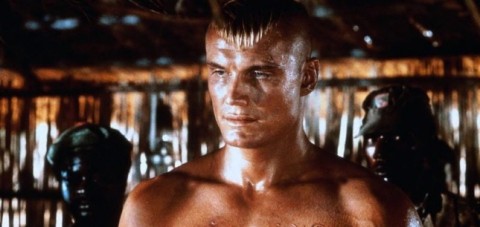
The film: Red Scorpion (1988) Why It’s an Inessential Essential: Co-scripted and produced by Jack Abramoff, Red Scorpion is a starring vehicle for Sweden’s own living action hero, Dolph Lundgren. Being the modest gentle giant that he is, Lundgren has nothing but good things to say about the film during the interview segment he shot for Synapse Films new release of the movie. But that says more about Lundgren’s personality than it does the crackerjack B-movie. As self-styled Lundgren expert Jeremie Damoiseau remarks in his annotated(!) liner notes, Red Scorpion nearly ruined Lundgren’s career (more on this shortly). Lundgren plays Lieutenant Nikolai Rachenko, a Russian “killing machine” that is tasked with murdering the leader of a group of rebel insurgents leading a coup in Africa. The Russians want the rebels stopped so they hire Rachenko to cozy up to the rebel leader’s advisor, now imprisoned by the Russians. In spite of repeated warnings from a smug, four-letter-word prone American journalist (M. Emmett Walsh, scowling up a storm), the rebel leader’s advisor grows to trust Rachenko, who in turn starts to see the murder and destruction caused by his comrades. Rachenko inevitably changes sides and becomes a hero, but only after being tortured by needles, attacked by scorpions, shot at, assaulted by a tank, thrown onto a moving motorcycle and berated repeatedly by the inimitable Walsh. How the DVD/Blu Ray Makes the Case for the Film: In his liner note, Damoiseu gives a stirring and comprehensive history of Red Scorpion that reveals how the film’s freaky production history helped to make it a memorable role for the charismatic–look at him pout!–athletic–thighs as big as a Rob Liefeld comic book character!–and smart–has a master’s degree in chemical engineering!–Swede. According to Damoiseau, Red Scorpion was a vanity project for Abramoff, who Lundgren describes during his supplementary interview as “patriotic,” and, “fiercely anti-Soviet.” Case in point: the film’s budget more than doubled from its original $8 million. Furthermore, production on the film continued even after the New York Times reprinted a story that revealed Abramoff and director Joseph Zito were disrespecting the Comprehensive Anti-Apartheid Act of 1986 by shooting in South Africa. That article stirred up considerable controversy, like when, to quote Damoiseau, “Sweden’s own Isolate Africa Committee called for a boycott of all films starring Dolph Lundgren.” The controversy surrounding Red Scorpion, which got a meagre first-run domestic release in America of 1,200 screens and grossed $4 million in its first two weeks, also made it difficult for the Lundgren-starrer The Punisher to be released in American theaters one year later in 1989. But at the same time, what makes Red Scorpion so fun is the fact that everyone was clearly throwing caution to the wind when they made it. The film could have been shot anywhere but instead it was shot in the desert, causing the film’s shooting schedule to distend from its original 2 1/2 months to 4 1/2 months. The film’s crew similarly used real guns and real dynamite for stunt-work. And while Tom Savini’s make-up effects certainly wasn’t real, Lundgren did many of his own stunts. Several live black scorpions were let loose on his back in one scene (their stingers had rubber tips put on them) while a P.O.ed hyena took a bite out of Lundgren after the filmmakers shot a deleted scene that’s not featured in Synapse’s release but is alluded to in Damoiseau’s essay. Other Trivia: Lundgren is such a generous and kind raconteur that it’s pretty funny listening to him reflexively trying to defend some things that any other star else would either conveniently gloss over or dismiss. He praises Sylvester Stallone’s detail-oriented direction of Rocky IV but also commends Red Scorpion director Zito for his zeal: “Zito was very postitive and had full momentum all the time rather than focussing on the individual scenes.” Furthermore, Lundgren’s not even sure why he did some of the stunts that he did for Red Scorpion , saying about a stunt where he jumps onto a speeding motorbike: “I don’t know if I was just stupid or if Zito wanted it.” He added, “Crazy! I would never do that today.”