Tag Archives: nominee

Special Report: Supremely Slanted – How the NY Times Pounds Conservatives and Coddles Liberals on the Supreme Court

As liberal Justice Elena Kagan takes her place on the Supreme Court next week, she could thank The New York Times for making her confirmation process smoother. Ever since Ronald Reagan nominated Robert Bork and he was rejected by the Senate in 1987 for his views and not his character or qualifications, confirmation battles for liberals have become less like judicial seminars and more like political campaigns. For almost 20 years, in this new era of activist groups and activist reporters, The New York Times has covered Supreme Court fights with a heavy finger on the scales of justice, tipping the balance. They have painted conservatives as highly controversial and dangerously ideological, while liberal nominees were presented as “brilliant” moderates who were only newsworthy in that they were often laudably “historic” choices, or, in Kagan’s case, she was not only “brilliant,” but “very funny, warm and witty.” For Supremely Slanted , Times Watch analyzed the arc of coverage over the last two decades and the last seven Supreme Court justices, from Clarence Thomas’s nomination in 1991 to Elena Kagan’s confirmation in 2010, and found stark differences in how the Times reported on the four Justices nominated by Democrats versus the three nominated by Republicans. Times Watch examined every substantive New York Times news story on each nomination, starting with the official presidential announcement and ending with the Senate vote confirming the nominee to the Supreme Court. Among the findings: A stark pro-Democratic double standard in labeling : The Times demonstrated a 10-1 disparity in labeling “conservative” justices nominated by Republicans compared to “liberal” ones nominated by Democrats. In all, the three Republican-nominated justices were labeled “conservative” 105 times , while the four justices nominated by Democrats were labeled liberal on just 14 occasions . Two dueling headlines demonstrate the Times’ slanted reporting in a nutshell. On June 27, 1993, The New York Times greeted Democrat Bill Clinton’s nominee, the liberal Ruth Bader Ginsburg, former chief litigator of the ACLU’s women’s rights project and a strong defender of unrestricted abortion rights, as a moderate: “Balanced Jurist at Home in the Middle.” On July 28, 2005, the Times welcomed Republican George W. Bush’s nomination of John Roberts, a former associate counsel to President Ronald Reagan, by summing up his judicial philosophy: “An Advocate for the Right.”            A vast difference in intensity of coverage: Besides the slant in labeling, there was a vast difference in the volume and intensity of coverage of conservative nominees compared to those on the left. While conservative nominations are cast as feverish battles over ideology and the future trend of the court, the Times withholds the drama and controversy when it comes to Democrats. The paper has done its best to drain the drama from Democratic nomination fights, pushing them as foregone conclusions. Republican nominees received intense coverage. Clarence Thomas was the subject of 81 stories through his initial hearings — not including the massive coverage after law professor Anita Hill made her unsubstantiated sexual harassment allegations. John Roberts was the subject of 107 stories, Samuel Alito 92. Democratic nominees received far less coverage. Ruth Bader Ginsburg’s nomination was featured in a flimsy 22 Times stories, while Clinton’s other pick Stephen Breyer was dealt with in a mere 20 stories. Obama nominee Sonia Sotomayor was a partial exception to the rule with 85 stories, but many of those keyed on the fact Sotomayor was a hometown pick. Elena Kagan also failed to excite interest, featuring in only 43 stories. Even taking into account that fewer stories for Democratic nominees should on average result in fewer ideological labels, the disparity was still sharp. While Democratic nominees were labeled liberal an average of once every 12 stories, Republican nominees were tagged conservative once every 2.66 stories . For instance, while Clarence Thomas was tagged conservative at an average rate of roughly once in every two stories (44 labels out of 81 stories), Sonia Sotomayor received a liberal label just once in every 17 stories (5 labels out of 85 stories). The study concludes that a crucial part of the “confirmation process” is the journalism that is committed (or omitted) by national newspapers like the Times . Newspaper reporters and editors aren’t writing the first draft of history. They’re trying to make history happen with a happy ending for liberals. You can begin reading the full report here , or read a formatted PDF version here .

Read more from the original source:
Special Report: Supremely Slanted – How the NY Times Pounds Conservatives and Coddles Liberals on the Supreme Court

4 Reasons Why Kiernan Shipka (a.k.a. Sally Draper) Might Get an Emmy Nomination in 2011

Laugh all you want, but it’s true: Besides perhaps only Randee Heller — R.I.P. Ms. Blankenship — there hasn’t been a bigger breakout performer on Mad Men this season than Kiernan Shipka. Upped to a series regular for the first time, Shipka has handled her increasingly adult situations — ahem — with the aplomb of someone twice her age. It begs the incredibly, ridiculously premature question: Can little Sally Draper be an Emmy nominee in 2011? Ahead Movieline offers 4 reasons why that might not be as far-fetched as you think.

Follow this link:
4 Reasons Why Kiernan Shipka (a.k.a. Sally Draper) Might Get an Emmy Nomination in 2011

CBS’s Schieffer Hits Miller for ‘Extreme Positions,’ Ridicules GOP Field as ‘Kind of an Exotic Crew’

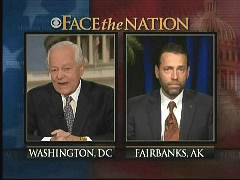
Republicans are “exotic” and “extreme,” and against science too, CBS’s Bob Schieffer contended on Sunday’s Face the Nation. “You have also taken some fairly controversial, some would say very extreme, positions,” Schieffer lectured Alaska Republican Senate candidate Joe Miller , citing “you want to phase out Medicare, you want to privatize Social Security.” Miller countered: “I would suggest to you that if one thinks that the Constitution is extreme then you’d also think that the founders are extreme.” Next, picking up on Democratic Congresswoman Debbie Wasserman Schultz’s claim Democrats are “are centrist” while Republicans “are really off on the right wing fringe,” Schieffer pressed Republican Mississippi Governor Haley Barbour “about that,” highlighting Miller’s “controversial stands” before asserting:  Isn’t that going to make it harder for some of these Republican candidates to get elected because down in Kentucky you have Rand Paul, who’s got the nomination for the Senate there, talking about, well, maybe we ought to rethink the Civil Rights Acts of ’64 and ’65. You’ve got Joe Buck, who won the nomination up in Colorado, who’s talking about bicycle paths being a, might lead to UN control or something other. It seems to me that you do have kind of an exotic crew out there this time. Barbour shot back: “Well Bob, the administration and the Democratic Congress have taken the biggest lurch to the left in policy in American history.” As for bicycles and the UN, Schieffer was apparently referring to an early August comment by Dan Maes, Colorado’s Republican gubernatorial candidate who is running against Denver’s Mayor, not Ken Buck the Senate candidate. According to an August 4 Denver Post article, “ Bike agenda spins cities toward U.N. control, Maes warns ,” he was making an argument about “Denver’s membership in the International Council for Local Environmental Initiatives.” The CBSNews.com summary post, on this edition of Face the Nation, also pivoted from Wasserman Schultz’s perspective: “ Tea Party Making It Harder for GOP: Fla. Dem .” Schieffer ended the show with a commentary decrying a federal judge for issuing an “injunction placing limits on stem cell research, an area that holds the greatest possibilities for medical breakthroughs since penicillin.” Without regard for the moral issues or how the latest breakthroughs have come from unimpeded research using adult stem cells (the ruling blocked only federal funding of embryonic stem cell research), Schieffer insisted “putting restraints on stem cell research is not far from those who refused to look through Galileo’s telescope because they believed their doctrines and tradition had already told them what they would see.” He painted opponents as being against gaining knowledge: “As we again try to untangle the arguments over stem cells, let us also consider this: No civilization, no society, has survived if its people came to believe they knew enough and needed to know nothing more.” After Schieffer repeatedly marveled about Miller’s pledge to work to cut federal payments to Alaska, in return for the federal government turning land over to the state, this exchange took place: BOB SCHIEFFER: You have also taken some fairly controversial, some would say very extreme, positions. First you say you want to phase out Medicare. You want to privatize Social Security. I have to say there are a lot of people in Alaska who are on Medicare and are getting Social Security. Isn’t that position going to be a problem for you in the election, in this general election? JOE MILLER: I would suggest to you that if one thinks that the Constitution is extreme then you’d also think that the founders are extreme… Later: DEBBIE WASSERMAN SCHULTZ: …Americans really are going to have a very clear choice set up in November between moderate Democrats who are centrist, where the country is, and Republicans who are really off on the right wing fringe. And there’s countless examples of that across the country. SCHIEFFER: Well, let me ask Governor Barbour about that. What about that, Governor Barbour? Because you just heard Joe Miller, who may wind up as the nominee for the Republicans up in Alaska, saying he’s go out and campaign on less money for Alaska, less federal dollars coming in. He has taken several controversial stands like that and, I must say, to his credit he didn’t back off of them when I asked him about it this morning. But isn’t that going to make it harder for some of these Republican candidates to get elected because down in Kentucky you have Rand Paul, who’s got the nomination for the Senate there, talking about, well, maybe we ought to rethink the Civil Rights Acts of ’64 and ’65. You’ve got Joe Buck, who won the nomination up in Colorado, who’s talking about bicycle paths being a, might lead to UN control or something other. It seems to me that you do have kind of an exotic crew out there this time. HALEY BARBOUR: Well Bob, the administration and the Democratic Congress have taken the biggest lurch to the left in policy in American history… Schieffer’s commentary at the end of the August 29 program: Finally today, last week two people I know were diagnosed with colon cancer, one of the deadliest of all cancers. Because my wife and I are cancer survivors, because my mother died of cancer because she was afraid to go to the doctor, I’ve come to know a little about the disease. My friends have a serious illness, but there is a path to recovery that was not there not so long ago. As I talked to them last week, I was again struck by the remarkable progress science is making to give them that path. Being told we have cancer no longer means we’ve been given the death penalty. Like all scientific breakthroughs, advances in cancer research began and depend on basic research — science’s ability to go not where doctrine or tradition dictates, but where research takes it. Ironically, my friends were diagnosed about the time a federal judge issued the injunction placing limits on stem cell research, an area that holds the greatest possibilities for medical breakthroughs since penicillin. I have the greatest respect for those who disagree, but to me putting restraints on stem cell research is not far from those who refused to look through Galileo’s telescope because they believed their doctrines and tradition had already told them what they would see. Their beliefs, too, were deeply held, but where would the store of knowledge be had their view prevailed? As we again try to untangle the arguments over stem cells, let us also consider this: No civilization, no society, has survived if its people came to believe they knew enough and needed to know nothing more.

See more here:
CBS’s Schieffer Hits Miller for ‘Extreme Positions,’ Ridicules GOP Field as ‘Kind of an Exotic Crew’

ABC’s Stephanopoulos Highlights Two Conservative News Agenda Items, Briefly

ABC News producers on Thursday night managed to sneak, into the script read by World News fill-in anchor George Stephanopoulos – ever so briefly – two news items from a conservative news agenda which were skipped by CBS and NBC: ♦ A study from the Pew Hispanic Center found that, in 2008, one out of every twelve babies born here had parents in the country illegally. ♦ We have some reassurance tonight for all of you who believe that faith and love are linked. A new study from the Journal of Marriage and Family found that couples who pray together do, indeed, stay together. And they have happier marriages than those who don’t. African-American couples are most likely to be on the same page when it comes to religion. Pew’s report, “ Unauthorized Immigrants and Their U.S.-Born Children ,” also determined “nearly four-in-five (79%) of the 5.1 million children (younger than age 18) of unauthorized immigrants were born in this country and therefore are U.S. citizens.”

The rest is here:
ABC’s Stephanopoulos Highlights Two Conservative News Agenda Items, Briefly

AP Headline: ‘Flight attendant’s grand exit is a dream for some’

It would seem that what JetBlue flight attendant Steven Slater did earlier this week was the stuff that some small-minded people’s dreams are made of. Would all of you out there who think that way please remove yourselves from jobs that involve contact with the public? One has to wonder, based on her sympathetic paean to the “take this job and shove it — but first, I’ll get my revenge” crowd, if Associated Press Writer Samantha Gross should be among those who deserve involuntary removal from such positions. Ms. Gross’s grotesque near-admiration for others concocting their own supposedly grand exits is my nominee as Exhibit A exemplifying the media’s “strange fascination” with the Slater incident and its meaning noted at this morning’s open thread at NewsBusters. Here are some less than exemplary excerpts from Ms. Gross’s gruel , including a few paragraphs exemplifying people the AP writer apparently intended to portray as nearly noble (bolds highlighting leftist phraseology and boorish behavior are mine): Hasn’t everyone thought about doing it? … Defying the rules, telling people off and walking off a job isn’t usually a launching pad for public acclaim and admiration. But few have fulfilled that particular working man’s fantasy in such grand fashion as JetBlue flight attendant Steven Slater, who left his job via the plane’s emergency chute, beer in hand. It was enough to set America’s heart aflutter. Slater’s sudden exit has rekindled memories of workers’ liberation – and sparked wistful excitement among workers who have long fantasized of choosing pride over pay. … After being scolded for the last time by a boss she believed was treating her unfairly while sleeping with the other waitress on her shift, she (waitress Mary Phelps) seriously considered knocking over the giant pot of tomato sauce sitting on the Italian eatery’s stove. Instead, she walked to the front of the restaurant and took orders from six tables sitting down at the beginning of the dinner rush. Then, before bringing anyone so much as a drop of water, she left. “It felt fantastic. It was a great feeling,” she recalls. “It was absolutely no regrets, absolutely. …” (Phelps’s customers who received seriously delayed service were apparently unavailable for comment — Ed.) (Chris Carter of Knoxville, who says he has walked out of about half of the jobs he has held) says he still gets a thrill of victory every time he walks out the door. “When you’re not making more than $10 an hour, there’s certain things that are not worth putting up with,” he says. “I’ve never allowed myself to get to that point where I feel like I have to put up with this and I have to be somebody’s slave.” Gross reports that Carter is only 30 years old and has held “nearly 40 jobs,” meaning that he has walked out of nearly 20. You’ll have to excuse me for thinking that Carter’s dreams might be more about milking the unemployment compensation system — funded, mind you, by those who put up with their oft-annoying managers and the companies who employ them — than they are about finding a personally rewarding way to serve his fellow man. In this culture, it looks like  there’s another perfectly good reason why employers are reluctant to hire. Of course, there’s the oft-cited  regime uncertainty  of the Obama administration’s legal and regulatory policy and postures. But what about new hire uncertainty? In a culture where significant numbers seem to be treating Slater as a hero, many smaller employers are more likely to either get the work done with the existing help, do without, or contract the required work out to someone else (e.g., a temporary help firm) to avoid the unpleasantness and negative business consequences of someone who thinks he or she can be the next Steven Slater.  Interestingly, Gross cited no examples of federal government worker walk-offs. I wonder why? There’s certainly no shortage of alienation, rudeness, or inattentive behavior. But there is at least one important difference. Uncle Sam’s worker walkouts are probably less frequent because federal pay and benefits are on average twice as high as the private sector, according to this Tuesday USA Today report . Why would a person with an attitude problem want to make a grand exit from that, when they can get their perverse satisfaction beating up on customers all day and still keep their jobs? Cross-posted at BizzyBlog.com .

More:
AP Headline: ‘Flight attendant’s grand exit is a dream for some’

Biden’s ‘The View’ Interview Tougher Than Obama’s, But Why?

Although there are few tough interviews on ABC’s “The View” – this was an exception to the rule – Vice President Joe Biden received a surprisingly more serious reception than did President Obama on the daytime celebrity show. He even had a snide remark for Whoopi Goldberg about high taxes for the wealthy. As Newsbusters reported , President Obama’s interview was essentially a rousing festival of praise for the administration and Obama’s family. By contrast, Vice President Biden’s interview, although by no means tough, was missing the slew of softball questions that Obama enjoyed. There were even some awkward exchanges between Biden and co-hosts Barbara Walters and Whoopi Goldberg, on the issues of foreign policy and taxes, respectively. While the show’s hosts continually fawned over President Obama, token conservative co-host Elisabeth Hasselbeck soon brought up Biden’s infamous F-bomb gaffe at the health care bill’s signing. Sherri Shepherd followed up by asking about the administration’s answers for angry Tea Partiers, and Whoopi Goldberg then pressed about the problem of high taxes. Biden quipped, “You have a lot of money, that’s why it bothers you,” before assuring Goldberg that he was kidding. That didn’t suffice for the comedian and actress, who continued to press the issue. “People do assume – they see somebody and say ‘They have a lot of money, so take it from them,'” Goldberg pointed out. “But no one says, ‘Well what are they doing with their money, and how are they working? Are they taking care of their family?'” “If we’re going to start talking about a national sales tax, on top of everything else, what taxes can you guys remove?” and exasperated Goldberg demanded of Biden. “I think that they’re worried, too, about how [their money] is being spent,” Hasselbeck remarked about Americans frustrated with the administration. “I think that’s a main issue, not just how it’s being taxed, but how it’s being spent, and it’s astronomical right now.” Veteran journalist Barbara Walters later pressed the Vice President on foreign policy, resulting in another mildly tense exchange. You can view the questions for President Obama’s interview on “The View” here , and compare it with Vice President Biden’s questions, which are listed below: ABC THE VIEW 8/9/10 11:23 a.m.-11:49 a.m. EDT JOY BEHAR: I was wondering, why did Dick Cheney never want to come on? Was it something I said? … BARBARA WALTERS: Mr. Vice President, you have the second most powerful job in the country, and I’m going to ask you a very simple question that may sound like a very simple question. But most people have no idea what the Vice President does except for ceremonial things. Vice President JOE BIDEN: (Unintelligible) (Laughter) WALTERS: Well, that’s why I asked. You know, you break the tie in the Senate, but do you have any power, I mean, what do you do every day? … ELISABETH HASSELBECK: You mentioned relationship with the President, and it obviously is very good, too. You know, it’s – he’s been in the past talking about words, you know, he’s told us that there are certain words that, as America, we should kind of stay away from. The “War on Terror,” “radical Islam,” etc. You get up there, health care bill signed, and you throw the F-bomb, and I’m thinking “Oh man! That might be one we shouldn’t say, too!” (Laughter) So were you surprised that you got the pass from him on that? (Laughter) BIDEN: I was just thankful my mother couldn’t hear or see it. And it was a little embarrassing. JOY BEHAR: Did you realize there was a microphone? … BEHAR: You know, there seems to be a lack of decorum in politics these days. (Laughter) You know, somebody yells out “You lie!”, another person calls Stupak a “baby killer,” and then there was a thing out of your office, Rahm Emanuel, saying that these liberal guys were a bunch of “retards,” my quotes are there. What is going on? And is it dangerous, and is it different? SHERRI SHEPHERD: Well what about the – you know, we have these Tea Party – the Tea Party people now, they’re protesting big government, health care, uh, spending — WHOOPI GOLDBERG: Taxes – SHEPHERD: And your administration – taxes – is saying that they’re these far right lunatics. I mean, why haven’t you addressed any of their – BIDEN: Well by the way, the President and I haven’t said they’re far right lunatics. Look, I think there’s an awful lot of people out there are frightened and scared. It’s a very difficult time. I travel all over the country, I’ve been in over 60 cities, people have lost their jobs, they’re unsure if they’re going to keep their homes, they’re not sure that the jobs they have they’ll keep, can I get my kid back to college, etc.? And they’re very worried. There’s fringes in every outfit. But the vast majority of these people, I think, are just frustrated. And what they don’t get yet, and I understand it, is they’re going to see that we’ve spent our time cutting taxes. We’ve given the largest tax cut in the history of America to middle class people. We’re actually paying for what we do. GOLDBERG: Okay. I like the idea of that. But when you look at how much taxation is going on in this country, you know, I ‘ve been crutching about this from the beginning. Because I don’t mind paying taxes. BIDEN: You have a lot of money, that’s why it bothers you. (Laughter) I’m joking. (Crosstalk) GOLDBERG: Here’s the interesting thing. You may see somebody, and people do assume – they see somebody and say they have a lot of money, so take it from them. But no one says, well what are they doing with their money, and how are they working? Are they taking care of their family? Are they doing – so now, if we’re going to start talking about a national sales tax, on top of everything else, what taxes can you guys remove? BIDEN: Well by – we aren’t talking about that. WALTERS: The President is. BIDEN: No, the President said he was open to listening about that. Look, we’ve set up a commission, a fiscal commission that is designed bipartisan, that is going to report after November elections back to us to say that “This is what we recommend is how to get control of the long-term deficit. And the President said everything’s on the table, everything’s on the table, from cuts, to even considering revenues. And so look, here’s the deal. The question is nobody likes taxes. Nobody likes paying taxes. And I don’t blame them. The question is, who deserves the biggest break right now?  From 2000-2007, the middle class lost ground in America. They lost ground. For the first time since 1929, you had one percent of the people making 23.5 percent of all the income. GOLDBERG: Then why not hit – and I know this must be crazy – but you know, the communications taxes, you look on the phone bill – we are being taxed within an inch of our butt. Why can’t we get some relief from those folk – people don’t mind paying the federal and the state. HASSELBECK: I think that they’re worried too about how it’s being spent. I think that’s a main issue, not just how it’s being taxed, but how it’s being spent, and it’s astronomical right now. …     BEHAR: Before we go any further, I must ask you – what is the appeal of Sarah Palin, exactly, do you think? … HASSELBECK: Is [Palin] something that the administration’s eyeing in 2-12? Or is she someone that they consider to be a legitimate threat again? … WALTERS: Can I ask some foreign policy questions, okay? While we’re at it? Because there’s some important things. Last week Defense Secretary Robert Gates said the administration does not have an adequate plan to stop Iran from developing nuclear weapons. The whole world is worrying about this. Why don’t we have a plan? BIDEN: Barbara, we do have a plan, and look, if, as the secretary said, when that, a reference to that memo was leaked. It was inaccurate, what was said, it does not reflect what the memo said, I’ve read the memo, I know the memo. We have, from the day we – actually before we took office, before we took office, one of the first things we did in putting together our national security team, was come up with a game plan as to how to deal with Iraq’s – I mean Iran’s – effort to get a nuclear weapon. We have clearly known exactly what we were doing, and – WALTERS: Sanctions are not working. BIDEN: No, no, no. Sanctions – WALTERS: But you have China doesn’t want to agree to have sanctions – BIDEN: China will agree to sanctions. There will in fact be – this is the first time the entire world is unified that Iran is out of bounds. You have a – they’re more isolated than they have ever been. They are more isolated with their own people, they are more isolated externally, they are more isolated in the region – WALTERS: So is the next step sanctions? BIDEN: The next step is sanctions. WALTERS: And if they don’t work?          BIDEN: I’m not going to speculate beyond that. It’s not appropriate to do that. … WALTERS: Also the Israelis are debating now whether they should attack themselves, without U.S. permission – attack Iran without U.S. permission. If they decided to do that, what are your thoughts? … HASSELBECK: You know, I was reading, growing up they called you “Joe Impedimenta,” is that correct, because of a stutter that you had? I mean, so many people do struggle with that. Exactly how did you overcome it over the years? … WALTERS: And you still today, you work with the American Institute of Stuttering, I just want to mention that – … SHEPHERD: One thing you’re not embarrassed about, which is so great. You’ve been married for 32 years to your wife Jill. But – I love it, because – you asked Jill five times, five times to marry you. When she said no the other four, what made you keep asking? … WALTERS: Why didn’t [Jill] want you? … HASSELBECK: A lot of people are in love with you, Mr. Vice President. Truly, you’re a pretty cool guy, I have to say. I mean, we don’t sit on the same side of the political aisle, but it’s good to share the sofa!  We’re so thankful that you are here. Thanks to the Vice President, and we’ll be right back.

Go here to see the original:
Biden’s ‘The View’ Interview Tougher Than Obama’s, But Why?

Under Ingraham’s Interrogation, Newsweek’s Fineman Pleads ‘No Contest’ for Newsweek’s ‘Mesmerized’ Obama Coverage

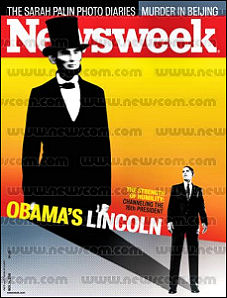
On Tuesday morning’s Laura Ingraham radio show, Newsweek reporter Howard Fineman pleaded “no contest” in Latin to the conservative host’s lecture that Newsweek was too busy celebrifying Barack and Michelle Obama to weigh whether Obama would succeed as president. (Audio here. ) He insisted the magazine was “mesmerized” by a “brilliantly run campaign,” as if it wasn’t also about their liberal wishes and dreams:  INGRAHAM: How is it though with all these smart people at Newsweek – I went around the block with Evan Thomas about this as well. How did you all think that a guy who basically went from the Harvard Law Review, to some community leafleting, organizing, whatever you want to call it, to a short stint, a few lectures about constitutional law at [the University of] Chicago, very short stopover in the state Senate, and a very short stopover in the U.S. Senate. How does that add up to experience to run the biggest economy and the biggest military in the world? And why wasn’t Newsweek, instead of doing these celebrified covers of Michelle and Barack as historic, and celebrity culture, and all this love-love-love-love-love, why wasn’t – Why weren’t those questions asked before this election took place? Because to me, those were the questions to ask. . It wasn’t about personality. It was about experience and outlook. FINEMAN: Well, uh, first, I’ll plead nolo [ contendere ] on a lot of this. But –  INGRAHAM: That’s what he did, in the U.S. Senate. He voted present. So you’re voting present for Newsweek. FINEMAN: No, no. Part of the problem is, or part of the reason is that we – as political reporters, we become enamored with the mechanics of the campaign, and I would still insist that – Ingraham saw right through the admire-your-mechanics trope:  INGRAHAM: You’re gonna do that if Paul Ryan is the nominee, for the Republicans? You’re gonna celebrify him? I don’t think so. FINEMAN: No, no. Let me back up for a second. That was – Whatever you say about Barack Obama and David Axelrod in your diaries and everything — INGRAHAM: Yeah. FINEMAN – It was a brilliantly run campaign. And I have come to despair of the notion of the relationship between the quality and shrewdness of a campaign that someone runs and the kind of presidency that they have. When Ingraham joked that Lady Gaga is good at branding, too, Fineman added; “We were mystified and mesmerized by the quality of the branding campaign that was Obama’s.” Another word for “mystified and mesmerized” would be that Newsweek was “suckered,” or “bamboozled,” or to use an Ingraham favorite, “razzle-dazzled.” But they knew he would be an inexperienced president, and make plenty of mistakes. They just calculated that they would cross that bridge when they arrived at it. “History” came first, incompetence afterwards.  When the media offers a contender like Obama yards and yards of gauzy press coverage, and when it papers over every inconvenient truth about his hate-preaching minister of two decades, among many contentious fractions of the candidate’s personal history, isn’t it much easier to portray his campaign as “brilliantly run”? Earlier, Fineman played the centrist correspondent who would have advised Obama to be less self-impressed with his own historic importance and seek half a loaf of government activism instead of greedily grabbing for a large socialist combination plate:  He consciously at the beginning set himself up as a kind of counterpoint to Reagan. Remember he said he admired Reagan and Hillary got all upset at him admiring Reagan? What Obama admired about Reagan was not his philosophy, or his program, but the fact that Reagan was an inflection point in history, was a big sea change in history. I believe Obama views himself in that way, and that’s why he went for the big health-care bill, and the big stimulus, and all the other big bills to make history, because he felt he would be the anti-Reagan. But I missed – I have to admit I miss half of what I cover when I’m out there. I thought Obama was shrewder than that, and wouldn’t use all of his political capital in the way he did, and it’s hurt him. But if Obama’s in dire political straits now, Newsweek’s over-the-top, ego-stoking coverage comparing him without any real factual foundation to historic presidents like FDR and Lincoln is a part of the problem. So maybe after November, Fineman and his colleagues can also plead “no contest” to unintentionally spurring the Republican wave that may come. 

Follow this link:
Under Ingraham’s Interrogation, Newsweek’s Fineman Pleads ‘No Contest’ for Newsweek’s ‘Mesmerized’ Obama Coverage

CNN’s Yellin Cites Her Own Liberal Harvard Days in Defense of Kagan

On Tuesday’s Rick’s List, CNN’s Jessica Yellin harkened back to her college days at Harvard as she defended Supreme Court nominee Elena Kagan against charges by conservatives that she is anti-military: “When I was at Harvard, a full decade before she was dean of the law school, there was already institutional opposition to ‘don’t ask, don’t tell’….it steeps the whole university.” Yellin, actually, was a key left-wing student agitator during her time at the university, as she revealed in several interviews with The Crimson, the student newspaper at Harvard. She was labeled a ” prominent feminist activist in her own right ” in a June 10, 1993 profile of Sheila Allen , her first-year roommate and self-proclaimed “dyke of the Class of ’93.” The then-student certainly earned this label, as she helped resurrect Harvard-Radcliffe Students for Choice after a “relatively inactive period,” was a women’s studies major, and, in an April 10, 1992 interview , bemoaned how Harvard was apparently opposed to her feminist agenda: “For people interested in women’s issues or gender studies, this is an overtly hostile environmen t.” In a May 1, 1992 article , Yellin expressed how the acquittal of the four police officers involved in the controversial Rodney King arrest was ” the most blatant evidence of the indelible racism… in this country .” Anchor Rick Sanchez brought on the correspondent just after the top of the 4 pm Eastern hour as the nominee continued her testimony before the Senate Judiciary Committe. Sanchez first referenced how Senator Jeff Sessions was “grilling Kagan about banning military recruiters from an on-campus recruiting facility when she was Harvard Law dean.”  He then asked the correspondent, “Is it fair, based, Jessica, on what happened at Harvard, to charge, as Sessions seems to be saying- or alluding to or suggesting- that Elena Kagan has a bias against the military?” Yellin defended  Kagan from the very beginning and immediately cited her time at the Ivy League school: YELLIN: I think that’s apples and oranges, Rick, because, when I was at Harvard, a full decade before she was dean of the law school, there was already institutional opposition to ‘don’t ask, don’t tell.’ It was alive and well . So, beginning in 1979, when Harvard instituted this no-discrimination policy, there were people in ROTC- the Reserve Officers Training Corps- who could not train and drill on campus because, initially- a holdover from Vietnam- it continued because of ‘don’t ask, don’t tell.’ That was a decade before she was there. Then, when General Colin Powell was invited to speak at graduation in 1993, there were massive protests over ‘don’t ask, don’t tell.’ I can’t emphasize enough how this- it steeps the whole university . She was continuing with prevailing beliefs on campus, and this whole debate feels very out of context for someone who was at Harvard, because- to suggest this didn’t predate her- saying that’s a left-wing talking point is like arguing that reality is a left-wing talking point. The correspondent does have a personal memory of the 1993 commencement, as she graduated from Harvard that year. The Clinton administration had introduced the “don’t ask, don’t tell” policy just months earlier, shortly after coming to office. Later, the CNN correspondent excused Kagan’s open opposition to military recruiters on the Harvard Law campus as merely a manifestation of the left-wing environment at most “elite” institutions of higher learning: SANCHEZ: She was there in 2003. YELLIN: Yeah. SANCHEZ: Isn’t this about the same time, though, that there was a lot of questions? Michael Moore had this movie that came out about that time [Fahrenheit 9/11], as I recall, where a big part of his movie was questioning whether recruiters had a right to go out there and get people to join the military, and that they were, maybe, not being all that honest with them. I mean, if you put it in the context of that time frame, there were a lot of questions being raised about recruiting by the left. YELLIN: There have been since the Vietnam era, when some of these organizations were kicked off of these elite campuses then. I mean, there are a number of colleges that have resisted allowing military recruitment. But that’s hardly unique to Elena Kagan or to Harvard. It might be- you know, some on the right have argued that that’s the culture of elite universities, that are- you know, anti-military in some way. I don’t buy that. I think that there’s a tension there, but this is- the fundamental point here is that it’s in no way special to her , and there were 24 faculties that joined in the lawsuit against this policy of requiring these military recruiters. Hers wasn’t even one of them. So she wasn’t even leading the charge on this.

Go here to read the rest:
CNN’s Yellin Cites Her Own Liberal Harvard Days in Defense of Kagan

Bozell Column: The ‘Elusive’ Truth About Kagan

It’s not cute when reporters play dumb. Last year, when Barack Obama nominated Sonia Sotomayor for the Supreme Court, CBS anchor Katie Couric said labeling her “won’t be easy.” CBS reporter Wyatt Andrews found “no clear ideology” in her public record. This week, the Washington Post embarrassed themselves with a front-page story claiming “Obama has not chosen outspoken liberals in either of his first two opportunities to influence the makeup of the court.” That ridiculous sentence collides with a June 8 report by liberal Los Angeles Times legal reporter David Savage. “The early returns are in, and Justice Sonia Sotomayor is proving herself to be a reliable liberal vote on the Supreme Court. Cases this year on campaign speech, religion, juvenile crime, federal power and Miranda warnings resulted in an ideological split among the justices, and on every occasion, Sotomayor joined the liberal bloc.” That verdict came before Sotomayor voted with the gun-controllers in the Chicago gun-rights case; before Sotomayor voted for allowing public universities to deny recognition to Christian student groups who dare to oppose homosexuality; and before Sotomayor voted as part of a 6-3 minority that it shouldn’t be illegal to provide material support to groups defined by our government as foreign terrorists. Now match that record with what the liberal media claimed about Sotomayor. “You know, for a Democrat, she has a pretty conservative record,” NPR reporter Nina Totenberg announced on PBS’s “Charlie Rose” show last year. “In fact, on a lot of criminal law issues, you could say that she’s more conservative than some members of the Supreme Court, including Justice Scalia.” If Totenberg sold shoddy diet pills that fraudulently, she’d be a red-hot case for the Federal Trade Commission. So why should anyone believe the media are telling the truth now when they suggest Elena Kagan cannot be called liberal? Kagan’s views are “elusive,” the media chant in unison. They all tried to evade Kagan’s vivid writing as a college student in the Daily Princetonian in 1980, about how she cried and got drunk when Ronald Reagan won and “ultraconservative” Al D’Amato defeated her candidate, ultraliberal Democrat Liz Holtzman. She wished that “our emotion-packed conclusion that the world had gone mad, that liberalism was dead and that there was no longer any place for the ideals we held or the beliefs we espoused” would be replaced by the hope that the Reagan era would be “marked by American disillusionment with conservative programs and solutions, and that a new, revitalized, perhaps more leftist left will once again come to the fore.” Unbelievably, our journalistic geniuses can read that and say Kagan’s political views are “elusive.” In their deference to Obama, the networks barely mentioned Kagan for the six weeks between her nomination and her confirmation hearings. Conservative interest groups putting out complaints that she’d be a radical justice on abortion and “gay marriage” are not newsworthy, even though liberal interest groups ranting about “far right” Bush nominees were tenderly solicited by the same networks. One TV reporter filed one story that broke the mold. On June 3, CBS legal reporter Jan Crawford said documents in Thurgood Marshall’s papers in the Library of Congress showed that, “Kagan stood shoulder to shoulder with the liberal left, including on the most controversial issue Supreme Court nominees ever confront: abortion.” The White House was furious that Crawford would dare tell the truth about such a thing. “Their reaction has been to push back so strongly on allegations, as they would put it, that she’s a liberal,” she revealed. “Like there’s something wrong with that, like it’s a smear to say their nominee is a liberal.” When the hearings began, ranking Republican Sen. Jeff Sessions offered a devastating opening statement documenting Kagan’s extreme liberalism. He ran through her college thesis on socialism that worried about socialism’s demise, and her master’s thesis praising the activism of the Earl Warren Court. He noted how she worked for the Michael Dukakis for President campaign, and took a leave as a law school professor to help Joe Biden get liberal Justice Ruth Ginsburg confirmed.      If that’s ancient history, Sessions added that in 2005, Harvard Law School Dean Kagan joined three other leftist law school deans to write a letter in opposition to Sen. Lindsey Graham’s amendment on determining who was an “enemy combatant” in the War on Terror. She compared Graham’s amendment to the “fundamentally lawless” actions of “dictatorships.” The networks skipped those facts in brief, perfunctory news reports. Liberal partisans expect the “objective” media to spout obvious lies that there are no liberals to be found in Obama’s Supreme Court selections, that they have been far too “elusive” to be categorized. That is why Americans are turning away in droves: they’re not finding the media’s biases to be “elusive.”

Visit link:
Bozell Column: The ‘Elusive’ Truth About Kagan

MSNBC Panel Invokes Anita Hill, Injects Sexism in Kagan Hearing

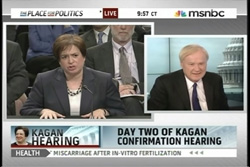
A liberal panel led by MSNBC anchor Chris Matthews injected sexism into the Kagan confirmation hearings on Tuesday morning, suggesting that Republican senators should curtail the tenacity of their questioning because the Supreme Court nominee happens to be a woman. Invoking the Clarence Thomas hearings, which focused on the testimony of Anita Hill, who accused Thomas of making inappropriate sexual comments, Matthews asked, “Am I wrong in hearing flashes here of the Anita Hill testimony way back when in the Clarence Thomas confirmation hearings?” Despite the absence of a sexual scandal, Matthews persisted with the bizarre analogy: “Are we past the sensitivity about a male member of the Senate grilling a female?” The “Hardball” host failed to clarify exactly who in 2010 is sensitive about male senators posing tough but legitimate questions to a woman nominated to the nation’s highest court. “I don’t think we are, Chris. I don’t think we are,” answered Sherrilyn Ifill, a law professor who teaches a seminar on “Reparations, Reconciliation, and Restorative Justice,” who appeared eager to respond to Matthews’s condescending question. Continuing to patronize female viewers who don’t believe that men and women should be treated differently in congressional hearings, Matthews asked Ifill, a woman, to flesh out the “rules of engagement” for handling female nominees. “So male-female interrogation has to be done more, what would you say?” probed Matthews. “Give me the verb [sic]?” “I think it has to be done with care, with care, with care,” explained Ifill. “We saw it last summer with the Sotomayor hearings where both race and gender were at play. I think some of the most uncomfortable moments that many of us experienced was when some of the Republican senators crossed that line.”              Like Matthews, the University of Maryland law professor failed to elucidate who specifically felt uncomfortable with Republican senators’ questions during the Sotomayor hearings. MSNBC anchor Andrea Mitchell echoed Ifill’s sentiment on handling female nominees “with care,” proclaiming, “The Senate Judiciary Committee is being very careful, with the exception perhaps of Jeff Sessions in his opening comments yesterday, in his opening statement. They’re being very careful about a female nominee.” David Corn, Washington bureau chief of the left-wing magazine Mother Jones , was the only panelist to duck Matthews’s sexist questions. “I’m not weighing in on this one,” he joked. A transcript of the segment can be found below: MSNBC News Live 6/29/10 10:54 a.m. CHRIS MATTHEWS: Let’s bring in our panel right now on the Supreme Court confirmation hearing. NBC News Chief Foreign Affairs Correspondent Andrea Mitchell, Susan Page, USA Today Washington Bureau Chief, David Corn, Washington Bureau Chief of Mother Jones, he’s also a blogger on PoliticsDaily.com, and Sherrilyn Ifill, who’s a professor of law at the University of Maryland Law School. Let’s go around the panel in that order, your thoughts about this whole topic here is so hot in terms of partisan politics. Traditionally the Republican Party does not like any restraint on spending, the Democrats like to see restraints because they’ve always believed that, somehow, the other party has an advantage in money. Andrea? ANDREA MITCHELL, NBC News chief foreign affairs correspondent: This was the case that she lost before the Supreme Court, and so this is positioning by both sides. She clearly has a very good handle on the details of this case, but she was on the losing end of this argument and there’s no way that Orrin Hatch and other would ever agree. MATTHEWS: The “Hillary” movie was a very tough partisan movie put out for general commercial distribution and it was perceived to be a political document by the Democrats. MITCHELL: It was perceived to be a political document and that was the argument, that it should not be permitted. MATTHEWS: That it could not be financed by corporate purposes. MITCHELL: By corporate purposes. MATTHEWS: Right, David? DAVID CORN, Mother Jones Washington Bureau Chief: But as we know, the 5-6 justices on the Supreme Court took this case and they expanded it even more so which is what got President Obama and other people riled up and they took a bigger swing at the McCain-Feingold bill, which had been passed by the Senate, which now Solicitor General Kagan is appearing before. And it was decried as judicial activism by people on the left and liberals and The New York Times. So I think Hatch’s main political point here is to try and stop that narrative because I think it’s really been absorbed that Citizens United went too far as a court decision. MATTHEWS: And this came out in the president’s State of the Union where he took a swipe at the Supreme Court with Samuel Alito and other justices there and they didn’t like it. SUSAN PAGE, USA Today Washington bureau chief: They didn’t. You know, it’s interesting since Kagan argued this case she feels pretty comfortable with it and you see, I think, a more free-flowing exchange between the Senator and the nominee there then we’ve seen on some others. Kagan famously called these hearings “vapid and hollow” in the past but we’ve seen some flashes of humor here this morning. And interestingly, Kagan said that she thought it would be a terrific idea to have TV cameras in the Supreme Court. If she gets confirmed that’s an issue where she’ll have some real issues with her colleagues. MATTHEWS: Am I wrong in hearing flashes here of the Anita Hill testimony way back when in the Clarence Thomas confirmation hearings? Orrin Hatch has to be very careful. Most voters are female. This is a female nominee, right? They must have that memory. That political memory and almost their intellectual muscle. MITCHELL: They have learned the lesson. The Senate Judiciary Committee is being very careful, with the exception perhaps of Jeff Sessions in his opening comments yesterday, in his opening statement. They’re being very careful about a female nominee. You’re seeing her personality. She has done this before. She’s been on the coaching side of previous nominees. And you’re seeing that she’s engaging with Orrin Hatch. She’s very comfortable in the setting. CORN: But she’s not just female. She’s probably smarter than any of them and she certainly knows the details better. So they really go at her at their own peril because I think she could twist them or turn them very quickly. MATTHEWS: I think this is fascinating because I (inaudible) Dick Durbin, the senator from Illinois, the number two Democrat, Susan. And I said have we past the sort of the feminist era – I shouldn’t call it the feminist era, the feminist reality. Are we past the sensitivity about a male member of the Senate grilling a female? (Laughter) MITCHELL: No! PAGE: No! CORN: I’m not weighing in on this one. (Inaudible) IFILL: I don’t think we are, Chris. I don’t think we are. MATTHEWS: So male-female interrogation has to be done more, what would you say? Give me the verb? Give me the adverb? IFILL: I think it has to be done with care, with care, with care. We saw it last summer with the Sotomayor hearings where both race and gender were at play. I think some of the most uncomfortable moments that many of us experienced was when some of the Republican senators crossed that line. And so you still have to be careful. MATTHEWS: Okay give me the ground rules, give me the rules of engagement, professor. Is there a different rule? Let me ask you this: obviously the question of a political role here is relevant because this nominee is a Democrat – has been a Democratic appointee – has voiced views on issues like “Don’t Ask, Don’t Tell” as a citizen. Where’s the line? How hard can they get in the questioning? IFILL: Well I find this quite astonishing because of course, you know, Justice Scalia was a political part of the Ford administration. Chief Justice Rehnquist came right from the Nixon administration into the Supreme Court. Clarence Thomas was so political that he had to promise to strip down like a runner. So this is not unprecedented that someone with a political background gets nominated to the Supreme Court and it’s a little interesting to see the wide-eyed Republicans, you know, talking about her being too political. I think they can’t push too far lest she just say, “I’ll strip down like a runner, you know, like Clarence Thomas.” –Alex Fitzsimmons is a News Analysis intern at the Media Research Center. Click here to follow him on Twitter.

View post:
MSNBC Panel Invokes Anita Hill, Injects Sexism in Kagan Hearing