Tag Archives: numbers

Going to Pot: Motive to unveil cannabis-composite Kestrel electric car [w/video]

Motive Industries has announced that they will unveil Canada's first bio-composite-bodied electric car this September at the EV 2010 V

Special schools a fast track to prison

http://www.theaustralian.com.au/national-affairs/special-schools-a-fast-track-to… BOYS are being segregated from the mainstream school system for behavioural and emotional disorders at about six times the rate of girls. A study by Macquarie University researchers has found a disturbing pattern suggesting specialist behaviour schools may act as a “school-to-prison pipeline”, in which students do not return to mainstream classes but enter juvenile justice centres. Based on an analysis of data from NSW, which has the most transparent education system, the study, to be published next month in the journal Contemporary Issues in Early Childhood, examined the diagnoses of students enrolled in special classes and schools. It found boys and girls were almost equally represented in intensive English classes for new migrant children, and that the diagnosis of physical disabilities such as hearing and vision impairment, or moderate to severe intellectual disability, has remained relatively stable over the past decade. But the study found boys with physical disabilities were more likely to be in special schools than girls, while the numbers were more representative of the general student body in special classes in mainstream schools. The proportion of boys in special classes rises as diagnosis of their condition becomes more subjective, with boys accounting for 85 per cent of students in special schools with behavioural and emotional disorders. Lead researcher Linda Graham said enrolments for behavioural and emotional conditions start to rise in Year 5, when students are about 10 and specialist behaviour schools start accepting students. Dr Graham said this situation would be similar in other states. The NSW government established the first behaviour school in 2001 and now runs about 35 — including 14 for students with mental health problems — teaching about 500 students from Year 5 to Year 10. The enrolments for students with behaviour disorders rise sharply until they turn 13, which Dr Graham said was when the juvenile justice system started to pick up children. The enrolment pattern for students with behaviour disorders in juvenile justice facilities mirrors the trend in special schools, with enrolments for boys rising steeply from 13 on. Dr Graham said the similarities of the trend in behaviour disorders and juvenile justice involvement raised the question of whether behaviour schools “precipitate movement down a school-to-prison pipeline”. “Reports suggest that these kids are being sent into holding pens,” she said. “They're becoming repositories for kids … and once they go in, it appears a high proportion are not coming … out. “These are kids who are disengaging because they're not learning at the rate of their peers in the first school years,” she said. A spokesman for the NSW Education Department said students were usually enrolled in the behaviour schools for two to three terms, but this varied according to the type of behaviour problem involved. About half the students placed in behaviour schools returned to the mainstream system, he said. added by: MotherForTruth

After Bashing Bush on Unemployment, NYT Now Touting ‘Benefits’ of High Unemployment

In late 2009, when high rates of unemployment began looking like a sad fact of life for the foreseeable future, the media started looking for ways to put a positive spin on the situation. Sure, many had predicted the next great depression when unemployment stood at around 6 percent in 2008, but with Democrats in control of the White House and Congress, a number of reporters suddenly found the recession’s many silver linings. “All I Want for Christmas Is a Layoff” read the headline of one ABCNews.com column following employees who would rather get a nice severance package than continue in their dull vocations. Newsweek cheerily noted that since men had been hit harder by the recession than women, they would now be able to help out around the house. The Los Angeles Times coined possibly the most absurd term of the recession to date in ” funemployment ,” and discussed jobless Americans who prefer “hitting the beach” to “punching the clock.” Now the New York Times is celebrating the fact that the 90.5 percent of those who are employed are seeing a pleasant rise in their wages. See, the recession’s not that bad. After the obligatory introduction – a few paragraphs lamenting those Americans who have lost their jobs – the Times started searching for the upside: But since this recent recession began in December 2007, real average hourly pay has risen nearly 5 percent. Some employers, especially state and local governments, have cut wages. But many more employers have continued to increase pay. Something similar happened during the Great Depression, notes Bruce Judson of the Yale School of Management. Falling prices meant that workers who held their jobs received a surprisingly strong effective pay raise. This time around, nominal wages – the numbers people see in their paychecks – have risen throughout the slump, as companies have passed along some of the impressive productivity to their (remaining) workers. Meanwhile, inflation has been almost non-existent, except for parts of last year, when real wages did briefly fall. Obviously, real wages could begin falling again if inflation picks up or more employers cut pay. And many workers are already struggling with big debts and diminished 401(k) accounts. Still, the contrast is pretty stark. The typical jobless person has been out of work six months. The typical worker has received a raise. Yes, the typical worker has received a raise. In fact, fewer than ten percent do not have a job. Say, why isn’t anyone giving Obama credit for the 90.5 percent employment rate? After all, the typical person is still employed. During the Bush years, the Times was of course more concerned about actual employment during a recession. Throughout 2002, the paper bemoaned the “jobless recovery” – despite the fact that the unemployment rate was never more than two percent below pre-recession levels. The Times shunned good news outright, favoring to report the more glum details of the nation’s economic outlook. “Employers Balk at New Hirings, Despite Growth,” was a headline typical of the Times’s attitude. Paul Krugman consistently opined on the ” jobless recovery ,” and some Times reporters speculated that government accounting tricks had shielded the public from seeing just how bad the economy was. The recession beginning in late 2001, though less severe than the one in which the country finds itself now, lasted a good deal longer than this one has lasted so far, as you can see in this graph, courtesy of Calculated Risk .   That is not to say that the 2001 recession more serious. As you can see, our current economic downturn is much deeper, and if it continues on its current trajectory may last even longer than the early-2000s recession. It does mean, however, that the New York Times had ample opportunity to ponder all the benefits of recession economics in an economic environment that was far less severe than the current one. I wonder why we were never informed of all the upsides.

Read the original here:
After Bashing Bush on Unemployment, NYT Now Touting ‘Benefits’ of High Unemployment

Obama Admin’s IT Outsourcing Assistance to Sri Lanka, Armenia Gets Little Press Notice

On August 3 (“U.S. To Train 3,000 Offshore IT Workers”), InformationWeek.com’s Paul McDougall reported that the U.S. Agency for International Development is operating at cross purposes with the Obama administration’s stated goal to keep high-tech jobs in the U.S. USAID has since attempted to do some backing and filling about the assistance it is providing in Sri Lanka, but its arguments may ring hollow, given McDougall’s report two days later that the agency is also helping to fund IT outsourcing efforts in Armenia. Here are the first four paragraphs of McDougall’s original August 3 report : Despite President Obama’s pledge to retain more hi-tech jobs in the U.S., a federal agency run by a hand-picked Obama appointee has launched a $36 million program to train workers, including 3,000 specialists in IT and related functions, in South Asia. Following their training, the tech workers will be placed with outsourcing vendors in the region that provide offshore IT and business services to American companies looking to take advantage of the Asian subcontinent’s low labor costs. Under director Rajiv Shah, the United States Agency for International Development will partner with private outsourcers in Sri Lanka to teach workers there advanced IT skills like Enterprise Java (Java EE) programming, as well as skills in business process outsourcing and call center support. USAID will also help the trainees brush up on their English language proficiency. USAID is contributing about $10 million to the effort, while its private partners are investing roughly $26 million. A short time later, Patrick Thibodeau at Computerworld (“Basic skills, not enterprise Java, in Sri Lanka”), relayed USAID’s contention that relevance of java to the Sri Lankan effort would only be in whatever coffee might be used to keep students awake and alert (that’s my “clever” interpretation, not his). He also offered a humanitarian justification for the effort: The U.S. Agency for International Development (USAID), which is helping to fund development of Sri Lanka’s offshore outsourcing industry, says it made a mistake in announcing that it would provide training on enterprise Java as part of a basic IT work skills program, an agency spokeswoman said today. … The inclusion of enterprise Java was curious because the USAID also said, in a subsequent follow-up blog post about this training, that the population in this area has “not been exposed to even basic IT technology.” … A USAID spokesman wrote this: “USAID’s partner in the project, a Sri Lankan company, initially requested to teach Enterprise Java to students that may qualify. However, after conducting due diligence, the partner found that the training programs must focus on fundamental computer skills, as the majority of prospective trainees lacked even basic experience with computers.” … The Northern area of Sri Lanka has seen much killing, including massacres. The war has been particularly brutal, with as many as 100,000 people killed over the course of the war and this in a country with a total population of just over 21 million. The war was settled last year and now the government is trying to stabilize this area with some economic development assistance. A correct translation of the bolded paragraph would be: They really wanted to do it, but they couldn’t. Even if the effort in Sri Lanka isn’t harmful to U.S. economic interests, the same probably can’t be said of what McDougall reported on August 5 (“Now It’s Armenia: USAID Funds IT In Eurasia”) about USAID’s involvement in Armenia: Even as controversy mounts over its funding of IT outsourcers in South Asia, the U.S. Agency for International Development has announced a program under which it will partner with the government of Armenia—a nation anxious to lure computer work from American shores–to promote the development of the country’s information technology industry. Jonathan Hale, USAID deputy assistant administrator for Europe & Eurasia, is on a four-day trip to Armenia to meet with government and private industry leaders in the country. On his agenda is a meeting with Armenian economic minister Nerses Yeritsyan. “We look forward to partnering with USAID on the IT sector, which has great potential as Armenia has an advantage in this sector,” Yeritsyan said in a statement released by USAID. “We want companies to come to Armenia and create their innovative environments,” Yeritsyan said. Among other things, Armenia is looking to establish itself as a center for low-cost IT and engineering work outsourced from the U.S. and other Western countries. … USAID, a taxpayer-funded federal agency, did not disclose how much it’s contributing to Armenia’s efforts to become a global IT competitor. Among the U.S. companies participating in the project is Oracle’s Sun Microsystems unit. Apart from what the Obama administration appears to be doing to ruin it, the more recent trend has been to pull call center work, much of which is related to IT support, back from overseas installations. I noted in a May 30 post (at NewsBusters ; at BizzyBlog ) industry reports that the call centers actually grew during the worst of the 2008-2009 recession as normal people define it . More tangible evidence of this trend is found at this link . Though it goes back to March of 2009, it cites eight specific and significant instances of companies each deciding to “onshore” hundreds of jobs in the U.S. that either had been outsourced overseas, or would have been in previous years. In the AT&T case cited at the link, thousands of jobs are involved. Though there have been stories in other tech publications about the Sri Lankan and Armenian situations since McDougall’s reports, the U.S. establishment press appears to be disinterested. A Google News search on “Sri Lanka outsourcing” (not in quotes) comes up with few results. A deeper dig into those results shows no U.S. establishment newspaper coverage. There is a mention at a blog post at the Seattle Post-Intelligencer , but it turns out to be from a commenter. Associated Press searches on ” Sri Lanka ” and ” Armenia ” (neither in quotes) return nothing relevant. Given “how American jobs disppearing overseas” was a popular establishment and sometimes valid media and Democratic Party theme during the Bush 43 years, it’s a little hard to handle any journalistic contention that a clearly proactive, government-sponsored effort to do just that isn’t sufficiently newsworthy. Cross-posted at BizzyBlog.com .

View post:
Obama Admin’s IT Outsourcing Assistance to Sri Lanka, Armenia Gets Little Press Notice

‘Recovery Summer’ vs. ‘Mission Accomplished’: Will MSM Immortalize Obama’s Laughable Proclamations?

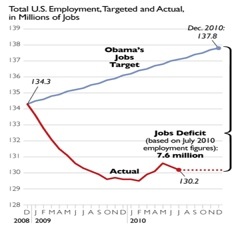
For the media, “Mission Accomplished” represents everything that was wrong with the George W. Bush administration and its war policy. The image of Bush declaring unequivocal victory mere weeks after the invasion of Iraq has been ballyhooed as a visual representation of Bush’s arrogance, naivete, even dishonesty (the media contrived most of this meme – more on that below). Will Barack Obama have a “Mission Accomplished” moment? That is, will the media seize on something he or his administration has said as evidence of the large gap between his rhetoric and the effects of his policies? In fact, the gap already exists. The White House’s ” Recovery Summer ” initiative and Treasury Secretary Tim Geithner’s statement, ” welcome to the recovery ” are completely divorced from economic reality. The only question is whether the media will seize on the catchy and baseless slogans (the two criteria of the “Mission Accomplished” media standard) coming from the White House to illustrate the sizable gap between this administration’s rhetoric, and the facts on ground, so to speak. First, it should be noted that the “Mission Accomplished” meme, as trumpeted by the media since May, 2003, is largely a myth. Bush never delivered those words in the context portrayed by many media liberals. The phrase was never actually uttered on the USS Abraham Lincoln, where Bush spoke in front of a banner displaying the infamous phrase. In fact, the banner was draped from the ship with little involvement or input from the White House. And Bush, during the speech on May 1, 2003, made sure to note that “Our mission continues” and that “We do not know the day of final victory, but we have seen the turning of the tide.” In other words, Bush plainly stated that the overarching mission was not  accomplished. Granted, he did say the following to a group of troops a month later: “America sent you on a mission to remove a grave threat and to liberate an oppressed people, and that mission has been accomplished.” But in the context of the time – when the search for weapons of mass destruction was still ongoing and Saddam Hussein had just been deposed – that statement was true. A grave threat in the Iraqi dictator had been removed, and the hundreds of thousands of Iraqis that bore the brunt of his dictatorial rule had been liberated. The lesson: truth matters less than perception and a coherent narrative in the creation of iconic images that promote or dog entire presidencies. The media’s “Mission Accomplished” meme abandoned truth in favor of a pithy and memorable way to get across a point they were already trying to make: the war effort was a bad idea. The Chicago Tribune channeled the media’s less flustered critics of the “Mission Impossible” statement, calling it ” dramatically premature .” The New York Times, on the other hand, labeled it a product of the president’s ” Never Never Land ” mentality on Iraq. “Welcome to the recovery” is certainly no less deserving – more so, in fact – of the iconic status afforded “Mission Accomplished” and the media’s disdain. Short, catchy, and lacking any real basis in reality, the phrase perfectly captures the Obama administration’s fingers-in-the-ears attitude towards their own economic policies. Three days after Geithner made his “welcome to the recovery” proclamation in the op-ed pages of the New York Times, the economy shed 131,000 jobs. The administration and its left-wing media cheerleaders touted the 71,000 private sector jobs created, not mentioning of course that about double that number would need to materialize for the economy to keep pace with new entrants in the job market. Ed Morrissey explains the numbers in more detail: This isn’t a Recovery Summer. It’s a slow slide, certainly better than the rapid disintegration of 2009, but we haven’t replaced those jobs yet, either. Job losses are cumulative. In a normal recovery with proper economic policies of lower barriers to investor entry, we would see a rapid replacement of jobs in this time frame that would take us back to somewhere around 80% of what was lost, with the remaining 20% being the most difficult to recover. We have not yet even begun that ascent. I’ll update this with a couple of slides later this morning to demonstrate the problem. Expect the White House to hail the best private-sector job creation numbers since March, but economists won’t get fooled. We’re still descending, and will until we get job creation solidly above 100,000 new additions per month. That Geithner’s “welcome to the recovery” statement was “dramatically premature” seems an understatement. is Tim Geithner stuck in Never Never Land? The Treasury Secretary’s declaration of the non-recovery recovery came in the middle of what the White House has formally dubbed its “Recovery Summer” campaign. The effort aims to promote “the surge in Recovery Act infrastructure projects that will be underway across the country in the coming months – and the jobs they’ll create well into the fall and through the end of the year,” according to a release. “Summer 2010 is actually poised to be the most active Recovery Act season yet,” the White House claimed in June. Total job losses during “Recovery Summer” have totaled 352,000 so far. The unemployment rate, meanwhile, has declined slightly, indicating that thousands of Americans have given up on their searches for jobs. Meanwhile, only a fifth of Americans believe the economy is improving, while three quarters believe the stimulus either had no effect on the economy, or has actually made things worse. In short, the “Recovery Summer” label is a joke, even given the modest (and that’s putting it generously) private-sector job creation so far this year. But will the media treat it with the disdain they did Bush’s “Mission Accomplished”? Will they call out Geithner for welcoming Americans to a non-existent recovery? If the economy doesn’t start gaining some steam, media neutrality will truly be put to the test.
See the rest here:
‘Recovery Summer’ vs. ‘Mission Accomplished’: Will MSM Immortalize Obama’s Laughable Proclamations?

What Is ‘Scott Pilgrim Vs. The World’ All About?

You’ve seen the colorful and wacky ads, but they might have left you wondering: Who is Scott Pilgrim? By Kara Warner, with reporting by Josh Horowitz Michael Cera in “Scott Pilgrim vs. the World” Photo: Universal Pictures Those who have encountered Universal’s creative and very colorful marketing campaign for the upcoming “Scott Pilgrim vs. the World” movie might be either intrigued or perplexed by the zany high-action trailers or the larger-than-life billboards (featuring either star Michael Cera shredding the guitar or the more dubious “Exes by the numbers” shot). Either way, apart from the film’s stellar cast and excellent tagline — “An epic of epic epicness” — curious moviegoers might be wondering: Who the heck is Scott Pilgrim? And what is this movie about? Well we here at MTV News are more than equipped to help answer those questions and more. Kicking off a week of Pilgrim-pegged coverage, we bring you a handy primer of the unlikely hero, courtesy of director Edgar Wright (“Sean of the Dead,” “Hot Fuzz”).To begin with, he says it’s all about love. “It’s essentially a love story — or a love triangle even — about a young man, Scott Pilgrim,” Wright told MTV News when he stopped by our live-stream show at Comic-Con recently. “[It’s] basically the ups and downs of his love life, filtered through kung fu and video games and all sorts of insane action.” Those ups and downs revolve around Pilgrim fighting for the love of Ramona (played by Mary Elizabeth Winstead) — we’re talking literal fighting here. Before Pilgrim and Ramona can be together, he must defeat her seven evil exes. Wright said it’s like a cartoon/ video game/ sugar-cereal cocktail. “Brian Lee O’Malley, who wrote the books, once described the character Scott Pilgrim as the hero of a movie inside his own head,” Wright said. “This essentially is the movie, so it’s kind of like a big daydream for people who’ve been brought up on Saturday morning cartoons, video games and too much sugary product.” Check out everything we’ve got on “Scott Pilgrim vs. the World.” For breaking comic book movie news, columns and more — updated around the clock — visit SplashPage.MTV.com . Related Photos ‘Scott Pilgrim Vs. The World’ Exclusive Clip Highlights

View original post here:
What Is ‘Scott Pilgrim Vs. The World’ All About?

Avenged Sevenfold’s Johnny Christ On Band’s #1 Debut, Nightmare

‘It’s a testament to the fans about how much they care about what we do,’ bassist Johnny Christ says about topping the Billboard albums chart. By Kyle Anderson Avenged Sevenfold’s Johnny Christ Photo: Getty Images It looked as though Eminem’s Recovery would be spending most of the summer at the top of the Billboard albums chart, at least until Katy Perry got around to dropping Teenage Dream later this month. But as we learned this week, you should never count out the savage power of California punk-metallers Avenged Sevenfold, who stormed the top of the charts with their fifth album, Nightmare. It’s the first trip to the top of the chart for the band, and they celebrated appropriately. “I got the call from my manager last night,” bassist Johnny Christ told MTV News. “Unfortunately, Matt [Sanders, better known as M. Shadows] and Zack [a.k.a. Zacky Vengeance] were doing press in L.A., but me and Brian [a.k.a. Synyster Gates] went out to celebrate and had some dinner together. It was pretty fun. It was more about the drinks. We were just drinking, having a good time. We should have been being good boys and not drinking last night, but it’s the first time we’re on the top of the Billboard, and that only happens once. We had to do something.” Of course, the chart victory is bittersweet for the men of A7X, as the celebration had to happen without drummer Jimmy “The Rev” Sullivan, who passed away in December 2009 of an accidental drug overdose. Christ (born Jonathan Seward) thinks of it as the latest in a long line of tributes to Sullivan. “The only thing we were worried about was getting it done and doing the best job we can for our brother,” he said. “We wanted to make this record as big and strong as possible. We wanted to make this a really huge record and get it out there to as many people as possible to extend Jimmy’s legacy.” In addition to the need to carry on Sullivan’s legacy, the men of Avenged Sevenfold were also fueled by their ever-growing fanbase, which has made them incrementally larger with each release. “We have the greatest fans in the world, and our growth has been so organic. It’s online, it’s out at the shows. It’s a big family, and they know we’re going to do our best, and we know they’re going to give it their best. “It’s a testament to the fans about how much they care about what we do,” he continued. “It’s not as much about the numbers as much as it is that our fans made a mark on this world for us.” Avenged Sevenfold are about to begin rehearsing for the Uproar Tour, which kicks off August 17 in Minneapolis and also features Disturbed, Stone Sour, Hellyeah and Halestorm. Related Artists Avenged Sevenfold Eminem

Link:
Avenged Sevenfold’s Johnny Christ On Band’s #1 Debut, Nightmare

CBS Celebrates: Democrats ‘Won A Major Battle’ On Unemployment Benefits

After the network pushed Congress for weeks to extend unemployment benefits, CBS’s Early Show cheered the expected passage of the legislation on Tuesday. Co-host Harry Smith noted how Democrats “have enough votes to break a GOP filibuster” and White House correspondent Chip Reid later added: “Democrats appear to have won a major battle in the long fight to extend unemployment benefits.” Reid portrayed the Democrats as standing on the side of the American people against obstructionist Republicans: “…this unemployment benefits extension has been stalled in the Senate since June. If it passes, millions of Americans will start getting about $309 a week.” A headline on screen read: “Jobless Relief; Senate Set to Extend Unemployment Benefits.” Describing White House attacks on the GOP over the issue, Reid declared: “President Obama accused Republicans of indifference to out of work Americans for refusing to extend benefits.” After a clip of the President was played, Reid explained Republican objections: “they support the extension but want the $34 billion cost paid for by an equal cut in the budget.” A clip of House Minority Leader John Boehner was played, but Reid chose to end with Obama: “The President fired back, saying the Republicans have a double standard.” Following Reid’s report, Smith had brief discussion with business and economics correspondent Rebecca Jarvis about the extension of benefits: “We’re talking about an awful lot of people who are very dependent on this. A lot because this economy, the rebound hasn’t happened the way so many people anticipated.” Jarvis replied: “…when they lose those $309 checks on a weekly basis, it not only has an impact on them individually, but it also has an impact on the economy overall. And that’s because when people get unemployment checks, research has shown it usually goes directly back into the economy.” Jarvis failed to offer any criticism of the extension. In addition, neither her nor Smith placed any blame for the still weak economy on Obama administration policies.      Here is a full transcript of the July 20 segment: 7:00AM TEASE HARRY SMITH: Unemployment battle. Senate Democrats may finally have the crucial vote needed to pass an extension of jobless benefits. But Republicans say how are you going to pay for that? We’ll have the latest on the battle. 7:09AM SEGMENT SMITH: Now to the ongoing battle over unemployment benefits. Senate Democrats are expected to have enough votes to break a GOP filibuster today. CBS News chief White House correspondent Chip Reid has the latest on that. Good morning, Chip. CHIP REID: Well, good morning, Harry. You know, this unemployment benefits extension has been stalled in the Senate since June. If it passes, millions of Americans will start getting about $309 a week, unemployed Americans, of course. And passage now appears all but certain. [ON-SCREEN HEADLINE: Jobless Relief; Senate Set to Extend Unemployment Benefits] JOE MANCHIN [GOVERNOR, D-WEST VIRGINIA]: Let me introduce to you, officially, the newest member of the United States Senate, Carte Goodwin. REID: With that appointment, Democrats appear to have won a major battle in the long fight to extend unemployment benefits. Carte Goodwin, now interim senator from West Virginia, replacing the late Robert Byrd, should give the Democrats the 60 votes they need to end a Republican filibuster and send the bill for a final vote. Monday, President Obama accused Republicans of indifference to out of work Americans for refusing to extend benefits. BARACK OBAMA: It’s time to do what’s right, not for the next election, but for the middle class. REID: 2.5 million workers have been waiting six weeks for relief since benefits expired June 2nd. Republicans say they support the extension but want the $34 billion cost paid for by an equal cut in the budget. JOHN BOEHNER: We want to make sure they’ve got the help they need, but if Washington’s going to spend that money, then we ought to find offsets in other spending, so that we’re not adding to the debt. REID: The President fired back, saying the Republicans have a double standard. OBAMA: The same people who didn’t have any problem spending hundreds of billions of dollars on tax breaks for the wealthiest Americans are now saying we shouldn’t offer relief to middle class Americans like Jim or Leslie or Denise, who really need help. REID: Now, in addition to Goodwin’s vote, Democrats are also counting on two Republican votes, the two Republicans from Maine, Olympia Snowe and Susan Collins. Harry. SMITH: Chip Reid in Washington this morning. Thank you very much. Joining us now is CBS News business and economics correspondent Rebecca Jarvis. Good morning. REBECCA JARVIS: Good morning, Harry. SMITH: Want to take this out of the political arena and put it into real life for a little while. We’re talking about an awful lot of people who are very dependent on this. A lot because this economy, the rebound hasn’t happened the way so many people anticipated. JARVIS: Harry, you’re making a really valid point there, which is that many millions of people have been unemployed for more than six months. It’s a problem that has lasted a lot longer for a lot of people. And so when they lose those $309 checks on a weekly basis, it not only has an impact on them individually, but it also has an impact on the economy overall. And that’s because when people get unemployment checks, research has shown it usually goes directly back into the economy. So if you’re unemployed, you get a check, you spend that check immediately as opposed to putting it in the bank and letting it sit there. SMITH: It’s very interesting, we talk about unemployment numbers a lot. Unemployment rate right now is 9.5%. It’s finally below 10%. But it seems to be languishing in this sort of state of it’s really so much higher than we’ve – we’re really accustomed to.          JARVIS: It is much higher than we’re accustomed to and that 9.5% number equates to about 14.6 million people who are out of work 8.5 million of them lost their jobs as a result of the recession. And what’s also scary about that number is that it doesn’t equate to numerous people who have given up looking for work and who aren’t collecting unemployment benefits and who aren’t accounted for in the system. So it’s actually an even a larger problem than what the numbers show. SMITH: Rebecca Jarvis, as always, thank you so much. Do appreciate it.

Read more from the original source:
CBS Celebrates: Democrats ‘Won A Major Battle’ On Unemployment Benefits

ABC’s Claire Shipman Laments Lack of Political Will to Extend Unemployment Benefits Beyond 99 Weeks

Good Morning America’s Claire Shipman on Tuesday delivered a one-sided report on unemployment benefits and the fact that they end after 99 weeks. Reporting on those who have reached the limit, the so-called “99ers,” she asserted, “… There’s no hope in sight right now .” Shipman featured three clips of those who are at the cap and one of Democrat Debbie Stabenow, who is advocating for an extension. However, the ABC morning show found no time for anyone with the opinion that nearly two years of unemployment benefits is enough. Instead, Shipman offered only stories of struggling people who have reached the 99 week limit: “We found a demoralized construction worker at loose ends at home for four years, while his wife works. A school a administrator who was rejected for a job at McDonald’s. And an accounts specialist, unemployed for two years, now living in a shelter with her four children.” The only mention of opposition came in a brief mention at the end of the segment. Shipman fretted, “But with Republicans arguing so strongly that even this bill is fiscally irresponsible, there’s no political consensus right now on helping the 99ers.” A transcript of the July 20 segment, which aired at 7:12am EDT, follows: GEORGE STEPHANOPOULOS: We’re going to turn to the jobs crisis . As we said, the Senate is expected to vote to extend unemployment benefits later today. And after three failed attempts, it looks like Senate Democrats should get the legislation passed this time. But that is little comfort to the long-term unemployed who have passed the maximum time to receive benefits . Claire Shipman has their story. And, Claire, they’re called the 99ers because all benefits run out after 99 weeks. And their ranks are growing. CLAIRE SHIPMAN: George, their ranks are growing. And their anger and frustration is growing, because while this bill will help unemployed- extend the 26 weeks of benefits [sic], if you’ve been out of work for two years or more, if you’re a 99er, there’s no hope in sight right now. President Obama, in a Rose Garden offensive, surrounded by unemployed Americans. BARACK OBAMA: They’re not looking for a handout. They desperately want to work. Just right now, they can’t find a job. SHIPMAN: Almost 15 million Americans are out of work. But most striking, almost half of that number are the long-term unemployed. A level that hasn’t been seen since the Great Depression. The hardest-luck cases, the so-called 99ers, who exhausted the maximum 99 weeks of unemployment benefits. Today’s legislation does not extend that limit. [Walking with Senator Debbie Stabenow] Is there a solution for the 99ers? Michigan Senator Debbie Stabenow has become a tireless advocate for the unemployed. SEN. DEBBIE STABENOW (D-MI): These are people who paid their taxes and followed the rules. They are in a situation not of their making. To say, well, we’re tired of this. We think we’ll, you know, not do it anymore. It is outrageous to me. SHIPMAN: And the 99ers offer a distinctly new demographic portrait of the unemployed. Many are professional, middle-aged, and totally unprepared for this turn . We found a demoralized construction worker at loose ends at home for four years, while his wife works. A school a administrator who was rejected for a job at McDonald’s. And an accounts specialist, unemployed for two years, now living in a shelter with her four children. MIGNON VEASLEY-FIELDS: We are sinking. We are dying now. We’re losing everything we have. And now I may lose my home because I have no money. MICHAEL OVERHOLT: The wife comes home and I’m sitting here. You feel like you’re not worth anything. UNIDENTIFIED WOMAN: I’m about as low as I can get. SHIPMAN: Now, their numbers are growing so quickly, some economists argue, George, that without helping them, that will hurt economic recovery. But with Republicans arguing so strongly that even this bill is fiscally irresponsible, there’s no political consensus right now on helping the 99ers.

Read the original here:
ABC’s Claire Shipman Laments Lack of Political Will to Extend Unemployment Benefits Beyond 99 Weeks

Van Jones: ‘Higher Energy Costs Are Unavoidable’

The left continues to try to renovate Van Jones’ reputation. Jones, the former green jobs czar who disappeared from the White House in a late-night resignation after it was revealed he had signed a 9/11 Truther petition, is one of the headliners at the Hamptons Institute gathering of lefties this weekend. Jones joins liberal financier George Soros and Craigslist founder Craig Newmark for “a weekend summer symposium gathering some of the greatest minds in the arts, the economy, and the media” this coming weekend. To prep for the event, Jones was interviewed by New Deal 2.0 and he responded predictably – touting massive government spending on eco-goodies and a higher cost for energy. According to Jones, “Higher energy costs are unavoidable in all future scenarios.” He tried to spin that cost as minor as long as America acts now, claiming it would be “the equivalent of a postage stamp a day for each American.” It sounds a lot worse after you do the math and come up with $50 billion. He doesn’t stop at spending $50 billion though. “Government needs to do two things: put a price on carbon and invest heavily in new technologies.” Then the numbers get higher. “The President’s recovery package (so-called “stimulus” package) put $80 billion on the table for investment; that was a good start. Dramatically more is necessary.” So how much is “dramatically more” than $80 billion? After the $787 billion stimulus bill, most Americans would believe anything. Of course, Jones loves hyperbole like the other climate change prophets. “If we do nothing, the ensuing climate catastrophe will wreck our economy – including wreaking havoc on our food production systems. All credible scientists agree on this point.” The event is sponsored by the Roosevelt Institute, which describes itself as “carrying forward the legacy, values, and spirit of Franklin and Eleanor Roosevelt.” It “hopes to contribute to bold, progressive change over a generation.” Some other highlights from the Van Jones interview include: “[T]he government should also directly employ people to do things like coastal restoration, land restoration, reforestation and similar programs that absorb carbon and protect America’s beauty.” Jones called for at least a doubling of renewable energy from its current 10 percent level. “We need to aim high – in the area of 20-25 percent – to create the urgent demand for new technologies, manufacturing plants and green jobs.”

See the original post:
Van Jones: ‘Higher Energy Costs Are Unavoidable’