Tag Archives: numbers

A Look Back At Live Aid, By The Numbers

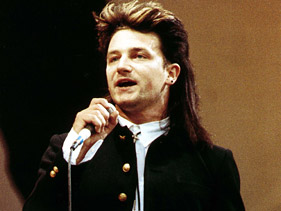
We celebrate the 25th anniversary of the groundbreaking charity concert by breaking out the calculators. By James Montgomery Bono performs at Live Aid on July 13, 1985 Photo: Peter Still/ Redferns Twenty-five years ago Tuesday (July 13), Bob Geldof and Midge Ure moved mountains, arranged satellites and assuaged rock-star egos to pull off one of the most monumental concerts in history. Live Aid, the transatlantic charity bash , brought together the biggest names in music — all of whom played for free — on two massive stages in London and Philadelphia, beamed their performances out to the entire world (including here in the U.S. on a fledgling cable network called MTV) and managed to raise hundreds of millions of dollars for famine relief in Ethiopia. It was, shall we say, a pretty incredible event — one Geldof rather shockingly booked in roughly three weeks, mostly on a whim (he was knighted for his efforts). And it’s not exactly hyperbole to say that it changed the world and defined an entire generation. So in celebration of Live Aid’s 25th anniversary, we decided to break out the calculators and crunch the numbers a bit. Here are some of the figures that helped make history. 1.5 billion : The estimated number of viewers who tuned in to watch the concerts, in 100 different countries. 150 million pounds : The amount that Live Aid raised for famine relief in Ethiopia. It works out to some $245 million U.S. 162,000 : The number of people who attended the two main Live Aid concerts — 72,000 in London’s Wembley Stadium and 90,000 in Philadelphia’s JFK Stadium. There were, of course, other concerts held in conjunction with Live Aid, in Sydney (OZ for Africa) and Cologne, Germany, to name a few. Bands also taped performances from Moscow, Japan, Austria, Norway and Yugoslavia. 70 : As best as we can count (using detailed Live Aid sites like this one ), this was the total number of acts/artists that performed on the stages in London and Philadelphia. It’s a list that includes Madonna, U2, Mick Jagger, David Bowie, Elton John, Queen, Black Sabbath, Run-DMC, Santana, Tom Petty & the Heartbreakers, Neil Young, the remaining three members of Led Zeppelin, Duran Duran, Bob Dylan and Tina Turner. Of course, we’re not counting the prince and princess of Wales (who appeared at Wembley), any of the celebs who introduced all the acts, everyone who joined in for the group finales at either concert or the artists who appeared in taped performances from around the globe. If you really want to get technical, here’s a list of everyone — musician, actor, comedian, royalty — who participated. 16 hours : The continuous length of the entire Live Aid concert. The show in London started at noon and ended at 11 p.m. In Philadelphia, things got under way at 8:51 a.m. and ended at 11:05 p.m. (4:05 a.m. in London), meaning that the entire thing ran for 16 hours. Though, as you can see, between London and Philly, there were actually more than 27 hours of total performances. 1 : The total number of artists who appeared at both the London and Philadelphia concerts. It was Phil Collins, who, after performing at Wembley, took a helicopter to Heathrow Airport, hopped on the Concorde and made it to JFK Stadium to do a second set — and play drums for Eric Clapton and the reunion of the former members of Led Zeppelin. He also reportedly convinced Cher — whom he met on the Concorde — to take the stage in Philly. What can we say? The man was dedicated. What are your memories of Live Aid? Let us know in the comments! Related Photos A Look Back At The Live Aid Concert, July 13, 1985

Read more here:
A Look Back At Live Aid, By The Numbers

WaPo Insists GOP Lacks Confidence of 72 Percent; But 43 Percent Said They Had ‘Some’

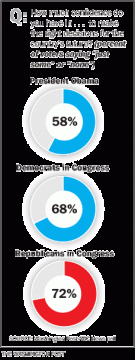
The Washington Post announced bad news for its largely liberal readers in its poll Tuesday morning. The headline said “6 in 10 Americans lack faith in Obama: Congress still held in lower esteem, but poll shows gap narrowing.” Those who read the story would wait until the end of paragraph six (just before the jump) to get this liberal-haunting number: “Those most likely to vote in the midterms prefer the GOP over continued Democratic rule by a sizable margin of 56 percent to 41 percent .” But if the Post reader skipped the gray text and went just for the graphics, they’d get the impression that Republicans are worse off than the Democrats: they’d see asked “how much confidence do you have” in the parties, they showed Obama’s “lack faith” number at 58 percent, Democrats in Congress at 68 percent, and Republicans at 72 percent. But wait: in parentheses it says “percent of voters saying ‘just some’ or ‘none'”. (That wasn’t bolded in the paper, as it is on the website.) Here’s the rub: deep in the Post’s data (question 3), it shows Republicans “just some” number was 43 percent and “none” was 29 percent, while Democrats “just some” number was 35 percent and “none” was 32 percent. So portraying the Republican standing as “worse” than the Democrats (complete with trouble-red emphasis) is misleading at best. Post reporters Dan Balz and Jon Cohen simply blurred the numbers together, without a breakdown: “About seven in 10 registered voters say they lack confidence in Democratic lawmakers and a similar proportion say so of Republican lawmakers.” But the networks took that misleading impression and hardened it, with NBC’s Matt Lauer proclaiming ” just slightly more than 7 in 10 Americans don’t have faith in Republicans in Congress.” That quick-and-dirty formulation has zero room for 43 percent of Americans saying “just some.” The real problem here is the news judgment of the Post: the first question isn’t “How much confidence?” It’s “Who are you voting for?” If the Republicans are up 56-41 among likely voters, clearly the “just some” confidence is presently more than enough. Near the bottom of the poll story, it gets even darker for Democratic prospects: Obama’s overall standing puts him at about the same place President Bill Clinton was in the summer of 1994, a few months before Republicans captured the House and Senate in an electoral landslide. President Ronald Reagan, who also contended with a serious recession at the outset of his first term, was a little lower at this point in 1982, with a 46 percent to 45 percent split on his approval ratings. Republicans went on to lose about two dozen seats in the House that fall. The Post projected its poll as bad for Democrats, but not happy news for Republicans. Inside the paper, the headline was “Obama viewed slightly better than lawmakers.” The text box on A6 acknowledged “Democrats nationally remain on the defensive as they seek to retain both houses of Congress this fall.”

See the article here:
WaPo Insists GOP Lacks Confidence of 72 Percent; But 43 Percent Said They Had ‘Some’

Richard Dreyfuss Heads to Weeds

If you were wondering which of the 5 Movieline-approved stars would be the first to pull ahead in the race to be the next Betty White, here’s your answer: Richard Dreyfuss. The veteran actor has signed on for four episodes of Weeds to play an “unexpected character” from Nancy Botwin’s (Mary Louise-Parker) past. So, her father. Also guest starring on the Showtime series this season: Mark Paul-Gosselaar, Alanis Morissette, Jennifer Jason Leigh, Peter Stormare and Linda Hamilton. Talk about a motley crew. [ TV by the Numbers ]

See the rest here:
Richard Dreyfuss Heads to Weeds

David Weigel Explains Away Journolist E-mails by Claiming to be a Jerk

Former Washington Post writer David Weigel has attempted to explain away his Journolist e-mails attacking conservatives by claiming he was a trash-talking thoughtless jerk. If you think that self-damnation was bad, at least it was much better than admitting something even closer to the truth which would be that he deviously allowed people to think of him as a conservative. In fact, he is still lamely making that conservative claim in his Big Journalism article but first the jerk confession: …I treated the list like a dive bar, swaggering in and popping off about what was “really” happening out there, and snarking at conservatives. Why did I want these people to like me so much? Why did I assume that I needed to crack wise and rant about people who, usually for no more than five minutes were getting on my nerves? Because I was stupid and arrogant, and needlessly mean… Unfortunately, Weigel proved that he still remains a jerk by continuing to claim that he was somehow conservative: I interned at the libertarian Center for Individual Rights in the summer of 2001. I supported the Iraq War and crashed an anti-war protest on my campus. I voted in Republican primaries in 2002 and 2004. (Since I was in Illinois, I voted in 2004 for Jack Ryan to get the GOP’s nomination for Senate, to oppose Barack Obama. I’m better off than one of those guys.) Weigel still tries to convince us of his one-time conservative credentials despite the fact that in the three presidential elections since 2000 he voted for Nader, Kerry, and Obama. Gee! What a “conservative!” Despite his pretend conservatism, Weigel just can’t seem to understand why people think he has misrepresented himself: Still, this was hubris. It was the hubris of someone who rose — objectively speaking — a bit too fast, and someone who misunderstood a few things about his trade. It was also the hubris of someone who thought the best way to be annoyed about something was to do it publicly. This is the reason I’m surprised at commentary accusing me of misrepresenting myself. Except that liberal Journolist was supposed to be private and Weigel wrote there in the expectation that it would remain so. Dave’s misrepresentation mode continues. 

Read more here:
David Weigel Explains Away Journolist E-mails by Claiming to be a Jerk

Once Again, ‘Many Peaceful’ = ‘Some Violent’ When It Comes to Leftist Protesters in the NY Times

Violent protesters set fire to police cars and shattered store-front windows at the Group of 20 economic summit in Toronto this weekend. How did the New York Times, so skittish about the hypothetical threat of non-existent Tea Party violence from the right, react to actual violence committed by political protesters by the left-wing and anarchist groups? With more snort-worthy apologias for left-wing protesters being overwhelmingly “peaceful” in numerical terms Reporter Randal Archibold made a similar claim in his April 24 story from Phoenix at a protest against Arizona’s anti-immigration law, claiming that “hundreds of demonstrators massed, mostly peacefully, at the capitol plaza.” Local news in Phoenix reported three people were arrested during the immigration rally, including two seen throwing water bottles at police, and videos showed more lawlessness on display. The same defensive tone is present in Monday’s Business section story from Toronto, with the ludicrous headline ” Police in Toronto Criticized for Treatment of Protesters, Many Peaceful ,” by Ian Austen. Austen’s story is illustrated with a photo from the European Pressphoto Agency showing two policemen arresting a woman, but not photos shown elsewhere of burning cars, like the Associated Press photo by Frank Gunn above. Austen managed to fault the police both for initial passivity and subsequent overreaction: An escalation of aggressive police tactics toward even apparently peaceful protests at the Group of 20 summit meeting led to calls for a review of security activities . After allowing a small group of people to burn police cars and smash windows unimpeded on Saturday afternoon, many of the 20,000 police officers deployed in Toronto changed tactics that evening and during the last day of the gathering. There was a notable increase in both the numbers of police officers who surrounded demonstrations as well as more use of tear gas and rubber or plastic bullets. At the same time, there was a visible drop in the number of demonstrators in the city streets. As a result, the violence by some demonstrators that marred the opening of the Group of 20 meeting did not reappear on Sunday, and more than 600 people were arrested Saturday and Sunday. The Times seemed to miss the obvious connection: More police and more arrests = less crime. It’s one the Times has missed before, most notoriously in this headline from September 28, 1997: ” Crime Keeps On Falling; but Prisons Keep On Filling .” Unlike Archibold’s Arizona coverage, Austen didn’t ignore the violence on display in Toronto, though he did offer the same ludicrous apologia to this group of left-wing protesters that Archibold did to the ones in Arizona, writing that ” the overwhelming majority…were peaceful .” The violence was not exceptional compared with problems at previous international meetings, like the World Trade Organization’s gathering in Seattle in 1999 . Toronto’s shopping district sustained the greatest damage but quickly became something of a tourist attraction. But it was nevertheless extraordinary for Toronto, a city with little history of violent protests. David Miller, the city’s mayor, was among the many who swiftly condemned it. “Does today send signals about Toronto that I wish weren’t sent?” he said on Saturday evening. “Absolutely.” …. William Blair, the city’s police chief, did not respond directly to the widespread criticism over the lack of police response during the period of violence. But at a news conference, he suggested that officers were deliberately held back. The protesters, the overwhelming majority of whom were peaceful , promoted a variety of causes. Many were challenging the legitimacy of the Group of 20 and proposing that governments work through the United Nations. Others championed specific issues, particularly in relation to human rights and the environment.

Link:
Once Again, ‘Many Peaceful’ = ‘Some Violent’ When It Comes to Leftist Protesters in the NY Times

Drake Spits A Freestyle In Exclusive ‘Better Than Good Enough’ Outtake

Drizzy rips a verse about fines wines and fake women during a visit to New Orleans radio station. By Mawuse Ziegbe Drake Photo: MTV News A 20-something rap phenom with an eye for the finer things, Drake is finding that when it comes to the ladies, not all of them share his Champagne taste. In an exclusive outtake from the documentary “Drake: Better Than Good Enough,” the Young Money MC visits New Orleans radio station Q 93.3, where he spits a freestyle, going in about everything from finances to females. “Why has every woman never dined here before?/ Am I the only 23-year-old wine connoisseur?” Drizzy wonders, as the room erupts with rowdy howls co-signing the hip-hop star’s rhyming skills. The full-length doc depicts the months before Drake dropped his hotly anticipated debut, Thank Me Later. But the freestyle sequence showcases one of the qualities that has made Drake a breakout star: his charismatic, hyper-informed flow. The outtake also captures the heightened buzz that preceded his first major-label offering, as the radio DJ coaxes the star into giving “a preview” of the kinds of bars to come on Later. Ready to flex his lyrical chops, the scene opens with Drizzy animatedly accepting the challenge. A focused Drake even refuses an instrumental (“No beat,” he star insists), spitting a verse a capella. “Please make your long story shorter/ Time is of the essence for the king of second quarter/ Numbers do the talking/ I have nothing for reporters/ I just hope we make these flights and don’t get held up at the border,” Drake spits. The verse demonstrates his trademark verbal agility (“Jumpin’ to the top/ This my leap year”); his witty humor (“I got new girls / But none of they love is for certain/ And call old girls/ But none of they numbers are workin’); and his easy candor (“They ain’t rootin’ for me/ They ain’t clappin’ for me/ I’m only saying can somebody just be happy for me?”). As the station dissolve into hollers of approval, Drake’s Young Money associate Mack Maine tosses out a challenge to any rappers ready to step to the Toronto MC. “I got a mil’ on Drake!” Maine shouts gleefully. “Against any of y’all! — old school, new school, need to know this!” MTV followed Drake in the weeks leading up to the release of his new LP, Thank Me Later. The “Drake: Better Than Good Enough” documentary will re-air on MTV Saturday at 12 p.m. and 9 p.m., Sunday at 9 a.m., and Sunday at 2 p.m. on MTV2. Related Videos ‘Drake: Better Than Good Enough’ Related Photos Drake’s Style: From A To Drizzy Related Artists Drake

See the rest here:
Drake Spits A Freestyle In Exclusive ‘Better Than Good Enough’ Outtake

NBC’s Williams Blames Obama’s Plummeting Approval on Getting Dragged Into Gulf Oil Leak

Unlike Katie Couric on Monday night , on Wednesday evening NBC’s Brian Williams didn’t hide the bad news for President Obama in the network’s latest poll, but Williams and Savannah Guthrie sure seemed to lament the public mood’s swing against Obama as Williams attributed it to how Obama “had to touch” the gulf oil leak, “he had to own it and now he’s getting tagged with how he’s reacting to it.” As if Obama had nothing to do with it, Guthrie agreed he’s “had a barrage of bad headlines on some of these very issues of leadership, handling a crisis…” “If you’re the White House looking at these numbers we’re about to debut tonight, there isn’t much here that’s encouraging right now,” Williams warned of the NBC News/Wall Street Journal survey findings. Guthrie agreed: “There’s not a lot of good news in this poll for the White House. Gushing oil, persistent unemployment the real problem.” Online, MSNBC.com’s headline also ascribed Obama’s troubles to the gulf: “ Spill drags the President’s rating down .” The subhead, over the posting by NBC News Deputy Political director Mark Murray, emphasized a bright spot in areas Guthrie noted declines : “A silver lining for Obama is that his personal scores are still strong.” Guthrie recounted how “for the first time ever in our poll, more disapprove of the President than approve” and how “we saw big drops in issues like likability, compassion, leadership, relatability, handling of a crisis. Why?” She explained: “The oil spill. 50 percent said they disapprove of how the President has been handling this oil spill. 42 percent say they approve.” That prompted Williams to rue: What’s so interesting here, the advice to the President for weeks was “if you touch it, you own it” – meaning the oil spill crisis. But the public anger was such that he had to touch it, he had to own it and now he’s getting tagged with how he’s reacting to it. (Monday night: “ CBS Poll Finds Tough Numbers for Obama on Oil Leak, But Couric Hides Them ”) From the Wednesday, June 23 NBC Nightly News: BRIAN WILLIAMS: We’re back, as promised, with our new NBC News/Wall Street Journal poll. It says a lot about the mood of this country right now, how Americans are feeling these days about their President and even the upcoming November elections. Now, if you’re the White House looking at these numbers we’re about to debut tonight, there isn’t much here that’s encouraging right now. Our White House correspondent Savannah Guthrie has paid us a visit here in New York tonight with the numbers. Savannah, welcome, good evening. SAVANNAH GUTHRIE: Good evening, Brian. As you said, there’s not a lot of good news in this poll for the White House. Gushing oil, persistent unemployment the real problem. Let’s look at the top line number: the approval rating for President Obama. It has never been this low, 45 percent. For the first time ever in our poll, more disapprove [48%] of the President than approve. Is the country headed in the right direction? This is the question that pollsters and White House advisers watch closely. This is the highest number of the presidency: 62 percent say this country is on the wrong track, 29 percent say it is going in the right direction. You know, Brian, even advisers have gone through these policy changes, things that the public expressed doubt about. Likability of the President, those leadership qualities he’s always rated high. This is the first time really our poll has shown a drop in those, plummeted in some cases. You see, this is his worst personal rating — 47 percent positive, 40 percent negative. We saw big drops in issues like likability, compassion, leadership, relatability, handling of a crisis. Why? The next number, Brian, might tell the story. The oil spill. 50 percent said they disapprove of how the President has been handling this oil spill. 42 percent say they approve — by the way, we did this poll after the Oval Office address last week, after the President secured $20 billion from BP. And then finally, some good news for Republicans. They edged out Democrats when we asked, “Who would you like to control Congess?” 45 percent said Republicans, 43 percent said Democrats. This is a number that is always tight, but the Republicans edged out the Democrats in this one. BRIAN WILLIAMS: What’s so interesting here, the advice to the President for weeks was “if you touch it, you own it” – meaning the oil spill crisis. But the public anger was such that he had to touch it, he had to own it and now he’s getting tagged with how he’s reacting to it. GUTHRIE: No question about it and let’s face it, he had a barrage of bad headlines on some of these very issues of leadership, handling a crisis, compassion. So, perhaps not surprising that he’s taken a hit there.

See the rest here:
NBC’s Williams Blames Obama’s Plummeting Approval on Getting Dragged Into Gulf Oil Leak

AP: "Oil Leak Wouldn’t Fill Superdome" – Who Cares?

Image Source: Boston.com A new AP article out on Monday had my jaw on the ground. The article, By the numbers: Oil leak wouldn’t fill Superdome by Seth Borenstein seemed to play down the severity of the BP oil leak and support BP CEO Tony Hayward’s statement that the amount of oil spilled was “relatively tiny” by providing comparisons to everyday measures that we can relate to. Overwhelmed and saddened by the gargantuan size of the Gulf oil spill? A little mathematical context to the spill size can put the envi… Read the full story on TreeHugger

More:
AP: "Oil Leak Wouldn’t Fill Superdome" – Who Cares?

WaPo Slams Rasmussen’s Professionalism, But Doesn’t Tell Readers His Critics Are Liberals

The Washington Post ran a story slamming pollster Scott Rasmussen on Thursday on the front page of the Style section. Political reporter Jason Horowitz earnestly channeled the Democratic spin from the story’s beginning: ASBURY PARK, N.J. — Here is a fun fact for those in the political polling orthodoxy who liken Scott Rasmussen to a conjurer of Republican-friendly numbers: He works above a paranormal bookstore crowded with Ouija boards and psychics on the Jersey Shore. Here’s the fact they find less amusing: From his unlikely outpost, Rasmussen has become a driving force in American politics. Democrats surely dislike how Rasmussen’s polls (like this week’s showing Harry Reid losing by 11 points) affect the optimism of their donors and activists. But are his numbers accurate? The Post wanted its readers to know this guy Rasmussen was a scary conservative: he played guitar in a band in high school in Massachusetts called “Rebel’s Confederacy” (racist?!) and he quotes the Bible: He graduated from DePauw University and moved to Charlotte. There he married, started a family and became a devout Methodist. He is given to quoting Scripture, including the principle: “Let every man be quick to listen, but slow to speak, and slow to anger.” (James 1:19.) In the mid-1990s, Rasmussen had discovered the business model of automated polling, and folks he polled heard a recording of his wife reading poll questions. In 1998, heavy traffic crashed his site when Rush Limbaugh unexpectedly told listeners to visit. Two years later, in August 2000, Bill O’Reilly invited him onto his show. He wrote columns for the conservative site WorldNetDaily in 2000. In 2001, he wrote a book advocating the privatization of Social Security. But are his numbers accurate? The pull quote in the story as it continued on page C-9 attacked his professionalism for his newer methods: “The firm manages to violate nearly everything I was taught what a good survey should do.” — Mark Blumenthal, a founder of Pollster.com, speaking about Rasmussen Reports Then there’s this hilarious attack from Daily Kos veteran Nate Silver, soon, a new hire of the New York Times: He “faults Rasmussen for polling only likely voters, which reduces the pool to ‘political junkies.'” Adds Scott Keeter of the Pew Research Center in agreement: “It paints a picture of an electorate that is potentially madder than it really is…And potentially more conservative than it really is.” Would it be wiser for a political candidate to focus on wooing unlikely voters? Jason Horowitz is dishonest for suggesting it’s Rasmussen versus the professionals — and not disclosing that Mark Blumenthal is identified correctly in others stories as a “Democratic pollster,” and not disclosing Nate Silver came from the hard-left Daily Kos, and not even hinting that the Pew Research Center is deeply invested in a series of liberal causes, and whose newest poll (also out Thursday) coos that “The president gets an enthusiastic thumbs up from the world (with the notable exception of the U.S.) for how he has handled the economic crisis.” They can even admit Rasmussen’s critics are liberals in the headline on C-9: “For some, pollster Rasmussen is a minus man.” For some? GOP pollster Ed Goeas, identified as a “Republican pollster,” defends Rasmussen but suggests he take on a Democrat to “balance his analysis” (or to please The Washington Post?) Rasmussen has a “conservative constituency” of Fox, The Washington Times, and the Drudge Report, adds pollster John Zogby insists. No one in the Post is going to suggest that perhaps a pollster for The Washington Post or The New York Times is a “liberal constituency.” How transparently odd. Just like the liberal media elite on a daily basis. For them, the playing field cannot be described as conservative professionals vs. liberal professionals — it’s upstart conservative peasants with pitchforks versus the established objective professionals who define the standards for everyone. Of course, Horowitz left out of his Rasmussen profile his latest poll showing how angry the public is with the media , that two-thirds of respondents are angry and say reporters slant the news to favor candidates they want to win. Instead, we get leftists dismissing Rasmussen numbers as “sorcery” that leads to conservative media bias:   Rasmussen said he is simply a “scorekeeper,” but his spike in clout has sharpened skepticism about how he tracks the dip in Democratic fortunes. Frustrated liberals suspect sorcery. Markos Moulitsas, the creator of the Daily Kos blog, has accused the pollster of “setting the narrative that Democrats are doomed” with numbers that fuel hours of Republican-boosting on talk radio and cable. Pardon conservatives if they might find it laughable that Markos Moulitsas as a polling professional, considering he concocts smear polls of “self-identified Republicans.” But are Rasmussen’s numbers accurate? The caption beneath Rasmussen’s picture brings the disturbing news for liberals: “Scott Rasmussen’s polling detected the groundswell for Scott Brown, who won the special election in Massachusetts for the U.S. Senate seat vacated by Ted Kennedy, earlier than most competitors.” That’s what has them worried about his ability to be a “driving force.”

Read more here:
WaPo Slams Rasmussen’s Professionalism, But Doesn’t Tell Readers His Critics Are Liberals

Media Make Selling Soccer a Goal

Something about the soccer World Cup brings out the missionary in the mainstream media, and every four years they strive to bring the good news of “the beautiful game” to the ignorant American masses. This year is no different. The 2010 World Cup is set to begin in South Africa on June 11. More than just covering the month-long event, the media are already doing their best to hype it, overstating its popularity in the United States and its potential appeal to U.S. sports fans. From Time magazine dedicating an entire issue to “The Global Game,” to CBS’s helpful ” The World Cup Guide for Americans ,” the public is being brow-beaten to catch “World Cup Fever.” And while soccer partisans may try (mostly unsuccessfully) to score on point-by-point comparisons to baseball or football, the most compelling argument many media outlets can muster is, “The rest of the world loves it. We should too.” The liberal media have always been uncomfortable with “American exceptionalism” – the belief that the United States is unique among nations, a leader and a force for good. And they are no happier with America’s rejection of soccer than with its rejection of socialism. Hence Americans are “xenophobic,” “isolated” and lacking in understanding for other nations and their passion for “the planetary pastime,” as Time magazine put it. But, they are confident, as America becomes more Hispanic, the nation will have to give in and adopt the immigrants’ game. On the other hand, the media assure the public that soccer is already “America’s Game,” and Americans are enthusiastically anticipating the World Cup, even though the numbers don’t bear that contention out. So, every four years they return with renewed determination to force soccer’s square peg in the round hole of American culture. Soccer is Popular, isn’t it? Time magazine is leading the “Ole’s” for soccer this year, putting the World Cup on its cover and dedicating 10 articles to the sport in its June 14 issue. One of those articles proclaimed in the headline, ” Yes, Soccer Is America’s Game .” Author Bill Saporito argued that “soccer has become a big and growing sport.”  “What’s changed is that this sport and this World Cup matter to Americans,” Saporito asserted. “These fans have already made the transition from soccer pioneers to soccer-literate and are gradually heading down the road to soccer-passionate.” Soccer is even in the White House, Saporito pointed out. President George W. Bush was a former co-owner of a baseball team. And although President Obama played basketball, his daughters play little league soccer, and current White House Press Secretary Robert Gibbs played soccer in high school and college. On MSNBC’s “Morning Joe” on June 3, host Joe Scarborough noted the importance of the World Cup to other countries, but explained that Americans just don’t understand “what a huge sport this is.” Still, he said hopefully, “It is a growing sport in America as well, isn’t it?” Growing, but not “huge” by any standard. The final game of the 2006 World Cup drew 16.9 million viewers in the United States. While that number may seem respectable, it pales in comparison with the 106 million viewers that tuned in to watch the 2010 Super Bowl. The final 2009 World Series game drew 22.3 million viewers, and 48.1 million tuned in to watch Duke beat Butler in the 2010 NCAA men’s college basketball championship. A look at game attendance figures is instructive, as well. According to Major League Soccer’s MLS Daily , as of June 7, 2010, the highest drawing pro soccer team, the Seattle Sounders, averaged 36,146 attendees over seven home games. Conversely, the Seattle Mariners baseball team has averaged 25,314 over 32 home games. The Mariners are dead last in the American League West division, and 24 th in the league in batting average, 30 th in home runs, 27 th in RBIs and 25 th in number of hits. In short, they’re horrible. With a record of 4-5-3, the Sounders aren’t very good either, but they play in a very liberal city, are currently benefiting from World Cup year interest in their sport, and they play a schedule that allows far fewer opportunities for fans to attend. Another number is Hollywood box office. John Horn of The Los Angeles Times contemplated on June 6 about Hollywood’s lack of a mainstream movie about soccer. In ” Why is There No Great Hollywood Soccer Movie?” Horn pointed out that each sport has its own hit movie except soccer. He explained that, “When 20th Century Fox adapted Nick Hornby’s book ‘Fever Pitch,’ [the film starred Drew Barrymore and Jimmy Fallon] the subject sport was changed from soccer (the Arsenal Football Club) to baseball (the Boston Red Sox.)” But aren’t American kids playing soccer in huge numbers? After all, there’s a sought-after (by liberals) voting demographic out there called “soccer moms.” Yes, but as of 2009, soccer trailed baseball and basketball in terms of U.S. youth participation, according to the Sporting Goods Manufacturers Association . And mass participation doesn’t necessarily translate into lasting enthusiasm. That has to do with the reasons children play soccer in the first place. As both soccer’s boosters and detractors have pointed out, at the youth level, it’s easy, more about participation than competition. As Webb wrote at First Things, to contemporary American parents, “Baseball is too intimidating, football too brutal, and basketball takes too much time to develop the required skills … Soccer is the perfect antidote to television and video games. It forces kids to run and run, and everyone can play their role, no matter how minor or irrelevant to the game.” Those aren’t the qualities that inspire love of a sport, and many children stop playing when they reach adolescence.  But in a World Cup year, no contortion is too severe to convince Americans to accept the sport. For example, The June 6 “New York Times Magazine” featured a piece titled “Next-Gen American Soccer,” a pictorial of young players it called “The potential face of the U.S. national team at future World Cups.” Meant to show that the United States already has excellent young talent, and that the future is bright for American soccer, the introductory text contradicted the intention. Explaining that the photographer had to travel to two European countries and two U.S. cities to shoot these up-and-comers, The Times wrote, “It’s an itinerary that hints at another truth about American soccer talent: it’s not only coming from abroad; at ever younger ages, it’s also going abroad … More than 200 prospects now playing in other countries would be eligible for the at next year’s [Under]-20 World Cup. Ability and American citizenship are all that’s required.” In other words, soccer is so popular in America that a good chunk of the nation’s best young players go overseas to ply their trade. On the other hand, somewhere along the way these kids acquired U.S. citizenship, so they’re going to carry our flag in future World Cups. Why Should We Be Different? As healthcare reform and stimulus spending have underscored, if Europe jumped off a cliff, the American left would be right behind it. So it makes sense that the media’s main argument for accepting soccer is that “everybody’s doing it.” In his Time article, Saporito quoted Seattle Sounder’s owner Joe Roth. “Soccer is the only game played around the world,” Roth explained. “We can’t be that different than anyone else in the world.” Roth also told the LA Times’ Horn that, “We’re basically a xenophobic country and don’t look at what’s going on in the rest of the world as closely as we should.” Liberal blogspot Huffington Post featured a June 4 article urging Americans to pay attention to the World Cup. In ” Why You Should Care About the World Cup,” author John Vorhaus informed readers he would call soccer “football” in the rest of his article, and attempted to convince Americans to watch the World Cup because the rest of the world cares. He argued that, “Football wasn’t my sport – isn’t and never will be my sport – but billions of people care enough about it to put their lives on absolute hold for four weeks every four years.” (Of course, Europeans famously put everything “on absolute hold for four weeks” far more frequently, when the entire continent shuts down for vacation in August.) “As a responsible citizen of the world,” he wrote, “I feel like that’s something I should pay attention to.” Vorhaus also asserted, “More to the point, you’ll get a taste of something that the rest of the world cares passionately about. In these troubled and isolated times in America, it couldn’t hurt at all for us to understand the passions of our foreign friends, competitors, even enemies.” “Citizens of the World” (aka. liberals) talk about the World Cup with the same reverence they reserve for the United Nations, and invest the sport and its championship with symbolic importance. Time’s managing editor, Rick Sanchez, told “Morning Joe” on June 3 the World Cup was the “biggest event in the world,” and “an optimistic idea,” and soccer was “a global sport.” Indeed, Time’s cover story proclaimed soccer, ” The Global Game .” Author John Carlin touted it as the “species’ favorite pastime,” a wonderful game because not only can it be played in most places, but the players are so physically diverse that almost everybody can play. Carlin asserted that how soccer can bring divided groups of people together, but then quoted Nike’s corporate vice president of global management as stating, “We’ve noticed there is nothing like the emotional connection that people have with soccer. There is a tribal instinct with it.” Like many things about America, its soccer backwardness embarrasses right-thinking liberal journalists. In the same “New York Times Magazine” that featured the “Next-Gen” piece, Michael Sokolove wrote a article about an intense European soccer academy and reported that he, “heard a lot of misconceptions … Many people seem to believe that the sport is still a novelty in the United States, a game that we took up only the last couple of decades and that is not very popular or perhaps is even disdained by our best male athletes …” He reported that Dutch soccer journalist and historian Auke Kok questioned if their “football is too stylish, too feminine?” Sokolove reported that was not the case, but still wondered why “the United States still does not play at the level of the true superpowers of soccer.” Bleacher Report’s Tyler Juranovich offered his own take into why Americans were so against soccer. A soccer fan, he wrote, “It’s not news that soccer’s popularity in America is slow growing. It’s popular everywhere else but not in the good ol’ US of A. My theory is because America isn’t as dominant at soccer as other sports, we have a hard time taking it seriously. Americans are a little arrogant when it comes to sports, and you can’t really blame us. We are dominant in football, baseball, and basketball.” Diversity’s Sake Part of the liberal sales pitch for soccer is its popularity with Hispanics. Liberals who fetishize race are eager to adopt a sport with a special appeal for a certain minority, and it would never occur to them that new arrivals to the country might be well served adapting to traditional U.S. pastimes. To the left, it’s America that must change. Saporito maintained that “the browning of America,” will grow the sport. Time’s Sanchez told Scarborough, “… you know, when America becomes a nonwhite majority nation in 2040, I mean, you know, the sport of soccer is the sport of, you know, of Hispanic Americans, of all kinds of immigrants to America.” In his June 3 rd “guide” to the tournament for ignorant Americans, CBS’s Chris Matyszczyk (who actually wrote that baseball players wear “girly pants”) posited, “Very soon, America will be a Hispanic country. The Hispanic culture has always been very partial to the world’s most wonderful game.” To Matyszczyk, soccer is the future, and demographics say so. Therefore, Americans should preemptively surrender for the sake of their children. “So, if all the obvious glories of the World Cup still cause you to utter expletives and bury your head in decaying Astroturf,” he wrote, “surely it is worth thinking of your children. They will be growing up in an America much different from yours, an America that has soccer at his heart and the NFL somewhere nearer its feet.” A Game of the Left Since at least the 1970s, Americans have been told that soccer was the future, and it would soon dominate other sports. But the United States proved pretty resistant to soccer’s charms, to the chagrin of its boosters on the left. (And yes, it’s support has mainly come from the left; in 2002 conservative soccer fan Robert Zeigler plaintively asked in National Review , “What is it about soccer that makes it (in America) the nearly exclusive domain of liberal sports fans?”) Commentators on the right have generally applauded the nation’s indifference and pointed the flaws of soccer itself as the cause. Writing in the last World Cup year (2006) in the Weekly Standard, Frank Cannon and Richard Lessner said, “Despite the heroic efforts of soccer moms, suburban liberals, and World Cup hype, soccer will never catch on as a big time sport in America. No game in which actually scoring goals is of such little importance could possibly occupy the attention of average Americans. Our country has yet to succumb to the nihilism, existentialism, and anomie that have overtaken Europe.” Soccer’s 0-0, 1-1 or 1-0 outcomes don’t sit well with Americans, who like to think that work accomplishes something, the authors wrote. “Soccer is the perfect game for the post-modern world. It’s the quintessential expression of the nihilism that prevails in many cultures, which doubtlessly accounts for its wild popularity in Europe. Soccer is truly Seinfeldesque, a game about nothing, sport as sensation.” Stephen H. Webb wrote for First Things in 2009 , “More than having to do with its origin, soccer is a European sport because it is all about death and despair. Americans would never invent a sport where the better you get the less you score.” Then there is soccer’s “flop-‘n’-bawl,” according to another 2006 Weekly Standard article by Jonathan V. Last . “Turn on a World Cup game, and within 15 minutes you’ll see a grown man fall to the ground, clutch his leg and writhe in agony after being tapped on the shoulder by an opposing player. Soccer players do this routinely in an attempt to get the referees to call foul. If the ref doesn’t immediately bite, the player gets up and moves along,” Last wrote. “Making a show of your physical vulnerability runs counter to every impulse in American sports. And pretending to be hurt simply compounds the outrage.” And to conservatives, the troubling aspects of the game aren’t confined to the pros. Soccer requires comparatively little from children but the ability to run after the ball – the risk of failure for anyone except maybe the goal keeper is zero. Even the strong chance that any given game will end in a tie makes it attractive for parents reluctant to impart life’s difficult lessons to young kids. Webb wrote in First Things that, “Sporting should be about breaking kids down before you start building them up. Take baseball, for example. When I was a kid, baseball was the most popular sport precisely because it was so demanding … you had to face the fear of disfigurement as well as the statistical probability of striking out. The spectacle of your failure was so public that it was like having all of your friends invited to your home to watch your dad forcing you to eat your vegetables.” In short, a powerful component of character building is missing from youth soccer, an important component of character is missing from pro soccer, and a sense of purposefulness is missing from the entire sport. American Classics It must baffle soccer partisans that Americans haven’t taken to their game. After all, the United States is a sports-obsessed nation. Americans look to sports to teach work ethic, teamwork and responsibility, in addition to the physical and mental skills necessary for competition. They love underdogs and “Cinderella stories” and “Evil Empires” and “bums,” “Hogs” and “No-Name Defenses.” And Americans like to think their sports reflect something about them. Michael Shackelford of Bleacher Report praised football because it, “requires a combination of power and agility, brute strength, and grace … In other words, it requires American characteristics in order to succeed.” And sports have played an important and overwhelmingly positive role in the history of America. During the Civil War, men of both armies were obsessed with baseball, and after the peace our “national pastime” helped repair the ties between north and south. And nearly a century before Jackie Robinson broke the color barrier, Walt Whitman said “I see great things in baseball. It’s our game – the American game.”