Pink decided to totally throw out any decency or respect for her millions of followers…by posting a frightening picture of her in her underwear to instagram…in what I like to think is caused by over-confidence from positive affirmations from the people around her….you know cuz most mom’s have lower testosterone than this dude, and their liking of cake coupled with a battered body, leads to not bothering bouncing back, while PINK, a name you think she’d drop cuz it’s a fucking joke and she’s in her 30s, not 12, is all delusional in a “I work out, look at my muscles”….and the whole thing…is pretty disgusting….but I bet your tranny ass likes it.
Sean Lowe is set to debut as The Bachelor in less than a month, and he promises emotion, surprises and drama – just no second thoughts about Emily Maynard. Of course, we already know how his season supposedly ends – see The Bachelor spoilers for the long and short of it – but that’s neither here nor there. In a chat with the media today, Sean Lowe discussed the “mystery contestant” in the premiere, to Emily Maynard, cat-fighting, early favorites and more. Excerpts from his wide-ranging interview below: On early favorites this season : “There was definitely one girl in the first episode that catches my eye, and she does receive the very first rose.” “You’ll see that that first feeling and those initial sparks, they’re going to play out over several episodes, and it’s going to be an interesting relationship.” On drama among the women : “There’s going to be drama and a little cattiness. It’s almost inevitable for it to happen, but it always irritated me.” “When girls got caught up in the drama and lost focus on the reason we were all there … I just wanted them to focus on the relationship we had.” “It’s tricky, because you hear women say certain things about certain women, and I would think to myself, ‘Well, I haven’t seen that, so I’m gonna make my own judgment.'” “But then I would hear multiple women talk about that same woman, and then you start to think, Well, maybe there is something there and you have to investigate.” On the choices by the producers : “The producers did an excellent job, they truly did. I told them I wanted girls who were well suited for me.” “I got to know [the producers] really well while I was on The Bachelorette and they got a good sense of who I am, but I was blown away by the amount of wonderful women.” “I had no idea I would become so attached and emotionally invested in multiple women.” “I’d heard about that happening on past seasons from people who’d done the show, but I thought that would be so hard. But it can happen, and it did happen.” On the mystery contestant : “I think America will be surprised to see who it is. I know I was certainly shocked when she stepped out of the limo on the first night.” “I’m glad she did come the first night. I probably would’ve done the same thing [Ben Flajnik] did, so I wouldn’t infuriate the other women that had been there several weeks.” On being on The Bachelorette : “My feelings for Emily were very real, and most of the people who watched the show could definitely recognize that.” “I wouldn’t have accepted The Bachelor unless my heart was definitely mended. I realized over time she’s not the one for me, and I knew she had her doubts about me.” “The woman I spend the rest of my life with, I don’t want her to have any doubts.” On Emily and Jef Holm breaking up : “I heard about it at our final destination [on the show], but I think even before we did The Bachelor I knew she wasn’t the one for me.” “Jef’s a good guy, and I hope for happiness for her in her future.” Sean Lowe as The Bachelor: Good choice for 2013? Yes! He’s perfect! Love Sean! No, should’ve been Arie! No, should’ve been someone new! View Poll »
Promised Land is not the first nor even second collaboration between filmmaker Gus Van Sant and actor Matt Damon . Van Sant helped usher in the age of Matt Damon and Ben Affleck with their Oscar-winner Good Will Hunting back in 1997 and Damon and Ben’s younger brother, Casey Affleck worked with Van Sant in Gerry . Fast forward nearly a decade and a script Damon had been collaborating on with John Krasinski from a story by Dave Eggers set in a small town needed a director. Damon, who had originally planned to direct the feature, realized he could not because of his packed schedule, so he reached out to his old friend Gus Van Sant and the result, which will head to theaters later this month, has caught the wind of Oscar chatterers. Van Sant discussed his latest pic and why he “always wants to work with Matt” during a NYC screening of Promised Land . “The genealogy of this is that John Krasinski was observing a mining operation in Alaska and spoke to Eggers later about writing a screenplay about installing wind power,” Van Sant said at the post- Promised Land screening. “Matt Damon was going to direct [ Promised Land ] himself but then decided he didn’t have time. They thought the project might go away, but then he contacted me – and a year ago, I said yes…” Van Sant said Damon packed schedule had once kept him from playing in one of the director’s most celebrated recent films. He had originally been slated to play Dan White in the 2008 Oscar-winner Milk , but again the actor’s long queue of roles interfered. But, Promised Land posed the next opportunity and the planets aligned. “When you work together you become friends and you wonder what else you can do together again and Matt and I became friends,” said Van Sant. “I felt like we’ve had successful collaborations so the idea of doing something again was really interesting… Working with Matt on this film – I always wanted to work with him on every film.” Set in a fictitious Pennsylvania town that could represent much of small town America that has taken economic blows due to de-industrialization, agribusiness consolidation and the fallout from globalization generally, the story revolves around Steve Butler (Damon) a former farm boy turned big city business guy who teams up with Sue (Frances McDormand) to sell financial prosperity to the struggling town. The sales execs offer up easy cash in return for drilling rights on their property. Though economically hard pressed, the town, along with many others across Rust Belt states, sit atop a rich resource of natural gas once thought unreachable. But through the controversial advent of fracking (fracture drilling) the resource is recoverable though at what ecological cost is not fully known. Steve and Sue think their stay in the town will be short, but a respected schoolteacher (Hal Holbrook) complicates what they think will be an easy sell when he questions the environmental risk. Steve meets a local school teacher (Rosemarie DeWitt) as they bunker down to sway in the town and things get really sticky when an environmentalist (John Krasinski) shows up and raises the stakes. “When we arrived in Pittsburgh during [pre-production] the hydraulic manufacturing companies were moving in and just happened to be having a convention at the hotel we were staying at,” Van Sant said. “So right away we had some sources we could go down and talk to. Also the people in contract talks were also the people we wanted to [scout] for locations.” The tracking process at the center of Promised Land ‘s plot has been hailed by some economic prognosticators as a short cut to energy independence while even cutting carbon emissions. But it has been criticized by others for polluting underground water-tables and even causing earthquakes in areas where they’re almost nearly unknown. Documentaries such as GasLand (2010) and others have depicted frightening scenarios of ecological degradation in the race for plentiful energy, which is not lost on Van Sant though he also sees the film as describing an even larger topic about corporations. “By default its playing into discussions that are political having fracking as a topic,” he said. “But I think the emotions of the story are about corporate maneuvering and inner corporate personnel maneuvering and it could relate to any corporation’s maneuvering including mine or Focus Features. [The film] will obviously play into politics…” [ Promised Land opens December 28 via Focus Features, trailer below.] Follow Brian Brooks on Twitter . Follow Movieline on Twitter .
By now you know that the list of songs eligible to be nominated for Best Original Song at the 85th Academy Awards is kind of mind-blowing. Not so mind-blowing is the generally risk-averse bent of the average Academy voter, which is why we should probably just send congratulations now to Brave , Les Miserables , and Adele , resting easy one of them will actually be the right recipient. But maybe not! Yeah, we all agree that Skyfall is the best thing to happen to our ears since the invention of the lobe massage, but does the winner have to be that obvious? Every now and then something crazy slips through the filter, like Elliot Smith in 1998, or Glen Hansard and Marketa Irglova ten years later. Really, there’s so much about the list that is pure, wonderful bonkersness and they would all shake things up more than accidentally slurring a huge chunk of your audience and getting fired from Oscars-production duties. If we had our way, one of these cuts below would send its songwriter home with a clunky golden statue. * “Casa De Mi Padre” from Casa De Mi Padre ! Dios mio! The title track from the criminally underrated Will Ferrell comedy accurately nails tone of 1970s theme songs, a perfect fit for the film’s lightly mocking telenovella/grindhouse vibe. The only problem is that the other two songs from Casa that made this list, ‘Del Cielo’ and ‘Yo No Se’, are just as good. Let’s just make a mashup and get them all through. * “100 Black Coffins” from Django Unchained We don’t know why Rick Ross wants a honey baked muffin so much, or what that has to do with the title of this song (Kidding! Now try not hearing “I want a honey baked muffin” whenever you listen to the song), but this track from Django Unchained accomplishes the unlikely task of making Mr. Ross’ rapping bearable, (production and beats by Jamie Foxx help.) It would be awesome if the Teflon Don manages to win the same number of Oscars as Martin Scorsese, just like Three Six Mafia back in 2006. * “Ladies of Tampa” from Magic Mike Thank you, Magic Mike for making it possible for the world to once again rejoice in the sleazy musk that exudes from Matthew McConaughey like light from the tarnished halo of a fallen angel. This creepy ballad from late in the film should be required listening for anyone wondering if they have what it takes to strip for a living. You don’t. Period. McConaughey has that shit covered for life, as proven by this obviously Oscar-caliber track. * “Razors Out” from The Raid I hate myself for loving this song, because it kind of drips with over-processed drums and emo singing and oh god no it’s written by Linkin Park frontman Mike Shinoda. But then I remember that it’s really put to amazing use in The Raid , and since The Raid isn’t likely to get noticed even though it should be your current favorite movie , this song’s worthiness for the Oscar is self evident. So please, Academy voters, please let Sony Pictures Classics and Stage 6 Films slap a “nominated for an Academy Award” sticker on the The Raid Blu-ray. “The Baddest Man Alive” from The Man With The Iron Fists The Rza ‘s directoral debut might have suffered from being cut to shreds in the editing process, but the soundtrack is everything that makes us still weak in the knees at the thought of a Wu-Tang Clan reunion. Thus, “The Baddest Man Alive” is also the baddest track on this list. An Oscar nomination for this instant classic won’t make up for the death of Ol’ Dirty Bastard, but it definitely makes up for a Crash Best Picture win. RELATED: Oscars Name Rick Ross, Katy Perry & ‘Ladies Of Tampa’ Tracks Eligible For Best Song Do you have your own dark horse favorites from the Best Song contenders list? Leave ’em in the comments. Ross Lincoln is a LA-based freelance writer from Oklahoma with an unhealthy obsession with comics, movies, video games, ancient history, Gore Vidal, and wine. Follow him on twitter (@rossalincoln). Follow Movieline on Twitter .
The camps are entrenched, the battle lines drawn, and the barbs and quips are flying like cannon shot across the divide. But as the debate rages on Movieline and on other sites across the web over Peter Jackson ‘s directorial decision to film The Hobbit: An Unexpected Journey in 48 frames per second , as opposed to the more traditional 24, no single quip seems to draw the ire of the “traditionalists” more than this one, aimed square in the chest of the old timers: Resisting 48 frames is like resisting color. As if an argument over aesthetic choice could be so absurdly reduced. Right, four time Academy Award winning legendary SFX master and Hobbit visual effects supervisor, Joe Letteri? “If you grew up seeing films in black and white and suddenly start seeing films in color, some people are going to have the reaction ‘Wow, that’s great!’ and other people are going to have the reaction, ‘That’s not moviemaking! Films should be made in black and white! You’re losing the mystery of how to deal with tonality, you’re sacrificing that to deal with color!'” Letteri told Movieline in an exclusive one-on-one chat. “But if you grew up with only seeing color, you don’t know that. Just talking to the people that have seen it so far, and obviously that’s been a very limited audience, the younger ones that I’ve spoken with don’t really have an issue with it because they’re not so ingrained with what 24 frames mean. To them they’re just watching a movie.” A movie that doesn’t actually look like a movie, opponents might counter, since one of the effects of shooting at 48 fps — which projects 48 individual static shots every second — is to give your brain twice as much visual information as compared to 24 fps. In turn, this extra visual information translates to a more immediate and “real” experience for viewers, lifting at least partly the screen’s veil (think of the look of many American soap operas). It’s a more visceral experience. But is it an equally cinematic one? ‘It’s a choice,” Letteri insisted. “You have time to adjust. [Then you can ask] Do I want this or do I not want this?” According to Letteri, it’s a choice that may be driven in the future more in tandem with the choice to go 3-D, or “stereo,” as Letteri refers to the process, than it is from a narrative compulsion, in large part because of how the human brain interprets three-dimensional filmmaking. In all films, objects not in focus or that are moving very fast will have blurriness (or “motion blur” in the case of quick moving objects). In 3-D, however, this same blurriness can cause your brain distress since it naturally wants to interpret the image as it does the real world, Letteri explained. “I think it’s beneficial with stereo,” Letteri said of the high frame rate process. “One of the artifacts of stereo — for example, if you look at something that’s out of focus, maybe an over the shoulder shot, this is where stereo differs from the real world. In the real world, wherever your eye focuses that object snaps to focus. So if you’re looking at a big screen and your eye wanders to something that is out of focus, your eye expects it to go into focus. It can’t. So you’re sitting there focusing on an out of focus object. That’s one of the things that causes your brain [to fritz].” “The same thing also happens temporally,” he continued. “If you’ve got an object moving across the screen in the real world your eye wants to be able to track that and your eye wants to see it in focus. But because you’ve already photographed that with this motion blur, your eye cannot focus on something in space that’s blurry. Again, in the real world you never see that. It’s one of those other things that in 3-D your brain says something’s not right here. Well, if you go to high frame right, it is in focus. Your eye can focus on these fast moving objects or even slow moving ones and the details always there. So your brain can make sense of it.” Of course, if 48 fps can reduce blur, enhance 3-D, and make for a more absorbing experience, then why stop at just 48 frames per second? For those who don’t like the process, it may be time to batten down the hatches. They aren’t. “Oh no, Jim [Cameron] is considering 60 fps [for Avatar 2 ],” Letteri, who won an Oscar for his groundbreaking work on the original Avatar said. “That’s closer to where persistence of vision almost disappears. In fact, these discussions came out of when we noticed the effect of that in Avatar . And we were brainstorming with Jim on how to fix it — well, this is inherent in the photography and the only thing you can do is go shorter shutter, butt that introduces strobing, or you can go higher frame rate. We started experimenting with higher frame rate [from a standpoint of] how do we solve the problem?” “It looks,” he added, sending up either the victory flag or the white flag, depending on your opinion of the movie-like quality of movies, “like something happening live.” RELATED ARTICLES: WATCH: At ‘Hobbit’ Premiere, Robinov Says Warner Is Taking Wait-And-See Approach To 48 FPS ‘The Hobbit’ At 48 FPS: A High Frame Rate Fiasco? ‘The Hobbit’ 3-D Early Review: Back Again, But Not Quite There Follow Shawn Adler on Twitter . Follow Movieline on Twitter .
She’s a winner in our eyes! According to Mrs. Obama’s White House Food Initiatives site , she’s just happy the nomination will keep people talking about healthier lifestyle choices… First Lady Michelle Obama has been nominated for a Grammy award in the Best Spoken Word Album category for the audio edition of her book American Grown: The Story of the White House Kitchen Garden and Gardens Across America. Published last May, the lavishly photographed book is Mrs. Obama’s debut as an author, part White House memoir and part national call to action for the Let’s Move! campaign. It includes recipes from the White House chefs and gardening tips, and spotlights food access projects around the nation. “This nomination is such an honor not just for me, but for everybody who contributed to the garden and the audio book, from the National Park Service employees to our White House chefs to our beekeeper,” Mrs. Obama told People about her nod. Senior Policy Advisor for Healthy Food Initiatives Sam Kass, Executive Chef Cris Comerford, Executive Pastry Chef Bill Yosses, beekeeper Charlie Brandts, and Supervisory Horticulturalist Jim Adams have all devoted themselves to the Kitchen Garden, and wrote sections of American Grown. The 1,500-square-foot garden is maintained by National Park Service staff. The First Lady said she hopes the Grammy nod will continue to spotlight Let’s Move!, and keep “the conversation going about how we can all work together to ensure a healthy future for all our nation’s children.” She will be in the midst of celebrating the third anniversary of her childhood obesity campaign when the 55th Annual Grammy Awards ceremony takes place on Feb. 10th in Los Angeles. No word yet on whether Mrs. Obama will attend the star-studded event–last year’s Let’s Move! anniversary was marked with a three-day, multi-state tour–but Grammy wins run in the family. President Obama won one each in the same category for his books Dreams From My Father and The Audacity of Hope . Mrs. Obama will be competing against one of her husband’s most high-profile fundraisers for the music industry’s biggest prize: Former President Bill Clinton also got nominated for his fourth book, Back To Work: Why We Need Smart Government for a Strong Economy. Mrs. Obama is also pitted against Ellen DeGeneres, whom she famously demolished in a push-up contest earlier this year. DeGeneres was tapped for Seriously…I’m Kidding. Other nominees are singer Janis Ian for Society’s Child: My Autobiography and MSNBC’s Rachel Maddow for Drift: The Unmooring of American Military Power. The ceremony will be broadcast on CBS on Feb. 10th, 2013. Big props to The First Lady! Images via tumblr
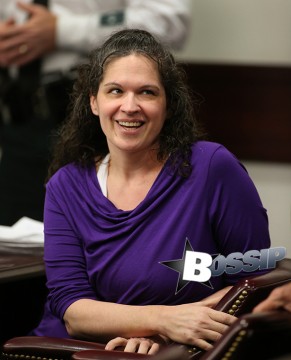
This chick took everything the man had , and then she shot him and tried to cover it all up. According to FOX News , she’s got supporters claiming she had nothing to do with his murder… Dorice “Dee Dee” Moore showed no emotion as the verdict was read. Judge Emmett Battles sentenced her to mandatory life without parole for the murder and an additional minimum mandatory sentence of 25 years for using a gun in the commission of a felony. Battles called Moore “the most manipulative person” he had ever seen, describing her as “cold, calculating and cruel.” Earlier, he had instructed the jury that it could convict her of a lesser charge. Jurors deliberated for more than three hours before finding Moore guilty of murdering Abraham Shakespeare, who won millions in 2006. Shakespeare’s mother was in the courtroom, but showed no emotion. “She got every bit of his money,” said Assistant State Attorney Jay Pruner in closing arguments. “He found out about it and threatened to kill her. She killed him first.” Prosecutors built much of their case from confidential informant’s statements and financial records. “There were a lot of people who owed Mr. Shakespeare a lot of money. One guy owed him a million dollars,” argued Defense Attorney Hileman. “The police focused on Dee Dee Moore and they didn’t even consider other people.” Moore was briefly banned from the Tampa courtroom Monday over concerns that she may have threatened jurors. She was back a short time later for closing arguments, but said she did not want to take the stand in order to protect her family. At times, the defendant closed her eyes and averted her face from the jury as prosecutors played audio recordings made by an undercover officer posing as a criminal who would take the fall for Shakespeare’s murder. Prosecutors said the 40-year-old Moore befriended Shakespeare in late 2008, claiming she was writing a book about how people were taking advantage of him. They claim Moore later became his financial adviser, eventually controlling every asset he had left, including an expensive home, the debt owed to him and a $1.5 million annuity. She ultimately swindled Shakespeare out of his dwindling fortune, then shot him and buried his body under a concrete slab in her backyard, Pruner said. In opening statements, Moore’s attorney told the jury that his client was trying to help protect Shakespeare’s assets from a pending child-support case when he was killed by drug dealers who haven’t been caught. Former inmate Rose Condora, who was locked up with Moore, said she visits her friend every night at the jail. “She’s not what people think she is. She did not kill that man,” Condora told reporters during a break in the trial. Glad she got life…plus another 25 years. Images via AP
I feel I have to confess to a certain partisanship. I grew up listening to Les Misérables . I’ve seen it performed twice and as a girl had the original Broadway cast recording down cold . It’s been years since I’ve heard it, but watching Tom Hooper ‘s adaptation of Claude-Michel Schönberg, Alain Boublil, Jean-Marc Natel and Herbert Kretzmer’s musical I realized with amusement and discomfiture that I could still sing along to just about every damn word, at least until whomever was sitting near me took it upon themselves to murder me for the greater good. These songs — and the bridges in between, for Les Misérables is a sung-through affair with almost no spoken dialogue — are permanently etched in my psyche, and I am as far from being able to look at this material with critical distance as a highly trained stage star is from an actual consumptive 1800s French urchin. That said, can we admit that Les Misérables is an absolute beast of a musical? It faces the impossible task of compressing Victor Hugo’s 1500-page novel into three hours (the screen version running a leaner 157 minutes), starting in a prison in the south of France in 1815 before leaping ahead to the town of Montreuil in 1823 and then Paris in 1832, where the main action takes place against the backdrop of the June Rebellion. It’s the story of ex-convict Jean Valjean ( Hugh Jackman ), but it has a notable array of other significant characters to be dealt with, ones who love and suffer and (quite frequently) die, and all with musical accompaniment. The signature staging of the play involved a giant turntable that allowed for more fluid scene changes. On screen, that can be accompanied efficiently with an edit, but then you have to deal with the fact that smooshing a whole storyline about Valjean giving up a chance to let a stranger go down for his crimes and choosing to go on the run again (“Who Am I? / The Trial”) looks incredibly rushed when taken out of the abstract. In staging Les Misérables for screen, Hooper has taken a relatively naturalistic and grounded approach to the musical, a choice that’s better suited to the subject matter of the story than to the fact that it takes place entirely in song. The vocals were recorded live on set, the backdrops are grimy in a poetic period Gallic style and the big numbers are frequently recorded in close-up, the camera holding on intimate shots of the performers as they stand or sit and sing. The film (which was shot by Danny Cohen, who also served as cinematographer on The King’s Speech ) treats its songs as it would dialogue, except that dialogue rarely involves spouting about one’s feelings at length out loud to no one, a tic that makes much more sense set to music. It’s an infuriatingly static way to shoot musical numbers, and it diminishes the bombastic grandeur many of these songs have. Éponine (singer and stage actress Samantha Barks) belts out her anguish about her unrequited love while huddled against a pillar; on the big sequence “One Day More” we cut abruptly between different faces as if everyone’s in their own individual music video. It’s only Russell Crowe in the role of Javert, the police inspector who’s devoted his life to chasing down Valjean, who gets the kind of grandiose staging the material demands in his two big songs, as he wanders along prominent Parisian landmarks and the camera swings out to take in the city. Crowe is, perhaps not coincidentally, the weakest singer, and despite his musical side career looks uncomfortable in the role of Javert, his concentration all seeming to go toward his serviceable warbling rather than acting. But much of the rest of the cast is terrific, particularly not-so-secret theater geeks Jackman and Anne Hathaway , who settle into their roles like they’ve spent their lives waiting for this opportunity. Hathaway’s in fact so good as Fantine, the factory worker forced into prostitution to support her daughter Cosette near the start of the story, that the film staggers a bit after her character departs, her killer rendition of “I Dreamed a Dream” one of its emotional highlights. Eddie Redmayne’s a pleasant surprise as Marius, the idealistic student torn between his love for the grown Cosette (Amanda Seyfried) and his desire to join his friends at the barricades for the uprising — the lovers tend to be the two blandest characters in the ensemble, but he finds a genuine gallantry and sweetness to the would-be revolutionary. Sacha Baron Cohen and Helena Bonham Carter , on the other hand, play designated comic relief couple the Thénardiers even broader than that description would suggest — though “Master of the House” is one of the most dynamically staged of the songs, the tonal difference between their appearances and the rest of the film is jolting. Even at a generous running time that matches this season’s other giant award candidates, Les Misérables seems like it’s in a hurry, skittering from one number to the next without interlude. After Hathaway’s early high point, it starts to feel numbing, an unending barrage of musical emoting carrying us through Valjean’s adopting of Cosette, the latter’s first encounter with Marius, the battle at the barricade and a last hour that can feel like it’s a non-stop series of death arias. But even if this isn’t a great screen adaptation of the musical, there’s no resisting the ending, which pairs the film’s two brightest stars and then has everyone join in on a reprise of “Do You Hear The People Sing?” Say, do you hear the distant drums? Maybe not, but at that moment the voices coming from the screen and the tune they’re crooning are rousing enough to draw a few tears. Follow Alison Willmore on Twitter . Follow Movieline on Twitter .
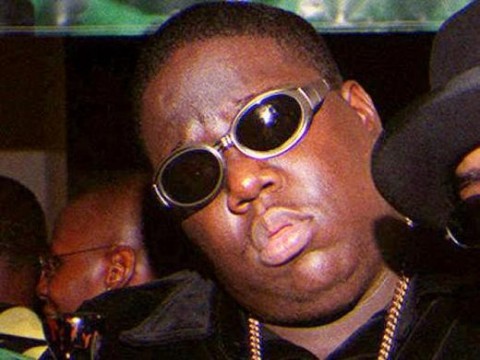
LAPD detectives have apologized to the family of the late Notorious B.I.G. for failing to warn them about the planned release of his autopsy report last Friday. The rapper (real name Christopher Wallace) was killed 15 years ago in a drive-by, but the Notorious B.I.G. autopsy report had never seen the light of day. The detectives intended to notify the rapper’s family , but the report was released prematurely “due to an administrative error,” officials said in a statement. “Our detectives personally spoke with the Wallace family (Friday) night, and apologized for not notifying them prior to the release” said Capt. Billy Hayes. The 1997 slaying remains unsolved, and under investigation, Hayes added: “Obviously this has been a challenging case; We hope that witnesses or other people with information will come forward and give us the clues we need.” Why release the report now in any case? L.A. County’s Chief Coroner Investigator Craig Harvey said a security hold on the report’s release was just lifted. The 23-page report revealed the rapper was hit by four bullets after leaving an event in March 1997, and that only the fourth – which hit his heart, lung and colon – killed him. The rapper’s family complained Friday that they were not notified of its release, and also criticized police for not closing one of L.A.’s highest-profile unsolved murders. Both the LAPD and the FBI investigated Wallace’s killing, which came just months after another rap superstar, Tupac Shakur, was gunned down in Las Vegas. The FBI looked into whether any LAPD were involved in Wallace’s shooting. The deaths of Wallace and Shakur, both unsolved, have been the subject of rampant speculation, and are a tragic but indelible part of the genre’s lore. The one-time friends and hip-hop pioneers became rivals and instigators in a wide-ranging, often violent East Coast-West Coast rap rivalry during the 1990s.
Hey guys! My name is Amanda. I am all the way on the right in green. I never thought I’d be writing a Bieber experience. EVER. In a million years. Here’s my story. A couple of years ago I almost killed myself. I had plans to do it, and reason’s why I wanted to do it. I was bullied. There were a lot of family problems. I was just like ya know.. I don’t wanna live anymore. I got diagnosed being bipolar and I had to go to a treatment center to get help. I didn’t like it at all. I felt like I didn’t belong there. A couple of years later I was still having problems. Going in and out of different treatment centers, trying to get help. I then began drinking and smoking, and going down the wrong path. But then I eventually stopped when I found a peace with God. In February of 2011 I saw “Never say Never,” Justin Bieber’s movie. The whole time I was watching it I was completely starstruck. Everything about him just made me smile. The weird thing was, it wasn’t his looks that did it for me. It was his faith in God and how much he believed in Him. His mom became my hero and his whole team just made me smile. What they do for people just makes me wanna do good things for other people. That night I began buying posters, CDs, I attacked my wall in purple marker with all of his lyrics. I just felt like a connection with him, I couldn’t even explain. It was a peace I found with God and Justin at the same time. My family didn’t understand why I loved him so much. I think it was because honestly he was the only artist ever to help me keep believing in God. The only artist that made me believe in myself and who I was. I think the time that I really found hope was when his acoustic album came out. I completely fell in love. I would just sit in my room everyday with it blasting. I would have my eyes closed and I would sing along with little harmonies because I’m a singer myself. On December 5th 2012 I met Justin at Philly’s Jingle Ball 2012. I got the tickets and the meet and greet from a family friend. After praying for an extremely long time it was finally happening. I never thought it would happen because my family doesn’t have enough money to buy meet & greets or buy tickets to his concert. The fact that this was happening I couldn’t even breathe. I was going to tell him how he changed my life. Little did I know this dream would be shot down. I got in the meet and greet line with my sister and they told us that they had to put us in a group of 10. I was devastated, only because I knew I wasn’t going to get to stand next to him. Then the one lady pulled me and my sister in the room by our wrists and pushed us in there. Justin came out. We got in the line for the picture, posed for the photo and then I was pushed away from him. I couldn’t even say how I really felt. I couldn’t even thank him, or say hey. It was all too fast and I felt disrespected by all the workers from Q102. I cried after the meet & greet because I thought I would never get another chance. I am very thankful I got the chance to be in the same room as him and see him in concert. I’m never going to give up hope that I’ll meet him again – only without the guards pushing me away. Where I can have at least 5 minutes of me explaining to him how he affected me in such a positive manner. I love him with all of my heart. Justin I hope you see this and try and contact me! I love you beliebers. Never give up hope. We are a FAMILY and always will be. – Amanda Go here to read the rest: Hey guys! My name is Amanda. I am all the way on the right in…