Tag Archives: personal

Senators propose granting president power to shut down Internet in times of crisis

A new U.S. Senate bill would grant the president far-reaching emergency powers to seize control of or even shut down portions of the Internet. The legislation announced Thursday says that companies such as broadband providers, search engines, or software firms that the government selects “shall immediately comply with any emergency measure or action developed” by the Department of Homeland Security. Anyone failing to comply would be fined. That emergency authority would allow the federal government to “preserve those networks and assets and our country and protect our people,” Joe Lieberman, the primary sponsor of the measure and the chairman of the Homeland Security committee, told reporters on Thursday. Lieberman is an independent senator from Connecticut who caucuses with the Democrats. Because there are few limits on the president's emergency power, which can be renewed indefinitely, the densely worded 197-page bill (PDF) is likely to encounter stiff opposition. TechAmerica, probably the largest U.S. technology lobby group, said it was concerned about “unintended consequences that would result from the legislation's regulatory approach” and “the potential for absolute power.” And the Center for Democracy and Technology publicly worried that the Lieberman bill's emergency powers “include authority to shut down or limit Internet traffic on private systems.” The idea of an Internet “kill switch” that the president could flip is not new. A draft Senate proposal that CNET obtained in August allowed the White House to “declare a cybersecurity emergency,” and another from Sens. Jay Rockefeller (D-W.V.) and Olympia Snowe (R-Maine) would have explicitly given the government the power to “order the disconnection” of certain networks or Web sites. On Thursday, both senators lauded Lieberman's bill, which is formally titled the Protecting Cyberspace as a National Asset Act, or PCNAA. Rockefeller said “I commend” the drafters of the PCNAA. Collins went further, signing up at a co-sponsor and saying at a press conference that “we cannot afford to wait for a cyber 9/11 before our government realizes the importance of protecting our cyber resources.” Under PCNAA, the federal government's power to force private companies to comply with emergency decrees would become unusually broad. Any company on a list created by Homeland Security that also “relies on” the Internet, the telephone system, or any other component of the U.S. “information infrastructure” would be subject to command by a new National Center for Cybersecurity and Communications (NCCC) that would be created inside Homeland Security. The only obvious limitation on the NCCC's emergency power is one paragraph in the Lieberman bill that appears to have grown out of the Bush-era flap over warrantless wiretapping. That limitation says that the NCCC cannot order broadband providers or other companies to “conduct surveillance” of Americans unless it's otherwise legally authorized. Lieberman said Thursday that enactment of his bill needed to be a top congressional priority. “For all of its 'user-friendly' allure, the Internet can also be a dangerous place with electronic pipelines that run directly into everything from our personal bank accounts to key infrastructure to government and industrial secrets,” he said. “Our economic security, national security and public safety are now all at risk from new kinds of enemies–cyber-warriors, cyber-spies, cyber-terrorists and cyber-criminals.” A new cybersecurity bureaucracy Lieberman's proposal would form a powerful and extensive new Homeland Security bureaucracy around the NCCC, including “no less” than two deputy directors, and liaison officers to the Defense Department, Justice Department, Commerce Department, and the Director of National Intelligence. (How much the NCCC director's duties would overlap with those of the existing assistant secretary for infrastructure protection is not clear.) The NCCC also would be granted the power to monitor the “security status” of private sector Web sites, broadband providers, and other Internet components. Lieberman's legislation requires the NCCC to provide “situational awareness of the security status” of the portions of the Internet that are inside the United States — and also those portions in other countries that, if disrupted, could cause significant harm. Selected private companies would be required to participate in “information sharing” with the Feds. They must “certify in writing to the director” of the NCCC whether they have “developed and implemented” federally approved security measures, which could be anything from encryption to physical security mechanisms, or programming techniques that have been “approved by the director.” The NCCC director can “issue an order” in cases of noncompliance. The prospect of a vast new cybersecurity bureaucracy with power to command the private sector worries some privacy advocates. “This is a plan for an auto-immune reaction,” says Jim Harper, director of information studies at the libertarian Cato Institute. “When something goes wrong, the government will attack our infrastructure and make society weaker.” To sweeten the deal for industry groups, Lieberman has included a tantalizing offer absent from earlier drafts: immunity from civil lawsuits. If a software company's programming error costs customers billions, or a broadband provider intentionally cuts off its customers in response to a federal command, neither would be liable. If there's an “incident related to a cyber vulnerability” after the president has declared an emergency and the affected company has followed federal standards, plaintiffs' lawyers cannot collect damages for economic harm. And if the harm is caused by an emergency order from the Feds, not only does the possibility of damages virtually disappear, but the U.S. Treasury will even pick up the private company's tab. Another sweetener: A new White House office would be charged with forcing federal agencies to take cybersecurity more seriously, with the power to jeopardize their budgets if they fail to comply. The likely effect would be to increase government agencies' demand for security products. Tom Gann, McAfee's vice president for government relations, stopped short of criticizing the Lieberman bill, calling it a “very important piece of legislation.” McAfee is paying attention to “a number of provisions of the bill that could use work,” Gann said, and “we've certainly put some focus on the emergency provisions.” added by: samantha420

Do you have a favorite player in the World Cup?

Everybody has a favorite. Ronaldinho, Drogba…my personal favorite is England's goalkeeper Green (thanks for letting that goal by). Who's yours? http://english.aljazeera.net/sport/worldcup2010/2010/06/2010615173537738884.html added by: afitzgerald

Anna Gray, Shannon Price Battle Over Gary Coleman

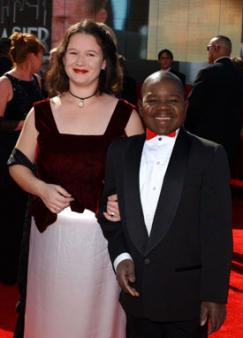
The saga surrounding the tragic death of Gary Coleman continues to become more bizarre by the day, with two former loves now locking horns over him. Coleman’s former wife Shannon Price, who he divorced in 2008 but still lived with, has called the shots (and sold the Gary Coleman death photos ) so far. But a new will surfacing that allegedly names Anna Gray , the star’s close friend and former girlfriend, as executor and sole beneficiary, Price may be SOL. Gray, of Portland, Ore., filed a 2005 will last Friday in a Utah court stating Coleman left Gray the bulk of his estate. Said her attorney, Randy Kester: “Anna just wants to carry out Gary’s wishes. Her will is the most objective reflection of what Gary wanted. We’re going to be in this for the long haul.” Gary Coleman with Anna Gray (left) and Shannon Price. Gray was a business associate of the actor’s for about eight years before living with him briefly in Utah, and her will bumps Dion Mial out of the picture. Mial, Coleman’s former business manager, had filed a now-outdated copy of the actor’s will naming him as the executor, but that’s a moot point now. Price claims she was Gary’s common law wife and sole heir according to what she says is his handwritten 2007 will, written a week after they wed. Kester says ask a judge to issue an immediate restraining order against Shannon Price, who is “invading Gary’s home and disposing of his property.” “She has no right to his things.” The lawyer notes that he and Gray would not object to Price removing her own personal items, but this is different. “But she has taken all his personal papers, evidence and other belongings. That is completely disrespectful and a further indication of her objectives.” Price’s attorney, Mitchell Maughan, counters that “Nothing ever changed between Shannon and Gary,” and that “They lived as husband and wife.” “For now, this is about who should care for Gary’s remains. Beyond that, there isn’t much to fight over in his estate, there wasn’t much financially.” In both Price and Gray’s will, he requested to be cremated and that no funeral be held . Cremation is expected to take place in the next few days. But a Utah judge ruled Monday that Anna Gray will be allowed 48 hours to view Coleman’s body before that. A third party will oversee his affairs. A trial to determine if Price was indeed Coleman’s common law wife – and therefore possibly in charge of his remains – is expected to take months. “Shannon’s doing well, but it’s obviously hard for her as his wife to have people from his past coming out of the woodwork,” Maughan says. “Gary wanted to distance himself from all his past managers and the media, so this is upsetting to her, as it would be for anyone in her position.”

Read the original here:
Anna Gray, Shannon Price Battle Over Gary Coleman

Drake’s Thank Me Later Among Our Top Five Most-Anticipated Rap Debuts

50 Cent, Snoop Dogg, Lauryn Hill and DMX had a little more buzz coming into the game than Drizzy does. By Shaheem Reid and Jayson Rodriguez Drake Photo: Johnny Nunez/ WireImage Drake fever has reached a fever pitch, but the release of his highly anticipated debut album, Thank Me Later, on Tuesday should quench the thirst of even his most eager fans. The buildup has been steady since his breakout mixtape, So Far Gone. But as Drake appeared on a steady diet of hits, ranging from his own (“Forever”) to others’ (Timbaland’s “Say Something”), Young Money’s White Knight drove up expectations like Khlo

Betty White Calls Sandra Bullock A ‘Lifelong Friend’ On ‘The View’

‘Golden Girls’ star also recalls her friendship with the late Rue McClanahan. By Jocelyn Vena Betty White on “The View” on Monday Photo: ABC Among the many topics Betty White discussed during her stop by “The View” on Monday (June 14), the “Golden Girls” star talked about how well Sandra Bullock addressed her personal life at the MTV Movie Awards earlier this month, when she accepted the Generation Award. “She’s doing fine and, bless her heart, I was so proud of her that night that she didn’t avoid the subject, she addressed [telling everyone], ‘Don’t worry about me. I’m doing fine,’ and she meant it,” White said of her co-star in “The Proposal.” “We had a great visit backstage.” White said that the two actresses became close on the set of the hit movie. “We became lifelong friends on ‘The Proposal,’ ” she said. “She’s one of the most special people I’ve ever met. Too bad she’s not good looking, but otherwise …” White also opened up about the loss of her other lifelong pal, Rue McClanahan, who died earlier this month. The two starred on “The Golden Girls” together some 25 years ago, and White said they always kept in touch after the show ended in 1992. “I talked to her three days before we lost her,” White said. “She lived in New York and I lived on the West Coast. We talked every three, four weeks. She was getting back [after some health complications], so we thought she was doing well. But, unfortunately, it surprised us.” With her much-hyped stint on “Saturday Night Live” behind her, White is looking forward to her next gig on the small screen, the TV Land sitcom “Hot in Cleveland” that also stars Valerie Bertinelli, Jane Leeves and Wendie Malick. “Well, because there’s four of us naturally there’s a comparison [to ‘Golden Girls’], but it’s totally different … the chemistry between us,” she shared. “They truly love each other and it shows.” So, what’s next for White? ” I’m ready for Robert Redford, whenever he is!” she joked. What do you want to see Betty White do next? Share your ideas in the comments.

Go here to read the rest:
Betty White Calls Sandra Bullock A ‘Lifelong Friend’ On ‘The View’

World Cup 2010 Prediction League Match Days 03 & 04 | Filminews

This Prediction League will be played here but if in the event Blogger/Blogspot servers go down, we will automatically carry on the league over to the personal blog of Voxeros at http://jaywalk.blog-city.com. Please bookmark this or at …

Read more:
World Cup 2010 Prediction League Match Days 03 & 04 | Filminews

‘For Neda,’ A Film, Tells the Story of This Young Symbol of Iran’s Post-Election Protests – Nedā Āġā Soltān

'For Neda' tells story of symbol of Iran's post-election protests By Mitra Mobasherat, CNN June 12, 2010 7:08 p.m. EDT (CNN) — Music posters still hang on the walls; stuffed animals decorate a twin bed in the corner of the room. Clothes lie neatly folded in the closet. Neda Agha-Soltan's bedroom in Iran remains practically untouched since the day she died. A little more than a week away from the one-year anniversary of her death on June 20, 2009, Neda's family refuses to forget their daughter's spirit. Journalist Saeed Kamali Dehghan traveled to Tehran to interview Neda's relatives in their home for a new documentary on her life and her tragic death. HBO's new documentary, “For Neda,” tells the personal story of the woman who unwittingly became the symbol of the post-election reform movement in Iran when her death was captured on a cell phone video and shown around the world. “She is any girl, anywhere, but this just wasn't anywhere,” the film's producer and director, Antony Thomas, told CNN. “I wanted to show the people who demonstrated, whatever happened, that their courage has not been forgotten.” Not able to find a professional camera crew that would accept the assignment, Kamali Dehghan, a print journalist who had never handled a movie camera before, took a two-day crash course and smuggled a camera into the country. Video: 'For Neda' blocked in Iran “I was ready to be arrested in Tehran at any moment. When I rang the bell to their home, I thought an officer could arrest me at anytime,” he told CNN. Explored through the life of Neda, the film examines the repression and inequality that women in Iran have struggled with since the arrival of the Islamic regime. “She was a hero, but she was not superhuman; she was a hero like millions of other girls in Iran,” Kamali Dehghan said. Speaking out for the first time since Neda's death, her father, Ali Agha-Soltan, describes his youngest daughter as a woman with “no fear in her body.” Her brother, Mohammed, is still mourning the loss of his best friend. He has not cut his hair or shaved since she died. Neda's picture adorns the front of his mobile phone. Neda's mother's, Hajar Rostami, describes her daughter as a rebellious girl who never outgrew her independent streak. She argued with her schoolteachers about having to wear the mandatory head covering, or hijab, in class. Growing up in Tehran, Neda enjoyed the latest Western fashions, singing and dancing, all forbidden to women in public. “She had this freedom to be herself in that family. They have respect for women's rights, so Neda could be herself in that family. She didn't have to play a role; she didn't have to pretend,” Kamali Dehghan said. The HBO film will debut in the U.S. at 9 p.m. ET Monday, but the network allowed Voice of America's Persian service to broadcast it in Farsi into Iran last week through its satellite TV channel and its website. Voice of America said attempts to show the film were interrupted by Iranian authorities jamming the satellite signal. Voice of America viewers also complained of electrical outages during the time slot. On Friday, the Islamic republic aired its own investigative documentary into the death of Neda titled “Intersection.” In the film, the government points the finger at the People's Mujahedeen Organization of Iran for Neda's death. The PMOI is a Marxist group advocating the regime's overthrow that the government often has blamed for post-election violence. Prepared for a censorship attempt, HBO and Thomas decided to post the full documentary on YouTube and worked with tech specialists to convert the 70-minute film into a small enough file to play on Iranian mobiles via a Bluetooth connection. Thomas and Kamali Dehghan said they've received thousands of e-mails from inside Iran since the HBO film has been seen around the world. But the most important approval, Thomas said, was from Neda's family, who still lives in Iran. “We can't leave Iran; she is still here,” Neda's mother told Kamali Dehghan. “She is there, still in that room, still in that house.” added by: EthicalVegan

Shannon Price is a Money-Grubbing Leech – Just Ask Gary Coleman

Gary Coleman’s ex-wife Shannon Price was motivated by money alone. The former child star himself said as much to the girl’s face – and on video. In 2008, around the time Gary and Shannon were divorcing, the two were filming a TV show pilot. It’s unclear what show, but it wasn’t picked up. Clips have been unearthed, however, and show Gary unloading on Shannon Price in front of a life coach. “All you care about is the money,” he says. He goes on to bitterly complain he’s been forced to take jobs he hated to support her … going to places he loathed, including Madison, Wisconsin. Why the hatred of that city, we have no idea. But the coach tells Gary he needs a job, STAT, and even offered to hook him up at a car dealership. Gary Coleman had Shannon Price pegged. Fast forward to 2010. Coleman died in May, and Price’s behavior has been nothing short of deplorable as she makes move after move to cash in. As if hawking the Gary Coleman death photo weren’t bad enough, Price filed legal documents angling for control of whatever assets he has left. Shannon wants to be named special administrator of Gary’s estate on grounds she was his common-law wife, having lived with him for five years. Additionally, she has submitted to the court a handwritten document purportedly from Gary making her the sole beneficiary of his entire estate. In what she claims is a handwritten addendum written by Gary Coleman in 2007, Shannon says he named her “sole heir of any and all monies.” That and all “earnings, model trains, vehicles, cars, toys, electronics, homes, other inheritances if any, all things physical and/or intellectual.” The couple then got divorced in 2008, but no matter. Oddly, the handwritten document reads: “This I have done because of my personal selfishness and weakness and I Love her with all my heart.” The handwritten addendum modifies a 2006 will stating “I revoke all previous wills. I specifically disinherit my biological parents and siblings.”

WaPo Devotes 60-Paragraph Front Page Story to Workaholic Kagan, Pays Little Attention to Her Philosophy

Borrowing a line from one of her Harvard colleagues, the Washington Post entitled its June 10 front-page profile of Supreme Court nominee Elena Kagan, “Her work is her life is her work.”* But the 60-paragraph story by staff writers Ann Gerhart and Philip Rucker shed barely any light on the judicial philosophy that Kagan’s life work demonstrates. Instead, Gerhart and Rucker presented a gauzy profile that rehashed the usual trivia — Kagan loves poker and the opera — while painting Kagan as a workaholic who still has time to lend an ear or a shoulder to cry on to friends in distress: She has arrived at the age of 50 in a blaze of accomplishment. But her achievements can obscure how relatively narrow her world has been.  She made her life the law and became consumed by it — and happily so, by all accounts. Her parents are no longer living, and she sees her brothers, Marc and Irving, Yale University graduates who teach public school in New York City, usually at holidays. Most of the people in Kagan’s life are important people, bound to her in tightly drawn concentric circles. Her friends are elite lawyers of a certain set or Democratic operatives with staying power. She cultivates their company, holds their confidences, gives them the best presents and solicits their ideas, said several friends among the four dozen people interviewed for this article. Many high-energy super-achievers strive for a sanctuary of home or hobby or nature away from the relentless pressures of the workplace, even as they bang away on their BlackBerry and brag how little sleep they require. Kagan seems to be the rare person who has moved fluidly up and through the corridors of power with no apparent need for this separate sphere. “Her work is her life is her work,” says Charles Fried, a Harvard Law professor. He credits her with grafting a sense of community onto the school’s prickly and insular culture in her six years as dean.  “To call her a bloodless organization person running her organization would be a terrible mistake,” Fried says of Kagan’s ceaseless entertaining, dinner-going and speech-giving while dean. “She did those things with real affection, not just for the institution but for the people.” Yet the friendship her intimates describe seems curiously one-sided; it is one in which Kagan gives freely of her support but seeks none in return. “I went through a very contentious divorce,” says Laurence Tribe, another Harvard Law professor who has known Kagan for more than 20 years, “and she was one of the very few people I could talk to about it. It’s because you could trust her. She made me feel that I would get through it. “She’s a great listener, and I think that will endear her to her fellow justices,” says Tribe, who is on leave from Harvard while working at the Justice Department. “She’s likely to make them feel that she cares what they think.” That’s great, but Kagan is not up for a marriage counselor gig, she’s nominated to the highest court of law in the land. It’s not wholly illegitimate for the media to devote some resources to exploring the personal and social dimensions of a Supreme Court nominee’s life, but ultimately these details are of little or no consequence to the job itself. Yet today, Post editors gave their front-page readers what essentially amounts to a Style section profile in lieu of a meatier profile that might examine the liberal leanings discernible in Kagan’s work product. *the headline for the online version reads, “Kagan has many achievements, but her world has been relatively narrow.”

Originally posted here:
WaPo Devotes 60-Paragraph Front Page Story to Workaholic Kagan, Pays Little Attention to Her Philosophy

Sting and Soros Hook Up For A Duet Of Pro-drug Stupidity

Editor’s Note : The following was originally posted at Andrew Breitbart’s Big Hollywood . Seeing that George Soros and Sting  are working together to “end the drug war” puts me in mind of a story an Army buddy who works in the DEA told me about busting in the door of a drug house only to find three occupants – the oldest four years old, having been left in charge while his “parents” went out to score meth.  Yeah, drug use is a victimless crime – if you ignore the victims. Apparently not content to subsidize the whining of the nonentities at Media Matters, Soros is taking a break from his adventures in currency manipulation and general scuzziness to enlist entertainment celebrities like Sting in his newest quest.  The Drug Policy Alliance  is the result, a group whose members, as its founder puts it, “come from across the drug use spectrum.”  Yes, the junkies, stoners, hopheads, dope fiends, pill-poppers, and Lindsay Lohan are unanimous:  Drug laws are bad, and it’s probably BusHitler’s fault. The threshold problem with comments by Sting such as, “The war on drugs represents an extraordinary violation of human rights,” is that Sting presumably not only believes this piffle, but further believes that he can put down his bass and offer meaningful input into the discussion.  This assumption of competence is a common delusion among celebrities, and here it has more potential for damage than most mindless celebribabble. Now, Sting is not alone – no one in that clip says anything worthwhile.  One woman, who is bald for no apparent reason, states that “The War on Drugs is a war on people of color,” as if Americans decided they would outlaw crack because they fear that black people might enjoy themselves.  Montel Williams shows up to explain that drug laws prevent him from making choices about his own body, but the awful tie and ridiculous earring he chose to wear make a powerful argument against allowing him to make any kind of choices at all. Tony Papa also appears.  He went to jail for 12 years for being part of a drug deal – oh, I mean committing “a nonviolent drug offense” – and became an artist on the taxpayer’s dime.  While most of us will likely ask “Why only 12?,” naturally Papa is worshipped by trendy leftist celebrities .  Some Hollywood half-wit even scooped up the rights to his inspiring story.  So, to repeat, Tony Papa joined a drug conspiracy, got arrested, went to jail, leveraged that into becoming a hip artist and the subject of a movie, and yet he is somehow the real victim. Of course, there’s also the perennial “America imprisons more people than anywhere else in the world!” meme.  In fact, the only drug incarceration problem in America is that too few drug dealers are incarcerated.  Sting suffers from the same delusion that afflicts many of his celebrity pals.  He seems to think that if the kind of people who deal drugs didn’t have drugs to deal, they would naturally flock to the world of hard work and responsibility.  Oh, if only drugs weren’t illegal, the drug dealing scumbags who infest our ghettos, barrios and college sociology departments would morph into clean-shaved, untatted workerbees eagerly embracing the world of 9-5 employment.  Yeah, it was outlawing meth and crack that turned the scumbags into scumbags.  At one point, the clip promises “new solutions” to the drug problem.  Then Sting pops back up, smug and self-satisfied, to announce that drug laws violate his individual sovereignty.  Uh, typically, when you say you are going to provide new solutions you might consider, you know, providing some new solutions instead of some new cliché. I certainly enjoy Sting and his pals’ new-found appreciation of my personal autonomy and “sovereignty over my body.”  I assume they’ll be standing by me when I reject the government’s interference in my health care decisions.  Unlikely.  If you think consistency is one of their strong points, perhaps you’ve been smoking the same stuff as them. Now, Sting was always annoying but here he is reaching new heights of crappiness and pomposity in direct proportion to his declining relevance.  It’s always a pleasure to hear some Brit mega-millionaire who glides around his English manor practicing tantric sex sound off on American domestic policy.  Please Sting, save us!  Unleash the full intellectual firepower you’ve amassed writing forgettable smooth jazz/rock fusion tunes for people who buy their music at Starbucks.  Just because you’ve been waited on hand and foot for three decades by a coterie of professional sycophants telling you you’re wiser than Buddha and smarter than Einstein doesn’t mean it’s true.  There may be a case for looking at our drug laws, but these nimrods don’t make it.  The most compelling points are made by the conservatives at National Review and the libertarians at Reason .  Sure, pot smokers steal your snacks, listen to Phish and sound-off with long, disjointed monologues about the miracle of hemp, but I have a hard time getting too bent out of shape by them.  Many celebrities are among them , but Sting and Soros aren’t just talking about causal stoners.  They think we ought to go open season on meth, crack and whatever else these degenerate half-wits today are ingesting.  No thanks – I’d prefer not to live with the mess you’re rich enough to ignore. The fact is that His Stingness knows nothing – or cares nothing – about the unspeakable devastation drugs cause, particularly within the inner cities.  Instead of standing behind the one truly effective response to urban drug terror – throwing the bastards in a cell and dropping the key down the Guatemalan sinkhole – His Majesty Sting decrees that drug dealing scumbags should run free, then retreats back behind his gates and armed guards to further hone his delayed orgasm skills. Well, Sting, let’s discuss your really keen points about why poison ought to be legal.  But let’s expand the scope of our discussion to include some other celebrities who might be able to provide us with some valuable insights.  Let’s invite Michael Jackson , Heath Ledger , Brad Renfro , DJ AM , and Brittany Murphy to weigh in with their points of view.  Oh wait, they’re all dead.  So are just a few others . Like a Sean Penn who can’t help but fly into some hellhole, figuratively fellate the local anti-American strongman then jet back to Santa Monica in time for dinner at Pizzeria Mozza, Sting wanders out of his fairy-tale life for a few minutes to tell the benighted peons in the real world how they need to live their lives before retiring back inside his palace behind three layers of security.  The violence, the abuse, the wasted potential brought on by drugs mean nothing to him; what is important is his own act of scolding his lessers for failing to conform to his personal vision. That’s Sting’s high – lording over others as if he was something more than a glorified cruise ship bassist who got lucky and didn’t have to spend his career cranking out covers of Billy Joel’s “Uptown Girl” for Corona-swilling passengers during runs between San Diego and Puerto Vallarta on the S.S. Living Hell .  And like so many in the entertainment world, he’s guilty beyond a reasonable doubt of possession of stupid ideas – with intent to distribute.

See the original post here:
Sting and Soros Hook Up For A Duet Of Pro-drug Stupidity