TLC is on its way to TLC. The network has given the greenlight to Totally T-Boz , a reality show that will chronicle the life of Tionne ‘T-Boz’ Watkins, a member of the 1990s girl group responsible for such hits as “Waterfalls.” Look for the series to focus on the singer’s attempt to reboot her career in Los Angeles after years of rehab from a life-threatening brain tumor. At one point, the artist could neither walk nor talk. “Tionne dominated the charts for years, turning the group TLC into household name, and her personal journey is as fascinating as her professional one,” said Amy Winter, GM, TLC, in a press release. “This series will open the door into T-Boz’s struggles and successes, and the people who are there to support her as she works to make her dreams come true all over again.” Totally T-Boz will air four episodes in early 2013.
Bond villainy is demanding work. Evil genius and a lust for world domination are crucial, but future Blofelds of the world take note, a way with words — steeped in wit and curare, or whatever neurotoxin the cool kids are using these days — is essential. Given that inevitable defeat and death are occupational hazards of obsessively pursuing the world’s greatest spy, one of the few ways a Bond villain to distinguish himself from the other loser Bond villains is by delivering some of the most memorable lines of the movie. Sometimes it’s the little victories that count. Without further unnecessary exposition, the 10 best lines delivered by Bond villains in ascending order. 10. “I like a girl in a bikini: no concealed weapons.” — Francisco Scaramanga, The Man With the Golden Gun The supernumerary-nippled Scaramanga, played by the great Christopher Lee, may not be one for sensible artillery purchases, but The Man with the Golden Gun certainly knows how to dress a woman for optimal security — and cleavage. 9. “I am invincible!” — Boris Grishenko, Goldeneye As Bond films go, Goldeneye is relatively straightforward, but it does contain a few nods to the campier 007 flicks of yesteryear. One of them comes courtesy of Grishenko (Alan Cumming), the Russian hacker who ends every successful evasion of authority with a heavily accented proclamation of hubris that foreshadows his inevitable downfall. If only James Cameron had taken note before his controversial “I’m king of the world!” Oscar acceptance speech for Titanic. 8. “The distance between insanity and genius is measured only by success.” — Elliot Carver, Tomorrow Never Dies Carver (Jonathan Pryce) is a compelling villain in a not-so compelling Bond film about a William Randolph Hearst-like media mogul who uses his control over said media to kickstart global warfare. The above quote demonstrates the fine line between being unhinged and just plain evil. Fox News could not be reached for comment regarding his passing resemblance to Rupert Murdoch. 7. ““Such nice cheeks too. If only they were brains.” — Ernst Stavro Blofeld, Diamonds are Forever It’s no coincidence that Bond’s most long-lived adversary was also quite the wordsmith. With this little verbal bon bon, he nicely captures the mixture of arrogance and casual misogyny that makes Blofeld (in this instance, played by Charles Gray) one of the franchise’s best villains. 6. “Of course Vargas does not drink…does not smoke…does not make love. What do you do, Vargas?” — Emilio Largo, Thunderball In the hedonistic world of James Bond, it’s almost unthinkable that any character would abstain from the above-mentioned vices, let alone all three. No wonder Vargas chose assassin as a career. 5. “The first one won’t kill you. Not the second. Not even the third. Not until you crawl over here and kiss my foot!” — Red Grant, From Russia with Love Sean Connery’s Bond was a cold and ruthless secret agent, and as such, his adversaries were the stuff of legend, often digging into deeper and darker places than the more fleshed-out characters of the later films. Robert Shaw’s magnificent turn as the psychopathic Red Grant is one for the ages. 4. “This time, Mr. Bond, the pleasure will be all mine!” — Xenia Onatopp, Goldeneye This line from the 1995 Goldeneye may be in keeping with the double entendres that distinguished so many of the earlier Bond films, but it’s delivered by the most confident, badass female villain (played by Famke Janssen) that Bond has ever faced. The scene marks the moment when (most of) the vicious sexism of the 007 franchise was left behind. 3. “East, West, just points of the compass, each as stupid as the other.” — Dr. No, Dr. No Joseph Wiseman laid the framework for the Bond baddies, and consequently, for the spy villain archetype itself. He’s clinically insane, emotionally detached and obsessed with world domination, as demonstrated by the above sentiment. 2. “Kill Bond! Now!” — Ernst Stavro Blofeld, You Only Live Twice That really says it all in a neat but expressive package, doesn’t it? Normally a man of refined taste and precise language, even Blofeld has his breaking point. 1. No Mr. Bond, I expect you to die.” — Auric Goldfinger, Goldfinger Goldfinger’s icily matter-of-fact response to the about-to-be-lasered Bond’s sneering inquiry, “I suppose you expect me to talk?”, is villainy at its streamlined best: no bad puns or goofball cackles, just pure malevolence. Nobody chilled the blood like Gert Frobe. Nobody! John Jarzemsky is a contributor at LitReactor , Twitch , and can be read semi-regularly at his personal blog, the ineptly named Super Roller Disco Monkey Hullabaloo! or on twitter @jtjarzemsky. He is big in Japan.
Anderson Cooper may be the host of Anderson , but the journalist himself was placed on the hot seat yesterday by Kristin Chenoweth. Asked by the actress about his summer, specifically his decision to announce himself as a proud gay man , Cooper explained that his sexual preference was no secret to anyone in his personal life. “I came out in high school,” Cooper said. “I told my friends, I told my family. I’ve always been out to my co-workers and stuff. It’s just not something I talked about publicly, because as a reporter, I didn’t think it was appropriate. It didn’t seem like part of my job.”
Also in Thursday morning’s round-up of new briefs, the Academy is set to honor four at its annual Governor’s Awards dinner. Toronto’s When I Saw You lands distribution. And new Clint Eastwood film is headed to the Tokyo International Film Festival. Academy to Honor Jeffrey Katzenberg, Hal Needham, D.A. Pennebaker and George Stevens, Jr. The Academy of Motion Picture Arts and Sciences will present Honorary Awards to stunt performer Hal Needham, documentary filmmaker D.A. Pennebaker and arts advocate George Stevens, Jr. as well as the “Jean Hersholt Humanitarian Award” to Jeffrey Katzenberg. The awards will be presented at the Academy’s annual Governors Awards dinner on Saturday, December 1st. Toronto’s When I Saw You Heads to Theaters The film by Annemarie Jacir will be Palestine’s entry for Best Foreign Language Oscar consideration and will debut at the Toronto International Film Festival September 9th. The story centers on an eccentric 11 year-old boy who runs away from a Palestinian refugee camp in his search for freedom. A journey of the human spirit that knows no borders, set in Jordan 1967. Around the ‘net… Angelina Denies Copyright Infringement in In The Land of Blood & Honey Lawsuit Jolie as well as fellow defendants GK Films and distributor FilmDistrict denied taking key elements of a book on the Bosnian War for her 2011 film In The Land of Blood & Honey in a 13-page response filed Tuesday, Deadline reports . Eva Longoria Says She’ll Be Her Own Speaker at DNC Longoria says comparisons to Clint Eastwood are not relevant as she gets set to take to the stage at the DNC. “People keep comparing us because we are both from the entertainment industry and he had a very different narrative,” the former Desperate Housewives actress told CNN’s Piers Morgan tonight at the DNC, Deadline reports . Clint Eastwood’s Trouble With the Curve to Close Tokyo International Film Festival Eastwood stars in the film directed by Robert Lorenze and also starring Amy Adams, John Goodman and Justin Timberlake. The film tells the tale of an aging baseball scout (Eastwood) with failing vision who takes a road trip to check out a hot prospect with his daughter, played by Amy Adams, during which they finally connect with each other. The feature will screen in Tokyo October 28th, THR reports .
Keep The Lights On director Ira Sachs ( Forty Shades of Blue , Delta ) tapped into his own experience in a tumultuous relationship that would eventually morph into the film that screened to accolades at the Sundance and Berlin film festivals earlier this year, winning the New York-based filmmaker a Teddy Award at the Berlinale. Keep The Lights On morphed out of the disintegration of a relationship he had with a man that spanned a number of years in New York around the turn of the century. Career demands, extra-relationship temptations, addictions, obsessions and more play into the rocky road experienced by the young couple. Sachs took inspiration for Keep The Lights On from the likes of Lisa Cholodenko’s The Kids Are All Right , Bill Sherwood’s Parting Glances and Jacques Nolot’s confessional Before I Forget , constructing Keep The Lights On as a gay man in NYC while embracing at times details some may consider unflattering. Danish actor Thure Lindhardt plays documentary filmmaker Erik, while American Zachary Booth plays closeted lawyer Paul, a couple who embrace each other while passionately forming a dramatic relationship rife with sex, drugs, highs, lows and dysfunction. Ahead of Keep The Lights On ‘s theatrical release this weekend, Ira Sachs invited Movieline over to his NYC apartment, which, perhaps not so coincidentally served as a prime location for his film. He talks about embracing depictions of addiction and sexuality, the challenges of making indie film today, how making the film affected him personally and what his former partner, who helped inspire the project, thought of the film. When did you decide that you actually wanted to make this film? I saw a film called Before I Forget by Jacques Nolot at (New York’s) Cinema Village, which was programmed by Ed Arentz — who is now my distributor. And what I saw [was] a film that reflected sort of contemporary life — Parisian life — of a filmmaker who was gay, but also what his life in Paris is that looks like something specific. As a gay person how we live looks very specific today and different than it did 20 years ago. I felt like there was no film that looked like my life, and no film which really reflected the community that I live in which is very mixed. The boundaries between gay and straight, I think, for most of us in our everyday lives, though not in our psyche has dissipated. So I wanted to make a film about sort of what I had seen in the last many years here. But specifically I ended a relationship in 2008 and I had a sense that 10 years before that was an interesting story. I started writing and I put it away for a couple of years, and it was really Mauricio Zacharias, my co-writer who read that material and said, “Well clearly this is a story you have to tell.” And in a way because I was doing something so autobiographical, I think I needed someone else to give me the blessing that it would be relevant. So how much of it is similar and how much of it is a departure to your own life during a certain time period? We began with the journals, and diaries, so we began with the raw materials from my life, but then ultimately we were creating a screenplay, which is constructed around its own laws and orders. And in a way, all my films have begun with things that I feel like I know more than anyone else. They’ve begun in a very intimate place. So you’re creating it similarly to the approach you took in Forty Shades of Blue for instance? Forty Shades was kind of about my dad actually. I grew up in Memphis with this larger than life figure who always had these younger girlfriends. And my relationship to those girlfriends was my entry to the film, and that sort of thing. And then when you start making a movie [like Keep the Lights On ] and you’ve cast a Danish actor to play a character based on yourself, then you’re like off to the races because you’re making a film. So what made you decide to go that route with a Danish actor? Was it that the actor Thure Lindhardt personally that appealed to you? I sent the screenplay to an agent that I have worked with in Hollywood, and I got the response that no one in the agency would be available for this [project]. And I knew even before that I wanted to make this film different. I thought that this film needed to be a truly independent film, so it would be financed that way. It would be made that way. So I heard about Thure who I was told was the bravest actor In Denmark and one of the best, and I knew that he would be. I sent him the script and he was alone in a hotel room in Spain, and he ended up using up all the scenes one could shoot alone, which were a series of masturbation scenes. And I knew that he was both comfortable with the material, but also really amazingly interesting to watch. So I casted him. Is this a little reflection, perhaps, on American actors, that they’re less inclined to do this sort of thing? I have a Danish lead actor. I have a Greek cinematographer. I have a Brazilian co-writer. I have a Brazilian editor. I had a Romanian script supervisor. I surrounded myself with non-American sort of sensibilities. And I think that’s a big part of the film. It’s a film about New York, and it’s a very New York film, but I think it’s told in a way that’s not repressed, and it doesn’t look at sex as some foreign object that has to be viewed only in the dark. Do you agree that that’s sort of the American POV generally, that violence in movies is acceptable, but sex is taboo? I do, I do. I think when this film played in Berlin, it was the most ordinary movie you could see.It was extremely ordinary which is very different than how it played at Sundance. How did it play at Sundance then? The subject matter and the sexuality made people uncomfortable. I think there’s a fear of difference in American cinema. And I was thinking a lot about that when I made this film because there used to be an idea that independent cinema was independent cinema . And that production and the means of production were actually separate from commercial cinema. And that gave you certain rights and opportunities — and I had all those rights and opportunities. I am one of a number of filmmakers who started out making films about gay people who stopped. My whole generation, most of us stopped. We either couldn’t make films, or we had to make other kinds of films. And I think that that’s partially about the individual, but it’s mostly about the culture, and trying to figure out how to sustain a career. I think for me, ultimately, I feel now that in some ways my marginal voice is actually my most powerful. It’s also possibly economically my most fertile, because I’m the guy who can make these films. Is there still a pretty low glass ceiling for gay filmmakers generally in this country? It wasn’t any easier to make a film about a Russian woman living in Memphis ( Forty Shades of Blue ). When you’re trying to make non-broad character-driven stories, and I’m interested in documentary as forum, so I’m actually trying to get the details right, which makes it even more specific in a certain way. Going back to Keep the Lights On and Thure’s character Erik, I got the feeling he was a little bit a love junkie. Yeah, and I would agree. He was someone who didn’t feel complete without obsessing over something. I think, no one’s used that term, but I think it’s a good one. It’s better than a sex addict. I mean, I like love junkie… He is someone who just emotionally needs some attachment. I think that there’s a compulsive need to be connected to another person. And I think the film in a lot of ways is less about addiction and more about obsession. There was something, these two guys, both of them are obsessed with the idea of maintaining their life together. And I think with obsession, sometimes it seems like the most comfortable place to be, because it shuts out everything else because you think, “Well if I can control this situation, then I can control my life.” So was it emotional reliving this to a degree? It wasn’t. No? It wasn’t really. I mean, I think by the time that I made the film I really believe I’d done all the therapeutic work and transformation in a lot of ways. Occasionally it felt like déjà vu. It was like an odd sensation that occasionally I was creating fictional scenes that were replicating things that were close to my own life. But mostly I just really felt like my life was one of the drawers that we can open. And I was always very willing to share as much as I could with the actors. But I never felt like they needed to try to do anything other than what was natural to them as actors and as people living the story. I mean, a lot of what I think I do as a director is try to give everything over to the actor. So I disappear. I mean, but the helms are their helms. The spaces are their spaces. I don’t rehearse with my actors. Then what’s your methodology of instruction? I talk to them individually, but I never talk to them together. So really in a certain way it’s more difficult for the actor because there’s a lot of risk, but actually that risk I think is the element that you could actually name in the performance in this film, and in my films in general. I think there’s something risky about it all. This is the moment. So I think to trying to capture the moment means that you’re really valuing the present, which includes the past, but it is about the present which is about the actors, it’s about flirtation, it’s what happens between them. Did you ever consider not emphasizing the drug use? Maybe there would be some other more acceptable vice like — alcoholism? An everyday addiction… Yeah, an everyday addiction, a “legal” addiction, yeah. You know, I really wanted to be unashamed and unabashed about the truth of my relationship and my behavior, and to not shy away from the details, and to not judge the action. So pot-head, crack addict, different kinds of distractions, different kinds of consequences, but the root of addiction is usually similar in lots of ways. And I feel like the drug use that the film talks about is really prevalent in the gay community at least. It’s something I feel like goes unspoken. So has your former partner seen this film? Yeah, he has seen the film. I showed him the film before Sundance. And he’s been very supportive. I mean, I think it’s not him. It’s a story about our relationship as seen through my eyes. Next: The New York filmmaker gives his personal Top 9 NYC films
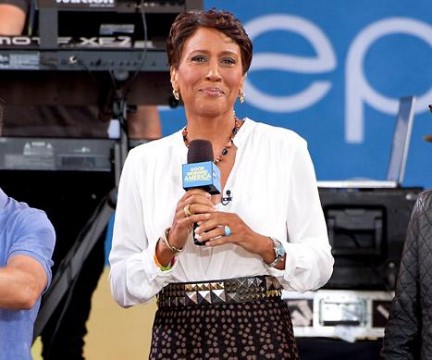
Robin Roberts has updated her Good Morning America blog to reflect the two major events taking place at the moment in her personal life. The reporter tells fans she has delayed the start of her bone marrow transplant procedure because she is in Mississippi “standing proudly” with her family as loved ones say goodbye to Robin’s mother, Lucimarian Tolliver Roberts, who passed away on Thursday . She was scheduled to be admitted to the hospital today, but Roberts writes : “When I return to NYC and walk through those hospital doors next week momma will be right there with me. Light, love and blessings to all.” Roberts goes on to say of her 88-year old mother, who was the first black woman to chair the Mississippi State Board of Education: “She was there when I took my first breath and what a privilege to hold her sweet hand when she took her last breath… Momma knew she wasn’t physically able to be with me for my bone marrow transplant . My siblings say mom wanted to spare me the agony it would have been if she had passed and I couldn’t be there. That thought was weighing heavily on me. “Momma found a way to be with me every step of the way on my journey. I am humbled by her selflessness.” The GMA co-anchor will be away from her chair for approximately two months when she does finally undergo that transplant – in order to deal with a rare blood disorder known as myelodysplastic syndrome – and we wish her nothing but the absolute best.
Worlds collide in the raunchy comedy For A Good Time, Call… , the sweet and salty tale of two reluctant roommates ( Ari Graynor and Lauren Anne Miller) tentatively building a friendship as they embark on a phone sex business venture together. It’s a long-awaited starring vehicle for Graynor and Miller and a warmly funny offering in the current wave of raunchy R-rated female-driven comedies – and For A Good Time, Call… also marks the anticipated debut of shorts filmmaker Jamie Travis ( The Patterns Trilogy , The Saddest Boy in the World ), who here earns the distinction of inspiring Justin Long ‘s performance in the film and getting to direct Kevin Smith jerking off in his feature debut. All of the above may surprise those who’ve followed Travis’s work over the past decade, during which time the Toronto-based filmmaker burst onto the film festival scene with award-winning, impeccably-crafted short films (highly recommended and viewable here ) that dealt effectively in nostalgic sensibilities, a Wes Anderson-like mise en scene, and a stylistic formalism largely absent from his fast-talking lady comedy. But after years of searching for the right project, Travis fell for the script by real life friends Miller and Katie Anne Naylon and subsequently launched into his first feature on an incredibly packed 16-day shooting schedule. After premiering at Sundance and debuting in limited release this weekend, For a Good Time, Call… expands to additional cities on September 7. “I honestly don’t know how to direct a movie unless I love it,” Travis offered, looking back on the film. “I feel like that love needs to drive you, and without it what are you doing?” I fell in love with your Patterns trilogy and your short films, so when I heard that you were directing For A Good Time, Call… I was very intrigued — I’d been wondering when we’d see a feature from you. You must have been surprised that I was making what people will refer to as a “phone sex comedy!” It definitely wasn’t the kind of film I thought I was going to direct. I thought of myself as directing something I wrote myself because all of my short films, including the Patterns trilogy, are written from a personal place. So it was a great surprise when I read the script. Knowing it was a phone sex comedy, I didn’t know what to think. I was so pleasantly surprised by how sweet it is, and how it shows female friendship in a way I don’t think enough movies show. It took a vehicle like phone sex and hung female friendship on it in such a grounded way. I just loved it, so I couldn’t say no! You must have been reading a lot of scripts over the years. Yeah – I had been reading so many scripts, and had gotten a lot of interest from American agents and eventually signed with WME, all from my films being at the Toronto Film Festival and Sundance. And I found that in particular it was The Saddest Boy in the World that people could see how I could kind of go in a commercial direction from that. The Patterns Trilogy is pretty out there; I feel like that’s for a very specific kind of audience, which apparently is you, Jen Yamato. It is! But it’s funny, I had been reading scripts for five or six years and hadn’t taken a meeting on anything. There was nothing I was interested in, I was growing increasingly skeptical that I was ever going to direct someone else’s script, and then I read this one and fell in love with it. It was just so funny to me, it bounced off the page in a way that I hadn’t experienced reading other people’s scripts. I immediately knew that I was the right person to direct it. I felt like I got it, and I also could see a really bad version of the movie in the hands of the wrong person who didn’t really get it, and I felt like I got it. I immediately connected it to these great ‘80s movies with Bette Midler and Goldie Hawn — Outrageous Fortune is a particular favorite of mine — and I loved that there’s a fine line of groundedness and also camp, a full-on female spirit. There’s a tricky tone to nail here. It’s a very sweet story about friendship between women, but it’s also raunchy, and that so much better reflects what real women are like than historically most movies about or for women have been. I mainly spend my time with girls — or more correctly, women — and my girlfriends talk dirty! They are brutally honest. And you’re right, I never see that in movies in a way that feels authentic to me. This script was written by two best friends, Lauren Miller and Katie Naylon, and they put so much of themselves into this script. You could really feel that, and it informed the whole project that it was loosely based on their real relationship. There’s this great quote from you, where the story goes that as you were lobbying for the directing job, you told Katie and Lauren, “You cannot let a straight man direct this movie.” [Laughs] I mean, certainly there are other people who could have directed this movie, I’m sure. But I did feel that as a gay man, and I don’t want to speak for all gay men, I have a certain reverence for women that is completely uncomplicated by sexuality or sexual tension. And I felt like that’s the spirit the film needed. It’s funny, because all the girls in this film — Ari, Lauren, and Katie, the writer — they all have their gay BFFs, and I felt like that perspective of reverence for women and for the kind of truthful aspects of female relationships — and I feel like I really get female relationships — I feel like a lot of that access comes because I am a gay man. You’re right — watching the film, I realized how so many of these scenes of phone sex or even just Katie and Lauren becoming close could easily have gone in another direction. That was my fear. This whole film was kind of a high wire act in tone. How do we have fun and keep it funny and keep it light and raunchy, but also find a way to keep the focus on the friendship between the girls? When I read the script I could see that someone, maybe a straight man, could read it in a whole other way, and could aim to titillate the audience or objectify the girls in their phone sex calls, and I hated that version of the movie in my mind. So I think I used this whole “a gay man must direct this movie” as a bit of a ploy to get the job, but at the same time it was my way of saying you guys have a sensitive tone here, and it would be very easy for it to go off the grid. But I’m sure there are many straight men out there who have great insight into female relationships. For me, it’s something I see among the gay men that I know; we just love women in a way that’s really uncomplicated. Speaking of which, I love the story of how Justin Long “found” his character. He plays Katie and Lauren’s mutual best friend, and after a conversation with you he decided he’d like to model the character on… you. How did you feel about that? Are you kidding me, I felt great about it! I basically wanted that, deep down in my subconscious mind. When that was the direction he wanted to take it in, I was very pleased. We had been talking about how to keep the character away from the stereotypical gay character that we see, and for me the most important part was not sexualizing the character as the lascivious gay man who’s chasing tail — because I’ve never been that guy, and those are not the gay men that I’m attracted to as friends or otherwise. I like the wholesomeness of [the character] — he has his own thing, he’s a budding comedian, and his real thrust in the film is trying to get his two best friends to be friends, which is a very human impulse to me. I remember we were having our first phone conversation and we were talking about the character and he might have mentioned hair extensions at one point and I was like, “Oh my God dear, no!” I think as soon as I responded to whatever he said about hair extensions he caught onto my voice and told me he liked the quality of my voice. And from then on he was following me around on set on the first day kind of mimicking my physical behavior, which was a little uncomfortable but I was also so busy making the film in the scenes that he was not in that I didn’t have enough time to feel terribly weird. But I think deep down in my subconscious it was very healthy for my ego. [Laughs] When you watch Justin’s scenes, do you recognize something familiar? It’s funny because I do see some of myself onscreen in him, and how could you not like that as a director? That calls to mind another tidbit about the production, which is that you shot it on an insanely fast schedule — something like 16 days? I know! It’s crazy. It was 16 days. My first short film, Why the Anderson Children Didn’t Come To Dinner , is on Vimeo, and that was a 16 minute film that I shot in 16 days. So here I am shooting a 90-minute feature in 16 days – I have never worked that quickly, but you do what you need to do to tell the story. I knew that my usual style of filmmaking, which is very visual and the directorial voice is very present — I knew that I couldn’t just plunk my so-called trademark aesthetic on this movie. It had to be looser, and the strength of the movie was going to be on the performances and the comedy so we had to take a really simplified style to it because otherwise we wouldn’t have a movie! You may notice there aren’t so many wide shots in the movie, and that’s because when you have a scene between two people and you have 20 minutes to shoot it, the close-ups, in a comedy like this where it’s all about engaging the audience with the characters, are important. So there were a lot of sacrifices made to make this film in 16 days, but at the same time the 16-day schedule forced us to have this indie spirit. We were making this film which, based on its synopsis, is really a commercial comedy but it was made in a very indie way and I think that informs our approach and our spirit. I see that everyone was loving what they were doing in this film and I think that’s important. That separates it from the average studio comedy. Has it been tempting to make a feature that is more in the voice of your short films, the style that had become your signature? The thing is, I’m also bored with my own voice! I’m still doing what I love and what feels natural to me, and I do see a lot of my voice in For A Good Time, Call… — but every project is different. For example, there’s a project that I’m in love with right now where there’s a lot of room for my voice and it is kind of a perfect balance between a formal, stylized world and we’re inside the head of a really interesting, very special teenage character. Is it tempting to do something like I’ve done in the past? I feel like I want to meet in the middle. I want to write it myself, and writing is the hardest and most emotional part of the process for me. I’ve really found a comfortable nook in directing; my confidence has really grown and if I love a project and know how I want to execute it, it feels very natural to me. So I’m not at a point where I want to write right now. I’m getting a lot of opportunities, reading really great scripts, and had such a good experience working with collaborators so I’m following that path. But on the other hand I would never choose a project for money or do a completely broad studio comedy. If it doesn’t engage me on the page, I don’t consider it. And I don’t really consider what I do a job; I’m able to make a living in commercials and I love making commercials, and it enables me to not have to make my filmmaking decisions based on money. Five years from now I’ll probably be directing Mission to Mars 5 or something and maybe we’ll talk again, but I don’t think that’s going to happen. [Laughs] I honestly don’t know how to direct a movie unless I love it. I feel like that love needs to drive you, and without it what are you doing? That said, Jamie Travis’s Mission to Mars 5 would be the most beautiful installment of the franchise. [Laughs] That’s the thing — I do get to jump outside my own style in commercials, and if I got a 30-second commercial that was Mission to Mars -esque I would take it on and be so excited about it. But films are different; you put yourself into it so much, and I think there are only so many film projects that a director can make in their life. You have to be careful about your decisions. After Sundance, there were opportunities for sex comedies and it was like, well, hold on — I’m not a sex comedy director. I’m just a director. And while I see myself directing horror films or comedies or thrillers in the future, I really do love the idea of exploring different genres, it’s all about the first experience of reading the script. If it’s not the equivalent of reading a piece of literature, I’m not even going to consider it. It’s fun, as a longtime Jamie Travis fan, to see your world and the raunchy Judd Apatowian R-rated comedy world collide as it does particularly in your cameos. The cameos were a combination of our amazing casting directors in LA and our personal relationships. Obviously we got Seth because he is Lauren’s husband, and Kevin has a relationship with Lauren and Seth. To give you a sense, when I first came down to LA I was living with Lauren and Seth. This was a low-budget movie — I was the house guest who wouldn’t leave, so there was a real spirit there of everyone helping each other out and figuring out this movie. What was it like, in your big first feature, to direct Kevin Smith and Seth Rogen jerking off? Everyone was jerking off in this movie! Working with Seth was amazing — the cameos in particular were very much improvised. A lot of this movie, because we shot in 16 days, is not as improvised as you’d think. But the cameos were very much so. Seth is a brilliant comedic actor and you never know what he’s going to say. He always says something better than you could possibly imagine and takes it to places you didn’t see it going. And Kevin Smith, he came to set for I think three hours one day — we sat him down in the car and Ari was in the back seat saying her lines and I was talking to him through a walkie. What notes do you possibly give Kevin Smith as he’s, shall we say, in flagrante? He just invented it on the spot! In those situations where you’re working with comedic minds like that, it’s more like taking the elements of what they said and trying to refine it or combine the great thing they said here with the great thing they said there. But really with them and Ken Marino and Martha MacIsaac, it’s really about letting them go and shooting and shooting. That’s what we did, and it worked out for us. For A Good Time, Call… is in limited release. Watch Jamie Travis’s Patterns 3 , via Vimeo: Patterns 3 from Jamie Travis on Vimeo . Follow Jen Yamato on Twitter . Follow Movieline on Twitter .
Ok, first things first. Put your pitchforks away, because high-powered ad exec and Make Love Not Porn founder Cindy Gallop contends that she is NOT anti-porn. ” I’m a fan of hardcore porn. I watch it regularly ,” she insists. Cindy’s problem is with guys– the younger men she dates, specifically–who can’t seem to tell the difference between the fantasy (porn) and the reality of sex. ” We live in a puritanical double standards culture…it’s not surprising that hardcore pornography has become de facto sex education, ” she said at the 2009 TED talk that launched the site. ” Porn tends to present one world view. Porn says, ‘this is the way it is.’ What I want to say is, not necessarily ,” she adds. And to prove that her beef isn’t with sex, just the way it’s portrayed in the media, she’s set up a new site, MakeLoveNotPorn.TV . Currently in its invite-only beta stage, MakeLoveNotPorn.TV is an attempt to harness the power of social media and viral video to…well, to get people to upload videos of themselves screwing. For $5 a pop (to filter out spammers, Cindy says), users can upload their personal stash of fuck films for the world to see. For another $5, users can “rent” content submitted by other users for three weeks of, uhm, sex education. What makes this different from sites like YouPorn (besides the price tag)? The good vibes, we guess. That, and when someone rents your sex video, half of their $5 goes back to MakeLoveNotPorn.TV , and half goes to you. So if you think you’ve got what it takes to be a home-grown sex star, your income opportunities (among other things) are pointing straight up. Is MakeLoveNotPorn.TV the wave of the future or just a cash grab? See the rest of founder Cindy Gallop’s TED talk after the jump, and let us know what you think in the comments!
Forget Game of Thrones for a minute. And soak in the Game of Bones! In the hilarious video below, a dog gives us his impression of this HBO epic’s beloved theme song. There may not be a map of Westeros to guide us around as the notes play, but we repeat: there’s a dog barking out the music! Watch and enjoy now:
Ann Romney, the wife of Republican Presidential candidate Mitt Romney, addressed the party’s convention last night to discuss life, challenges, and her husband. “Tonight, I want to talk to you about love,” the warm and engaging Mrs. Romney said, regaling the crowd with stories of the couple’s courtship and marriage. The goal of her speech: Help people understand the personal side of her husband, a successful and decent man but one who struggles to connect with voters. Think she succeeded? Take a look below …