Tag Archives: plans

Book Excerpt: Guillermo Del Toro Dishes in FilmCraft: Directing

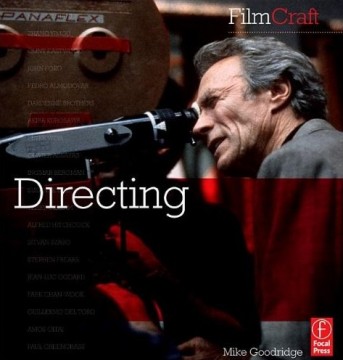
Oscar-nominated director Guillermo del Toro has been in the craft of filmmaking since he was 16, filling roles as diverse as P.A., assistant director and makeup effects. He made his first film Cronos at 28 and received his Academy Award-nomination in 2007 for Pan’s Labyrinth , making him one of the most prominent filmmakers to emerge from his native Mexico. In a candid interview, he explains how he learned filmmaking in author Mike Goodridge’s new book, FilmCraft: Directing . Goodridge, who until recently served as editor of Screen International and is now CEO of the international sales and financing company Protagonist Pictures wrote the book which features in-depth interviews with 16 of the world’s celebrated and respected film directors including Del Toro, Clint Eastwood ( Million Dollar Baby ) Paul Greengrass ( The Bourne Supremacy ), Peter Weir ( The Truman Show ), Terry Gilliam ( Brazil ) and Park Chan-wook ( Oldboy ). These and other filmmakers share their insights and experiences on development, storytelling/writing, working with actors and cinematographers, as well as other areas necessary to completing a successful film. In this excerpt from the book, which will be available via Amazon beginning June 15th, Guillermo del Toro gives his take on the mistakes and triumphs of his first movie as well as the first movie of other filmmaking greats, a life lesson courtesy of John Lennon, Tom Cruise’s take on filmmaking, what made him cry during his first movie, making ‘everything’ theatrical and why having “enough money” will get you, err… screwed. Director Guillermo Del Toro excerpt from FilmCraft: Directing : I came from the provinces, from Guadalajara, which is the second largest city in Mexico and nobody makes movies there. When I was a teenager, I started building relationships in Mexico City and I started as a blue-collar member of the crew. I was either a boom guy or a PA or an assistant director. I was makeup effects. I did my floor time in both TV and movies. My first professional work on a movie was at the age of 16 and I made Cronos when I was 28, so I had twelve solid years of doing just about everything in between. If somebody needed something, I would do it. I even did illegal stunt driving. But what happened is that I learned a little bit of everything and, once you put your time into exploring everything, you get to know what every piece of grip equipment is called and how many you need, and how to do post — I edited my own movies and did the post sound effects on all of them. So to some extent, directing came naturally to me from my first movie. My first movie Cronos is not in any way a perfect movie, but it’s a movie full of conviction. When you make your first movie, whatever mistakes you make are very glaring, but if you have conviction, and I would even say cinematic faith, this also shines through. I recently watched Cronos again and I thought, “I like this kid,” he has possibilities. After your first movie, with a little bit of craft, diligence, and more importantly, experience, you learn to make virtues out of some of your defects. What I mean is that any first movie has good moments, even if it is not entirely perfect. It can be a filmmaker as famous as you like, such as Stanley Kubrick, whose first film F ear and Desire (1953) is about 70 minutes long and stars Paul Mazursky. It is very stilted, very awkwardly paced, full of stuff that doesn’t work, the actors speak in a patois, and it has a very non-naturalistic rhythm. But what is incredibly fascinating is that the very stilted quality, that artificial rhythm, eventually became his trademark in later films. He bypasses it in more naturalistic films like The Killing (1956) and Paths of Glory (1957), but comes back to that type of hyperrealism or strange filtered reality in his later movies, and he is in complete control of it there. Kubrick used the tools he acquired in making other films to transform what you thought was a defect in Fear and Desire into a virtue. In my case, when I make movies in Spanish, starting with Cronos , I purposefully avoid characterizing certain things in the conventional Hollywood sense, and that comes out as a blatant defect. Specifically, I had shot a much longer film, including a whole section between the husband and wife where she noticed that he is getting younger and they start falling in love again. At night, he would come and sleep underneath her bed. But I couldn’t make it work. The way I staged it was simply too stilted and strange, and I didn’t feel comfortable leaving it as part of the movie. Even to this day, I think there is a mix of different tones in that movie. I change from the dramatic to the comedic too often. I try to do it generically, mixing horror with melodrama, and there are moments in Cronos that are really jarring for me. I sometimes allowed Ron Perlman to be too broad and it simply didn’t work. I think I did it better in my later movies. I don’t know whether that mix of genres is my trademark. One of the things that was very influential for me when I was kid was the book by Tolkien in which he discussed fairy stories in literature. I remember him saying in that book that you should make the story recognizable enough to be rooted in reality, but outlandish enough to be a flight of fancy. So I try to mix an almost prosaic approach, or at least a rigid historical context, with fantastic elements. I treat the fantasy characters very naturalistically or else I root the story in a precise context like The Devil’s Backbone or Pan’s Labyrinth , or in Cronos , post-NAFTA Mexico. As Tolkien says, when you give the audience a taste of what they can recognize, they immediately accept the rest of the concoction; it’s almost like wrapping a pill in bacon for a dog to swallow it. You need, for example, the bacon of domesticity in Cronos . I wanted to shoot that family as a very middle-class family in Mexico. I wanted a kitchen that looked like a kitchen you’d recognize, a really ordinary bedroom and very mild, neat clothing design. Out of that middle-class reality, I wanted a single anomaly — the mechanical clockwork scarab device. If the audience believes that this abnormality is as real as it can be, they will respond to the story. Many directors think that the more you keep the creature in the shadows and don’t show it, the better it is, but I don’t believe that. I don’t have monsters in my movies, I have characters, so I shoot the monsters as characters. For example, in Hellboy , I shot Abe Sapien, the fish-man, like any other actor. I didn’t fuss about it, I shot the monster with the same conviction that I would shoot Cary Grant or Brad Pitt; in other words, if I shot it in a different way than I would the regular actors, I would be making a mistake. What I do in every movie very consciously is to ensure that this anomaly is shot two notches above actual reality, so it’s weird enough to accommodate the monster, but not too stylistic that it’s unrecognizable. For example, everything you see in Pan’s Labyrinth — the house, the furniture — is fabricated to be slightly more theatrical than it needed to be. The uniforms for the captain and his guards are exactly what were worn at the time, but we tweaked the cut and the collar to make them more theatrical. Everything around the creatures, therefore, exists like a terrarium for them to live in so that when it comes to shoot them, I can shoot them in a normal way. I was very nervous on Cronos , but the adrenaline carried me through. Directing is almost like keeping four balls in the air on a monocycle with a train approaching behind you. There were days, for example, like the scene with the husband sleeping under the bed, where I knew I’d fucked up. The makeup was wrong and we didn’t have time to go back and change it, we didn’t even have time to test it. The light was wrong. Everything was wrong, and I arrived home to my wife that night and cried. I said that I had destroyed the scene I had dreamt of for years. I didn’t have the luxury of reshoots. Of course, you can only break down in front of your wife, or your partner, or your parents. In front of the staff on the film, you need to keep total control. You don’t want anyone thinking the general is afraid—you have to be leading the charge. There are two very lonely positions on a movie set: the actor and the director. The cinematographer has a close liaison with the director, the gaffer, the grip, etc. The director is alone on one end of the lens and the actor is alone on the other. That’s why the great, most satisfying partnerships on set are when a director and actor come to love and support each other. Being from Mexico is an enormous part of who I am as a filmmaker. The panache, the sense of melodrama, and the madness I have in my movies that allows me to mix historical events with fictional creatures, all comes from an almost surreal Mexican sensibility. I’m really prone to melodrama. This comes from watching Mexican melodrama obsessively, to the point where I was watching The Devil’s Backbone with a Spanish architect and the architect said to me that it was more Mexico than Spain; the characters were acting like Latin characters. If my father hadn’t been kidnapped in 1998 then frankly I would be making Mexican movies interspersed with the European and American. Since 1998, I cannot go back to Mexico because I would be too visible a target, especially when there is a printed schedule of where I am going to be every day for the entire run of a shoot. I think of the audience every second during writing; I think of them as me. I question how I would understand something, or what would make me feel a certain way. When I’m shooting a scene that moves the characters, I weep, I feel the emotion on set, so when I am writing it, if it doesn’t work, I don’t print it out until I have that feeling. Creating tension is a different skill to creating fear. For fear, you try to create atmosphere. You ensure the scene is alive visually before anything is added, then you craft the silence very carefully because silence often equals fear. Rarely can you elicit fear with music unless the music is used very discreetly, underlining the scene in a way that is almost invisible. When the Pale Man appears in Pan’s Labyrinth there is music, but Javier [Navarrete, the film’s composer] is almost just underlining his movements. It becomes like a sound effect. Silence is one of the things that you learn to craft the most because there is never real silence in a movie; you always have distant wind, cars, dogs barking, or crickets in the distance. I think really well-crafted silence creates tension, and by the same token an empty frame, an empty corridor for example — if it’s empty in the right, creepy way — is a tool. You know if a scene’s not working on set, and as you get older and craftier, you can learn to re-direct it in post. You can patch it up in your coverage and recover it—you can even end up with a great scene because beauty rarely comes out of perfection. For something to work, I think it has to come out of emotional turmoil. You can’t encapsulate the perfect melody; a huge component of it is instinctive. Then, of course, there are the actors. Many times you storyboard and rehearse with the actor, and then you come to the scene and it’s not working. But then you try something different and something suddenly happens that makes it work. It’s very raw. It’s funny, we enthrone this idea of the perfect filmmaker, this myth of the all controlling, all-seeing, all-encompassing person, but even for Kubrick or von Stroheim there is a part of the process that is entirely instinctive. I once asked Tom Cruise about it and he confirmed that Kubrick often found things in a panic on Eyes Wide Shut (1999). I love imperfection. I have been friends with James Cameron since 1992 and because he is so incredibly precise, people sometimes don’t think he is human, but the beauty of being a close friend is that I’ve seen him burn the midnight oil and toil and sweat. These imperfections in the façade are what make the work more admirable. Art depends on that human touch that doesn’t make perfection; in fact the filmmakers and films I am most attracted to require a level of human imperfection. On the big effects films, you try to prepare thoroughly but there are always surprises. John Lennon said, “Life is what happens when you are making other plans” and I think film is what happens when you are making other plans. You come onto the set and either the actor or the material doesn’t come out as you expect and the film comes out better for it. If you have either experience or inspiration, one of the two will get you through. One you accumulate through the years, the other you cherish. As a young filmmaker you’re full of inspiration and if you are unlucky you are only trading it in for experience. You need to remain on dangerous ground to continue to be inspired. I am always tackling things I shouldn’t tackle and meddling with stuff I shouldn’t meddle with. You never have enough money. If you ever feel one day you have enough money, that’s the day you’re fucked. FilmCraft: Directing is available via Amazon beginning June 15th. Follow Movieline on Twitter .

Excerpt from:
Book Excerpt: Guillermo Del Toro Dishes in FilmCraft: Directing
Book Excerpt: Guillermo Del Toro Dishes in FilmCraft: Directing

Oscar-nominated director Guillermo del Toro has been in the craft of filmmaking since he was 16, filling roles as diverse as P.A., assistant director and makeup effects. He made his first film Cronos at 28 and received his Academy Award-nomination in 2007 for Pan’s Labyrinth , making him one of the most prominent filmmakers to emerge from his native Mexico. In a candid interview, he explains how he learned filmmaking in author Mike Goodridge’s new book, FilmCraft: Directing . Goodridge, who until recently served as editor of Screen International and is now CEO of the international sales and financing company Protagonist Pictures wrote the book which features in-depth interviews with 16 of the world’s celebrated and respected film directors including Del Toro, Clint Eastwood ( Million Dollar Baby ) Paul Greengrass ( The Bourne Supremacy ), Peter Weir ( The Truman Show ), Terry Gilliam ( Brazil ) and Park Chan-wook ( Oldboy ). These and other filmmakers share their insights and experiences on development, storytelling/writing, working with actors and cinematographers, as well as other areas necessary to completing a successful film. In this excerpt from the book, which will be available via Amazon beginning June 15th, Guillermo del Toro gives his take on the mistakes and triumphs of his first movie as well as the first movie of other filmmaking greats, a life lesson courtesy of John Lennon, Tom Cruise’s take on filmmaking, what made him cry during his first movie, making ‘everything’ theatrical and why having “enough money” will get you, err… screwed. Director Guillermo Del Toro excerpt from FilmCraft: Directing : I came from the provinces, from Guadalajara, which is the second largest city in Mexico and nobody makes movies there. When I was a teenager, I started building relationships in Mexico City and I started as a blue-collar member of the crew. I was either a boom guy or a PA or an assistant director. I was makeup effects. I did my floor time in both TV and movies. My first professional work on a movie was at the age of 16 and I made Cronos when I was 28, so I had twelve solid years of doing just about everything in between. If somebody needed something, I would do it. I even did illegal stunt driving. But what happened is that I learned a little bit of everything and, once you put your time into exploring everything, you get to know what every piece of grip equipment is called and how many you need, and how to do post — I edited my own movies and did the post sound effects on all of them. So to some extent, directing came naturally to me from my first movie. My first movie Cronos is not in any way a perfect movie, but it’s a movie full of conviction. When you make your first movie, whatever mistakes you make are very glaring, but if you have conviction, and I would even say cinematic faith, this also shines through. I recently watched Cronos again and I thought, “I like this kid,” he has possibilities. After your first movie, with a little bit of craft, diligence, and more importantly, experience, you learn to make virtues out of some of your defects. What I mean is that any first movie has good moments, even if it is not entirely perfect. It can be a filmmaker as famous as you like, such as Stanley Kubrick, whose first film F ear and Desire (1953) is about 70 minutes long and stars Paul Mazursky. It is very stilted, very awkwardly paced, full of stuff that doesn’t work, the actors speak in a patois, and it has a very non-naturalistic rhythm. But what is incredibly fascinating is that the very stilted quality, that artificial rhythm, eventually became his trademark in later films. He bypasses it in more naturalistic films like The Killing (1956) and Paths of Glory (1957), but comes back to that type of hyperrealism or strange filtered reality in his later movies, and he is in complete control of it there. Kubrick used the tools he acquired in making other films to transform what you thought was a defect in Fear and Desire into a virtue. In my case, when I make movies in Spanish, starting with Cronos , I purposefully avoid characterizing certain things in the conventional Hollywood sense, and that comes out as a blatant defect. Specifically, I had shot a much longer film, including a whole section between the husband and wife where she noticed that he is getting younger and they start falling in love again. At night, he would come and sleep underneath her bed. But I couldn’t make it work. The way I staged it was simply too stilted and strange, and I didn’t feel comfortable leaving it as part of the movie. Even to this day, I think there is a mix of different tones in that movie. I change from the dramatic to the comedic too often. I try to do it generically, mixing horror with melodrama, and there are moments in Cronos that are really jarring for me. I sometimes allowed Ron Perlman to be too broad and it simply didn’t work. I think I did it better in my later movies. I don’t know whether that mix of genres is my trademark. One of the things that was very influential for me when I was kid was the book by Tolkien in which he discussed fairy stories in literature. I remember him saying in that book that you should make the story recognizable enough to be rooted in reality, but outlandish enough to be a flight of fancy. So I try to mix an almost prosaic approach, or at least a rigid historical context, with fantastic elements. I treat the fantasy characters very naturalistically or else I root the story in a precise context like The Devil’s Backbone or Pan’s Labyrinth , or in Cronos , post-NAFTA Mexico. As Tolkien says, when you give the audience a taste of what they can recognize, they immediately accept the rest of the concoction; it’s almost like wrapping a pill in bacon for a dog to swallow it. You need, for example, the bacon of domesticity in Cronos . I wanted to shoot that family as a very middle-class family in Mexico. I wanted a kitchen that looked like a kitchen you’d recognize, a really ordinary bedroom and very mild, neat clothing design. Out of that middle-class reality, I wanted a single anomaly — the mechanical clockwork scarab device. If the audience believes that this abnormality is as real as it can be, they will respond to the story. Many directors think that the more you keep the creature in the shadows and don’t show it, the better it is, but I don’t believe that. I don’t have monsters in my movies, I have characters, so I shoot the monsters as characters. For example, in Hellboy , I shot Abe Sapien, the fish-man, like any other actor. I didn’t fuss about it, I shot the monster with the same conviction that I would shoot Cary Grant or Brad Pitt; in other words, if I shot it in a different way than I would the regular actors, I would be making a mistake. What I do in every movie very consciously is to ensure that this anomaly is shot two notches above actual reality, so it’s weird enough to accommodate the monster, but not too stylistic that it’s unrecognizable. For example, everything you see in Pan’s Labyrinth — the house, the furniture — is fabricated to be slightly more theatrical than it needed to be. The uniforms for the captain and his guards are exactly what were worn at the time, but we tweaked the cut and the collar to make them more theatrical. Everything around the creatures, therefore, exists like a terrarium for them to live in so that when it comes to shoot them, I can shoot them in a normal way. I was very nervous on Cronos , but the adrenaline carried me through. Directing is almost like keeping four balls in the air on a monocycle with a train approaching behind you. There were days, for example, like the scene with the husband sleeping under the bed, where I knew I’d fucked up. The makeup was wrong and we didn’t have time to go back and change it, we didn’t even have time to test it. The light was wrong. Everything was wrong, and I arrived home to my wife that night and cried. I said that I had destroyed the scene I had dreamt of for years. I didn’t have the luxury of reshoots. Of course, you can only break down in front of your wife, or your partner, or your parents. In front of the staff on the film, you need to keep total control. You don’t want anyone thinking the general is afraid—you have to be leading the charge. There are two very lonely positions on a movie set: the actor and the director. The cinematographer has a close liaison with the director, the gaffer, the grip, etc. The director is alone on one end of the lens and the actor is alone on the other. That’s why the great, most satisfying partnerships on set are when a director and actor come to love and support each other. Being from Mexico is an enormous part of who I am as a filmmaker. The panache, the sense of melodrama, and the madness I have in my movies that allows me to mix historical events with fictional creatures, all comes from an almost surreal Mexican sensibility. I’m really prone to melodrama. This comes from watching Mexican melodrama obsessively, to the point where I was watching The Devil’s Backbone with a Spanish architect and the architect said to me that it was more Mexico than Spain; the characters were acting like Latin characters. If my father hadn’t been kidnapped in 1998 then frankly I would be making Mexican movies interspersed with the European and American. Since 1998, I cannot go back to Mexico because I would be too visible a target, especially when there is a printed schedule of where I am going to be every day for the entire run of a shoot. I think of the audience every second during writing; I think of them as me. I question how I would understand something, or what would make me feel a certain way. When I’m shooting a scene that moves the characters, I weep, I feel the emotion on set, so when I am writing it, if it doesn’t work, I don’t print it out until I have that feeling. Creating tension is a different skill to creating fear. For fear, you try to create atmosphere. You ensure the scene is alive visually before anything is added, then you craft the silence very carefully because silence often equals fear. Rarely can you elicit fear with music unless the music is used very discreetly, underlining the scene in a way that is almost invisible. When the Pale Man appears in Pan’s Labyrinth there is music, but Javier [Navarrete, the film’s composer] is almost just underlining his movements. It becomes like a sound effect. Silence is one of the things that you learn to craft the most because there is never real silence in a movie; you always have distant wind, cars, dogs barking, or crickets in the distance. I think really well-crafted silence creates tension, and by the same token an empty frame, an empty corridor for example — if it’s empty in the right, creepy way — is a tool. You know if a scene’s not working on set, and as you get older and craftier, you can learn to re-direct it in post. You can patch it up in your coverage and recover it—you can even end up with a great scene because beauty rarely comes out of perfection. For something to work, I think it has to come out of emotional turmoil. You can’t encapsulate the perfect melody; a huge component of it is instinctive. Then, of course, there are the actors. Many times you storyboard and rehearse with the actor, and then you come to the scene and it’s not working. But then you try something different and something suddenly happens that makes it work. It’s very raw. It’s funny, we enthrone this idea of the perfect filmmaker, this myth of the all controlling, all-seeing, all-encompassing person, but even for Kubrick or von Stroheim there is a part of the process that is entirely instinctive. I once asked Tom Cruise about it and he confirmed that Kubrick often found things in a panic on Eyes Wide Shut (1999). I love imperfection. I have been friends with James Cameron since 1992 and because he is so incredibly precise, people sometimes don’t think he is human, but the beauty of being a close friend is that I’ve seen him burn the midnight oil and toil and sweat. These imperfections in the façade are what make the work more admirable. Art depends on that human touch that doesn’t make perfection; in fact the filmmakers and films I am most attracted to require a level of human imperfection. On the big effects films, you try to prepare thoroughly but there are always surprises. John Lennon said, “Life is what happens when you are making other plans” and I think film is what happens when you are making other plans. You come onto the set and either the actor or the material doesn’t come out as you expect and the film comes out better for it. If you have either experience or inspiration, one of the two will get you through. One you accumulate through the years, the other you cherish. As a young filmmaker you’re full of inspiration and if you are unlucky you are only trading it in for experience. You need to remain on dangerous ground to continue to be inspired. I am always tackling things I shouldn’t tackle and meddling with stuff I shouldn’t meddle with. You never have enough money. If you ever feel one day you have enough money, that’s the day you’re fucked. FilmCraft: Directing is available via Amazon beginning June 15th. Follow Movieline on Twitter .

Read the original post:
Book Excerpt: Guillermo Del Toro Dishes in FilmCraft: Directing
Kim Kardashian and Kanye West to Elope?!?

According to the latest tabloid report, Kim Kardashian is gearing up to steal the wedding spotlight from Miley Cyrus and Liam Hemsworth . Life & Style reports the reality star and her rapping new man are making “SECRET PLANS TO ELOPE,” with Kanye West pressuring Kim to finalize her divorce from Kris Humphries so they can become husband and wife. “Kanye wants to marry Kim, and he’s telling her to expedite the divorce so they can start their future,” a Kardashian insider tells the tabloid. “Kanye’s like, ‘Just do whatever you need to do to make it go away.'” We might find out more about what that entails in a couple weeks when Kim and Kris give depositions in their ongoing legal battle. For now, the public is left to wonder whether Kardashian and West really are serious about taking the next huge step, with this source claiming the former is “starting to come around to Kanye’s way of thinking” about marriage: “As things get more and more intense and comfortable, both Kim and Kanye hate being apart. And as they grow closer, Kanye’s desire to marry Kim – and hers to be married to him – keeps getting stronger.” Do you think these two should get hitched?

Read the original:
Kim Kardashian and Kanye West to Elope?!?

Bam Margera Hospitalized After 100-Foot Kayak Jump

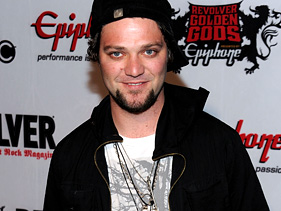
‘Jackass’ alum tweets a picture of himself from a hospital bed after hernia operation. By Terri Schwartz Bam Margera Photo: Frazer Harrison/ Getty Images Bam Margera is a daredevil on and offscreen. The “Jackass” alum took a 100-foot tandem kayak jump off a waterfall in Oregon with pro kayaker Steve Fisher Wednesday and lived to tell the tale. However, he did have to undergo a hernia operation Thursday as a result. Margera tweeted a picture from his hospital bed showing him a bit out of it and hooked up to medical machines but still giving a thumbs-up to show that he’s all right. Though he was originally supposed to appear at an art show in Pennsylvania on Friday night (June 1), the 32-year-old had to cancel his plans, tweeting , “Can’t make it to the show tonight, in hospital still. Phil, Ape & Boof will be there. Stop by if your in WC.” It’s unclear if Fisher was also injured in the fall, but we would guess that Margera would reference it if that was the case. Fisher also has a Twitter but hasn’t used it in years. This isn’t the first time Margera’s stunts have gotten him in trouble. Back in February, he was arrested after jumping into a pool fully clothed during Mardi Gras in New Orleans and refusing to get out. He ended up not getting a ticket because, according to him, the police didn’t know what to charge him with. “I was just swimming in a pool with all my clothes on, and I refused to get out,” he told E! Online . “No ticket. They just wanted to f— with me, drunk Mardi Gras nonsense.”

Read the original here:
Bam Margera Hospitalized After 100-Foot Kayak Jump

J. Cole & Kendrick Lamar In The Studio Recording Music [PHOTOS]

Never say J. Cole is not a man of his word. The Roc Nation rapper recently confirmed his plans to record an album with Kendrick Lamar, and now photos have appeared that further reveal it is definitely going down. Click Here To Peep The Photos On HipHopWired.com

See the original post here:
J. Cole & Kendrick Lamar In The Studio Recording Music [PHOTOS]

Exclusive: Drake Has A ‘Good’ Feeling About Justin Bieber Collabo

Toronto MC talks up the Believe track ‘Right Here’ and details his plans to hit the studio after his Club Paradise Tour. By Rob Markman, with reporting by Sway Calloway Drake Photo: MTV News Drake has a jam-packed schedule taking his Club Paradise Tour city to city, but the Toronto rap star still manages to find time to record, especially since he has a studio on his tour bus. Right after Club Paradise’s last show in Boston, Massachusetts, Drizzy will begin recording new music, possibly for his next album. “I’m really excited to start working on new music. I start like June 18,” Drake told MTV News correspondent Sway Calloway when the two met backstage in Houston on May 17. “I got a studio bus out here so me and 40 started working on a couple joints the other night. Just getting warmed up,” he continued. “I did like the ‘Amen’ track for Meek [Mill] and I did ‘No Lie’ for 2Chainz.” Fans have already raved over Drizzy’s performance on both “No Lie” and “Amen,” which appears on the Philadelphia MC’s recently released Dream Chasers 2 mixtape . Still, the Young Money star has a few more collaborations that fans will hear in the coming weeks, one of them being French Montana’s “Pop That.” “I’m on French Montana’s single; me, him, Ross and Wayne, which is a crazy lineup,” Drake said. “And then on Justin Bieber ‘s record. I wrote a song for him as well.” At the time of the interview, Drake wasn’t sure of the name of the Bieber record or if the song would even be included on Justin’s upcoming Believe LP. “Awkward Justin Bieber moment,” Drizzy joked after pondering the very slim chance that he wouldn’t make the final cut. “Yeah, we’ll see. It’s a good song though; produced by Hit-Boy.” Well, Drake doesn’t have to worry. On Monday, the Biebs unveiled his Believe track list , and his fellow Canadian does appear on the song “Right Here.” We have no reason to doubt Drake’s word about “Right Here,” but we’ll all will just have to wait until June 19 when Believe is released to finally hear it. Are you excited to hear Justin and Drake’s “Right Here”? Tell us in the comments Related Videos Drake Brings His Club Paradise Tour To Houston Related Artists Drake Justin Bieber

See the original post here:
Exclusive: Drake Has A ‘Good’ Feeling About Justin Bieber Collabo

Future And Pusha T’s Pluto Tour ‘A Mix Of Everything’

Pusha tells MTV News his tourmate Future is ‘in the underbelly of the street and the ‘hood, with a following.’ By Nadeska Alexis, with reporting by Rahman Dukes Pusha T Photo: Daniel Boczarski/ WireImage Pusha T is gearing up to drop his debut solo album later this year, but the G.O.O.D. Music signee will head out on tour with Atlanta rapper Future before that rolls around. Pusha embarks on the Pluto Tour beginning May 29, and he’s looking forward to it. “To me, it’s gonna be reminiscent of when I went out on my first album-promo tour,” Pusha told MTV News while taking a break from recording his album in Atlanta this past weekend. “I’m going out with Future, and right now, he’s in the underbelly of the street and the ‘hood, with a following. “It’s grown to the point where we can do House of Blues shows all across the country,” he added. “So, it’s gonna be a mix of everything in the show.” Pusha, who released four albums with his brother Malice as part of the Clipse , is looking forward to dropping his first solo project, and is still surprised that the opportunity has already arrived. “It was something that was in the plans once we went through the label drams,” he said, referencing the Clipse’s very public falling out with Jive Records. “But at the end of the day, I never thought it would just be myself.” Malice, who took a break from recording music to publish his memoir “Wretched, Pitiful, Poor, Blind and Naked,” has no plans to drop an album soon. “We went through the drama, did the Re-Up Gang mixtape series, and from that point, we were like, ‘Man, we really need to expand the brand as much as possible,’ ” Pusha explained. “That means I’ve gotta do a solo project, [Malice] is gonna do one — it was always about expanding the brand, but I didn’t know it would happen so quickly.” Upcoming dates for the Pluto Tour, featuring Future and Pusha T:

Some Matrimony-dom Chitchatter: John Legend’s Bangin Beard Bride To Be Talks About How Wedding Planning Is Taking So Long She Hopes She Doesn’t Hate Him By The Time They Get Hitched!

We hope not either, cuz where is he gonna get some Grade A cous like hers if she leaves him? Chrissy Teigen Talks About Wedding Plans With John Legend Opening up to Us Weekly at Project Sunshine’s Benefit in NYC Tuesday night, the swimsuit model–who got engaged to love of five years John Legend during a Maldives getaway over the holidays–said she isn’t willing to let wedding planning take over her life. In fact, “I feel like the anti-bride, because I watch all those shows and I hate them,” she told Us. “I go out of my way to try not to be too annoying . . . my biggest goal in life is to not be annoying about being a bride.” Teigen, 26, says she’d rather focus on the fun stuff: food and fashion, stressing that her big day will be very “food-oriented”–and will involved multiple costume changes. “I love dress shopping and I love talking about the wedding food. That’s what makes me happy,” Teigen revealed. “If you tell me to do a guest list, I cry. I hate it.” The 5-foot-8 beauty says she also didn’t waste any time picking out her first dress for her nuptials–a “simple” but “stunning” Monique Lhuillier gown. “I had been looking at online for so long . . . since the day I got engaged,” Teigen shared. “It’s so beautiful. I loved it. That was my excuse for having not waited. I don’t know what part [of the wedding] it will be worn for, but it will be worn and I’m very excited.” Teigen might not have wasted any time settling on a dress, but in general, she says she and Legend, 33, aren’t stressed about when they’ll make it official. “We’re going to take our time with [the rest of the planning],” Teigen told Us. “We’ve been together for so long.” Joked the model, “Hopefully I won’t hate him by then!” These two have been together forever and hopefully the marriage will be even happier than the wedding planning! Source

Read more from the original source:
Some Matrimony-dom Chitchatter: John Legend’s Bangin Beard Bride To Be Talks About How Wedding Planning Is Taking So Long She Hopes She Doesn’t Hate Him By The Time They Get Hitched!

Lil Wayne Explains How Failed Juelz Santana Collabo Became Human Being II

‘ I Can’t Feel My Face has now turned into I Am Not a Human Being, ‘ Wayne confirms to ‘Hip Hop POV.’ By Rob Markman Lil Wayne Photo: Hutton Supancic/ Getty Images It seems like we’ve been talking about a Lil Wayne / Juelz Santana collabo album forever. But when the much-ballyhooed I Can’t Feel My Face will actually drop is anyone’s guess. While Weezy’s 2010 jail stint definitely postponed the project, now Tunechi says when he got home, he reached out to his Dipset buddy to finally put their plans in motion. “I actually got at Elz when I got out and told him, ‘Man, I think it’s time we really capitalize on that,’ ” Wayne recalled to Amanda Seales of MTV’s “Hip Hop POV” in an outtake from last week’s episode. It’s more than six years in the making, but for a time, I Can’t Feel My Face was one of rap’s most-anticipated projects. Now that Weezy has put his legal troubles behind him, it’s Santana who’s facing drama after his New Jersey recording studio was raided in January 2011. “He can’t work how he wants to work because they shut down his studio,” Wayne explained. “I sent him some music and he didn’t send them back in the time-fashion that I work.” Never one to remain idle, Tunechi took the songs that he had set aside for the joint album and repurposed them for his upcoming I Am Not a Human Being II solo LP. “I started putting extra verses on those songs and I’ve moved on,” he confirmed. “Now what probably would’ve been I Can’t Feel My Face, has now turned into I Am Not a Human Being. ” During a June 2011 interview on “RapFix Live,” Juelz gave his own reasoning for the delay. “It wasn’t no one reason it didn’t happen. Me and Wayne always was on the same page, musically, as far as friendship-wise,” he said. “I’m just happy we didn’t let that get in the way of us being cool, being able to do things in the future; we ain’t let it get to us.” Would you still like to see a Wayne/Juelz collaboration album? Tell us in the comments! Related Videos Hip Hop POV | Bonus Lil Wayne Interview Related Artists Lil Wayne Juelz Santana

Continue reading here:
Lil Wayne Explains How Failed Juelz Santana Collabo Became Human Being II

Kentucky Fans Flip Cars and Set Couches Ablaze After Final Four Win

http://www.youtube.com/v/Z0IhvEGrZ5s

Read more:

Kentucky fans overturned cars and set couches on fire after Saturday's victory over Louisville in the NCAA Final Four semifinal college basketball tournament. (AP Photo/The Courier-Journal, Amy Wallot)

LOUISVILLE, Ky. (AP) — Riot police used pepper spray in small amounts for crowd control as thousands of rowdy fans… Broadcasting platform : YouTube Source : The Blaze Discovery Date : 01/04/2012 05:42 Number of articles : 2

Kentucky Fans Flip Cars and Set Couches Ablaze After Final Four Win