Tag Archives: plans

Frustrated Locals Not Waiting for Official "OK" to Try to Stop Oil and Save Oiled Animals and Birds

PART ONE… http://www.cnn.com/2010/US/06/21/oil.spill.okaloosa.county/index.html?hpt=C1 By Jamie Gumbrecht, CNN June 21 2010 4:30pm EDT Photo: Stephanie Neumann holds a Northern Gannet Okaloosa Island, Florida – Vacationers were the first to notice the bird fumbling in the water near this popular tourist beach last week. He bobbed and swayed differently than other birds, and didn't react when humans came dangerously close. Once he was ashore, they could see why: a light sheen of oil covered his feathers. Animal health technician Stephanie Neumann tried to rescue the Northern Gannet, but beach safety officers stopped her. Her coworkers at the Emerald Coast Wildlife Refuge already had stabilized birds and a sea turtle affected by the Gulf oil disaster, but officials wanted to know: Did she have a contract with BP? Could she – and the bird – wait while they verified her organization's status? “They're trying to do their job,” Neumann said as she crouched over the motionless bird, wrapped in a white sheet and barely hidden from the stares of kids and parents. “They have to make sure protocol is followed.” When brown clumps of tar began to wash up on the snow-white beaches around Destin last week, the mood in this sunny beach community shifted from optimistic denial to furious worry. Local ideas about how to protect the area clashed with plans from BP, state and federal agencies. Community volunteers struggling to cut through protocol cheered a decision by Okaloosa County to defy BP and the feds. They were done waiting. They'd use their own plans. “This is ridiculous. We'll take the heat. We would do whatever it took to stop the oil,” said the county commission chairman, Wayne Harris. After months of wrangling with agencies responding to the spill, Harris wasn't willing to stake the county's ecology and economy only on boom that captures or absorbs oil. The commission authorized emergency management teams to add skimmers, barges and extra boom, and an air wall they hope will push the oil away. They plan to layer prevention measures in the pass that connects the Gulf to Choctawhatchee Bay, where fresh and salt water mix and dolphins play. Harris said the plan could cost up to $6 million per month, which he hopes will be covered by money from BP. The county developed its oil plan in the days after the disaster began to unfold, but it was plagued by miscommunications, disagreements and bureaucracy once it left local hands, Harris said. Communities along the Gulf Coast have made similar complaints. Mayors grilled a BP official about the response during a press conference earlier this month. In Magnolia Springs, Alabama, locals went outside the federal plan and risked incarceration by adding boom and barges to protect Weeks Bay. In Pointe Aux Chenes, Louisiana, Native Americans pitched in to string boom near an island where many of their ancestors are buried. Harris said some of his county's efforts may work; others may not. “Doing something is better than doing nothing,” he said. On the Okaloosa Island beach, local response to the oiled Gannet was quicker, but the federal response had less red tape to work through. U.S. Fish and Wildlife workers arrived before Neumann's status was verified, so she left their bird in their care. “Time is essential with these guys,” she said. “Every minute counts.” For the rest of Okaloosa County, more boom and barges were starting to appear in the water. The county commission vote was “smart,” and sped up the state and federal response, said public safety director Dino Villani, who was quickly invited to an “olive branch” meeting in Mobile. Most of the county's preferred plans are moving forward, Villani said, and they'll continue to adapt as the oil moves throughout their waters. Harris said the plans would have gone forward even without approval from BP or other government agencies. “I'm sure they're cussing. I'm sure they're cussing us bad,” Harris said. “If we had waited, we'd still be waiting. Why did it take us giving an ultimatum?” Charles Diorio, a Coast Guard commander in Mobile, said some communities decided to implement their own plans once they saw they didn't top the list of state and federal priorities, if they were on the list at all. Some just wanted to act before the mess – and response agencies' attention – began to move their way. Now that oil is reaching Florida's shores, resources are shifting there, Diorio said, and there's a plan to meet with Okaloosa commissioners this week. “Now is the time to make sure these relationships are still working and strong and the lines of communication are open,” he said. CONTINUED… added by: EthicalVegan
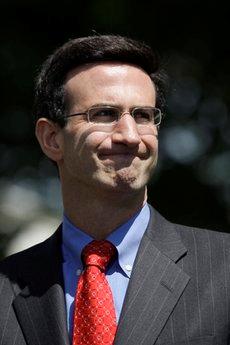
Budget Chief Peter Orszag leaving

Office of Management and Budget Director Peter Orszag at the Center for American Progress June 8, 2010 in Washington, DC. Orszag is leaving the administration, the Washington Post reported citing a Democrat familiar with his plans, marking the first departure from President Barack Obama#39;s cabinet. White House budget director Peter Orszag is leaving the administration, the Washington Post reported late Monday citing a Democrat familiar with his plans, marking the first departure from Presiden

Visit link:
Budget Chief Peter Orszag leaving

Ladies’ Day at Ascot

Extraordinary hats abound at Ascot Ladies’ Day 2010, from Lego bricks to two plump pheasants

See more here:
Ladies’ Day at Ascot

Government cuts hit 2012 Olympic legacy as free swimming is axed

• Under-16s and over-60s no longer get free time in the pool • ‘This has become a luxury we can no longer afford’ Free swimming for children and pensioners is to be scrapped as part of cost-saving measures. The scheme for the under-16s and over-60s was launched by the Labour government two years ago amid much fanfare as a London 2012 Olympic legacy initiative. But the Sports and Olympics minister, Hugh Robertson, said that the scheme was “a luxury” that could no longer be afforded and has been axed as part of £73m savings made by the Department for Culture, Media and Sport. “This is not a decision that gives me any pleasure,” Robertson said. “However, the research shows that the great majority of free swimmers were swimming already, and would have paid to swim anyway. With a crippling deficit to tackle and tough decisions to take, this has become a luxury we can no longer afford.” Labour launched the scheme in 2008 as part of a bid to get more people involved in sport by 2012 and claimed their aim was to get England’s swimming pools free to use by the time of the London 2012 Games. Robertson said new research showed the scheme has not delivered value for money nor significantly increased physical activity. He added: “Delivering a legacy from 2012 is one of my top priorities. I want people of all ages and abilities to have opportunities to take part in all kinds of sport, and under our plans to reform the Lottery shares we should see an extra £50m a year going on sports facilities by 2012. “Our plans to deliver a community sports legacy, in partnership with Sport England, are progressing well and we expect to make a full announcement in July.” Other non-sport DCMS projects being cancelled include the planned Stonehenge Visitor Centre and the British Film Institute (BFI) Film Centre. Olympic games 2012 guardian.co.uk

More:
Government cuts hit 2012 Olympic legacy as free swimming is axed

Architect Builds House Using 4.5 Million Boeing 747 Parts

Architect David Hertz is building Francie Rehwald the home of her dreams: an eco-friendly house on 55 acres in the remote hills of Malibu, California. Called the Wing House, the structure is being built using a commercial Boeing 747-200. We first reported the plans for the house back in 2005. But the structure requires FAA approval as to not be mistaken for a crash site. digg_url = ‘http://www.treehugger.com/files/2010/06/architect_builds_house_using_45_million… Read the full story on TreeHugger

Read the original:
Architect Builds House Using 4.5 Million Boeing 747 Parts

Robert Pattinson Won’t Let ‘Fear’ Influence His Career Choices

‘Eclipse’ star says, for him, wanting to play a part is the key to doing it well. By Eric Ditzian, with reporting by Josh Horowitz Robert Pattinson Photo: MTV News Robert Pattinson has not shied away from admitting how close he came to quitting show business, fed up with endless auditions and persistent unemployment. “Literally the day before I auditioned [for ‘Twilight’], I was going to quit acting ’cause I never got any jobs,” Pattinson said last fall. “So I guess that’s not really quitting, when you’re not really getting any jobs. It’s just surrendering to fate.” Fate, so it seemed, had other plans for the British heartthrob, who went on not only to become the smoldering vampire at the center of the “Twilight” franchise but an executive producer on “Remember Me” and the upcoming co-star of A-listers like Uma Thurman and Reese Witherspoon. But the lessons of those early struggles continue to stay with Pattinson and inform his decision-making process to this day. “Professionally, as soon as you start thinking about the choices you’re making in terms of the future, in terms of your career, you start doing it out of fear,” he told MTV News. “If you’re doing it for your career, just choosing jobs because you want to have a job after that, you’re not actually choosing jobs because you want to do the job.” And actually wanting to do the job is of primary importance to Pattinson. It always has been, whether he was struggling to land auditions or had his pick of coveted parts. “Acting is one of the only jobs where the point is to try and at least attempt to doing something which you care about more than anything else and then that’s the only way it will be any good,” he said. What other roles do you want to see RPattz take on when “Twilight” is done? Share your ideas in the comments. Check out everything we’ve got on “The Twilight Saga: Eclipse.” For young Hollywood news, fashion and “Twilight” updates around the clock, visit HollywoodCrush.MTV.com . Related Videos ‘The Twilight Saga: Eclipse’ Clips MTV Rough Cut: Robert Pattinson Related Photos ‘The Twilight Saga: Eclipse’

See the original post:
Robert Pattinson Won’t Let ‘Fear’ Influence His Career Choices

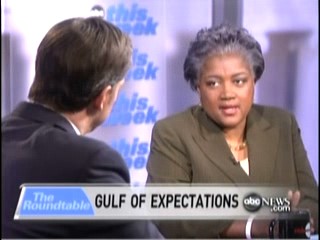
Donna Brazile Defends Obama By Badly Misrepresenting Oil Pollution Act, Gets No Challenge From ‘This Week’ Panel

Nothing ruins my Sunday more than a pundit defending his or her politician by completely misrepresenting a law and nobody on the program in question bothers to challenge the falsehood. Such happened on the recent installment of ABC’s “This Week” when Democrat strategist Donna Brazile said of President Obama’s pathetic response to the Gulf Coast oil spill, “The administration has been constrained by the Oil Pollution Act of 1990, which basically gives the responsible party the lead role in trying to not only fix the problem, but contain the problem.” Really? Well, why don’t we look at the Oil Pollution Act of 1990 and see if Brazile was right (video and transcript follow with details about this law and commentary):  ROBERT REICH: But the present spectacle of the Coast Guard asking BP to speed up this clean-up is absurd. I mean, the federal government needs to be in charge. The president needs to be in charge of this. Use BP’s expertise. Use BP’s resources. But the president must be in charge of all of this. Otherwise, he looks like he’s just standing on the sidelines. DONNA BRAZILE: Well, the administration has been constrained by the Oil Pollution Act of 1990, which basically gives the responsible party the lead role in trying to not only fix the problem, but contain the problem. That has been the problem from day one. They’ve waited for BP to come up with the answers, and we know that BP continues to mislead people. This is the Overview of the Act (emphasis added): The Oil Pollution Act (OPA) was signed into law in August 1990, largely in response to rising public concern following the Exxon Valdez incident. The OPA improved the nation’s ability to prevent and respond to oil spills by establishing provisions that expand the federal government’s ability , and provide the money and resources necessary, to respond to oil spills. The OPA also created the national Oil Spill Liability Trust Fund, which is available to provide up to one billion dollars per spill incident. In addition, the OPA provided new requirements for contingency planning both by government and industry. The National Oil and Hazardous Substances Pollution Contingency Plan (NCP) has been expanded in a three-tiered approach: the Federal government is required to direct all public and private response efforts for certain types of spill events ; Area Committees — composed of federal, state, and local government officials — must develop detailed, location-specific Area Contingency Plans; and owners or operators of vessels and certain facilities that pose a serious threat to the environment must prepare their own Facility Response Plans. Finally, the OPA increased penalties for regulatory noncompliance, broadened the response and enforcement authorities of the Federal government , and preserved State authority to establish law governing oil spill prevention and response. Now, let’s take a look at the expanded National Oil and Hazardous Substances Pollution Contingency Plan (NCP)  (emphasis added):  The OPA was enacted to strengthen the national response system. The OPA provides for better coordination of spill contingency planning among federal, state, and local authorities. The addition of the National Strike Force Coordination Center (NSFCC), for example, is expected to relieve equipment and personnel shortages that have interfered with response to oil spills posing particularly significant environmental or human health threats. Today’s rule revises the NCP to implement a strongly coordinated, multi-level national response strategy. The national response strategy, contained primarily in Subparts B and D of the NCP, provides the framework for notification, communication, logistics, and responsibility for response to discharges of oil, including worst case discharges and discharges that pose a substantial threat to the public health or welfare of the United States. The amended NCP further strengthens the OSC’s ability to coordinate the response on-scene and also incorporates a new OPA- mandated level of contingency planning–Area Committees and Area Contingency Plans (ACPs). These committees and plans are designed to improve coordination among the national, regional, and local planning levels and to enhance the availability of trained personnel, necessary equipment, and scientific support that may be needed to adequately address all discharges. The major revisions to the NCP being promulgated today reflect OPA revisions to CWA [Clean Water Act] section 311. These changes increase Presidential authority to direct cleanup of oil spills and hazardous substance releases and augment preparedness and planning activities on the part of the federal government, as well as vessel and facility owners and operators . For example, revised CWA section 311(c) requires the President to direct removal actions for discharges and substantial threats of discharges posing a substantial threat to the public health or welfare of the United States . Revised section 311(d) requires a number of specific changes to the NCP, including the establishment of “criteria and procedures to ensure immediate and effective Federal identification of, and response to, a discharge, or the threat of a discharge, that results in a substantial threat to the public health or welfare of the United States.”  Section 311(d) also mandates the establishment of procedures and standards for removing a worst case discharge of oil and for mitigating or preventing a substantial threat of such a discharge. As such, quite contrary to what Brazile stated Sunday, the Oil Pollution Act of 1990, along with its changes to the National Oil and Hazardous Substances Pollution Contingency Plan, significantly increased the President’s authority over oil spills. As this disaster is now over seven weeks old, surely “This Week” host Jake Tapper should have been aware of the pertinent provisions of this Act. Ditto Reich and George Will who also sat idly by as Brazile made this misrepresentation. With this in mind, why didn’t anyone challenge her on this? This question especially goes out to Will who in recent months has gone after Bill Maher  as well as  Brazile for misrepresenting the facts in his presence.  I guess George wasn’t in the mood for a fight today. Too bad, for it was easy pickings.  Of course, there’s a larger issue here, and why this really angers me when it happens. It’s not surprising that a pol or pundit stretches the truth. It happens almost every time these people open their mouths. However, when their misrepresentations go unchallenged, the viewer assumes the statement was accurate. This is why it’s so important for the host or moderator to be on top of things. Unfortunately, folks watching “This Week” on Sunday were given the wrong impression about this law and its relevance to what’s currently happening on the Gulf Coast. As such, the burden was on SOMEONE present to correct Brazile on this point. Sadly, that didn’t occur. What a shame. 

See more here:
Donna Brazile Defends Obama By Badly Misrepresenting Oil Pollution Act, Gets No Challenge From ‘This Week’ Panel

Leaked ObamaCare Docs Ignore Costs of the Law’s Mandates in ‘De-Grandfathering’ Estimates

On Friday, Investors Business Daily (IBD) reported on leaked government documents identifying what employer-provided health plans can and cannot do if they wish to retain their “grandfathered” status under the statist health care legislation commonly known as ObamaCare that became law on March 23. One of the items in the government document ( 83-page PDF ) is the following table, which estimates the percentages of large and small employers who will choose to “relinquish” (i.e., give up) their grandfathered status: In ironic timing, Walecia Konrad at the New York Times, in a personal finance column that appeared in the paper’s Saturday print edition and which was probably written shortly before IBD’s report, inadvertently revealed that ObamaCare itself may be a reason why employer “relinquishments” over the next three years come in well above the mid-range estimates in the table: As in years past, employers are also grappling with how to offset rising health care costs. Recent years have brought an average cost increase of about 9 percent, said Tracy Watts, a partner at Mercer Health and Benefits. In most cases, companies have been able to absorb about 6 percentage points of those cost increases a year, passing the rest onto employees. This year Ms. Watts estimates that changes made in response to the health law will add an extra 2 to 3 percent in cost increases , pressuring employers to engage in even more cost-sharing with employees — whether through higher premiums, co-payments or other out-of-pocket costs. (Senior vice president at Fidelity Consulting Services Pearce) Weaver also reports increased interest by employers in high-deductible insurance plans. “They’ve been effective in managing costs,” he said. The estimates tabulated above are based on a review of employer plan design changes made from 2008 to 2009. The government did not attempt to look at what might have happened if “an extra 2 to 3 percent” in ObamaCare-driven costs had been piled into the mix. Facing a higher mandated cost structure even beyond increases in the cost of health care services, many employers will find themselves unable to redesign their plans within ObamaCare’s tight grandfathering constraints while remaining competitive (or possibly viable), and will choose to relinquish, i.e., “de-grandfather.” The government’s document says that a de-grandfathered employer has two choices: “Significantly change the terms of the plan or coverage and comply with Affordable Care Act provisions from which grandfathered health plans are excepted; or in the case of a plan sponsor, cease to offer any plan.” To “comply with Affordable Care Act provisions,” an employer would have to offer a plan with ObamaCare’s specified minimum coverage levels, which are far higher and far more expensive than typical private plans, or, conceivably, offer coverage that is even better. Left unstated by the government is the fact that employers above a certain very small workforce threshold who “cease to offer any plan” must pay a payroll-based penalty for not doing so. Unless I’m missing something, the government’s grandfathering regs as drafted also close off the “high-deductible plan” option Konrad cited above. That’s because, as IBD reported, an employer plan will be de-grandfathered if: “It eliminates benefits related to diagnosis or treatment of a particular condition.” “It increases the percentage of a cost-sharing requirement (such as co-insurance) above its level as of March 23, 2010.” “It increases the fixed amount of cost-sharing such as deductibles or out-of-pocket limits by a total percentage measured from March 23, 2010, that is more than the sum of medical inflation plus 15 percentage points.” “It increases co-payments from March 23, 2010, by an amount that is the greater of: medical inflation plus 15 percentage points or medical inflation plus $5.” “The employer’s share of the premium decreases more than 5 percentage points below what the share was on March 23, 2010.” Beyond that, the ObamaCare-driven “extra 2 to three percent” to which the Times’s Konrad refers above may be low. One mandate alone may (I would say probably will) cause costs to increase by about that amount. This was explained in a May 25 item found at the Society for Human Resources Management (bold is mine): The Department of Health and Human Services (HHS) released estimates in May 2010 of the costs and benefits of the requirement to cover adult children up to age 26, as part of a regulation directing employers and insurers on how to carry it out. The new benefit is estimated by HHS to cost $3,380 for each dependent, raising premiums by 0.7 percent in 2011 for employer plans, according to the department’s mid-range estimate. Some 1.2 million young adults are expected to sign up, more than half of whom would have been uninsured. … there are concerns about the impact of adverse selection with this population. That is, prior to 2014 when all Americans must secure health care coverage, healthy young adults may chose to forgo coverage through their parent’s plan, while the estimated one in six young adults with chronic health issues would be the most likely to accept coverage under their parent’s plan. This self-selection for coverage by the least healthy could result in higher coverage costs than the estimates presented above. … Bruce Davis, health and group benefits national practice leader at HR consultancy Findley Davies … said as of May 2010 his firm is forecasting an additional cost increase of 2 to 2.5 percent to account for the unknown cost of adding adult children, and an overall health care cost trend increase of around 11 percent for 2011. Exit questions: What in this so-called “Affordable Health Care Act” is really “affordable”? Who else (if anyone) in the establishment press will meaningfully address how obviously and utterly untrue the president’s core promise to employees (“If you like your coverage, you can keep it?) has become less than 90 days since ObamaCare passed? Cross-posted at BizzyBlog.com .

The rest is here:
Leaked ObamaCare Docs Ignore Costs of the Law’s Mandates in ‘De-Grandfathering’ Estimates

Michael Jackson Museum Plans Announced In Gary, Indiana

Jackson estate denies involvement in $300 million privately funded complex. By Gil Kaufman Michael Jackson Photo: Kevin Mazur/ WireImage The city of Gary, Indiana, the birthplace of Michael Jackson , is moving ahead with plans to build a $300 million museum dedicated to its favorite son. The entertainment complex is slated to include a hotel, housing, golf course, performing arts center and an elevated rail line to shuttle visitors, according to the Gary Post-Tribune. Mayor Rudy Clay said the massive, privately funded Jackson Family Center will be built without using tax dollars from Gary residents and is expected to attract 750,000 visitors a year to the gritty industrial Midwestern city that has struggled through decades of hard times. “This is not a promise,” said Clay, who stood beside Jackson family patriarch Joseph Jackson at Wednesday’s press event announcing the plans after years of failed attempts to honor Jackson in Gary. “This is going to be done.” A possible hiccup in those definitive plans emerged just hours later, when a reporter from the paper called one of the attorneys representing the executors for the Jackson estate, who said that the estate is planning its own “world-class museum” at a yet-undetermined site. Lawyer Howard Weitzman noted that Jackson’s image and name can’t be used without the estate’s permission. “The estate of Michael Jackson was never consulted about, nor is it involved in, the Jackson Family museum being proposed in Gary, Indiana,” Weitzman said in a written statement. “Michael Jackson’s music, name, likeness, memorabilia and other intellectual property are assets exclusively owned by the estate for the benefit of his children, his mother during her lifetime and charities as specified in his will. These properties cannot be exploited legally without written authorization from the estate. … The estate is considering a world-class museum that would include memorabilia, music and other intellectual properties at a site yet to be determined. The estate has no connection to this project.” A lawyer for the city said the announcement was the “first step” in getting the project off the ground, noting that the Jackson family has a direct line of contact with the estate and that Jackson himself made a commitment in 2003 to building a performing arts center in Gary. Clay said the city’s Public Works department approved a land transfer to the Jackson Development & Marketing Corp. shortly before Wednesday’s event, noting that the plan has the endorsement of Joe Jackson and the singer’s mother, Katherine. The artist’s rendering of the proposed complex includes the Jackson Family Museum and Cultural Center, Michael Jackson Performing Arts Center and Concert Hall and the Michael Jackson Memorial Pavilion. It is expected to take three to five years to complete the project, with private funding supplied by the Jackson Family Foundation and groundbreaking expected in early 2011. Would you head to Gary, Indiana, to see a Michael Jackson museum? Discuss it in the comments. Related Photos Michael Jackson: A Life In Photos Related Artists Michael Jackson

Go here to see the original:
Michael Jackson Museum Plans Announced In Gary, Indiana

A New Page

First, I’d like to recognize today’s importance for our nation and offer congratulations and nothing but best wishes of success to our new President, Barack Obama. I know Dad was overwhelmed by the graciousness showed last night at dinner honoring his service to our country. I’m also making the first of several announcements about my plans for 2009 and beyond. Beginning this week, I’m going to be writing segments on www.TheDailyBeast.com. Daily Beast was founded by Tina Brown who wrote the 2007 New York Times best seller  The Diana Chronicles . Tina is the former editor of Vanity Fair and The New Yorker magazines among others. I will be writing more in depth articles about topics and opinions of the day at Daily Beast while I keep the Blogette for my personal experiences and annecdotes. I hope you’ll book both and read my first feature there by clicking here . It’s a very revealing sit down conversation with Mom I think you’ll all find very enlightening. Song of the Day: “Scream” by Chris Cornell

Go here to see the original:
A New Page