Tag Archives: politics

Joe Klein’s Latest Adventure in Missing the Point: Taking Bill Kristol Out of Context

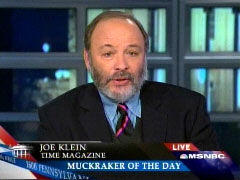
Time magazine’s Joe Klein yesterday did what he does best: take one paragraph from a neoconservative’s column and blow it out of proportion and out of context in order to go on an extended screed bashing conservatives in general and neocons in particular. Writing for his magazine’s Swampland blog yesterday, Klein addressed Bill Kristol’s editorial for the August 30 Weekly Standard print edition entitled, ” He’s No Muslim, He’s a Progressive. ” Klein started off with a backhanded compliment: Well, it’s good to learn that there are limits to Bill Kristol’s tactical skeevery. He clearly states here that Barack Obama is not a Muslim. No winks, no nods, no gratuitous McConnellesque “If he says he’s not, that’s okay with me.” With that out of the way, Klein dove into his screed: But read the editorial all the way through and you get to this paragraph: It’s similar with the Community Center Formerly Known as the Ground Zero Mosque. Today’s progressives are multiculturalists. They’re inclined to make grand claims about the positive merits of a multicultural, non-judgmental mosaic replacing our old, uniculturalist melting-pot view of America. But when political realities force them to retreat, as Obama has done in the mosque controversy, from a proud multiculturalism to a narrow defense of the right to the free exercise of religion and the right to build on private property, they’re in trouble. The free exercise of religion and respect for private property are not a promising agenda for progressives. Say what? Is Kristol actually admitting that his crowd, including his aspirational hand-puppet Sarah Palin, have been arguing against the conservative themes of the “free exercise of religion and respect for private property?” Um, no, Joe. Here are the paragraphs immediately preceding and following the one you quoted (emphasis mine) So progressivism seeks to bring big changes to our backward country. Progressives like to dream about passing “the most progressive legislative agenda .  .  . not just in one generation, maybe two, maybe three.” But when progressivism has to give up its grand transformational claims, then we’re back in the world of reality and results, of the practical consequences of policy choices. A political debate over consequences rather than intentions, and over the real world rather than an imagined one, is one that is, as it has been for a long time, good for conservatives and bad for progressives. Progressivism is in retreat. Obama’s problem isn’t that people falsely think he’s a Muslim. It’s that the public is correctly concluding he’s a garden-variety multiculturalist progressive. So November’s election won’t just be a repudiation of one non-Muslim president. It will be a repudiation of a multiculturalist progressive worldview —and of the bitter elites who cling desperately to that worldview and are consumed by antipathy to most Americans, who don’t. Kristol was arguing that with the Ground Zero mosque issue as with health care reform and various other issues, progressives are envisioning themselves as more enlightened than the general public, whose views must be damned when they stand in the way of advancing a progressive agenda. Progressives live in a la-la land where good intentions matter more than the unintended consequences they spawn. That’s Kristol’s point.  Yet Klein insists that the thing he admires about true conservatives is that they are realists: Here are some conservative principles I admire: Foreign policy realism, budget discipline and a belief in (carefully regulated) markets as the best vehicles for delivering prosperity and even some forms of government services. The best conservatism has a healthy respect for complexity and a deep skepticism about the perfectability of human nature. For one who admires people who have “a healthy respect for complexity,” Klein is determined to ignore or dismiss the true complexity of the Ground Zero mosque issue. Klein failed to point out a single conservative leader who insists that the First Amendment doesn’t apply to Muslims. The issue has always been the impropriety and lack of sensitivity of building a mosque two blocks from Ground Zero, particularly given the controversial remarks Feisal Rauf has made about the U.S. being an accessory to the 9/11 attacks and his refusal to label Hamas a terrorist organization . But perhaps complexity and nuance are a little too much to ask from Joe Klein, particularly when doing so means he has to logically wrestle with his political opponents rather than demonize them.
The rest is here:
Joe Klein’s Latest Adventure in Missing the Point: Taking Bill Kristol Out of Context
New York Times Faults Gov. Candidate Rick Lazio for Mosque Opposition, Downplays Firefighter Protests

The front page of Monday’s New York Times featured a story on how Rick Lazio, the Republican candidate for governor of New York, is gaining voter appeal from his strong opposition to the building of a mosque two blocks from the site of the World Trade Center terrorist attacks: ” Lazio Finds an Issue in Furor Over Islamic Center .” Reporter Michael Barbaro, while conceding the popular appeal of Lazio’s opposition, managed by tone to suggest Lazio was somehow engaged in inappropriate politicking, confirmed by the story’s text box: “Commercials that appeal to some may risk the alienation of moderates.” Mr. Lazio’s relentless opposition to the project — he again attacked the imam behind it during an appearance Sunday on NBC’s “Meet the Press” — is, above all, aimed at Republican primary voters, analysts say. But it risks alienating moderates who could prove crucial in a general election. And it certainly is infuriating many Muslim leaders, who say he is preying on the worst fears of voters; and provoking a backlash from some influential voices in the community of Sept. 11 emergency workers, who say he is exploiting the tragedy. Nevertheless, Mr. Lazio is pushing ahead with the strategy, even breaking what has been, until now, something of an unwritten rule of politics in New York: never to use images of Sept. 11 in campaign advertisements. The Times drug up an incident from 10 years ago to make Lazio into some kind of anti-Muslim campaigner: This is not the first time that Mr. Lazio has thrust Islam into a political campaign. In his 2000 bid for the United States Senate, Mr. Lazio attacked his Democratic opponent, Hillary Rodham Clinton, for raising money from a Muslim group, some of whose members had defended the radical Islamic group Hamas. Mrs. Clinton eventually returned the donations. But in the waning days of the campaign, Mr. Lazio’s supporters in the State Republican Party made a telephone calls to voters that linked Mrs. Clinton’s donors to the terrorism attack on an American warship in Yemen, angering many voters, who considered the tactic over the top. Also on Monday, reporter Michael Grynbaum covered the fiery protest and counter-protest that took place Sunday near ground zero over the proposed mosque: ” Proposed Muslim Center Draws Protesters on Both Sides of the Issue .” Although a front-page photo featured firemen and hard-hat construction workers protesting the mosque, only one firefighter made it into the story, quoted three paragraphs from the end. The Times has been very supportive of the health needs of September 11 first responders like the firefighters and police and has attacked Republicans for allegedly short-changing them. Why would the Times downplay their concerns now? Instead, Grynbaum led with a flattering anecdote about a tolerance martyr attacked by an angry, red-cheeked mosque opponent. Around noon on Sunday, Michael Rose, a medical student from Brooklyn, approached some of the hundreds of protesters who had gathered near ground zero to rally against a mosque and Islamic center planned for the neighborhood. Mr. Rose, 27, carried a handwritten sign in favor of the mosque — “Religious tolerance is what makes America great,” it read — and his presence caused a stir. An argument broke out, punctuated by angry fingers pointed in the student’s face. One man, his cheeks red, leaned in and hissed that if the police were not present, Mr. Rose would be in danger. Before any threats could be carried out, the police intervened, dragged Mr. Rose away from the crowd and insisted that he return to the separate area, one block away, where supporters of the project had been asked to stand. Minutes later, as Mr. Rose was still shaking off the encounter, he turned to find the red-cheeked man back at his side. The man had followed the student up the street, and the two now stared at each other for a tense moment. Then the man stuck out a hand and, in a terse voice, said, “I’m sorry.” “You have a right,” he told Mr. Rose. (He would not give his name.) “I am sorry for what I said to you. I disagree with you completely, but you have a right.” Here’s a tidbit about firefighter opposition that was picked up by the New York Post but ignored in the Times on Monday: Opponents of the project began with a 9 a.m. motorcycle ride, led by several firefighters, to Ground Zero and then proceeded to an 11 a.m. rally around the corner from the Park Place site of the planned 13-story mosque and community center.

Read more:
New York Times Faults Gov. Candidate Rick Lazio for Mosque Opposition, Downplays Firefighter Protests

On Letterman, Brian Williams Cheers ‘Fruits’ of ‘Clinton Economy’ and Ridicules Tea Party

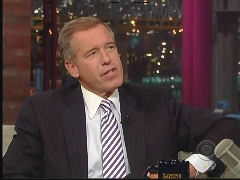
Appearing on the Late Show on Monday night to plug his Friday night Dateline on the 5th anniversary of Katrina, NBC Nightly News anchor Brian Williams bizarrely asserted “we’re still enjoying the fruits really of the Clinton economy,” claimed Tea Party activists who say “we want our country back” want it back “from the Trilateral Commission” and ridiculed their presumed hypocrisy as he insisted “you see a lot of signs, ‘Federal Government Out of My Social Security,’ ‘Federal Government Out of My Medicare and Medicaid.’ But for the federal government, of course, those programs would not exist.” Plus, he passed along how “I’m hearing a few people say” that President Barack Obama won’t run for re-election because he “wants to somehow transcend the presidency,” citing a British columnist who contends he was “never supposed to be an ordinary President.” Williams considered the possibility Obama could be as consequential as Jimmy Carter or Bill Clinton: “Jimmy Carter converted the post-presidency, redesigned the idea of an ex-President. Solving diseases and bad elections around the world. Bill Clinton with the Clinton Global Initiative trying to do the same thing.” When David Letterman raised the disparity between gluttonous Americans and kids starving around the world, Williams rued self-centered Americans as he incongruously touted: “We’ve had a good run here. We’re still enjoying the fruits really of the Clinton economy.” Huh? The current economy is doing well? And I thought the line was that Bush drove the economy into the ditch and we’re all being saved by Obama? (Or was he saying the Clinton years made us selfish?) Letterman soon wondered: “When they say ‘we want our country back,’ who, what, what are they talking about?” That prompted an answer from Williams which sounded more like derision than impartial reporting: “If you ask them, they would say from, ‘from the Trilateral Commission, from the big bankers, from the Council on Foreign Relations.’” Williams sounded like he’s still living in the 1980s. The condescending duo soon latched on to supposed Tea Party hypocrisy, which really just proved their hostile naivete as Williams showed quite an imagine as to the signs held up at Tea Party events and dismissed it all as simply anger caused by people upset by the bad economy: DAVID LETTERMAN: And again the popular inconsistency that is cited is “we don’t want the nationalized health care. But by god we still want our Medicare and our Medicaid.” How do they reconcile that? BRIAN WILLIAMS: Well, you see a lot of signs, “Federal Government Out of My Social Security,” “Federal Government Out of My Medicare and Medicaid.” But for the federal government, of course, those programs would not exist. A lot of it is just raw anger being translated onto signs and in slogans because people are on the downside of a bad economy. So much for “still enjoying the fruits of the Clinton economy.” From the Monday night, August 23 Late Show with David Letterman on CBS: DAVID LETTERMAN: There are two food channels, two food networks. One’s motto is “Stay hungry.” “Stay hungry.” There are cupcake shows, there are cupcake wars, there are cake shows, there are let’s build a cake. “Who can build a cake that looks more like a reclining chair?” And then there’s one show where a guy goes out and eats as much as can. “Bring me all the food in your house. I’ll eat it.” Three million people in this country do not get enough to eat and every six seconds, an infant in this world dies of starvation. How, how do you explain the disparity? BRIAN WILLIAMS: Ask your friends at the World Food Program and they’ll tell you the same thing. We’re a highly generous nation. And we like to think of ourselves as a very generous people. But we’ve had a good run here. We’re still enjoying the fruits really of the Clinton economy. And an ethos — I still come back to this that says you’re the star. It’s about you. Listen to the commercials on all those channels and the message is all in the first person in ways we never ever used or would dream of in the time of say Mad Men, for a modern television reference. So I think it’s that. I think out of sight, out of mind, however, is what sends children around the world to bed hungry and kills them ultimately. …. LETTERMAN: Now when the Tea Party formed, or when I think it formed, or when I read about the formation of it, I thought this is great. This is great. People have gotten together and said “holy god, we’ve lost all our money, our pension funds are gone. Nobody seems to know where the money goes. The government raises all this money to bail out huge corporations, our money is still gone. Our retirement funds, everything is gone. We don’t like this. We think we can do a better job. We’re going to form another political party.” That’s great. That’s all part of the luxury of being born in this country. You can do that. You should do that. We thrive on that sort of thing. Now I hear them saying things like “we want our country back.” And I’m having trouble deciding who took it, where did it go. You know, when they say “we want our country back,” who, what, what are they talking about? WILLIAMS: …You’ve latched on Dave, in what is Topic 5 for those playing our home game, you’ve latched on to sloganeering, which is as fine as an American tradition as any Tom Jefferson was involved in. And it makes people feel better to say “take our country back.” If you ask them, they would say from, “from the Trilateral Commission, from the big bankers, from the Council on Foreign Relations.” …. LETTERMAN: A friend of mine, I said there’s going to be a Tea Party convention up the road. I said go there and let me hear what they’re saying. Do they have a platform? Do they have solutions? And she said “well, no, not so much. It was more about we want our country back and are you with us and this and that and attracting support.” Which I understand is part of a growing movement. But to get any kind of traction, don’t you want to hear, oh here’s what we’re going to do different. I mean let’s face it, you could get elected, Harry Truman could get elected, and because of the politics of the day and the bureaucracy, it’s going to be a pretty tough slog for anybody. WILLIAMS: …People’s anger goes to their money. They do kind of generically want control back. They see a government so big and yet a government that says, “wait a minute, stop an oil leak a mile down under the water. Oh, we have nothing for that, that’s BP’s technology. We’re going to put an admiral here in charge and watch BP for you, but I swear we’ve got this covered.” LETTERMAN: And again the popular inconsistency that is cited is “we don’t want the nationalized health care. But by god we still want our Medicare and our Medicaid.” How do they reconcile that? WILLIAMS: Well, you see a lot of signs, “Federal Government Out of My Social Security,” “Federal Government Out of My Medicare and Medicaid,” but for the federal government, of course, those programs would not exist. A lot of it is just raw anger being translated onto signs and in slogans because people are on the downside of a bad economy. …. WILLIAMS: I think you’re going to see anger, in some form or fashion, translated at the ballot box. LETTERMAN: And projecting from that, are we looking at a one-term President? WILLIAMS: You know what, and I think the British Telegraph last night online there was a column saying he wants to be. And I’m hearing a few people say this, that he wants to somehow transcend the presidency. He was never supposed to be, or so this columnist’s theory goes, never supposed to be an ordinary President. And so this would be extraordinary to not do the expected thing and run for a second term. To kind of be a different kind of figure. Jimmy Carter converted the post-presidency, redesigned the idea of an ex-President. Solving diseases and bad elections around the world. Bill Clinton with the Clinton Global Initiative trying to do the same thing. So I’m not putting any credence in this column. I think we have to assume, because he’s a politician and he’s an incumbent President, he is running for re-election.

See the original post:
On Letterman, Brian Williams Cheers ‘Fruits’ of ‘Clinton Economy’ and Ridicules Tea Party

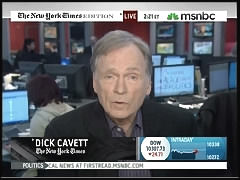
Blast from Past: Dick Cavett ‘Genuinely Ashamed’ of Americans for Opposing the Mosque

In Monday’s “Best of the Web Today” compilation , the Wall Street Journal’s James Taranto highlighted a New York Times online column posted Friday, from “superannuated erstwhile TV host Dick Cavett,” who “reports that the mosque controversy brought back childhood memories.” Cavett recalled World War II when he “heard an uncle of mine endorse a sentiment attributed to our Admiral ‘Bull’ Halsey: ‘If I met a pregnant Japanese woman, I’d kick her in the belly.’”          In the post provocatively titled “ Real Americans, Please Stand Up ,” as if those who disagree with him are not “real” Americans – at least they aren’t to the New York Times editors — Cavett then equated feticide with peaceful opposition to the mosque near Ground Zero: These are not proud moments in my heritage. But now, I’m genuinely ashamed of us. How sad this whole mosque business is. It doesn’t take much, it seems, to lift the lid and let our home-grown racism and bigotry overflow. We have collectively taken a pratfall on a moral whoopee cushion. Later he denigrated mosque critics as he derided “airborne sludge” from Rush Limbaugh: A heyday is being had by a posse of the cheesiest Republican politicos (Lazio, Palin, quick-change artist  John McCain and, of course, the self-anointed St. Joan of 9/11, R. Giuliani). Balanced, of course by plenty of cheesy Democrats. And of course Rush L. dependably pollutes the atmosphere with his particular brand of airborne sludge.

See the rest here:
Blast from Past: Dick Cavett ‘Genuinely Ashamed’ of Americans for Opposing the Mosque

WaPo Sees ‘Anti-Muslim’ Sentiment in Opposition to Tennessee Mosque; Reporter Omits Zoning, Traffic Concerns of Critics

“Nowhere near Ground Zero, but no more welcome: Outcry over mosque proposals in Tennessee and elsewhere could be a sign of rising anti-Muslim sentiment across the country.” With those words, the front page headline* and subheader for an August 23 Washington Post story by Annie Gowen conflated the controversy over the Ground Zero mosque with opposition to other mosques across the fruited plain, namely one planned for Murfreesboro, Tennessee, from where Gowen filed her story.  Gowen waited until 27th pragraph in the 41-paragraph story to introduce the man spearheading the opposition, “a stocky 44-year-old correctional officer named Kevin Fisher” who “spent his formative years in Buffalo, where a home-grown terrorist cell of Yemeni Americans was uncovered in 2002.” Yet long before she ever got around to quoting Fisher, Gowen set out to portray the opposition to the mosque as the work of intolerant, ignorant rednecks. “It shouldn’t be surprising that there’s a negative reaction to this mosque…. [Y]ou can connect it to this global media event in New York, it just reinforces this siege mentality local residents have,” Gowen quoted Richard Lloyd of Vanderbilt University in paragraph 16. In the preceding paragraph, Gowen cited a recent Pew poll that found one in five Americans believe Barack Obama is a Muslim as one reason for why “the change in tone” regarding Muslim Americans has been “striking” according to “religious scholars and other experts.” When Gowen finally got around to quoting Fisher, she left a lot to be desired in terms of capturing the subject’s opposition to the proposed mosque. For example, Gowen failed to note that Fisher also opposed a Bible theme park that had been planned for the city and that many of his objections to the mosque are grounded not in fear of radical Islam or sharia law but in zoning and traffic issues pertaining to the 52,900-square foot size of the planned facility. By contrast, Elisabeth Kauffman of Time noted these concerns in her August 19 story : But if some people in Murfreesboro want the county to reject construction of the new mosque, they also wanted — and won — rejection of a proposed Bible theme park in the city. “It isn’t about Islam or religion, it’s about where they want to build,” insists Kevin Fisher, an organizer of opposition to the mosque who says he also opposed the Bible park because developers wanted to build too close to a subdivision. Along with worries over increased traffic on a road he says is already too dangerous, Fisher says the Center’s plans to one day have a cemetery could generate soil and water contamination. Ayash says that while one member of the Center is already buried on the property, without a coffin, “in accord with Islamic custom,” it all took place with county and city approval and within health guidelines. Fisher says that’s not good enough. “Each of my concerns is based on legitimate issues. This has nothing to do with anti-Islam; it’s not racism. I’m African-American, I know what it’s like to be discriminated against. I wouldn’t do that to someone.” Still, Fisher concedes he didn’t object to the construction of the new Grace Baptist Church at the same corner. “That’s a much smaller building [than the 52,000 feet complex the Center might one day build] and they don’t plan a cemetery.” *The online headline for the story is considerably less weighted with the loaded language of the print headline: “Far from Ground Zero, other plans for mosques run into vehement opposition.”

More:
WaPo Sees ‘Anti-Muslim’ Sentiment in Opposition to Tennessee Mosque; Reporter Omits Zoning, Traffic Concerns of Critics

The New York Times Rushes to Defend Ground Zero Imam

The New York Times offered still more moral support for the controversial Ground Zero mosque on Sunday’s front-page profile by Anne Barnard of the man behind the building project, imam Feisal Abdul Rauf — ” For Imam in Muslim Center Furor, a Hard Balancing Act .” Among the contributors to the report: Thanassis Cambanis and Mona El-Naggar in Cairo, and Kareem Fahim, Sharaf Mowjood and Jack Begg in New York. Mowjood? As Alana Goodman of the Business and Media Institute reported earlier this month , Sharaf Mowjood is a former lobbyist for the Council on American Islamic Relations, an interest group that strongly supports the mosque. Mowjood coauthored a glowing Dec. 9, 2009 article on the mosque with reporter Ralph Blumenthal and also contributed to a sympathetic story by Barnard August 11 about public relations missteps by the mosque sponsors. Barnard began with an anecdote about a Rauf lecture in Cairo where the imam (with a voice the Times describes as “soft, almost New Agey”) was accused by radical Islamists of being an American agent (a story which of course bolsters Rauf’s moderate credentials). Barnard seemingly took it as her mission to rebut charges of extremism against Rauf. In his absence — he is now on another Middle East speaking tour sponsored by the State Department — a host of allegations have been floated: that he supports terrorism; that his father, who worked at the behest of the Egyptian government, was a militant; that his publicly expressed views mask stealth extremism. Some charges, the available record suggests, are unsupported. Some are simplifications of his ideas. In any case, calling him a jihadist appears even less credible than calling him a United States agent . Barnard insisted that Rauf’s views, in context, placed him “as pro-American within the Muslim world.” He consistently denounces violence . Some of his views on the interplay between terrorism and American foreign policy — or his search for commonalities between Islamic law and this country’s Constitution — have proved jarring to some American ears, but still place him as pro-American within the Muslim world. He devotes himself to befriending Christians and Jews — so much, some Muslim Americans say, that he has lost touch with their own concerns. Barnard set up more criticisms for the sole purpose of rebuttal, and waited until paragraph 34 out of 35 to bring up, defensively, Rauf’s failure to describe Hamas as a terrorist organization. Mr. Abdul Rauf also founded the Shariah Index Project — an effort to formally rate which governments best follow Islamic law. Critics see in it support for Taliban-style Shariah or imposing Islamic law in America. Shariah, though, like Halakha, or Jewish law, has a spectrum of interpretations. The ratings, Ms. Kahn said, measure how well states uphold Shariah’s core principles like rights to life, dignity and education, not Taliban strong points. The imam has written that some Western states unwittingly apply Shariah better than self-styled Islamic states that kill wantonly, stone women and deny education — to him, violations of Shariah. After 9/11, Mr. Abdul Rauf was all over the airwaves denouncing terrorism , urging Muslims to confront its presence among them, and saying that killing civilians violated Islam. He wrote a book, “What’s Right With Islam Is What’s Right With America,” asserting the congruence of American democracy and Islam. That ample public record — interviews, writings, sermons — is now being examined by opponents of the downtown center. Those opponents repeat often that Mr. Abdul Rauf, in one radio interview , refused to describe the Palestinian group that pioneered suicide bombings against Israel, Hamas, as a terrorist organization. In the lengthy interview , Mr. Abdul Rauf clumsily tries to say that people around the globe define terrorism differently and labeling any group would sap his ability to build bridges. He also says: “Targeting civilians is wrong. It is a sin in our religion,” and, “I am a supporter of the state of Israel.”

See the rest here:
The New York Times Rushes to Defend Ground Zero Imam

ABC Hides Identity of Liberal Activists Advocating for More Government Intervention in Business

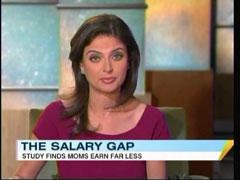
Good Morning America’s Bianna Golodryga on Sunday featured a liberal activist arguing for more government intervention in the form of paid time off laws and “affordable” child care. The ABC host never identified Kristin Rowe-Finkbeiner’s ideology or the fact that she’s a  Huffington Post contributor. Instead, Golodryga fretted about “bias” against women who have children. The Rowe-Finkbeiner interview and the preceding segment lamented the fact that women who have children often don’t end up making as much as men and also females who don’t have kids. Neither segment even hinted that there could be two sides to the story. Instead, Rowe-Finkbeiner was allowed to lobby, “We know that passing family-friendly policies and programs like paid family leave, like affordable child care, like access to paid sick days, like access to flexible work options, those things actually help lower the gap between women and men.” Rowe-Finkbeiner’s blogs on the Huffington Post have advocated for a number of left-wing causes, including attacking Arizona for its tough immigration law. The segment also featured a woman by the name of Kiki Peppard. Golodryga explained: “Kiki Peppard spent a decade as a successful bookkeeper before taking leave to spend more time with her kids. But, when she went to reenter the work force after a divorce, she found herself on the outside looking in.” An ABC graphic blandly identified that Kiki “had a hard time finding work.” However, according to MomsRising.org , where Rowe-Finkbeiner is the executive director, Peppard has ties to the organization dating back to 2006. Golodryga also skipped this fact. Instead, she wondered, ” So, we heard Kiki’s story. How common and widespread are stories like hers? ” Rowe-Finkbeiner played dumb: “You know, I hear from women like Kiki everyday. Kiki is definitely not alone.” ABC on Sunday went way beyond being one-sided. Not identifying either of these women, their agendas and their connections is incredibly misleading. A transcript of the August 22 segment, which aired at 8:40 am EDT, follows: BIANNA GOLODRYGA: In America’s Jobs this morning, we’re going to look at the pay gap. The disparity between what men and women make has been shrinking over the years. And while it’s still not exactly equal, it is getting better, except for one particular group of women. They’re some of the most accomplished women in the world. Supreme Court justices. A former secretary of state. Even the head of Homeland Security. But, despite their widely varying political differences, they all have one thing in common: These woman don’t have children. And experts say, that fact may contribute directly to their success. According to the University of Chicago, men and women right out of school had nearly identical incomes and hours worked. But, 15 Years later, the men made 75 percent more than the women in the group. The only exception to the room? A small group of women who never had children. Their pay equaled the men. KIKI PEPPARD: There is such a double standard. GOLODRYGA: Kiki Peppard spent a decade as a successful bookkeeper before taking leave to spend more time with her kids. But, when she went to reenter the work force after a divorce, she found herself on the outside looking in. PEPPARD: The very first question asked me was, “Are you married?” And the second question was, “Do you have any children? This went on for the first 18 job interviews. On my19th job interview, they did not ask me about my marital status. They did not ask if I had children and hired me. GOLODRYGA: It’s long been assumed women make less than men because they have more career disruptions. But the unequal pay disparity also pits moms against non-moms. Women with kids are 44 percent less likely to be hired than women without. And they’re paid $11,000 less. And in this economy, that bias can be devastating to many families just trying to get by. And joining me now from Seattle to talk more about this is Kristin Rowe-Finkbeiner, the co-founder and executive director of MomRising.org. Good morning. Thanks for joining us, Kristin. KRISTIN ROWE-FINKBEINER (executive director, Momsrising.org): Good morning. GOLODRYGA: So, we heard Kiki’s story. How common and widespread are stories like hers? ROWE-FINKBEINER: You know, I hear from women like Kiki everyday. Kiki is definitely not alone. One of the thing is that this problem is bigger than most people realized. In fact, the maternal wall standing in the way of the glass ceiling. And here’s what it looks like: Women without children make 90 cents to a man’s dollar. Women with children make only 73 cents to a man’s dollar. So, this is a big discrepancy. And we have a big issue with pay discrimination against mothers. GOLODRYGA: So, when we hear statistics like that, what can be done to level out the playing field in the workforce? ROWE-FINKBEINER: Well, we have a big issue to address. And that’s that we have a 1950s work policy structure but we have a modern labor force. We’re now more than 50 percent of the labor force are women for the first time in history. But, that doesn’t mean we’ve reached full equality as we just heard in the segment. Because, right now, women and mothers are struggling. Moms are working full time and can’t put food on the table. In fact, one in four children in our nation are experiencing food scarcity in their households because of economic limitations, according to the USDA. So, the solutions are there. We have solutions. We know that passing family-friendly policies and programs like paid family leave, like affordable child care, like access to paid sick days, like access to flexible work options , those things actually help lower the gap between women and men. And they raise all boats. Because, it’s not just moms who need the policies, but everybody needs those policies in order to excel in their life, in the workplace and with their families. GOLODRYGA: But, now of all times, with the economy being so bumpy, with jobs being even more difficult to find, what should moms who are planning on taking time off do to avoid falling behind? ROWE-FINKBEINER: Well, professional women who decide to take time out of the labor force need to do four things. One, and most importantly, they really need to keep up with their professional contacts. Maintain those contacts so they have smooth sailing when they move back into the labor force. Two, they need to make sure that their professional accreditations are up to date while their out of the labor force. Three, this is really important. They need to find a mentor. Somebody who has navigated this interesting seas before and can help them navigate through. And fourth, one thing that’s very important is to find volunteer positions that you can put on the resume while you’re out of the labor force to show that you were productive while you were staying home with kids. Not that staying home with kids isn’t an important job in and of itself. Because it is. One of the things, though that is critically important to understand is that because we have a 1950s work policy structure in our nation still, we haven’t updated our policies like most other countries have, that most women can’t stay out of the labor force. So, we have a huge problem where we, you know, don’t have paid family leave, like 177 other countries do. And because of that, we see the implications on kids with a quarter of families with young children living in poverty. So, it’s important to recognize that not that many people can stay out of the labor force. GOLODRYGA: That is true, indeed. Especially in these times.

More:
ABC Hides Identity of Liberal Activists Advocating for More Government Intervention in Business

The Greens Are The Only Winner From Australia’s Federal Election

Images: Sydney Morning Herald (left), and The Greens (right). You may recall that just eight weeks ago Australia found itself with a new Prime Minister , it’s first female one at that, in Julia Gillard. She had ousted Kevin Rudd , who although sweeping … Read the full story on TreeHugger

Read the original here:
The Greens Are The Only Winner From Australia’s Federal Election

E! Writer: ‘True Blood’ Rape and Murder ‘Highly Ironic,’ ‘Great Fun’

E! Online ” The Awful Truth ” columnist Ted Casablanca on Aug. 21 called the graphic depictions of sex and violence on HBO’s vampire drama “True Blood” “highly ironic” and promoted the show as “great fun.” Casablanca defended the show on Fox News Channel’s “Geraldo at Large” in a discussion with host Geraldo Rivera and Culture and Media Institute Assistant Editor Nathan Burchfiel. The debate was sparked by the controversy surrounding a recent Rolling Stone magazine cover that depicted “True Blood” stars naked and covered in (fake) blood. Burchfiel pointed out that while the shows originate on premium cable channels like HBO and Showtime, many “worst-of” clips are available online within hours of broadcast, and many popular shows like “The Sopranos” and “Sex and the City” have found their way onto basic cable via syndication, a likely future for “True Blood.” “It’s highly ironic, Geraldo,” Casablanca said of the show, adding, “It’s a highly intelligent, very clever indictment of the very conversation that we’re having right now and it’s an allegory to our times.” Burchfiel questioned that characterization. “Highly clever and ironic? They’re depicting murder and rape as if it’s something worth being glorified. I mean there was an episode just this season where one of the main characters literally turned a woman’s head around 180 degrees while he’s violently raping her. ‘Oh, it’s ironic. Haha.’ It’s digusting.” “Where do we stop writing things off as simply ironic instead of sewer diving?” Burchfiel later added. Casablanca suggested opposition to the show’s graphic nature was a result of homophobia. “I guarantee you that if none of those vampires were gay vampires, we wouldn’t be having this conversation,” Casablanca said. “What’s upsetting so many people is that a lot of the vampires are gay.” Rivera didn’t buy that argument, and neither did Burchfiel, who asked, “Who was talking about them being gay? It has nothing to do with that.” Casablanca was correct in asserting that many of the show’s vampires are gay. The depiction of gay sexual violence has been similar to the depiction of heterosexual violence. In a recent episode, a main character murdered an enemy during while engaging in gay sex. “Certainly that heterosexual sloppy scene we just saw was not gay,” Rivera said referring to clips shown during the discussion.” At the end of the segment, Casablanca recommended “True Blood” to viewers saying, “It’s great fun.”   

Read more from the original source:
E! Writer: ‘True Blood’ Rape and Murder ‘Highly Ironic,’ ‘Great Fun’

‘Ground Zero’ or ‘ground zero’? AP, NYT Long Ago Opted for Lower Case

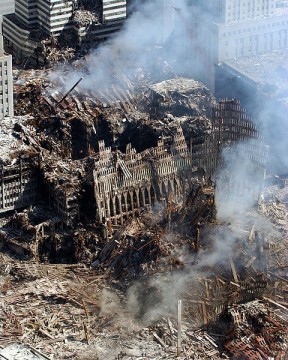
File this under “Fascinating Things You Learn When Researching Other Things.” The Associated Press’s infamous memo huffing and puffing about how it will henceforth describe the 13-story mosque/community center/kumbaya center that Imam Feisal Abdul Rauf would like to have built on a site two blocks away from where the World Trade Center Towers once stood opened with this sentence: We should continue to avoid the phrase “ground zero mosque” or “mosque at ground zero” on all platforms. Obviously the publicly announced editorial decision was news, but how about the lack of uppercase letters in “Ground Zero”? It turns out that both the AP and the New York Times routinely do not capitalize “Ground Zero,” making them grammar outliers. Here was one grammarian’s take on the matter in 2007 (bolded in final sentence is mine): Today’s topic is capitalizing tricky nouns like Ground Zero, Internet, and Earth. Ground Zero Since we’re coming up on September 11th, I was thinking about Ground Zero, and I realized that sometimes I see the words ground zero capitalized and sometimes I don’t. Back in 2001, it seemed as if the name Ground Zero got assigned to the site of the World Trade Center in New York almost immediately. Traditionally, ground zero means the site of a nuclear explosion, and sometimes it is used to refer to the site of a more general explosion or an area where rapid change has taken place. In those general instances, ground zero would be a common noun and wouldn’t be capitalized. On the other hand, although there are a few dissenters, most notably the New York Times, most people agree that Ground Zero is the name of the specific site of the former World Trade Center, and therefore it’s a proper noun that needs to be capitalized when it is used in that way . Besides the Times, the AP is not in the grammarian’s roster of “most people” who correctly capitalize “Ground Zero” as a specific place in Lower Manhattan. Perhaps they would prefer to be described at “the nyt and the ap.” This past Monday, referring back to something he wrote in 2002, the guy who runs TestyCopyEditors.com remined readers he doesn’t like the use of the term “Ground Zero” in uppercase or lowercase: “Ground zero” has a long history as a cliché but was occasionally useful in its original sense, meaning the point at which a nuclear explosion is triggered. To apply the term to the World Trade Center is to be needlessly vague about the nature of the attack. It also makes the term useless in its original sense, particularly in reference to the nuclear attacks on Hiroshima and Ngasaki, Japan, in 1945. That’s interesting. Maybe the term’s use first became popular in the establishment press once it was coined as a convenient shortcut to avoid using the the “T-word,” as in “the site of the 9/11 terrorist attacks,” or even to describe what occurred as “attacks” at all. If it was a strategy, it didn’t work out particularly well. Virtually everyone knows that “Ground Zero” in a story about New York City is where the terrorist attacks occurred. Here is a collection of current raw headlines found at the wire service’s main site at 5:20 p.m. in a search on “Ground Zero” (not in quotes, but capitalized): I count eight headlined instances of lowercase use of Ground Zero (the AP uses sentence case for its headlines). With the exception of one link to a multimedia item (“Plans for Ground Zero”) and links to two videos (“Obama backs mosque near Ground Zero” and “Obama Supports ‘right’ for Ground Zero Mosque”), “Ground Zero” is in lowercase format at all relevant underlying AP items listed above. So determined is the AP to keep “Ground Zero” in lowercase format that it revised the words in two paragraphs it directly quoted from a Rochester New Democrat and Chronicle editorial . The relevant paragraphs originally read as follows: The controversy over building a community center and mosque near Ground Zero cuts so deeply to the core of this country’s founding that President Barack Obama was right to weigh in. … That’s the rub. Many Americans view Ground Zero as hallowed ground, and building a mosque nearby seems beyond insensitive. In a roundup of editorials on various topics, the AP de-capitalized both uses of the term. This after-the-fact revision of another publication’s work seems to reflect a grim resolve that goes beyond the normal policing of grammar. If so, what’s the source? You’ll have to excuse me for believing that business arrangements similar to those  described here four years ago might have influenced the AP’s original decision-making process: Arab states have for decades paid substantial sums for control over content and other news-management privileges that I daresay would be refused at any price (with the mere request being treated as an earth-shaking scandal) if asked for by representatives of any Western country. Say it ain’t so, AP. Cross-posted at BizzyBlog.com .

See the original post:
‘Ground Zero’ or ‘ground zero’? AP, NYT Long Ago Opted for Lower Case