Tag Archives: recession

American Academy of Pediatrics: Media Portrayal of Sex ‘Unhealthy’

Calling media portrayals of sex “unhealthy,” the American Academy of Pediatrics (AAP) has issued new guidelines calling on all media outlets to present human sexuality in a healthy, scientifically accurate manner. At the same time, the group pomoted the use of contraceptives among teenagers and denigrated abstinence-only education.   “There is a major disconnect between what mainstream media portray – casual sex and sexuality with no consequences – and what children and teenagers need – straightforward information about human sexuality and the need for contraception when having sex,” the AAP  said .    “Television, film, music, and the Internet are all becoming increasingly sexually explicit, yet information on abstinence, sexual responsibility, and birth control remains rare,” said the AAP.   The organization, with 60,000-plus members, said that because children and young adults spend an inordinate amount of time interacting with various media, it was important for the portrayals of sex in that media to be accurate and responsible.   “American children and teenagers spend more than 7 hours a day with a variety of different media. Those media are filled with sexual messages and images, many of which are unrealistic,” the AAP said. “Talk about sex on TV can occur as often as 8 to 10 times per hour. Between 1997 and 2001 alone, the amount of sexual content on TV nearly doubled.”   This proliferation of inaccurate sexual messages has had documented effects on youth sexual behavior, the AAP reported. Kids exposed to sexual material on television are almost twice as likely to engage in sexually risky behavior at a younger age than youth whose parents limit their exposure to sexually saturated media.    Other studies have shown that exposure to sexualized media content doubled the risk of teen pregnancy. “Clearly, the media play a major role in determining whether certain teenagers become sexually active earlier rather than later, and sexually explicit media may be particularly important,” the AAP stated.   These negative trends are happening at a time when public sexual education has favored a scientifically unfounded, abstinence only approach, said the organization, adding that as public policy has avoided providing youth with accurate information about sex, the media have become the sexual educator of “last resort.”   “Because so many sex education programs have recently been focused on abstinence only, the media have arguably become one of the leading sex educators in the United States today,” the AAP said. “Yet, parents and legislators fail to understand that although they may favor abstinence-only sex education (despite the lack of any evidence of its effectiveness), the media are decidedly not abstinence only.”   In fact, the American media can be among “the most sexually-suggestive media in the world,” according to the AAP. The effect of this is that media can act as a “super-peer” on youth, exerting an influence on sexual behavior stronger than that of a child’s parents.   One major problem – labeled “dangerous” by the AAP – with the media’s portrayal of sex is the lingering myth that access to contraception affects sexual behavior patterns. Because the media play such a large role in providing information about sex to young people, this dearth of accurate information about contraceptives leaves teens at a disadvantage as they become sexually active.   “The United States is the only Western nation that still subscribes to the dangerous myth that giving teenagers access to birth control – and media represent a form of access – will make them sexually active at a younger age,” the AAP explained.    In response to these twin problems, the AAP called on media to do two things: remove some inappropriate sexual content from programming likely to be viewed by children and substitute it with accurate, educational information about sex.   “Pediatricians and child advocacy groups should encourage the entertainment industry to produce more programming that contains responsible sexual content and that focuses on the interpersonal relationship in which sexual activity takes place,” the AAP said.    “Similarly, Madison Avenue and advertisers need to be encouraged to stop using sex to sell products,” said the group.   In addition to changing media programming, the AAP also called for comprehensive sex education in schools and increased advertisements for contraceptives.   “Pediatricians should urge the broadcast industry to air advertisements for birth control products,” the AAP said.    Dr. Vic Strasburger, the policy’s lead author, said that scientific studies showed that increased advertising for birth control would lead to “one thing and one thing only” – increased use of contraception.   “The research is quite clear, the media represent one access point for children and teenagers about birth control and giving teenagers access to birth control does one thing and one thing only – that is it makes them more likely to use birth control when they begin having sex,” Strasburger told CNSNews.com.    “As parents and as adults, we couldn’t be doing a worse job,” Strasburger said. “We do a terrible job of preparing kids to be happy, healthy, sexual adults.” Crossposted at NB sister site CNSNews.com  

Continued here:
American Academy of Pediatrics: Media Portrayal of Sex ‘Unhealthy’
CNN’s ‘Glass One-Quarter Full’ Spin: Emphasize Private Job Gains

The Bureau of Labor Statistics released its “all-important” jobs report on Sept. 3, the morning before Labor Day weekend. CNN rapidly found the ” bright spot ” in a report that showed a net loss of 54,000 jobs and a higher 9.6 percent unemployment rate . “American Morning” co-anchor Kiran Chetry announced the report by saying “It’s good news, but it’s not good news.” Still, she maintained the mainstream media’s spin by focusing on private-sector jobs gains of 67,000 even though that is cold comfort to the 14.9 million people who are unemployed. That CNN segment ignored negative information that would have provided important context. The BLS reported that there are still 1.1 million discouraged workers (too discouraged to even look for work) and another 1.3 million people working part-time who want full-time work instead. Chetry and fill-in co-anchor Ali Velshi discussed the breaking news report with two guests who were even more upbeat: Leigh Gallagher of Smart Money magazine and Shawn Tully of Fortune magazine. Tully told CNN viewers, “This is actually not such bad news because we are looking at unemployment rates in the U.S. we really haven’t seen since the early 1980s. And in the early 1980s the comeback was extremely strong, unemployment dropped very, very sharply. In the U.S. we’ve never had 10 percent unemployment rates for long periods.” Conservative economists argue that Reagan’s tax cuts were part of the reason the unemployment rate dropped and the economic comeback happened. President Obama has not proposed dramatically cutting tax rates and, in fact, seems willing to let the more modest tax cuts of President George W. Bush expire at the end of 2010. Tully told CNN “we’re now in the upcycle,” and said a double-dip recession was unlikely. Gallagher happily noted that the unemployment report beat expectations. But neither CNN host nor their guests pointed out how high real unemployment is or how many jobs we would need per month to “catch up” the 8.4 million jobs lost in the recession. According to CNBC’s Rick Santelli the increase of 0.1 percent to a 9.6 percent unemployment rate just means “real unemployment is in the teens.” Bloomberg said that the underemployment rate is now 16.7 percent . CNBC’s Erin Burnett also brought context to the story on MSNBC, saying that news was “definitely better than expected,” but cautioned that it doesn’t make up for what has been lost. “I would note though, we obviously lost 8.4 million jobs during the financial crisis so to catch up with that you need to have 200,000 jobs or more [added] a month,” Burnett said. The media’s desperate attempts to positively spin jobs reports since Obama was elected contrast with the way they tried to talk down the economy during the Bush presidency. ABC, CBS and NBC failed to criticize Obama even while on his watch the most jobs had been lost in a year since 1940 . The mainstream media have also given Obama a pass on grandiose promises about how many millions of jobs the stimulus package would create. Contrast that with the media’s coverage of unemployment under Republican President George W. Bush when unemployment was roughly half of what it is now. In Feb. 2006, when 193,000 jobs had been added and the unemployment rate dropped to 4.7 percent: the lowest rate since July 2001 . CBS and ABC evening shows ignored the drop in unemployment, while CNN found “mixed” news in the report. A January 2006 Special Report from the Business & Media Institute found that the networks in particular emphasized layoffs in a year that 2 million new jobs had been created . Negative stories about corporate layoffs and outsourcing made up more than half the stories on jobs or unemployment. Like this article? Then sign up for our newsletter, The Balance Sheet .

50 Cent Gives Up Twitter To Work On Album

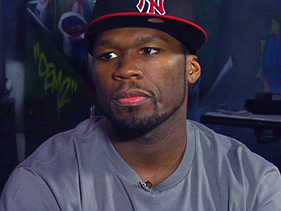
MC says he won’t tweet until September 6 to work on The Return of the Heartless Monster. By Mawuse Ziegbe 50 Cent Photo: MTV News 50 Cent’s Twitter followers are going to have to find other ways to amuse themselves this weekend. The MC says he’s giving up tweeting to pen his next effort, The Return of the Heartless Monster. “Ok ladies and [gentlemen] I’m writing my new album. I will not be on twitter again till Sept 6,” Fif wrote Wednesday (September 1). “This album will be a classic,” added the MC, who announced the album title on Twitter . 50 has been putting in work on his new material. Swizz Beatz recently told MTV News that he has been in the studio with the G-Unit boss, after 50 reportedly shelved much of the dance-music-friendly sound he originally envisioned for his upcoming music. While the arrival of Kanye West and his multifaceted musings on the micro-blogging website has sparked major fanfare from fans and the media, 50’s missives have ramped up in both frequency and ridiculousness over the past few weeks. Some days, Fif has been introspective and candid, sharing the inner-workings of his subconscious with followers. “Just woke up I had a dream I put stars On my head like baby [of Cash Money]. then I was at church they told me take my hat off I said I just wanta pray lol,” 50 typed Sunday. “That’$ crazy why wa$ baby on my mind. oh I wa$ looking at old xxl magazine$ la$t night. anyway$hout out to baby I know that [hurt].” Other times, the Queens MC has added his voice to the public discourse about the state of the economy, and even doled out advice to our increasingly embattled president. “Obamas ratings are down cause he didn’t include pimpin and hoein in stimulus package. Good hoes would boost male moral and fix the recession,” 50 asserted Saturday. The “Baby by Me” rapper later added, “Sh– I should run america. first thing I’d do is cut my taxes then tell yal chill the f— out ima get to the rest of the problems. You know me and george bush was born on the same day july6. Speaking of birthdays everybody on twitter should send me just 1 dollar cool?” The Before I Self Destruct rapper has even mused about his tough childhood. “My aunt sylvia didnt like me growin up cause she was the baby till I came,” 50 also wrote Saturday. “We had roaches so she put roach spray in a bowl and kill my dog.” Of course, it wouldn’t be 50’s Twitter page if he didn’t take a swipe at the competition. “I just looked at kanye page what the f— kind a spaced out tweets are those,” the MC typed earlier in the day. “F— that I aint never looking at that sh– again.” Although 50 has built an empire on his super-tough persona, the MC has conceded that his words may be a wee bit harsh for his Twitter fans. “Look man I’m sorry I’ve been cursing,” 50 said. “But f— that sh– I gotta express myself, bitch.” Will you miss 50 on Twitter? What are you looking forward to on his next album? Chat in the comments below! Related Artists 50 Cent

Originally posted here:
50 Cent Gives Up Twitter To Work On Album

The Billionaires Bankrolling the Tea Party

There’s just one element missing from these snapshots of America’s ostensibly spontaneous and leaderless populist uprising: the sugar daddies who are bankrolling it, and have been doing so since well before the “death panel” warm-up acts of last summer. Three heavy hitters rule. You’ve heard of one of them, Rupert Murdoch. The other two, the brothers David and Charles Koch, are even richer, with a combined wealth exceeded only by that of Bill Gates and Warren Buffett among Americans. But even those carrying the Kochs’ banner may not know who these brothers are. Their self-interested and at times radical agendas, like Murdoch’s, go well beyond, and sometimes counter to, the interests of those who serve as spear carriers in the political pageants hawked on Fox News. The country will be in for quite a ride should these potentates gain power, and given the recession-battered electorate’s unchecked anger and the Obama White House’s unfocused political strategy, they might. All three tycoons are the latest incarnation of what the historian Kim Phillips-Fein labeled “Invisible Hands” in her prescient 2009 book of that title: those corporate players who have financed the far right ever since the du Pont brothers spawned the American Liberty League in 1934 to bring down F.D.R. You can draw a straight line from the Liberty League’s crusade against the New Deal “socialism” of Social Security, the Securities and Exchange Commission and child labor laws to the John Birch Society-Barry Goldwater assault on J.F.K. and Medicare to the Koch-Murdoch-backed juggernaut against our “socialist” president. added by: Conniepae

NYT’s Brooks Bashes Obamanomics, Praises Germany’s Far More Successful Fiscal Restraint

On the same day the Commerce Department dramatically revised down second quarter Gross Domestic Product estimates, New York Times columnist David Brooks published a stinging rebuke of Obama economic policies. “The American stimulus package was supposed to create a ‘summer of recovery,’ according to Obama administration officials,” wrote Brooks. “Job growth was supposed to be surging at up to 500,000 a month,” he continued. “Instead, the U.S. economy is scuffling along.” Scuffling is putting it mildly, for it was announced Friday that the GDP only grew by a pathetic 1.6 percent last quarter which was down from previous estimates of 2.4 percent. With this in mind, Brooks’ column was not only spot on, but a surprising indictment of everything the Obama administration has done since Inauguration Day: During the first half of this year, German and American political leaders engaged in an epic debate. American leaders argued that the economic crisis was so bad, governments should borrow billions to stimulate growth. German leaders argued that a little short-term stimulus was sensible, but anything more was near-sighted. What was needed was not more debt, but measures to balance budgets and restore confidence. The debate got pointed. American economists accused German policy makers of risking a long depression. The German finance minister, Wolfgang Schäuble, countered, “Governments should not become addicted to borrowing as a quick fix to stimulate demand.” The two countries followed different policy paths. According to Gary Becker of the University of Chicago, the Americans borrowed an amount equal to 6 percent of G.D.P. in an attempt to stimulate growth. The Germans spent about 1.5 percent of G.D.P. on their stimulus. This divergence created a natural experiment. Who was right? The early returns suggest the Germans were. After sharing our dismal data, Brooks presented a stark comparison: The German economy, on the other hand, is growing at a sizzling (and obviously unsustainable) 9 percent annual rate. Unemployment in Germany has come down to pre-crisis levels. But the results do underline one essential truth: Stimulus size is not the key factor in determining how quickly a country emerges from recession. The U.S. tried big, but is emerging slowly. The Germans tried small, and are recovering nicely. Indeed. As the Wall Street Journal noted last week: In the second quarter, the German economy grew 2.2% compared to the previous three months, or more than 8% annualized-the best quarterly performance in decades. And while the American economy shed 130,000 jobs in July, resulting in an unemployment rate of 9.5%, German unemployment has fallen for 13 months straight and is now down to 7.6%, where it was at the start of the financial crisis. Imagine that: German unemployment is now down to where it was before the financial crisis began ! Not only is ours not even close to that, most economists expect U.S. unemployment to rise in the coming months. What might be the key according to the Journal? [O]ne thing that can be said for Chancellor Angela Merkel is that she has resisted the borrow-and-spend policy temptation. Earlier this year, she announced an €80 billion ($103 billion) deficit-reduction plan. Mrs. Merkel has followed a basic rule of economic policy: First do no harm. Her center-right government has failed to fulfill its pro-growth, tax-cutting campaign promises. But it has also largely refrained from worsening the country’s business conditions. While the U.S. debates whether, by how much and on whom to raise taxes in January, Berlin’s budget cuts have taken some of the uncertainty out of Germany’s fiscal future. In America, U.S. corporations are holding back on investments despite soaring profits. At the end of the first quarter, nonfinancial companies in the Standard & Poor’s 500 had a record $837 billion in cash, apparently preferring to make almost no interest on the money instead of investing it in the face of uncertainty about taxes and regulation going forward. In other words, by the simple expedient of not frightening business, Berlin has made it easier for the country’s export-oriented industries to take advantage of the global recovery. German engineering is successful in emerging markets such as India and particularly China, where BMW, Audi and Daimler, posted record sales these past few months. Meanwhile, as American corporations sit on the sidelines waiting for the next shoe to drop from the Obama administration, our trade deficit continues to explode. Of course, regardless of the comparisons being made by Brooks and the Journal, folks on the Left are sure to blame the slowing economy on not enough federal spending. Almost on cue, Brooks’ colleague Paul Krugman wrote Friday: In the case of the Obama administration, officials seem loath to admit that the original stimulus was too small. True, it was enough to limit the depth of the slump – a recent analysis by the Congressional Budget Office says unemployment would probably be well into double digits now without the stimulus – but it wasn’t big enough to bring unemployment down significantly.   Amazing! Despite historical evidence during the Depression that governments can’t spend their way out of economic calamities, and the same being true when Japan couldn’t do it in the ’90s, Krugman and his ilk just want to continue with this failed policy. Maybe Brooks ought to take Obama and Krugman on a trip to Berlin so that Merkel can teach them a thing or two about the benefits of fiscal restraint and getting out of the way of the jobs creating private sector.   Alas, they probably still wouldn’t get it. Sigh.

See the original post here:
NYT’s Brooks Bashes Obamanomics, Praises Germany’s Far More Successful Fiscal Restraint

How Convenient: CBS Asks Pro-Stimulus Economist to Rate the Stimulus

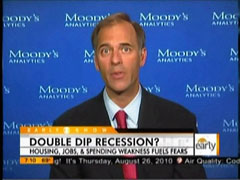
As the Obama administration’s “Recovery Summer” crumbles, CBS’s Early Show on Thursday noted how the poor economic data has made many Americans deeply pessimistic about the future, with 37% saying that the economy “is in permanent decline.” So does that mean Obama’s $862 billion stimulus is a failure? Not according to economist Mark Zandi, who was interviewed by co-host Erica Hill. Zandi asserted that “the recession ended about a year ago, in large part because of the stimulus efforts,” and the current sluggishness was because “the stimulus is now fading,” and thus “the benefit to growth is winding down.” Of course, Zandi has been a consistent enthusiast for the stimulus, as far back as early 2009, a fact which was not disclosed today. “We need stimulus,” Zandi championed on the January 28, 2009 Early Show. “It’s about preserving jobs.” After President Obama signed the behemoth spending bill, Zandi was back on the February 18, 2009 Early Show: “It`s a reasonably good plan….The fact that policymakers are working really hard here, I think, is a reason for some optimism.” Viewers might have benefitted if CBS had paired Zandi with an economist who sees the data differently (for example, the Heritage Foundation’s Brian Riedl put out a good report last week on why rampant federal spending risks destroying the economy). On the flip side, Zandi did argue against the Obama administration’s scheme to raise taxes in January, saying that while it would be “reasonable” to do so in later years, the economic recovery is now too “fragile” to withstand such an action. Here’s more of how the August 26 Early Show covered the economy: # Report from correspondent Rebecca Jarvis, headline: “Economic Woes” REBECCA JARVIS: From housing to jobs to the health of the U.S. consumer, the latest economic data has slowed significantly, and it’s having an impact on how Americans feel about the recovery. According to the most recent CBS News poll, over one-third of Americans, or 37%, think the decline is here to stay. # Interview with Mark Zandi ERICA HILL: There’s so much focus on the Obama administration, on what was done on the stimulus package. How much of what we’re seeing in the economy right now is a direct result of the administration’s policies and of the stimulus? MARK ZANDI: Well, it is related. I think it’s fair to say the recession ended about a year ago, in large part because of the stimulus efforts. I don’t think it’s any coincidence that the recession ended as the stimulus provided its maximum benefit to the economy. But, the stimulus is now fading — the housing tax credits being part of that stimulus, as an example — and so the impetus to growth, the benefit to growth is winding down, and that’s one of the reasons why the economy is slowing. HILL: So, would that be a case then, as you see the economy slowing, to extend those Bush tax cuts which we’re hearing so much about, and which has really become important as we move forward to the elections in November? ZANDI: Yeah, good point. I mean, I don’t think it would be wise to raise taxes for anyone in 2011 when the economic recovery is so fragile. Now, the President has proposed raising tax rates back to where they were [in the Clinton years] for people who make over $250,000 a year on a joint basis — that’s a very wealthy group, about three percent of the population. I think that’s reasonable, but only in 2012, 13, 14 — when the economy’s off and running. I wouldn’t do it in 2011 when the recovery is so weak.

Read the original here:
How Convenient: CBS Asks Pro-Stimulus Economist to Rate the Stimulus

NYT Editorial Board Calls Successful Tea Party Candidates ‘Insurgents’

The New York Times editorial board on Thursday called successful Tea Party candidates insurgents. For those not intimately familiar with the term, despite having several meanings, it has in the years since 9/11 become largely synonymous with terrorists. With that in mind, the imagery in ” The Wrong Kind of Enthusiasm ” was unmistakable:  Republican insurgents from the far right did well in Tuesday’s primaries. What their campaigns lack in logic, compassion and sensible policy seems to be counterbalanced by a fiercely committed voter base that is nowhere to be seen on the Democratic side. In fairness, there are two meanings to insurgent: 1. a person who rises in forcible opposition to lawful authority, esp. a person who engages in armed resistance to a government or to the execution of its laws; rebel. 2. a member of a section of a political party that revolts against the methods or policies of the party.   On cross-examination, the authors might make the case that their intent was to depict these illogical, compassionless and senseless conservatives as the latter. But the imagery and implication throughout was clearly to brand these “insurgents” as something far worse:   In Alaska, Joe Miller, a little-known lawyer from Fairbanks, has a lead for the G.O.P. Senate nomination over Lisa Murkowski, the incumbent. The race is too close to call, but Mr. Miller’s possible victory shows the power of his mentor, Sarah Palin, and the misguided popularity of his anti-immigrant, pro-gun message. Among other dubious positions, he has questioned the constitutionality of unemployment benefits. Then, the Times predictably took sides: The good news is that the anti-immigrant message may not play as well in Florida in the general election. Good news? Good news for whom? Certainly not the overwhelming majority of Americans that support Arizona’s new immigration law. But the Times wasn’t done displaying its deplorable biases, for even a victory by a moderate mainstream candidate left a sour taste: Insurgents did not triumph everywhere. In Arizona, Senator John McCain easily fended off a challenge by a former congressman, J. D. Hayworth. But he did so by throwing his principles overboard. Gone was the stalwart voice for campaign finance reform and a humane, bipartisan overhaul of immigration laws. In his place was a man calling himself “Arizona’s last line of defense,” strutting along the Mexican border in a campaign ad, telling a county sheriff that all we had to do to fix immigration was “complete the danged fence.” Yes, McCain is the Times’ darling when he tacks far-left to help pass legislation that makes conservatives sick. But defending Arizona’s border is “throwing his principles overboard.” Not surprisingly, a good Republican to these shills is really one with no principles at all.  Disgracefully, this editorial ended with more terrorist imagery: Much of the G.O.P’s fervid populist energy has been churned up by playing on some people’s fears of Hispanics and Muslims, by painting the president as a dangerous radical, by distorting the truth about the causes of the recession. Far too many Republican leaders have eagerly fed that destructive anger. Yes, the desire of the majority of Americans to defend the borders from illegal immigrants while doing everything possible to prevent another terrorist attack is “destructive anger.” Makes you wonder if former President Jimmy Carter is heading up the Times editorial board. But the larger point is that the Obama-loving liberal media are in a full state of panic about Democrat prospects in the upcoming elections. As such, the goal now is to paint every GOP candidate as too scary to hold political office.  That even the formerly lovable McCain, who has been in Congress since 1983 and is currently one of the most moderate Republicans up for re-election, is being depicted as equally frightening should clue readers in to just how far the Times is willing to go to help Democrats this cycle. Ironically, as this editorial board clearly is way on the wrong side of public opinion concerning the issues herein addressed, aren’t they behaving like insurgents rather than the objects of their disaffection? The only question is whether their actions fall under definition one or two. We’ll let you decide that.

Go here to see the original:
NYT Editorial Board Calls Successful Tea Party Candidates ‘Insurgents’

July New Home Sales: Wire Reports Dour, But Still Understated; Reuters-Quoted Economist Blames Govt.

July’s bad news in new home sales is even worse than it first appears. The seasonally adjusted annual rate of 276,000 units is bad enough. That is an all-time low since records have been kept and 12% lower than June’s annual rate. It’s also lower than what analysts predicted by about the same percentage. The lazy business press is running with those figures. But, as has been the case so many other times, it takes a trip to the raw (i.e., not seasonally adjusted) data, this time at the Census Bureau ( large PDF ), to fully comprehend the extent of the new-home market’s collapse during this big, fat failed “Recovery Summer.” The raw data shows that 25,000 new homes were sold in the U.S. in July. That’s not a typo, and it really is the figure for the entire country. Worse, that figure, the lowest July since records have been kept, is down by over one-third from July of last year, when the economy supposedly bottomed out, and by 42% from July 2008. I don’t think you’ll see those facts reported today. Here is a graphic cap of a 10:07 a.m. report at Reuters carried at CNBC.com . It contains a jaw-dropper of a quote from an economist (red box is obviously mine): You have to wonder how widely reported Mr. Porcelli’s in-your-face to the government will be, or if it will even survive future Reuters revisions. As would be expected, no similar quote is present at the Associated Press, which used its time-honored business-reporting strategy of downplaying the awful news inside of two larger stories, one about the stock market’s reaction and the other about the not as bad news about durable goods orders, instead of giving it the separate treatment it deserves. Here are a few paragraphs from the two reports. To their credit, the authors of the first cited the lowest-on-record nature of the past three months’ results, but without indicating the degree of the cratering: (Daniel Wagner and Alan Zibel, “Recovery in danger as firms, homebuyers cut back,” as of 12:09 p.m. ) The economic recovery appears to be stalling as companies cut back last month on their investments in equipment and machines and Americans bought new homes at the weakest pace in decades. … Separately, Commerce said new home sales fell 12.4 percent in July from a month earlier to a seasonally adjusted annual sales pace of 276,600. That was the slowest pace on records dating back to 1963. Collectively, the past three months have been the worst on record for new home sales. … The two reports are likely to stoke fears that the economy is on the verge of slipping back into a recession. They follow Tuesday’s report that showed sales of previously owned homes fell last month to the lowest level in decades. Unemployment remains near double digits and job growth in the private sector is slowing. … Housing has never fully recovered from the recession. Builders have been forced to compete with foreclosed properties offered at significantly lower prices. (Stephen Bernard, “More bad news on home sales sends stocks lower,” as of 12:04 p.m. ) The Dow Jones industrial average fell about 16 points in midday trading Wednesday following news that sales of new homes fell last month to the lowest level on record. It was the latest indication that home sales are stagnating after the expiration of a homebuyer tax credit this spring. … New home sales fell 12.4 percent in July to an annual rate of 276,600, the Commerce Department reported. That was the slowest pace on records dating back to 1963 and worse than the pace forecast by economists polled by Thomson Reuters. A day earlier, the National Association of Realtors said sales of existing homes, a far greater proportion of the housing market, fell to a 15-year low in July. … Despite the ultra-low borrowing rates, home sales have been weak since a home buyer tax credit expired at the end of April. High unemployment has kept people from buying homes, and banks still reeling from the crisis in the mortgage-backed securities market have been cautious in making new loans. Note how the last excerpted sentence dodges Porcelli’s contention at Reuters that “There is also little demand for lending.” Banks are being cautious, but there’s plenty of mortgage money out there for people who want to borrow (listen to the constant barrage of lender radio ads if you don’t believe it). There’s just little interest in doing so. Cross-posted at BizzyBlog.com .

See the original post here:
July New Home Sales: Wire Reports Dour, But Still Understated; Reuters-Quoted Economist Blames Govt.

Meet the Press: Dick Armey Slams Alan Greenspan’s View of Bush Tax Cuts

David Gregory on Sunday finally got an answer to his question about extending the Bush tax cuts, but it certainly wasn’t what he was expecting. For those that have been watching “Meet the Press” this month, the host has been grilling his conservative guests about this issue ever since former Federal Reserve Chairman Alan Greenspan told him on August 1 that tax cuts don’t pay for themselves. Having badgered Senate Minority Leader Mitch McConnell (R-Ky.) about this earlier in the program with no success, Gregory broached the subject with former House Majority Leader Dick Armey in a subsequent segment. With a hanging curveball coming into his wheelhouse, Armey whacked a long drive that still hasn’t landed (video follows with transcript and commentary): DAVID GREGORY, HOST: I want to, I want to address the tax debate . And what you hear from Republican leaders is an unwillingness to pay the bill as you move forward to extend the Bush tax cuts . FORMER REPRESENTATIVE DICK ARMEY (R): Not at all. MR. GREGORY: Is that wrong? You heard Alan Greenspan say that it’s borrowed money … REP. ARMEY: No. Right. MR. GREGORY: …and that they do not pay for themselves. REP. ARMEY: Where has Alan Greenspan been? John — I, I was a young undergraduate watching all my faculty celebrate the genius of John F. Kennedy as he taught us you cut taxes , revenues increase. Reagan cut taxes , revenue doubled. What — the first, most important, critical thing for the American economy is to cut the size of the federal government. This is a big, fat, sloppy, inefficient, obstructionist, Porky Pig that’s standing in the way of economic progress for the American people. It is counterproductive. It’s an extra weight. It is — and it needs to be cut or this economy can’t carry the weight. This is no thinking… D’oh! Now, that’s the way to hit a hanging curveball! With the crowd still on its feet, Gregory turned to his liberal guest for her view:  MR. GREGORY: This is the argument. GOV. JENNIFER GRANHOLM (D-MICHIGAN): Just quickly — this is the argument, and it’s a 20th century argument, it’s not a 21st century argument. When we’re competing in a global economy , the government has to partner with the private sector to create jobs. If you just slash spending, you slash the investments in the things that are going to move our economy forward, we miss out. Just very quickly, last year, the vice president came to Michigan , said we were going to get all these battery grants; we created — we have 16 companies now in Michigan just in the past year because we partnered with the private sector creating 62,000 jobs. Strategic investment with the private sector is what works in the 20th century. Actually, Granholm was playing rather fast and loose with the facts. As MLive.com reported on July 27 in an article titled “Experts Warn ‘Battery Bubble’ Could Burst Michigan’s Dreams”: Michigan and the federal government have placed a multibillion dollar bet that advanced batteries and electric vehicles will someday power the state and national economies. But experts at a National Academy of Sciences conference on the future of batteries, held here Monday, said the bet could go bust if consumers don’t buy those vehicles. And no one knows if they will. The Obama administration last year allocated $2.3 billion in stimulus funds to help develop the nascent advanced battery industry. More than half of that money — $1.35 billion — was awarded to Michigan companies and organizations. Much of the money is being spent on research and development, and on the manufacturing of advanced batteries. Michigan has supplemented that with lucrative tax credits for companies manufacturing cells and battery packs in the state. And those 62,000 jobs Granholm said were already created? Gov. Jennifer Granholm said the state expects to create 62,000 new battery jobs in Michigan over the next 10 years. Ah. So, with unemployment currently at 13.1 percent in her state, these are jobs Granholm hopes will be created in the next ten years. But that’s not what she told Gregory on Sunday. Sadly, he let her get away with it, although he did ask a good follow-up question:  MR. GREGORY: But should the Democrats be raising taxes on the wealthiest Americans during a recession? Understanding her previous faux pas concerning jobs “created,” listen to her answer:  GOV. GRANHOLM: It’s — the question is, should the tax cuts expire for the wealthiest 2 percent so that we can make the investments that will grow jobs? Yes. That’s the most effective way of creating job growth. The CBO has said that cutting taxes for the wealthiest 2 percent is the most ineffective way of creating job growth. Yep. The most effective way of creating jobs is to tax employers so the government can get the money rather than employees. Of course, what folks like Granholm and the current White House resident do is then claim they “saved” or “created” jobs regardless of any real impact to payrolls or unemployment. Pretty neat, huh?  Fortunately, Armey was having none of this:  REP. ARMEY: I’ll give you, I’ll give you anywhere from — a minimum of $2 trillion to a possible $8 trillion worth of real stimulus of the economy from the private sector if we can just relieve the private sector that’s sitting on its cash from the fear that this administration ‘s going to screw up the future of this economy. Let them understand this administration ‘s going to stand down from any new cockamamy ideas and not raise taxes and take away the return on an investment, and they’ll put that cash to work in America. MR. GREGORY: I’m going to make that the last word.  So am I. 

Read the rest here:
Meet the Press: Dick Armey Slams Alan Greenspan’s View of Bush Tax Cuts

Open Thread: America Is Becoming The Soviet Union

For general discussion and debate. Possible talking point: America is becoming the Soviet Union! Is he right? 

See the rest here:
Open Thread: America Is Becoming The Soviet Union