Tag Archives: review

REVIEW: Josh Lucas Moors Himself in Grief In Clunky Hide Away

Filmmaker Chris Eyre made his name with his 1998 debut  Smoke Signals , a delicate indie adapted from a short story by Sherman Alexie about two young men living on the Coeur D’Alene Indian Reservation who go an a road trip to retrieve the belongings of one’s recently deceased estranged father. It was a small, wistful thing that offered a look at characters and a community that don’t get a lot of time on screen. Hide Away,  Eyre’s newest work — since Smoke Signals he’s made four features that have mostly headed to TV — is in the same emotional vein as that first film, but heads away from the rez for a setting that’s more figurative and characters that are more generic (by choice, though it’s also a problem). It’s a slender story of mourning that manages some lovely bits of mood while also being dreary and a little preposterous in its spareness. Josh Lucas does a heroic amount to ground Hide Away  in real feeling in the lead role, an unnamed man who is in mourning for reasons we slowly start to understand, one related to the wife and kids we see him with in gauzy flashbacks. “Are you divorced?” people ask him. “No, I’m not,” he responds numbly. He’s told by the man from whom he buys a boat at the start of a film that a lot of divorced guys apparently do what he’s doing. He doesn’t know anything about boats — what he’s looking for is an escape, a refuge — which is why he ends up with a sailboat in barely functioning condition, the Hesperus, named for the evening star. Arriving in a black suit like he either fled straight from a business meeting or a funeral, the would-be mariner pokes around the decrepit vessel on which he plans to live, and starts learning his way around. Hide Away , which was written by Peter Vanderwall, was shot and is set in a real place — on Grand Traverse Bay in Michigan — but the film strips away most identifying details, leaving the dock on which the man’s ship is moored to seem like an outpost at the end of the world. The cinematography, by Elliot Davis, makes the place look fancifully lovely, with its still, reflective water and open skies, its winter storms and cloud banks. There’s a town nearby — the man heads in sometimes to buy groceries or booze — but he doesn’t really interact with it, having chosen solitude. A few people come and go around the dock, including a guy (Jon Tenney) who actually is divorced and using his recent boat-ownership to get women, but otherwise the man’s alone. Lucas is saddled with a lot of scenes in which he’s by himself on screen, and for the most part does an admirable job of conveying someone who’s so haunted by grief that he needed to leave the world behind without actually talking about what he went through. His moments of grief — staring out, sleepless, at night; drinking himself into a stupor at Christmas while lit-up boats past by — feel rough and believable, especially in the way he courts death by acting carelessly while never actually wanting to do the deed himself. Lucas turns the man’s repair of the ship into a series of bits of physical comedy — running out of the shower after it breaks, trying to raise the sail, setting off smoke alarms when starting a fire in the stove. He makes the repetition of work into something believably soothing, makes it seem like a process through which you could genuinely start to heal. But all the interactions the man has with the few visitors he encounters and friends he makes are leadenly infused with meaning. There’s the beautiful waitress (Ayelet Zurer) at the restaurant by the dock who seems to have taken up residence there exclusively to offer comfort sex and a more maternal caring to the broken wanders who end up nearby. There’s the older man (James Cromwell) who offers words of wisdom with regard to his own sorrow — it’s “not a recipe I recommend a young man follow.” There’s the former work colleague (Taylor Nichols) who drops by to insist the man come back to his software company, offering to set him up to telecommute. And there’s the pretty check-out girl (Casey LaBow) who inexplicably comes to him for shelter after her boyfriend beats her. The entire world seems there only to patiently nurture the man back to mental health — as if he’s in some kind of extremely elaborate sanatorium in which patients are led to think that this whole recovery-by-way-of-fixing-a-sailboat thing was their idea from the start. Hide Away has more clunky moments than it does elegantly minimalist ones, the worst of which is the glimpse of what actually happened to the man’s family. It’s over-the-top and unnecessary, given that we’d already gotten the idea about why the guy feels such guilt and grief. In shaping a film so deliberately around things left out, it would have been better to give the audience the benefit of the doubt and leave a little more mystery to the nameless man and his pain. Follow Alison Willmore on Twitter . Follow Movieline on Twitter .

See the original post:
REVIEW: Josh Lucas Moors Himself in Grief In Clunky Hide Away

REVIEW: A Cat in Paris Captures the Mystery of the Feline Heart with Gorgeous Animation

If you could distill essence de chat into a few well-chosen pen strokes, you’d end up with something like Jean-Loup Felicioli and Alain Gagnol’s superb animated adventure A Cat in Paris , a picture whose modest demeanor only underscores how expressive and imaginative it is. This isn’t the kind of big-budget animation we get from the major studios: It’s richness of another sort, a feat of hand-drawn animation that relies on spare but succinct character design and a dazzling sense of perspective — rather than a volley of cultural in-jokes — to tell its story. The picture sparkles, but in the nighttime way — its charms have a noirish gleam. Most of the picture does, in fact, take place at night, beginning and ending with the nocturnal Parisian perambulations of a wily striped cat named Dino. Dino “belongs” to a little girl named Zoe. He pledges his devotion by bringing her little gifts from his nighttime hunting jaunts. Actually, he keeps bringing her the same gift: One dangly, limp dead lizard after another, but Zoe is delighted by them and saves them all in a little box, much to the annoyance of her new nanny. What almost no one knows is that Dino doesn’t go out at night just for fun, or simply out of a feline sense of duty. He’s also a cat burglar, assisting a sneaky but noble local jewel thief, Nico, on his midnight rounds. The plot becomes more complicated — to the extent that it’s complicated at all — by the fact that Zoe’s mother, Jeanne, is a detective with the Paris police. She’s consumed with concern for Zoe, who hasn’t spoken since her father was killed by a square-shouldered, square-headed thug named Victor Costa. She’s also riven with grief, and she’s determined to avenge her husband’s death by catching Costa, who, it turns out, has a new scheme: He plans to steal a precious, valuable and huge antiquity, the Colossus of Nairobi, a hulking totem that’s being brought to the city for an exhibit. Meanwhile, though, Jeanne has peskier problems: Jewels keep disappearing from various households in the city, thanks to Nico and an accomplice with four silent, velvet paws. A Cat in Paris is being released in the states in two versions, an English-language one (in which Marcia Gay Harden, Anjelica Huston and Matthew Modine provide some of the key voices) and a subtitled French one (which features, in the role of the nanny, the voice of actress Bernadette Lafont, who, for those who keep track of such things, played Marie in The Mother and the Whore ). If you’re bringing children and are lucky enough to have bilingual ones, I recommend the French version, since it is simply more French; to hear the English language pouring forth from these characters’ mouths feels just a little wrong. But the visuals of A Cat in Paris resonate in any language, and it doesn’t hurt that the picture features a stunning, stealthy Bernard Hermann-style orchestral score by Serge Bessett. (The music in A Cat in Paris is finer and more resonant than that of any live-action picture I’ve seen this year.) This is Felicioli and Gagnol’s first full-length feature — it was a 2012 Academy Award nominee — and it clocks in at a very trim but visually rich 70 minutes. The filmmakers’ drawings are both meticulous and highly stylized: They render the rooftops of Paris (what is it about city rooftops in general, and Paris rooftops in particular?) as a dusky, velvety patchwork, an invitation to adventure — they take great delight in the city’s highs and lows, in the contrast between tall and short. Their palette features an array of oranges, from muted citrus tones to deep sienna, and lots of deep, nighttime turquoise. And they dot the picture with small but inventive visual touches: When a character dons night goggles, the figures around him are rendered as stark white lines on a flat black surface. And the gargoyles of Notre Dame feature in the climactic chase sequence, a bit of travelogue whimsy that’s nonetheless dramatically gripping, perhaps even a little dizzying for those who are hinky about heights — it doesn’t matter that you can’t really fall off a cartoon building. And then there’s Dino, an utterly bewitching arrangement of orange and chocolate triangles (with a pink one for a nose). Dino isn’t a cute cartoon cat — there’s an element of mystery and devilishness about him, suggesting that Felicioli and Gagnol understand true feline spirit. They also understand feline loyalty, which is a contradiction in terms only to those who don’t understand (to the extent that understanding is possible) these elusive, magnetic creatures. Dino comforts the distressed Zoe by visiting her in bed, sliding under her arms as if he could pretend she’d never notice. And in a way, she doesn’t notice — somehow, suddenly, Dino is simply there , a presence who changes, only ever so slightly, the nature of the room around him. That’s the quiet province of cats everywhere — not just those who are lucky enough to live in the animated city of Paris. Follow Stephanie Zacharek on Twitter . Follow Movieline on Twitter .

Read this article:
REVIEW: A Cat in Paris Captures the Mystery of the Feline Heart with Gorgeous Animation

REVIEW: A Cat in Paris Captures the Mystery of the Feline Heart with Gorgeous Animation

If you could distill essence de chat into a few well-chosen pen strokes, you’d end up with something like Jean-Loup Felicioli and Alain Gagnol’s superb animated adventure A Cat in Paris , a picture whose modest demeanor only underscores how expressive and imaginative it is. This isn’t the kind of big-budget animation we get from the major studios: It’s richness of another sort, a feat of hand-drawn animation that relies on spare but succinct character design and a dazzling sense of perspective — rather than a volley of cultural in-jokes — to tell its story. The picture sparkles, but in the nighttime way — its charms have a noirish gleam. Most of the picture does, in fact, take place at night, beginning and ending with the nocturnal Parisian perambulations of a wily striped cat named Dino. Dino “belongs” to a little girl named Zoe. He pledges his devotion by bringing her little gifts from his nighttime hunting jaunts. Actually, he keeps bringing her the same gift: One dangly, limp dead lizard after another, but Zoe is delighted by them and saves them all in a little box, much to the annoyance of her new nanny. What almost no one knows is that Dino doesn’t go out at night just for fun, or simply out of a feline sense of duty. He’s also a cat burglar, assisting a sneaky but noble local jewel thief, Nico, on his midnight rounds. The plot becomes more complicated — to the extent that it’s complicated at all — by the fact that Zoe’s mother, Jeanne, is a detective with the Paris police. She’s consumed with concern for Zoe, who hasn’t spoken since her father was killed by a square-shouldered, square-headed thug named Victor Costa. She’s also riven with grief, and she’s determined to avenge her husband’s death by catching Costa, who, it turns out, has a new scheme: He plans to steal a precious, valuable and huge antiquity, the Colossus of Nairobi, a hulking totem that’s being brought to the city for an exhibit. Meanwhile, though, Jeanne has peskier problems: Jewels keep disappearing from various households in the city, thanks to Nico and an accomplice with four silent, velvet paws. A Cat in Paris is being released in the states in two versions, an English-language one (in which Marcia Gay Harden, Anjelica Huston and Matthew Modine provide some of the key voices) and a subtitled French one (which features, in the role of the nanny, the voice of actress Bernadette Lafont, who, for those who keep track of such things, played Marie in The Mother and the Whore ). If you’re bringing children and are lucky enough to have bilingual ones, I recommend the French version, since it is simply more French; to hear the English language pouring forth from these characters’ mouths feels just a little wrong. But the visuals of A Cat in Paris resonate in any language, and it doesn’t hurt that the picture features a stunning, stealthy Bernard Hermann-style orchestral score by Serge Bessett. (The music in A Cat in Paris is finer and more resonant than that of any live-action picture I’ve seen this year.) This is Felicioli and Gagnol’s first full-length feature — it was a 2012 Academy Award nominee — and it clocks in at a very trim but visually rich 70 minutes. The filmmakers’ drawings are both meticulous and highly stylized: They render the rooftops of Paris (what is it about city rooftops in general, and Paris rooftops in particular?) as a dusky, velvety patchwork, an invitation to adventure — they take great delight in the city’s highs and lows, in the contrast between tall and short. Their palette features an array of oranges, from muted citrus tones to deep sienna, and lots of deep, nighttime turquoise. And they dot the picture with small but inventive visual touches: When a character dons night goggles, the figures around him are rendered as stark white lines on a flat black surface. And the gargoyles of Notre Dame feature in the climactic chase sequence, a bit of travelogue whimsy that’s nonetheless dramatically gripping, perhaps even a little dizzying for those who are hinky about heights — it doesn’t matter that you can’t really fall off a cartoon building. And then there’s Dino, an utterly bewitching arrangement of orange and chocolate triangles (with a pink one for a nose). Dino isn’t a cute cartoon cat — there’s an element of mystery and devilishness about him, suggesting that Felicioli and Gagnol understand true feline spirit. They also understand feline loyalty, which is a contradiction in terms only to those who don’t understand (to the extent that understanding is possible) these elusive, magnetic creatures. Dino comforts the distressed Zoe by visiting her in bed, sliding under her arms as if he could pretend she’d never notice. And in a way, she doesn’t notice — somehow, suddenly, Dino is simply there , a presence who changes, only ever so slightly, the nature of the room around him. That’s the quiet province of cats everywhere — not just those who are lucky enough to live in the animated city of Paris. Follow Stephanie Zacharek on Twitter . Follow Movieline on Twitter .

Read more from the original source:
REVIEW: A Cat in Paris Captures the Mystery of the Feline Heart with Gorgeous Animation

REVIEW: A Cat in Paris Captures the Mystery of the Feline Heart with Gorgeous Animation

If you could distill essence de chat into a few well-chosen pen strokes, you’d end up with something like Jean-Loup Felicioli and Alain Gagnol’s superb animated adventure A Cat in Paris , a picture whose modest demeanor only underscores how expressive and imaginative it is. This isn’t the kind of big-budget animation we get from the major studios: It’s richness of another sort, a feat of hand-drawn animation that relies on spare but succinct character design and a dazzling sense of perspective — rather than a volley of cultural in-jokes — to tell its story. The picture sparkles, but in the nighttime way — its charms have a noirish gleam. Most of the picture does, in fact, take place at night, beginning and ending with the nocturnal Parisian perambulations of a wily striped cat named Dino. Dino “belongs” to a little girl named Zoe. He pledges his devotion by bringing her little gifts from his nighttime hunting jaunts. Actually, he keeps bringing her the same gift: One dangly, limp dead lizard after another, but Zoe is delighted by them and saves them all in a little box, much to the annoyance of her new nanny. What almost no one knows is that Dino doesn’t go out at night just for fun, or simply out of a feline sense of duty. He’s also a cat burglar, assisting a sneaky but noble local jewel thief, Nico, on his midnight rounds. The plot becomes more complicated — to the extent that it’s complicated at all — by the fact that Zoe’s mother, Jeanne, is a detective with the Paris police. She’s consumed with concern for Zoe, who hasn’t spoken since her father was killed by a square-shouldered, square-headed thug named Victor Costa. She’s also riven with grief, and she’s determined to avenge her husband’s death by catching Costa, who, it turns out, has a new scheme: He plans to steal a precious, valuable and huge antiquity, the Colossus of Nairobi, a hulking totem that’s being brought to the city for an exhibit. Meanwhile, though, Jeanne has peskier problems: Jewels keep disappearing from various households in the city, thanks to Nico and an accomplice with four silent, velvet paws. A Cat in Paris is being released in the states in two versions, an English-language one (in which Marcia Gay Harden, Anjelica Huston and Matthew Modine provide some of the key voices) and a subtitled French one (which features, in the role of the nanny, the voice of actress Bernadette Lafont, who, for those who keep track of such things, played Marie in The Mother and the Whore ). If you’re bringing children and are lucky enough to have bilingual ones, I recommend the French version, since it is simply more French; to hear the English language pouring forth from these characters’ mouths feels just a little wrong. But the visuals of A Cat in Paris resonate in any language, and it doesn’t hurt that the picture features a stunning, stealthy Bernard Hermann-style orchestral score by Serge Bessett. (The music in A Cat in Paris is finer and more resonant than that of any live-action picture I’ve seen this year.) This is Felicioli and Gagnol’s first full-length feature — it was a 2012 Academy Award nominee — and it clocks in at a very trim but visually rich 70 minutes. The filmmakers’ drawings are both meticulous and highly stylized: They render the rooftops of Paris (what is it about city rooftops in general, and Paris rooftops in particular?) as a dusky, velvety patchwork, an invitation to adventure — they take great delight in the city’s highs and lows, in the contrast between tall and short. Their palette features an array of oranges, from muted citrus tones to deep sienna, and lots of deep, nighttime turquoise. And they dot the picture with small but inventive visual touches: When a character dons night goggles, the figures around him are rendered as stark white lines on a flat black surface. And the gargoyles of Notre Dame feature in the climactic chase sequence, a bit of travelogue whimsy that’s nonetheless dramatically gripping, perhaps even a little dizzying for those who are hinky about heights — it doesn’t matter that you can’t really fall off a cartoon building. And then there’s Dino, an utterly bewitching arrangement of orange and chocolate triangles (with a pink one for a nose). Dino isn’t a cute cartoon cat — there’s an element of mystery and devilishness about him, suggesting that Felicioli and Gagnol understand true feline spirit. They also understand feline loyalty, which is a contradiction in terms only to those who don’t understand (to the extent that understanding is possible) these elusive, magnetic creatures. Dino comforts the distressed Zoe by visiting her in bed, sliding under her arms as if he could pretend she’d never notice. And in a way, she doesn’t notice — somehow, suddenly, Dino is simply there , a presence who changes, only ever so slightly, the nature of the room around him. That’s the quiet province of cats everywhere — not just those who are lucky enough to live in the animated city of Paris. Follow Stephanie Zacharek on Twitter . Follow Movieline on Twitter .

Read the rest here:
REVIEW: A Cat in Paris Captures the Mystery of the Feline Heart with Gorgeous Animation

REVIEW: High School Makes Getting High Look Less Than Fun

High School has such a winning premise that you want to send everyone involved in making it back to the drawing board for a do-over — just take it from the top, folks, and this time everyone actually have a good time. Directed by John Stalberg, who wrote the film with Erik Linthorst and Stephen Susco, this debut feature follows uptight overachiever Henry Burke (Matt Bush) as, on the eve of finals, he dabbles in pot for the first time with his childhood friend-turned-burnout king Travis Breaux (Sean Marquette) — only to be told the next day that principal Leslie Gordon (an almost unrecognizable Michael Chiklis) is instating a student body-wide zero tolerance drug test. The plan the pair come up with to salvage Travis’s years of hard work and scholarship to MIT? They’re going to get the entire school high to throw off the results. This is, as far as stoner movies go, kind of ingenious, but  High School rushes through the parts it should savor and then pads out its runtime with filler elsewhere — and, less forgivably, it doesn’t make getting high look like fun. The stoner comedy as a genre has few requirements other than summoning up a THC haze and being generally good-natured, but  High School leaves you feeling like the sober person at a party, wincing at how everyone’s acting and wondering if that’s how you look when under the influence. This may be because that’s how Henry feels all the time — he’s a tightly wound scold who belongs to that wan breed of recent high school protagonists (see It’s Kind of a Funny Story and  The Art of Getting By ) who seem on the verge of implosion thanks to some vague, self-imposed psychological distress. The hollow-eyed Henry reunites with Travis, who is leading a seemingly parentless life on a perpetual high, after nearly running into him in the parking lot and instead hitting the principal’s car and earning a detention. “You come to see how the other half lives?” sneers Travis, who’s stuck there too. It rings strange — the division between the pair isn’t due to any class difference but to a lifestyle one, and Travis hasn’t exactly been forced to smoke pot constantly. But the two feel enough nostalgia for their younger days to end up hanging out afterward, where Travis coaxes Henry in smoking his way to an unpleasant first-time high that leaves him paranoid, dazed and with a black eye from falling out of a tree house. Because this is a stoner comedy, the fact that the setup is creaky and doesn’t quite make sense shouldn’t be a problem — except that none of the ways in which the film exaggerates are all that funny. Take Chiklis’s pompous Principal Gordon, with his flop of greasy hair and secret pervert vibe. He’s in the style of an ’80s movie authority figure like Mr. Rooney in  Ferris Bueller’s Day Off , one whose sole motivation is ego and spite — except that High School isn’t stylized in the same way. It’s grounded enough to realize that parents would instantly protest the gross invasion of privacy represented by mandatory drug testing, but not enough to explain why an administrator would be eager to expel the graduating class’ likely valedictorian. Its sense of rebellion is completely phony — that of a kid who, like Henry, got high one time and still talks about it. The film’s major asset, one that’s also wasted (in both senses), is Adrien Brody hamming it up as twitchy drug dealer Psycho Ed, a tattooed law school grad (he has “BOOK WORM” across his knuckles) who lost it after smoking a laced joint and has chosen instead to apply his smarts to growing high-octane weed. Sporting cornrows, his bug eyes rolling, Brody should be funny, though Ed’s a better idea than he is in practice — you’re aggressively aware that he’s just an actor showing off the way he’s playing against type rather than a character who’s amusing in his own right. There are other side figures who don’t click: Sebastian (Adhir Kalyan), Henry’s mustache-twirlingly evil rival for the top academic slot; stoner spelling bee champ Charlyne Phuc (Julia Ling), whose last name gets used for a lame joke; well-meaning assistant principal Brandon Ellis (Colin Hanks); a loopy former Deadhead teacher (Yeardley Smith). The movie’s big event — the spiking of bake sale brownies with THC crystals — takes place early on rather than toward the end, so it doesn’t result in the kind of delirious chaotic payoff you’d expect or want from the film. Students and teachers look dazed, lose focus and say some inexplicable things, and by the time the goofiness comes along, it’s too late. It is, horror of horrors, a portrayal of a mildly realistic high, which in the context of what should be an over-the-top film is really the last thing you want. What’s the use of a stoner film if it can’t convince you that there’s at least some fun to be had in the warm embrace of cannabis? Follow Alison Willmore on Twitter . Follow Movieline on Twitter .

See the article here:
REVIEW: High School Makes Getting High Look Less Than Fun

REVIEW: High School Makes Getting High Look Less Than Fun

High School has such a winning premise that you want to send everyone involved in making it back to the drawing board for a do-over — just take it from the top, folks, and this time everyone actually have a good time. Directed by John Stalberg, who wrote the film with Erik Linthorst and Stephen Susco, this debut feature follows uptight overachiever Henry Burke (Matt Bush) as, on the eve of finals, he dabbles in pot for the first time with his childhood friend-turned-burnout king Travis Breaux (Sean Marquette) — only to be told the next day that principal Leslie Gordon (an almost unrecognizable Michael Chiklis) is instating a student body-wide zero tolerance drug test. The plan the pair come up with to salvage Travis’s years of hard work and scholarship to MIT? They’re going to get the entire school high to throw off the results. This is, as far as stoner movies go, kind of ingenious, but  High School rushes through the parts it should savor and then pads out its runtime with filler elsewhere — and, less forgivably, it doesn’t make getting high look like fun. The stoner comedy as a genre has few requirements other than summoning up a THC haze and being generally good-natured, but  High School leaves you feeling like the sober person at a party, wincing at how everyone’s acting and wondering if that’s how you look when under the influence. This may be because that’s how Henry feels all the time — he’s a tightly wound scold who belongs to that wan breed of recent high school protagonists (see It’s Kind of a Funny Story and  The Art of Getting By ) who seem on the verge of implosion thanks to some vague, self-imposed psychological distress. The hollow-eyed Henry reunites with Travis, who is leading a seemingly parentless life on a perpetual high, after nearly running into him in the parking lot and instead hitting the principal’s car and earning a detention. “You come to see how the other half lives?” sneers Travis, who’s stuck there too. It rings strange — the division between the pair isn’t due to any class difference but to a lifestyle one, and Travis hasn’t exactly been forced to smoke pot constantly. But the two feel enough nostalgia for their younger days to end up hanging out afterward, where Travis coaxes Henry in smoking his way to an unpleasant first-time high that leaves him paranoid, dazed and with a black eye from falling out of a tree house. Because this is a stoner comedy, the fact that the setup is creaky and doesn’t quite make sense shouldn’t be a problem — except that none of the ways in which the film exaggerates are all that funny. Take Chiklis’s pompous Principal Gordon, with his flop of greasy hair and secret pervert vibe. He’s in the style of an ’80s movie authority figure like Mr. Rooney in  Ferris Bueller’s Day Off , one whose sole motivation is ego and spite — except that High School isn’t stylized in the same way. It’s grounded enough to realize that parents would instantly protest the gross invasion of privacy represented by mandatory drug testing, but not enough to explain why an administrator would be eager to expel the graduating class’ likely valedictorian. Its sense of rebellion is completely phony — that of a kid who, like Henry, got high one time and still talks about it. The film’s major asset, one that’s also wasted (in both senses), is Adrien Brody hamming it up as twitchy drug dealer Psycho Ed, a tattooed law school grad (he has “BOOK WORM” across his knuckles) who lost it after smoking a laced joint and has chosen instead to apply his smarts to growing high-octane weed. Sporting cornrows, his bug eyes rolling, Brody should be funny, though Ed’s a better idea than he is in practice — you’re aggressively aware that he’s just an actor showing off the way he’s playing against type rather than a character who’s amusing in his own right. There are other side figures who don’t click: Sebastian (Adhir Kalyan), Henry’s mustache-twirlingly evil rival for the top academic slot; stoner spelling bee champ Charlyne Phuc (Julia Ling), whose last name gets used for a lame joke; well-meaning assistant principal Brandon Ellis (Colin Hanks); a loopy former Deadhead teacher (Yeardley Smith). The movie’s big event — the spiking of bake sale brownies with THC crystals — takes place early on rather than toward the end, so it doesn’t result in the kind of delirious chaotic payoff you’d expect or want from the film. Students and teachers look dazed, lose focus and say some inexplicable things, and by the time the goofiness comes along, it’s too late. It is, horror of horrors, a portrayal of a mildly realistic high, which in the context of what should be an over-the-top film is really the last thing you want. What’s the use of a stoner film if it can’t convince you that there’s at least some fun to be had in the warm embrace of cannabis? Follow Alison Willmore on Twitter . Follow Movieline on Twitter .

See the article here:
REVIEW: High School Makes Getting High Look Less Than Fun

REVIEW: Kristen Stewart Makes a Feisty But Boring Princess in Snow White and the Huntsman

Why can’t heroines just be heroines anymore, instead of micromanaged personalities who may as well have the words “Role Model” tattooed across their foreheads? That’s the fate suffered by poor Kristen Stewart as the warrior princess athlete orphan Christ figure Snow White in Snow White and the Huntsman . She’s not just Joan of Arc — she’s Joan of Archetypes. Moviegoers who love Kristen Stewart — and they include a distinctive subgroup who avoid the Twilight pictures as a vampire eschews sunlight — have long been waiting for Snow White and the Huntsman , hoping to see this enormously appealing actress in a role that is, at last, worthy of her. I think Stewart has held her ground admirably enough in the Twilight pictures, particularly the profoundly crazy-ass Breaking Dawn – Part I , which gives her character something to do other than swan about moodily. (They don’t call her Bella Swan for nothing.) She also made a fine and fierce Joan Jett in Floria Sigismondi’s The Runaways . But Snow White and the Huntsman , the debut feature of Rupert Sanders , does her no favors. This Snow White is clearly designed to be a young woman of agency, not a girly-girl victim who waits around for a prince to save her. The problem is that she’s so admirable, so aggressively self-reliant, so beloved and respected by little forest animals as well as simple-minded villagers, that she barely has time to be a woman. Stewart is laced so tightly into her character that she can hardly breathe, let alone give a performance. Luckily, Charlize Theron — as the really, really wicked Queen Ravenna — is on hand to give us something to watch, and boy, does she. This is, of course, a “dark” version of the fairy tale, not a cheerful one, and as written by Evan Daugherty, John Lee Hancock and Hossein Amini, it at least half-delivers on that score. The picture opens with a quick backstory, revealing how the young and ravishing Ravenna tricked Snow’s father, a poor widowed king, into marrying her before murdering him on their marital bed. Along with her hapless twit of a brother, Finn (Sam Spruell) — the two have a quasi-incestuous, master-and-servant relationship — she takes over the kingdom, turning it into a place of darkness and death, as was her plan all along. She also locks away the orphaned Snow, who starts out as a little girl before morphing into the comely but feisty K Stew. Snow eventually manages to escape into the forest, which, under Ravenna’s rule, has become a wasteland in which tangled branches transform into writhing, hissing serpents and flowers that appear to be made of mussel shells glisten with venomous portent. Snow needs help, but just a little. And when a sturdy local huntsman shows up — he’s played by Chris Hemsworth, of Thor and The Avengers — the two reluctantly join forces, though Snow has not forgotten her first love, a duke’s son named William (Sam Claflin), even though we can all see how boring, if good-looking, he is. Snow White and the Huntsman isn’t as willfully hammy as that other recent entry in the Brothers Grimm source-material parade, Tarsem Singh’s Mirror, Mirror , and it’s not as enjoyable either, though admittedly it’s a completely different creature. Production designer Dominic Watkins sure knocked himself out here: One of the movie’s most fantastic backdrops is a fairy refuge inhabited by slippery, naked little creatures with pointed ears and oversized peepers; their homeland is also populated by stands of mushrooms, each sporting a single, blinking eye, and moss-covered turtles that provide handy landing pads for clouds of butterflies. Most magnificently, this forest is also home to a dignified-looking white hart with a set of antlers that spread as wide and as tall as the branches of an oak. (They resemble, in the good way, an over-the-top showgirl headdress.) The hart bows in respect to Snow, because it’s clear she has the power of healing, of leadership, of having fabulous hair even though she’s been fighting her way through an ugly forest for days on end. She’s also a great warrior, as we see during the picture’s lavish but oddly unexciting climactic battle sequence. She doesn’t even need a cadre of great English character actors disguised as dwarves to save her, but they show up anyway. (The gang includes Eddie Marsan, Ian McShane, Bob Hoskins, Ray Winstone, Nick Frost and Toby Jones, all shot to appear height-challenged.) Stewart moves through the picture looking noble and sadly dull, unwittingly setting the stage for the evil queen to steal her show. Theron is marvelous here, playing Ravenna as a cooler-than-cool customer who’ll do anything — include draining the blood from innocent young beauties — to stay young-looking. She works wonders with dum-dum dialogue along the lines of “My beauty…fades,” and struts around boldly, doing justice to Colleen Atwood’s luxurious glittering-metallic costumes. (At least one of these appears to be an obvious nod to the late British designer Alexander McQueen, featuring a collar of shiny black plumes that fan around the queen’s face like an ornithological lion’s mane.) Snow White and the Huntsman looks great. And yet even there, it’s often guilty of trying too hard. The picture was shot by Greig Fraser (the DP behind great-looking pictures like Bright Star and Let Me In ), and many of its images are arresting. But it also features a number of “what for?” visuals that have no real reason to exist other than that they look cool. At one point Ravenna submerges herself in a creamy-white milk bath (cool!) and emerges as a figurine coated in porcelain (wha…?). Clearly, this is one of her special magic beauty treatments, but it doesn’t make sense even in a fantastical way. And it’s emblematic of all the ways in which Snow White and the Huntsman works overtime to wow us, to make us shiver, to remind us that, hey, girls can be strong too! This Snow White is no wussy princess. But her tomboy nobility is no match for the imperious Ravenna and her succession of liquid-stainless-steel gowns and spiky medieval-gal-on-the-rag headgear. Don’t see Snow White and the Huntsman for its ho-hum empowerment message. See it for the killer clothes. Follow Stephanie Zacharek on Twitter . Follow Movieline on Twitter .

Read more from the original source:
REVIEW: Kristen Stewart Makes a Feisty But Boring Princess in Snow White and the Huntsman

REVIEW: Despite Cristero War Setting, For Greater Glory Could Use a Better Story

Although he converted to marry his devoutly Catholic wife in 1926, Graham Greene was famously called to the faith during his time in Mexico, where he exiled himself in 1938, after an over-stimulated review of a Shirley Temple movie threatened him with extradition to the United States on libel charges. It was in Mexico that Greene conceived the first novel in his “Catholic trilogy,” The Power and the Glory , about a priest on the run during the Cristero War. The context of that war is laid out in reams of curly font at the beginning of For Greater Glory , and I guess I mention Graham Greene because the two hours of prancing melo-epic that follow those introductory paragraphs compare so poorly to the nuance and moral rigor of his masterpiece. To be fair, that’s probably a given – what I mean is that I began, not long after the opening credits, to long for an escape into a better story. I kept wanting to sneak Greene’s “whiskey priest” into the film’s turgid, sepia-toned landscapes and start following him through his purely fictional paces. Where Greene’s hero was racked with doubt, there’s very little of that at the outset of For Greater Glory ; the embalming agents of history will do that to a story. President Calles (Rubén Blades) informs the press that “Mexico is under siege,” and describes his campaign to rid the country of its overweening religious influences. Calles passed legislation that banned Catholic services, forbid priests and nuns from being seen in clerical garb, and severely restricted the rights of the faithful. Religion-neutral revolutionary war hero-turned-mogul General Gorostieta (Andy Garcia) addresses the concerns of his devout wife (Eva Longoria): “As an ex-military man I can tell you it’s only a matter of time until Calles is overthrown.” The rebels (including Catalina Sandino Moreno and Santiago Cabrera) amassing an underground alliance are as certain in their beliefs, and pledge a peaceful resistance. Young José (astonishing newcomer Mauricio Kuri) is chastised by his father (Nestor Carbonell) for taunting a priest (Peter O’Toole); the priest responds by making José an altar boy. Soon after, O’Toole is martyred before his protégé’s eyes, galvanizing the boy’s faith where it might have been understandably thrown into chaos. The scene is shameless, the pair locking eyes and praying together at the moment of execution, and comes very early on. But For Greater Glory is just getting started, both with its jarring emotional pace and deliberate muddling of the issue of whether our heroes are fighting for their God or for a larger freedom of religious belief. Garcia’s General is positioned as the lightning rod for this question: When the Cristeros decide to fight back, they seek to recruit him as a leader, but the only glory the General is interested in has to do with medals and kill counts. Bored with his soap factory, Garcia squares his mercenary interest in the offer with the idea, as he later hisses to his old war buddy Calles, that the latter “declared war on freedom.” (Oh no he did not!) But the General’s reluctant conversion – the result of the bond he develops with José, who joins the revolt – manages to sidestep the idea of a motivating ideology. Instead Glory relies more on sentiment for its climax, mixing in just enough piety to fully and finally confuse the film’s perspective. Michael Love’s script is full of beans and Catholic loopholes: In one scene a priest tells his men that they might fire bullets, but God decides where they land. In another he counsels that God doesn’t worry about those who kill a body, only those who kill a soul. There doesn’t seem to be any scrutinizing awareness surrounding these lines; certainly director (and effects maven) Dean Wright appears to rejoice in depicting the war’s violence, whether it’s the bodies swinging from telephone poles or the constant puh-pow, puh-pow, p-chew, p-chew of the shoot ‘em up scenes (though the renegade fighter played by Oscar Isaac has a welcome, snarling vitality). There’s a moment, early on, when For Greater Glory fires up the viewer’s camp alert, specifically when Blades ends one of his diabolical, “let them eat dick” pronouncements – and the scene – by lazily spinning a globe with his index finger. Ultimately the movie has too much going on to be primarily a campy pleasure. Bruce Greenwood works his oaky inflections as the U.S. ambassador responsible for arming Calles’s men with advanced artillery in exchange for oil; several performers eke out genuinely moving moments. But there’s enough froth along the way to keep the memory of Will Ferrell’s recent Casa Di Me Padre close at hand. I’m still Catholic enough to feel guilty about that, especially given the closing-credits images of the actual subjects – martyrs all – and one actual, unidentified execution. I hereby sentence myself to a re-reading of The Power and the Glory as penance. Follow Michelle Orange on Twitter . Follow Movieline on Twitter .

Originally posted here:
REVIEW: Despite Cristero War Setting, For Greater Glory Could Use a Better Story

Ween May Be Gone, But Their ‘Good Run’ Lives On

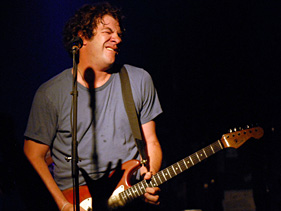
With the band (apparently) calling it quits after 25 years, Bigger Than the Sound offers a eulogy. By James Montgomery Dean Ween Photo: Chris McKay/ WireImage In my review of Ween ‘s 2007 album La Cucaracha (which also happens to be the last time they were mentioned on this website), I referred to them as “musical cockroaches,” the kind of scurrying, scrounging band that — much like the titular (and totally gross) arthropod on the record’s cover — was capable of surviving nuclear holocausts and subsisting on a bar of soap for weeks at a time. “In essence, Ween are indestructible,” I wrote. “They will be here long after you and I are gone.” It turns out, I was wrong about that last point. Because on Tuesday, Aaron Freeman, better known to bong-rippers and Scotchgard-huffers everywhere as Gene Ween, told Rolling Stone that he was retiring the mantle and ending Ween, saying, simply, “It’s been a long time; 25 years. It was a good run.” Of course, this apparently came as a surprise to Freeman’s partner for the past quarter-century, Mickey “Dean Ween” Melchiondo, who reportedly wrote on his private Facebook page that the band’s breakup “is news to me, all I can say for now I guess.” There’s been no official announcement on Ween’s site , and as late as 2010, the duo were talking about entering the studio to begin work on the follow-up to Cucaracha, though, from the sound of things, those sessions probably didn’t go all that well … if they ever happened at all. But if this really is the end of the band, well, most fans probably saw it coming. After an infamous onstage meltdown at a Ween show last year, Freeman entered rehab (and just released a solo album, Marvelous Clouds ), and in recent years, Melchiondo has devoted most of his time to his side-job as a fishing guide (he describes himself as both a “pretty good conversationalist” and “fully insured”). Still, none of that makes the news any less of a bummer, especially for folks like me, who grew up with Ween, got sh–faced at their live shows — a genuine rite of passage for any fan — spent endless smoky nights dissecting their wildly divergent back catalog and, as a result, would go on to process popular music through their own uniquely cracked spectrum. Freeman is right: It was a good run. And that’s why it’s taken me almost a day to write this column. After all, how does one encapsulate their 25-year career, which began in eighth-grade typing class and has encompassed tape-machine schlock, bizarre, brain-addled semi-hits — 1993’s “Push Th’ Little Daisys” — critical acclaim and Pizza Hut commercials (and master classes in old-school country & western, nautical prog, Beatles-y psych, Buffett-y calypso and, uh, Philly Soul, to name just a few of the dozens of genres they’ve skewered)? Because of all that, they most certainly rank up there as one of weirdest acts of all time, earning their rightful place alongside the likes of Zappa, Spike Jones, Screamin’ Jay Hawkins and Captain Beefheart … though, to me, Ween were always something more: They were an entry point to all that oddity, the first of their kind. The moment I heard “Dr. Rock” or “The Stallion, Pt. 1” (from 1991’s The Pod ), I could practically feel my musical consciousness being expanded, and from that moment on, everything was different. In a lot of ways, Ween made me. I followed them through every twist and turn, often as puzzled as I was delighted ( 12 Golden Country Greats and The Mollusk remain two of my favorite albums ever). But through it all, Ween remained an important band for me, an old favorite, a reminder of the good times when I didn’t know better and when it was socially acceptable to wear basketball shorts and sit cross-legged in smoky dorm rooms all day long. And while nothing I write can effectively eulogize them, I do think that, in closing, it’s important to defend them in one regard: No matter what anyone tells you, Ween were never a “joke” band. They were a terrific band, one adept at doing anything — mostly because they wanted to — and brilliant enough to carry it out to the nth degree. The attention to detail on albums like White Pepper or Mollusk was the kind of thing only true musicians (and music aficionados) could muster — if Ween were gonna do a prog record, you’d better believe it was gonna sound like a prog record — and that held true to the very end. On what might very well end up being their final album track (the smooth-jazz-slaying “Your Party,” from La Cucaracha ), not only did they nail the buttocks-clenching uprightness of the genre, but they went out and got none other than David Sanborn to play satin-sheet sax on the thing. That goes beyond mere humor; it’s pure genius. And that’s what Ween were, to me, and to a whole lot of other people too: musical geniuses. They just managed to hide it for 25 years — though those of us who worship at the altar of the Boognish knew otherwise. Ween may not have lasted forever, but the memories they’ve soundtracked certainly will. It’s a Brown day, indeed. Related Artists Ween

Visit link:
Ween May Be Gone, But Their ‘Good Run’ Lives On

Kristen Stewart Reviews Rob Pattinson’s ‘Cosmopolis’

‘It’s so good, it’s so cool, I’m so proud of him,’ she gushes to MTV News. By Kara Warner, with reporting by Josh Horowitz Kristen Stewart Photo: MTV News Kristen Stewart made quite a statement when she attended the Cannes Film Festival premiere of “Cosmopolis” last week in support of co-star (and boyfriend?) Robert Pattinson . So when MTV News caught up with her during our Sneak Peek Week Q&A for her latest movie, “Snow White and the Huntsman,” we had to ask for her review of the film. “He’s so good in it!” Stewart gushed about Pattinson’s performance. “He’s really, really [good]. I don’t even know how he [did it]. I couldn’t even understand it. It’s so good, it’s so cool, I’m so proud of him. Thank God.” The superstar went said her overall experience at the highbrow film bonanza was just as positive as her review of Pattinson’s performance. “It’s the ultimate celebration,” she said of the glitz and glamour of the fest, which she also attended on behalf of her film “On the Road.” “I was so oddly placed in my body, which I’m so unable to do. I was not nervous. I had the greatest time it was so cool.” After its Cannes premiere, critics pointed out the film’s odd notes but were divided on whether Pattinson was the perfect choice for the lead role. Directed by David Cronenberg, the film follows Eric Packer (Pattinson) in the not-too-distant future as he’s chauffeured through Manhattan on his way to get a haircut. His entire world is falling apart — his marriage is failing, his financial status is slipping and even his very life is being threatened. Don’t forget to tune into MTV and MTV.com for more Sneak Peek Week fun with stars from “Magic Mike,” “That’s My Boy” and “Rock of Ages,” all leading up to the 21st annual MTV Movie Awards live on Sunday, June 3, at 9 p.m. ET. Head over to MovieAwards.MTV.com to vote for your favorite flicks now! The 21st annual MTV Movie Awards air live this Sunday, June 3, at 9 p.m. ET. Related Videos Movie Awards Sneak Peek Week: ‘Snow White And The Huntsman’

Here is the original post:
Kristen Stewart Reviews Rob Pattinson’s ‘Cosmopolis’