“Director Sacha Gervasi has tapped Scarlett Johansson and James D’Arcy to play Psycho stars Janet Leigh and Anthony Perkins in Fox Searchlight’s Alfred Hitchcock and the Making of Psycho . Anthony Hopkins will play the iconic director, while Helen Mirren will play his wife, Alma. Sources tell Variety that Making of Psycho has drawn comparisons to My Week With Marilyn , and that the role of Janet Leigh could lead to the same awards consideration for Johansson that the Marilyn Monroe role did for Michelle Williams.” [ Variety ]
” Shoot the dog .” In the vein of powerhouse Aussie import Animal Kingdom comes The Snowtown Murders , a chilling thriller based on the true story of charismatic charmer and sociopathic serial killer John Bunting, who led a band of criminals in South Australia as they kidnapped, robbed, terrorized, and murdered victims from their own community during the ’90s. Get a glimpse of the masterful manipulation skills that helped Bunting earn the notorious title of Australia’s worst serial killer in Movieline’s riveting exclusive clip, featuring Daniel Henshall as Bunting and Lucas Pittaway as his emotionally vulnerable protege — tasked here with proving himself by committing a heinous act at Bunting’s behest. In her review of the film , Movieline’s own Alison Willmore described Henshall’s Bunting as “an unassuming monster,” and as you can see in the clip below Henshall is wonderfully, and chillingly, unsettling. Director Justin Kurzel’s slow-burn pic introduces the notorious killer as a do-gooder savior who steps in to pull an ailing Australian community up by its bootstraps, drawing his group of brethren deeper and deeper into adopting and, frequently, aiding in his own ultraviolent tendencies; by the time the most heinous atrocities have been committed, it can at least be understood just how these neighbors and friends had fallen under Bunting’s destructive spell in the first place. First screened at the Cannes Film Festival (where it won the FIPRESCI Prize — special mention) as Snowtown , The Snowtown Murders is quite an unsettling but powerful watch, but is worth seeing especially if you’re curious about the so-called Australian New Wave. The film hits theaters in limited release today (NYC Friday at IFC Center, 3/15 in LA at the Egyptian) but can already be viewed now on IFC Midnight VOD. Follow Jen Yamato on Twitter . Follow Movieline on Twitter .
It wasn’t all tepid , frustrating and demoralizing Sunday night at the Oscars. We’ll always have the red carpet with all its bitchy tweets , tuxedo sabotage , wheelchair awkwardness and wackadoodle screen vets getting the live, televised attention they so richly, richly deserve. Take Richard Dreyfuss and Nick Nolte, for example. Who was crazier? Oscar-winner Dreyfuss practically melted with contempt for the whole post-Oscar scene, veering from modulated bickering to some rant about retiring from movies, the Constitution, the conservative political patrons the Koch brothers, and… Well, here. Watch: It made for a fine complement to the evening’s earlier red-carpet batshittery, with nominee Nolte making the most of his face time by discussing crows, pinball machines and whatever else his interviewer brought up (when he could hear and/or understand her): Are you thinking what I’m thinking? Down and Out in Beverly Hills : The Senior Years ? Someone find Bette Midler, let’s get on this! Follow S.T. VanAirsdale on Twitter . Follow Movieline on Twitter .
“When I was in junior high, I was sewing my own clothes. I had these looks. Sometimes they were very tragic. I wore a pair of green, silk, MC Hammer–style pants with the low crotch, Birkenstocks, and my hair in a turban. What that look was, I don’t know, but it was kind of amazing.” [ BlackBook ]
The annals of filmmaking are filled with stories of people who managed to make movies against all odds, without money, without shooting permits, without proper professional equipment. This Is Not a Film, the 75-minute film directed by Iranian filmmaker Jafar Panahi and Mojtaba Mirtahmasb that made its debut at Cannes last spring and is now, thankfully, arriving in theaters Stateside, may be the ultimate achievement in stealth filmmaking, considering that Panahi is currently serving a six-year jail sentence and has been banned by the Iranian government from making films for 20 years. And yet somehow he has made a movie that found its way first to one of the world’s major film festivals, and now to other parts of the world: This Is Not a Film is a small but extremely significant message in a bottle. That metaphor is almost literal: The picture made its way to Cannes via a USB drive — which was smuggled in a cake. The movie covers a day in Panahi’s life as he’s waiting to hear the results of his appeal. It was shot with a digital camera (manned by Mirtahmasb, a documentary filmmaker, who is also heard asking Panahi questions off-camera) and an iPhone (wielded, slyly, by Panahi, because how much harm can a little home movie do?). Mirtahmasb’s camera captures the mundane details of Panahi’s life as he makes and takes calls on his cell phone (including one from his lawyer), answers the door for the food-delivery guy, feeds some greens to his daughter’s large, and surprisingly personable, pet iguana. From these mundane details spring all sorts of provocative, frustrated conversations about the nature of filmmaking under a repressive regime. At one point, Panahi reveals that he’s going to tell the story of a script that he wrote before his arrest, which the authorities had refused to approve. With masking tape, he marks off a corner of his nicely furnished living room to serve as a makeshift set; he describes the actions of his main character, a suicidal young woman. Then he stops abruptly, realizing the futility of the enterprise: “If we could tell a film, then why make a film?” The moment is piercing for the way it cuts to the heart of Panahi’s plight: Here we have a gifted, dedicated filmmaker being kept from doing the thing he lives for. You may as well cut off his right arm – though Panahi himself is too optimistic for that, never resorting to self-pity, at least here. And the fact that Asghar Farhadi’s A Separation managed to win an Oscar this past weekend – something Panahi couldn’t have known, of course, while this Not a Film was being made – does raise the visibility of the restrictions and outright danger Iranian filmmakers face. In that context, seeing This Is Not a Film today is a slightly more hopeful experience than it was last May. Still, Panahi’s house arrest is cause for no one’s joy. (No one outside the Iranian government, that is.) In the course of the day, we hear fireworks outside that sound like gunshots, part of a Persian New Year’s celebration known as “Fireworks Wednesday” that’s supposedly benign and celebratory but which, under current conditions, has the capacity to turn violent. A neighbor rings the doorbell of Panahi’s apartment: She wonders if he’ll watch her small, noisy dog for a few hours while she goes off to the fireworks, and though Panahi at first agrees, he calls her back just seconds later when the dog launches into a barking tirade. Panahi goes online, noting that his access to sites he might like to visit has been seriously curtailed. He turns on the television to catch news of the earthquake in Japan. In the film’s final section, filmed by Panahi himself (now manning the professional camera and not the iPhone), an impromptu encounter with a young man who’s filling in for the building’s superintendent becomes a kind of mini-Panahi film. Earlier Panahi pictures like The Circle and Offside are deeply political movies that derive all their meaning from depictions of people’s everyday lives, rather than from any contrived arrangement of abstract ideas. By the end of This Is Not a Film Panahi, going from floor to floor with this affable, photogenic guy (he’s also a student) as he collects the residents’ garbage, has turned the camera away from himself and out toward the world, even if that world is only an elevator and, later, a courtyard beyond which lies a blazing bonfire that may or may not be celebratory. This Is Not a Film is so technically modest that it almost isn’t a film. Yet in its simplicity it’s as direct as a laser beam, underscoring why Panahi is considered so dangerous by his country’s government: The difference between just looking and really seeing is second nature to him. Editor’s note: Portions of this review appeared earlier, in a slightly different form, in Stephanie Zacharek’s Cannes Film Festival coverage. Follow Stephanie Zacharek on Twitter . Follow Movieline on Twitter .
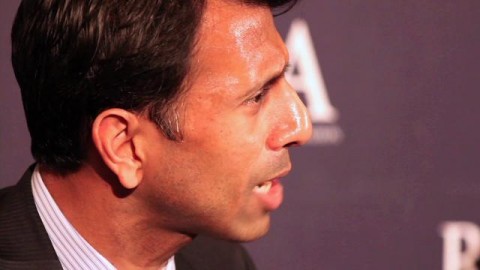
At a press conference with Nikki Haley and Bob McDonnell at the Republican Governors’ Association yesterday, Louisiana governor Bobby Jindal perfectly stated the conservative position on energy in response to a question on gas prices. Gov. Bobby Jindal on Energy from Republican Governors Association on Vimeo. National Review’s Jim Geraghty called Jindal’s answer a “Clinic” Broadcasting platform : Vimeo Source : The Hayride Discovery Date : 28/02/2012 18:44 Number of articles : 2
The films almost couldn’t be more different: Hugo is an epic, 3-D family film that wraps us up in a warm glow, and The Girl With the Dragon Tattoo is a chilling murder mystery set in the stifling Nordic winter. Robert Richardson and Jeff Cronenweth — the cinematographers (pictured above R-L) tasked with making these respective worlds believable — will contend this weekend for an Oscar for Best Cinematography (along with The Artist ‘s Guillaume Schiffman, The Tree of Life ‘s Emmanuel Lubezki and War Horse ‘s Janusz Kaminski). Movieline spoke with Cronenweth and Richardson about their approach and style on their nominated films as well as their recognition from the Academy. What did the narrative of this film demand of you in terms of style? CRONENWETH: A murder mystery in and of itself has its own set of dramatic license and techniques to implore. But with Dragon Tattoo being the first book of the incredibly detailed Stieg Larsson trilogy and set in the Swedish countryside during a particularly harsh winter, we inherited certain esthetic obligations, the most obvious one being the cold and how it affects the lives of our characters. It was imperative that we afforded the audience to appreciate that visually through quality and color of light and through sound effects. RICHARDSON: The narrative of Hugo slipped from the seed of Brian Selznick’s illustrations — in that respect all departments enhanced the reality of the world that Hugo lived within — that became the foundation of our style. How much did you collaborate with your director on the message of each scene? CRONENWETH: Well, there is always a conversation about the impetus of each scene and the purpose of each shot within that scene. Then on the shoot day, when we actually rehearse with the cast and block the scene, we apply those discussions but stay open to discovery. RICHARDSON: Communication with Marty [Scorsese] is extremely specific — there is not a shot within his storyboards that does not have a purpose — in the same light his concept of what each scenes “message” might be is a reflection of this degree of precision — in respect to collaboration — generally it is less about collaboration of origin of concept and more about collaborating on manner and methods of achievement of his vision. This year, there’s a mix of digital and film among the nominees for Best Cinematography. How much does shooting on film vs. digital matter to you? CRONENWETH: I still like the notion that some formats support certain stories better than others, and I like the idea that we are afforded the luxury of different story telling tools. But having said that I feel the gap between the two has closed for all intents and purposes. RICHARDSON: Digital capture and film capture both have their advantages and disadvantages. I shot Hugo on digital with the Alexa and am now in the process of shooting Django Unchained on 35mm anamorphic. I feel comfortable with either digital or film — the director and the project should determine the course of choice. Does this digital-film diversity among cinematographers make it a more exciting race, and how so? CRONENWETH : I think the drastically different subject matter and story styles are a more interesting conversation than the digital vs. film. Black-and-white silent-period movie, a 3-D children’s fairy tale colorful and dramatic, WWII fantasy about a horse beautifully epic and classic, a story of life shot free-flowing with available light crosscut with nature’s marvels, and a murder mystery set in the Swedish country in the middle of winter. RICHARDSON: I am uncertain about this question. The product should speak for itself. I sense that perhaps you are making too much of too little. In the end (I believe) not one of the projects is not in some manner a digital collaboration — the digital intermediate currently is placed between capture and presentation — the number of screens with which to view a film capture and traditional chemical treatment is on a rapid decline — most presentations are now digital cinema and that percentage will rise exponentially — was The Artist shot on black and white? I am uncertain, but I would hazard the guess that it was shot on color film and then in post had the color removed, meaning regardless of capture most projects at some point become digitized. With that in mind I would ask if you might tell me where does digital and film begin and or end. Furthermore, what is the percentage of films that you have viewed this year that were captured on film, processed, printed for dailies and distributed on film to the cinema? Sadly, cinemas with film as the primary source are disappearing. We need to remain open to change. That does not require one to divorce the past but to respect and process both the present and the future. Are there any colleagues you would’ve liked to see nominated for best cinematography this year? CRONENWETH: Newton Thomas Sigel for Drive . RICHARDSON: Far too many to list. Who is accompanying you to the ceremony? CRONENWETH: My beautiful girlfriend Tyne Doyle. RICHARDSON: My wife, Stephanie Martin, will be accompanying me to the Oscars as she did to the BAFTAs. How are you following this film? What is your next project? CRONENWETH: Directing commercials at the moment and reading scripts. RICHARDSON: I followed Hugo with World War Z (Marc Forster), and I am currently filming Django Unchained (Quentin Tarantino). MORE 2012 OSCAR ROUNDTABLES & CHATS Best Costume Design Best Documentary Feature Best Foreign-Language Feature
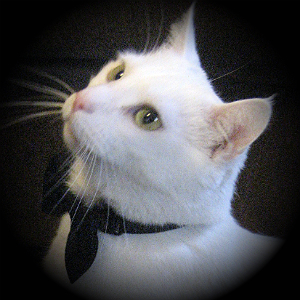
Meet Otis the Oscar Cat, Movieline’s resident feline awards prognosticator. Like the majority of Academy members , he’s white, male, and owns a black tie; his tastes tend toward the traditional, although he’ll bite at the occasional tasty treat. To get an inside line on Sunday’s Best Picture winner, we consulted Otis for his Oscar picks — will the Academy Award go to The Artist , starring that rascally pup Uggie ? Or perhaps War Horse , by a nose? Presented with all nine Best Picture nominees — The Artist , The Descendants , Extremely Loud and Incredibly Close , The Help , Hugo , Midnight in Paris , Moneyball , Tree of Life , and War Horse — Otis weighed each film’s merits. Treats were involved, but don’t we all get a bit peckish when sorting out life’s big questions? As he considered the nominees with care and deliberation, Otis went back and forth between his favorites before landing firmly, and with no outside influence, on his ultimate selection. Otis is sure that his peers in the Academy went through a similar process with their vote. Otis the Oscar Cat considers the field of nominees. He’s drawn to War Horse , but… ” The Descendants , man. I do so adore Alexander Payne.” ” All the other cats loved The Help ; it ruined chocolate pie for me forever.” ” Hugo took me back to the whimsy of my youth, although those 3-D glasses are so very cumbersome.” “This is hard, isn’t it, shadow?” “Ooooh, Brad Pitt!” In the end, there is no contest. Otis picks The Artist with two paws up! “Berenice, mon amour!” Bonus pick: A Cat in Paris for Best Animated Feature! And with a beatific stare into the distance and a lock on this year’s kitty Oscar pool, Otis the Oscar Cat bids adieu until next year.
When the Academy announced its nominations last month for Best Animated Feature, two waves of surprise washed over Oscar watchers: Not only was Pixar left out in the cold for the first time in its history, but also two lesser-known films from abroad made the cut in the category: the noir-y French entry A Cat in Paris and the Spanish-language jazz-romance Chico and Rita . The directors of those films, along with Kung Fu Panda 2 helmer Jennifer Yuh Nelson, one of few female directors nominated this year, spoke with Movieline about the recognition from the Academy, technologies such as 3-D and motion capture, and their Oscar night excitement. So get to know three of the filmmakers from the animation community who could go home with a trophy on Sunday: For A Cat in Paris we have Alain Gagnol, who co-directed with Jean-Loup Felicioli, and for Chico and Rita we have Fernando Trueba, who directed along with Tono Errando and Javier Mariscal. (Fellow nominees Chris Miller [ Puss in Boots ] and Gore Verbinski [ Rango ] were not available to participate.) Animation nominees seem to have the most fun at the Academy Awards. What are you looking forward to most on Oscar Sunday? GAGNOL: Actually, Hollywood is the opposite of my world, so everything is amazing, incredible, and funny. But the most impressive part is to see, at the reach of my hand, some of my favorite directors. Scorsese and Spielberg gave me the desire to make movies. They gave me the strength to make my dreams come true. NELSON: I’m looking forward to a whole lot of people-watching. And going on a seriously cool date with the husband. TRUEBA: Well, being nominated is already a big prize for us. I didn’t know the animation nominees were supposed to have the most fun? How do you feel about the Best Picture category being expanded to nine films but having animation shut out? GAGNOL: For too many people, animated films are not genuine cinema. But I don’t think that is the problem here. I have to admit that without young children, most adults are not going to watch animated movies. They are concerned these films won’t have anything for them, and they will be bored. I also think that because there’s no such thing as a human face in animated cinema, seeing the actors and actresses in live-action films are very fascinating for the audience, and they may not think they have those celebrity images to relate to. NELSON: I think that the movies nominated are very deserving, and that the number spices it up. I would love to see animated films widen from a realm reserved for family entertainment and become just a technique used in all ranges of cinema. Once that happens, I think it will show up regularly in all categories. TRUEBA: I didn’t like it. To me [more nominations] is a wrong decision, and I don’t know anyone who prefers it this way. I think the most important prize has lost a lot of his charm. It’s almost impossible to know all of them. Too, too many. It’s much better [with] five. Do you see the Academy’s recent rule about motion-capture films as an attempt to emphasize traditional hand-drawn animation? GAGNOL: Computers are so useful that they tend to be everywhere. But they are perfect, and the limits of life are not an issue for them. Therefore, sometimes human beings seem to have been forgotten in the process. Hand-drawn animation is far from perfect but we can feel the sensitivity of the animator. But I don’t think that one kind of animation is better than the other one. After all, the most important thing is the story we want to tell. Computers are still not able to write stories. NELSON: The films chosen show a wide range of techniques, not just hand-drawn. Three of them are CG, so it’s nice to see that such different films were recognized. But computer or not, these films were created frame-by-frame by animators. Some mo-cap is so heavily worked by animators that it may as well be full animation. Whereas others are very automated. The question then becomes one of artistry. TRUEBA: Maybe, animation has today many different techniques and approaches. And it is not easy to dictate the rules now to such a complex field. But maybe something should be done. Several live-action and animated films nominated this year, including top nominee Hugo , were released in 3-D. In your view, does 3-D help or hurt a film’s chances of taking home an Oscar? GAGNOL: I’m not a great fan of 3-D movies. In my opinion, it doesn’t bring anything really interesting to cinema. A well-composed picture can give all the feelings needed by a story. When a movie is good, you already have the feeling of being a part of it. NELSON: 3-D is a cinematic tool that can be used or abused. Used well, it is a true enhancement of the film. I enjoy seeing the boundaries being pushed on how we can simulate an immersive experience. Like surround sound, immersive picture can really make you feel the film all the more. But it has to be done well. TRUEBA: I really hate 3-D. This stuff is invented every decade and after a while, people get bored of it. For me 3-D makes movies lose their nature. It’s just for children and people who go occasionally to movies. Real moviegoers don’t need 3-D. And personally I can’t see 3-D. I’m strabic !!! Maybe you can assist some moviegoers in filling out their ballots: Who will win for Best Animated Short film? GAGNOL: I’m sorry I can’t answer that question because I haven’t yet had the opportunity to watch these films. NELSON: Oh please, I may be working for some of these people someday. I don’t want any of them mad at me. TRUEBA: La Luna. Who is accompanying you to the ceremony? GAGNOL: As I am coming from France, I think my jet lag will be with me all along. NELSON: My sweet husband will be with me, making sure I don’t trip in my heels. Also, since DWA has two films nominated, there will be a posse of great people including Melissa Cobb the producer of KFP2 , and Raymond Zibach, the very talented production designer. TRUEBA: My friend and co-director of Chico and Rita , Javier Mariscal, and my wife and producer, Cristina. How are you following this film? What projects are in the works? GAGNOL: I am working on a new feature film. It’s also a thriller for children but with an additional fantasy aspect. I have already worked on the script for more than two years, and Jean-Loup has drawn the first pictures. The action takes place in New York. One of the great advantages of making animated movies, as directors, is that we can go everywhere from our drawing table. NELSON: I’m developing something, but it’s a secret at the moment. TRUEBA: I just finished a new movie, The Artist and the Model, my first movie in French, featuring Jean Rochefort, Aida Folch and Claudia Cardinale. MORE 2012 OSCAR ROUNDTABLES AND CHATS Best Cinematography Best Costume Design Best Documentary Feature Best Foreign-Language Feature
Tyler Perry doesn’t don drag or delve into religion in his latest, Good Deeds — the film isn’t part of the prolific entertainment giant’s Madea franchise (next stop Madea’s Witness Protection , slated for later in 2012), but rather of his less broad line of feel-good dramedies like Daddy’s Little Girls and Why Did I Get Married? But despite the restrained tone, it’s no less savvy an entertainment, one that Perry wrote, directed and stars in as San Francisco businessman Wesley Deeds, the wealthy, perfect son of a good family, head of the company his father created. Wesley’s life changes when he meets Lindsey (Thandie Newton), a beleaguered single mom who works as the night janitor in his office building. Like Maid in Manhattan , Good Deeds is an urban fairy tale in which the idea of a prince swooping down to woo and rescue the poor cinder girl is given a contemporary twist. But the film is well aware that it’s Wesley, and the man playing him, who are the real objects of fantasy here. Loving to his icy mother (Phylicia Rashad), protective of his alcoholic, angry brother Walter (Brian White), devoted in his stewardship of the business he was left, this Deeds is actually too good, too reliable, subsuming any actual desires of his own to cater to the needs of everyone around him. He’s so safe and predictable that when his fiancée Natalie (Gabrielle Union) finds a blonde hair on a pillow in their bed, she takes it not as a sign of possible infidelity but as one that she needs to tell the housekeeper to be more careful with their dry cleaning. It’s Lindsey, who with her 6-year-old daughter Ariel has recently fallen from a precarious economic situation into full-on homelessness, who breaks through Wesley’s shell by, well, trampling all over him. Good Deeds has the shrillest meet-cute imaginable, in which Lindsey parks in Wesley’s spot in the company lot and, having no idea who he is, calls him an asshole and walks away. Later, she taunts that he’s going to run and “tell massa” on her when he catches her using an office phone for a personal call late at night. Lindsey’s abrasiveness is weirdly delightful — she’s not on the lookout for anyone to save her, and she’s going through a very difficult time — but it’s one of several reasons the romance angle of this otherwise engaging melodrama doesn’t work. The primary one is chemistry — Lindsey and Wesley have none at all. There’s a sibling quality to their banter that diminishes the potentially creepy aspects to the fact that Wesley comes to Lindsey’s aid financially, buying her and her daughter dinner and eventually providing her with a place to stay in a corporate apartment, but there’s no spark between them, even as her influence starts opening him to new possibilities in his life. Newton’s loveliness is undeniable, but it’s downplayed until late in the film — before that point, she’s harried and frequently seen wearing a cleaning crew outfit, sleeping with Ariel in her minivan or trying to hide the girl in a supply closet while she works the night shift. In contrast, Union’s character is shown beginning the day getting immaculately made up while wearing a slip and heels. Part of the fancy of Good Deeds is that Wesley, a character who, as he says himself in the introduction, has everything, has a run-in with an unapologetically insulting, frazzled woman who leaves her kid unattended in her car and runs off, and he thinks that she’s probably what he’s been missing in his life. Wesley’s so square that when he looks through Lindsey’s iPod, he notes she’s listening to “Two-P-A-C,” but the two find common ground in their love of motorcycles, and take a geographically improbable lunchtime ride across the Golden Gate Bridge to Santa Rosa (despite filling in plentiful snap zoom-filled shots of San Francisco, Good Deeds was filmed in and looks like it was filmed in Atlanta). While Wesley is both too good to be true and an absence of a charisma on screen, Good Deeds is very fair to its two main female characters even as they’re both entangled with the same man. Despite her role in the story, Natalie isn’t made into a villain, just someone who, like Wesley, has chosen something because she’s been told she should want it. And the domino chain of poverty-driven difficulties Lindsey faces is well-realized — because she can’t pay her rent on time, she’s evicted and loses the savings she’s hidden away, because she has to work she can’t check into the shelter on time, because she’s working double shifts to get back on her feet financially she’s late picking up Ariel and her teacher notified child services. It’s Wesley who never seems like a real person, but then he’s not meant to be one — he’s Prince Charming for a prospective audience of women who are less enchanted by rippling abs than by kindness and responsibility. Follow Alison Willmore on Twitter . Follow Movieline on Twitter .