Tag Archives: review

REVIEW: Enjoyably Over-The-Top ‘Breaking Dawn – Part 2’ Lacks A Certain Je Ne Suck Quoi

Whether you’re a devoted Twihard, an absolute hater or someone who’s still just completely bewildered by  Stephenie Meyer ‘s oeuvre, you must give the  Twilight saga this — these stories are incredible, unabashed distillations of teenage (or just teenage-at-heart) female fantasy. Male equivalents, like, say, most superhero stories, have come to dominate the mainstream and fill the summer blockbuster schedule to such an extent that the  Twilight  films are striking simply in how very different they are. And how crazily well they target certain girlish pleasure centers with their themes of eternal romance, playing house with the advantages of unlimited vampiric wealth, and being the one that everyone wants without even trying . The wildest though hardly the best chapter of the series, franchise closer  Breaking Dawn — Part 2 will also be basically bulletproof in terms of box office. That leaves the film free to indulge in the giddy insanity that also colored  Part 1 , with its bruising, bed-breaking sex, accelerated monstrous pregnancy and Cronenbergian birth sequence. Like its predecessor,  Part 2  was directed by  Bill Condon . It picks up with Bella ( Kristen Stewart ) freshly vampirized by her husband Edward ( Robert Pattinson ) after the difficult birth of their daughter Renesmee  — initially a CG-enhanced infant and, later, Mackenzie Foy — and skips the surreal, semi-metaphorical treatments of sex and fecundity for more movie-friendly but less interesting action. Renesmee, you see, is aging rapidly, moving from baby to adorable little girl at an unusual rate — and when she’s spotted bounding high in the air the way only a mini half-immortal can, she’s mistaken for a child vampire, the creation of which is against the rules. The sinister Volturi, led by Aro (Michael Sheen, in a performance that goes beyond camp to a higher, gigglier level), prepare to descend on Forks, Washington to dole out punishment, while the Cullens, prompted by one of Alice’s (Ashley Greene) visions, go about gathering allies to their side from covens around the globe. Breaking Dawn — Part 2 ends with a credit sequence for the entire series, including actors who don’t appear in this installment, and watching Anna Kendrick and other actors who played Bella’s classmates flash on screen, it’s hard to think back to when the series was merely a dreamy supernatural high school drama. With its hybrid offspring, soulmate-bonding with babies, international array of bloodsuckers (including Lee Pace as a character I’m choosing to call Revolutionary War Vampire) and an outrageous battle sequence in the snow in which heads are popped off bodies like caps off of beer bottles, this film is very far from the normalcy of Edward and Bella meeting in biology class, or from anything that makes sense. PHOTOS: Kristen Stewart, Robert Pattinson & Co. Premiere ‘Breaking Dawn 2’ At this point in the franchise our central couple is, after much pining and love triangulation, a done deal, and while the two obviously have troubles to deal with, they’re no longer of the impossible-romance variety. Bella and Edward are irrevocably in this together as they prepare to face a threat to their family and their home, which may be why this installment lacks the irresistibly overheated melodramatics of the earlier chapters. With clumsy CGI and awkwardly choreographed fights, these films have never handled action well, but it’s the main focus of the latter half of  Breaking Dawn — Part 2 . It’s Jacob ( Taylor Lautner ) — who obligingly doffs his shirt under cheerily contrived circumstances not far into the film — who’s left to carry the torch for difficult love stories by imprinting on and forever hovering around Renesmee, which is actually creepier when she becomes a girl than when he’s mooning over an infant. There’s no way for this development not to read as ridiculous, and the way Lautner chooses “mildly pained” from his limited array of expressions appears to indicate he agrees as he lingers near his potential child bride. Of course, a lot of  Breaking Dawn — Part 2 is ridiculous, often knowingly so, with its winking moments of fan service and a gigantic array of characters, many of them signaling their cultural identity with amusing broadness. (The Amazonian vampires were entertaining, but it’s the gothy Romanians who really won me over). The film actually packs in so many new characters and explorations of superpowers (Bella, it turns out, is a “Shield”) that it feels like it’s just trying to avoid having to deal with its protagonists, unsure of what to do with them now that they’re together and married. Aside from a tastefully shot sex scene and one closing affirmation of devotion, the film plays down their relationship now that it’s not plagued with reasons the two can’t be together. And there have been so many. As ludicrous and enjoyably over-the-top as  Breaking Dawn — Part 2  can be, it’s not a terribly satisfactory capper to the Twilight   franchise because it sets aside the strange undercurrents of desire and danger that defined the series and made it such a hair-tearing conundrum for feminists mystified by the appeal of its passive blank of a heroine. Bella’s an empowered badass in this last installment, wielding newborn strength while showing unusual self-control and learning to use her new abilities — and that’s why things feel off. Bella’s foremost qualities in this series come through in her being protected, being rescued, being adored — she’s a fantasy of finally being recognized as precious after always having been undervalued. And as Bella and Edward ride off into the glittery sunset together to live in their fancy cottage with their walk-in closets and mutant child, it’s nice to see Bella holding her own, but also a curious final twist on the  Twilight saga’s darkest appeal — the lure of being the thing that is fought over. READ MORE ON TWILIGHT : The ‘Twilight’ Scream-O-Meter: Notes From The ‘Breaking Dawn 2’ Premiere Taylor Lautner On Jacob And Renesmee’s ‘Breaking Dawn’ May-December Relationship: ‘I Was Worried About It’ Follow Alison Willmore on Twitter . Follow Movieline on Twitter .

See the original post:
REVIEW: Enjoyably Over-The-Top ‘Breaking Dawn – Part 2’ Lacks A Certain Je Ne Suck Quoi

REVIEW: Enjoyably Over-The-Top ‘Breaking Dawn – Part 2’ Lacks A Certain Je Ne Suck Quoi

Whether you’re a devoted Twihard, an absolute hater or someone who’s still just completely bewildered by  Stephenie Meyer ‘s oeuvre, you must give the  Twilight saga this — these stories are incredible, unabashed distillations of teenage (or just teenage-at-heart) female fantasy. Male equivalents, like, say, most superhero stories, have come to dominate the mainstream and fill the summer blockbuster schedule to such an extent that the  Twilight  films are striking simply in how very different they are. And how crazily well they target certain girlish pleasure centers with their themes of eternal romance, playing house with the advantages of unlimited vampiric wealth, and being the one that everyone wants without even trying . The wildest though hardly the best chapter of the series, franchise closer  Breaking Dawn — Part 2 will also be basically bulletproof in terms of box office. That leaves the film free to indulge in the giddy insanity that also colored  Part 1 , with its bruising, bed-breaking sex, accelerated monstrous pregnancy and Cronenbergian birth sequence. Like its predecessor,  Part 2  was directed by  Bill Condon . It picks up with Bella ( Kristen Stewart ) freshly vampirized by her husband Edward ( Robert Pattinson ) after the difficult birth of their daughter Renesmee  — initially a CG-enhanced infant and, later, Mackenzie Foy — and skips the surreal, semi-metaphorical treatments of sex and fecundity for more movie-friendly but less interesting action. Renesmee, you see, is aging rapidly, moving from baby to adorable little girl at an unusual rate — and when she’s spotted bounding high in the air the way only a mini half-immortal can, she’s mistaken for a child vampire, the creation of which is against the rules. The sinister Volturi, led by Aro (Michael Sheen, in a performance that goes beyond camp to a higher, gigglier level), prepare to descend on Forks, Washington to dole out punishment, while the Cullens, prompted by one of Alice’s (Ashley Greene) visions, go about gathering allies to their side from covens around the globe. Breaking Dawn — Part 2 ends with a credit sequence for the entire series, including actors who don’t appear in this installment, and watching Anna Kendrick and other actors who played Bella’s classmates flash on screen, it’s hard to think back to when the series was merely a dreamy supernatural high school drama. With its hybrid offspring, soulmate-bonding with babies, international array of bloodsuckers (including Lee Pace as a character I’m choosing to call Revolutionary War Vampire) and an outrageous battle sequence in the snow in which heads are popped off bodies like caps off of beer bottles, this film is very far from the normalcy of Edward and Bella meeting in biology class, or from anything that makes sense. PHOTOS: Kristen Stewart, Robert Pattinson & Co. Premiere ‘Breaking Dawn 2’ At this point in the franchise our central couple is, after much pining and love triangulation, a done deal, and while the two obviously have troubles to deal with, they’re no longer of the impossible-romance variety. Bella and Edward are irrevocably in this together as they prepare to face a threat to their family and their home, which may be why this installment lacks the irresistibly overheated melodramatics of the earlier chapters. With clumsy CGI and awkwardly choreographed fights, these films have never handled action well, but it’s the main focus of the latter half of  Breaking Dawn — Part 2 . It’s Jacob ( Taylor Lautner ) — who obligingly doffs his shirt under cheerily contrived circumstances not far into the film — who’s left to carry the torch for difficult love stories by imprinting on and forever hovering around Renesmee, which is actually creepier when she becomes a girl than when he’s mooning over an infant. There’s no way for this development not to read as ridiculous, and the way Lautner chooses “mildly pained” from his limited array of expressions appears to indicate he agrees as he lingers near his potential child bride. Of course, a lot of  Breaking Dawn — Part 2 is ridiculous, often knowingly so, with its winking moments of fan service and a gigantic array of characters, many of them signaling their cultural identity with amusing broadness. (The Amazonian vampires were entertaining, but it’s the gothy Romanians who really won me over). The film actually packs in so many new characters and explorations of superpowers (Bella, it turns out, is a “Shield”) that it feels like it’s just trying to avoid having to deal with its protagonists, unsure of what to do with them now that they’re together and married. Aside from a tastefully shot sex scene and one closing affirmation of devotion, the film plays down their relationship now that it’s not plagued with reasons the two can’t be together. And there have been so many. As ludicrous and enjoyably over-the-top as  Breaking Dawn — Part 2  can be, it’s not a terribly satisfactory capper to the Twilight   franchise because it sets aside the strange undercurrents of desire and danger that defined the series and made it such a hair-tearing conundrum for feminists mystified by the appeal of its passive blank of a heroine. Bella’s an empowered badass in this last installment, wielding newborn strength while showing unusual self-control and learning to use her new abilities — and that’s why things feel off. Bella’s foremost qualities in this series come through in her being protected, being rescued, being adored — she’s a fantasy of finally being recognized as precious after always having been undervalued. And as Bella and Edward ride off into the glittery sunset together to live in their fancy cottage with their walk-in closets and mutant child, it’s nice to see Bella holding her own, but also a curious final twist on the  Twilight saga’s darkest appeal — the lure of being the thing that is fought over. READ MORE ON TWILIGHT : The ‘Twilight’ Scream-O-Meter: Notes From The ‘Breaking Dawn 2’ Premiere Taylor Lautner On Jacob And Renesmee’s ‘Breaking Dawn’ May-December Relationship: ‘I Was Worried About It’ Follow Alison Willmore on Twitter . Follow Movieline on Twitter .

See the original post:
REVIEW: Enjoyably Over-The-Top ‘Breaking Dawn – Part 2’ Lacks A Certain Je Ne Suck Quoi

5 Rock ‘N’ Roll Martial Arts Life Lessons From ‘Miami Connection’ Guru Grandmaster Y.K. Kim

As far as underdog success stories go, no film this year holds a candle to the crazy true resurrection of the obscure Florida-set 1987 rock ‘n’ roll martial arts pic Miami Connection . A totally ’80s actioner shot independently by Korean-born Tae Kwon Do expert and future Grandmaster Y.K. Kim, the film tanked so hard upon initial release (in just eight theaters in Central Florida) that it sat languishing in obscurity for decades… until the maverick visionaries at Drafthouse Films discovered the gloriously cheesy and infectiously sincere tale, about five orphaned Tae Kwon Do black belts who face off against biker ninjas while moonlighting as a synth rock band . Thanks to Drafthouse Films, the upstart distribution arm of the Drafthouse Cinema specializing in a kind of bold, genre-leaning fare that has so far yielded one Oscar-nominee ( Bullhead ) and another Oscar hopeful (Korea’s 2012 contender Pieta , by Kim Ki-Duk) in just two years of existence, contemporary audiences can share the unbridled joy that emanates from Miami Connection ‘s unique combination of martial arts action, ’80s rock, and genuinely sweet message of friendship (forever). Miami Connection has everything: Evil biker ninjas, “stupid cocaine,” catchy songs with titles like “Friends Forever,” a touch of romance, a lot of bromance, and, at the center of it all, one Y.K. Kim. A cross between Jackie Chan and Bruce Lee, Kim plays Mark, a college student who lives, plays rock and roll, and trains in Tae Kwon Do with his four best friends John (Vincent Hirsch), Jack (Joseph Diamand), Jim (Maurice Smith), and Tom (Angelo Janotti). When Jane (Kathy Collier) joins their band Dragon Sound, her seedy brother and his evil ninja-gangster pal set out to destroy them. Awesomeness ensues! The Korean-born Kim wrote, co-directed, and starred in Miami Connection , which began as an action movie pitch from a director who’d seen Kim promoting his martial arts philosophies on Korean TV. Kim knew nothing of filmmaking, but he seized the opportunity, recruiting some of his own Tae Kwon Do students to star alongside him. It wasn’t the smartest financial venture, to say the least. Kim, still a force of nature who now runs a martial arts school, tours as a motivational speaker, and developed a five-step program for success, has no regrets about the indie bomb that ended his filmmaking career before it even had a chance to take off. “All my friends and community leaders and media came up to me and said, ‘Don’t try to make a movie – you are a martial arts expert, you are not a movie maker,'” he remembered when we met to chat in Austin at Fantastic Fest , where Miami Connection played to a raucous crowd. “So many people in Central Florida tried and not one person finished a movie, and that means you were asking for bankruptcy. But all my students were excited; with martial arts spirit you don’t just give up. So I started.” Long hours, not enough money, and crew shortfalls threatened to derail the production; Kim stepped into multiple roles behind the scenes and went without sleep. “You name it, I did casting, cleaning up, catering, dialogue, location scout,” he said. “Five nights I didn’t sleep, just five or ten minutes here in the daytime, like a cat.” Through the blood, sweat, and tears, Kim and Co. thought they were making a hit movie, until everyone in Hollywood passed after watching the film. “I went to Hollywood, showed it to Warner Bros., Paramount, Universal, you name it – over 100 distribution companies, and every single person said, “This is trash! Don’t even try. You will waste more money and it’s not going to work,'” said Kim. After taking Miami Connection to Cannes, Kim and actor Joe Diamand sat down to rewrite the film, adding in elements of Kim’s Tae Kwon Do martial arts philosophy. The new version opened theatrically in eight theaters in Florida, but poor word of mouth effectively killed the film upon arrival. “One guy was a very popular movie critic in the newspaper – I still have his review – and he wrote: ‘Worst Movie Of The Year – don’t go watch!'” Kim said. “People listened to him and in weeks, it was dead. I lost all the movie, dead. The name Y.K. Kim was trash. But I started a new life. I built it up right away. I’m a fighter.” Diamond and his fellow martial arts students/actors were, he says, “devastated” by the failure. “It was as if all the air had been kicked out of our guts,” said Diamand. “We were horrified; we just couldn’t believe it. We had a lot more hope.” “We were just so numb after putting all the energy into it and getting no recognition for it that it was one of those memories we wanted to forget about,” he continued. “On the one hand it was viewed as pure inept campiness originally, and now it’s being viewed as more real and sincere – we were martial artists going out there pretending to be actors, rather than actors pretending to be martial artists.” The re-embracing of Miami Connection by contemporary audiences has heartened Kim, Diamand, and the rest of Dragon Sound, who reunited at Fantastic Fest to play all two of their original Miami Connection rock songs. “You can’t fake this stuff,” Diamond said. “We really did feel this way about each other because we were all martial arts students practicing together. People originally thought we were trying to be actors but really it’s about being martial artists and getting that message across about friendship and a true indomitable spirit. This is how we lived; this is what we believed in. And this is what we wanted to show.” Before joining Grandmaster Kim and Diamand in cementing our newfound eternal friendship in song in a karaoke room at Austin’s Highball (we sang Queen’s “You’re My Best Friend,” in case you were wondering), Grandmaster shared with me five lessons from the philosophy that life, martial arts, and now Miami Connection have taught him. Hit the jump for Grandmaster Y.K. Kim’s life lessons (and the real story of how all those biker boobs popped up in Miami Connection …

Read more here:
5 Rock ‘N’ Roll Martial Arts Life Lessons From ‘Miami Connection’ Guru Grandmaster Y.K. Kim

REVIEW: Daniel Day-Lewis Brings Noble, Determined President To Life In Spielberg’s Timely ‘Lincoln’

The release of Lincoln , the new film from Steven Spielberg , is intended to coincide with the 150th anniversary of the days leading up to the Emancipation Proclamation and not the recent election; it doesn’t try to make a metaphor out of its portrayal of the 16th President or to force comparisons to our current commander-in-chief and the state of the country he’s overseeing, but it still couldn’t feel more timely. Written by Tony Kushner, the film covers the last four months in the life of Abraham Lincoln ( Daniel Day-Lewis ), as he battles to ratify the Thirteenth Amendment and bring an end to the Civil War, and up until an overly soft coda it is a magnificently warts-and-all portrait and appreciation of democracy at work in all its bickering, lively messiness. The difficulty of getting consensus on what’s clear now to be the righting of a massive ethical wrong allows for unlikely suspense and drama in what would be, had it existed back then, the domain of C-SPAN. The stakes are considerable, but Spielberg has no need to convince anyone of the awfulness of slavery. Instead, he makes a case for the democratic process, despite its flaws — as the best way for these decisions to be examined and hammered out, a place for moral purpose to meet practical concerns. A composition of browns and grays and dark rooms illuminated by dim period lighting,  Lincoln opens with two scenes that establish it has little desire to gaze at its subject or era with starry eyes. A glimpse of the war shows men floundering and dying in the mud, jabbing bayonets in each others’ guts. (Spielberg has no use, these days, in prettying up battle.) In the scene following, we watch soldiers greet Lincoln, all adoring, though not all content to simply praise: While two young white soldiers gawk over how tall he is, an African American one questions why there are still no commissioned officers of color as his friend tries to shush him. Lincoln receives and jokes with them all with characteristic unhurried equanimity, a quality that sees him through subsequent larger version of this interaction, in which even those who are firmly on his side have their own requests and additional needs to be pursued. With the help of a very good, fundamentally restrained performance from Day-Lewis,  Lincoln  offers up its protagonist as a flesh-and-blood being while allowing us to understand why his status in the country is already, as one of his officials puts it, “semi-divine.” Wielding a folksy charm and remaining even-keeled in the most tense of situations — his Secretary of War Edwin Stanton (Bruce McGill) storms off in frustration at one point when he realizes the President is about to launch into another anecdote — Lincoln’s nobility shines through in his unswerving conviction for what is right and his unfussiness about how to achieve it. Certain that the amendment must go through before the war ends, or risk not getting passed at all, Lincoln has Secretary of State William Seward (David Strathairn) hire a slightly disreputable trio (James Spader, John Hawkes and Tim Blake Nelson) to offer up patronage jobs to the outgoing Democrats in the House of Representatives in exchange for their votes. In his own Republican party, he tries to placate the conservatives, led by Preston Blair (Hal Holbrook), who are afraid of chasing away support with “extreme” views on things like freed slaves getting the vote, while winning over the radicals, led by the prickly Thaddeus Stevens ( Tommy Lee Jones at his most wonderfully irascible ), who consider compromise to be a betrayal of their beliefs about equality. Half the working character actors in Hollywood don wretched period facial hair and show up in small but memorable roles in  Lincoln — Jackie Earle Haley, Jared Harris, Michael Stuhlbarg, and Walton Goggins are just a few, while more famous faces like  Joseph Gordon-Levitt and  Sally Field show up as son Robert and wife Mary Todd Lincoln, who push and pull their patriarch over Robert’s desire to enlist. But this is Day-Lewis’ movie, and he does with the meditative inner stillness of his character a wonderful thing — he finds a type of heroism that runs counter to all of the usual showy movie signifiers of such a quality. The climactic vote in Lincoln , a rousing scene in which each congressman calls out his vote to the roar of his colleagues and the observers, takes place with the title character playing quietly with his young son in the White House, having done all he can. After months of a presidential campaign that illustrated the United States as a nation in which communication between parties and points of view has largely ceased,  Lincoln feels like a work of legitimate importance, and not only because it shows that people did just as much snarky, politicized yelling back in 1865. Spielberg has made a film that shows the legislative process as work but also as an ongoing conversation, one in which individual contact and shifts in perception can add up to gradual change, that argues multiple differing points of view needn’t leave the country immobile. Democracy is such that there will always be those who are displeased with the way votes went, but this was the moment in our history in which we declared that it didn’t mean they were allowed to secede and start their own country — that we were going to be in this together, one quarreling, diverse whole united in this national identity. As divided as the present can feel, there’s something unaffectedly patriotic about this sentiment, one that lightens this very fine film from within. Read more on Steven Spielberg’s Lincoln . Follow Alison Willmore on Twitter . Follow Movieline on Twitter .

Original post:
REVIEW: Daniel Day-Lewis Brings Noble, Determined President To Life In Spielberg’s Timely ‘Lincoln’

REVIEW: Daniel Day-Lewis Brings Noble, Determined President To Life In Spielberg’s Timely ‘Lincoln’

The release of Lincoln , the new film from Steven Spielberg , is intended to coincide with the 150th anniversary of the days leading up to the Emancipation Proclamation and not the recent election; it doesn’t try to make a metaphor out of its portrayal of the 16th President or to force comparisons to our current commander-in-chief and the state of the country he’s overseeing, but it still couldn’t feel more timely. Written by Tony Kushner, the film covers the last four months in the life of Abraham Lincoln ( Daniel Day-Lewis ), as he battles to ratify the Thirteenth Amendment and bring an end to the Civil War, and up until an overly soft coda it is a magnificently warts-and-all portrait and appreciation of democracy at work in all its bickering, lively messiness. The difficulty of getting consensus on what’s clear now to be the righting of a massive ethical wrong allows for unlikely suspense and drama in what would be, had it existed back then, the domain of C-SPAN. The stakes are considerable, but Spielberg has no need to convince anyone of the awfulness of slavery. Instead, he makes a case for the democratic process, despite its flaws — as the best way for these decisions to be examined and hammered out, a place for moral purpose to meet practical concerns. A composition of browns and grays and dark rooms illuminated by dim period lighting,  Lincoln opens with two scenes that establish it has little desire to gaze at its subject or era with starry eyes. A glimpse of the war shows men floundering and dying in the mud, jabbing bayonets in each others’ guts. (Spielberg has no use, these days, in prettying up battle.) In the scene following, we watch soldiers greet Lincoln, all adoring, though not all content to simply praise: While two young white soldiers gawk over how tall he is, an African American one questions why there are still no commissioned officers of color as his friend tries to shush him. Lincoln receives and jokes with them all with characteristic unhurried equanimity, a quality that sees him through subsequent larger version of this interaction, in which even those who are firmly on his side have their own requests and additional needs to be pursued. With the help of a very good, fundamentally restrained performance from Day-Lewis,  Lincoln  offers up its protagonist as a flesh-and-blood being while allowing us to understand why his status in the country is already, as one of his officials puts it, “semi-divine.” Wielding a folksy charm and remaining even-keeled in the most tense of situations — his Secretary of War Edwin Stanton (Bruce McGill) storms off in frustration at one point when he realizes the President is about to launch into another anecdote — Lincoln’s nobility shines through in his unswerving conviction for what is right and his unfussiness about how to achieve it. Certain that the amendment must go through before the war ends, or risk not getting passed at all, Lincoln has Secretary of State William Seward (David Strathairn) hire a slightly disreputable trio (James Spader, John Hawkes and Tim Blake Nelson) to offer up patronage jobs to the outgoing Democrats in the House of Representatives in exchange for their votes. In his own Republican party, he tries to placate the conservatives, led by Preston Blair (Hal Holbrook), who are afraid of chasing away support with “extreme” views on things like freed slaves getting the vote, while winning over the radicals, led by the prickly Thaddeus Stevens ( Tommy Lee Jones at his most wonderfully irascible ), who consider compromise to be a betrayal of their beliefs about equality. Half the working character actors in Hollywood don wretched period facial hair and show up in small but memorable roles in  Lincoln — Jackie Earle Haley, Jared Harris, Michael Stuhlbarg, and Walton Goggins are just a few, while more famous faces like  Joseph Gordon-Levitt and  Sally Field show up as son Robert and wife Mary Todd Lincoln, who push and pull their patriarch over Robert’s desire to enlist. But this is Day-Lewis’ movie, and he does with the meditative inner stillness of his character a wonderful thing — he finds a type of heroism that runs counter to all of the usual showy movie signifiers of such a quality. The climactic vote in Lincoln , a rousing scene in which each congressman calls out his vote to the roar of his colleagues and the observers, takes place with the title character playing quietly with his young son in the White House, having done all he can. After months of a presidential campaign that illustrated the United States as a nation in which communication between parties and points of view has largely ceased,  Lincoln feels like a work of legitimate importance, and not only because it shows that people did just as much snarky, politicized yelling back in 1865. Spielberg has made a film that shows the legislative process as work but also as an ongoing conversation, one in which individual contact and shifts in perception can add up to gradual change, that argues multiple differing points of view needn’t leave the country immobile. Democracy is such that there will always be those who are displeased with the way votes went, but this was the moment in our history in which we declared that it didn’t mean they were allowed to secede and start their own country — that we were going to be in this together, one quarreling, diverse whole united in this national identity. As divided as the present can feel, there’s something unaffectedly patriotic about this sentiment, one that lightens this very fine film from within. Read more on Steven Spielberg’s Lincoln . Follow Alison Willmore on Twitter . Follow Movieline on Twitter .

Read more from the original source:
REVIEW: Daniel Day-Lewis Brings Noble, Determined President To Life In Spielberg’s Timely ‘Lincoln’

REVIEW: James Bond Is Reborn In Lavish, Fun & Relevant ‘Skyfall’

In his half-century of cinematic existence, James Bond has been cast and recast, refined, reinvented and rebooted. He’s been declared a “sexist, misogynist dinosaur” and gotten his heart broken, and he’s been dragged into the present, where he’s had to find a new perch somewhere between gritty and ridiculous, between being a stoic modern action hero and a deliberately outsized fantasy remnant of, as one unamused minister puts it in  Skyfall , a long gone “golden age of espionage.” Skyfall is  American Beauty director Sam Mendes ‘ first turn at the wheel of this venerable spy franchise, and he and screenwriters Neal Purvis, Robert Wade and John Logan have managed what feels like the best possible thing that could have happened to Bond: They’ve made him fun again. When Daniel Craig was put in the lead role and the character was brought back to his beginnings in  Casino Royale , it brought a vividly contemporary jolt to the character — this Bond wasn’t going to be off gathering information on al-Qaeda or anything, but his job was just as likely to involve messy killings as suave seductions, and the possibility of death and pain were much more real. It was a welcome revamp, if one that shifted the films into the orbit of the Bourne trilogy and risked stripping them of an essential element of Bond-ness. Chilly, rough-edged and not yet settled into his place at MI6, Craig’s Bond was a little busy with love and revenge to make quips. In  Skyfall , Bond is literally reborn. During a mission-gone-wrong, he takes a hit that leaves everyone thinking he’s dead. It’s a misconception he’s happy to let stand while he takes a potentially permanent sabbatical involving beachside booze, sex and brooding over a vague sense of betrayal. He’s lured back by an attack on MI6 and on M ( Judi Dench ) masterminded by a computer genius named Silva (a terribly entertaining and menacingly flirtatious Javier Bardem). Bond ends his retirement because he knows he’s needed. And, oh, he is. Skyfall acknowledges that Bond isn’t a paragon of physical or martial arts perfection, or technologically savvy.  In contrast to the newly minted agent he played in Casino Royale, he’s an old hand in this film, neither the fastest nor the youngest but still the best. Skyfall acknowledges our need for some humanity in Bond without overloading him with angst. The film fondly brings back familiar franchise elements, including an entertainingly young Q (a sly Ben Whishaw) and another character whose reveal is best left discovered, along with an exotically beautiful paramour named Sévérine (Bérénice Marlohe) who’s part victim and part femme fatale. Bond gets fewer silly gadgets these days, but he does have his awesomely fly car and a customized gun. And though he travels to such exotic locations as Shanghai, Macau and Istanbul, he also spends an unprecedented amount of time in his homeland, where he reintegrates himself with MI6, which is under political scrutiny,  and returns to his native Scotland where a just-enough sliver of backstory is revealed. Skyfall makes explicit that Bond is a child of the United Kingdom.  His only consistent relationship is with his country, even though that country is willing to sacrifice him for the greater good should it be necessary. It’s why, despite Bond’s dalliances with Sévérine and fellow field agent Eve (Naomie Harris), the film’s true Bond girl is M. The MI6 director’s complicated role as stern taskmaster and surrogate maternal figure gets played out as Silva, who shares a past with M, targets her and Bond tries to protect her. Like Bond, M is as much a concept as a character, but, beneath their bickering, Dench and Craig find a credible tenderness that suggests their is immense mutual affection behind the bone-dry sniping. Mendes isn’t an exceptional director of action, and many of the set pieces are lavish and forgettable. The car chases through crowded streets and pursuits across rooftops look a lot like other blockbuster sequences that recently graced screens. He’s better with character interactions and small touches: Bond straightening his cuffs after an improbable landing in a train; Bond watching a foe face a Komodo dragon and book-ending his adventure with unwilling dips in bodies of water. Working with the great cinematographer Roger Deakins, Mendes also presents some stunning sequences of beauty in a film where you might not expect such a thing. A fight high atop a Shanghai skyscraper takes place in the dark against the neon advertising backdrop of a shifting jellyfish projected on the building’s glass skin and ends with Bond meeting the gaze of someone in the building across the way, hundreds of feet up. Silva’s high-tech lair is set on an island that’s home to an abandoned city, while MI6 retreats with all its sleek gear to a historical location deep in London. The old and the new, the past and the ever-accelerating present — despite the body count, it’s not death that Bond has to worry about, it’s remaining recognizable and relevant. Skyfall manages to balance both in an uncommonly entertaining fashion. Related: Check out Movieline’s extensive coverage of Skyfall and the 50th anniversary of James Bond here. Follow Alison Willmore on Twitter. Follow Movieline on Twitter.

Read more here:
REVIEW: James Bond Is Reborn In Lavish, Fun & Relevant ‘Skyfall’

REVIEW: James Bond Is Reborn In Lavish, Fun & Relevant ‘Skyfall’

In his half-century of cinematic existence, James Bond has been cast and recast, refined, reinvented and rebooted. He’s been declared a “sexist, misogynist dinosaur” and gotten his heart broken, and he’s been dragged into the present, where he’s had to find a new perch somewhere between gritty and ridiculous, between being a stoic modern action hero and a deliberately outsized fantasy remnant of, as one unamused minister puts it in  Skyfall , a long gone “golden age of espionage.” Skyfall is  American Beauty director Sam Mendes ‘ first turn at the wheel of this venerable spy franchise, and he and screenwriters Neal Purvis, Robert Wade and John Logan have managed what feels like the best possible thing that could have happened to Bond: They’ve made him fun again. When Daniel Craig was put in the lead role and the character was brought back to his beginnings in  Casino Royale , it brought a vividly contemporary jolt to the character — this Bond wasn’t going to be off gathering information on al-Qaeda or anything, but his job was just as likely to involve messy killings as suave seductions, and the possibility of death and pain were much more real. It was a welcome revamp, if one that shifted the films into the orbit of the Bourne trilogy and risked stripping them of an essential element of Bond-ness. Chilly, rough-edged and not yet settled into his place at MI6, Craig’s Bond was a little busy with love and revenge to make quips. In  Skyfall , Bond is literally reborn. During a mission-gone-wrong, he takes a hit that leaves everyone thinking he’s dead. It’s a misconception he’s happy to let stand while he takes a potentially permanent sabbatical involving beachside booze, sex and brooding over a vague sense of betrayal. He’s lured back by an attack on MI6 and on M ( Judi Dench ) masterminded by a computer genius named Silva (a terribly entertaining and menacingly flirtatious Javier Bardem). Bond ends his retirement because he knows he’s needed. And, oh, he is. Skyfall acknowledges that Bond isn’t a paragon of physical or martial arts perfection, or technologically savvy.  In contrast to the newly minted agent he played in Casino Royale, he’s an old hand in this film, neither the fastest nor the youngest but still the best. Skyfall acknowledges our need for some humanity in Bond without overloading him with angst. The film fondly brings back familiar franchise elements, including an entertainingly young Q (a sly Ben Whishaw) and another character whose reveal is best left discovered, along with an exotically beautiful paramour named Sévérine (Bérénice Marlohe) who’s part victim and part femme fatale. Bond gets fewer silly gadgets these days, but he does have his awesomely fly car and a customized gun. And though he travels to such exotic locations as Shanghai, Macau and Istanbul, he also spends an unprecedented amount of time in his homeland, where he reintegrates himself with MI6, which is under political scrutiny,  and returns to his native Scotland where a just-enough sliver of backstory is revealed. Skyfall makes explicit that Bond is a child of the United Kingdom.  His only consistent relationship is with his country, even though that country is willing to sacrifice him for the greater good should it be necessary. It’s why, despite Bond’s dalliances with Sévérine and fellow field agent Eve (Naomie Harris), the film’s true Bond girl is M. The MI6 director’s complicated role as stern taskmaster and surrogate maternal figure gets played out as Silva, who shares a past with M, targets her and Bond tries to protect her. Like Bond, M is as much a concept as a character, but, beneath their bickering, Dench and Craig find a credible tenderness that suggests their is immense mutual affection behind the bone-dry sniping. Mendes isn’t an exceptional director of action, and many of the set pieces are lavish and forgettable. The car chases through crowded streets and pursuits across rooftops look a lot like other blockbuster sequences that recently graced screens. He’s better with character interactions and small touches: Bond straightening his cuffs after an improbable landing in a train; Bond watching a foe face a Komodo dragon and book-ending his adventure with unwilling dips in bodies of water. Working with the great cinematographer Roger Deakins, Mendes also presents some stunning sequences of beauty in a film where you might not expect such a thing. A fight high atop a Shanghai skyscraper takes place in the dark against the neon advertising backdrop of a shifting jellyfish projected on the building’s glass skin and ends with Bond meeting the gaze of someone in the building across the way, hundreds of feet up. Silva’s high-tech lair is set on an island that’s home to an abandoned city, while MI6 retreats with all its sleek gear to a historical location deep in London. The old and the new, the past and the ever-accelerating present — despite the body count, it’s not death that Bond has to worry about, it’s remaining recognizable and relevant. Skyfall manages to balance both in an uncommonly entertaining fashion. Related: Check out Movieline’s extensive coverage of Skyfall and the 50th anniversary of James Bond here. Follow Alison Willmore on Twitter. Follow Movieline on Twitter.

Read more here:
REVIEW: James Bond Is Reborn In Lavish, Fun & Relevant ‘Skyfall’

REVIEW: Ambitious ‘Cloud Atlas’ Is By Turns Glorious, Ridiculous and Moving

As is often the peril with movies of giant ambition,  Cloud Atlas walks a crooked line between the glorious and the ridiculous, its reach unencumbered by sensible decisions or restraint. Adapted with reasonable faithfulness from a novel of equally epic sweep by British author David Mitchell, the film spans eras and genres, intertwining tales of men at sea in the 1850s with a 1970s conspiracy-based mystery with a dystopian future Seoul. Through these settings and the characters that populate them, the movie highlights themes of reincarnation and of the warring nature of mankind as empathetic and self-sacrificing versus competitive and brutal. Directed by Tom Tykwer and Lana and Andy Wachowski , Cloud Atlas  matches the scope of its settings and its motifs with an equally bold filmmaking choice: it reuses its actors in different roles in the different story threads, recasting them with the help of make-up and prosthetics across ethnicities and sometimes genders. Halle Berry   plays the Jewish wife of a 1930s Belgian composer in one storyline and an African-American journalist in San Francisco in another. Hugo Weaving plays a female nurse working in a modern British old age home and an incarnation of the devil in a distant future version of Hawaii. Tom Hanks is a duplicitous 19th century doctor picked up in the Chatham Islands and the thuggish Cockney author of a popular novel in the present day. It’s a wild choice that underscores the film’s suggestion of the transmutation of souls. As the main character — who’s marked by a comet-shaped birthmark and played by various actors — makes his/her way through the eons and different lives, the recurrence of performers provides a visual reminder of this theme, tying together narratives that are wildly diverse in tone and content. It’s also a technique that provokes some unavoidable amusement. Despite the quality of the production, there’s only so much that can be done to plausibly turn Korean star Bae Doona into a freckled white aristocrat, Ben Whishaw into a blonde woman or Jim Sturgess into an Asian rebel leader. And yet, there’s something fiercely admirable about the film’s dedication to this particular type of color-blind casting, even when it fails. (Well, almost color-blind — the black characters are all played by black actors.) Its hero, after all, is a soul, so why stand on ceremony about the malleable bodies in which it, and others, are housed? That protagonist starts off, in the earliest story, as a villain — Dr. Henry Goose (Hanks), who treats the naive Adam Ewing (Sturgess) on their trip to San Francisco by ship in the mid-1800s with a medicine that is quite deliberately making him worse. He is reborn, in the ear between World Wars, as Robert Frobisher (Whishaw), an English composer whose love affair with another man gets him disinherited, he leads to him working for an established talent named Vyvyan Ayrs (Jim Broadbent) who’s not as benign an employer as Frobisher would like. In the 1970s, he’s become a she — Luisa Rey (Berry), a Californian journalist whose investigation into a nuclear plant cover-up lands her in danger. In 2012, she’s Timothy Cavendish (Broadbent), an aging publisher who gets both lucky and unlucky with a hit book and who finds himself committed to a militant nursing home from which he’d like to escape. In New Seoul in the near future, he’s become Sonmi-451 (Bae), a cloned waitress at a chain restaurant who experiences an awakening from the conscripted life that labor “fabricants” are intended to have. And in the far-flung reaches of the film’s timeline, she’s become Zachry (Hanks), one of a small community of peaceful villagers living in Hawaii after the collapse of civilization and trying to avoid the savage cannibalistic faction the remaining humans on the island have become. These stories connect within each other and, unlike the nesting doll structure of Mitchell’s novel, they’re intercut. The film stays with one story for long minutes or dips into another for a brief glimpse. Every thread is, in essence, about the powerful oppressing the powerless and what it takes to put oneself at risk to help others, whether it be an escaped slave stowaway or a manufactured corporate server. Despite the showiness of the structure, it’s the films smaller moments that leap out as emotionally wrenching: an encounter with an old love at the top of a cathedral, a man carrying his sick friend out to sit in the sun, a rallying cry at a pub. Cloud Atlas strives continually for transcendence and only sometimes grasps it, but the sincerity with which it pursues the emotion and the very idea of the reverberating impact selfless actions can have is quite moving. It’s rare, these days, to see a movie declare its aims for greatness so openly and without a leaden sense of self-importance. And though the film doesn’t achieve all of its goals, it does offer an indelibly powerful vision of a throughline from the past to today and on through the end of things, that expresses faith in the ability of people to overcome animalism. It’s spiritual but entirely humanistic, and salvation, when it comes, arrives from within or from other people — an outrageous, silly and beautiful ode to the better nature of mankind. Follow Alison Willmore on Twitter. Follow Movieline on Twitter.

More:
REVIEW: Ambitious ‘Cloud Atlas’ Is By Turns Glorious, Ridiculous and Moving

REVIEW: Gleefully Insane Seven Psychopaths Is Meta Movie Mayhem

While I hate to quibble over the details, Martin McDonagh ‘s  Seven Psychopaths  really contains only six of the nutjobs promised promised in the title — unless you want to count the main character, Marty ( Colin Farrell ). Marty, an Irish screenwriter living in Los Angeles who likes to drink but wouldn’t say he has a drinking  problem  (though others might disagree) and considers himself an observer of the increasingly and often hilariously crazy events that unfold in the film. But the film, which is half ’90s-style violent comedy and half an meta-critique of that genre, makes a pretty good case for writing as its own breed of pathological behavior — one that tends in its nature to be solitary and that leads you to prey on the experiences and stories of others, to assimilate them as your own to tell. Seven Psychopaths  is set in a bright, rambling Los Angeles in which even the people who aren’t employed in the film industry know how to give notes. Marty is working on a screenplay also titled Seven Psychopaths , though mostly he’s staring at a blank page and getting sloshed. His best friend Billy ( Sam Rockwell ), an unemployed actor who makes cash on the side by kidnapping dogs with his partner-in-crime Hans ( Christopher Walken ) and then returning them to their grateful owners, tries to provide support, while his girlfriend Kaya (Abbie Cornish) stews in exasperation. A series of events involving a masked man who’s been killing mobsters and leaving a jack of diamonds as his calling card, a stolen Shih Tzu and an ad in the LA Weekly brings all the inspiration Marty could want into his life and a lot more. Despite his chosen subject matter, Marty claims “I don’t want to do another film about guys with guns in their hands.” Instead, he’d prefer something about love and peace. McDonagh, an acclaimed playwright as well as a filmmaker, has fewer qualms about the appeal of gleeful carnage and wild-eyed swagger, though he also explores the balance between wanting to create something universal and profound and taking a less complicated joy in things blowing up. As a mixture of bloodshed and philosophy,  Seven Psychopaths is a step up from and a smoother ride than McDonagh’s 2008 feature debut  In Bruges , which also starred Farrell and which studied the interactions of its two gangsters for meaning like they were tea leaves. In its  Adaptation. -esque interrogations of its own developments — Marty’s thoughts on where his screenplay is going echo what’s happening in the movie, and he and Billy tussle for control over what type of ending they’re going to get —  Seven Psychopaths presents a clever if largely surface-level argument about cinema as art versus cinema as a delivery system for more immediate gratification. Despite Marty’s wishes, it’s the immediate gratification aspects of  Seven Psychopaths that win out, by way of the jubilant gore, the crackling verbal back-and-forths and the fact that the cast is stacked with actors who in any other film would be playing the scene-stealing oddball but here raise the ensemble average to something deliciously quirky. Even Farrell, as the least wacko of the men, is interesting — the Hollywood preener toppling into destruction. Walken, playing the mild-mannered, cravat-wearing Hans, cranks up his signature inflection and transforms every other sentence into an odd laugh line. Woody Harrelson, as insane dog owning gangster Charlie, is amusingly and smirkingly scary, following rules that only he understands. Tom Waits turns up as Zachariah, a man who carries around a pet rabbit and who has a hell of a story to share, while former  Boardwalk Empire co-stars Michael Pitt and Michael Stuhlbarg pop in for a thoroughly enjoyable discussion of eyeball shooting. But it’s Rockwell’s demented Billy, grinning like a jack-o’-lantern through the escalating chaos, who reigns over the film’s greatest moment when he offers up a suggestion for a climactic scene in Marty’s movie that uproariously fills the screen as he narrates and provides sound effects. Set to a score by Carter Burwell that takes breaks for tunes like P.P. Arnold’s “The First Cut Is The Deepest” and Linda Ronstadt’s “Different Drum,” existing in a start contrast from what’s unfolding on screen,  Seven Psychopaths is a ball. But there is a hollowness to some of its self-critiques: when Hans tells Marty “your women characters are awful,” with little to say and usually meeting a bleak end, he’s offering the same jab at the movie he’s in. That doesn’t change the fact that it’s true. And given the Tarantino-worthy antics the characters get up to, the musings about what these things all mean sometimes seem just that — empty musing. Marty may be offered a vision of how violence can transcend into something more powerful, but the movie he’s in can’t quite follow the same path. It’s a good thing that psychopathy is so entertaining. Follow Alison Willmore on Twitter . Follow Movieline on Twitter .

View original post here:
REVIEW: Gleefully Insane Seven Psychopaths Is Meta Movie Mayhem

Tom Hanks To Make Broadway Debut In Nora Ephron Play About Tabloid Columnist

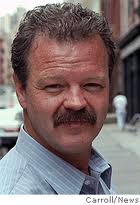
Tom Hanks will make his Broadway debut in a play written by his friend, the late Sleepless in Seattle director Nora Ephron.  Hanks will play the late tabloid columnist Mike McAlary in Lucky Guy , Ephron’s play about the charismatic and controversial newspaperman, who worked for both the New York Post and its rival the New York Daily News during the  gritty 1980s.  According to the New York Times , Ephron, who died in June, first developed Lucky Guy  as a movie but later decided to adapt it to the stage. (She last worked on Broadway in 2002 when Imaginary Friend s, her play about the writers Mary McCarthy and Lillian Hellman, opened.)  An announcement put out on Thursday by the play’s producers described Lucky Guy  as the “rise, fall and rise again” of McAlary who, shortly before succumbing to colon cancer at the age of 41, won a Pultizer Prize in 1998 for his coverage of the Abner Louima police brutality case. Earlier that decade, McAlary came under fire for three columns he wrote questioning the story of a former Yale University student who claimed she’d been raped in Brooklyn’s Prospect Park. The 29-year-old woman hit McAlary with a $12 million libel suit claiming that he damaged her reputation by writing that she fabricated the rape claim to publicize a feminist rally. A judge cleared him of the charges in 1997. Lucky Guy will be directed by George C. Wolfe (Angels in America) and will open on April 1, 2013 at the Broadhurst Theater on West 44th Street for a limited engagement. (Previews will begin March 1.) The Times also reported that, although Hanks has never appeared on Broadway before, he made his professional theater debut as a servant in a Great Lakes Shakespeare Festival production of The Taming of the Shrew .  The two-time Oscar winner worked with Ephron in Sleepless in Seattle and You’ve Got Mail.  [ New York Times ] Follow Frank DiGiacomo on Twitter. Follow Movieline on Twitter.  

Read more:
Tom Hanks To Make Broadway Debut In Nora Ephron Play About Tabloid Columnist