Tag Archives: science

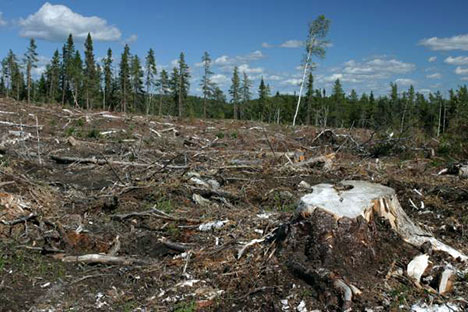
U.S. and Canada Destroyed More Forest Than Brazil Between 2000-2005

Boreal Forests Losing the Most Ground A new study in the Proceedings of the National Academy of Science (PNAS) concludes that over a million square kilometers of forest were lost around the world between 2000 and 2005, and that both the U.S. and Canada had higher percentages of forest losses than even Brazil (a country long notorious for deforestation). How does it break down?… Read the full story on TreeHugger

See original here:
U.S. and Canada Destroyed More Forest Than Brazil Between 2000-2005

Media Continue War against BPA; Claim It Causes ‘All Sorts’ of Health Problems

Toys, food, packaging. Chemicals are in them all. The media make a living by sensationalizing the potential dangers of just about everything in our modern world. Bisphenol-A (BPA), a chemical found in many plastic items, was no exception . The news media have been scaremongering about BPA for years, even going so far as to compare it to tobacco at one point, but a cautious tone from the government and left-wing junk science prompted recent hyperbole from reporters. Reuters warned of a ” potential carcinogen in my soup ,” June 9. News website Newser.com took the fear-mongering a step further calling BPA ” a known carcinogen ” in a May 19 story about the “dangerously high” levels of BPA in canned food and drink. But according to the American Chemistry Council, a trade group representing the chemical industry, BPA is not a known carcinogen. Its website says “based on sound, robust scientific evidence, some government bodies around the world have concluded that BPA is not carcinogenic in humans .” The Food and Drug Administration’s (FDA) latest report on BPA, a chemical used to harden plastic and a primary ingredient in the plastic resin that protects the flavor of food in metal cans, said that studies “have thus far supported the safety of current low levels of human exposure to BPA.” New results from the National Toxicology Program caused FDA to request more research about the effects of BPA and recommended “reasonable steps” to “reduce” exposure, particularly in infants and children. FDA made it clear that BPA has not yet been proven harmful to humans at current levels. Scientific evidence hasn’t prevented the news networks from trying to scare the public away from BPA. In an interview on the Feb. 25 CBS “Early Show,” food critic Katie Lee told co-anchor Harry Smith to avoid plastic containers for leftover food because they usually contain BPA. “And that’s been shown to cause liver disease, heart failure, all sorts of things,” Lee claimed. Smith chimed in saying, “I think it’s already been banned in Canada.” Smith was wrong about Canada – they didn’t ban the chemical outright, rather they banned the chemical from use in baby bottles. Neither Lee nor Smith consulted any scientists, or mentioned anything about the many studies that have confirmed the safety of BPA. Health News Digest pointed out that more than 5,400 scientific journal articles have been published on the safety of BPA. The FDA has deemed BPA safe for years, only choosing to caution people about “some concern” relating to children and infants in 2010. The FDA made it clear that more research was needed before the agency would decide to regulate the chemical. But that hasn’t stopped the network news media from warning viewers not to use BPA products because they “cause” health problems. Jeff Stier of American Council on Science and Health reacted to the May 2010 canned good study saying, “Of course BPA is ‘linked’ to obesity and cancer, because these people linked it. There’s no causal relationship, but you can say there is a link between anything you want, just based on animal studies.” A Junk Science Study Stirs Up Media against BPA In May 2010, the left-wing, pro-regulatory group U.S. PIRG sent out a press release about the National Workgroup for Safe Markets’ study of canned foods and drinks in which they claimed “alarming levels” of BPA were present in common canned foods. “BPA is a synthetic sex hormone and exposure to low doses has been linked to abnormal behavior, diabetes, heart disease, infertility, developmental and reproductive harm, and obesity, which raises the risk of early puberty, a known risk factor for breast cancer,” the PIRG released claimed. That press release also touted liberal Sen. Dianne Feinstein’s, D- Calif., support for legislation to ban BPA in cans and other food and beverage containers. Feinstein is trying to add an amendment to ban BPA to S. 510, the FDA Food Safety Modernization Act . The media quickly repeated the scary study’s findings that BPA was found in 92 percent of canned goods tested. Reuters hyperbolically headlined its story: “Waiter, there’s a potential carcinogen in my soup.” CBS “Morning News” warned that “A new study finds food and drink from metal cans may be contaminated with a chemical linked to a number of disorders. And some lawmakers want the chemical banned.” While CBS’s Sandra Hughes mentioned that the study was tiny – only 50 cans were tested – she expressed no skepticism about the results on May 19. Her story was also stacked against BPA with two interviewees in favor of avoiding canned foods or banning the chemical, and only a statement from the Chemical Industry Council. On May 18, CNN took the study seriously enough that Elizabeth Cohen impractically advocated that people should “start your own garden” just before saying that the people who wrote the study “think that a lot of BPA can make you infertile.” Robert L. Brent, MD, PhD, D.Sc., and adviser to the American Council on Science and Health condemned the study as a lot of hype designed to frighten the public. Brent said, “The National Workgroup for Safe Markets publication wasn’t intended to educate the public about risks, but to frighten unsophisticated scientists and the public. We should respond to such garbage with good science.” He explained that human exposure to BPA has “been exhaustively studied.” After mentioning different studies that have bee done, Brent said “the important point is that human serum concentrations of BPA are very, very low, far below any expected toxic effects.” “The overwhelming scientific evidence points to the conclusion that at current human exposure levels, BPA is not toxic – and specifically is not linked to the myriad diseases outlined in the National Workgroup for Safe Markets report released earlier this week,” Brent concluded. Coca-Cola also hit back against the study telling Reuters, “A person weighing 135 pounds (61 kg) would need to ingest more than 14,800 12-ounce cans of a beverage in one day to approach the FDA’s acceptable daily limit for BPA consumption.” But Reuters buried Coca-Cola’s statement and other information about the large amounts of BPA that would have to be ingested to be compared to rodent tests, waiting until the 38 th paragraph of its 55 paragraph story to bring it up. BPA Scare: 2008-2010 Journalists have hyped the dangers of BPA for years, despite evidence to the contrary. Back in April 2008, NBC’s “Today” warned about the reproductive dangers of ingesting BPA from reusable plastic water bottles. NBC had already campaigned against ordinary plastic water bottles, arguing that they were bad for the environment. But the miniscule levels of BPA found in reusable water bottles is thousands of times less than what levels linked to rodent health problems, according to Dr. Gilbert Ross of ACSH. But that didn’t stop “Today” from warning against many types of water bottles, including the popular Nalgene brand. “[I]n the meantime, you can always check that number on the bottom [the indicator of what type of plastic used is],” reporter Michelle Kosinski said, “or just go back to old-fashioned glass.” Some reporters have advocated a return to glassware without stating the obvious inconvenience (try biking with a heavy glass water bottle) and danger (glass shatters). In 2009, the crusade against BPA continued. MSNBC’s Dr. Nancy Snyderman, raised concerns about BPA saying “It’s a synthetic estrogen that some scientists believe can be linked to everything from breast cancer to obesity. We associate it with plastic water bottles, but now Consumer Reports says that BPA is even in canned foods.” But even Snyderman had to admit the study was inconclusive and based on “soft science.” Her guest New York Times columnist Nicholas Kristof continued to hype the danger by comparing BPA to tobacco: “To me, it feels a little bit like tobacco in the 1970s when, you know, there is growing evidence and scientists understand the causal pathways and we don’t entirely understand at what dosage and at what stage of life those adverse consequences really build up.”  Like this article?  Sign up  for “The Balance Sheet,” BMI’s weekly e-mail newsletter.

Read more here:
Media Continue War against BPA; Claim It Causes ‘All Sorts’ of Health Problems

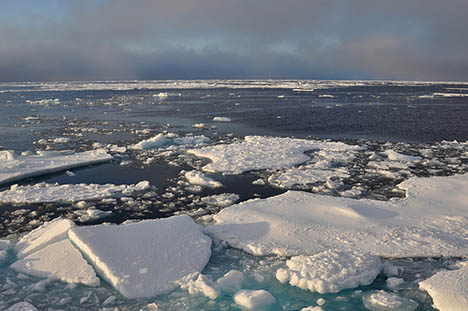
Arctic Ice Cover at Lowest Point in Past Several 1000 Years + Arctic Autumn Will Be Ice-Free This Decade

photo: US Geological Survey via flickr Two pieces on Arctic ice which are worth paying attention to today: 1) Via Climate Progress , Wieslaw Maslowski of the Naval Postgraduate School has presented some new research showing how autumn in the Arctic is likely to be ice-free by the end of thi… Read the full story on TreeHugger

Go here to read the rest:
Arctic Ice Cover at Lowest Point in Past Several 1000 Years + Arctic Autumn Will Be Ice-Free This Decade

‘Splice’ Star Adrien Brody Talks ‘Disturbing’ Sex Scene

‘It’s a new level,’ actor says of his steamy scene in the sci-fi film. By Josh Wigler Adrien Brody Photo: MTV News When working in Hollywood, the occasional sex scene is par for the course. But for Adrien Brody, his “Splice” character’s encounter with a genetically engineered monstrosity takes the term “sex scene” to a whole new level. In the film, Brody plays a scientist who collaborates with his colleague and girlfriend Sarah Polley to create a new life-form that rapidly evolves into a sentient humanoid creature played by French actress Delphine Chan

MN professor eviscerates Lord Monckton’s climate misinformation in must-see video

“The number of errors Chris Monckton makes is so enormous it would take a thesis to go through every single one of them.” The Viscount Monckton of Brenchley (TVMOB) is a shameless purveyor of hate speech and anti-science disinformation (see links below). Nonetheless, you rarely sees such a thorough debunking of an anti-science disinformer as this astonishing point-by-point evisceration put together by John Abraham, an engineering professor at St. Thomas University in St. Paul, MN. One of the two reasons you rarely see this is because few people are willing to put in the time and effort that Prof. Abraham has — not merely looking up just about every reference TVMOB uses but actually e-mailing the authors of those scientific papers and asking them if TVMOB has accurately represented their work. The second reason you rarely see this kind of thorough dismantlement is that few people make stuff up with the relentlessness of TVMOB or push the kind of hate speech that make people want to debunk them entirely: •Lord Monckton meltdown: “I’m not going to shake the hands of Hitler youth.” •TVMOB hate speech shocker: Lord Monckton repeats and expands on his charge that those who embrace climate science are “Hitler youth” and fascists. •TVMOB shocker: Activists decried as “Hitler Youth” for crashing Americans For Prosperity’s global warming event in Copenhagen •How to diss-a-peer: Real Climate Scientists take on TVMOB •Deltoid at ScienceBlogs: Monckton’s triple counting and here. •Irony-gate 2: Modern day Tea Partiers outsource denial to Lord Monckton — a British peer! •Climate Crock takes on Lord Monckton aka TVMOB •Climate Crock takes on Lord Monckton, Part 2 Kudos to Abraham for this masterful debunking. added by: JanforGore

Lord Monckton wins global warming debate at Oxford Union

For those who don’t know, the Oxford Union is the top of the food chain for scholarly debate. This is a significant win. Founded in 1823 at the University of Oxford, but maintaining a separate charter from the University, The Oxford Union is host to some of the most skillful debates in the world. Many eminent scholars and personalities have come and either debated or delivered speeches in the chamber. Monckton was invited as part of the formal Thursday debate. It is described as follows: The Union is the world’s most prestigious debating society, with an unparalleled reputation for bringing international guests and speakers to Oxford. It has been established for 182 years, aiming to promote debate and discussion not just in Oxford University, but across the globe. Here is a view inside from a previous debate: Oxford Union Debate on Climate Catastrophe Source: SPPI Army of Light and Truth 135, Forces of Darkness 110 For what is believed to be the first time ever in England, an audience of university undergraduates has decisively rejected the notion that “global warming” is or could become a global crisis. The only previous defeat for climate extremism among an undergraduate audience was at St. Andrew’s University, Scotland, in the spring of 2009, when the climate extremists were defeated by three votes. Last week, members of the historic Oxford Union Society, the world’s premier debating society, carried the motion “That this House would put economic growth before combating climate change” by 135 votes to 110. The debate was sponsored by the Science and Public Policy Institute, Washington DC. Serious observers are interpreting this shock result as a sign that students are now impatiently rejecting the relentless extremist propaganda taught under the guise of compulsory environmental-studies classes in British schools, confirming opinion-poll findings that the voters are no longer frightened by “global warming” scare stories, if they ever were. When the Union’s president, Laura Winwood, announced the result in the Victorian-Gothich Gladstone Room, three peers cheered with the undergraduates, and one peer drowned his sorrows in beer. Lord Lawson of Blaby, Margaret Thatcher’s former finance minister, opened the case for the proposition by saying that the economic proposals put forward by the UN’s climate panel and its supporters did not add up. It would be better to wait and see whether the scientists had gotten it right. It was not sensible to make expensive spending commitments, particularly at a time of great economic hardship, when the effectiveness of the spending was gravely in doubt and when it might do more harm than good. At one point, Lord Lawson was interrupted by a US student, who demanded to know what was his connection with the Science and Public Policy Institute, and what were the Institute’s sources of funding. Lord Lawson was cheered when he said he neither knew nor cared who funded the Institute. Ms. Zara McGlone, Secretary of the Oxford Union, opposed the motion, saying that greenhouse gases had an effect [they do, but it is very small]; that the precautionary principle required immediate action, just in case and regardless of expense [but one must also bear in mind the cost of the precautions themselves, which can and often do easily exceed the cost of inaction]; that Bangladesh was sinking beneath the waves [a recent study by Prof. Niklas Moerner shows that sea level in Bangladesh has actually fallen]; that the majority of scientists believed “global warming” was a problem [she offered no evidence for this]; and that “irreversible natural destruction” would occur if we did nothing [but she did not offer any evidence]. Mr. James Delingpole, a blogger for the leading British conservative national newspaper The Daily Telegraph, seconded the proposition, saying that – politically speaking – the climate extremists had long since lost the argument. The general public simply did not buy the scare stories any more. The endless tales of Biblical disasters peddled by the alarmist faction were an unwelcome and now fortunately failed recrudescence of dull, gray Puritanism. Instead of hand-wringing and bed-wetting, we should celebrate the considerable achievements of the human race and start having fun. Lord Whitty, a Labor peer from the trades union movement and, until recently, Labor’s Environment Minister in the Upper House, said that the world’s oil supplies were rapidly running out [in fact, record new finds have been made in the past five years]; that we needed to change our definition of economic growth to take into account the value lost when we damaged the environment [it is artificial accounting of this kind that has left Britain as bankrupt as Greece after 13 years of Labor government]; that green jobs created by governments would help to end unemployment [but Milton Friedman won his Nobel Prize for economics by demonstrating that every artificial job created at taxpayers’ expense destroys two real jobs in the wealth-producing private sector]; that humans were the cause of most of the past century’s warming [there is no evidence for that: the case is built on speculation by programmers of computer models]; that temperature today was at its highest in at least 40 million years [in fact, it was higher than today by at least 12.5 F

Prominent Princeton Scientist Dr. Happer Testifies to Congress: ‘Warming and increased CO2 will be good for mankind’

Climate Depot’s Selected Highlights of Dr. Happer’s May 20, 2010 Congressional Testimony: (Dr. Happer’s Full Testimony here: (To read the warmists’ testimony of Ralph Cicerone, Stephen Schneider, and Ben Santer, see here. ) Dr. Will Happer’s Testimony Before the House Select Committee on Energy Independence and Global Warming – May 20, 2010 My name is William Happer, and I am the Cyrus Fogg Bracket Professor of Physics at Princeton University. I have spent my professional life studying the interactions of visible and infrared radiation with gases – one of the main physical phenomena behind the greenhouse effect. I have published over 200 papers in peer reviewed scientific journals. I am a member of a number of professional organizations, including the American Physical Society and the National Academy of Sciences. I have done extensive consulting work for the US Government and Industry. I also served as the Director of Energy Research at the Department of Energy (DOE) from 1990 to 1993, where I supervised all of DOE’s work on climate change. Key Excerpts: The CO2 absorption band is nearly “saturated” at current CO2 levels. Adding more CO2 is like putting an additional ski hat on your head when you already have a nice warm one below it, but you are only wearing a windbreaker. The extra hat makes you a little bit warmer but to really get warm, you need to add a jacket. The IPCC thinks that this jacket is water vapor and clouds. The climate-change establishment has tried to eliminate any who dare question the science establishment climate scientists and by like-thinking policy-makers – you are either with us or you are a traitor. Orwellian: I keep hearing about the “pollutant CO2,” or about “poisoning the atmosphere” with CO2, or about minimizing our “carbon footprint.” This brings to mind a comment by George Orwell: “But if thought corrupts language, language can also corrupt thought.” CO2 is not a pollutant and it is not a poison and we should not corrupt the English language by depriving “pollutant” and “poison” of their original meaning. Our exhaled breath contains about 4% CO2. That is 40,000 parts per million, or about 100 times the current atmospheric concentration. CO2 is absolutely essential for life on earth. Commercial greenhouse operators often use CO2 as a fertilizer to improve the health and growth rate of their plants. Plants, and our own primate ancestors evolved when the levels of atmospheric CO2 were at least 1000 ppm, a level that we will probably not reach by burning fossil fuels, and far above our current level of about 380 ppm. We try to keep CO2 levels in our US Navy submarines no higher than 8,000 parts per million, about 20 time current atmospheric levels. Few adverse effects are observed at even higher levels. That we are (or were) living at the best of all CO2 concentrations seems to be an article of faith for the climate-change establishment. Enormous effort and imagination have gone into showing that increasing concentrations of CO2 will be catastrophic: cities will be flooded by sea-level rises that are ten or more times bigger than even IPCC predicts, there will be mass extinctions of species, billions of people will die, tipping points will render the planet a desert. Any flimsy claim of harm from global warming brings instant fame and many rewards. Sea Level: The sea level is indeed rising, just as it has for the past 20,000 years since the end of the last ice age. Fairly accurate measurements of sea level have been available since about 1800. These measurements show no sign of any acceleration. The rising sea level can be a serious local problem for heavily-populated, low-lying areas like New Orleans, where land subsidence compounds the problem. But to think that limiting CO2 emissions will stop sea level rise is a dangerous illusion. It is also possible that the warming seas around Antarctica will cause more snowfall over the continent and will counteract the sea-level rise. Hockey Stick: I was very surprised when I first saw the celebrated “hockey stick curve,” in the Third Assessment Report of the IPCC. Both the little ice age and the medieval warm period were gone, and the newly revised temperature of the world since the year 1000 had suddenly become absolutely flat until the last hundred years when it shot up like the blade on a hockey stick. This was far from an obscure detail, and the hockey stick was trumpeted around the world as evidence that the end was near. We now know that the hockey stick has nothing to do with reality but was the result of incorrect handling of proxy temperature records and incorrect statistical analysis. There really was a little ice age and there really was a medieval warm period that was as warm or warmer than today. I bring up the hockey stick as a particularly clear example that the IPCC summaries for policy makers are not dispassionate statements of the facts of climate change. Conclusion: I regret that the climate-change issue has become confused with serious problems like secure energy supplies, protecting our environment, and figuring out where future generations will get energy supplies after we have burned all the fossil fuel we can find. We should not confuse these laudable goals with hysterics about carbon footprints. For example, when weighing pluses and minuses of the continued or increased use of coal, the negative issue should not be increased atmospheric CO2, which is probably good for mankind. We should focus on real issues like damage to the land and waterways by strip mining, inadequate remediation, hazards to miners, the release of real pollutants and poisons like mercury, other heavy metals, organic carcinogens, etc. Life is about making decisions and decisions are about trade-offs. The Congress can choose to promote investment in technology that addresses real problems and scientific research that will let us cope with real problems more efficiently. Or they can act on unreasonable fears and suppress energy use, economic growth and the benefits that come from the creation of national wealth. added by: Dagum

‘Avatar’ Star Sam Worthington To Produce, Appear In ‘Quatermain’

Actor will play treasure hunter back from outer space in sci-fi adaptation of literary tale. By Adam Rosenberg Sam Worthington Photo: Kevin Winter/ Getty Images Science fiction was very good to Sam Worthington in 2009. His Marcus Wright was one of the bright spots in “Terminator Salvation,” and he finished the year in grand style, starring in James Cameron’s record-shattering sci-fi epic, “Avatar.” It’s no wonder the actor will make his debut as a producer in an out-of-this-world take on famed literary treasure hunter Allan Quatermain. Worthington will produce and star in DreamWorks’ “Quatermain,” an update of the character introduced in H. Rider Haggard’s Victorian-era adventure “King Solomon’s Mines.” In the original book, published in 1885, the hero travels to unexplored Africa in search of a friend’s lost brother, who was himself looking for the untold treasures hidden away in the king’s mines. The Hollywood Reporter ‘s Heat Vision blog reveals that in the update, Worthington’s Quatermain returns to planet Earth after spending time away in outer space. Humans are gone, but the hero is back for another ” ‘King Solomon’s Mines’-style adventure but on a planetwide scale.” “Quatermain” was first revealed as a DreamWorks project last year, with “Timecop” writer Mark Verheiden penning a sci-fi-angled script. Quatermain has had a number of big screen portrayals, most recently by Sean Michael in the 2008 direct-to-video “Allan Quatermain and the Temple of Skulls,” released by the Asylum, the studio behind “Mega Shark vs. Giant Octopus.” Sean Connery took on the character in 2003’s “The League of Extraordinary Gentlemen,” as part of a super-team of literary heroes that included Captain Nemo, Tom Sawyer and the Invisible Man. Patrick Swayze played Quatermain a year later in the two-part TV miniseries re-telling “King Solomon’s Mines.” Worthington will produce with “Smallville” executive producers Miles Millar and Alfred Gough. No director has been named, though the film will presumably be built off of Verheiden’s script. Did you like Sam Worthington in “Avatar”? Do you think he’ll make a good treasure hunter? Let us know in the comments! For breaking news, celebrity columns, humor and more — updated around the clock — visit MTVMoviesBlog.com .

More here:
‘Avatar’ Star Sam Worthington To Produce, Appear In ‘Quatermain’

AP English Language and Composition Exam Practice Test Guide

These are the top exam prep questionnaires you can find in the market today! These practice exams and practice tests will truly help you with your AP English Language and Composition Exam guide that you need to take. The AP English Language and Composition Exam is one of the more difficult AP Exams available, so properly preparing yourself is a must! You can also get AP History Exam Practice Tests, AP Science Exam Practice Tests, AP Math Exam Practice Tests and more along with the AP English Language and Composition Exam practice tests guide. To get your FREE (for a limited time only) AP English Language and Composition Exam practice test and guide, please see links AP English Language and Composition Exam Practice Test Guide is a post from: Daily World Buzz Continue reading

Mexico Oil Spill of 2010

In a decision to control the oil spill in the Gulf of Mexico, which can be considered as one of the worst in the U.S. history, the United States Coast Guard is aiming to burn off the part of affected areas. The process of burning the oil may start as early as Wednesday as the oil slick has turn to within 20 miles of the Louisiana coastline. The decision on burning the oil has its own pros and cons, is still not furnished. The process to put the oil on fire starts by using a 500-foot-long, flame-retardant boom used to gather oil, and whatever is collected in the boom would be burnt. Or else, the entire spill would not be set on fire at once. The problem is that a drilling rig, the Deepwater Horizon, went kaput, detonated, and sank at a site, some 50 miles off the coast of Louisiana. That left the oil leaking at the rate of about 42,000 gallons a day from the well. Further investigations will be conducted with regards to this serious problem that the U.S. is facing. Mexico Oil Spill of 2010 is a post from: Daily World Buzz Continue reading