If you’ve ever fantasized that Kristen Stewart invited you to bed by saying, “Hop in, water’s fine,” well, this is a trailer for your permanent collection. The actress and her Bohemian behavior in On The Road get prime placement — there’s even a quick glimpse of her talked-about double hand-job scene — along with co-stars Garrett Hedlund and Sam Riley , in this just-released trailer for Walter Salles adaptation of the Jack Kerouac novel. Although the trio appears to get the most screen time, the fast-paced clip does a good job of introducing most of the name cast members, including Kirsten Dunst , Viggo Mortensen, Amy Adams , Elisabeth Moss and Alice Braga. The film gets a limited released on Dec. 21 if the world doesn’t end along with the Mayan calendar. You can also head over to iTunes to download the trailer — for your permanent collection. Follow Frank DiGiacomo on Twitter. Follow Movieline on Twitter.
The Wachowskis are about to shoot their first film in 3D, which, after the complexity of Cloud Atlas , almost sounds like a comedown. FilmStage.com reports that the cinema siblings will utilize 3D for the first time to make their next science-fiction film, Jupiter Ascending , which begins shooting early next year. The news is part of a Warner Bros . deal in which it plans to release up to 20 upcoming films, including Jupiter Ascending , in IMAX over the next three years. Last May, Vulture reported that Jupiter Ascending is set in a universe where humans are quite low in the evolutionary hierarchy. There, Mila Kunis plays an immigrant cleaning lady who is targeted for assassination by the Queen of the Universe because she possesses the same genetic make-up and therefore poses a threat to the Queen’s rule. Sounds like a very specific variation on the Engineers hatred of the human race in Prometheus , no? Word is Channing Tatum plays a bounty hunter sent to eliminate Kunis’ character, who instead falls in love with her. Just guessing here, but I bet that means more bounty hunters are dispatched to track down the lovebirds. [ FilmStage.com, Vulture ] Follow Frank DiGiacomo on Twitter. Follow Movieline on Twitter.
After spending four years and five movies playing Bella Swan’s vampire sister-in-law Rosalie Hale in the Twilight series, Nikki Reed understandably has a bittersweet perspective on the billion-dollar franchise coming to a close in this week’s Breaking Dawn Part 2 . On the one hand, she won’t miss the hate mail from fans who have taken her character’s onscreen iciness to Kristen Stewart ‘s heroine to heart for four films. But few of Twilight ‘s central figures have been as close to the saga as long as Reed has, dating back to even before director Catherine Hardwicke had cast Stewart and Robert Pattinson in the roles that would skyrocket them, the films, and all of their cast, to global fame. “Catherine called me seven or eight months before it was happening and she was like, ‘Hey, do you like the vampire genre? Because there’s this thing I’m thinking about and there are actually some books, and some fans — I don’t know if you’re into it…’ It was that sort of conversation,” said Reed, who at the time had acted in a handful of indie films including 2003’s Thirteen , which she co-wrote with director Hardwicke. Tempted by the role of Edward Cullen’s disapproving adopted sister Rosalie, Reed decided against early retirement from acting and took the gig, joining Stewart, Pattinson, and their fellow Twilight cast mates at the film’s Portland shoot — the first and last time the cast would be able to make a Twilight movie in relative anonymity. “We were just kids, and no one knew who anyone was,” Reed remembered. “There were no stars, there was no celebrity. We were just people together.” Fast forward to 2012: Reed has four non- Twilight films in the pipeline, including turns in Empire State with Liam Hemsworth and Dwayne Johnson and In Your Eyes , from producer Joss Whedon. She recently launched her own jewelry line, Mattlin Era , featuring designs inspired by her mother and grandmother. And with musician husband Paul McDonald — who she met on the red carpet for Hardwicke’s Red Riding Hood , another cosmically unpredictable byproduct of the Twilight saga’s success — Reed recently debuted her first album anchored by “All I’ve Ever Needed,” an original song they wrote for the Breaking Dawn soundtrack. PHOTOS: Kristen Stewart, Robert Pattinson & Co. Premiere ‘Breaking Dawn 2’ How do you feel right now about Twilight and your experience with this franchise now that it’s coming to a close? Having us all together is such a special thing. As the movies have gotten bigger it’s become more rare. In the beginning when there wasn’t this kind of success or fan base for the films, we were all together more. Now there’s more isolation and we don’t get to all hang out in the same room like we used to. It feels really sad, and there are not many moments in your life when you can consciously close a chapter. You reach a milestone like you’re graduating college, and you’re like, oh — I’m aware that this is going to completely change my life when this is done. You normally look back on things in hindsight, but with this we’ve known that it’s been coming to an end since the beginning. It’s really sad for me. I feel really sad. Everyone else is like, “No, it’s fun and exciting!” and it’s all those things, too. But it’s hard to know what an experience this has been, and be conscious of that, and still know that it’s done. And don’t get me wrong, I’m happy about this film and I want it to come out so that the fans can see it. It’s a lot of mixed feelings. Is that why you’ve been driving by Elizabeth Reaser’s house, sending her photos when she’s not home? Isn’t that funny! We both live outside of Hollywood on the same mountain, but I live one mountain over and she lives on the street that I take to get into town. So I drive by her house four times a day, and sometimes when I’m feeling goofy I’ll pull over and get out and take a picture of her license plate and I’ll go, “This is how close I was.” It’s just silly! I see her all the time. Rosalie finally gets some nice, warm moments in Breaking Dawn Part 2 – she’s become basically like a godmother to baby Renesmee, able to exercise her latent maternal instincts. How happy were you to bring Rosalie to this point as a character? I think one of the greatest challenges with this franchise for me has been knowing that Stephenie [Meyer] wrote such multifaceted, dynamic character but only getting to play one aspect of that person. It sort of makes everything look a lot more superficial than it is; there’s so much depth to all of the characters she wrote. They all have incredible back stories. If you sit down with her and ask her questions, she has answers to everything — this is her world. Also, even if the fans have read the books and know the character and connect with the character, what we bring to life is so different than what’s in the books sometimes, and it’s almost impossible to portray. So I think I’ve been waiting for this moment, not just for myself but for Rosalie. It’s been so hard defending her for so many years and defending who she is – No, she’s not that, and she’s not this, and there are all these feelings inside! Subconsciously people in general have a hard time disassociating an actor from a character; people who play the villain — you look at John Lithgow on Dexter , playing that character on that show has changed my whole perception of him. Every time I see him in something else now, I can only think of that, and you don’t even know you’re doing it. If I had known going in that playing the outcast and playing the least-liked character was going to… how you’re perceived by the fans is different from how the rest of the cast is perceived because of how they connect you with your character. So I’m happy I didn’t realize that going in, because that would have given me a lot of anxiety about the next four years of my life. It’s interesting to see how the fans will connect with you more now that Rosalie is on Bella’s side. Now you’re playing the hero. That’s an interesting, unexpected drawback to being a part of the Twilight franchise — especially considering how much the popularity of the franchise has changed your lives, with screaming fans at events and paparazzi out in public. It’s bizarre, but I can’t cry about that because my mother would kill me. I’m so blessed to be in the position I’m in, and this is today — I don’t know what tomorrow’s going to bring, but I can tell you that being in this series, there’s no golden ticket here. Any of us who think that are crazy, because you have to constantly work hard. You’re constantly proving yourself. And even when you’ve done a great job, you have to do something else to show people that you can do something great in some other role. We’re always trying to grow and better ourselves, and I feel like I can’t complain. There are so many perks and so many wonderful things about being a part of this. Any time I get down — which I do, by the way. When I get hate mail I get really down on myself and I read it to my mom and my mom is like, “So what? Who cares? These people don’t know you, so you can’t take the praise or the hate to heart.” All of it comes from a very distant place, so you have to receive all of it that way. Even the love, you have to appreciate it but from a distance, because you don’t want that to be absorbed either. People actually send you hate mail? People send everyone hate mail. That’s the way the world works right now, I’m nothing special. [Laughs] Trust me. It’s just the way that the world communicates now, the way that everyone functions. I love this quote, and it was a friend of mine who told me this and I think about it consciously whenever I’m feeling like this: “If it’s not personal, you don’t take it personally.” If that person doesn’t know me, it’s not personal. Whatever you have to say about me doesn’t actually exist because this relationship doesn’t exist. You don’t know me.
It speaks to just how good David O. Russell is at portraying raw, high-strung sincerity that Silver Linings Playbook is able to walk a line between likable and tolerable despite a premise the reeks of quirky bullshit. In addition to its frequently cutesy treatment of mental illness, the movie features a love interest who instantly latches onto and pursues the film’s mess of a hero like she read the script in advance and was assured things will eventually work out. Based on a novel by Matthew Quick and adapted for the screen by Russell himself, Silver Linings Playbook is an unfussy, rambling crowd-pleaser that recalls elements of the filmmaker’s past work: the New Age coachings of the existential detectives in I Heart Huckabees, the back-in-your-childhood-home set-up of Spanking the Monkey and the chaotic regional family flavor of The Fighter . More than any of that, though, the movie brings to mind the leaked videos of Russell having a meltdown in front of Lily Tomlin on the set of Huckabees , pacing back and forth, incensed and out of control. Russell seems, from all accounts, like a man who knows his way around mood swings and wild bursts of emotion. His very apparent ability to empathize with his protagonist in Silver Linings Playbook while allowing him to behave in some ugly ways both grounds the film and, at times, proves problematic. Russell is more generous with his hero than he is with those who live with and love the guy. Pat ( Bradley Cooper ) is a former teacher back from eight months in a Baltimore mental institution, The state-provided treatment he’s receiving for a previously undiagnosed bipolar disorder is part of a plea bargain stemming from his violent reaction to the discovery that his wife Nikki (Brea Bee) had been fooling around with another man. Pat has talked his mother Dolores (Jacki Weaver) into letting him come home against his doctor’s recommendation, and with Nikki having sold their house and secured a restraining order against him, he moves into the attic of his Pennsylvania childhood home and attempts to get his life in order. Despite having embraced a new fitness regimen (he’s rarely dressed in anything other than workout gear, with the occasional addition of a garbage bag-like vest to stimulate sweating) and a garbled but deeply felt set of self-help principles involving finding silver linings, maintaining positivity and the affirmation “excelsior,” Pat’s not doing that well. He isn’t taking his meds, he unapologetically bursts into his parents’ room at four in the morning to complain about the ending of A Farewell to Arms and he’s fixated on how he’s going to prove himself to Nikki and win her back, despite all the evidence that she’s done with him. Cooper’s slippery charm makes him an unexpected and imperfect fit for the role of Pat. He’s great at portraying his character’s utter conviction in his delusions and his enveloping rage when something pushes him over the edge. But, as devoted as he is to the role, Cooper does less well showing the character’s filter-free, no pretense appeal. To put it another way, Cooper tends to get cast as a handsome jerk for a reason, and given the oafish way he reacts to Tiffany (Jennifer Lawrence) when they first meet in the movie, it’s not easy to see why she would be so instantly and strongly attracted to him. She literally begins chasing him down the street when he goes for runs until he starts spending time with her. Tiffany, who is the widowed sister of the wife (Julia Stiles) of Pat’s friend Ronnie (John Ortiz), has some instability and past tragedy of her own to deal with, but Pat doesn’t want to play reluctant outcasts with her. He is determined to become the upright citizen he thinks Nikki wants. Lawrence imbues this potential (okay, likely) manic pixie dream girl with complexity and heart, showing her as someone who’s unwilling to let Pat push her around or push her away — though aside from Tiffany’s loneliness, Lawrence is given little to indicate why her character feels compelled to try so hard with this erratic new arrival in her life. She enlists Pat as her partner in a dance competition, and slowly begins to win him over as well as his family, which is headed up by a skeptical Robert De Niro as Pat Sr., a football obsessive and bookie whose superstitious beliefs feed into his OCD. The glorious mess that is Pat’s family and community is the warmest, funniest aspect of Silver Linings Playbook , from Dolores’ continual preparation of “crabby snacks and homemades” to the earnest but panicked Ronnie and the repeated arrivals and subsequent reclaimings by police of Pat’s friend from the hospital Danny (Chris Tucker). De Niro, showing uncharacteristic (for his recent work) signs of life, is downright wonderful as Pat Sr., channeling his fondness and hope for his wayward son into an insistence that Pat watch Eagles games with him because he brings good luck. Pat isn’t as lovable as the filmmaker seems to find him, and sentiments like the one expressed by Danny that the mentally ill might “know something you don’t know” come cloyingly close to suggesting Silver Linings Playbook believes mood disorders to be a gift. The tangible details of the town and its supporting characters are anything but saccharine, however, and when the film takes time and indulges in them, it creates a sense of place you don’t want to leave behind. Follow Alison Willmore on Twitter. Follow Movieline on Twitter.
The Hamptons International Film Festival handed out awards Sunday for its 20th edition of the event with Umat Dag’s Kuma and Cate Shortland’s Lore tying for the Golden Starfish narrative prize, while Tora Martens’ Colombianos took the Documentary prize. Toronto audience winner Silver Linings Playbook , meanwhile, also took the equivalent prize in the Hamptons, while No Place on Earth won the audience nod in the documentary category. The 20th Hamptons International Film Festival winners: Baume & Mercier Audience Award Narrative Silver Linings Playbook by David O. Russell Baume & Mercier Audience Award Documentary No Place On Earth by Janet Tobias Baume & Mercier Audience Award Best Short Growing Farmers by Michael Halsband Golden Starfish Award Narrative Feature Winner (TIE) Kuma , Directed by Umat Dag Lore , Directed by Cate Shortland Golden Starfish Award Documentary Feature Winner Colombianos , Directed by Tora Mårtens Special Jury Prize for Inspiration Jason Becker: Not Dead Yet , Directed by Jesse Vile Special Jury Prize for Performance Carlos Vallarino , La Demora GSA Short The Curse , Directed by Fyzal Boulifa The Kodak Award for Best Cinematography Lore , Cinematography by Adam Arkapaw The Victor Rabinowitz and Joanne Grant Award for Social Justice Call Me Kuchu by Katherine Fairfax Wright and Malika Zouhali-Worrall The Jeremy Nussbaum Prize for Provocative Fiction Lore by Cate Shortand Zelda Penzel Giving Voice to the Voiceless Award One Nation Under Dog by Amanda Micheli, Jenny Carchman, Ellen Goosemberg-Kent GSA for Curatorial Excellence Ian Birnie
It’s been rumored for years, but it looks like Warner Bros. is finally going to convert the 1939 classic The Wizard of Oz to 3-D. Thank James Cameron and the Titanic 3-D rerelease that brought in cruise ship-loads of money. Temper that knee-jerk reaction for just a moment and consider: Could Wizard of Oz 3-D actually be a great thing for cinema? The Judy Garland musical about a Kansas farmgirl whisked away to a magical land was a game-changer in its own day, heralding the leap from black and white to color in one breathtaking cultural moment of Technicolor bliss. WB made the announcement today at a press event celebrating their 90th Anniversary; expect Dorothy to skip along the Yellow Brick Road and into your cerebral cortex in 2013. And while Wizard ‘s legacy has lived on in subsequent decades, trickling down tributaries of pop cultural influence as far reaching as the Muppets, to Japanese Lolita cosplay to a live-action prequel by the guy who made Evil Dead , there’s something wonderfully pure about the idea of an entirely new generation of youngsters getting an intro to Dorothy Gale’s fantastical Oz adventure on the big screen. Mimicking that transformative cinematic revelation from B&W to color could also be a big moment for the 3-D industry; imagine the black and white doldrums of Dorothy’s ho-hum homestead not only exploding in color, but in glorious three dimensional color once she awakens in Oz. It could blow kids’ minds, plus it opens the door to the next natural step: The Wizard of Oz 4-D . Opium highs and the odor or Munchkin sweat — the pinnacle of added-value cinema. [via Collider ]
Did you just see that glass of water tremble à la Jurassic Park ? Could that distant rumbling be Harvey Weinstein barreling T-Rex style down the endless red carpet leading to the Kodak Theater in February? Indeed, with the announcement this week that Seth McFarlane will be hosting the 85th Academy Awards , Oscar season is now officially under way. Screeners and For Your Consideration ads shall soon be raining down upon us. So this seems as good an occasion as any to assess the buzz around Oscar hopefuls in the major categories. Prognosticating about the Oscars so early in the race, when many of the most anticipated prestige movies of the year ( Lincoln, Django Unchained, Les Miserables ) remain to be seen, may be premature, like discussing the prospect of a Gingrich/Perry 2012 ticket a year ago. But what self-respecting pundit waits to be fully informed? After all, the jockeying has already begun . BEST PICTURE ‘Zero Dark Thirty’ Like last year, there could be as few as five and as many as ten nominees in this category. The locks so far are Lincoln (a biopic of Abraham Lincoln directed by Steven Spielberg could be made with animated stick figures and it would still be a shoo-in—actually, I’d like to see that…); Les Misérables (a lavish, crowd-pleasing period musical that couldn’t be more upfront about its Oscar ambitions); and Argo (Ben Affleck’s film about a CIA hostage rescue mission in Tehran under the guise of a Hollywood production — Zero Dark Thirty meets Tropic Thunder ? — got a terrific jump out of the Telluride and Toronto gates). Silver Linings Playbook , a romantic comedy with just enough of a serious edge to please Oscar voters, also had a solid Toronto run. Ang Lee’s lyrical Life of Pi delighted New York Film Festival audiences last week and there’s every reason to believe the Academy will be just as enchanted, especially since there’s a feeling Lee was screwed over when Crash was voted best picture over Brokeback Mountain in 2005. I’d be surprised if The Master didn’t get nominated for best picture, but Kristopher Tapley and Anne Thompson over at Indiewire point out that, while the acting and cinematography are spectacular, the film itself left many critics cold. Michael Haneke’s rueful rumination on love and death, Amour , which won the Palme d’Or at Cannes, is a bit of a long shot since it’s in French. But if Weinstein, who is distributing the film in the U.S., can get a French silent film a best picture Oscar, as he did last year with The Artist , there’s no saying what he can do with a French talkie. Rounding out the frontrunners is the oneiric bayou fantasy Beasts of the Southern Wild, which could provide this Oscar season’s feel-good, indie underdog narrative. (NB: This category will be shaken up in December, when many major contenders will be released, including Django Unchained ; The Hobbit ; Promised Land ; Zero Dark Thirty ; and The Impossible .) BEST DIRECTOR Ben Affleck Back in 1998, we all made jokes about how Ben Affleck was the luckiest man alive for tying his fate to Matt Damon’s and winning a screenwriting Oscar. But Affleck, who’s proven to be one of the best mainstream directors of his generation, may well get the last laugh — in addition to a nomination for helming Argo . Spielberg’s seat at this table has been booked for years. The Master auteur Paul Thomas Anderson is a near lock, too. Les Miserables director Tom Hooper, who won this award two years ago for The King’s Speech , will almost certainly get recognition for his use of live-action singing, which, to believe the featurette Universal put out last week, has never been attempted before in a musical of this scope. The Hurt Locker director Kathryn Bigelow could get a shot at a repeat victory with Zero Dark Thirty . The same goes for Ang Lee, who took home the best-director consolation prize in 2005, and breaks new ground this year with his innovative use of 3D in Life of Pi . If David O. Russell’s reputation as an on-set tyrant hasn’t blacklisted him so far — and judging from his 2010 nomination for The Fighter, it hasn’t — there’s a good chance he’ll get a nod for Silver Linings Playbook . Rounding out the category are heavy hitters Robert Zemeckis ( Flight ), Peter Jackson ( The Hobbit: An Unexpected Journey ); and Quentin Tarantino ( Django Unchained ).
Take This Waltz is an unusually kind film about infidelity — not because it sidesteps or shortchanges heartbreak, but because it doesn’t let any one of its characters bear the full burden of blame. That such a thing needs to or should even be assigned in this scenario is beside the point, as the film defers to the vagueries of the human heart and the way we can, despite our better judgment, form a connection with someone that can’t easily be set aside. It’s tempting to glibly connect this clear-eyed empathy with the fact that Take This Waltz is Canadian and somehow inherently prone to niceness — it’s set in a rosy version of Toronto in which the characters all live in charmingly shabby chic houses and sporadically work in quirky jobs. But what it actually comes from, I think, is that the film is the sophomore feature of actress-turned-director Sarah Polley, who constructs her central love triangle with a determinedly feminine perspective and places all of the choice on her female protagonist Margot, played with typical grace by Michelle Williams. Margot wants anything but to have to make a difficult call, especially one that will result in someone getting hurt. One of the film’s first scenes finds her visiting the living history museum of the Fortress of Louisbourg for work and getting pulled in front of a crowd by costumed, in-character staffers to help with a flogging. “Put your back into it!” yells a man from the crowd when she ineffectually flails at the prisoner, clearly mortified. Later, she ends up sitting next to the heckler on the plane. His name is Daniel (Luke Kirby), and he’s just watched her board in a wheelchair despite not having needed one before, leading her to confess that she pretends at airports because of her terror of missed connections, something born not out of a need not to miss a flight but because, as she puts it, “I’m afraid of wondering if I’ll miss it. I don’t like being in between things.” Margot will, however, spend the movie in between things — between Daniel, who turns out to live across the street (“Shit!” she mutters when she finds out), and Lou (Seth Rogen), the husband of five years with whom she shares a loving if childlike and seemingly no longer passionate relationship. Margot loves Lou — the two tussle like kids and talk adoring about the terrible violence they’re going to do one another (“I’m going to put your spleen through a meat grinder,” Lou sighs) — but she may not be in love with him any longer, and she has an undeniable heated spark with Daniel, an artist who pulls a rickshaw and who watches her with guarded longing. Take This Waltz , which was also written by Polley, has moments of overdetermined dialogue — the line about airport connections is one, and another finds Margot describing Lou, who’s a cookbook writer, as “a really good cook, if you like chicken.” It’s stronger in its moments of wordless sensuality, from its opening scene in which Margot makes muffins, the camera drifting to her bare feet and then her face as she leans it against the over glass. Daniel offers to take Margot and Lou downtown in his rickshaw when they’re headed out to celebrate their anniversary, and we track her gaze across the muscles of his arms and back, catching his eye in the side-view mirror. The draw of the flesh is not inconsiderable, and Take This Waltz doesn’t make it so easy as being a kind of passing temptation, an indulgence to be resisted. Margot and Lou have a stable and relatively happy life together — we see them at home and in the company of their friends and family, including Lou’s sister Geraldine (a memorable Sarah Silverman), a recovering alcoholic. It’s a lot to trade for attraction, no matter how significant, but the film feasibly puts the two on a level, leaving Margot to navigate the decision with growing distress as she tries to avoid Daniel, only to go out of her way to run into him, and then flees back to Lou professing her love and fear. Kirby makes his improbable swain just dangerous enough, the embodiment of the promise of the new, while Rogen shows off his dramatic chops as a man who’s obviously never given thought during his time with Margot of what things would be like without her. But the weight of the film rests on Williams, and she finds a poignant and quiet agony in her character as she realizes she’s the only one who can make this decision and must deal with the consequences either way, after time and again trying to push it off or onto other people. It’s a world of bittersweet sophistication from Polley, and one that accepts that, as a stranger reminds Margot at a swim class, “new things get old,” but that doesn’t make them any less appealing.
Take This Waltz is an unusually kind film about infidelity — not because it sidesteps or shortchanges heartbreak, but because it doesn’t let any one of its characters bear the full burden of blame. That such a thing needs to or should even be assigned in this scenario is beside the point, as the film defers to the vagueries of the human heart and the way we can, despite our better judgment, form a connection with someone that can’t easily be set aside. It’s tempting to glibly connect this clear-eyed empathy with the fact that Take This Waltz is Canadian and somehow inherently prone to niceness — it’s set in a rosy version of Toronto in which the characters all live in charmingly shabby chic houses and sporadically work in quirky jobs. But what it actually comes from, I think, is that the film is the sophomore feature of actress-turned-director Sarah Polley, who constructs her central love triangle with a determinedly feminine perspective and places all of the choice on her female protagonist Margot, played with typical grace by Michelle Williams. Margot wants anything but to have to make a difficult call, especially one that will result in someone getting hurt. One of the film’s first scenes finds her visiting the living history museum of the Fortress of Louisbourg for work and getting pulled in front of a crowd by costumed, in-character staffers to help with a flogging. “Put your back into it!” yells a man from the crowd when she ineffectually flails at the prisoner, clearly mortified. Later, she ends up sitting next to the heckler on the plane. His name is Daniel (Luke Kirby), and he’s just watched her board in a wheelchair despite not having needed one before, leading her to confess that she pretends at airports because of her terror of missed connections, something born not out of a need not to miss a flight but because, as she puts it, “I’m afraid of wondering if I’ll miss it. I don’t like being in between things.” Margot will, however, spend the movie in between things — between Daniel, who turns out to live across the street (“Shit!” she mutters when she finds out), and Lou (Seth Rogen), the husband of five years with whom she shares a loving if childlike and seemingly no longer passionate relationship. Margot loves Lou — the two tussle like kids and talk adoring about the terrible violence they’re going to do one another (“I’m going to put your spleen through a meat grinder,” Lou sighs) — but she may not be in love with him any longer, and she has an undeniable heated spark with Daniel, an artist who pulls a rickshaw and who watches her with guarded longing. Take This Waltz , which was also written by Polley, has moments of overdetermined dialogue — the line about airport connections is one, and another finds Margot describing Lou, who’s a cookbook writer, as “a really good cook, if you like chicken.” It’s stronger in its moments of wordless sensuality, from its opening scene in which Margot makes muffins, the camera drifting to her bare feet and then her face as she leans it against the over glass. Daniel offers to take Margot and Lou downtown in his rickshaw when they’re headed out to celebrate their anniversary, and we track her gaze across the muscles of his arms and back, catching his eye in the side-view mirror. The draw of the flesh is not inconsiderable, and Take This Waltz doesn’t make it so easy as being a kind of passing temptation, an indulgence to be resisted. Margot and Lou have a stable and relatively happy life together — we see them at home and in the company of their friends and family, including Lou’s sister Geraldine (a memorable Sarah Silverman), a recovering alcoholic. It’s a lot to trade for attraction, no matter how significant, but the film feasibly puts the two on a level, leaving Margot to navigate the decision with growing distress as she tries to avoid Daniel, only to go out of her way to run into him, and then flees back to Lou professing her love and fear. Kirby makes his improbable swain just dangerous enough, the embodiment of the promise of the new, while Rogen shows off his dramatic chops as a man who’s obviously never given thought during his time with Margot of what things would be like without her. But the weight of the film rests on Williams, and she finds a poignant and quiet agony in her character as she realizes she’s the only one who can make this decision and must deal with the consequences either way, after time and again trying to push it off or onto other people. It’s a world of bittersweet sophistication from Polley, and one that accepts that, as a stranger reminds Margot at a swim class, “new things get old,” but that doesn’t make them any less appealing.
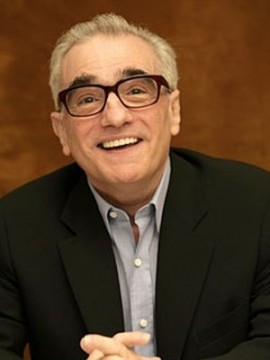
Healthcare is grabbing the headlines and the Chattersphere today, but one thing appears to be certain: It’s curtains for film. OK, maybe a stretch of a segue, but here’s the thing. Sure, there are some high profile holdouts and even digital-converts will attest to the quality and feel of film. But when Martin Scorsese is ready to make the perma-switch, then the slow inevitable demise may have just been given an extra boost. Scorsese will go digital for his next film and appears resigned to the format going forward. Speaking with Empire at the Edinburgh International Film Festival, the director’s longtime editor Thelma Schoonmaker said, “It would appear that we’ve lost the battle,” confirming his next film, The Wolf of Wall Street would be shot digitally. “I think Marty just feels it’s unfortunately over, and there’s been no bigger champion of film than him.” Of course Scorsese’s last film Hugo won an Oscar for Best Cinematography. It is also a de facto call for film preservation, something near and dear to the filmmaker’s heart. “It’s a very bittersweet thing to be watching films with him now that are on film,” said Schoonmaker. “We’re cherishing every moment of it. The number of prints that are now being made for release has just gone down, and it would appear that the theaters have converted so quickly to digital.” Scorsese and Schoonmaker get to work on The Wolf of Wall Street starring Leonardo DiCaprio, Jonah Hill and Jean Dujardin the second week of August. And what do you think about the switch to digital? [Source: Empire ]