Tag Archives: stephen-holden

‘The Muppets’: The Reviews Are In!

Critics are overwhelmingly happy with the big-screen reboot featuring Kermit and the gang. By Kevin P. Sullivan Miss Piggy in “The Muppets” Photo: Muppets Studio It’s time to play the music. It’s time to light the lights. It’s time to meet “The Muppets” for the first time in over 10 years. Everyone’s favorite felt friends are back in a big-screen reboot brought to life mostly on behalf of the hard work of lifelong Muppet fan Jason Segel . The reviews have been overwhelmingly positive. (You can see our own rave here .) Critics have praised the return of the Muppets as fun, warm, family-friendly fare, true to the characters and the fans who have loved them for decades. Check out our roundup of the reviews. The Story “A clever idea holds this reboot together, as simple as making one brother (Gary, played by Segel) human and the other (Walter, voiced by Peter Linz) a Muppet in love with the Muppets legacy. (He sports a Kermit wristwatch.) The locale is Smalltown, USA, which Gary and Walter introduce to us in the opening number, ‘Life’s a Happy Song.’ Gary, his schoolteacher sweetheart Mary ( Amy Adams ) and Walter journey to Los Angeles for a vacation. Touring the old Muppet Studios facility, the trio learn of the plan to raze the historically significant and sentimentally priceless structure. There’s oil under the ground, see, and the weaselly millionaire ( Chris Cooper ) after it doesn’t give a Gonzo’s patoot about nostalgia. To preserve the old homestead the visitors must gather together the Muppets from various locales and raise $10 million in a save-the-Muppets telethon.” — Michael Phillips, The Chicago Tribune The Songs “The setup works like a charm. So do the songs, with several new ones by [“Flight of the Conchords”] star Bret McKenzie . Adams rocks out on ‘Me Party.’ And Segel’s heartfelt ballad ‘Man or Muppet?’ deserves Academy attention as the movie song of the year.” — Peter Travers, Rolling Stone The Comeback “As a theatrical troupe, the Muppets haven’t exactly been AWOL these past dozen years; the gang rocked YouTube in 2009 with their kick-ass rendition of Queen’s ‘Bohemian Rhapsody.’ But they’ve certainly been lying low while our twitchy, tweet-y times have favored snarkier, more air-quote-driven entertainment, even from puppets. And in a way, that showbiz hiatus has worked in favor of The Muppets. For adults, the movie’s gentle, clever, unironic humor feels freshly, trendily retro now, enhanced by laughs provided in cameos from a very up-to-date roster of stars.” — Lisa Schwarzbaum, Entertainment Weekly The Muppets “These are the same old, adorable Muppets, as sweetly innocent and likable as ever. Winking at itself, the movie is casually, amusingly self-reflexive. In one joke Kermit the Frog considers telephoning President Carter. ‘The Muppets’ makes no attempt to match the wisecracking hipness of the ‘Shrek’ movies. If it doesn’t provoke belly laughs, it elicits many affectionate chuckles.” — Stephen Holden, The New York Times The Final Word “The remarkable thing about the Muppets, then and now, is what distinctive personalities and presences they have. When ‘The Muppet Movie,’ the first in the series, came out in 1979, there was astonishment that — ohmigod! — Kermit was riding a bicycle! How could a Muppet do that? Today, characters can do anything in the movies, but these Muppets are still played by Muppeteers, and they’re still endearing.” — Roger Ebert, Chicago Sun-Times Check out everything we’ve got on “The Muppets.” For breaking news, celebrity columns, humor and more — updated around the clock — visit MTVMoviesBlog.com .

See the original post here:
‘The Muppets’: The Reviews Are In!

NYT Movie Critic: Venezuelan Dictator Hugo Chavez a ‘Good-Hearted Man of the People’

Stephen Holden, the New York Times’s most left-wing movie critic (and that’s saying something) admires Venezuelan dictator Hugo Chavez almost as much as left-wing conspiracist/movie director Oliver Stone does. Stone’s new documentary, ” South of the Border ,” features informal interview sessions with several left-wing Latin American leaders, but the screen-time is dominated by Chavez, who Holden holds up as a humorous, ” good-hearted man of the people .” Political documentaries shadowed by paranoia and apocalyptic foreboding are so commonplace nowadays that “South of the Border,” Oliver Stone’s celebration of the leftward tilt of South American politics, comes as a cheerful surprise . As anyone who remembers “JFK,” his 1991 film about the Kennedy assassination, can attest, Mr. Stone has his own paranoid tendencies, but they are muted in this provocative, if shallow, exaltation of Latin American socialism. During “South of the Border” Mr. Stone schmoozes with several left-wing political leaders, including his good buddy the Venezuelan president, Hugo Chávez; he takes Mr. Stone to his childhood home, where Mr. Chávez mounts a children’s bike that collapses under him. Mr. Chávez comes across as a rough-hewn but good-hearted man of the people whose bullheaded determination is softened by a sense of humor . At a corn-processing factory, he jokes: “This is where we build the Iranian atomic bomb. A corn bomb.” Ho, ho, ho. Such “humor” is especially hilarious given that, as Forbes reports, Venezuela under Chavez harbors terrorists and weapons from the anti-Israel groups Hezbollah and Hamas via Tehran. Mr. Stone’s visit with Mr. Chávez is the movie’s longest interview with a Latin American statesman during what feels like a whirlwind tour of South American capitals. Instead of the saber-rattling, America-hating tyrants often depicted on American television (especially Fox News, several of whose extreme fulminations are excerpted for comic effect) , Mr. Stone finds sensible, plain-spoken men (and one woman, Argentina’s president, Cristina Fernández de Kirchner). They are well aware of how power works in the global arena. Those who have it use it for their own advantage; it’s the way of the world. The two demonic influences named in the movie are the American-controlled International Monetary Fund and the “private media.” Mrs. Kirchner recalls resisting pressure to keep borrowing from the fund rather than pay back what was owed. Mr. Chávez repeatedly triumphs despite the almost unanimous hostility of Venezuela’s privately owned media. Holden brought up the anti-Chavez hostility of the “private” media without reporting that earlier this year Chavez arrested the owner of the independent TV network Globovision for “comments offensive” to Chavez. Holden left Chavez criticism to a single sentence: There are no serious interviews with the poor to determine how everyday lives have changed under these socialist governments, and there is no mention of the human rights abuses in Venezuela reported by Amnesty International. Holden left out plenty. Chavez arrested Judge María Lourdes Afiuni for a ruling that displeased him (she had freed a businessman who had supported opposition politicians), as the Times itself reported on April 4, ” Criticism of Chavez Stifled by Arrests .” Reporter Simon Romero added: Twenty to 30 Venezuelans, including Judge Afiuni, are now imprisoned here because of their political activity or for reasons connected to publicly contradicting Mr. Chávez’s wishes, said Rocío San Miguel, a legal scholar here who leads a nongovernmental group that monitors Venezuelan security. Holden argued that “South of the Border” “is a valuable, if naïvely idealistic, introductory tutorial on a significant international trend.”  Ever the socialist idealist , Holden concluded: “It ultimately proffers the vision of a pan-South American union that is economically and politically strong enough to realize the Bolivarian dream.”

Originally posted here:
NYT Movie Critic: Venezuelan Dictator Hugo Chavez a ‘Good-Hearted Man of the People’

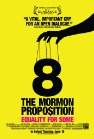
Media Praises ‘8: The Mormon Proposition,’ But Admit Film is One-Sided

“ 8: The Mormon Proposition ,” is a documentary detailing the large role the Mormon Church played in passing California’s Proposition 8 in 2008.That ballot initiative added an amendment to the state constitution defining marriage as exclusively between a man and a woman. While the media has naturally been praising the documentary, the movie is so biased that even some reviewers couldn’t avoid pointing out how one-sided it is. Directed by Reed Cowan, the film first premiered at the Sundance Film Festival. “8: The Mormon Proposition” is narrated by Lance Dustin, who was the screenwriter for “ Milk ,” the movie about California’s first openly gay elected official. The trailer features protestors, people upset about the passage of Proposition 8, and paints the Mormon Church negatively for influencing the outcome of Proposition 8. Cowan has not attempted to hide his bias in the documentary. He stated, “The separation of church and state in the USA is a sacred value. It’s what keeps us from being a theocracy. We are a democracy and should forever stay that way. ‘8: The Mormon Proposition’ is a crucial piece of documentary film making because it puts on record what I believe to be the greatest encroachment into matters of state by a church in American history.” Mormon Church spokesperson Kim Farah told the Washington Post in January that although she has not seen the film, “judging from the trailer and background material online, it appears that accuracy and truth are rare commodities in this film. Although we have given many interviews on this topic, we had no desire to participate in something so obviously biased.” Farah is not the only one who has noticed the film’s obvious bias. In a June 18 article, The Boston Globe’s Mark Feeney labeled the film as “numbingly partisan.” He explained that while over 30 people were interviewed in the documentary, only two are against same-sex marriage and he called one of them “a bombs-away bozo.” But Feeney made sure readers knew he was no apostate from the gay agenda, explaining, “It’s so one-sided you hardly care after a while that the side it’s on is so clearly the right one.” The Chicago Tribune also noticed how one-sided the documentary was. Author Michael Phillips stated the film, “emanates empathy for gay and lesbians who are also Mormons, or were, or are related to them, and whose relationship has been thwarted by the preachments and political influence of the Latter-Day Saints.” Some reviewers didn’t feel the need to mention the film’s propagandist bent. In a June 18 New York Times’ review, author Stephen Holden praised the documentary as being “highly emotional.” He detailed how the, “movie shows the depth of religion-based loathing of homosexuality, like that of abortion, to be primal. In the meantime the struggle to repeal Proposition 8 is under way.” Strange, but Holden wasn’t so receptive to another film’s depiction of “religion-based loathing” when he panned “The Stoning of Soraya M.” But then, that movie was critical of Islam, not a dangerous creed like Mormonism. The Los Angeles Times’ review labeled the documentary as being a “straightforward presentation” and “outstanding.” The movie review continued to state how, “The words of the church’s leaders and its activists could scarcely be more homophobic.”

Visit link:
Media Praises ‘8: The Mormon Proposition,’ But Admit Film is One-Sided