Tag Archives: stimulus

ABC’s Dan Harris Links Glenn Beck and Sarah Palin to Anti-Muslim ‘Anger,’ Violence

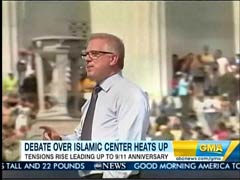
Good Morning America’s Dan Harris on Monday slipped in an aside about Sarah Palin and Glenn Beck that seemed to link the two conservatives to both violence against Muslims and a Florida minister’s plan to burn on the Koran on 9/11. Harris asserted, “It is but a preview of the anger we’ll be seeing on the upcoming ninth anniversary of 9/11, now just five days away , which will include an event in Alaska featuring Glenn Beck and Sarah Palin, a protest at Ground Zero and a Koran-burning ceremony at a church in Florida.” [MP3 audio here .] After the curious remark, Harris then played a clip of Pastor Terry Jones and added, “Critics say all this rhetoric is fueling anti-Muslim violence.” Beck’s rally , which will take place in Alaska on Saturday, will obviously not involve the burning of the Koran.   On Monday’s World News, a slightly altered version of the segment aired. Harris made the same connection: “And an event in Alaska that will includes Glenn Beck and Sarah Palin, two of the most vocal opponents of the so-called Ground Zero mosque. Critics say all the rhetoric is fueling anti-Muslim violence, including a fire at the future site of a mosque in Tennessee, which just this weekend was ruled to be an act of arson.” On Monday’s GMA, Harris featured only voices agreeing with his argument, including CAIR spokesman Ibrahim Hooper. Hooper warned, “We are asking people to take into account security concerns given the almost hysterical atmosphere we’re in right now.” Harris failed to note that in 2007 CAIR was named an unindicted co-conspirator for supporting Hamas. News anchor Juju Chang introduced the segment by fretting, “And, of course, the upcoming anniversary of 9/11 has many worried the strong words being heard may lead to violence against symbols of Islam across America.” A transcript of the segment, which aired at 7:10am EDT on September 6, follows: DAVID MUIR: With the hurricane still heating up, another story causing a lot of controversy over the proposed Islamic center in Ground Zero. On, Sunday, in fact, a rally in downtown Manhattan held by a pastor from Florida did little to ease tensions. Disappointing JUJU CHANG: And, of course, the upcoming anniversary of 9/11 has many worried the strong words being heard may lead to violence against symbols of Islam across America. Here’s Dan Harris. DAN HARRIS: This morning at a hotel near Ground Zero, a pastor from Florida will be holding the second in a series of services bashing the planned Muslim community center and promoting a competing Christian center that he plans to build. BILL KELLER (pastor): When they decided to build a mosque and preach what I consider a 1,400-year-old lie from Hell, I decided that somebody should be down there preaching the truth of God’s word. HARRIS: It is but a preview of the anger we’ll be seeing on the upcoming ninth anniversary of 9/11, now just five days away, which will include an event in Alaska featuring Glenn Beck and Sarah Palin, a protest at Ground Zero and a Koran-burning ceremony at a church in Florida. TERRY JONES (Pastor): We are going to have an International Burn a Koran Day. HARRIS: Critics say all this rhetoric is fueling anti-Muslim violence . And, now, mosques around the country are reaching out to other faiths for help. IBRAHIM HOOPER (CAIR National Communications Director): We are asking people to take into account security concerns given the almost hysterical atmosphere we’re in right now. [Advertisement] CHILDREN: I am American. I’m a Muslim. HARRIS: Muslim groups are now running these ads designed to improve the image of the faith. MALE: I don’t want to take over this country. FEMALE #1: Respect all people. FEMALE #2: I am an American. HARRIS: But there’s another concern that many Muslims have about this 9/11 anniversary, due to a fluke in the calendar it happens to coincide with the festival of Eid, which has many people worried about Muslim celebrating being misconstrued. One positive note in all of this, in past years, the biggest political issue of 9/11 has been the lack of development at the actual Ground Zero site. But this year that has changed, these pictures shot this weekend show two new skyscrapers going up on their way to completion. For Good Morning America, Dan Harris, ABC News.

Read the original here:
ABC’s Dan Harris Links Glenn Beck and Sarah Palin to Anti-Muslim ‘Anger,’ Violence

Dobbs to Obama: ‘Quit Whining and Start Leading’

It is crunch time for President Barack Obama and Democrats. The writing on the wall suggests the president and his party will suffer severe losses and will ultimately lose control of one, if not two chambers of Congress in November. And this was something Obama addressed in a Labor Day speech in Milwaukee on Sept. 6 , but he also complained about how he has been personally treated by his critics, suggesting he has been talked about “like a dog.” That was something former CNN anchor and syndicated radio host Lou Dobbs said it was time for Obama to get past. On the Fox News Channel’s Sept. 7 broadcast of “America Live,” host Megyn Kelly asked Dobbs about Obama’s hypersensitivity and comments about how he is treated by his detractors. According to Dobbs, the president needs to man up and be less concerned about his critics. “Megyn when you talk about the lies that are told – that happens in any political arena at anytime as you well know,” Dobbs said. “But the lies aren’t what are hurting this president. What is hurting this president is the truth. And it is – it’s critically important to this administration, this White House, I believe, for this president to quit whining and start leading all of the people – not just groups, not just certain identities but all of the American people.” Dobbs also noted the president’s last-ditch effort to make another push at saving the economy, which includes a a $50-billion proposal to repair the nation’s infrastructure, and various incentives for companies in the private sector, which Dobbs called  “born of desperation.” “This political death-bed conversion to free enterprise with less than two months to the election, this is a president who said he would be transparent,” Dobbs said. “Well, his politics are so transparent now it’s embarrassing because they are born of desperation. This newly discovered affection for free enterprise by this president – where has he been for the previous 17 months of his administration?” A recent Gallup poll had the president’s favorability at an all-time low of 43 percent – still higher than his predecessor at the end of his presidency, but a sign he is fading and needs to do something to stem this tide.

Continue reading here:
Dobbs to Obama: ‘Quit Whining and Start Leading’

CBS’s Smith Pressures GOP to Sign On to ‘Obama’s New Deal’

On Tuesday’s CBS Early Show, co-host Harry Smith touted President Obama’s economic proposals and portrayed Republicans as obstructionist: “Obama’s new plan. The President proposes to spend $50 billion on roads, airports, and railways and offers businesses a $200 billion tax cut. But the GOP says not so fast.” Later, Smith introduced a report by senior White House correspondent Bill Plante: “With unemployment at 9.6% and the midterm elections just two months away, President Obama is out and about this week promoting new ideas to get the economy moving again.” Plante proclaimed: “Pumped up in full campaign mode before a crowd of union members in Milwaukee, Mr. Obama celebrated his administration’s accomplishments and announced a new project to repair the nation’s infrastructure.” A headline on screen read: “Obama’s New Deal; Announces $50 billion Infrastructure Plan.” Following Plante’s report, Smith spoke with CBS economics and business correspondent Rebecca Jarvis and political analyst John Dickerson about the President’s plans. As Jarvis promoted the idea that more spending would create jobs, Smith asked Dickerson about Republican opposition: “…almost anything that the White House talks about, say over the last couple months or so, has met – had been met with a raspberry, I suppose we should assume this will be met with the same kind of reaction?” Dickerson had earlier used the “raspberry” image to dismiss GOP criticism as pure politics: “Well, the resounding sound was a huge raspberry from all Republican corners to the President’s proposal. You know, they – it’s almost as if these press releases are pre-written.” In reply to Smith, Dickerson suggested a strategy for Obama: “So then does the President have an issue, can he take it on the stump and say, ‘look, I’m even trying to give Republicans things that they want, that they’ve said they’ve wanted, they’re still saying no,’ and that’s going to be his message for the next two months.” Smith followed up: “Is there any chance any of this stuff the White House is talking about is going to get any support from Republicans?” Dickerson remarked: “No….in the end, the President’s going to have to try to rally his troops around the idea that the Republicans are really trying to block anything that’s sensible.” On Sunday’s Face the Nation , Smith filled in for host Bob Schieffer and asked a panel of liberal economists: “was the stimulus big enough?” He also pushed for a “second stimulus,” questioned extending the Bush tax cuts, and proposed the creation of “something like a new WPA” to create jobs. Here is a full transcript of the September 7 segment: 7:00AM TEASE HARRY SMITH: Obama’s new plan. The President proposes to spend $50 billion on roads, airports, and railways and offers businesses a $200 billion tax cut. But the GOP says not so fast. 7:06AM SEGMENT SMITH: Now to the economy and politics. With unemployment at 9.6% and the midterm elections just two months away, President Obama is out and about this week promoting new ideas to get the economy moving again. CBS News senior White House correspondent Bill Plante has the latest on that. Bill, good morning. BILL PLANTE: Good morning, Harry. The stalled economy has fueled voter discontent and Democrats fears of losing control of Congress. So the President will be on the campaign trail for much of the next two months trying to turn things around. [ON-SCREEN HEADLINE: Obama’s New Deal; Announces $50 billion Infrastructure Plan] BARACK OBAMA: I am going to keep fighting every single day, every single hour, every single minute, to turn this economy around and put people back to work and renew the American dream. Not just for your family, not just for all our families, but for future generations. PLANTE: Pumped up in full campaign mode before a crowd of union members in Milwaukee, Mr. Obama celebrated his administration’s accomplishments and announced a new project to repair the nation’s infrastructure. The proposal would rebuild 150,000 miles of roads, construct 4,000 miles of rail, and reconstruct 150 miles of runway as well as modernizing the air traffic control system. Administration officials insist this isn’t another stimulus, but the President says it will be a big boost to the economy. OBAMA: This will not only create jobs immediately, it’s also going to make our economy hum over the long haul. PLANTE: House Minority Leader John Boehner shot back in a statement, saying ‘we don’t need more government stimulus spending. We need to end Washington Democrats’ out-of-control spending spree, stop their tax hikes, and create jobs.’ Administration officials propose to pay for the infrastructure rebuilding by eliminating some tax breaks for oil and gas production. And the President will soon propose another tax break for small business. He wants to eliminate taxes on capital investment for the coming year until the end of 2011. Harry. SMITH: Alright, Bill Plante at the White House this morning, thank you. Here now to talk – take a closer look at the President’s plans are CBS News business and economics correspondent Rebecca Jarvis. And in Washington, CBS News political analyst John Dickerson. Good morning to you both. REBECCA JARVIS: Good morning. SMITH: Rebecca, let’s start with you, let’s go through these two plans. The $50 billion, sort of, stimulus junior, as it were, to all of this infrastructure work. JARVIS: Infrastructure- SMITH: This is supposed to be kind of a seed, really, for a much larger idea of addressing infrastructure needs across the country. JARVIS: Absolutely, and well we’ve had these infrastructure needs, obviously, in the very first stimulus, which was about $800 billion, some of the stimulus needs were supposed to be addressed. And if you look at those numbers, that original stimulus dollars, that original 800 billion or so stimulus dollars, that created – according to the Congressional Budget Office, which is a nonpartisan group – that created 1.4 to 3.3 million jobs. So if you think about this infrastructure plan which is $50 billion – that’s the proposal – that, if it’s an apples to apples comparison, it’s a 1/16 of the size of the original plan, could create about 88,000 to 206,000 jobs in a year. SMITH: That’s not a lot of jobs, although it is being welcomed, politically, in some corners and being shunned by – in other quarters. Let’s get John Dickerson on board here to just talk a little bit about the reaction to this. What was the resounding sound, especially from Republicans? JOHN DICKERSON: Well, the resounding sound was a huge raspberry from all Republican corners to the President’s proposal. You know, they – it’s almost as if these press releases are pre-written. They see this as a last-minute desperate attempt by the President. They say more big government spending going to balloon the deficit, this was right into their existing playbook. SMITH: Alright, and let’s talk about this two – this other- DICKERSON: The $200 billion. SMITH: Exactly. Which is a whole – kind of putting a different template on the way businesses sort of write down their own investment in their business. JARVIS: Yeah, as Bill Plante mentioned, it’s an original for two years businesses won’t have to wait to write down their investments in new things. Instead, they’ll get to take off their books, they’ll get to take the deductions in taxes. It’s a $200 billion plan. And some economists estimate it will help grow business investment by 5% to 10%, which could be a boost to some new businesses, as well as new jobs. SMITH: Alright. And John Dickerson, we haven’t heard so much reaction to that yet, but sort of overall, almost anything that the White House talks about, say over the last couple months or so, has met – had been met with a raspberry, I suppose we should assume this will be met with the same kind of reaction? DICKERSON: It will be. And the problem is the President’s got to get these things through Congress and particularly in the Senate, that requires Republican votes and his – the President’s allies in the Senate say that just isn’t going to happen. So then does the President have an issue, can he take it on the stump and say, ‘look, I’m even trying to give Republicans things that they want, that they’ve said they’ve wanted, they’re still saying no,’ and that’s going to be his message for the next two months. SMITH: Because that really ends up being the question. Is there any chance any of this stuff the White House is talking about is going to get any support from Republicans? DICKERSON: No. And though there may an tiny bit of support for this $30 billion small business bill, because small business is something everybody loves. But in the end, the President’s going to have to try to rally his troops around the idea that the Republicans are really trying to block anything that’s sensible. SMITH: Yeah, okay. And finally, last but not least, all through this then, the Bush tax cuts has become this sort of mantra of sorts that the Republicans say, ‘do not touch this. Do not touch this.’ What’s the news on that today? JARVIS: Well, this $200 billion tax credit for businesses throughout the country, some are viewing it as a potential alternative to the Bush tax cuts for the upper earning income earners. SMITH: Alright, thanks very much, Rebecca Jarivs, John Dickerson. Thank you very much for joining us and your insights this morning.

Visit link:
CBS’s Smith Pressures GOP to Sign On to ‘Obama’s New Deal’

CBS’s Harry Smith on Face the Nation: No Time to ‘Continue Cutting Taxes,’ So ‘What About, Say, Something Like a New WPA?’

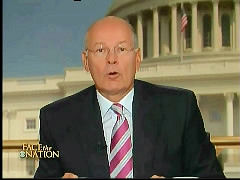
Filling in for Bob Schieffer as host of Face the Nation , Early Show co-host Harry Smith brought his liberal sensibilities to the Sunday show, pressing his economic panel to agree the Bush tax cuts should not be extended, the stimulus was too small and so another would be wise – even suggesting a return to an FDR-era government make-work jobs program: “What about, say, something like a new WPA?”   Presuming the pre-2003 levels are the real rates, Smith questioned Gretchen Morganson of the New York Times: “Is now the time to continue cutting taxes if there is this overwhelming deficit out there?” He soon cued up White House economic adviser Laura Tyson to agree with his premise: “Should the Bush tax cuts stay in place for the middle class but be rescinded for the top wage earners?” Turning back to Morganson, Smith showed exasperation with public opposition to government spending programs as he wondered if the stimulus wasn’t big enough: I want to go back to the stimulus because as so many of these Congress folks are going back out of their districts and people complain about the size of government, they’re complaining about the deficit, they’re complaining about TARP and who knows what all else. As we’re standing here looking at it right now, just if you can step away, was the stimulus big enough? Morganson afirmed “the stimulus was not big enough” and Smith next pushed Mark Zandi, of Moody’s Analytics: “There are plenty of economists out there, Mark Zandi, who say what’s needed is is a second stimulus. Could those words cross your lips?” After Zandi’s reply, Smith arrived at his Works Progress Administration idea: All right. Laura Tyson, what about a more significant stimulus, beyond the things, these, you know, a block here, a block here, a block here, but another say couple hundred billion dollars, what about say something like a new WPA? Tyson used that as a cue to advocate more “infrastructure” spending. The CBSNews.com posting summarizing the program reflected Smith’s agenda, “ Economists: Second Economic Stimulus Needed .” From the Sunday, September 5 Face the Nation on CBS, picking up a few minutes into the segment: HARRY SMITH: Gretchen, let me ask you this. This whole idea of the President talking about moving in the right direction, wanting to pick up the pace. Is there a pre-dominant idea of what it is that is hindering the economy from catching fire? GRETCHEN MORGANSON, NEW YORK TIMES: Definitely. It is debt. We had a debt binge the likes that we have hardly ever seen before. Frankly, Harry, it just takes a long, long time to get that out of the system. We’re still really working down the debt that homeowners took on. And it’s a difficult and really excruciating process. You can’t do it overnight. SMITH: Which brings up the whole idea, Gretchen, of this debate: Is now the time to continue cutting taxes if there is this overwhelming deficit out there? MORGANSON: Well, I think what you have to worry about immediately is job creation and let’s just forget about the deficit for the moment because when you have the unemployment rate where it is now and you have incomes really being stretched, I think that that is the key to any kind of activity and economic activity by consumers is an enormous part of our economy. That is really why we are in such dire straits. SMITH: Which is maybe one of the ideas that has to be in play is do we have the wrong model to begin with? I want to get back to that in a second. First, though, I want to talk about the Bush tax cuts which are due to expire in January. Laura Tyson, should the Bush tax cuts stay in place for the middle class but be rescinded for the top wage earners? LAURA TYSON: I think that is the right thing to do… …. SMITH, TO MARK ZANDI: Because you hear small business owners say if those tax cuts come back, I’m not going to hire a single person. I mean, that’s anecdotal, but is that really the predominant feeling among small businessmen? …. SMITH: Gretchen Morganson, I want to go back to the stimulus because as so many of these Congress folks are going back out of their districts and people complain about the size of government, they’re complaining about the deficit, they’re complaining about TARP and who knows what all else. As we’re standing here looking at it right now, just if you can step away, was the stimulus big enough? MORGANSON: The stimulus was not big enough… SMITH: One of the things you write so much about for the Times is the housing market. One of the other ideas that’s out this this week is this notion of giving people whose homes are underwater, mortgage holders whose homes are underwater, the opportunity to get out. People who are paying their mortgages, but to get out from underwater and basically handing the federal government the bill. In the short term, or even in the long term, Gretchen, does that seem like a viable option? And oh, by the way, we should say the government’s efforts on some of these levels have not been particularly good in the last two years. MORGANSON: That’s right. I mean, I think that the devil is in the details. The HAMP program has been a big disappointment. That was the helping homeowners, the initial program that treasury put out there. It’s been very disappointing. I think these matters are so complicated with so many different people and debt, second loans, first loans, it’s really very complex. And I just don’t see how it’s going to provide immediate help, the kind that we really need. SMITH: So is it time — it’s crazy to even talk about — but there are plenty of economists out there, Mark Zandi, who say what’s needed is is a second stimulus. Could those words cross your lips? MARK ZANDI: Well, we are talking about other stimulus, right? I mean, An r&d tax credit, payroll tax holiday. Job tax credit. All these things are different forms of stimulus. In fact, the federal government has provided a couple hundred billions dollars in additional stimulus beyond the recovery act stimulus that we put in place a year-and-a-half ago. We are doing that. In my view the recovery needs more help. It would be prudent, I think, to provide some additional help through some of the things that we’re talking about. SMITH: All right. Laura Tyson, what about a more significant stimulus, beyond the things,  these, you know, a block here, a block here, a block here, but another say couple hundred billion dollars, what about, say, something like a new WPA? LAURA TYSON: Well I believe that we should look at infrastructure because we know before the recession, before the great recession, we know that we were vastly underspending on the nation’s infrastructure. You can sort of, therefore, start with the notion that infrastructure spending is terrific in two ways. It creates demand right away when you go out and get the project start and get the worker started. It also creates the ability to grow and be productive in the future. SMITH: Although Japan tried that and they don’t have a lot to show for it.

See the original post here:
CBS’s Harry Smith on Face the Nation: No Time to ‘Continue Cutting Taxes,’ So ‘What About, Say, Something Like a New WPA?’

Tom Friedman Rips Obama: ‘Completely Over-read Mandate…Never Seen Worse Communicating Administration’

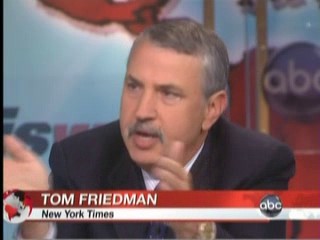
New York Times columnist Tom Friedman on Sunday accused Barack Obama of badly misreading his Election Day mandate, and said the current White House is the worst communicating administration he’s ever seen. Appearing on the Roundtable segment of ABC’s “This Week,” Friedman blasted the President saying, “I’m for more health care. I’m glad we’ve extended it to more Americans. But the fact is there’s a real, I think, argument for the case that Obama completely over-read his mandate when he came in.” Friedman continued, “He was elected to get rid of one man’s job, George Bush, and get the rest of us jobs. I think that was the core thing, and by starting with health care and not making his first year the year of innovation, expanding the economy and expanding jobs, you know, I think looking back, that was a political mistake.” Moments later, the Times columnist said, “I’ve never seen a worse communicating administration” (video follows with partial transcript and commentary): TOM FRIEDMAN, NEW YORK TIMES: Walter Shapiro had a column the other day which I think made a good point. Look, I’m for more health care. I’m glad we’ve extended it to more Americans. But the fact is there’s a real, I think, argument for the case that Obama completely over-read his mandate when he came in. He was elected to get rid of one man’s job, George Bush, and get the rest of us jobs. I think that was the core thing, and by starting with health care and not making his first year the year of innovation, expanding the economy and expanding jobs, you know, I think looking back, that was a political mistake. Not surprisingly, Friedman’s colleague at the Times blamed it all on Republicans. PAUL KRUGMAN, NEW YORK TIMES: He needs now to say it’s the other guys who are blocking action. He needs to lay out a philosophy. I’m not sure if there’s any way to save the House, but if he can, it can do it not by actually changing the economy in the few weeks remaining, but by making this an issue. Do you really want these guys’ economic plan? And then he has to campaign for it. Amanpour then referred to an article by Richard Cohen about to be published in the Washington Post talking about Obama as the incredible shrinking president. CHRISTIANE AMANPOUR, HOST: He says, “The folks who ran a very smart presidential campaign in ’08 have left the defining of the Obama presidency to people on the edge of insanity.” But then he goes on to talk about his Oval Office address this week, about Iraq, about turning to Afghanistan and the economy. He says, “It was only his second Oval Office address, and so great importance was attached to it. He should have had something momentous to say.” Is that fair? FRIEDMAN: I think it is fair. You know, one of the criticisms certainly I’ve had and many others have had, this is not I think original, there’s been no narrative to this administration. To me, I think Barack Obama was elected for one thing – which I’m not sure he ever fully understood – to do nation building at home, to do nation building in America. That to me was the central tent pole. Under that was health care, jobs, you know, economy, innovation, education, energy, okay? He’s never tied it together it seems to me under one single narrative. And then, therefore, he’s fought each issue against a different constituency. There’s never been a unifying message. I’ve worked here since 1989. I’ve personally just as a reporter, columnist in Washington, I’ve never seen a worse communicating administration, just at the basic technical level of, hey, we’ve got a good plan, you know, maybe someone out there would be interested in writing about it, since I’ve been to Washington. More and more it’s becoming clear this President is losing his once gushing and fawning press. If only these same folks would have actually examined the junior senator from Illinois’ record before jumping on his bandwagon in 2007. I guess that would have been too much like journalism.  

View original post here:
Tom Friedman Rips Obama: ‘Completely Over-read Mandate…Never Seen Worse Communicating Administration’

Robert Reich: Stimulate Economy With 90% Tax On Top Earners

Can you imagine what would happen to the economy if top wage earners were taxed at 70 to 90 percent? Former Clinton Labor Secretary Robert Reich can, and he thinks it’s a great idea. To be sure, many Americans were concerned that giving Democrats control of the executive and legislative branches of our government during an economic crisis could usher back in socialist tendencies first seen in this nation during the Depression. Fears of such a leftward shift sparked a new powerful movement called the Tea Party. With this in mind, Reich’s op-ed “How to End the Great Recession” published in Friday’s New York Times validates these concerns:  The rich spend a much smaller proportion of their incomes than the rest of us. So when they get a disproportionate share of total income, the economy is robbed of the demand it needs to keep growing and creating jobs. What’s more, the rich don’t necessarily invest their earnings and savings in the American economy; they send them anywhere around the globe where they’ll summon the highest returns – sometimes that’s here, but often it’s the Cayman Islands, China or elsewhere. The rich also put their money into assets most likely to attract other big investors (commodities, stocks, dot-coms or real estate), which can become wildly inflated as a result. Meanwhile, as the economy grows, the vast majority in the middle naturally want to live better. Their consequent spending fuels continued growth and creates enough jobs for almost everyone, at least for a time. But because this situation can’t be sustained, at some point – 1929 and 2008 offer ready examples – the bill comes due. And how does Reich see “us” paying that bill? If you said “higher and higher taxes,” give yourself a cigar: THE Great Depression and its aftermath demonstrate that there is only one way back to full recovery: through more widely shared prosperity. In the 1930s, the American economy was completely restructured. New Deal measures – Social Security, a 40-hour work week with time-and-a-half overtime, unemployment insurance, the right to form unions and bargain collectively, the minimum wage – leveled the playing field. In the decades after World War II, legislation like the G.I. Bill, a vast expansion of public higher education and civil rights and voting rights laws further reduced economic inequality. Much of this was paid for with a 70 percent to 90 percent marginal income tax on the highest incomes. And as America’s middle class shared more of the economy’s gains, it was able to buy more of the goods and services the economy could provide. The result: rapid growth and more jobs. 70 to 90 percent! He said it, didn’t he? 70 to 90 percent! But there’s more: What else could be done to raise wages and thereby spur the economy? We might consider, for example, extending the earned income tax credit all the way up through the middle class, and paying for it with a tax on carbon. Or exempting the first $20,000 of income from payroll taxes and paying for it with a payroll tax on incomes over $250,000. Yep. Let’s tax carbon and give the proceeds to lower and middle-income wage earners. There it is, folks. If you doubted the whole global warming scam was specifically designed to redistribute wealth, one of the left’s most-respected economic strategists just admitted it! But there’s still more: In the longer term, Americans must be better prepared to succeed in the global, high-tech economy. Early childhood education should be more widely available, paid for by a small 0.5 percent fee on all financial transactions. Public universities should be free; in return, graduates would then be required to pay back 10 percent of their first 10 years of full-time income. A 0.5 percent fee on all financial transactions! Does that mean if one buy’s stock or a house, the government gets a half of a percent? And another half when you sell? Does that include mutual funds, treasury bills, and money market accounts? And certificates of deposit? See where this could lead? Now just imagine if these socialists also get their way and a new valued added tax is implemented? At that point, any time you want to actually use your money, the government gets a slice kind of like a mafia kingpin or a union leader. And this is supposed to help the economy? But there’s still more: Another step: workers who lose their jobs and have to settle for positions that pay less could qualify for “earnings insurance” that would pay half the salary difference for two years; such a program would probably prove less expensive than extended unemployment benefits. Earnings insurance! Earnings insurance! As I hinted at the onset, this op-ed by Reich is a picture of the future if the Party in power and their media minions get their way.   Be afraid, America! Be very afraid!

See original here:
Robert Reich: Stimulate Economy With 90% Tax On Top Earners

Washington Whispers: Ted Kennedy an Innocent Chappaquiddick Victim

This is one story that U.S. News & World Report’s Washington Whispers might want to keep to a low whisper or risk even more ridicule than what they are already receiving. Paul Bedard, writing in Washington Whispers, quotes Kennedy’s biographer and former girlfriend who claim that Ted was really an innocent victim of the Chappaquiddick accident. Here is Kennedy biographer Burton Hersh making the case for Kennedy as merely a lousy driver: Now, a year after Kennedy died, his lifelong biographer Burton Hersh, armed with fresh interviews with Kennedy’s mistress at the time, tells Whispers that the whole July 1969 episode  should have been handled as a simple crash, leaving the senator’s legacy untainted. “It was a car accident,” he says. “Ted was a terrible driver. He never paid much attention to where he was going.” “He took a tremendous blow on the head,” says Hersh. In interviews following the crash, Kennedy displayed confusion and amnesia, he says. Wasn’t Ted married to Joan Kennedy at the time of the accident? No matter. Perhaps his biographer figures it is better to show that Kennedy was unfaithful rather then culpable in Mary Jo Kopechne’s death. In any event, loyal lifelong biographer Hersh continues to play a sympathetic note on his violin: “If the thing had been handled properly, the first thing they would have done is put him in a hospital. Then they would have said he was a victim of an auto accident and didn’t know what he was doing and couldn’t be held responsible for anything that happened really after that, which would have been a fair explanation,” says author-journalist Hersh, who knew Kennedy since they were classmates at Harvard. “But instead, he felt terribly guilty about the whole thing … tried to take responsibility and … just confused the issue.” Darn that mighty Ted Kennedy moral compass. That is what got him into so much trouble. Oddly enough, despite his laughable defense of Kennedy, Hersh admits that his type of woman is a…bimbo: As for Kennedy being interested in the straight-laced Kopechne, Hersh says that was highly unlikely. “She wasn’t Ted’s kind of babe. She was a long way from being a bimbo.” Most of the Washington Whispers readers don’t seem to be buying this bizarre rewrite of history judging from their posted remarks : If I had done the same thing I would have gone to jail for 4 years for manslaughter. Trying to rewrite Teddy’s shameful acts won’t cut it.  Read “Senatorial Privilege” published shortly after the accident and inquest. Provides an hour by hour investigatorial record. ‘Nuff said. I wish every reader of this article had a personal army of lackeys like the Kennedy’s do to come up with trash like this to protect them. Yeah, so confused he swims back to his hotel, goes to his room and gets some sleep before reporting the accident. He knew what he had done and what he was doing. Anyone with honor would have admitted his transgressions.  In my neighborhood, and absent political connections, we call this tragic event failure to render aid, driving while intoxicated, leaving the scene of a felony accident, and he should have been charged with murder.  And now the bonus comedy punchline from the article to explain away Kennedy’s dissolute activies: He also brushes off tales that Kennedy was a playboy more than a lawmaker. “Kennedy’s central project was accomplishing as much as he could in public life. And all of the things, including the drinking, the women, and the rest, were sort of supportive activities. They were amusements.”  Burton Hersh: historical airbrusher with the special comedic touch.

Read more here:
Washington Whispers: Ted Kennedy an Innocent Chappaquiddick Victim

Freeland: Obama ‘Should Probably Have the Balls’ for Another Stimulus

It’s been a challenging week for President Barack Obama.  His vacation ended.  He was forced to rebuke questioning reporters with a cutting, “We’re buying shrimp, guys.”  And now Reuters global editor-at-large Chrystia Freeland, accurately described recently by Media Research Center president Brent Bozell as “a deeply devoted Obama groupie,” is referencing what Obama-endorsed former Illinois Gov. Rod Blagojevich (D) termed testicular virility. On today’s CNN Newsroom, anchor Ali Velshi suggested a second stimulus might be needed, an idea Chrystia clearly liked: FREELAND: Well, I think you’re absolutely right. I mean, look, he is a Democrat. If you talk to Democratic economists — one of them, for example, Laura Tyson, who was a senior economist in the Clinton White House, came out with a very strong op-ed piece over the weekend saying we need a second stimulus. I think that is the consensus among Democratic thinkers right now. And, yes, I think the president should probably have the balls to say this is what I believe in and push it. It’s true, that would be publicly difficult, but this is not a moment for milquetoast measures. Things are really rough. Things are really tough, despite – or more likely because of – the huge stimulus Obama and his Democratic accomplices shoved through Congress last year.  Yet in Liberal Land, drastically increased government spending is like Jello, there’s always room for more.  Additionally, it takes a manly man to counsel Americans that spending even more is our only way out of economic woes. A man who’s really got that ol’ testicular virility.  Chrystia Freeland courageously shares that blunt advice with The One.  Even if it means turning CNN into PG-rated fare.              

Originally posted here:
Freeland: Obama ‘Should Probably Have the Balls’ for Another Stimulus

NYT’s Brooks Bashes Obamanomics, Praises Germany’s Far More Successful Fiscal Restraint

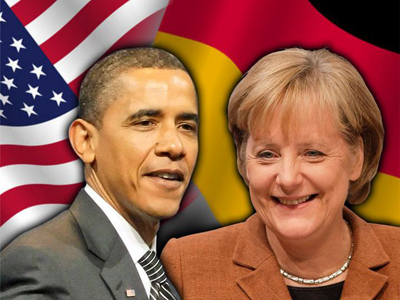
On the same day the Commerce Department dramatically revised down second quarter Gross Domestic Product estimates, New York Times columnist David Brooks published a stinging rebuke of Obama economic policies. “The American stimulus package was supposed to create a ‘summer of recovery,’ according to Obama administration officials,” wrote Brooks. “Job growth was supposed to be surging at up to 500,000 a month,” he continued. “Instead, the U.S. economy is scuffling along.” Scuffling is putting it mildly, for it was announced Friday that the GDP only grew by a pathetic 1.6 percent last quarter which was down from previous estimates of 2.4 percent. With this in mind, Brooks’ column was not only spot on, but a surprising indictment of everything the Obama administration has done since Inauguration Day: During the first half of this year, German and American political leaders engaged in an epic debate. American leaders argued that the economic crisis was so bad, governments should borrow billions to stimulate growth. German leaders argued that a little short-term stimulus was sensible, but anything more was near-sighted. What was needed was not more debt, but measures to balance budgets and restore confidence. The debate got pointed. American economists accused German policy makers of risking a long depression. The German finance minister, Wolfgang Schäuble, countered, “Governments should not become addicted to borrowing as a quick fix to stimulate demand.” The two countries followed different policy paths. According to Gary Becker of the University of Chicago, the Americans borrowed an amount equal to 6 percent of G.D.P. in an attempt to stimulate growth. The Germans spent about 1.5 percent of G.D.P. on their stimulus. This divergence created a natural experiment. Who was right? The early returns suggest the Germans were. After sharing our dismal data, Brooks presented a stark comparison: The German economy, on the other hand, is growing at a sizzling (and obviously unsustainable) 9 percent annual rate. Unemployment in Germany has come down to pre-crisis levels. But the results do underline one essential truth: Stimulus size is not the key factor in determining how quickly a country emerges from recession. The U.S. tried big, but is emerging slowly. The Germans tried small, and are recovering nicely. Indeed. As the Wall Street Journal noted last week: In the second quarter, the German economy grew 2.2% compared to the previous three months, or more than 8% annualized-the best quarterly performance in decades. And while the American economy shed 130,000 jobs in July, resulting in an unemployment rate of 9.5%, German unemployment has fallen for 13 months straight and is now down to 7.6%, where it was at the start of the financial crisis. Imagine that: German unemployment is now down to where it was before the financial crisis began ! Not only is ours not even close to that, most economists expect U.S. unemployment to rise in the coming months. What might be the key according to the Journal? [O]ne thing that can be said for Chancellor Angela Merkel is that she has resisted the borrow-and-spend policy temptation. Earlier this year, she announced an €80 billion ($103 billion) deficit-reduction plan. Mrs. Merkel has followed a basic rule of economic policy: First do no harm. Her center-right government has failed to fulfill its pro-growth, tax-cutting campaign promises. But it has also largely refrained from worsening the country’s business conditions. While the U.S. debates whether, by how much and on whom to raise taxes in January, Berlin’s budget cuts have taken some of the uncertainty out of Germany’s fiscal future. In America, U.S. corporations are holding back on investments despite soaring profits. At the end of the first quarter, nonfinancial companies in the Standard & Poor’s 500 had a record $837 billion in cash, apparently preferring to make almost no interest on the money instead of investing it in the face of uncertainty about taxes and regulation going forward. In other words, by the simple expedient of not frightening business, Berlin has made it easier for the country’s export-oriented industries to take advantage of the global recovery. German engineering is successful in emerging markets such as India and particularly China, where BMW, Audi and Daimler, posted record sales these past few months. Meanwhile, as American corporations sit on the sidelines waiting for the next shoe to drop from the Obama administration, our trade deficit continues to explode. Of course, regardless of the comparisons being made by Brooks and the Journal, folks on the Left are sure to blame the slowing economy on not enough federal spending. Almost on cue, Brooks’ colleague Paul Krugman wrote Friday: In the case of the Obama administration, officials seem loath to admit that the original stimulus was too small. True, it was enough to limit the depth of the slump – a recent analysis by the Congressional Budget Office says unemployment would probably be well into double digits now without the stimulus – but it wasn’t big enough to bring unemployment down significantly.   Amazing! Despite historical evidence during the Depression that governments can’t spend their way out of economic calamities, and the same being true when Japan couldn’t do it in the ’90s, Krugman and his ilk just want to continue with this failed policy. Maybe Brooks ought to take Obama and Krugman on a trip to Berlin so that Merkel can teach them a thing or two about the benefits of fiscal restraint and getting out of the way of the jobs creating private sector.   Alas, they probably still wouldn’t get it. Sigh.

See the original post here:
NYT’s Brooks Bashes Obamanomics, Praises Germany’s Far More Successful Fiscal Restraint

CBO’s Rosy Stimulus Numbers Have Little Basis in Reality, But Media Again Report Them as Fact

In the media’s continued effort to sell the stimulus to the American public, reality is simply a nuisance. It’s much easier to use rosy economic projections with little to no grounding in the real world, and to refrain from informing readers just how disconnected from reality those models are. That is exactly what many in the media have done since the Congressional Budget Office released numbers yesterday ( pdf ) claiming that the stimulus has, in the words of ABCNews.com reporter Andy Sullivan, “put millions of people to work and boosted national output by hundreds of billions of dollars in the second quarter.” The only problem with this reasoning: it has no basis in reality. Those employment and economic growth numbers exist only on paper. The models may tell economists and policymakers that a certain number of jobs have been created, but that number has literally no connection to the actual unemployment situation. Of course that hasn’t stopped the media from reporting CBO’s numbers as fact before. And once again, they’ve demonstrated their own disconnect from reality. There are two essential problems with CBO’s findings: first, they assumes what they purport to demonstrate. CBO accepts as given that each dollar in stimulus spent will create X number of jobs and Y points of economic growth. The logic looks like this: the stimulus creates jobs, therefore the stimulus created jobs. Second, the CBO’s analysis, by its own admission, did not take into account what could have happened without the stimulus. So it is entirely possible that the economy could have created more jobs and economic growth without the legislation. The latter point is simple economic logic, but it is also reinforced by scholarship. A recent study at Harvard Business School found that the more money federal legislators sent back to their home states or districts, the more private businesses in those areas retrenched. Private sector economic activity actually decreased as more pork left Washington. Ed Morrissey wrote of the study’s findings: If this seems counterintuitive, it might be from marinating too long in Beltway conventional wisdom. When private entities (citizens or businesses) retain capital, it gets used in a more rational manner, mainly because the entity has competitive incentives to use capital wisely and efficiently. The private entity also has his own interests in mind, and can act quickly to use the capital to its best application. Private entities innovate and look to create and expand markets, creating more growth. Since the stimulus is just a massive pork barrel project, it stands to reason that it could adversely affect economic activity even where it is most heavily targeted. Could that actually be the case? Well, according to the CBO report released yesterday, Although CBO has examined data on output and employment during the period since ARRA’s enactment, those data are not as helpful in determining ARRA’s economic effects as might be supposed because isolating the effects would require knowing what path the economy would have taken in the absence of the law. In other words, the report did not examine what the economy might have looked like absent the stimulus package. Considering the media’s fondness for touting jobs saved – a completely hypothetical claim – one would imagine they would at least ponder the possibility of a stimulus-less economy. Of course even CBO’s measurements concerning stimulus spending were a tired exercise in theoretical economics. It was the same methodology the CBO has been using since the stimulus passed, and – surprise! – it produced nearly identical results. Reason’s Peter Suderman reported in March: …In response to a question at a speech earlier this month, CBO director Doug Elmendorf laid out the CBO’s methodology pretty clearly, describing the his office’s frequent, legally-required stimulus reports as “repeating the same exercises we [aleady] did rather than an independent check on it.” CBO tweaks its models on the input side, he says-adjusting, for example, how much money the government has spent. But the results the CBO reports-like the job creation figures-are simply a function of the inputs it records, not real-world counts. Following up, the questioner asks for clarification: “If the stimulus bill did not do what it was originally forecast to do, then that would not have been detected by the subsequent analysis, right?” Elmendorf’s response? “That’s right. That’s right.” Even if it were acceptable to use models to gauge economic growth without actually examining the economy, we now know that the stimulus was a failure even by the most basic standards of federal spending aimed at promoting economic growth. Former White House economic advisor Lawrence Lindsey claims he was cited as a supporter of a generic stimulus package before the measure was actually passed. But even Lindsey, who supported the idea of a stimulus package in the abstract, wrote earlier this month that “the bill that was actually passed into law was both so expensive and so badly flawed that it gives the whole concept of macroeconomic stimulus a bad name.” Since the projections in CBO’s models are based on previous experience with economic stimulus packages – as is, presumably, Lindsey’s support for a theoretical stimulus – assuming that those models apply neatly to today’s economic situation is misguided at best. Despite all of these facts, many in the media have trumpeted the CBO’s findings as irrefutable signs that the stimulus saved the American economy from even greater catastrophe. The Washington Post , the Associated Press , Bloomberg , and ABC News are four outlets that reported CBO’s findings without mentioning that its numbers were based on economic models that were not derived from actual economic conditions, and do not take into account the failures of the actual bill to do what its supporters claimed it would. The CBO was forced to do something similar during the health care debate, when Democratic congressional leaders were scrambling to keep the bill’s price tag below a trillion dollars. Even if CBO knows its forecasts or predictions are beyond the pale of reality, they must score what Congress gives them. The CBO does not presume to know what would have happened had the stimulus package not been passed at all. Research suggests that the economy could even have been better with no federal spending at all. This possibility also escaped mention by these reporters. It’s getting continually more difficult to tout the successes of the stimulus by using real-world examples. The media, apparently, have devised a solution: ignore reality.

Read this article:
CBO’s Rosy Stimulus Numbers Have Little Basis in Reality, But Media Again Report Them as Fact