Alicia Keys and Swizz Beaks did it up Grammy style stuntin in the purple velvet. You likey?? Wiz Khalifa and his lovemate Amber Rose were in the building as well. See more pics below:
A century from now, there will likely be a supermarket tabloid headline that claims Jennifer Aniston and Brad Pitt got back together in heaven. Such is the ridiculousness that has become of this never-ending rumor, one that magazines still profit over because customers continue to gobble up all Brangelina and Bennifer talk. In the latest issue of InStyle , Aniston says she’s aware of the headlines ( she’s having Pitt’s baby!!! ), she wishes they didn’t exist, but she understands why the editors continue to approve them. “It’s constant,” the star says. “It’s a story headline that won’t go away, but it’s a money thing – [people make money off] a story that has nothing to do with reality.” Among other topics touched on by Aniston during the interview: The occupation she’d want if she were not an actress : “I’d love to be a dermatologist. I’d be so obsessive about it. I’m fascinated by skin, products, and lasers. I go on the Internet and read all about it. I call it ‘laser porn.’” Boyfriend Justin Theroux : “First of all, he has great style – it’s very specific, and it has been his style forever. Has it influenced mine? No, but I know people say it has. ‘Oh, look, you’re dressing alike.’ And I think, ‘No I’m not. I’ve had this jacket for three years!’” What she looks for in a man : “Having experienced everything you don’t want in a partner over time, it starts to narrow down to what you actually do want. As I get older I realize what qualities are important in love and what suits me. And what I won’t settle for.”
Nicki Minaj is heating up the Internet with a new unofficial leak of a record dedicated to late Hollywood icon Marilyn Monroe. She flipped her style up for this one the hard rapping female mc is showing her softer side and is singing. I really like this song she is gonna be soon recognized as not only the best female rapper in the game but as a pop star. Let me know what you think about her new song.
The magic of Madonna’s parallel romantic storytelling appears to have been lost on critics. By Kara Warner Madonna directing “W.E.” Photo: The Weinstein Co. In addition to her heavily hyped performance at Super Bowl XLVI this weekend, Madonna has been busy writing and directing her second movie, “W.E.,” which follows the real-life love story of American divorc
Celebrity Fashion & Beauty News, Photos, Video, Tour Outfits, Trends, Shopping. Here is the original post: Justin Bieber Takes Style Tips From Lil' Wayne
We’ve been discussing that shady French Elle and their comments about black folks all week , and now they have finally decided to respond: French fashion magazine Elle has denied charges of racism after unleashing a storm by suggesting that a black American elite, inspired by the Obama couple, was finally embracing “white” fashion. The January 13 blog post entitled “Black fashion power” has drawn volleys of angry protest on both side of the Atlantic, with the New York Daily News tabloid saying it managed to “insult black Americans as a whole”. In the piece, which has since been removed from Elle’s website, journalist Nathalie Dolivo cited singers Erykah Badu or Rihanna and the actress Zoe Saldana, as black Americans who understood “the importance of style”. “In an America governed for the first time by a black American president, chic has become a plausible option for a community up until then bound by its streetwear codes,” she wrote. “In 2012, the ‘black-geoisie’ has integrated all the white codes … but with a twist, bourgeois with an ethnic reference that recalls their roots,” she argued. The US website Huffington Post slammed the piece last week, saying a clumsy attempt to praise black style had “unravelled into a string of controversial, stereotypical and insulting statements”. “So, being chic and sophisticated beyond jeans and a T-shirt has only been an option for black people since 2008 when Michelle Obama became First Lady?” it asked. French star journalist Audrey Pulvar, one of the rare black faces in France’s media landscape, also called the article “racist and imbecilic”. In a statement issued on Wednesday night, the body representing journalists at the style weekly defended their title. “No Elle is not racist,” the Societe Des Journalistes said in a statement, insisting the magazine had “never stopped campaigning for the dignity of all women for more than 60 years”. Elle editor Valerie Toranian also published an online apology, saying the weekly was “deeply sorry” to have caused offence, and has invited an anti-racism body to take part in a debate about the article. In a new post on Elle’s site, Dolivo also apologises for the article, saying it was an attempt to take a “positive” look at US society and style. SMH. We call bullsh*t on this one. Discuss… Source More On Bossip! Pure Comedy: Bin Laden’s Potty-Mouth Ex-Boo-Thang Kola Boof Responds Directly To BOSSIP About Her Husband-Fuggin Tweets!! On The Party Scene: Rick Ross Celebrates His B-Day In Atlanta With His Banger Boo “Basketball Wives Beef”: Laura Govan Says She Will Never Speak To Shaunie O’Neal And Explains Why She Loves The Pistol Packing Player Who Is Papa To Her Kids! Hate It Or Love It?!?! The Notable Women Of Color (Mostly) In Ask Men’s Most Desirable Women Of 2012
Don’t let the bikini Twit pic fool you. Nor the vow that she’s committed to ” new beginnings .” Kim Kardashian is totally alone and totally a mess, at least according to this week’s issue of Life & Style . “She stays home all the time. It’s like she’s afraid to be in public,” a friend tells the tabloid . Somehow, though, some way, Kim got the courage up to hit the town on January 22, going out for dinner in New York City with pals Loren Ridinger and Jonathan Cheban… where a witness that this magazine totally did not make up overheard the reality star whining: “I am so alone. I didn’t expect all of this. It’s devastating.” Bruce Jenner even admitted to Life & Style that his step-daughter is going through a rough time, bashing the feminist movement and saying: “It’s tough for a woman at 30 – not married, no kids. Kim’s an idealist.” And, as we all know, the ideal situation for any woman at 30 is to have a husband and children.
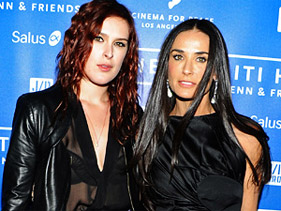
On the call, someone called ‘Ru’ was asked to provide an address for emergency responders. By Kara Warner Demi Moore with daughter Rumer Willis Photo: Getty Images Ever since news of Demi Moore’s hospitalization broke, more details have emerged each day to paint a clearer picture of the circumstances that led to the actress’ ambulance ride to the ER on Monday night. Some reports have claimed Moore was inhaling nitrous oxide from aerosol cans, also known as whip-its, the night the 911 call was placed from her home in Los Angeles, the recording and details of which were released Friday (January 27). Several people were heard on the call describing various symptoms the actress was experiencing at the time, as well as a few comments that seemed to indicate that Moore’s friends were just learning of her alleged substance abuse. Photos: Demi Moore through the years. One question that is causing a buzz online is whether Moore’s 23-year-old daughter, Rumer Willis, was present during the ordeal. Careful listening of the 911 call reveals an exchange between one of the callers and someone named “Ru,” who is asked for the specific address and instructions for how the paramedics can get to the house. “Hey, Ru, what’s the name at the gate so that we can buzz them in from here?” a man is heard asking on the call. There has been no confirmation regarding Rumer’s presence at the scene, but she reportedly goes by the “Ru” nickname and references it on her Twitter account. Sources told E! News that Moore’s three daughters are doing fine since their mom’s health scare. Rumer reportedly visited her mother several times at the hospital before she was discharged earlier this week . Tallulah, 17, is with her dad, Bruce Willis. “She’s doing great,” the source said. “Her grandmother [Bruce’s mom] is also there with her.” Moore’s other daughter, 20-year-old Scout, goes to Brown University in Rhode Island and reportedly hasn’t been home since the incident.
Effects work ‘frighteningly well’ but ‘premise is so devoutly ridiculous,’ critics say. By Kara Warner Sam Worthington in “Man on a Ledge” Photo: Summit If your impressions about the new action thriller “Man on a Ledge” are based on the film’s very-literal title , you’re very likely correct in assuming to know a decent amount about the film before entering the theater. “Ledge” is the story of ex-cop and fugitive Nick Cassidy (Sam Worthington), whose seemingly obvious suicidal plan to jump off a building is slowly revealed to be something much more. Thus far, the critical reception for the film is very different from initial audience reactions. The Rotten Tomatoes Tomatometer has “Ledge” at a 22 percent fresh rating from critics, versus a 65 percent fresh audience rating. Read on to see what has the two viewing bodies so divided as we sift through the “Man on a Ledge” reviews: The Premise “It’s an arresting image, Sam Worthington out on that 40th-story ledge. He’s a fairly tough-looking guy, after all, and we know him best as the tooth-gritting blockbuster hero of ‘Avatar’ and ‘Clash of the Titans,’ so it’s head-spinning to see the man’s beefy figure as a speck hovering so precariously close to New York’s infinite sky. The camera swirls around Worthington’s disgraced former cop Nick Cassidy, inching out past that thin strip of architecture, then back in. What if he trips, or jumps? For a while, anything seems possible, and it’s both exhilarating and terrifying. Then the wool comes off, and it’s clear that director Asger Leth and screenwriter Pablo Fenjves have ambitions considerably less grand than their protagonist’s perch. Cassidy’s ledge game — with all the studio-unfriendly moral ambiguities it entails — is just a con, a photo op for the crowds, and Nick’s apparent desire to exit the material world is a front. What he truly, passionately wants to do is steal some jewelry.” — Andrew Lapin, NPR The Impact of Practical Effect “I, on the other hand, was gripping anything in reach, palms dripping, thinking I might not have survived the effects had they been 3-D. Though there were other production sites, serious time was spent actually shooting on that 14-inch ledge wrapping the 21st floor of the Roosevelt Hotel to create the vicarious sensation of being there. Which worked frighteningly well, at least for the vertiginous among us. Oh, that the actual human dynamics of the unfolding story could have been as dramatic, as on the edge as that ledge.” — Betsy Sharkey, Los Angeles Times The Direction “Mr. Leth, the son of renowned Danish documentarian Jorgen Leth, has directed only one other film, ‘Ghosts of Cit
It says something about how far Ice-T has come since his gangsta rap days that his directorial debut, the hip-hop documentary Something from Nothing: The Art of Rap , premiered at Sundance to a house packed with hip-hop heads and white older moviegoers who likely know Ice better from Law & Order: SVU than “New Jack Hustler.” And it says something about the film itself, which explores the historical landscape of hip-hop in intimate detail with over 40 of Ice-T’s fellow rappers, that even the L&O -watching grandmas in the audience were bopping their heads the whole way through. Taking a fresh approach to the music documentary, The Art of Rap sees Ice-T as a tour guide of sorts, navigating the viewer through home and studio visits with fellow MCs on both coasts as he has wide-ranging discussions about the roots of rap, what hip-hop means, and the skills and talent required of a truly great MC. (Among the hip-hop titans appearing in the film: Chuck D, Grandmaster Caz, Afrika Bambaataa, KRS-One, Melle Mel, B-Real, Mos Def, Ice Cube, Snoop Dogg, Dr. Dre, MC Lyte, Q-Tip, Redman, Immortal Technique, Nas, Common, and Kanye West.) As he travels from New York City to Los Angeles — with a detour to Detroit to see Eminem, described as one of the greatest rappers of all time — Ice asks his subjects to spit “something no one’s ever heard before,” resulting in a tapestry of astounding, off the dome freestyles and rare rhymes from some of the best rappers alive. With the intention of keeping the film feeling fresh and present, Ice-T forgoes include archival or concert footage as he revisits hip-hop’s colorful past, a choice that turns The Art of Rap into something of a communal, if dense, oral history of the genre. The doc could be a bit brisker with further edits and more complete in its comprehensiveness (he began with a three hour film before shaving off an hour for Sundance, but has dozens of hours of footage left; an Art of Rap series has been suggested, though Ice-T declined to discuss the possibilities), but with legends like these on hand speaking comfortably to one of their own – spilling their vulnerabilities as artists, exposed beyond the typically hard façade of the genre – it’s all utterly fascinating. Following the film’s premiere Movieline caught up with Ice-T as he and wife/reality TV co-star Coco breakfasted in Park City, where the rapper-turned-actor-turned-filmmaker explained what motivated him to grab his Rolodex and a tiny crew in the first place, why rap needed an Ice-T film more than another album, why the genre doesn’t get the respect it deserves, and how the film’s success or failure will determine his future directorial aspirations. How do you think things went at your premiere? I wasn’t breathing the whole night before, I was so nervous. I put a lot of time and work into it, but you never know. Sundance was our goal when we made the movie — I only wanted to make it to Sundance. This was it for me. And if I could make it here, I was in the right company of good movies. Why Sundance? It was interesting to see it play well here for a crowd of predominantly white, older viewers, and last year Beats, Rhymes, and Life also did quite well. Well, I didn’t know what films would be here when we submitted the film and got accepted. When you think about it, I’m an indie artist; I started out making hardcore records, so I wanted to make something that was raw. I said, I know Sundance is artsy but if I can get accepted there, then I’m on the right track. White people, black people, it really doesn’t matter. It’s just a matter of is it good? So when the movie came on and people started cheering and laughing and bobbing their heads, it was like oh my god – we got it! It’s kind of like not a normal documentary, it’s like a performance experience, an intimate concerts with a lot of the artists that people love. I was just happy. You’ve said that once you decided a documentary on rap should be made it was easy to just call your friends to be in the film, but in terms of the actual filmmaking what was your approach? Did you study documentary form to develop the style you eventually used? Not really. I mean, I’ve been watching movies and I’ve been in the film business for 20 years so I know what’s good. I wanted to shoot it, but I wanted to blur the lines of the filmmaking and behind the scenes. If the mic was exposed, that was good. A lot of the stuff, you see me talking to people; I wanted you to get the idea of what it was like to make it, not just watch it. People are into reality right now so this was like real reality; you’re with me, you’re on the set, I’m going to walk up to this guy and ask him a few questions. So as I edited, I just wanted the camera to feel like it might be anywhere at any moment. There are times people are talking and you’re showing the wall, or his hands, or his shoes. And then we shot with a Super 8 to kind of break up the cleanness of high definition. And we shot the big cinematic shots because I felt that if you just shoot the talking heads the movie becomes claustrophobic, so it’s just like, listen, listen, listen, breathe. Listen, listen, listen, breathe. Those sweeping overhead cinematic shots, of the cityscapes over New York City and Los Angeles and the places you visit in between, also do well to connect visually to a sense of place and geography… even though that also makes it conspicuous when you don’t visit, say, the Bay Area or the South. That’s what Mos Def said in the movie — the music is dictated by the geography, and that’s why New York sounds different than Detroit, different than L.A. And you know, I couldn’t go to the South; the biggest problem I ran into with the movie was once we started, just the lack of time and the amount of film we shot. When I got the nod for Sundance I had a three-hour film and they said the longest they’d run them here is two. We had interviewed 54 [musicians]; even to make a three-hour cut we had 47, and I had 25 people waiting to be filmed when we had to wrap shooting! So like Chuck D said [at asked why this person wasn’t in it and why that person wasn’t, and you know what? The movie’s not about that, it’s not about ‘Come see your favorite rapper.’ I feel every form of rap, every style, was represented. Are you currently considering extending this two-hour film somehow into something else, perhaps a series? I won’t speak on that, only because we don’t want to lower the integrity of this as a film. We want it to be a film, and once it does its dance as a film, whether it’s a theatrical release which looks like it’s about to happen… I’ll put it like this: We’ve got two hours on each artist. Wow. That’s pretty incredible considering that many of the rappers we only see for a minute or two at most. [Laughs] I have two hours! So you look at KRS-One; KRS-One talked about so much stuff, but my job is, let’s show the part where KRS talks about being vulnerable, like the moment where he got dissed. I want you to see the different dynamics of these artists. See, when you take young artists, right, young artists have their guards up. They never want to show any weakness, they’re scared. They’re worried about their persona. When you talk to people once they’ve been down the lane, they’ll tell you the story. They’ll say, ‘Wow, man — I’m Public Enemy and Mel was dissing us!’ Now they’re comfortable with themselves. Even the stories, WC was talking about how I would use kids as teleprompters. Early in my career I wouldn’t have said that, but now I’m like, let’s laugh about it! I think that’s part of this film’s charm, too. There’s a segment where you’re talking with Ice Cube and 50 Cent is referenced; Cube jokes that you don’t want to get rich and die trying. Was that a jab at Fiddy, or just an offhand remark? No, that’s not a diss -– it’s more like saying, this is my play on what you said. I don’t want to get rich and die trying. 50 Cent said ‘Get rich or die trying,’ but you can get rich and die trying. So once you made it now, let’s not fuck it off. That would be part two of Fifty. The next one is Get Rich AND Die Tryin … I just think that the way that rappers speak about each other in the movie is very endearing, how they speak about how they were inspired by this one, and also I think really showing Grandmaster Caz as one of the unsung heroes. Grandmaster Caz wrote “Rapper’s Delight!” It’s important shit. That’s a nice quality to the movie; it engenders appreciation not only between the artists that you interview, but having MCs spit live, directly into the camera without music really highlights rap as a performance and an art form. And you’ve got to remember this: Nobody knew they were going to rap. That’s part of being a rapper. Nobody knew they were going to rap. It’s like at the [Sundance premiere Q&A] the guy said, ‘Ice, can you quote a rhyme?’ Yeah, I’m a rapper – I’d better know how to fucking quote a rhyme! I pulled Rakim outta my ass, and that’s it. But during the interviews I said, ‘You want to spit something – you got anything in the head, want to say something no one’s ever heard?’ And bam! They just, bam! I didn’t tell anyone, ‘You’re going to rap.’ I didn’t tell Kanye he was coming over to rap. But you knew they could, because that’s what they do . Exactly! That’s what they do. You can’t interview a basketball player on a basketball court, with a basketball within his reach, and he won’t take a shot. It’s just what they do. He’s going to want to dribble the ball – he’s at home! So when you get a rapper in a comfortable situation with one of their friends and say, ‘Spit something,’ they might go, ‘Aww, come on Ice!’ Then they might go, ‘Hold on…’ bam! And another thing I did in the movie, if you really watch — some of the rappers in their rhymes kind of fuck up. They kind of slur words, because they’re connecting two rhymes together. That’s the art. You know, what you hear on records is something different. But when you hear it live, that’s all good. I mean, hopefully none of the rappers are so vain that they’re like, ‘Ice, you saw me fucking up.’ But that’s just what they did. That’s real shit. Which of your interviews was the most challenging to pull off, or to break through to? None. None of them. Every interview was just as easy to do, the only hard part was getting Ice-T, them, and a camera crew from London in the same place at the same time. How did you find your crew? When I came up with the idea, my manager said ‘I’ve got somebody who might be interested in doing it.’ We hooked up with a guy named Paul Toogood, he does a TV show called Songbook where they interview singers and they break down a song. It’s right up his alley. He said, not only do I want to do it, I’ll get the money to do it. I had to find somebody who was as passionate about it as me, and thank god – these guys are incredible cinematographers… the thing about this film is there were only five people that made it. There’s Paul, the cinematographer, myself, my guys that helped me wrangle the artists, Coco, Little Ice, and the sound crew. It’s apparent how small your crew is in the film when you have trouble fending off onlookers and fans while interviewing Q-Tip in New York… We just grabbed Q-Tip on the corner and we started shooting, I’ve got one of the homies out there blocking, I’ve got a camera guy and a boom, and we just go. So it’s very guerrilla, but I think that’s part of what makes the movie good. That comfortable distance of time and age that you mentioned that allows you to be more open with your experiences – do you feel like the impetus for making this film came from a desire to revisit where you’ve been in your career, to reconnect with your roots after transitioning into acting and television and beyond? I think it’s trying to do something for hip-hop, but do something that I am the only one who’s really capable of doing it. It’s kind of like, Ice-T could make another record, but we all know that. Now Ice is in another lane, he’s moved up, he’s got different credentials. So now it’s my job; I’ve got to make a movie. I’ve got to give hip-hop something they didn’t even know they wanted. Right now you make records and people don’t listen to them. You write a book and some people read. But people go to movies! And I wanted to direct; I have a lot of films that are in my sights, but I always learned in business that if you’re going to start a new business, go for the lowest hanging fruit. Start with something you know the best, first. And this is what I know the best. So I said, let me do something that’s important, that’s my way of giving back to hip-hop, and if it’s successful I’ll move on with my filmmaking career. If it’s not, I’ll re-assess my mistakes, maybe try again, or I’ll stop. But what is your barometer for success with this film? When will you be happy or satisfied with the results? It’s really just the response of the people. I never go by the critics, because critics’ jobs are to criticize. So a critic will look at you and how well you’re dressed but they’re looking for something they don’t like. Film journalists, I respect. But anyone who uses the word ‘critic’ in their description, I don’t fuck with them. But I can tell from the fans. Now, the internet and all the ways people can get back at you… you’ll know if you did something good or not. My first barometer is the hip-hop community. If they love it, and they’re like, ‘Man, you did something great. Thank you, Ice…’ That’s the first thing. Secondly will be the people and how they respond to it. So far, I went home last night and went through 30 reviews and didn’t get one bad, not one. I’m speechless! In the movie, we ask the question ‘Why don’t you think hip-hop is respected?’ Well, to have this film respected kind of says it is respected. It’s maybe not vocal, but it is, because people loved the movie. So it is respected. Follow Jen Yamato on Twitter . Follow Movieline on Twitter . Get more of Movieline’s Sundance 2012 coverage here .